Why Wide Toe Box Shoes for Women Are Worth a Look
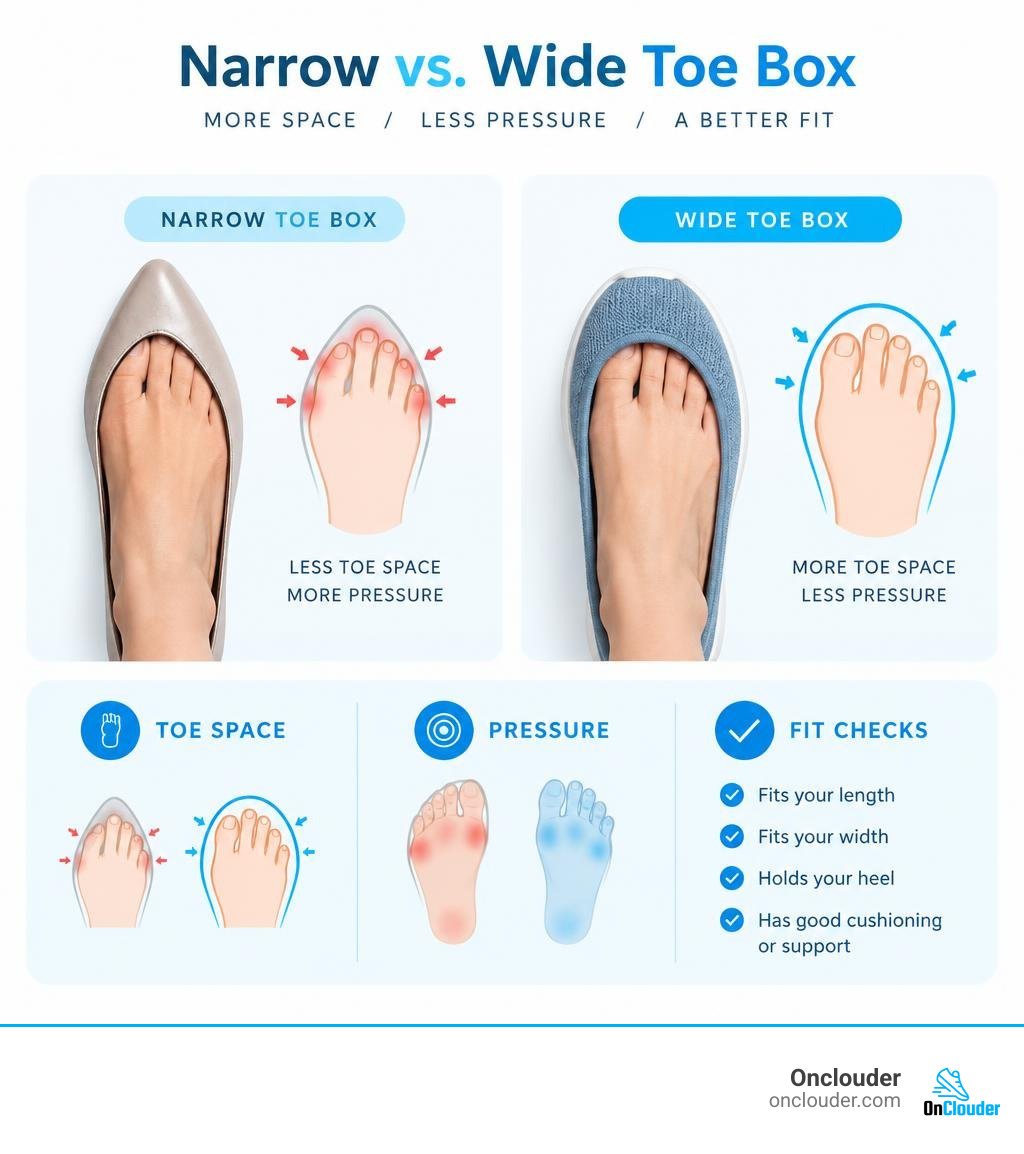
Wide toe box shoes give your toes room to spread instead of pressing them into a narrow point. They can reduce rubbing and pressure across the front of the foot, which may make walking and standing more comfortable, especially if you have bunions or hammertoes. Finding comfortable wide box toe shoes for women allows you to enjoy natural forefoot alignment without sacrificing heel stability or everyday style.
Look for a shoe that fits your foot’s length and width, holds your heel securely, and has enough cushioning or support for your activity. A roomy toe box does not have to mean a loose shoe, a thin sole, or a barefoot design.
This guide will help you compare styles, check the fit, and make the switch at a pace that feels comfortable.
Helpful footwear terminology and guides:
Understanding Toe Box Geometry: Wide Fit vs. Traditional Footwear
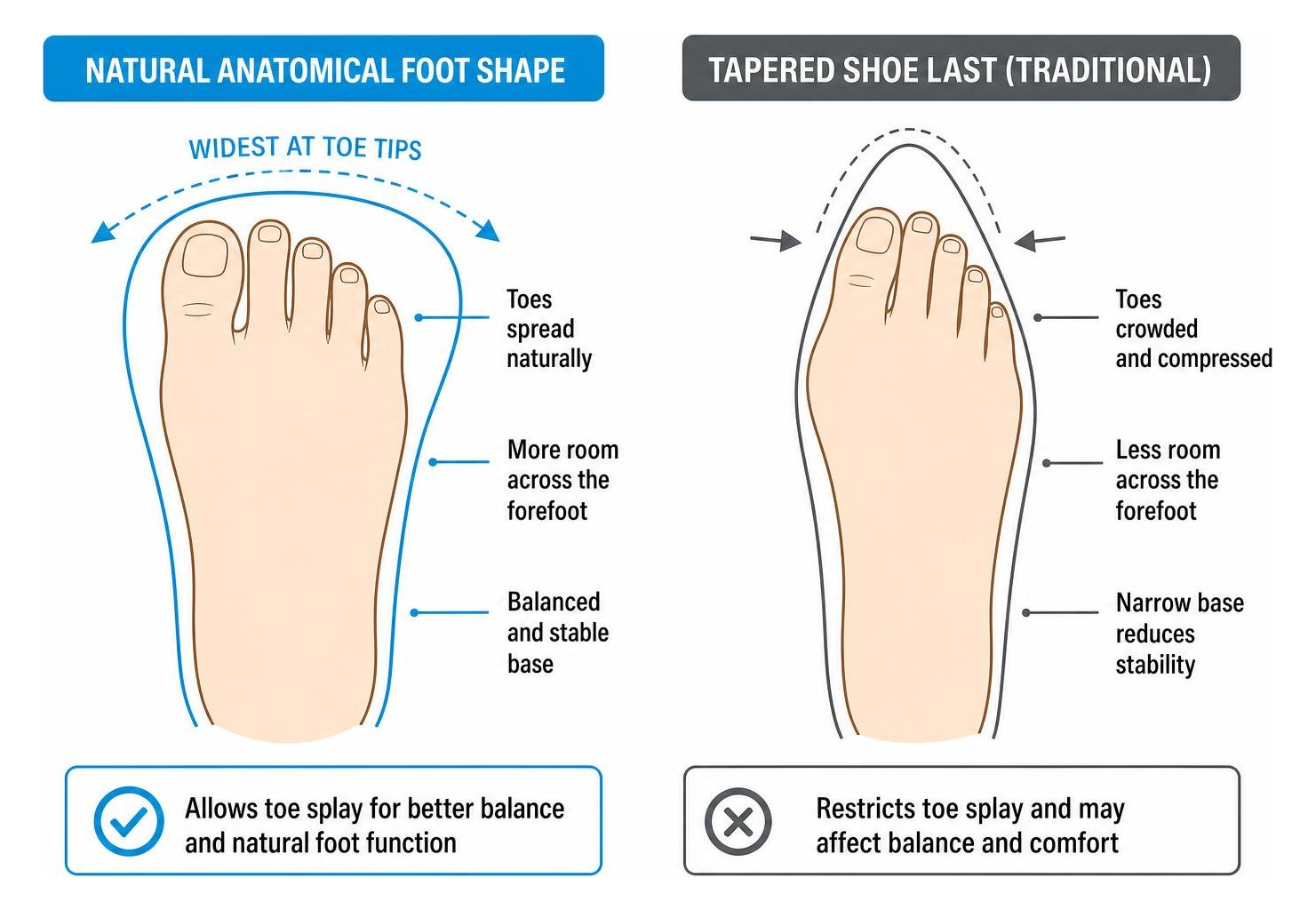
For decades, mainstream women’s footwear prioritized a tapered silhouette that narrows sharply from the ball of the foot toward the toes. This design assumes the human foot resembles a symmetrical spearhead. In reality, an unconstrained human foot is shaped like a fan, with its widest point resting across the tips of the toes rather than the metatarsal heads.
When you slide into traditional tapered shoes, the footwear last forces your outer digits inward. Over time, this crowding alters natural gait mechanics. If you explore our comprehensive footwear breakdown, you will find that human gait relies on active forefoot stabilization, where the big toe acts as the primary anchor for forward propulsion.
Anatomical Toe Splay and Balance
When your toes have sufficient lateral space, they naturally spread outward upon ground contact—a biomechanical action known as toe splay. This splay widens your base of support, evenly distributes body weight across the entire forefoot, and dramatically improves balance.
Sensory receptors on the bottom of your feet communicate with your central nervous system to make real-time postural micro-adjustments. When toes are compressed, that sensory feedback is muted. Understanding the essential fundamentals of toe freedom helps us recognize that spacious forefoot design is not just a comfort preference; it directly impacts overall stability and athletic performance.
Traditional Narrow Taper vs. Wide Box Construction
A standard women’s shoe frequently squeezes the first and fifth digits, generating high frictional shear against the upper. In contrast, an anatomically shaped toe box curves along the natural contour of your toes, providing room for the big toe to stay completely straight.
| Feature | Traditional Narrow Last | Anatomical Wide Toe Box |
|---|---|---|
| Forefoot Shape | Tapered, triangular, or pointed | Fan-shaped, asymmetrical, foot-shaped |
| Toe Alignment | Forces big and pinky toes inward | Allows natural, uninhibited toe splay |
| Pressure Distribution | Concentrated on metatarsals & joints | Evenly spread across entire forefoot |
| Balance & Stability | Narrow base of support | Broad, natural base of support |
| Friction Points | High rubbing at outer toe margins | Minimal friction along lateral borders |
Why Wide Box Toe Shoes for Women Are Essential for Foot Health
When footwear squeezes your toes, the resulting plantar pressure distribution can trigger a cascade of structural issues up the kinetic chain. As we highlight in our definitive ladies footwear overview, liberating your toes with wide box toe shoes for women helps maintain healthy alignment across the ankles, knees, and hips.
How Wide Box Toe Shoes for Women Prevent Bunions and Hammertoes
Bunions (hallux valgus) form when the big toe is continually forced inward toward the second toe, shifting the first metatarsophalangeal (MTP) joint outward. Tapered toe boxes exacerbate this issue by keeping the joint under constant lateral stress.
Similarly, hammertoes develop when smaller toes lack room to extend, curling upward to avoid the front barrier of a tapered shoe. Incorporating spacious options gives the MTP joints the breathing room needed to prevent painful friction, inflammation, and chronic joint deformities.
Managing Plantar Fasciitis and Morton’s Neuroma
Plantar fasciitis is often linked to an unstable foot base. When the big toe cannot splay, the arch loses its natural structural rigidity, placing excessive strain on the plantar fascia band.
Furthermore, transverse compression across the metatarsal heads can pinch the interdigital nerves, leading to Morton’s neuroma—a sharp, burning sensation between the third and fourth toes. When focusing on alleviating chronic foot pain, choosing footwear with a generous forefoot design reduces nerve impingement and promotes healthy shock absorption during walking.
Key Features to Look for in Ergonomic Women’s Footwear
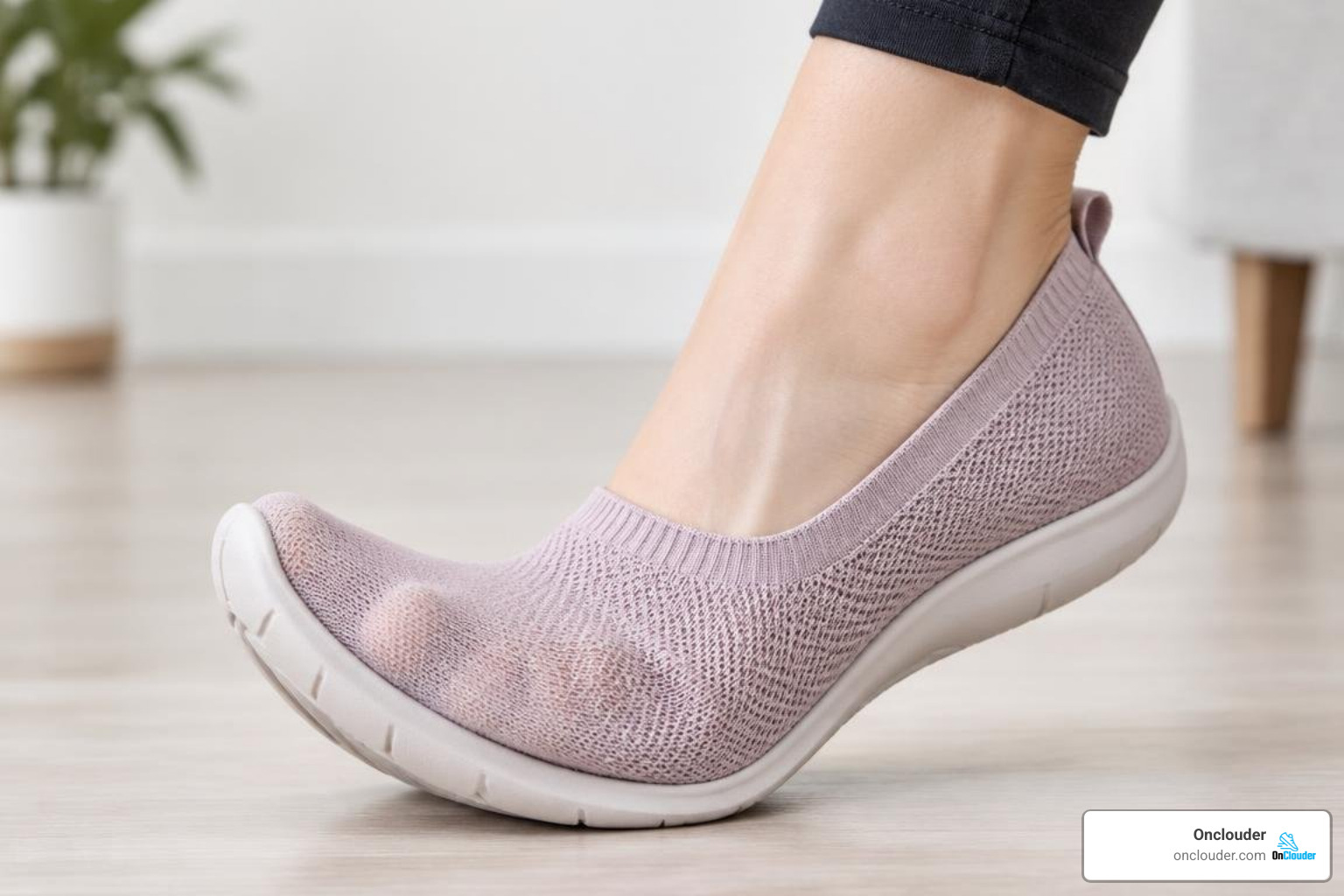
Finding the right pair means balancing spacious design with overall structural support. As we cover in our guide to comfortable everyday ladies footwear, you should evaluate materials, sole drop, and internal cushioning.
Breathable and Stretchable Upper Materials
Rigid synthetics can dig into sensitive pressure points. Instead, look for:
- Engineered Tech-Knits: Flexible knits expand over bunions or wide forefeet without pinching.
- Premium Full-Grain Leathers: Handcrafted models soften and mold to your unique foot profile over time.
- Ventilated Linings: Breathable fabrics keep feet cool, reducing sweat and blister-causing friction.
Arch Support, Zero-Drop, and Heel Cushioning
Roomy footwear comes in multiple configurations:
- Low or Zero-Drop Geometry: Keeps the heel and forefoot level to encourage an upright posture and a balanced stride.
- Supportive Cushioning: If you prefer protection from hard pavement, explore cushioned non-barefoot roomy footwear with dual-density foam midsoles.
- Contoured Footbeds: For those managing plantar fasciitis, selecting optimal arch support helps distribute ground impact without crowding your toes.
Best Styles and Daily Applications for Women
Functional footwear no longer means settling for clunky silhouettes. Modern brands combine foot-shaped lasts with refined design details, making it easy to find stylish non-orthopedic everyday shoes.
Professional Workwear, Flats, and Dress Shoes
For the office, you can choose refined designs that meet professional dress codes without crushing your toes:
- Square-Toe & V-Cut Flats: These provide a wide toe box with an elegant, leg-lengthening profile.
- Tailored Dress Loafers: Premium leather styles pair near-zero drop comfort with luxury boardroom aesthetics.
- Discover more options in our curated guides to stylish dress shoe options and the top ballet flats selection for 2026.
Casual Walking and Active Footwear
For travel, errands, and workouts, prioritize lightweight construction and flexible traction:
- Road-Running and Gym Trainers: Look for athletic sneakers with a foot-shaped forefoot and responsive foam cushioning.
- Everyday Walkers: Flexible leather or knit sneakers provide all-day comfort on concrete. Check out our recommendations for everyday casual wide toe models.
How to Transition to Ergonomic Footwear and Sizing Tips
Switching from restrictive, heeled shoes to anatomically shaped footwear changes how your lower leg muscles work. Following a step-by-step footwear sizing guide makes this transition smooth and comfortable.
Transitioning Safely to Roomy Footwear
If you are moving to zero-drop or minimalist shoes, transition gradually:
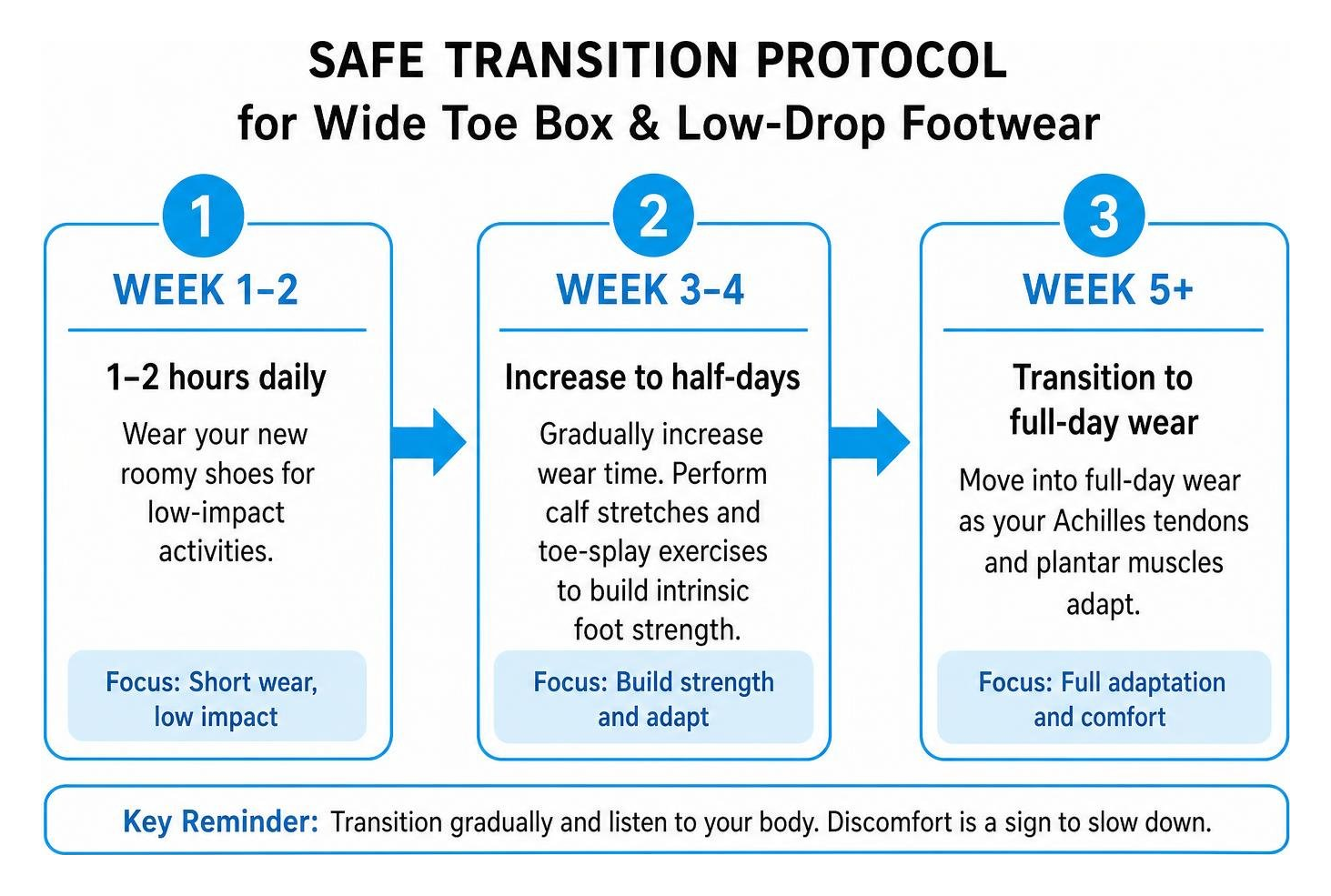
- Week 1–2: Wear your new roomy shoes for 1 to 2 hours daily during low-impact activities.
- Week 3–4: Gradually increase wear time to half-days. Perform calf stretches and toe-splay exercises to build intrinsic foot strength.
- Week 5+: Transition into full-day wear as your Achilles tendons and plantar muscles adapt.
Accurate Foot Sizing and Width Considerations
To find the right fit:
- Trace in the Evening: Measure your feet at the end of the day when they are naturally slightly swollen.
- Measure Length in Millimeters: Compare your longest toe to the manufacturer’s millimeter chart, leaving a thumb’s width (10–12 mm) of space at the front.
- Check the Midfoot Lock: Make sure the shoe hugs your instep and heel securely so your foot does not slide forward into the toe box. For more fit advice, read our guide on finding properly fitted wide footwear.
Frequently Asked Questions About Roomy Footwear
Are wide toe box shoes the same as wide width shoes?
No. Standard wide-width shoes (D or EE) increase the volume across the entire shoe, which can leave your heel and ankle loose. A dedicated wide toe box shoe keeps a standard, snug heel and midfoot while widening only the front zone where your toes splay.
Can wearing wide toe box shoes reverse existing bunions?
While footwear alone cannot reverse established bone deformities without surgery, switching to a wide toe box can relieve pressure on the MTP joint, alleviate pain, and help prevent the condition from worsening.
Do wide toe box shoes look bulky or orthopedic?
Not anymore. Modern designs use sleek V-cut collars, streamlined square toes, and flexible knit textures to deliver generous internal room while maintaining a polished, contemporary look.
Conclusion
At Onclouder, we believe comfortable feet are the foundation of lifelong mobility. Giving your toes the space to spread naturally relieves joint pressure, enhances balance, and keeps you moving comfortably throughout your day.
Whether you need refined office loafers or lightweight walking sneakers, modern footwear design means you no longer have to choose between style and foot health. Explore our barefoot and wide toe box comparison guide to find the perfect pair for your daily routine.