
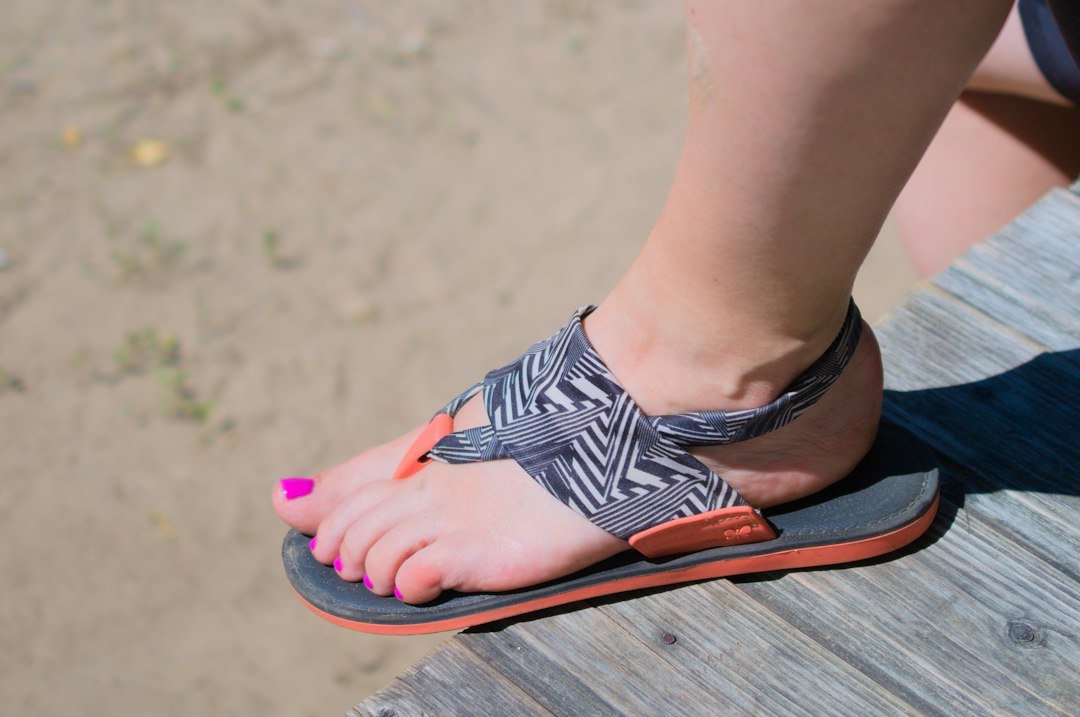
Are FitFlop Sandals Good for Plantar Fasciitis?
FitFlop sandals may help with plantar fasciitis if the footbed supports your arch, cushions your heel, and fits without making your toes grip to keep the sandal on. Those features matter more than the brand name. A supportive pair can make short, everyday walks more comfortable, but it will not cure heel pain or replace a stable shoe for long walks and workouts. When shopping for the best fit flops for plantar fasciitis, focus on structured arch support and deep heel cushioning rather than brand labels alone.
This review looks at what to check before buying and when flip-flops are the wrong choice.
Understanding Plantar Fasciitis and Footwear Mechanics
Plantar fasciitis is one of the most frustrating sources of heel pain you can experience. The plantar fascia is a thick band of connective tissue running along the bottom of your foot, connecting your heel bone to your toes. It acts as a shock-absorbing bowstring, supporting your longitudinal arch every time your foot strikes the ground.
When repetitive strain, poor foot biomechanics, or unsupportive footwear overload this tissue, tiny micro-tears develop near its insertion at the calcaneus (heel bone). This leads to localized inflammation, stiffness, and that unmistakable, knife-like morning heel pain during your very first steps out of bed.
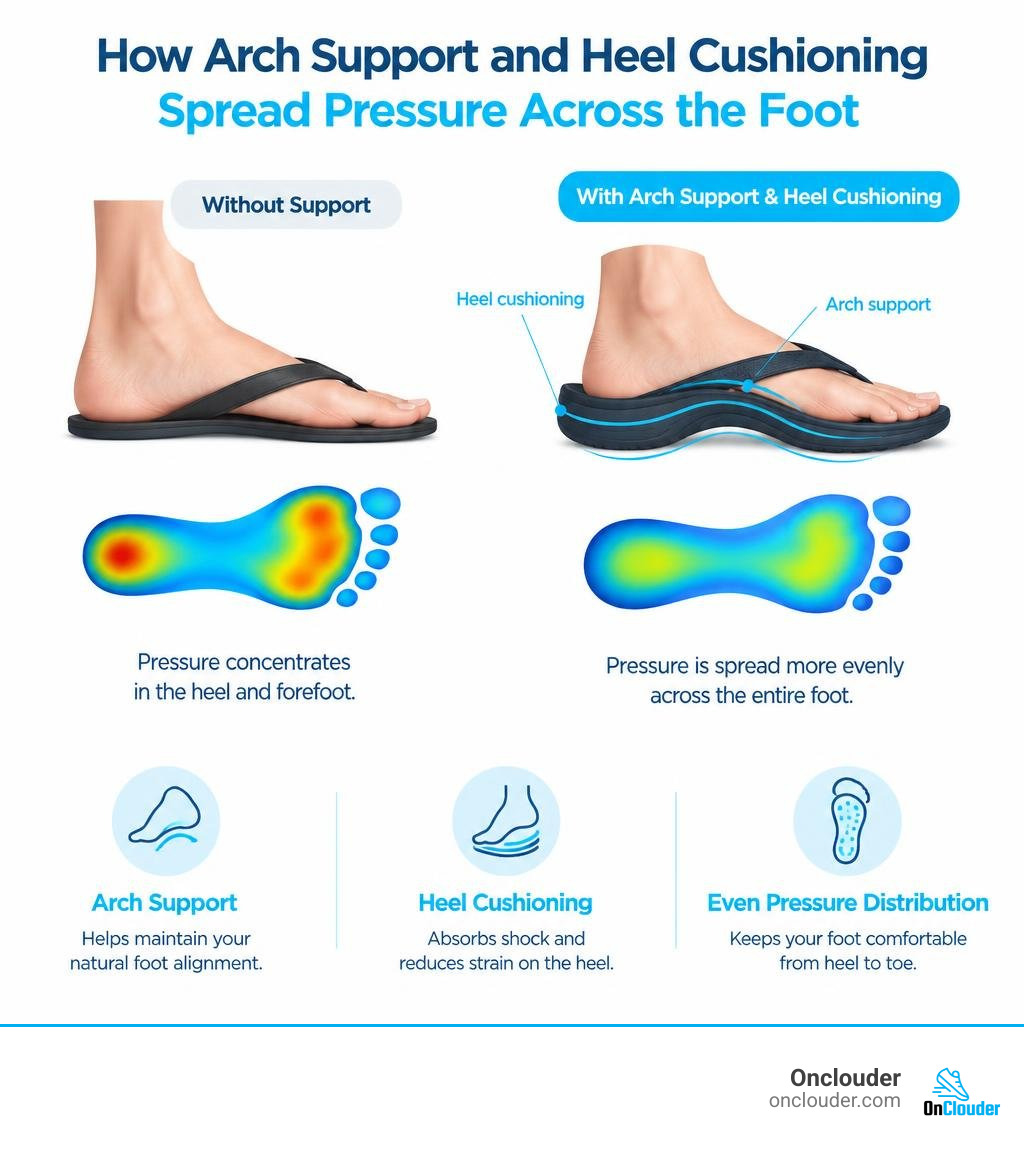
To heal, your feet require proper biomechanical alignment and consistent arch support. Every step you take barefoot or in flat shoes causes the arch to collapse downward, stretching the inflamed plantar fascia under high tension. Footwear plays a decisive role: it either offloads this tension or magnifies it.
How Flat Sandals Trigger Inflammation
Traditional, flimsy beach flip-flops are notorious for aggravating heel problems. They present several mechanical issues:
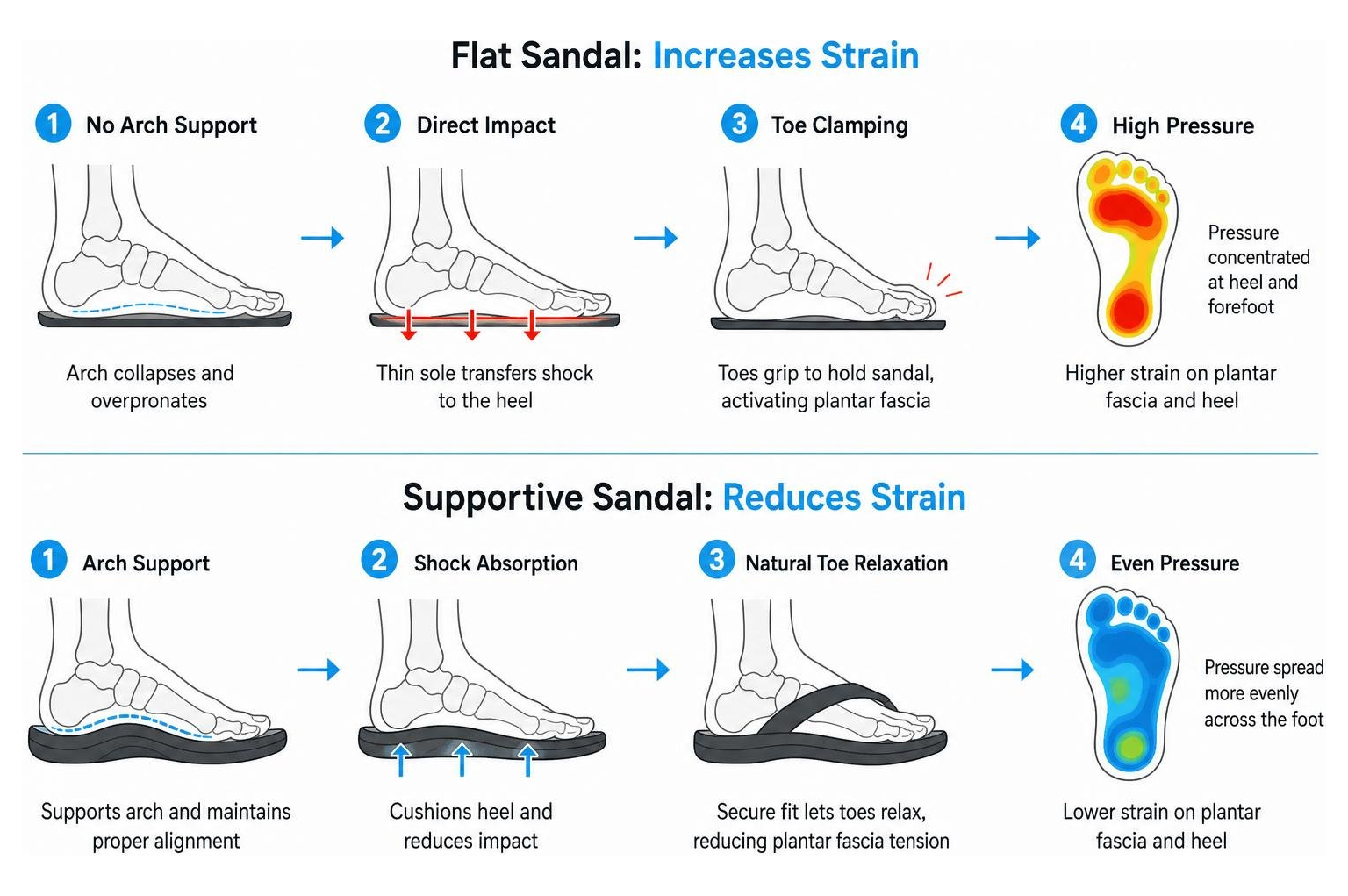
- Zero Arch Structure: Completely flat soles offer no resistance against arch collapse, causing excessive pronation and overstretching the plantar fascia.
- Lack of Shock Absorption: Thin rubber or foam soles bottom out immediately, transferring impact forces directly into the heel pad.
- Toe Clamping: Because flat thong sandals lack secure straps, your toes must curl and grip the footbed with every step. This activates the windlass mechanism prematurely, putting continuous tension on the plantar fascia and tightening the intrinsic foot muscles.
- Zero Drop and Instability: A completely flat profile stresses the Achilles tendon and calf muscles, which pull tightly on the heel bone and increase plantar strain.
Clinical Evidence Supporting Orthotic Sandal Design
Can open-toe sandals actually offer therapeutic relief? Clinical research says yes—provided they feature built-in orthotic contours.
In a randomized, double-blind controlled clinical study on flip-flop sandals with insoles, researchers evaluated 66 patients with plantar fasciopathy over a 12-week intervention period. Participants wore their assigned footwear for at least 4 hours per day.
The results were compelling:
- Pain Reduction: Patients wearing flip-flops with plantigraphy-adapted orthotic insoles experienced a statistically significant reduction in morning pain (–1.82 cm on the Visual Analogue Scale) compared to those wearing plain, flat sandals.
- Functional Improvement: Foot Function Index (FFI) scores improved significantly (mean difference –0.10, p = 0.023).
- Higher Satisfaction: Patients using contoured sandals reported substantially greater satisfaction with their daily mobility and pain relief.
While choosing a dedicated closed-toe model from our guide to the best shoes for plantar fasciitis remains ideal for all-day standing or long walks, orthotic flip-flops provide genuine relief during warm weather and relaxed indoor recovery.
Key Features of the Best Fit Flops for Plantar Fasciitis
Finding supportive footwear requires looking beyond marketing claims. When we evaluate sandals at Onclouder, we assess specific biomechanical criteria that distinguish high-performing sandals from cheap foam slabs.
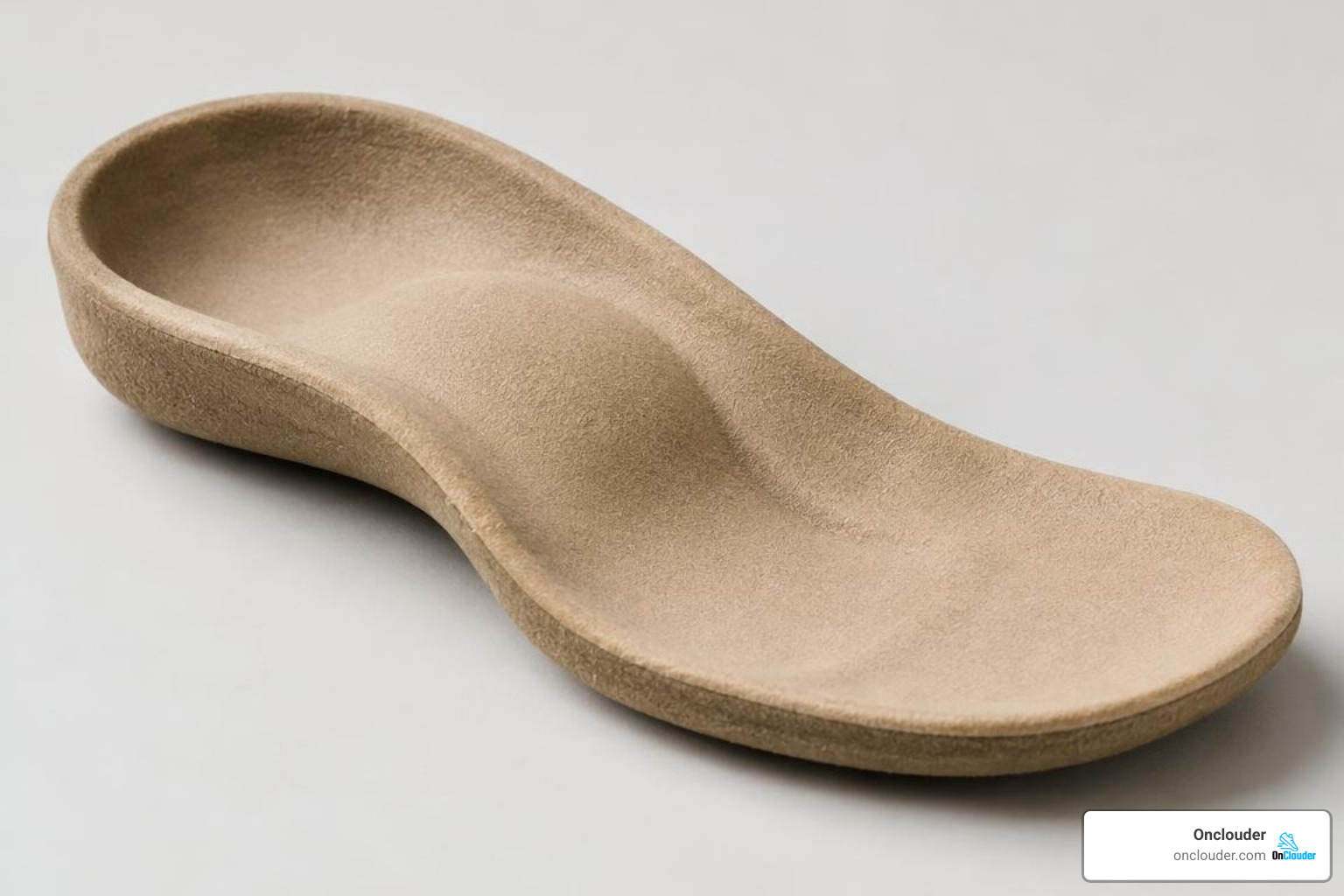
- Deep Heel Cup: A structured heel cradle centers the natural fat pad beneath your calcaneus, preventing it from flattening outward and preserving your foot’s built-in cushioning.
- Anatomical Medial Arch Support: Contoured support fills the space under your arch, distributing body weight evenly across the entire plantar surface rather than concentrating pressure on the heel and ball of the foot.
- High-Density Cushioning: Resilient materials like dual-density EVA foam absorb ground reaction forces without compressing completely flat over time.
- Professional Seals: Footwear carrying the American Podiatric Medical Association (APMA) Seal of Acceptance indicates independent podiatric evaluation for foot health.
Ergonomic Soles Defining the Best Fit Flops for Plantar Fasciitis
The sole architecture determines how effectively a sandal offloads strain from your plantar fascia. Selecting the best fit flops for plantar fasciitis comes down to three crucial design elements:
- Rocker-Bottom Geometry: Soles with a subtle rocker curve gently roll your foot forward from heel-strike to toe-off. This reduces the range of motion required at the big toe joint (metatarsophalangeal joint), minimizing tension on the plantar fascia during the push-off phase.
- Substantial Stack Height: A thick midsole—typically 3cm to 4cm of high-grade EVA foam—creates a protective barrier between your heel and hard surfaces.
- Firm Torsional Rigidity: A therapeutic flip-flop should not twist like a wet rag. The midfoot should remain stable when twisted, ensuring that your arch is physically supported rather than collapsing under load.
Sizing and Adjustability for the Best Fit Flops for Plantar Fasciitis
An improper fit can negate the benefits of an orthotic footbed. Follow these fitting guidelines:
- Strap Security: Straps should hold the foot securely against the footbed without causing friction. If the upper is too loose, your toes will reflexively clench to keep the sandal in place.
- Break-In Timeline: Therapeutic footbeds often require a short adaptation window. While some cloud-soft EVA sandals feel comfortable instantly, firm biomechanical models take roughly 7 to 14 days to fully conform to your arch profile.
- Width and Sizing Adjustments: If you have wider feet or fall between sizes, size up. Double-strap designs with adjustable buckles can prevent pinching and accommodate mild swelling.
Supportive Flip-Flops vs Traditional Sandals, Slides, and Clogs
To choose the right footwear for your routine, compare how orthotic flip-flops perform against other popular warm-weather and recovery options:
| Footwear Style | Arch Support Level | Heel Containment | Toe Gripping Risk | Best Use Case |
|---|---|---|---|---|
| Orthotic Flip-Flops | Moderate to High | Moderate (Heel Cup) | Low to Medium | Warm weather, casual outings, beach/pool |
| Ergonomic Slides | High | Moderate | Very Low | House recovery shoe, post-workout, wide feet |
| Recovery Clogs (e.g., Crocs) | Moderate | High (with heel strap) | Very Low | All-day indoor standing, light gardening, casual wear |
| Flat Traditional Flip-Flops | None | None (Flat) | High | Not recommended for heel pain |
Performance Differences Across Footwear Styles
Each style offers specific biomechanical advantages depending on your daily routine:
- Supportive Flip-Flops: Provide breathability and warm-weather comfort. Models like the Aerothotic Solace blend quick-drying, water-friendly materials with orthotic support, making them well-suited for pool decks and casual outdoor walks.
- Ergonomic Slides: Eliminate the toe post entirely, making them comfortable for individuals who experience friction between their toes or who prefer wearing recovery socks indoors.
- Supportive Clogs: Clogs made from proprietary cushioning resins offer generous toe room, closed-toe protection, and pivoting heel straps that lock the foot securely in place during extended wear.
When to Wear Flip-Flops Versus Supportive Shoes
Supportive flip-flops are designed for low-impact environments and casual wear. They are well-suited for:
- Stepping out of bed onto hard tile or hardwood floors to prevent morning heel pain.
- Short errands, beach outings, and poolside lounging.
- Relaxing after workouts to let your feet breathe while maintaining arch support.
However, flip-flops lack lateral ankle stability and structured torsional control. For long shifts on hard concrete or extended walking, swap sandals for dedicated shoes for standing all day to protect your lower kinetic chain.
Comprehensive Foot Care: Exercises and Complementary Treatments
Footwear is a cornerstone of recovery, but combining supportive sandals with targeted physical therapy accelerates healing.
Stretching and Physical Therapy Routines
Perform these three exercises daily to relieve tension along the bottom of your foot and promote lasting plantar fasciitis relief:
- Plantar Fascia Stretch: Sit down and cross your affected leg over your knee. Grasp the base of your toes and gently pull them back toward your shin until you feel a firm stretch along your arch. Hold for 30 seconds; repeat 3 times before taking your first steps in the morning.
- Calf and Achilles Stretch: Stand facing a wall with your hands placed at shoulder height. Step your injured foot back, keeping the heel firmly planted and the knee straight. Lean forward into the wall until you feel a stretch in your upper calf. Hold for 30 seconds, then bend the back knee slightly to target the soleus muscle.
- Towel Scrunches: Sit in a chair with your bare foot flat on a small towel. Use your toes to grip and pull the towel toward you, strengthening the intrinsic arch muscles.
At-Home Remedies and Recovery Strategies
To maximize recovery at home, consider these practical podiatrist tips:
- Ice Bottle Roll: Freeze a plastic water bottle and roll the arch of your foot over it for 10–15 minutes in the evening. This combines deep-tissue massage with cryotherapy to soothe localized inflammation.
- Night Splints: A night splint holds your ankle in a neutral 90-degree position while you sleep, preventing the plantar fascia from shortening overnight and easing morning stiffness.
- Never Walk Barefoot: Hard flooring places intense tensile load on your healing plantar fascia. Keep a supportive pair of recovery sandals or slides directly beside your bed.
Frequently Asked Questions About Supportive Flip-Flops
Can supportive flip-flops fully cure plantar fasciitis?
No single piece of footwear acts as a complete cure. Supportive flip-flops provide an optimal mechanical environment by offloading pressure, cushioning heel strikes, and reducing strain on the plantar fascia. True healing requires a comprehensive approach, including targeted stretching, calf strengthening, activity modification, and podiatric guidance when necessary.
How long does it take to break in orthotic sandals?
Most orthotic sandals require an adaptation period of roughly 7 to 14 days. If the footbed has firm arch support or a rocker sole, start by wearing them for 1 to 2 hours per day indoors, gradually increasing your wear time as your foot muscles adjust. Softer EVA models often provide immediate comfort right out of the box.
Are supportive thong sandals suitable for flat feet?
Yes, as long as they provide structured medial arch support and deep heel cups. Individuals with flat feet tend to overpronate, causing the arch to collapse inward. A contoured footbed stabilizes the sub-talar joint and prevents excessive roll. For closed-toe needs, check our curated recommendations for shoes for flat feet.
Conclusion
Managing plantar fasciitis does not mean you have to avoid open-toe footwear entirely. While flat, flimsy sandals can trigger arch strain and heel pain, orthotic flip-flops with structured arch contours, deep heel cradles, and shock-absorbing midsoles provide comfortable relief for casual wear.
At Onclouder, our testing shows that rotating between supportive recovery sandals for home use and structured footwear—such as dedicated best work shoes for plantar fasciitis during the day—provides the balanced foundation your feet need to heal. Pair the right footwear with daily calf and arch stretches, and you can stay active and comfortable through every season.
