Is the Nike Alphafly a Good Half-Marathon Shoe?
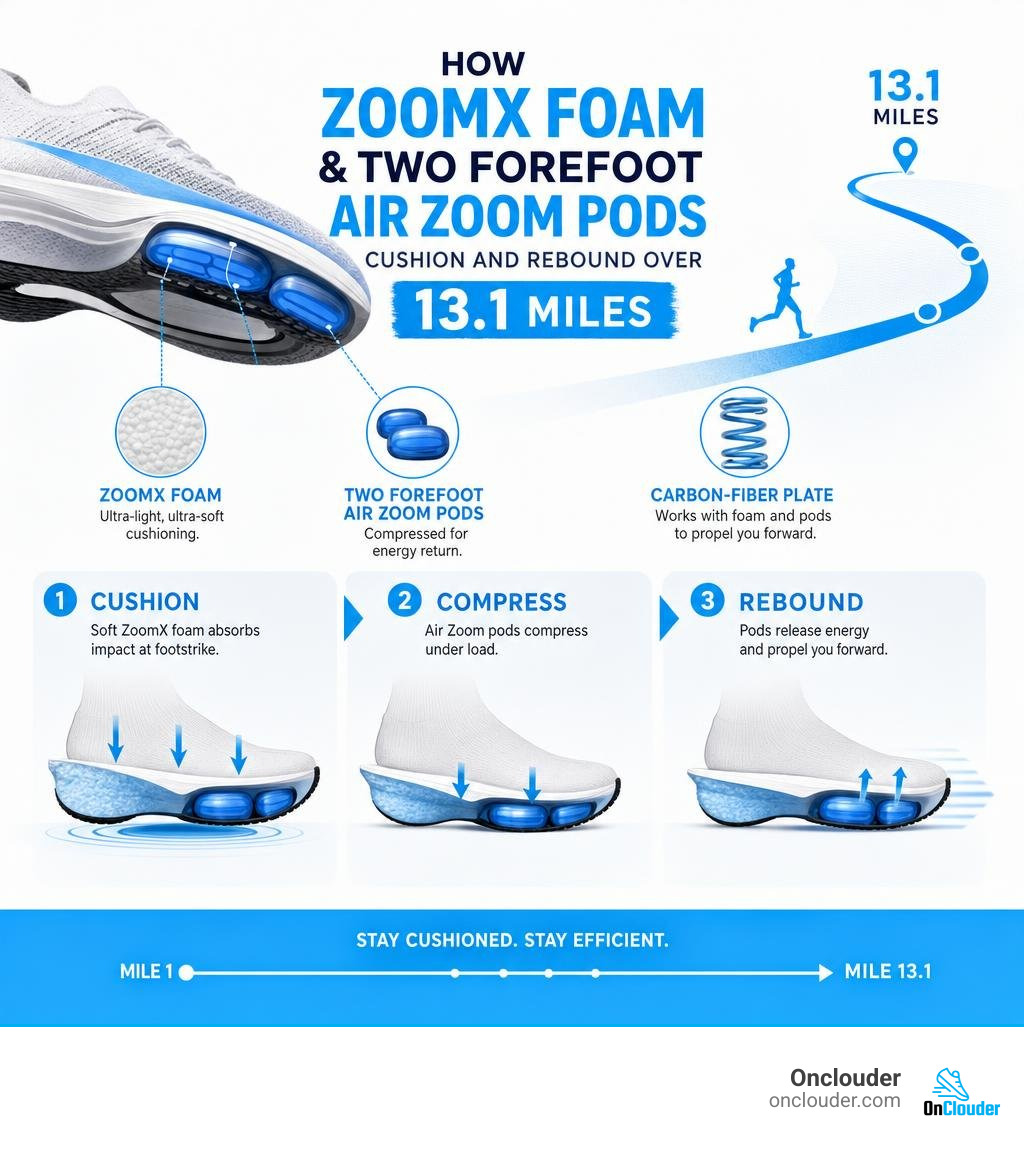
Yes, if it fits your foot and feels steady at your race pace. The Alphafly 3 combines soft ZoomX foam, two forefoot Air Zoom pods, and a carbon-fiber plate. Together, they give it a cushioned, springy feel that many runners value over 13.1 miles. But it is not the best choice for everyone: its tall sole can feel less secure on tight turns, and some runners get arch or toe discomfort. If you want a lighter, more agile shoe, a lower-stack racing option may suit you better.
Before you race, test the Alphafly in a run at your planned half-marathon pace, using your race-day socks. A shoe that feels fast for one runner can feel awkward for another.
To evaluate how race-day footwear compares across other distances, see our guides on the best marathon nike shoes, the best 10k shoes, and the best long run shoes 2026.
Is the Alphafly for Half Marathon Racing the Ultimate Choice?
When standing on the starting line of a 21.1-kilometer race, you want equipment that actively works with your biomechanics. While the shoe built its legendary reputation by dominating the full 26.2-mile distance, choosing the Alphafly for half marathon events has surged in popularity among runners aiming to slice minutes off their personal bests.
The half marathon is unique: it requires sustained velocity right at threshold pace, but 13.1 miles is still long enough that muscular fatigue degrades form in the closing 5 kilometers. The Alphafly counters this with a massive 40mm stack height, an 8mm heel-to-toe drop, and a lightweight build weighing around 198g. For runners exploring the top race-day options in our half marathon shoe guide, understanding how this shoe functions over middle-distance racing is essential.
| Feature / Spec | Nike Alphafly 3 | Nike Alphafly 4 |
|---|---|---|
| Weight | ~198g (Men’s US 9) | ~194g (Men’s US 9) |
| Stack Height / Drop | 40mm heel / 32mm forefoot (8mm drop) | 40mm heel / 32mm forefoot (8mm drop) |
| Midsole Foam | Continuous ZoomX | Refined High-Energy ZoomX |
| Propulsion Elements | Dual Zoom Air Pods + Full FlyPlate | Dual High-Flow Zoom Air Pods + Tuned Carbon Plate |
| Upper Material | AtomKnit 3.0 | Ultra-light AtomKnit Matrix |
| Target Distance Focus | Half Marathon to Marathon | 10K, Half Marathon, Marathon |
| R.A.C. Score | 9.5 / 10 | 9.6 / 10 |
Alphafly 3 vs Alphafly 4: What Changed for 13.1 Miles?
The jump from earlier iterations to the Alphafly 3 and the newest Alphafly 4 fundamentally transformed the shoe’s ride. Previous versions used disconnected midsole segments that caused clunky heel-to-toe transitions. Starting with the Alphafly 3, Nike introduced continuous midsole geometry that creates an uninterrupted line of ZoomX foam from heel to toe.
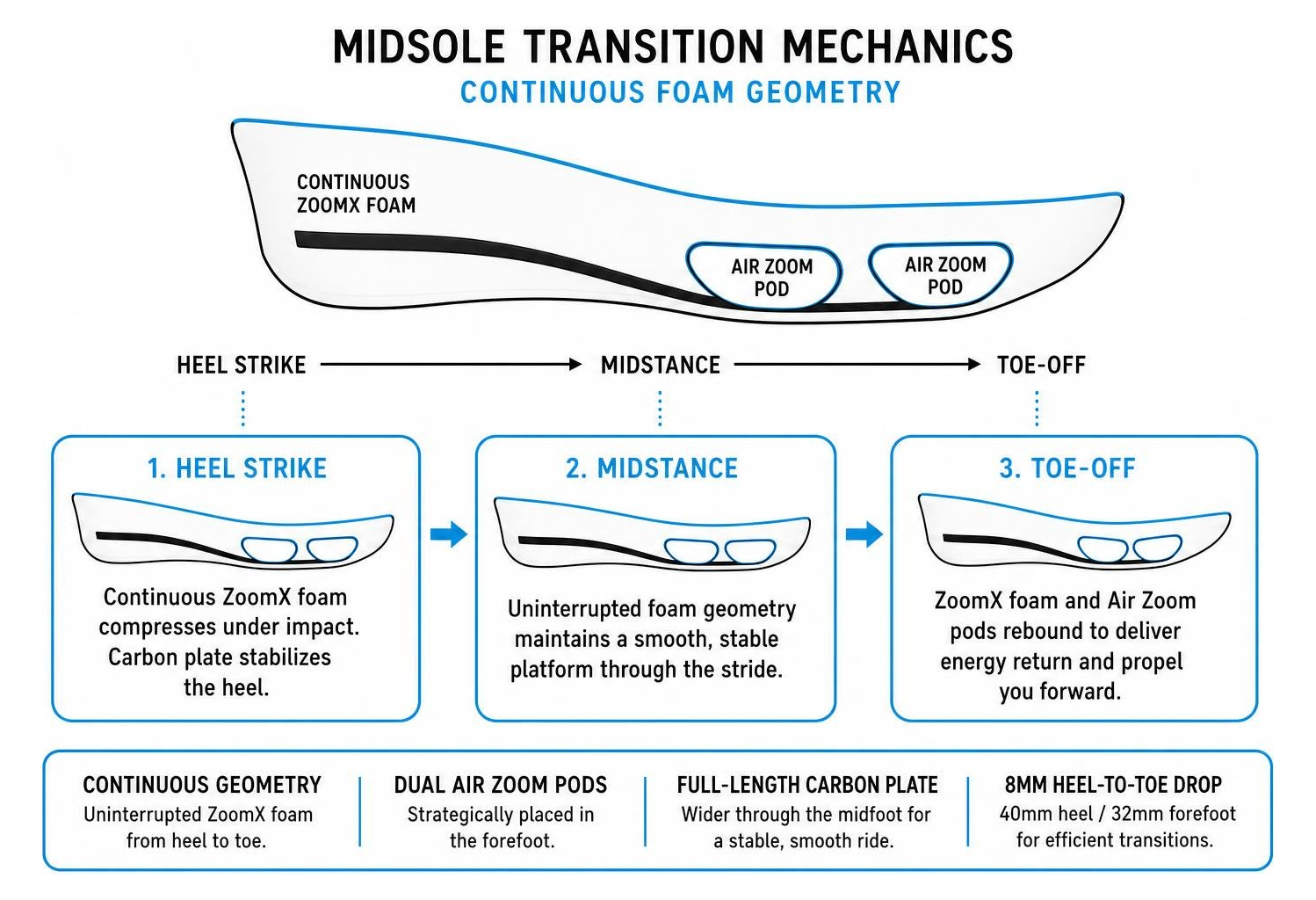
This structural shift, combined with a re-engineered ZoomX foam formulation pressed to deliver up to 23% greater energy return than the Alphafly 2, completely revitalized the shoe’s cadence friendliness. The full-length carbon-fiber FlyPlate is slightly wider through the midfoot, delivering a stable platform that helps you roll smoothly through every stride without feeling unstable.
Balancing Cushioning and Agility
A recurring debate among road racers is whether a lighter racing flat or the highly cushioned Alphafly reigns supreme for 13.1 miles. A lower-stack racer offers unmatched agility for sharp turns and short surges, but the Alphafly provides supreme late-race protection. During our extensive road testing, finishing a hard half-marathon simulation in the Alphafly left our legs fresh and completely free of deep muscle soreness. As noted in athlete feedback, the shoe doesn’t just push you forward—it actively stops your form from breaking down when fatigue sets in.
Midsole Mechanics: Zoom Air Pods and FlyPlate Dynamics
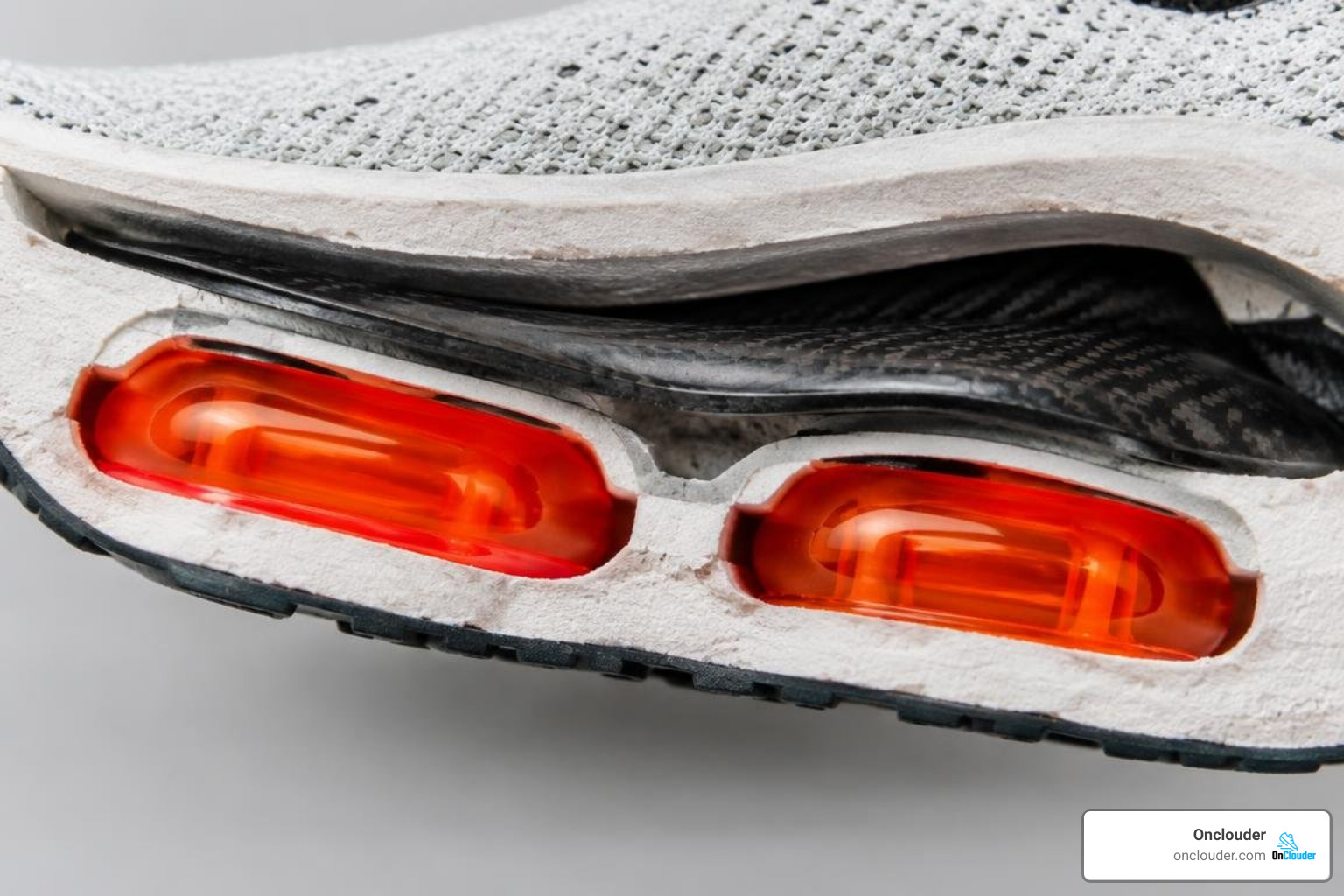
The magic underfoot stems from the relationship between Nike’s dual Air Zoom units and the rigid FlyPlate. Unlike standard foam that dampens shock and slowly rebounds, pressurized Zoom Air pods function like high-rebound chambers.
When your foot lands, the carbon-fiber plate acts as a lever, compressing the pods beneath your forefoot. As you transition to toe-off, the trapped air chambers snap back instantly, reducing the workload placed on your calves and Achilles tendons.
The Pace-Dependency Catch: Who Unlocks the Air Pods?
There is a technical catch that every runner must understand: the Alphafly is pace-dependent. To compress the Air Zoom pods enough to trigger their trampoline-like snap, runners generally need to move at paces around sub-4:30 min/km (sub-7:15 min/mile).
When you run slower than this mechanical threshold, you may not exert enough downward force to fully load the pods. Instead of feeling an explosive push-off, the high-stack foam can feel slightly stiff or awkward underfoot.
Cornering, Stability, and Heel-Striker Mechanics
At a 40mm stack height, taking sharp 90-degree corners requires caution. The Alphafly is engineered for high-speed forward momentum along sweeping roads. On technical courses with tight switchbacks, running wide cornering lines is the smartest strategy to prevent ankle roll.
Heel strikers will find the continuous bottom geometry much smoother than older versions, as the heel crash pad blends seamlessly into the midfoot. For a deeper look at balancing cushion with lateral support, review the high-stack stability breakdown in our Alphafly comparison.
Training Integration and Race Strategy

Integrating super shoes into your regimen requires a measured approach. You should never log daily recovery runs in your carbon racers; reserve them for specific dress rehearsals while balancing your weekly mileage with workout options in our marathon training shoe lineup.
Why the Alphafly for Half Marathon Workouts Demands Specific Pacing
The sheer energy return of ZoomX and Zoom Air pods creates a noticeable disconnect between perceived exertion and actual road speed. It is remarkably easy to click off the first two miles 15 to 20 seconds faster than your target half-marathon pace without realizing it.
To prevent early blowouts on race day:
- Calibrate Goal Pace: Run 5- to 7-mile tempo blocks strictly checking your GPS watch to build pace discipline.
- Control First-Mile Excitement: Treat the first 3 kilometers as controlled tempo running before settling into your cruise rhythm.
- Focus on Cadence: Let the shoe facilitate foot turnover rather than overstriding.
The Optimal Break-In Mileage and Tune-Up Protocol
Arriving at race morning with zero miles on your shoes is an invitation for blisters, while running 200 training miles wears down the foam’s bounce. The sweet spot is toeing the line with 40 to 100 miles on the shoe.
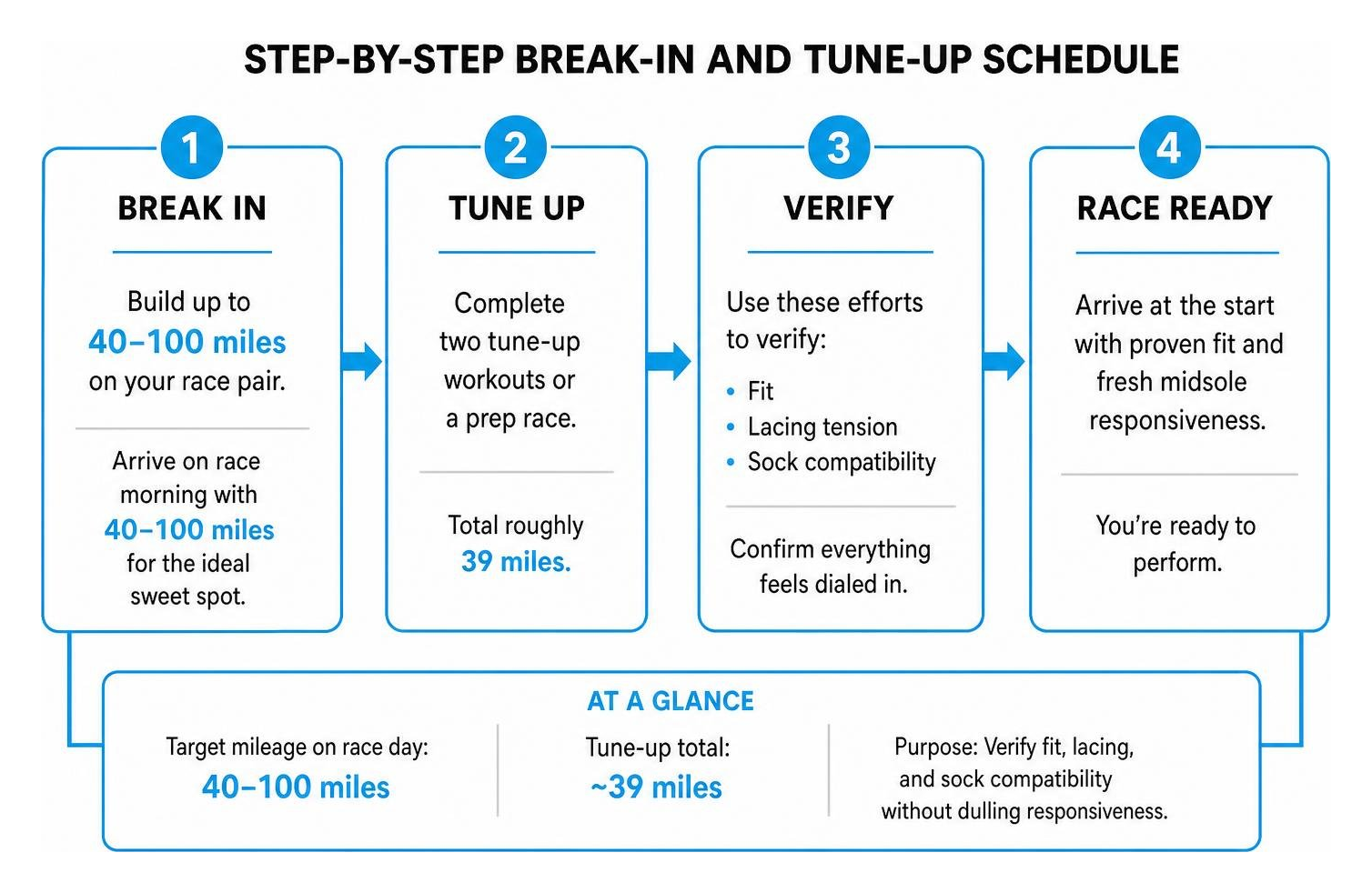
Using your race pair for two tune-up workouts or a prep race (totaling roughly 39 miles) verifies fit, lacing tension, and sock compatibility without dulling the midsole’s responsiveness. Review our race-week preparation from our training and race day shoe guide to refine your schedule.
Solving Fit Issues and Maximizing Shoe Durability
Dialing in Your Alphafly for Half Marathon Race-Day Fit
The AtomKnit upper provides an ultralight, sock-like lockdown, but it requires deliberate handling:
- Break-In Mileage: The knit material and rigid toe bumper require a 10 to 25 km break-in period to soften up.
- Arch Bite: The shoe features an aggressive midfoot contour. Flat-footed runners should use structured socks or anti-friction balm along the arch.
- Heel Lockdown: Utilize the integrated notched laces to lock the ankle collar without overtightening across the top of your foot.
When to Retire Your Racing Pair
Modern super shoes do not last as long as traditional daily trainers. Most elite carbon shoes maintain peak race rebound for roughly 150 to 200 miles.
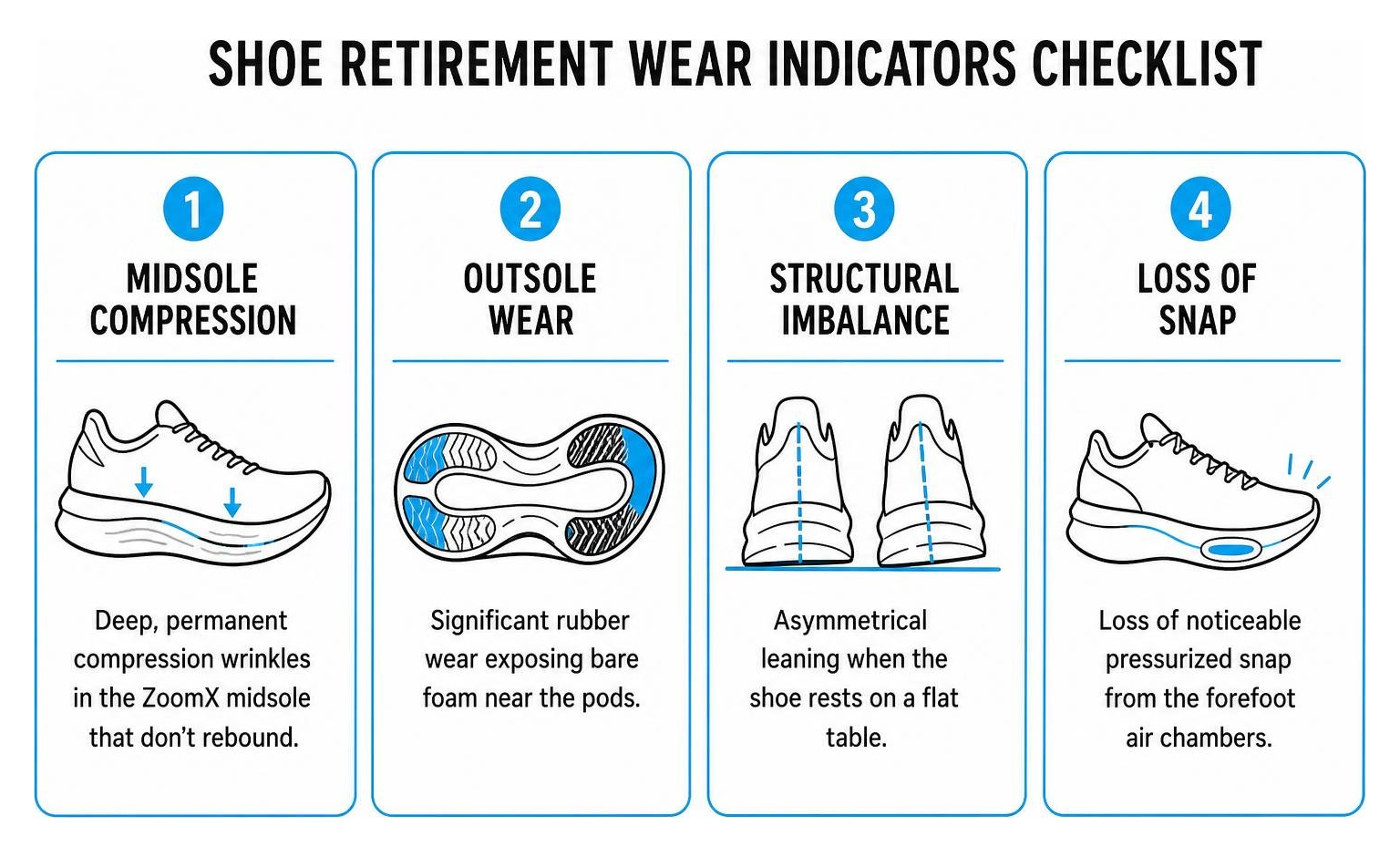
Signs that your Alphaflys should be demoted from race duty to workout sessions include:
- Deep, permanent compression wrinkles in the ZoomX midsole that don’t rebound.
- Significant rubber wear exposing bare foam near the pods.
- Asymmetrical leaning when the shoe rests on a flat table.
- Loss of noticeable pressurized snap from the forefoot air chambers.
Frequently Asked Questions about the Alphafly
Is the Alphafly suitable for slower half marathon paces?
While runners of all paces can appreciate the massive impact protection, the shoe’s mechanical efficiency peaks at sub-4:30 min/km paces. Slower speeds may make the high stack height feel slightly tippy on cambered roads.
How many miles can you race in the Alphafly before losing pop?
The shoe delivers its peak pop for 150 to 200 miles. Beyond that mileage, ZoomX foam gradually loses resilience, making the pair better suited for mid-week threshold sessions.
Can you race a half marathon in brand-new Alphaflys out of the box?
We strongly advise against it. The AtomKnit upper needs 10 to 25 km of running to conform to your foot anatomy, and you must verify that the high arch contour doesn’t cause hotspots at race pace.
Conclusion
Running 13.1 miles in the Nike Alphafly provides a noticeable advantage in energy return and muscular fatigue reduction. By properly breaking in the AtomKnit upper, respecting the shoe’s aggressive pace dynamics, and controlling your early splits, you position yourself for a fast, comfortable race.
To compare how today’s top super shoes stack up across longer endurance challenges, explore our ultimate marathon and distance shoe selection guide.