Which Adidas Ultraboost Shoes Work for Overpronation?
If you overpronate mildly, start by trying the Ultraboost Light or Ultraboost 22. Both offer a more structured feel than the soft, flexible Ultraboost 1.0. But every Ultraboost is a neutral shoe, not a dedicated stability shoe. If your foot rolls inward a lot or you need firm arch support, a stability trainer is the safer place to start.
Overpronation means your foot rolls inward more than usual as you land. When evaluating the Adidas Ultra Boost overpronation dynamic, the soft Boost foam can feel great underfoot, but comfort alone does not control that inward movement. Try a short walk or easy run before choosing a pair for longer distances. For a broader look at how neutral and structured models compare, see this guide to the best overpronation shoes.
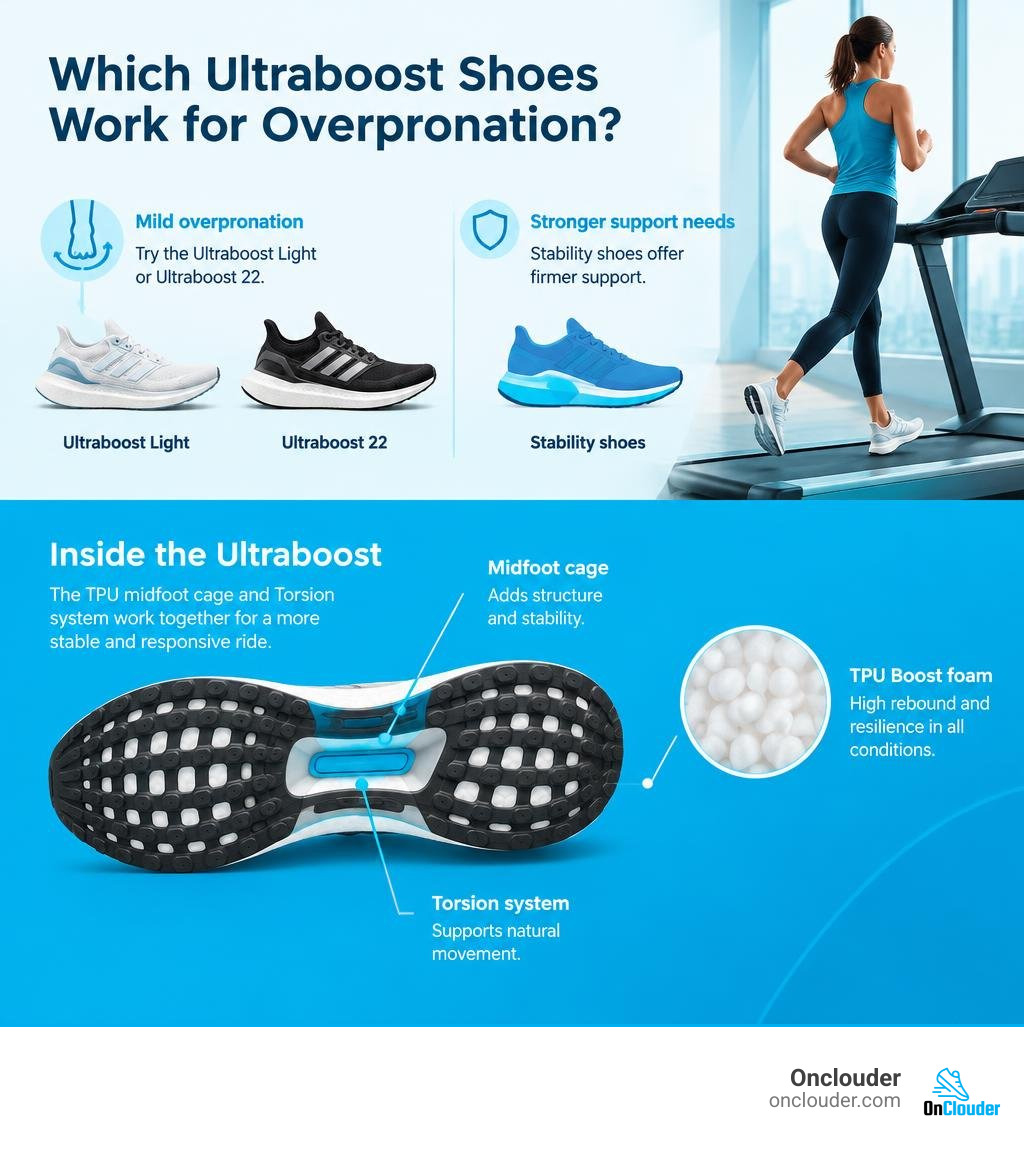
Biomechanics and Design: Adidas Ultra Boost Overpronation Analysis
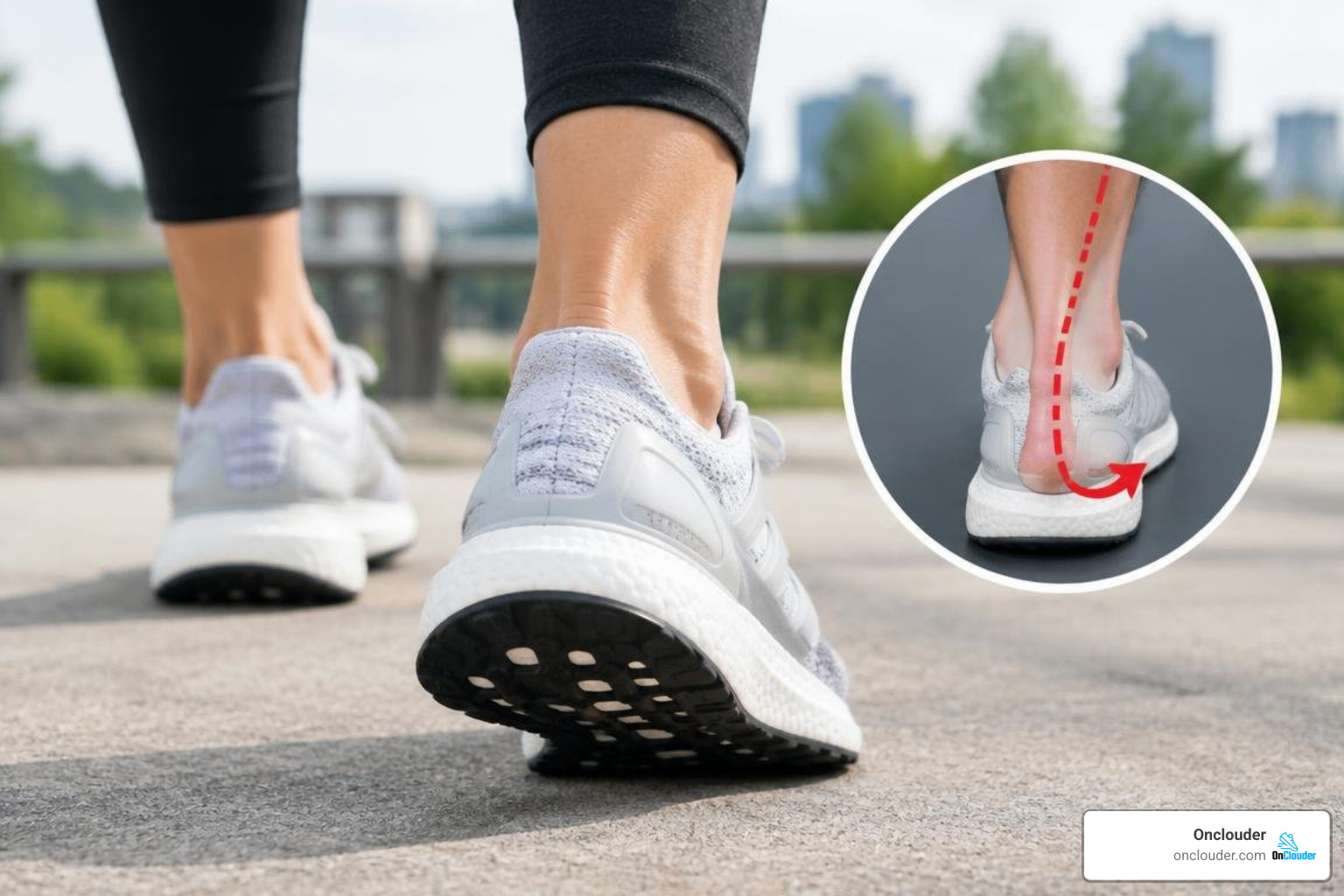
When examining Adidas Ultra Boost overpronation characteristics and real-world biomechanics, we have to look past the plush step-in feel and inspect the shoe’s chassis. The entire Ultraboost franchise relies on thermoplastic polyurethane (TPU) pellets that are steam-fused together. This delivers high rebound and resilience across changing temperatures, but it behaves very differently from traditional dual-density EVA foam.
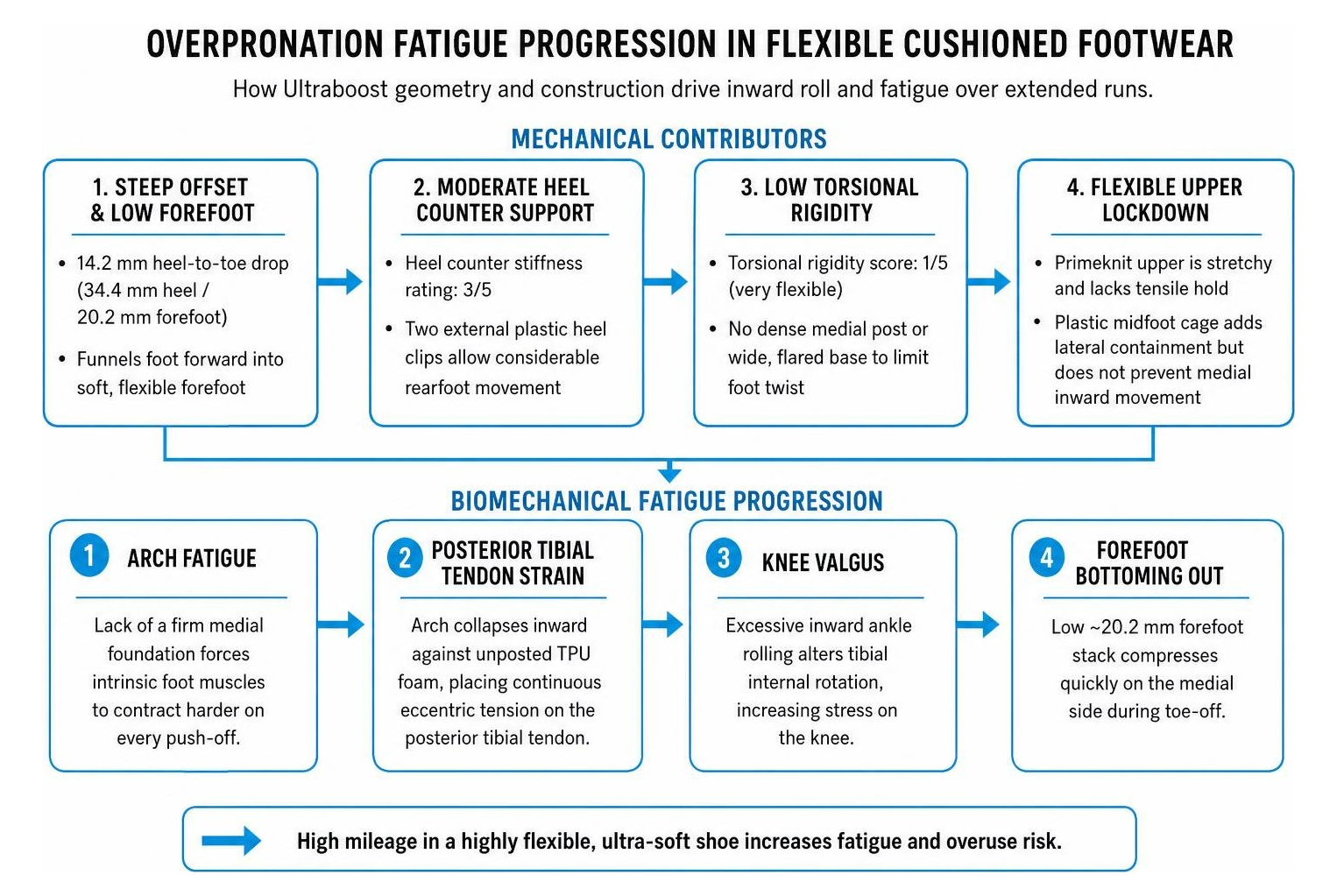
In our lab examinations and standardized bench tests, the classic Ultraboost displays an exceptionally steep offset. While official marketing often lists a 10 mm drop, actual caliper measurements show a 14.2 mm heel-to-toe drop on the original platform, pairing a 34.4 mm heel stack with a low 20.2 mm forefoot stack.
This geometry works wonderfully for traditional heel strikers by dissipating initial ground contact forces. However, it funnels the foot forward rapidly into a soft, flexible forefoot. Coupled with a heel counter stiffness rating of 3 out of 5—provided by two external plastic heel clips rather than an internal, rigid cup—the shoe allows considerable rearfoot movement.
To understand how footwear geometry guides inward roll, mastering everything you need to know about stability shoes for runners will help clarify why traditional medial postings behave differently than pure TPU platforms.
Midsole Geometry, Torsion Spring, and Upper Lockdown
The structural core of the Ultraboost relies on three components:
- The heat-expanded TPU Boost midsole
- The plastic midfoot cage integrated with the eyelets
- The embedded thermoplastic Torsion spring (or newer LEP systems)
Under physical manual testing, the standard Ultraboost registers a torsional rigidity score of 1 out of 5. That makes it one of the most flexible neutral trainers on the market. Without a dense medial post or a wide, flared base, the shoe allows the foot to twist naturally.
The Primeknit upper fits like a sock, which feels luxurious around the bunions and midfoot. However, stretchy knit fabric lacks the tensile hold of engineered mesh. While the plastic three-stripe cage provides lateral containment when laced firmly, it does not stop the medial edge of your foot from pushing inward over the soft foam border.
Biomechanical Risks of Overpronation in the Adidas Ultra Boost on Extended Runs
When runners with moderate to severe overpronation log high mileage in a highly flexible, ultra-soft shoe, specific overuse patterns can emerge:
- Arch Fatigue: The lack of a firm medial foundation forces the intrinsic foot muscles to contract harder on every push-off.
- Posterior Tibial Tendon Strain: As the arch collapses inward against unposted TPU foam, the posterior tibial tendon experiences continuous eccentric tension.
- Knee Valgus: Excessive inward ankle rolling alters tibial internal rotation, occasionally triggering patellofemoral pain.
- Forefoot Bottoming Out: With only ~20.2 mm of stack at the forefoot, heavy pronators compress the medial forefoot quickly during toe-off.
For those managing tissue irritation alongside excessive motion, our Adidas Ultra Boost review for runners with plantar fasciitis breaks down the delicate balance between heel cushioning relief and arch strain.
Top Adidas Ultraboost Models Ranked for Pronation Support
Over the years, the Ultraboost line has evolved from a single lifestyle-leaning running shoe into distinct performance iterations. Newer releases introduce firmer foam blends and stiffened underfoot plates that offer substantially better stability for runners who need extra guidance.
| Ultraboost Model | Weight | Measured Drop | Torsional Rigidity (1-5) | Best Suited Pronation Profile |
|---|---|---|---|---|
| Ultraboost Light | 10.5 oz (299 g) | ~10 mm | 3 / 5 | Mild Overpronation / Neutral |
| Ultraboost 22 | 11.7 oz (333 g) | ~10 mm | 3 / 5 | Mild Overpronation / Narrow Heel |
| Ultraboost 1.0 | 11.3 oz (320 g) | 14.2 mm | 1 / 5 | Neutral / Recovery Walking Only |
Adidas Ultraboost Light: Stiffened LEP Geometry for Daily Mileage
The Ultraboost Light represents a major functional upgrade for runners who want Boost comfort without excessive lateral wobble. Featuring Light Boost foam that is 30% lighter than standard TPU capsules, the shoe trims unnecessary bulk while increasing density.
More importantly, it incorporates an updated Linear Energy Push (LEP) system. This rigid plastic frame extends through the midfoot and wraps along the lateral and medial edges, raising the torsional rigidity to a stable 3 out of 5. The wider base net and beveled heel offer a smoother transition, preventing the rapid medial collapse common in earlier versions. For runners with mild pronation tackling easy daily miles, the Ultraboost Light is the most supportive shoe in the lineup.
Adidas Ultraboost 22: Reinforced Arch Wrap and Heel Cup Stability
The Ultraboost 22 introduced significant refinements, including a redesigned heel pocket and targeted upper reinforcement. Developed with female biomechanics in mind, it features a narrower heel build, a lower instep curve, and an S-curve external heel clip that grips the calcaneus securely to reduce rearfoot wobble.
The reinforced midfoot cage wraps higher around the medial arch than the 1.0, giving runners with flexible arches a noticeable boost in lateral containment. If you are comparing structured shoes with dedicated arch architecture, check out our roundup of the 5 best running shoes for flat feet and overpronation to see how reinforced uppers stack up against purpose-built arches.
Adidas Ultraboost 1.0: Maximum Plushness for Walking and Recovery Jogs
The Ultraboost 1.0 is the softest, most flexible version of the family. With an open Primeknit weave, a compliant Stretchweb outsole, and a 1 out of 5 torsional rigidity score, it offers an unrestricted ride.
Because the 1.0 features a measured 14.2 mm drop and a thin 20.2 mm forefoot, it provides almost zero medial resistance against severe overpronation. We recommend reserving the Ultraboost 1.0 for low-intensity recovery jogs, casual all-day walking, or gym wear where the legendary underfoot bounce can shine without fatiguing your lower leg tendons.
Custom Adjustments for Adidas Ultra Boost Overpronation Support
If you already own a pair of Ultraboosts and want to increase stability, simple fit adjustments can improve foot containment without compromising cushioning.
- Utilize a Runner’s Heel Lock: Thread your laces through the extra eyelet near the collar to create a friction loop. Pulling the laces tight through this loop locks the heel firmly against the rear plastic clips, preventing calcaneal slip.
- Swap the Factory Insole for a Semi-Rigid Orthotic: The stock insole in the Ultraboost is flat and flexible. Replacing it with a supportive orthotic featuring a firm TPU arch cradle gives your foot a structured platform directly above the soft Boost foam.
- Adjust Midfoot Cage Tension: Ensure the lower laces over the metatarsals remain comfortably relaxed while pulling the midfoot cage laces snug to maximize the plastic saddle’s support.
When Overpronators Should Choose Ultraboost vs. Dedicated Stability Shoes
Understanding when to lace up an Ultraboost versus a structured stability trainer comes down to run duration, pace, and the degree of your inward roll.
If you are weighing the soft, springy feel of Boost against other modern cushioned daily trainers, reading our head-to-head on On Cloud vs Adidas Ultra Boost highlights the key differences in midsole firmness and gait mechanics.
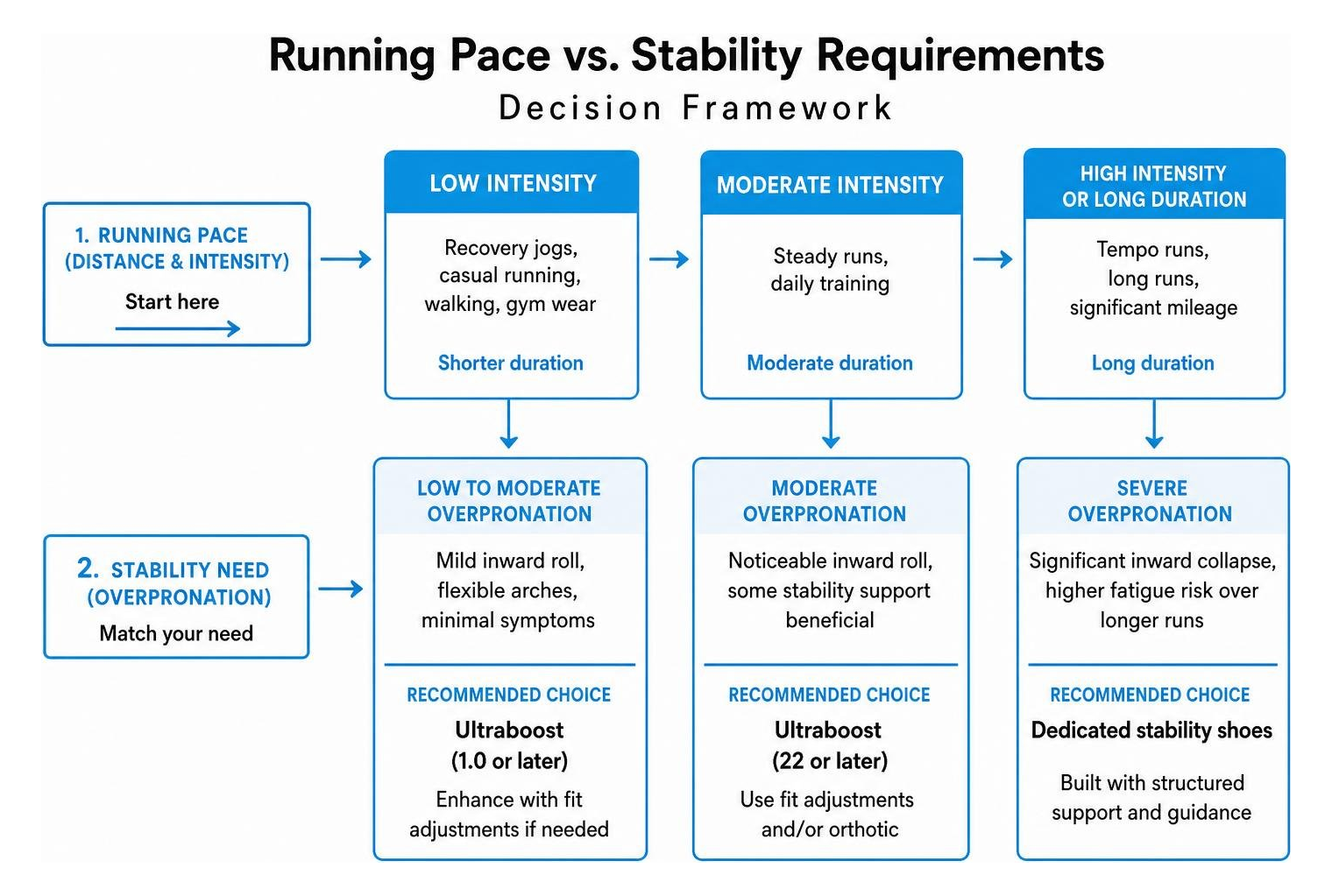
For runners experiencing significant inward collapse, relying solely on unposted TPU foam over double-digit mileage can lead to excessive fatigue. In those cases, consulting the 9 best stability shoes for every type of overpronator will provide tested options built with dual-density midsoles, wide geometric guide rails, and firm medial posting.
Frequently Asked Questions About Ultraboost Support
Is the Adidas Ultra Boost classified as a neutral or stability running shoe?
The Adidas Ultra Boost is strictly classified as a neutral running shoe. It does not feature medial posting, dual-density medial foams, or raised guide rails along the arch. While the midfoot cage and Torsion/LEP systems provide baseline structural integrity, stability depends heavily on the runner’s own foot strength.
Can runners with flat feet comfortably wear the Adidas Ultra Boost?
Runners with flat feet can comfortably wear the Ultraboost for walking, recovery days, and short easy runs. However, because flat arches compress flexible midsoles unevenly, long runs may lead to arch fatigue. Adding a semi-rigid supportive insole significantly improves comfort for flat-footed runners.
What are the best alternatives if the Ultra Boost lacks sufficient arch support?
If you need genuine motion control or structured stability, explore our best overpronation shoes guide to discover dedicated trainers engineered with firm medial posts and wide baseline geometries.
Conclusion
The Adidas Ultraboost remains an icon of step-in plushness, thermal-stable cushioning, and energy return. While its neutral engineering and high torsional flexibility make it less than ideal for runners with severe inward ankle rolling, models like the Ultraboost Light and Ultraboost 22 offer enough structure for mild overpronators on recovery days and short runs.
For high-mileage blocks or moderate-to-severe pronation control, we recommend rotating the Ultraboost with a dedicated stability shoe. To find the ideal balance of cushioning, drop, and arch guidance for your specific biomechanics, an essential guide to best overpronation shoes will walk you through everything you need to keep your stride healthy and supported.