Best Hunting Boots for Plantar Fasciitis: Start With Support and Fit
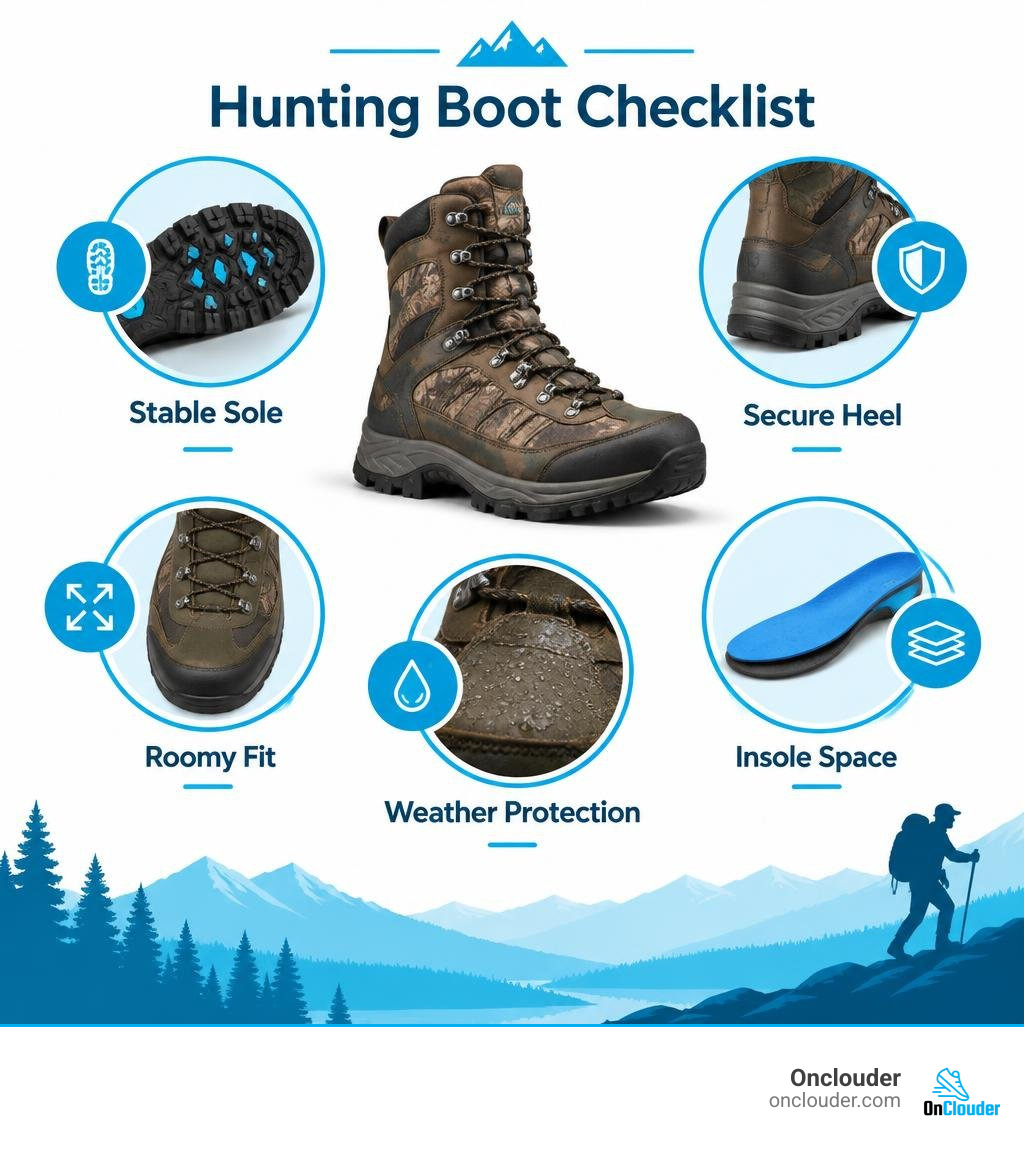
The best hunting boots for plantar fasciitis have a stable sole, a secure heel, and room for a supportive insole. For rocky ground, look for a firm shank and good traction. For cold or wet hunts, add insulation and waterproofing without squeezing your toes or crowding your orthotic.
No boot can treat plantar fasciitis on its own. The right choice depends on your foot shape, the ground you hunt, and how the boot feels after hours of walking or standing. Use this roundup to narrow your options, then try each pair with your hunting socks and insole.
Best hunting boots for plantar fasciitis word guide:
- best hiking boots for plantar fasciitis
- best boots for plantar fasciitis
- arch support inserts plantar fasciitis
Best hunting boots for plantar fasciitis: top picks by hunting use
Hunting is not one activity. Climbing a scree slope, sitting in a stand, and wading a marsh each stress your arch differently. So instead of crowning one winner, we sort boots by the job they do. Hunters in the forums we reviewed agree on this much: one boot rarely suits every hunt.

| Boot type | Support | Best terrain | Weather protection | Fit notes |
|---|---|---|---|---|
| Stiff-shank mountain boot | High | Steep, rocky ground | Often waterproof | Needs break-in |
| Wide-fit hunting boot | Moderate to high | Mixed terrain | Varies | Extra room for orthotics |
| Insulated waterproof boot | Moderate | Cold, wet ground | Excellent | Watch toe room with thick socks |
| Rubber wading boot | Low to moderate | Marsh, water crossings | Fully waterproof | Often loose, slip-on feel |
| Lightweight flexible boot | Low to moderate | Gentle trails | Varies | Adds foot freedom, less shield |
Whatever type you pick, an orthotic-ready footbed matters. A removable insole lets you swap in your own support, and in the threads we read, many hunters said the insole mattered as much as the boot.
Best hunting boots for plantar fasciitis for steep, rocky terrain
Steep ground punishes a soft boot. Podiatrist guidance points to three must-haves: a stiff shank, a deep heel cup, and an orthotic-friendly design. A firm heel counter keeps your heel from wobbling, and ankle stability helps on loose rock. A rugged outsole gives grip so you are not constantly gripping with your toes.
Hunters in forum discussions reported relief in stiffer mountain boots when paired with orthotics, and several European and American mountain-boot makers offer dependable models built around these supportive features. Leave enough interior volume so the orthotic does not push your foot up and jam your toes.
Best hunting boots for plantar fasciitis for wide feet and custom inserts
Cramped boots and thick orthotics are a bad pair. Look for a wide last, a roomy toe box, extra depth, and adjustable lacing so you can fine-tune the fit across your instep. Removable footbeds are a big plus because they free up space for your insert.
Options exist for very wide feet. One wide-last mountain boot runs up to size 16 in EEEE width and costs about $600, though it is not marketed for plantar fasciitis, so judge it by fit and insert room. One hunter with EEE feet said a naturally wide toe-box boot let him wear a medium width, and another with size 15 EEEEE feet found relief with foot-mapped over-the-counter insoles. A roomy hiking-style boot with custom orthotics gave one hunter virtually no pain on his hunts. If you want more ideas on wide-fit hunting footwear, our hiking boot guide covers roomy, supportive picks.
Waterproof and insulated options for cold, wet hunts
Cold country adds a trade-off. A waterproof membrane keeps feet dry, but it can trap sweat, and damp feet get cold and sore. Look for breathable linings and good moisture control, and pair them with wool socks.
Insulation adds weight and bulk. Heavier boots tire your legs, and a bulky boot can squeeze your toes if you size too snug. Try boots with the thickest socks you will really wear. Lighter EVA midsoles often help reduce fatigue on long days.
Rubber boots deserve a warning. They are handy for wading about six inches of water, and hiking-style boots cannot do that. But one hunter said rubber boots left him barely able to walk after hunts, until he switched to hiking-style boots with orthotics. Many rubber boots have little arch contour, so add an insert and consider them a specialty tool, not an all-day boot.
What to look for when choosing supportive hunting boots
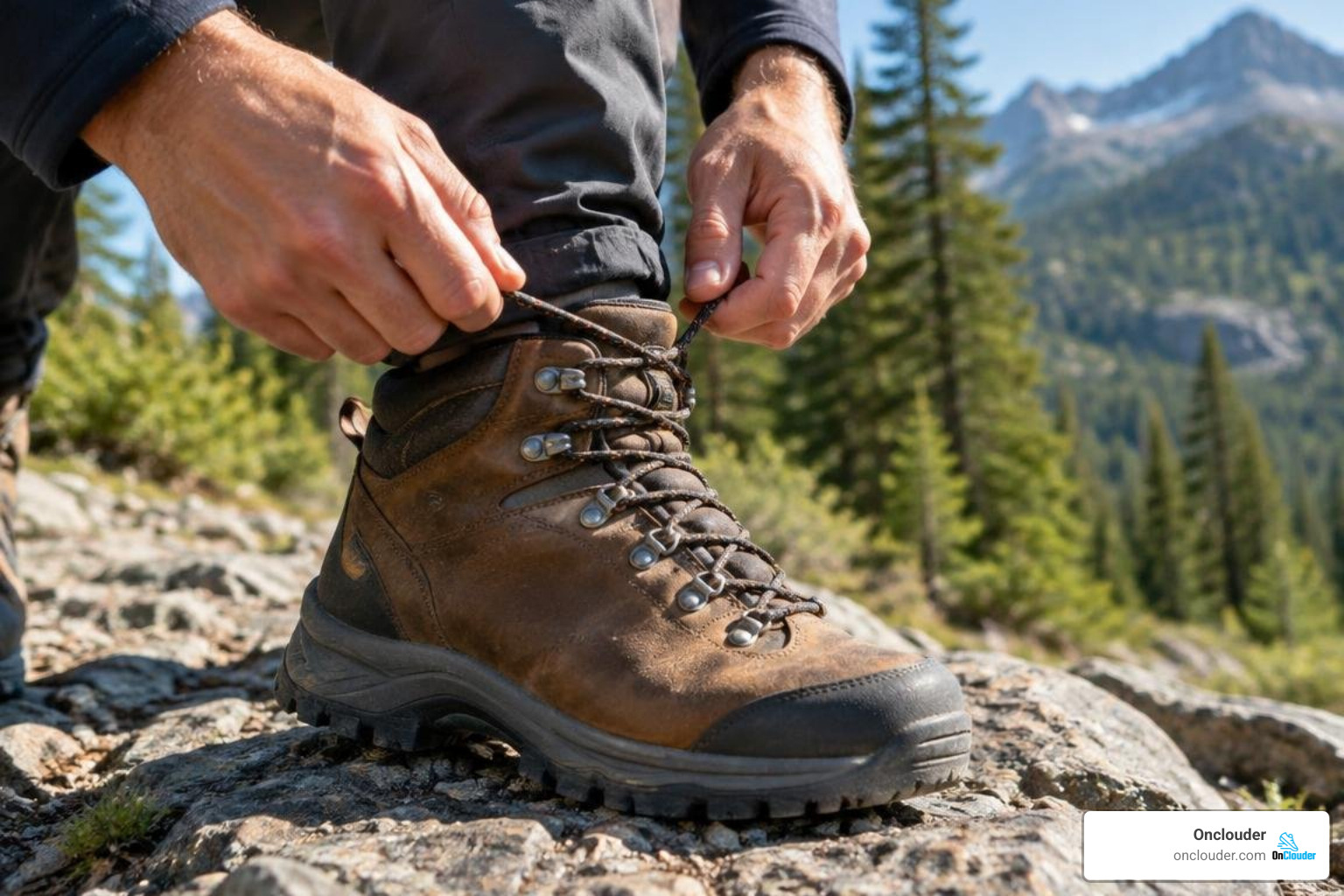
Think of the boot as a platform. It should hold your foot steady, spread pressure, and leave space for what you add. Our guide on boot support for long hours on hard surfaces explains why support matters when you stand or walk for hours, and our overview of hiking footwear features for plantar fasciitis covers more of the basics.
Sole stiffness, cushioning, and arch support
A stiffer sole limits how much your foot flexes with each step, which can reduce strain on the plantar fascia. The downside is a harsher feel and a longer break-in. Midsole cushioning, often EVA, absorbs shock, and a contoured arch spreads pressure. Heel-to-toe drop also matters, as a very flat boot changes how your calf and arch load. On uneven ground, a stable platform beats plush softness, since a wobbly boot makes your foot work harder.
Insoles and orthotics: stock footbeds, over-the-counter, or custom
Stock footbeds are usually thin foam. Most of the hunters in our research swapped them out. Superfeet models (Blue, Green, and Trail) came up again and again, and one hunter found Green too high in the arch and moved to Blue. Arch height should match your foot, not the loudest recommendation. Other users liked Powerstep Protech full-length insoles at around $45.
Custom orthotics, made by a podiatrist, were the favorite among several hunters who said they ended pain after other fixes failed. Results do vary, though, and some people did fine with store foot-mapping or off-the-shelf inserts. Choose a full-length insert with a decent heel cup. For rough ground, see our picks of hiking insoles for rough terrain.
Fit, break-in, and sizing for high arches or wide feet
- Get your feet measured for length and width, since both can change over time.
- Shop in the afternoon, when feet are a bit swollen from the day.
- Bring your hunting socks and your insert.
- Check for toe wiggle room, a snug instep without pressure, and no heel slip.
- Walk on an incline if the store has one.
- Break boots in gradually with short outings.
- Buy where returns are allowed, in case the boot misbehaves.
High arches can feel pinched across the instep, so check instep volume. Also, lace-up boots beat slip-ons: one doctor’s explanation shared by a hunter was that toes curl to grip slip-on footwear, straining the fascia.
Manage plantar fasciitis beyond the boot
Boots help, but treatment does the heavy lifting. The Mayo Clinic outlines clinical treatment options, and the NHS offers plain guidance on symptoms and self-care.
Stretching, strengthening, and other treatments
- Calf stretching: Do it several times a day. One hunter’s pain of a couple of years eased almost right away once he stretched.
- Plantar fascia stretch: Pull your toes back and hold for about 30 seconds.
- Rolling: A frozen water bottle under the arch is a hunter favorite.
- Strengthening: Build foot strength gradually.
- Activity changes: Back off aggravating activity early. One hunter who overdid training was sidelined for six months.
- Night splints and shockwave therapy: Options a clinician may suggest when basics are not enough.
Morning pain is the classic sign. Starting care early after a flare makes a difference.
Can minimalist or zero-drop boots help?
Experiences clash here. One hunter fixed his pain with soft, flexible, wide-toe-box footwear, saying it took a couple of years to adapt. Another found zero-drop boots plus calf stretching nearly ended two years of pain. Others swear by stiff, supportive boots and orthotics.
Both can work, for different people. The risk is switching too fast: weak feet and tight calves can flare in a sudden change. Move gradually, watch your symptoms, and talk to a professional first.
When to replace boots and orthotics
Support fades quietly. Press on the midsole, check for compression and creases, look at tread wear, and see whether your heel sits as it used to. Custom orthotics flattened after two to three years for one hunter, and a flare came when he delayed replacing them. Inspect your gear before each season and replace by condition, not just by calendar. Cheap, poorly made boots may lose support faster.
Frequently Asked Questions about hunting boots and plantar fasciitis
Which boot brands and models do hunters and podiatrists recommend?
Podiatrist guidance favors stiff-shank, deep-heel-cup, orthotic-friendly boots, with Crispi, Kenetrek, Schnee’s, and Lowa mentioned. Hunters also report success with the Crispi Thor and Idaho, Keen Targhee IV, and Hoka-style flexible boots. There is no universal best boot, so fit comes first.
Should I see a podiatrist before changing boots or orthotics?
Yes, ideally. A professional can confirm the diagnosis, since other causes of heel pain exist, and build a plan that may include custom orthotics. Get checked sooner if pain persists or worsens.
Are stiff or flexible soles better for plantar fasciitis?
It depends on terrain, foot mechanics, and how you respond. Stiff soles give stable support on rough ground, while flexible soles suit some people working to build foot strength. Change gradually and track symptoms.
Conclusion
Choose boots for your terrain, leave room for the right insert, and keep up your stretching. Check support regularly and replace worn gear. Our Onclouder footwear guides are built on hands-on testing to help you compare options, and you can see our comparison of supportive footwear for plantar fasciitis for more ideas. Here is to a pain-free season.