
Best Women’s Shoe Brands for Plantar Fasciitis: Start With Your Foot Type
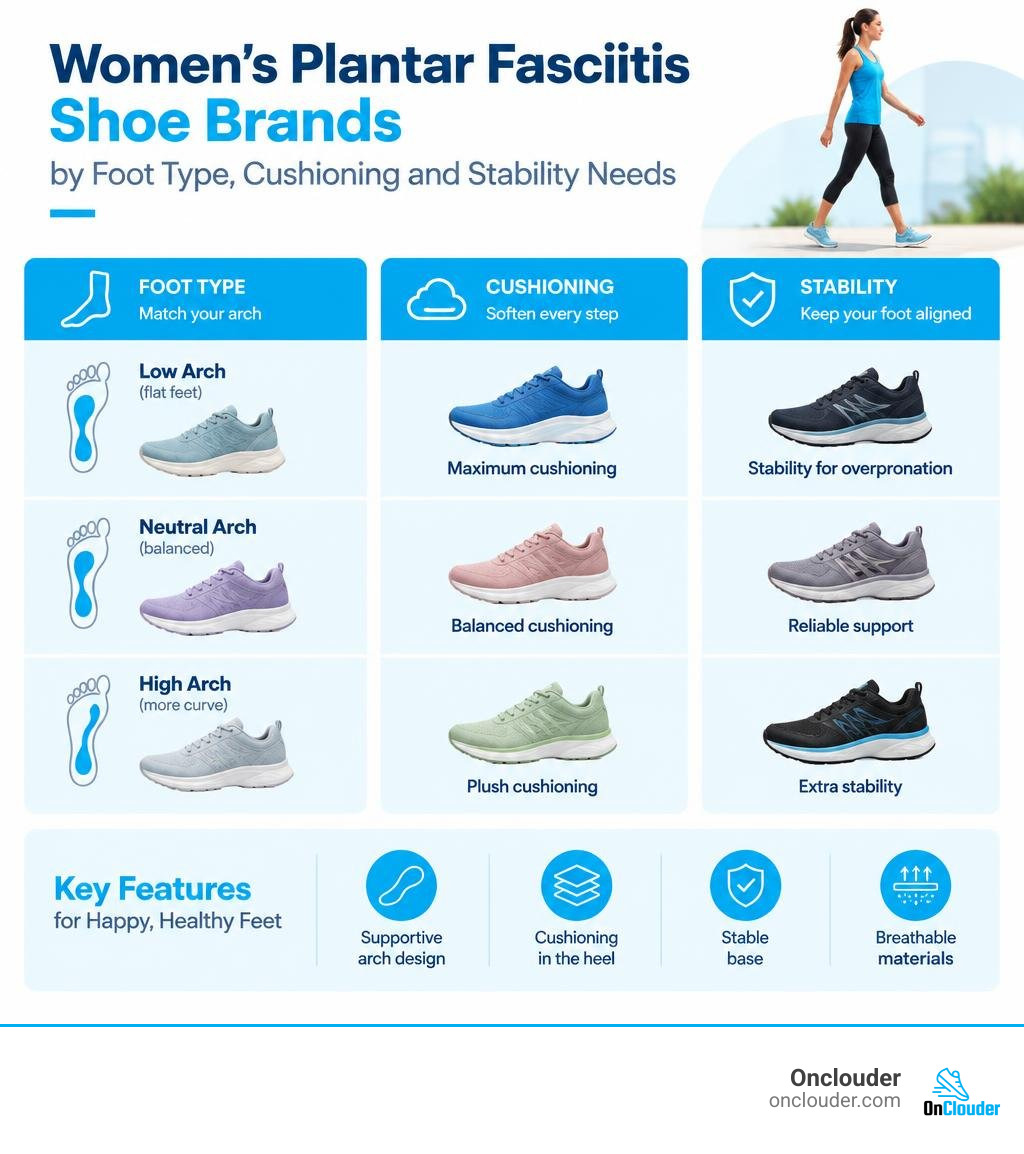
Start with Hoka if you want maximum cushioning, Brooks or Saucony for comfortable everyday running shoes, and New Balance for cushioned options that may suit high arches. If your feet roll inward, compare stability models from ASICS or Mizuno. No single brand is best for everyone: the right shoe should support your arch, cushion your heel, and hold your foot securely without squeezing your toes.
This roundup compares brands by foot type and activity, so you can narrow your choices before trying on a pair.
Essential Features to Look for in Women’s Plantar Fasciitis Footwear
When you are coping with that sharp, stabbing sensation beneath your heel each morning, your footwear choices cease to be about aesthetics alone. Plantar fasciitis affects up to 10% of people at some point in their lives, occurring when the thick band of tissue running across the bottom of your foot becomes inflamed from repetitive stress and poor mechanical alignment.
To give your feet the support they need to heal, look for footwear built around specific biomechanical principles. Finding podiatrist-approved best shoes for plantar fasciitis involves identifying several core engineering features:
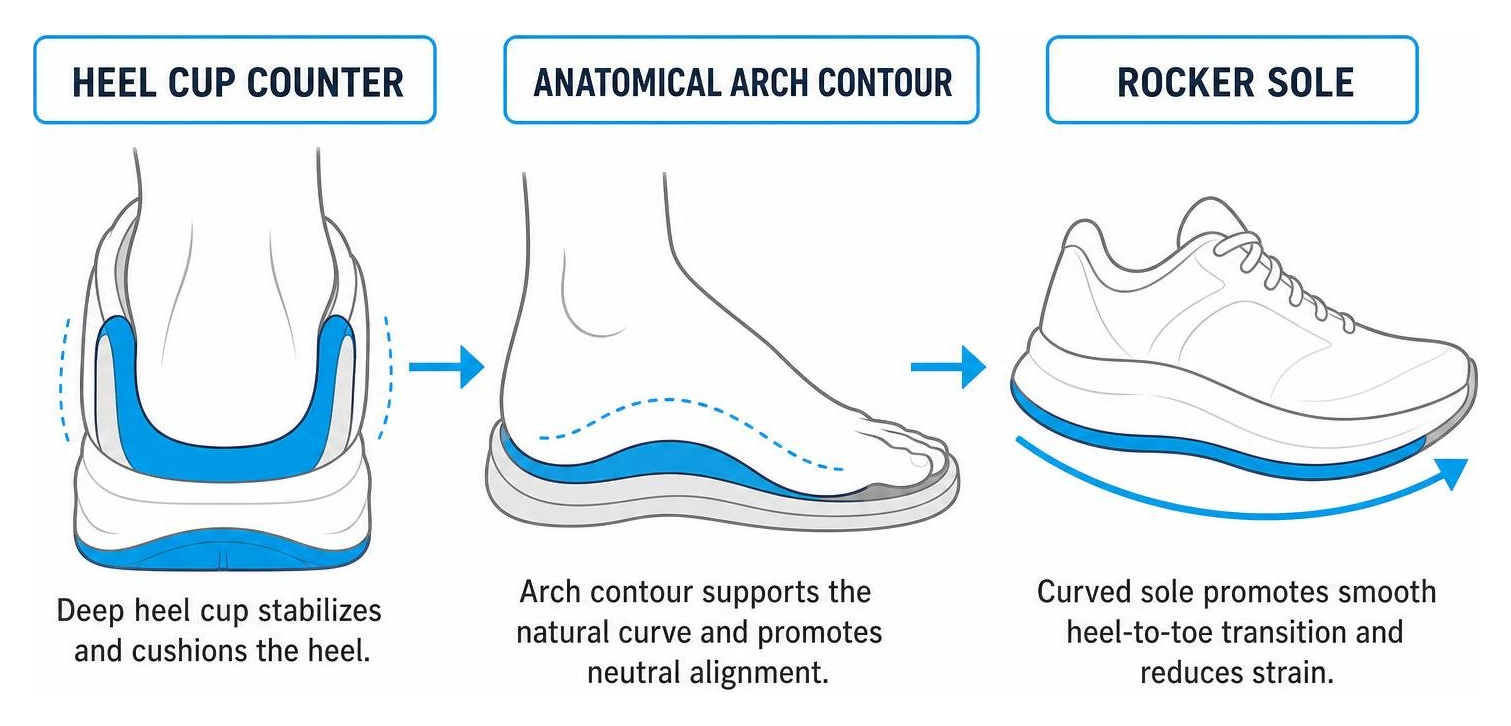
- Anatomical Arch Support: Your footwear must actively cradle your plantar fascia. A structured arch contour keeps your foot in a neutral position throughout your gait cycle, preventing the arch from collapsing and over-stretching the fascia.
- Deep Heel Cup: A secure heel counter centers and stabilizes the natural fatty pad under your calcaneus (heel bone), absorbing shock before it radiates into your arch.
- Shock-Absorbing Midsole Cushioning: Premium materials like dual-density EVA or specialized soft foams dissipate ground impact, softening every step on hard surfaces.
- Rocker Sole Geometry: A subtle curved sole rolls your foot smoothly from heel strike to toe-off, reducing the bending force across your midfoot and taking mechanical strain off your connective tissues.
- Roomy Toe Box: A wide toe box allows your toes to splay naturally, which enhances balance and prevents compensatory foot tension.
- APMA Seal of Acceptance: Footwear awarded the American Podiatric Medical Association (APMA) Seal of Acceptance has been independently evaluated by medical specialists to ensure it genuinely promotes foot health.
The Best Brand of Women’s Shoes for Plantar Fasciitis: Top Podiatrist Picks for 2026
When evaluating which manufacturer creates the best brand of women’s shoes for plantar fasciitis, no single label fits every lifestyle or foot profile. In our hands-on testing and clinical reviews throughout 2026, we compared the leading footwear lines across arch support stiffness, midsole cushioning, heel drop, and targeted foot types.
| Brand & Model | Primary Arch Support | Cushion Level | Best Foot Type / Condition | APMA Seal | Heel-to-Toe Drop |
|---|---|---|---|---|---|
| Hoka Bondi 8 | Structured / Neutral | Maximum Plush | Sensitive heels, all-day standing | Yes | 4 mm |
| Saucony Ride 15 | Contoured EVA | Soft & Balanced | Neutral arches, daily walking | Yes | 8 mm |
| Brooks Ghost 14 | Adaptive Foam | Balanced Plush | Flat feet, wider forefoot | No | 12 mm |
| New Balance Fresh Foam X 880v13 | Elevated Support | High Cushion | High arches, heavy heel strikers | Yes | 10 mm |
| Mizuno Wave Inspire 19 | Wave Plate Stability | Responsive Shock Relief | Severe heel pain, overpronation | No | 12 mm |
| ASICS Gel-Venture 9 | Rearfoot GEL Support | Springy / Responsive | Trail walking, mild pronation | No | 10 mm |
Maximum Cushioning
If you experience immediate, throbbing heel tenderness the moment your foot touches the floor, maximum cushioning should be your top priority. Brands specializing in thick midsole foam protect sensitive tissues from ground impacts.
- Hoka (Bondi 8): Often considered the gold standard for high-stack recovery, the Bondi 8 weighs approximately 8.9 oz and incorporates a low 4 mm heel drop paired with signature Meta-Rocker geometry. Its deep heel cup and plush foam cradle your heel to limit ground shock, making podiatrist-recommended Hoka shoes for plantar fasciitis relief a popular choice for long days on your feet.
Running and Flat Feet
Women with low arches or flat feet frequently overpronate, rolling their ankles inward and putting extra strain on the plantar fascia. These runners and walkers need a balance of structured midfoot alignment, a generous toe box, and responsive cushioning.
- Brooks (Ghost 14): A favorite for runners with flat feet, the Ghost 14 features plush foam cushioning that adapts to your stride, a carbon-neutral build, and a spacious toe box that lets your forefoot splay without rubbing. Its 12 mm drop helps offload strain from the Achilles tendon and plantar fascia.
- Saucony (Ride 15): Weighing just 7.8 oz with an 8 mm drop, the Ride 15 pairs APMA-accepted construction with a soft foam midsole that hugs the contour of your foot. Review our detailed comparison of the 10 best support shoes for plantar fasciitis 2026 expert picks to see how modern neutral designs handle daily mileage.
High Arches and Trail Stability
Rigid, high arches concentrate impact forces onto the heel and forefoot rather than distributing them evenly across the sole. Shoes with elevated heel drops, targeted arch bridge fills, and specialized shock absorption help disperse these forces.
- New Balance (Fresh Foam X 880v13): Engineered with a plush Fresh Foam midsole and a supportive heel structure, this model cushions high-arch foot strikes and eases tension through the plantar band.
- Mizuno (Wave Inspire 19): Designed for active individuals experiencing stubborn heel pain, Mizuno’s Wave Plate technology distributes impact shock outward rather than driving it straight up into your heel bone.
- ASICS (Gel-Venture 9): Built for varied terrain and light trails, this shoe uses rearfoot GEL technology to absorb sudden off-road impacts while providing responsive arch support.
Specialized Orthopedic & Lifestyle Brands for Daily Wear
Beyond traditional athletic runners, several dedicated orthopedic and recovery brands create everyday options designed specifically for arch and heel pain.
- MAYKX: The MAYKX Women’s Plantar Fasciitis Shoes combine a breathable mesh upper with a 3 cm platform rocker sole, non-slip rubber tread, and a removable orthotic arch insert.
- Aetrex: For comprehensive support, the Aetrex Plantar Fasciitis Kit pairs high-arch orthotic insoles and supportive flip-flops with a targeted foot roller and guided stretching plan.
- Pimali: For warm weather and indoor use, Pimali orthopedic arch support sandals feature a 4 cm thick, waterproof EVA footbed with a 15-degree arch contour to take pressure off your heels.
- WALKHERO: Trusted by over one million customers with more than 51,000 ratings, the brand builds anatomically shaped Plantar Fasciitis Shoes for Women featuring dual-density arch support and deep heel cups.
- Dress Footwear Alternatives: If you need professional styles for the office, consider top women’s arch support dress shoes that hide orthotic-grade footbeds inside elegant profiles.
Comparing Footwear Styles: Running Shoes, Recovery Sandals, and Everyday Walkers
Managing plantar fasciitis requires consistent arch support across every activity—not just during workouts. Walking barefoot on hard tile or hardwood floors can quickly reignite heel inflammation.
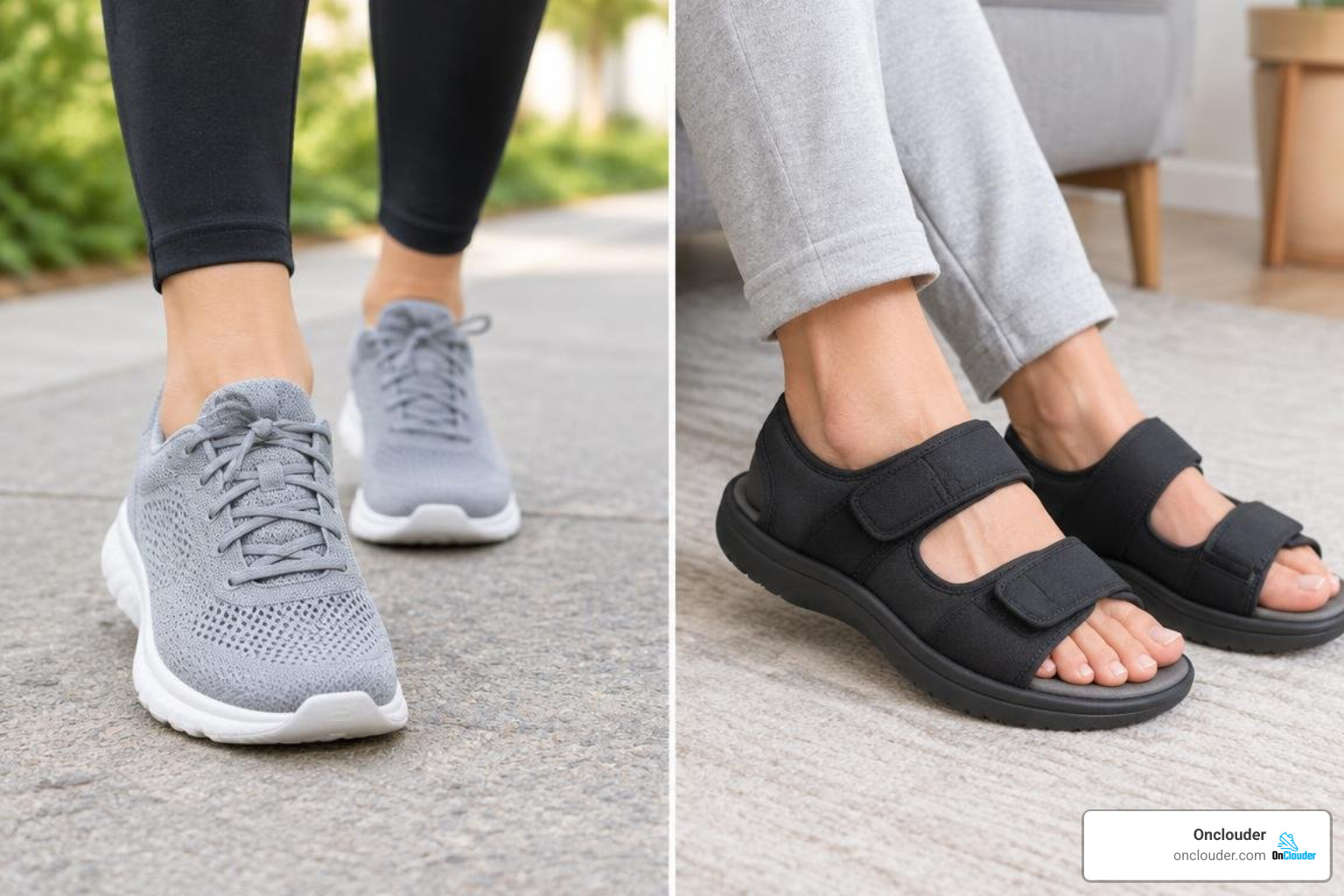
- Athletic Running Shoes: Running shoes offer the highest shock absorption, deep heel counters, and engineered midsoles designed to handle repeated impacts. They are well-suited for long walks, gym workouts, or jobs that keep you moving.
- Everyday Lifestyle Sneakers: Many casual brands now build supportive footbeds directly into daily sneakers. You can find stylish casual shoes that keep your feet properly aligned by exploring the best Adidas women’s shoes for plantar fasciitis.
- Orthopedic Recovery Sandals & Slides: Thick EVA recovery slides with built-in arch contours make supportive indoor house shoes. They keep your heels off hard floors without requiring you to lace up sneakers at home. You can also upgrade your arch support with the best shoe brands for plantar fasciitis by keeping a pair of recovery sandals handy by your bed.
Buyer’s Guide: Sizing, Fit, and Avoiding Common Purchasing Mistakes
Finding the right shoes involves more than picking a supportive model; you also need a precise fit. Follow these practical steps when shopping:
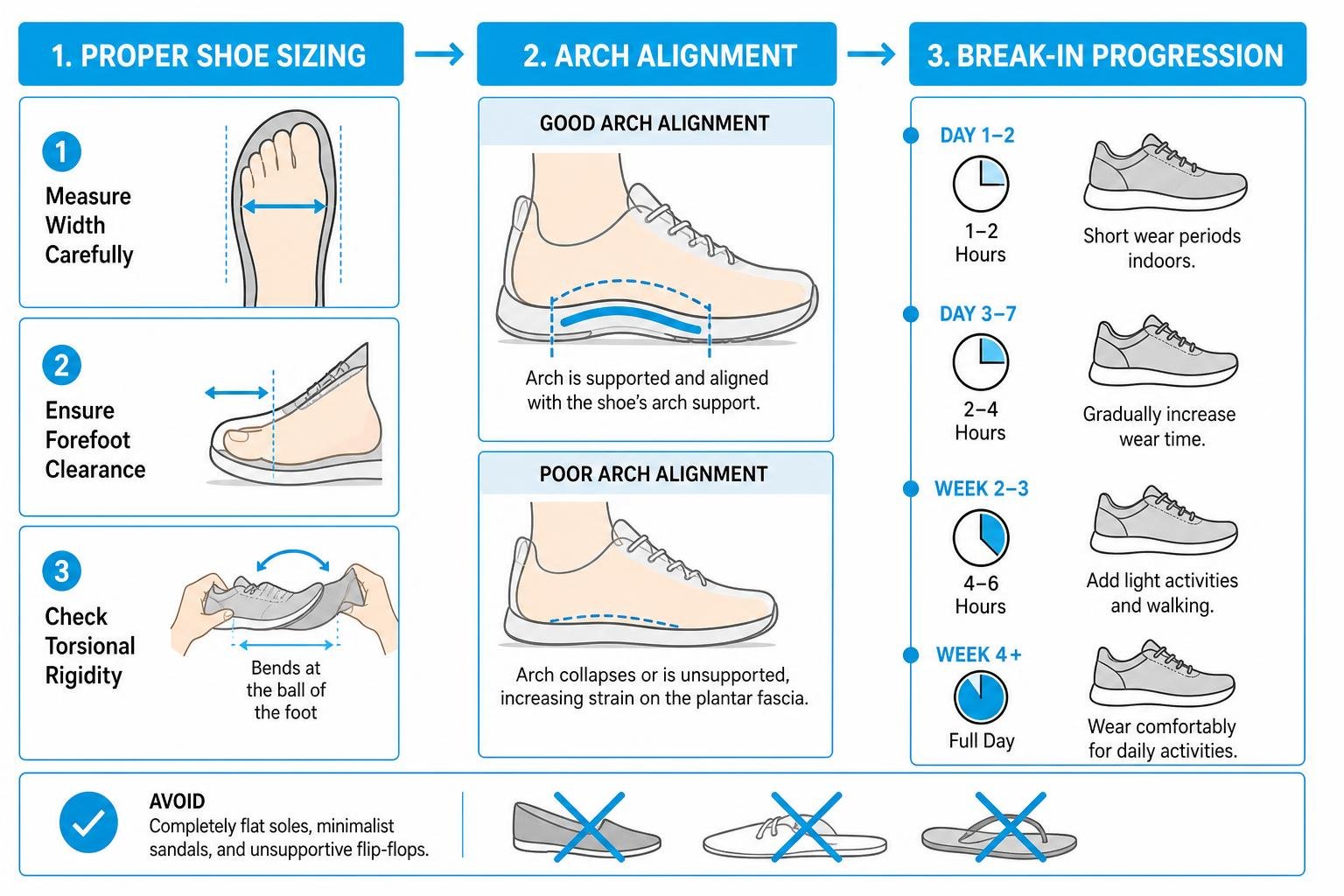
- Measure Your Width Carefully: Plantar fasciitis symptoms often worsen when narrow shoes pinch the metatarsals and restrict foot movement. If you have wide feet or bunions, look for models available in Wide (D) widths, or size up by half a size.
- Ensure Forefoot Clearance: Look for roughly half an inch (about a thumb’s width) of space between your longest toe and the end of the shoe to avoid cramped toes during forward strides.
- Check Torsional Rigidity: Take the shoe and try to twist it like a towel. A supportive shoe should resist twisting through the midfoot; it should bend primarily at the ball of the foot, not collapse across the arch.
- Avoid Completely Flat Soles: Flat canvas shoes, minimalist sandals, and unsupportive flip-flops force your plantar fascia to absorb every impact without assistance.
- Consult Podiatric Guidelines: For clinical advice on evaluating footwear support, review recommendations from the American Podiatric Medical Association to ensure your selected pair meets podiatric standards for foot health.
Frequently Asked Questions About Plantar Fasciitis Shoes
Are running shoes good to wear all day for plantar fasciitis?
Yes. Running shoes are designed with high-density midsole cushioning, reinforced heel counters, and rockered soles that absorb ground impact. These features help relieve strain on your plantar fascia during long shifts on hard floors.
Are custom orthotics better than built-in shoe arch support?
It depends on your foot structure. Built-in arch support in quality shoes from brands like Hoka, Brooks, and New Balance is often sufficient for mild to moderate plantar fasciitis. However, if you have severe overpronation, leg-length discrepancies, or rigid high arches, removable insoles allow you to drop in custom medical orthotics without overcrowding your shoes.
How do I transition to new orthotic shoes without triggering foot pain?
Start by wearing your new shoes for 2 to 3 hours on the first day, then gradually increase wear time over one to two weeks. This gives your arches, calf muscles, and plantar fascia time to adapt to the corrected alignment without fatigue. Pair this transition with daily calf and arch stretches to keep the tissue flexible.
Finding Your Perfect Match for Lasting Arch Relief
Recovering from plantar fasciitis takes patience and the right footwear. By choosing shoes with anatomical arch support, shock-absorbing midsoles, deep heel cups, and a comfortable fit, you can take pressure off your plantar fascia and walk comfortably again.
Whether you prefer the thick cushioning of Hoka, the balanced support of Brooks, or the versatility of orthopedic recovery sandals, prioritize fit and alignment over aesthetics. If your job keeps you on your feet all day, be sure to read our comprehensive guide to the best work shoes for plantar fasciitis to protect your arches throughout your shift.
Best Shoes for Flat Feet / High Arches (2026 Guide)
