

Introduction
For runners seeking adidas wide toe box running shoes, the most practical options are the dedicated wide-fit Duramo SL Wide and the stretchy Primeknit Ultraboost models, which provide extra forefoot volume without squeezing the toes. These shoes allow the hallux and metatarsal heads to spread naturally, reducing pressure and improving stability during every stride.
When we run, our feet act as dynamic shock absorbers. With every footstrike, the impact forces can reach two to three times our body weight, requiring our arches to load and our toes to splay outward naturally. This lateral toe spread—especially at the hallux (big toe) and metatarsal heads—creates a stable base of support that propels us smoothly into the next stride.
Unfortunately, standard running shoes often taper inward prematurely at the forefoot. Squeezing your toes into an unnatural triangular shape restricts healthy biomechanics, increases pressure across the metatarsal joints, and elevates the risk of painful friction, blisters, and repetitive strain injuries. Opting for footwear that respects foot anatomy by offering a generous forefoot volume allows the toes to function as intended.
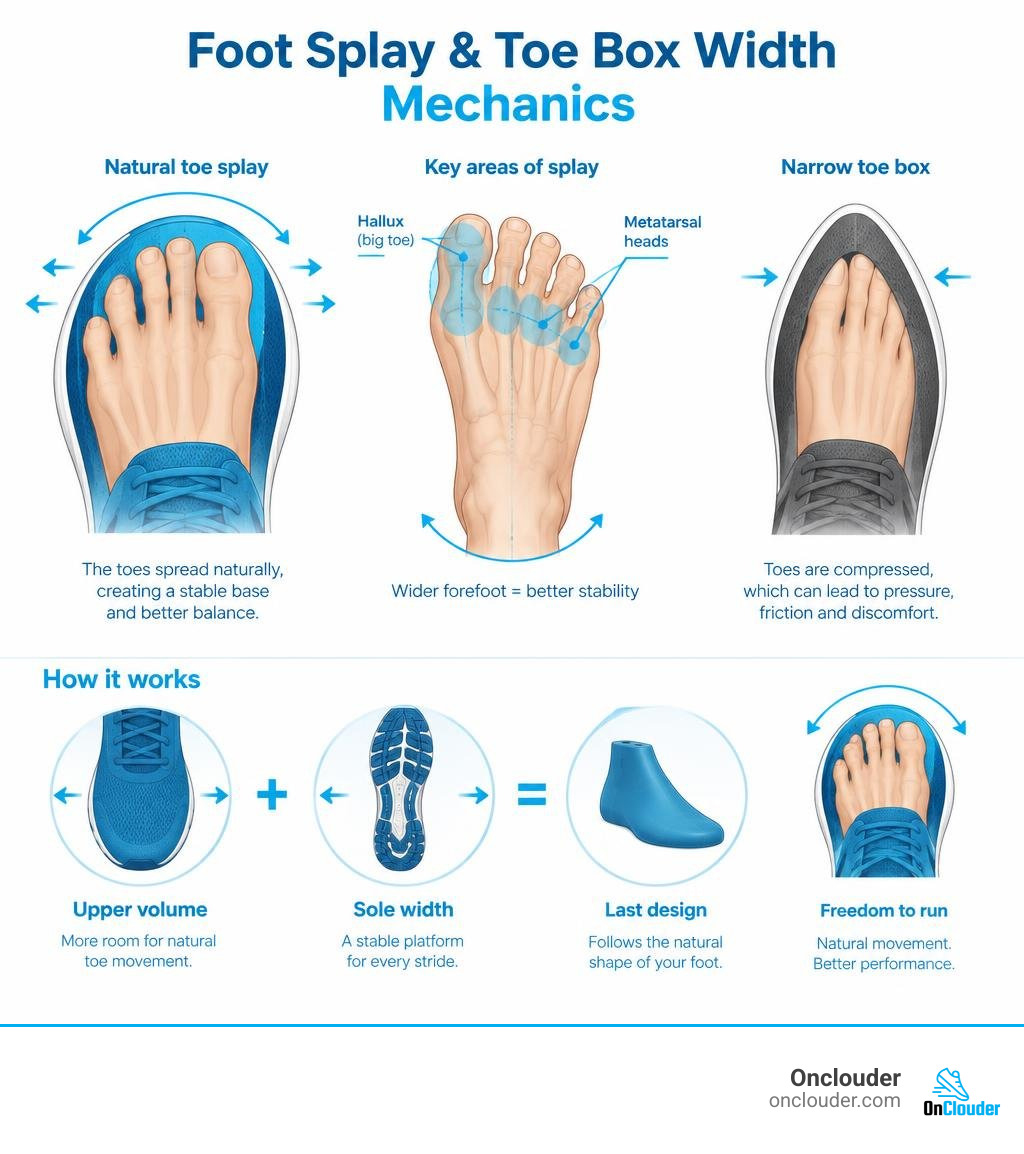
Understanding how upper volume, sole width, and last design interact is essential for runners who need wider fits. Below, we break down top models, sizing nuances, and the biomechanics behind running freely.
Best Adidas Wide Toe Box Running Shoes for Every Training Goal
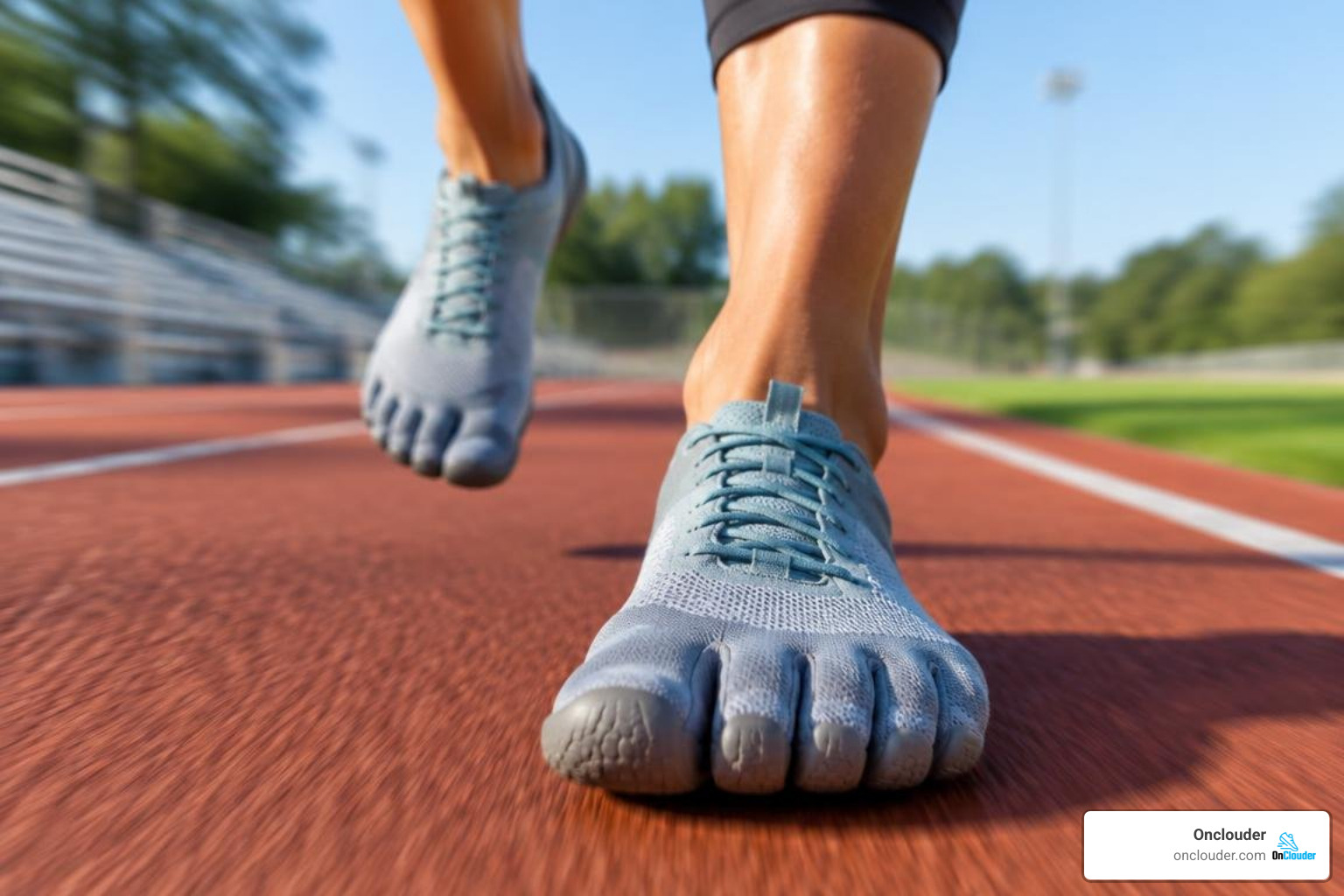
Finding the right balance between forefoot freedom and locked-in performance comes down to how a brand constructs its shoes. Many runners search for adidas wide toe box running shoes hoping to combine responsive midsole foams with enough room to prevent toe crowding.
While Adidas is traditionally recognized for sleek, performance-oriented silhouettes, the brand offers specific wide-width editions engineered on broader lasts. These designs increase internal volume across the ball of the foot and the toe cap while preserving midfoot structure and heel security.
To help you compare options, here is a quick breakdown of popular wider Adidas models alongside category benchmarks in the running footwear space:
| Model | Category / Best For | Weight (Men’s 9/10) | Heel Drop | Key Cushioning Technology | Width Availability |
|---|---|---|---|---|---|
| Adidas Duramo SL Wide | Daily Training / Budget Road Runs | ~9.9 oz (280g) | 9.5 mm | Lightmotion Foam | Men’s Wide (2E) |
| Adidas Lite Racer Adapt Wide | Recovery / Casual Walking / Warmups | ~7.8 oz (221g) | 10 mm | Cloudfoam Midsole | Men’s Wide (2E) |
| Adidas Ultraboost (Standard/Primeknit) | Long Runs / Impact Protection | ~10.5 oz (298g) | 10 mm | Boost / Light Boost | Standard (Accommodating Upper) |
Duramo SL Wide: Everyday Adidas Wide Toe Box Running Shoes
The Duramo SL Wide Running Shoes represent Adidas’s most accessible, dedicated wide-fit road trainer. Built with an engineered sandwich mesh upper and Lightmotion midsole cushioning, it delivers a responsive yet lightweight ride suitable for everyday training, treadmill workouts, and short-to-medium road distances.
The wide edition provides noticeably expanded room across the metatarsal area, keeping your pinky toe from rubbing against the lateral side wall. The durable Adiwear outsole compound resists abrasion across heavy pavement use, making it an exceptional value for runners on a budget.
Fit Advice: In our testing and based on official brand fit guidance, the Duramo SL Wide tends to run slightly short in length. We recommend ordering a half size up from your standard running shoe size for optimal clearance ahead of the toes.
For more shoe options designed with a broader forefoot profile, explore our best adidas wide toe box sneakers guide.
Lite Racer Adapt Wide: Casual Recovery and Walking Fit
When your training schedule calls for recovery walks, gym mobility, or easy warm-down laps, the Lite Racer Adapt 7.0 Wide provides an effortless slip-on experience.
Featuring an elasticized sock-like entry and soft Cloudfoam cushioning underfoot, the Lite Racer Adapt Wide relieves top-of-foot pressure by eliminating traditional rigid eyelet stays. The stretchy textile upper accommodates broader forefeet without pinch points, making it an outstanding lifestyle companion for runners dealing with tired, swollen feet post-workout.
To see how this relaxed silhouette compares across everyday footwear, check out our adidas lite racer and neo advantage review.
Ultraboost Options for Plantar Support and Forefoot Relief
Although the mainline Ultraboost series is primarily produced on a standard D-width last, its engineered Primeknit upper offers exceptional dynamic stretch that conforms comfortably around broader forefeet. Paired with hundreds of expanded thermoplastic polyurethane (eTPU) Boost capsules, this setup delivers plush energy return and protective shock absorption.
For runners struggling with plantar strain or arch tightness, the deep heel cup and torsion system in the Ultraboost stabilize foot transitions while preventing excessive tension across the plantar fascia.
If you are looking for running solutions tailored to arch discomfort and impact reduction, see our in-depth runners buying guide to adidas plantar fasciitis shoes or read our dedicated adidas ultra boost review for runners with plantar fasciitis.
Anatomical and Biomechanical Benefits of Wider Forefoot Footwear
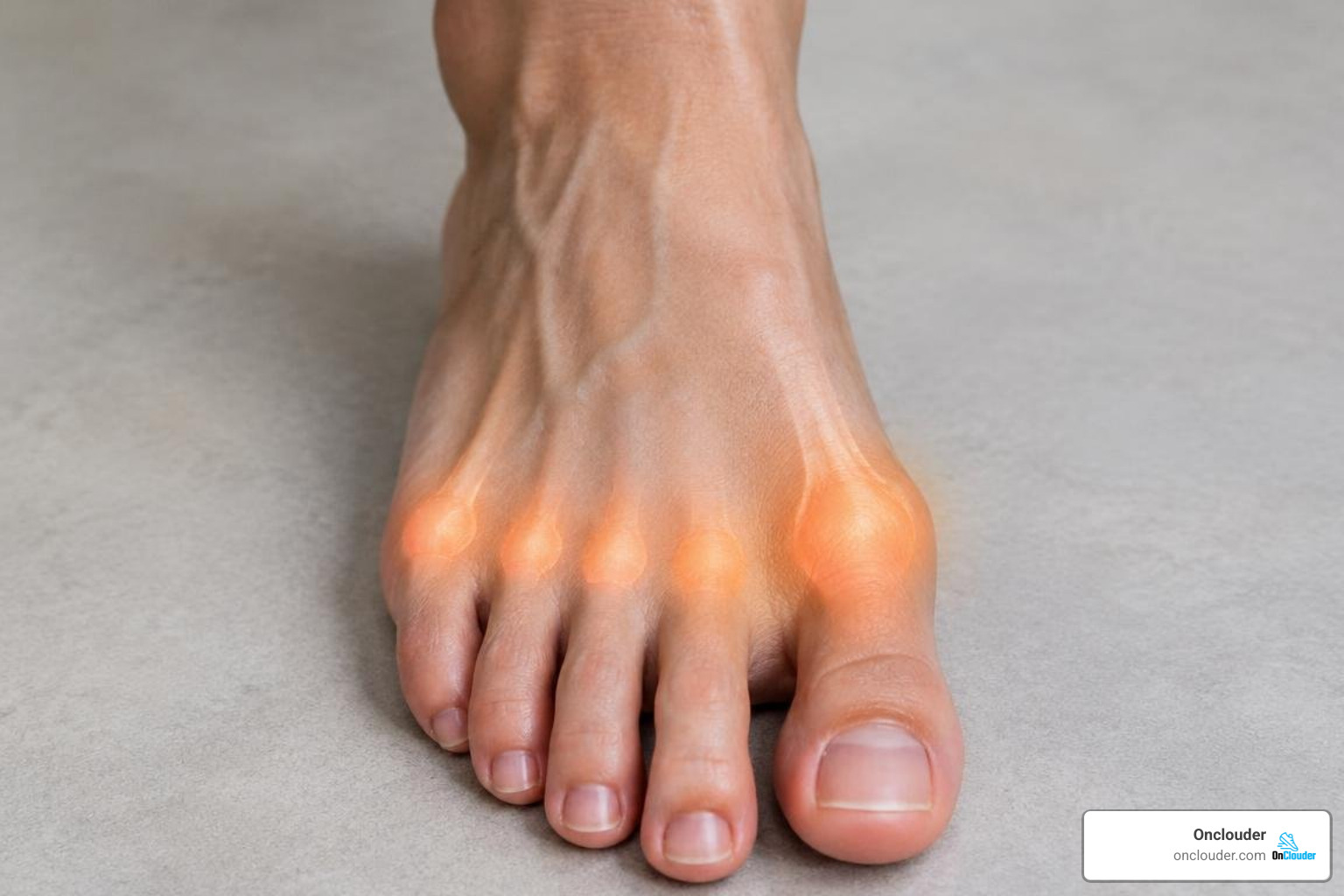
The human foot consists of 26 bones, 33 joints, and over 100 muscles, tendons, and ligaments. The forefoot houses the five metatarsal bones and the phalanges. Biomechanically, the hallux (big toe) provides the final pivot point and thrust during the toe-off phase of gait. When footwear squeezes the hallux inward toward the second toe:
- Balance Degrades: A narrow base reduces ground contact surface area, forcing compensatory stabilizing muscle contractions up the kinetic chain into the ankles, shins, and knees.
- Joint Deformities Accelerate: Constant lateral compression exacerbates hallux valgus (bunions), forcing the joint capsule outward and causing inflammation against the shoe upper.
- Nerve Impingement Occurs: Compressing the metatarsal shafts pinches interdigital nerves, frequently triggering the burning pain or numbness characteristic of Morton’s neuroma.
Providing adequate width in the toe box maintains natural alignment, disperses impact evenly, and prevents friction spots. Runners who spend long hours on their feet benefit substantially from shoes that accommodate midday foot swelling.
For additional footwear recommendations focused on comfort and long-duration support, refer to our best adidas for standing all day guide and our curated roundup of the best adidas womens shoes for plantar fasciitis that actually help.
How to Select and Size Adidas Wide Toe Box Running Shoes
Choosing the correct shoe requires distinguishing between shoe width and toe box shape. A shoe labeled “Wide” (2E for men, D for women) increases total internal circumference across the ball of the foot, whereas anatomical toe boxes feature a less aggressive inward taper toward the tips of the toes.
If you enjoy active recovery walks, you can also upgrade your daily walk with adidas plantar fasciitis footwear to maintain continuous comfort throughout your weekly routine.
Sizing Guide for Adidas Wide Toe Box Running Shoes
To ensure you get the right fit when shopping for wider models:
- Measure at the End of the Day: Feet naturally swell by up to half a shoe size after hours of activity and standing.
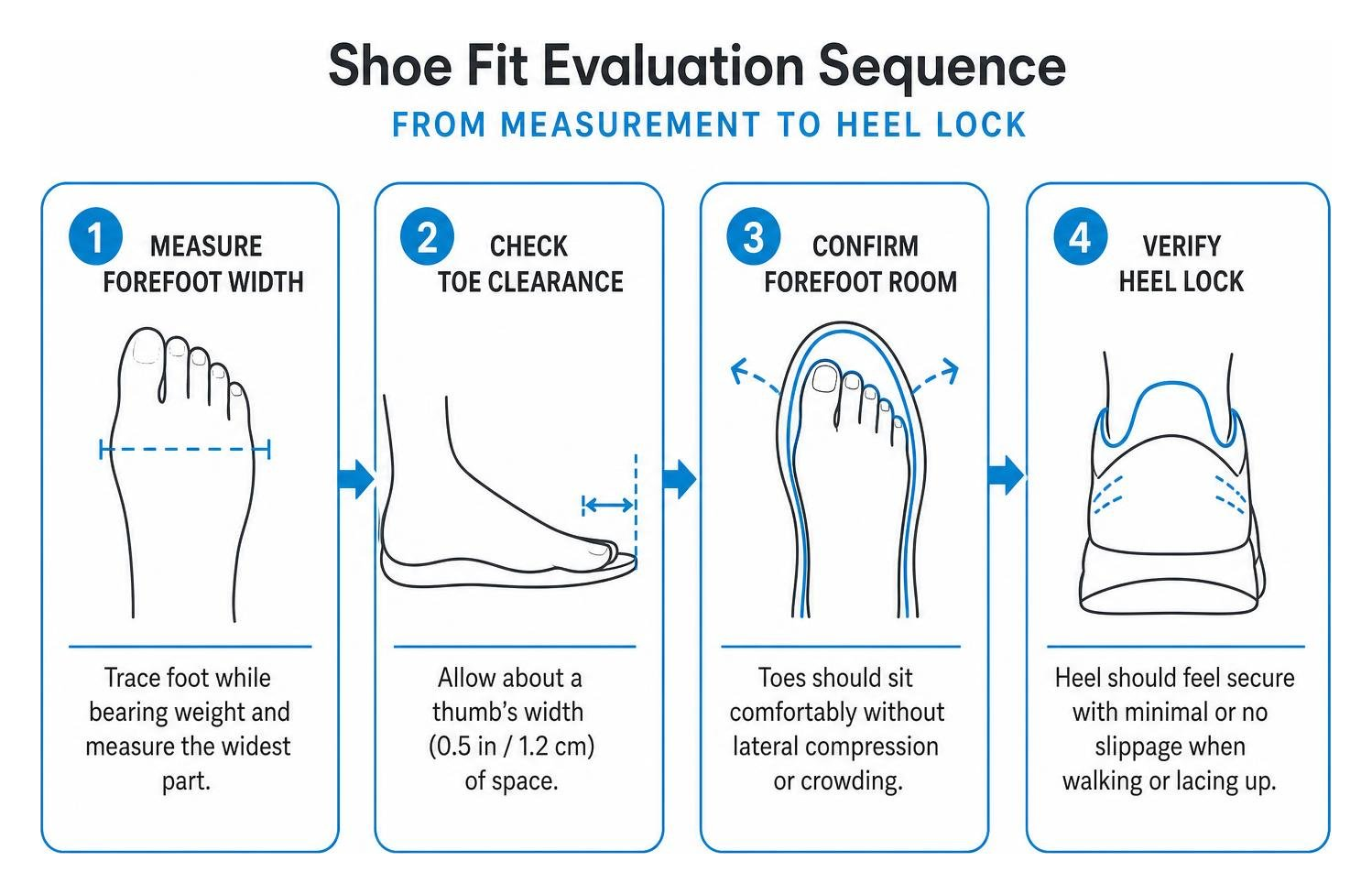
- Trace and Check Forefoot Width: Stand on a piece of paper and trace your foot while bearing weight. If the widest part of your foot exceeds the standard insole width by more than 0.25 inches (6 mm), a dedicated Wide (2E) last is recommended.
- Allow a Thumb’s Width Ahead of the Longest Toe: Ensure there is approximately 0.5 inches (1.2 cm) of clearance between the longest toe and the tip of the shoe to avoid bruised toenails on downhill sections.
- Account for Model-Specific Sizing: Models like the Duramo SL Wide fit snug lengthwise. Sizing up by a half size gives your toes ample forward and upward room.
Balancing Forefoot Room with Midfoot Lockdown and Stability
A common issue when moving to a wider running shoe is unwanted heel slippage or lateral foot slide inside the shoe. Extra forefoot width should never come at the expense of rearfoot security.
- Use the Runner’s Loop (Marathon Knot): Utilize the extra top eyelet found on technical running shoes to cinch the collar snugly around the ankle without tightening the forefoot laces.
- Check the Midfoot Saddle: The shoe’s midfoot overlays and tongue design should hold your arch firmly over the midsole platform.
- Examine Upper Stretch: Engineered mesh uppers with targeted knit zones provide flexible horizontal room at the bunion zone while maintaining rigid longitudinal threads to stabilize the foot during sharp turns.
Frequently Asked Questions About Forefoot Width and Running Shoes
Do wide toe box shoes help prevent common running injuries?
Yes. Providing adequate space allows the transverse arch to flatten and recoil naturally, reducing peak pressure under the second and third metatarsal heads. This lowers the occurrence of metatarsalgia, prevents blister formation between crowded toes, and keeps the big toe straight to reduce shear forces on the plantar fascia band.
Should you size up if a running shoe does not come in a wide fit?
Sizing up in a standard-width shoe to gain forefoot room is generally not recommended for dedicated running. While it increases volume, it also shifts the shoe’s engineered flex point forward and misaligns the molded arch support relative to your foot’s natural anatomy. This can lead to clumsy foot turnover, tripping hazards, and heel lift. It is far better to choose a shoe built on a true wide last.
How do I know if I need a wide shoe or just a roomy toe box?
If your foot feels constricted across the bony ball of the foot (the first to fifth metatarsal joints) and your insole feels narrow under your arch, you need a true Wide (2E/4E) shoe. If your midfoot and heel fit securely but your toes feel pinched inward at the outer edges, you primarily require footwear with an anatomically squared or rounded toe box.
Conclusion
Running should never feel like a battle against your own footwear. Giving your forefoot the room it needs allows your toes to splay, stabilizing every landing and generating clean forward propulsion. Whether you opt for dedicated wide trainers like the Duramo SL Wide or models with forgiving, adaptive uppers, prioritizing anatomical space protects joint health over hundreds of training miles.
Ready to eliminate cramped toes and experience unrestricted movement? Take the next step and explore barefoot and wide toe box shoes to stop foot squeezing across your entire running rotation.
The Rise of Quantum Computing: What You Need to Know
