How to Find Overpronation Shoes That Fit
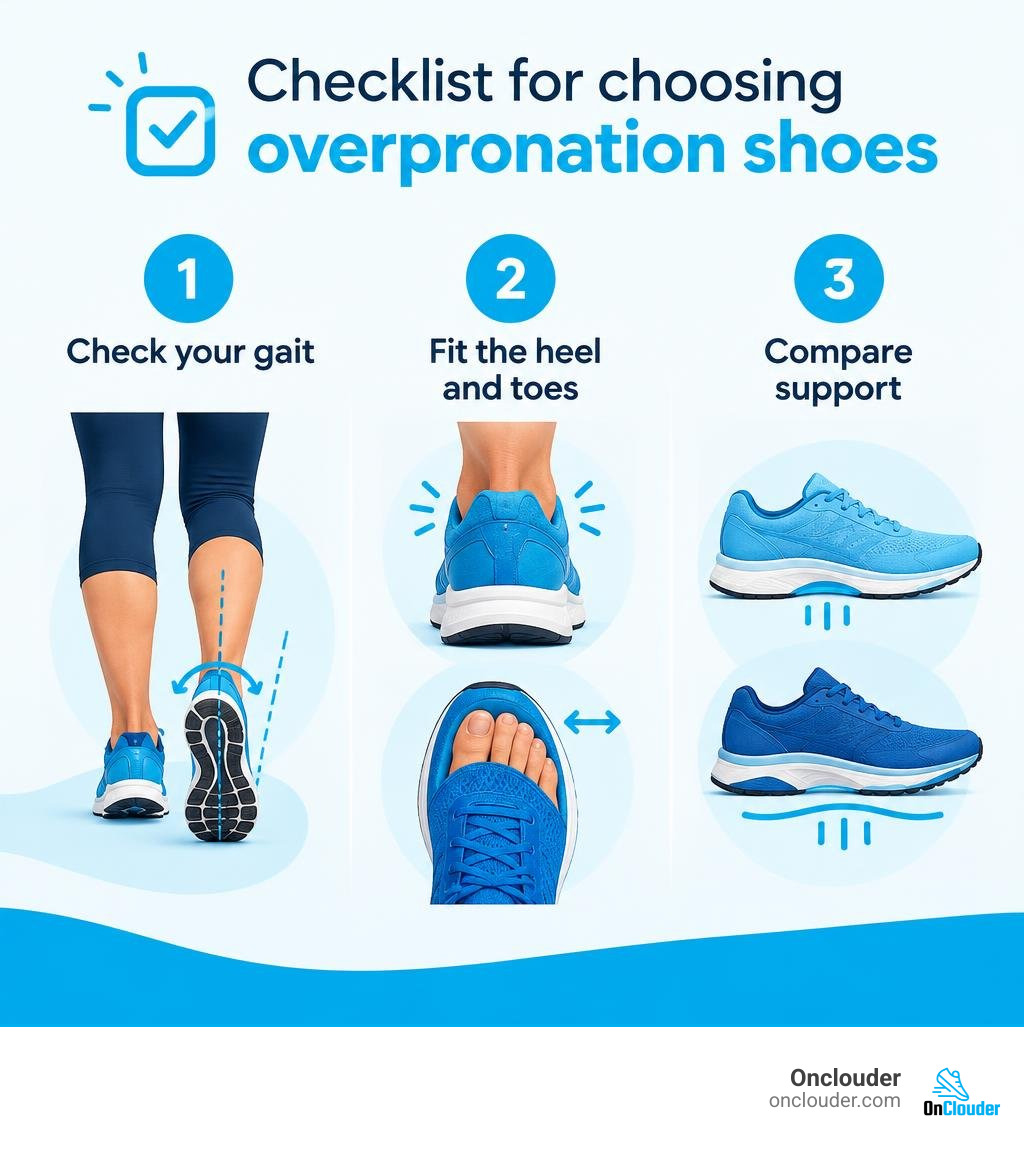
Start with fit, then choose support. Overpronation shoes can help guide a foot that rolls inward too far during a step. Look for a snug heel, room for your toes, and a stable base. If you need mild to moderate support, try a stability shoe. If you need more control, compare motion control shoes with help from a running-shoe fitter.
You cannot tell how much support you need from arch height alone. Watch how your feet move when you walk or run, and try shoes in the width you need. This guide will help you compare support features, choose a comfortable fit, and know when your shoes are worn out.
Overpronation shoes further reading:
Biomechanics of Foot Pronation and Arch Support
Every time your foot strikes the pavement, an intricate chain reaction travels through your bones, tendons, and muscles. Pronation is completely normal; it is your body’s natural shock-absorption mechanism. As your heel contacts the ground, your arch flattens slightly, allowing your foot to absorb impact and adapt to uneven terrain.
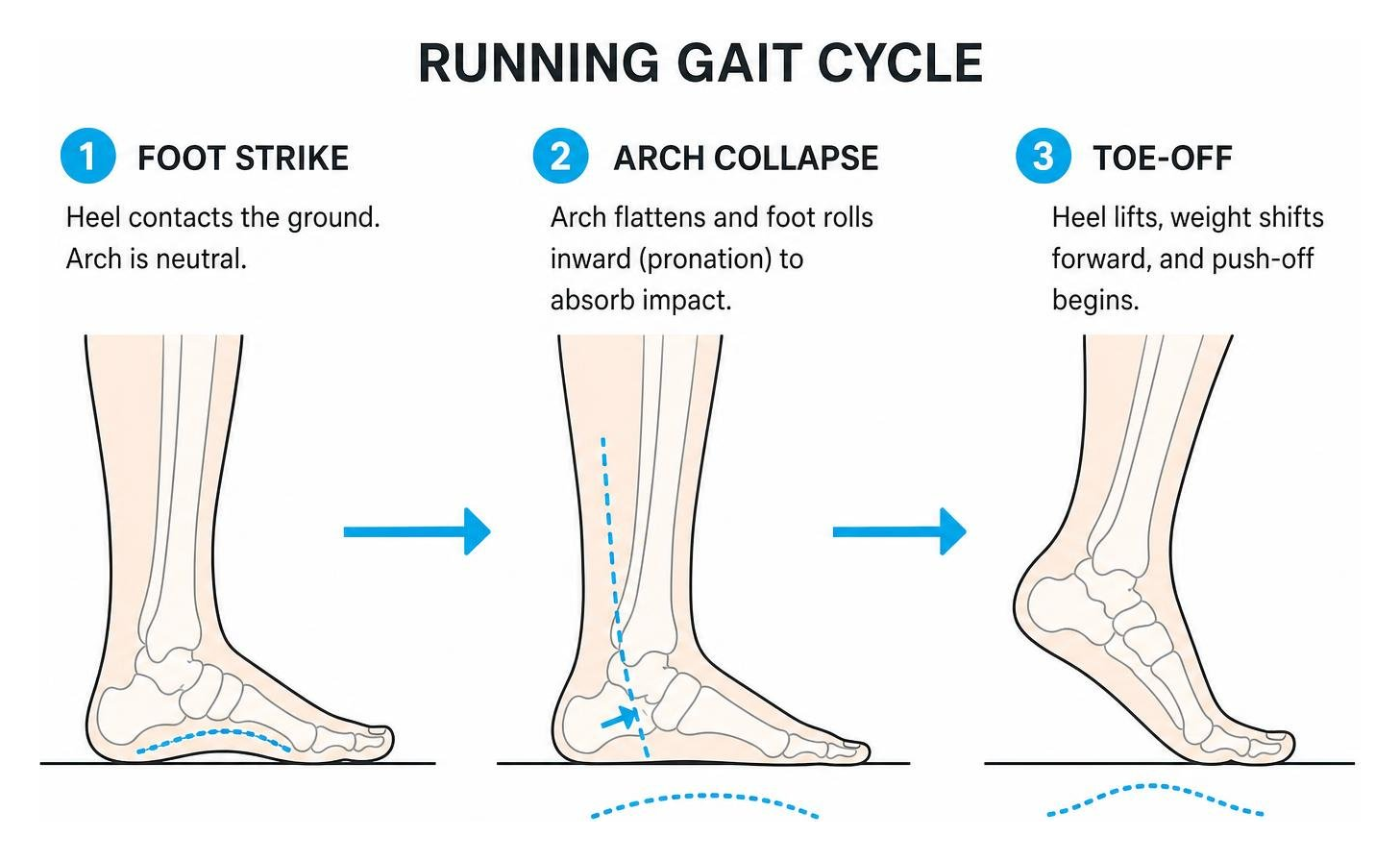
However, when excessive arch collapse occurs, your ankle tilts inward beyond the standard 15-degree angle. This excessive inward movement forces your tibia and knee to rotate inward, placing undue stress on your lower extremities. Roughly 15% to 20% of runners experience moderate to severe overpronation. Without intervention, this kinetic misalignment often leads to common running ailments like plantar fasciitis, shin splints, patellofemoral pain syndrome, and Achilles tendinitis. For a deeper breakdown of movement mechanics, explore The Ultimate Guide to Running with Overpronation.
Identifying Excessive Inward Rolling
How can you tell if your feet are rolling inward too much? You do not need an advanced biomechanics lab to spot the basic signs:
- The Wet Paper Test: Wet the bottom of your bare foot and step onto a piece of cardboard or dark construction paper. If you see a complete imprint of your sole without a noticeable dry curve where your arch should be, you likely have flat feet or low arches.
- The Shoe Wear Pattern: Inspect the outsoles of your current daily trainers. Overpronators show heavy wear along the inner edge of the heel and under the ball of the big toe, while neutral runners show an S-shaped wear pattern from the lateral heel to the center forefoot.
- The Standing Mirror Check: Stand barefoot facing a full-length mirror. If your inner ankle bones bulge inward toward each other and your Achilles tendons bow outward when viewed from behind, your ankles are tilting excessively.
Catching these signs early helps you say goodbye to arch pain in stability runners before mild discomfort turns into chronic inflammation.
Structural Footwear Components for Arch Relief
To counteract excessive inward rolling, footwear engineers incorporate specialized structural elements into modern running shoes.
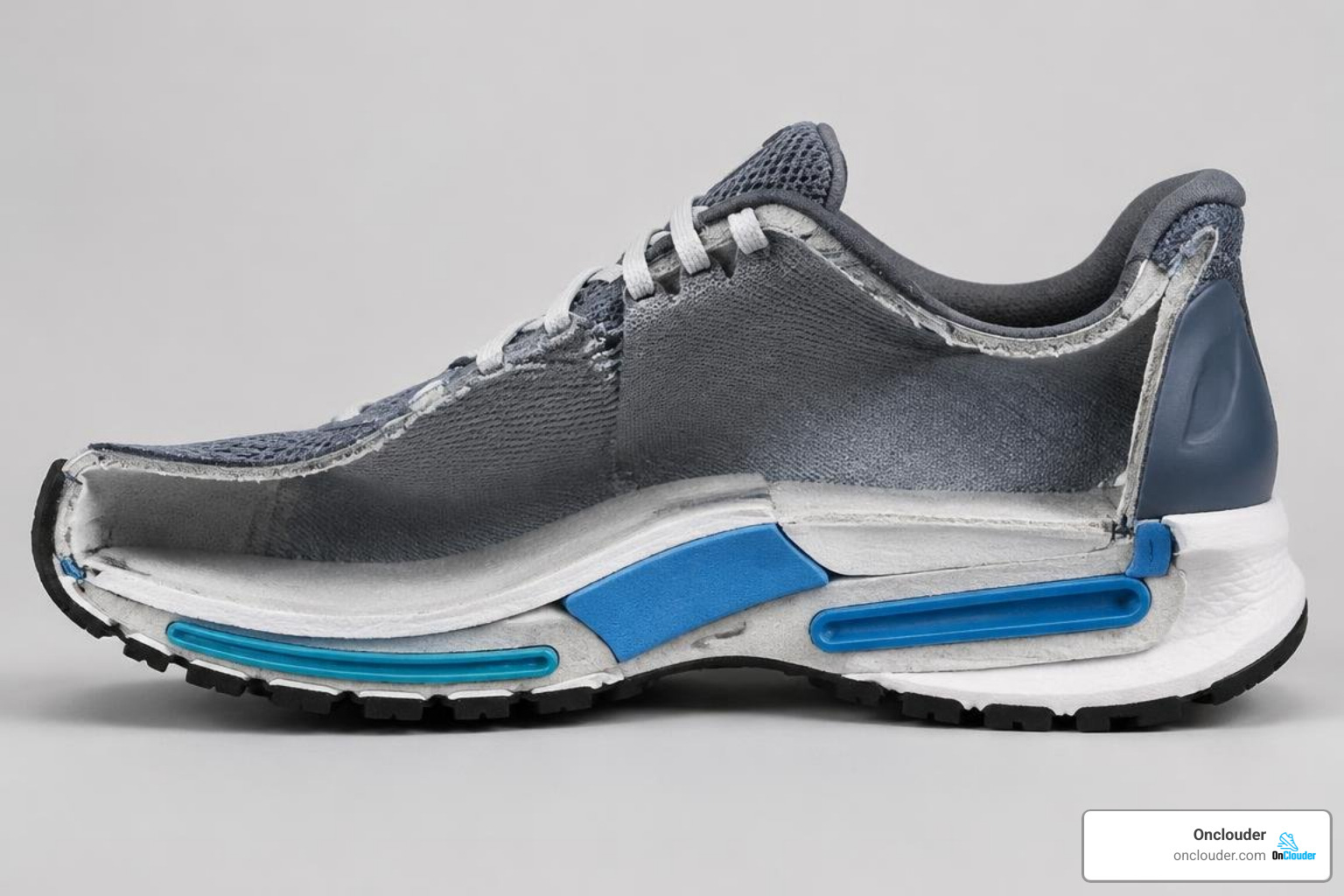
- Medial Posts: Traditionally, brands inserted a firmer block of dual-density foam along the inner edge of the midsole to physically block the arch from collapsing.
- GuideRails and Holistic Guidance: Modern shoes often use bumper-like guide rail systems that stabilize excess movement at both the heel and the knee, engaging only when your gait veers off-track.
- Rigid Heel Counters: A stiff internal plastic cup locks your calcaneus (heel bone) in place, preventing lateral heel shifting at initial contact.
- Torsional Shank & Broad Platform: A firm midfoot shank prevents the shoe from twisting like a washcloth, while a wider base creates a stable foundation beneath your entire foot.
How to Choose the Right Overpronation Shoes for Your Gait
Selecting the ideal pair involves balancing your biomechanical needs with your specific running profile. A lightweight runner covering 10 miles a week requires a very different level of structure than a heavy runner training for a marathon. If you have low arches, checking the 5 best running shoes for flat feet overpronation 2026 guide will point you toward models built for lower structural integrity.
Analyzing Cushioning Density vs Stability Tech
There is often a tug-of-war between plush step-in comfort and structural stability. Ultra-soft, highly responsive foams feel cloud-like during a quick try-on, but under continuous load, excessive squishiness can exacerbate ankle instability. In fact, understanding why standard highly cushioned foam might hurt your overpronating feet is crucial: overly soft foams compress unevenly on the medial side, tilting your ankle further inward.
Look for dual-density setups or structured EVA blends that balance soft shock absorption in the heel crash pad with firm, resilient support under the arch.
Matching Footwear Width and Toe Box Shape
Support means little if your toes are cramped. When your foot strikes the ground, your toes naturally splay to provide baseline stability. If a shoe’s toe box is too narrow, your intrinsic foot muscles cannot engage properly, forcing the arch to collapse further.
- Look for models that offer wide (2E) or extra-wide (4E) options if you have wide feet or bunions.
- Consider brands like Altra that feature an anatomical FootShape™ fit, allowing your big toe to remain straight and act as a natural stabilizer.
- For everyday walking and lifestyle wear, check the best women’s overpronation trainers for daily comfort to ensure all-day comfort without sacrificing support.
Stability vs Motion Control Footwear Categories
Understanding the spectrum of supportive footwear ensures you do not buy more or less shoe than your body requires.
| Feature | Neutral Shoes | Stability Shoes | Motion Control Shoes |
|---|---|---|---|
| Target Runner | Normal pronation / Supination | Mild to moderate overpronation | Severe overpronation / Flat arches |
| Arch Support | Minimal / Dynamic | Moderate structured support | Maximum rigid support |
| Medial Support Tech | None | Guide rails, dual-density foam | Rigid medial posting, TPU shanks |
| Torsional Flexibility | High | Moderate | Very Low / Rigid |
| Average Weight | Light (7–9 oz) | Moderate (9–11 oz) | Heavier (11–14 oz) |
| Platform Width | Standard | Slightly flared | Broad and straight-lasted |
For a head-to-head evaluation of how these categories behave on the road, review our detailed comparison of stability running shoes for overpronation.
Comparing Stability and Motion Control Overpronation Shoes
Stability shoes are designed for the majority of runners who need moderate guidance. They provide active alignment without completely immobilizing foot articulation. Modern stability models utilize dynamic foam geometries that subtly redirect movement. You can browse the 9 best stability shoes for every type of overpronator to find shoes that match varying degrees of pronation.
Motion control shoes, by contrast, are heavy-duty workhorses built for runners with severe overpronation, collapsed arches, or higher body weights. These shoes feature straight lasts (meaning the shoe does not curve inward at the waist), rigid plastic midfoot bridges, and ultra-firm medial posts to completely resist arch collapse.
Integrating Custom Orthotics and Support Insoles
If factory insoles do not provide enough arch contour, pairing your trainers with aftermarket insoles can make a dramatic difference. You can stop the roll with the best overpronation insoles designed with deep heel cups and high semi-rigid arches. Always remember to pull out the stock liner before inserting custom orthotics to prevent cramped volume and heel slippage.
Top Stability Models and Modern Alternatives
As of October 2026, leading brands have updated their flagship stability lineups with innovative guidance geometries and high-rebound foams.
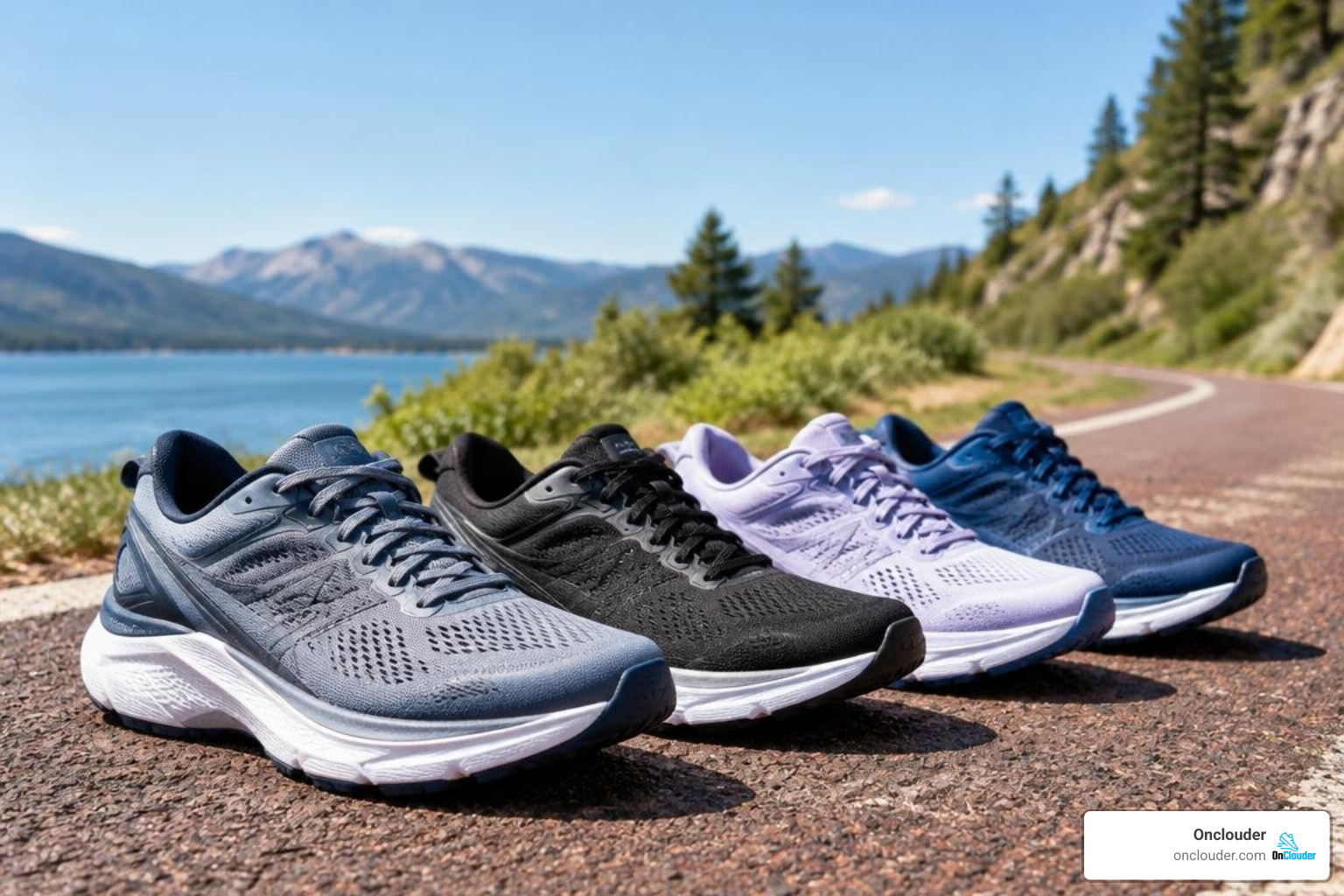
- Brooks Adrenaline GTS 24: A perennial favorite utilizing Brooks’ signature GuideRails system. Ideal for both long runs and daily walks. (Currently discounted around 21%, from $140.00 to $109.95).
- Hoka Arahi 7: Maximum cushioning in a lightweight package, featuring the stabilizing J-Frame™ technology. (Available at a 28% discount, down from $145.00 to $104.90).
- Hoka Gaviota 5: Premium plush stability built on an ultra-wide base with the H-Frame™ support structure. (Discounted by 20%, from $175.00 to $140.00).
- New Balance Fresh Foam X 860 v14: Delivers structured cushioning with a smooth transition and dual-density stability. (Discounted by 21%, from $140.00 to $109.99).
- Asics GT Series: A staple line engineered with LITETRUSS technology to stabilize inward ankle rolls; read about how stability technology can help prevent inward ankle rolling to see how Asics balances comfort and support.
Upgrading from Discontinued Overpronation Shoes
A frequent challenge for runners needing maximum motion control is the discontinuation of heritage models. Notably, the classic New Balance 940—a longtime favorite for severe overpronators—has been discontinued by the manufacturer.
If you are transitioning away from the New Balance 940, consider these modern replacements:
- Brooks Beast / Ariel: The gold standard in motion control, offering maximum stability and a wide base.
- Hoka Gaviota 5: Offers a similar level of high-volume arch support with modern plush foam.
- Asics GT-1000 or GT-2000 Series: For those wanting a lighter, nimble alternative, discover why runners keep choosing lightweight stability trainers for daily mileage.
Lifespan and Replacement Timeline for Maximum Protection
Unlike neutral shoes, which you might replace solely based on outsole wear or upper fraying, stability shoes lose their structural support before the outer rubber completely wears smooth. Over 300 to 500 miles of running (or 6 to 9 months of daily walking), the medial foam compresses permanently under repeated foot strikes. Once this medial support fatigues, the shoe begins leaning inward on its own, accelerating joint strain.
Frequently Asked Questions About Footwear Support
How do I know when my stability shoes need replacement?
Look for deep compression lines along the medial midsole, tilt test your shoes on a flat table (if they lean inward on their own, the support is shot), and pay attention to returning aches in your shins, arches, or knees. Most runners hit this point between 350 and 450 miles.
Can wearing supportive footwear cure overpronation permanently?
No, footwear cannot permanently reshape adult bone structure or shorten lengthened ligaments. However, stability footwear corrects dynamic alignment while you move, preventing microtrauma and muscle overuse. You can also consult our guide on top podiatrist-approved shoes for overpronation and complement proper shoes with targeted foot-strengthening exercises (like toe curls and calf raises).
Are stability models suitable for walking and daily standing?
Yes, stability shoes are excellent for standing and walking. The structured arch support and broad base distribute your body weight evenly across the plantar surface, relieving lower back tension and plantar fascia strain. For complete details, see everything you need to know about stability shoes for runners.
Conclusion
Finding the right footwear is not about picking the stiffest shoe on the rack; it is about finding the optimal balance of gentle guidance, comfortable cushioning, and anatomical fit. At Onclouder, our hands-on testing across hundreds of miles proves that the right support system keeps you moving pain-free and injury-free.
Ready to find your perfect pair? Dive into our comprehensive pillar resource: An Essential Guide to Best Overpronation Shoes to compare top picks, read real-world wear test reviews, and get expertly fitted for your next run!