
Which Stability Running Shoe Is Right for Your Stride?
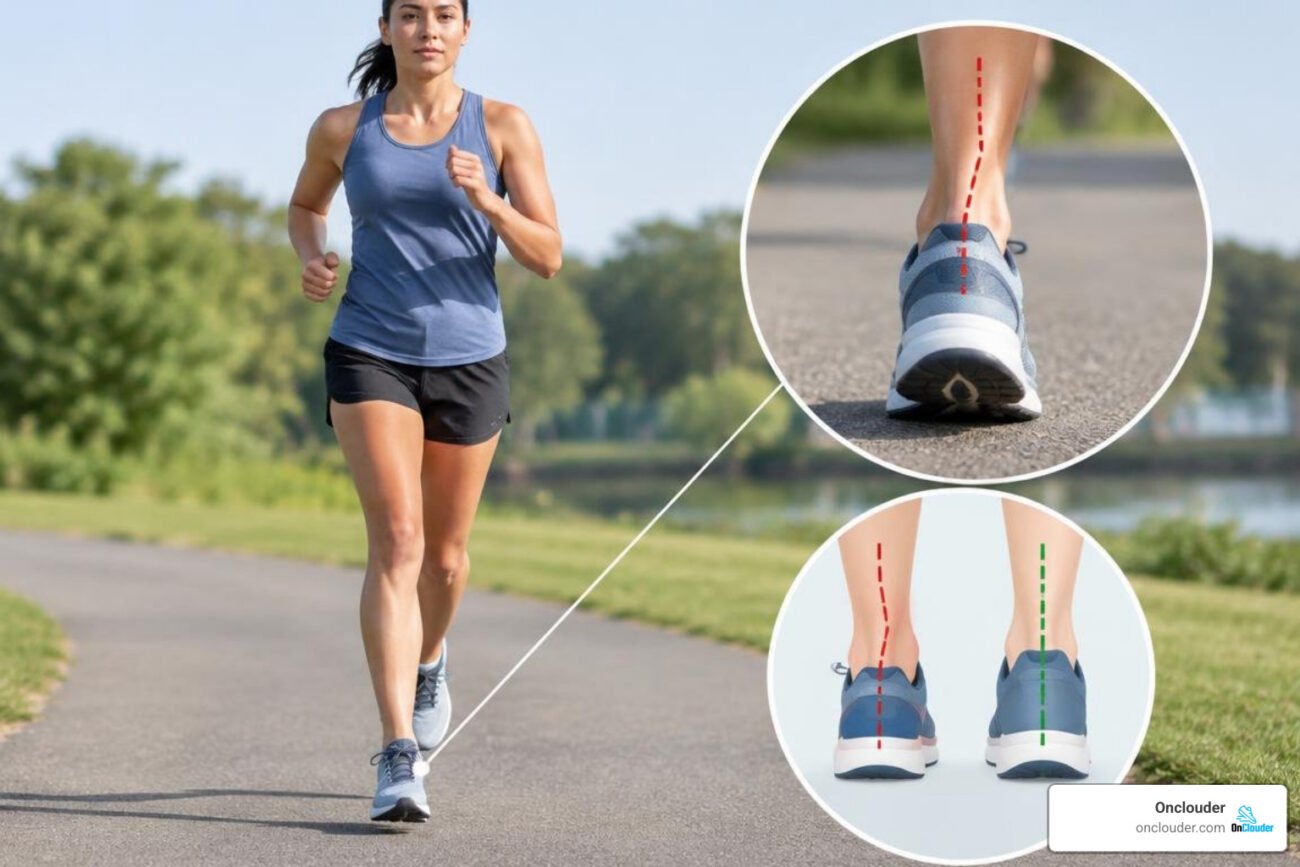
If your foot rolls inward more than is comfortable when you run, start with a stability shoe that fits well and gives you the amount of support you need. The Brooks Adrenaline GTS 25 uses GuideRails for gentle guidance. The New Balance Fresh Foam X 860 v15 uses a supportive platform and comes in more widths. Both suit easy runs better than speedwork.
Some inward roll, called pronation, is normal. If you think you overpronate, don’t choose by arch shape alone. Check your gait and try both shoes: the better pick should hold your heel, give your toes room, and feel comfortable as you move. Choosing the right stability running shoes for overpronation starts with understanding how your foot moves through each stride.
How Stability Running Shoes Overpronation Designs Protect Your Stride
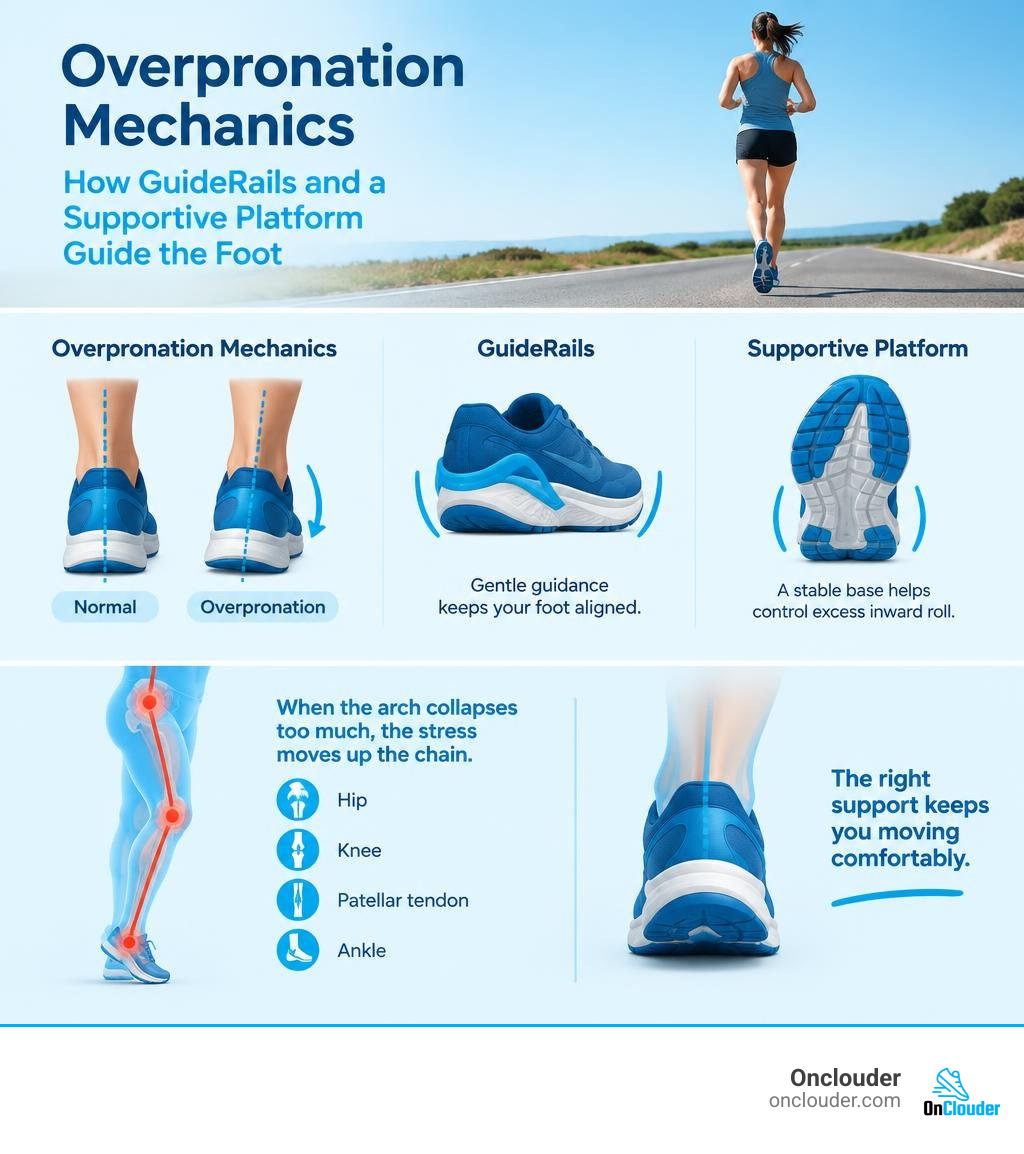
When your foot strikes the ground, your arch naturally flexes downward and inward to disperse impact shock. This is standard pronation. However, when the arch collapses excessively inward past the neutral range of motion, the kinetic chain above it absorbs unusual stress.
As explored in our guide to running with overpronation, severe inward rolling causes excessive internal tibial rotation. This twisting force travels directly up into your patellar tendon, your knee joint, and eventually your hip complex. If your stride reminds you of Phoebe Buffay joyfully flailing down an avenue in Friends, your joints are likely taking the brunt of that uneven loading.
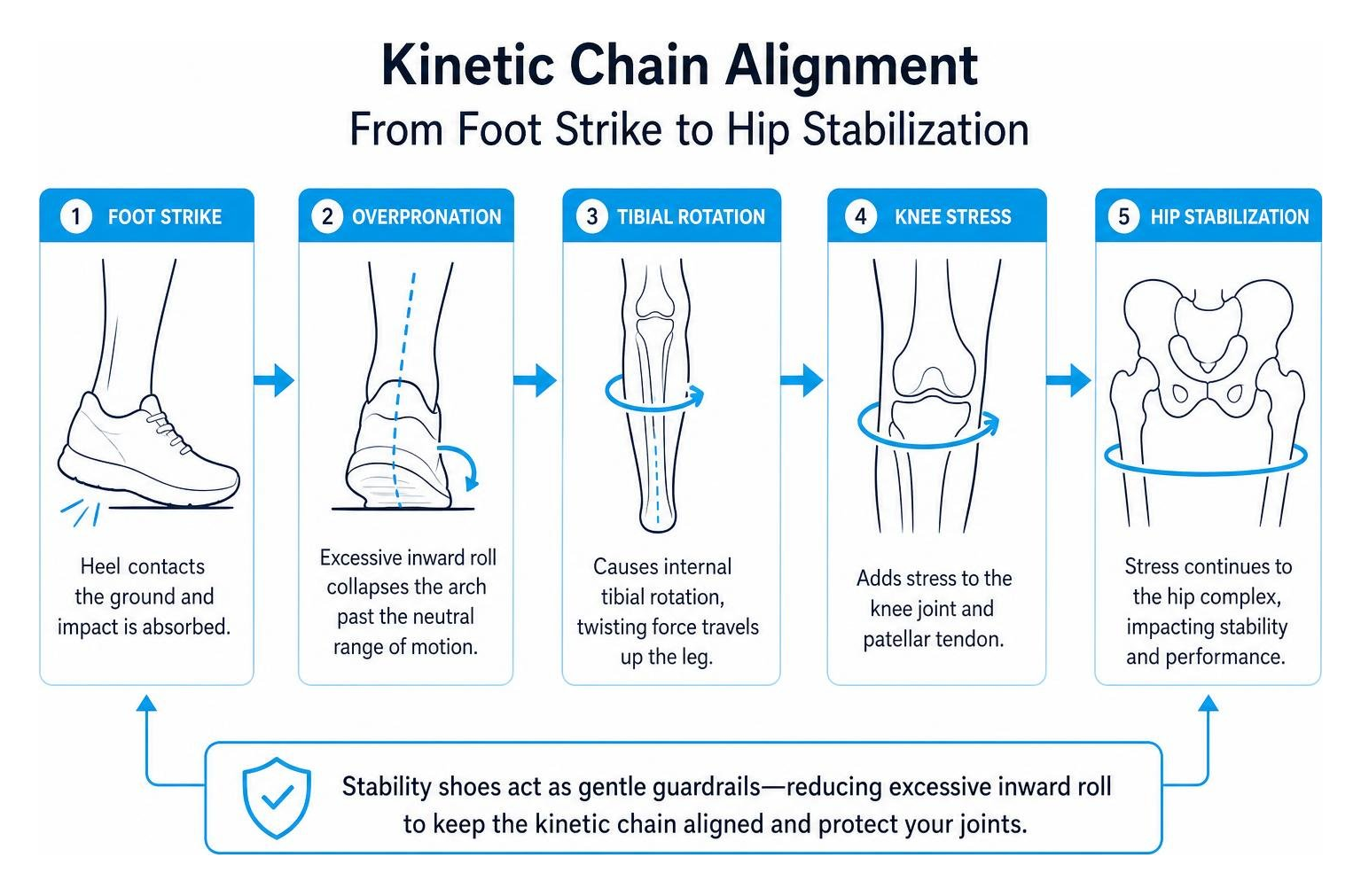
Modern stability shoes act as gentle guardrails rather than rigid casts. Instead of forcing your foot into an artificial, locked position, contemporary supportive geometry preserves natural biomechanics while halting excessive medial roll. Selecting expert-recommended podiatrist-approved shoes for overpronation can dramatically reduce strain across the plantar fascia, posterior tibial tendon, and IT band during repetitive road training.
Matching Gait Mechanics: Selecting Stability Running Shoes Overpronation Levels for Your Foot Strike
Not all runners need the same degree of structural intervention. Choosing the right shoe means understanding where your gait falls along the stability spectrum:
- Severe Overpronators: Runners whose arches collapse completely flat upon ground contact require robust torsional rigidity, a firm heel counter, and targeted guidance structures along the medial boundary.
- Mild-to-Moderate Overpronators: Runners whose arches fatigue during longer miles or who experience slight knee valgus benefit from broad midsole platforms and subtle dual-density foam layers.
- Neutral Runners: Runners who track straight or display minimal inward roll should avoid heavy medial blocks, though modern holistic guidance systems rarely interfere with neutral biomechanics.
If you have flat feet, review our running shoes for flat feet guide and our fundamentals breakdown in flat feet running 101 to ensure your footwear accommodates lower arch profiles without painful pressure points.
Guidance Systems vs. Dual-Density Medial Support
The footwear industry has largely transitioned away from the aggressive, rock-hard medial posts of the past. Traditional stability footwear relied on a dense chunk of EVA foam directly beneath the inner arch. While it stopped inward rolling, it often created a harsh “medial bite”—a distinct, uncomfortable pressure point that blistered arches and created an unnatural, jarring foot strike.
Today’s designs take two smarter approaches:
- Raised GuideRails and Lateral Enclosures: Implemented in shoes like the Brooks Adrenaline GTS 25, these structures flank the outer heel and inner midfoot. They remain passive when your foot tracks straight and only engage to steer your heel and ankle if excess rolling occurs.
- Integrated Dual-Density & Stability Planes: Found in models like the New Balance Fresh Foam X 860 v15, this method pairs plush base foams with targeted firmer compounds and embedded stability planes or broader platform sidewalls to gently cup and stabilize the foot without harsh plastic wedges.
Head-to-Head: Two Leading Stability Running Shoes
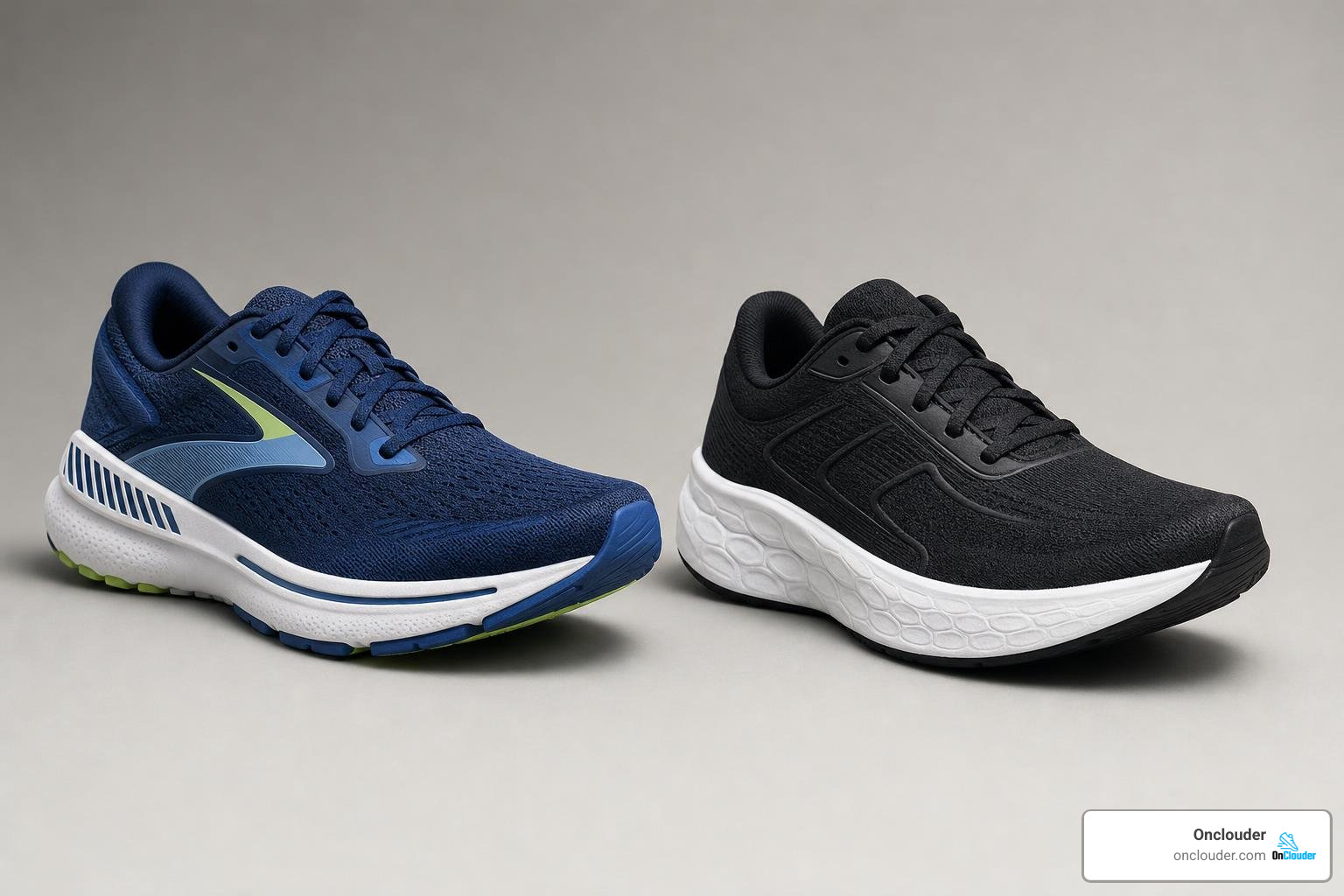
Two titans dominate the daily training conversation in 2026: the Brooks Adrenaline GTS 25 and the New Balance Fresh Foam X 860 v15. Both provide dependable support, but they solve overpronation using distinct cushioning and structural philosophies.
| Feature / Specification | Brooks Adrenaline GTS 25 | New Balance Fresh Foam X 860 v15 |
|---|---|---|
| Primary Support Tech | Holistic GuideRails System | Dual-Density Fresh Foam X & Stability Plane |
| Stability Level | Moderate to Structured | Mild to Moderate Guidance |
| Midsole Cushioning | DNA Loft v3 (Nitrogen-Infused) | Fresh Foam X (Dual-Density Layer) |
| Stack Height | 37 mm (Heel) / 27 mm (Forefoot) | 39.7 mm (Heel) / 32.1 mm (Forefoot) lab measured |
| Heel-to-Toe Drop | 10 mm | 7.6 mm lab measured (8 mm advertised) |
| Weight (Men’s / Women’s) | 10.6 oz / 9.5 oz | 10.6 oz (claimed) / 11.7 oz (lab measured) |
| Available Widths | Medium (D), Wide (2E) | Narrow (B), Standard (D), Wide (2E), Extra-Wide (4E) |
| MSRP | $140–$150 | $150 |
For an extended overview of other top performers on the market, check our curated best stability running shoes index.
Midsole Cushioning, Stack Height, and Heel Drop
Underfoot feel differs noticeably between these two workhorses.
The Brooks Adrenaline GTS 25 incorporates nitrogen-infused DNA Loft v3 foam throughout the midsole. This upgrade delivers a lighter, more energetic ride than previous iterations while preserving the classic 10mm heel drop that heel strikers love. With a 37mm heel stack, it provides ample shock absorption without feeling disconnected from the pavement.
The New Balance Fresh Foam X 860 v15 leans heavily into high-stack plushness. According to independent lab teardowns, the shoe features a generous 39.7mm heel stack and a 32.1mm forefoot stack, yielding an actual lab-measured drop of 7.6mm. Its Fresh Foam X midsole registers at a soft 25.8 AC on durometer tests, delivering a forgiving, pillow-soft landing combined with an energy return of 65.2% in the forefoot.
Fit, Sizing Quirks, and Width Availability
Fit precision is essential for overpronation control. If your foot slides over the footbed, no amount of built-in stability can correct your alignment.
- Brooks Adrenaline GTS 25: Fits true to size with a tailored, lockdown-oriented midfoot and a secure heel counter. Some runners note that the midfoot lacing eyelets offer less lateral give, making it critical to establish a snug knot before heading out.
- New Balance Fresh Foam X 860 v15: One of New Balance’s greatest strengths is width variety. The 860 v15 is offered in four distinct widths: Narrow (B), Standard (D), Wide (2E), and Extra-Wide (4E). The shoe features a plush, padded tongue and an accommodating toebox that comfortably accepts higher-volume feet.
For female runners looking for tailored silhouettes, browse our women’s overpronation daily trainers roundup for specific shape and volume recommendations.
Real-World Performance: Daily Training, Long Runs, and Daily Wear

When putting in high-mileage road blocks, both models shine as dependable, daily recovery and steady-pace cruisers.
The Adrenaline GTS 25 provides an intuitive, structured rhythm. As fatigue sets in at mile 10 or 12 and your form begins to break down, the GuideRails unobtrusively cradle the calcaneus (heel bone), keeping your knees tracking smoothly over your toes. It feels consistent, agile, and protective.
The Fresh Foam X 860 v15 excels as a maximalist recovery shoe. Its wider base and soft underfoot dampening swallow road vibrations effortlessly. Furthermore, its plush interior and supportive platform make it an exceptional option for walkers, physical therapists, nurses, and runners who stand for hours on hard surfaces.
If you require additional customization beyond factory footbeds, pairing your trainers with targeted overpronation insoles can further stabilize your arch inside either shoe.
Training Versus Racing: Finding Stability Running Shoes Overpronation Balance for Speed and Recovery
Neither the Adrenaline GTS 25 nor the 860 v15 is designed for breaking personal records in 5K sprints or tempo intervals.
With the 860 v15 weighing in at a substantial 11.7 oz (332g) in men’s standard sizes during lab testing, it sits toward the heavier end of modern road trainers. The Adrenaline GTS 25 is slightly nimbler at 10.6 oz, but both models prioritize joint protection, impact dampening, and stride guidance over explosive snap.
For speed workouts or race days, pair these structured trainers with a lighter stability-racer or use them primarily for your foundational, aerobic base-building miles.
Durability, Breathability, and Outsole Traction
Both shoes are built to withstand rigorous 400-to-500-mile lifecycles:
- Outsole Durability & Grip: The New Balance 860 v15 employs segmented blown rubber that provides exceptional traction on wet sidewalks and asphalt. The Adrenaline GTS 25 uses full-contact carbon rubber flex grooves that transition smoothly from heel to toe on varied pavement surfaces.
- Upper Construction & Breathability: The Adrenaline GTS 25 uses a lightweight engineered air-mesh that vents heat exceptionally well in warm climates. The 860 v15 uses a plusher, denser jacquard mesh that maximizes comfort and lockdown, though it runs slightly warmer during mid-summer training.
- Torsional Rigidity: Both trainers resist excessive midfoot twisting, securing high marks for structural integrity on the run.
For more technical breakdowns on upper durability and flat foot mechanics, read our guide to running shoes for flat feet.
How Top Stability Models Compare: Structured Daily Trainers and Max-Cushion Cruisers
When building your ideal shoe rotation, it helps to understand how the Brooks Adrenaline GTS 25 and New Balance 860 v15 compare against other category leaders:
- ASICS Gel-Kayano Series: Utilizes a dynamic 4D Guidance System with softer interior arch foam that compresses on demand. It leans closer to max-cushion territory alongside the 860 v15.
- HOKA Gaviota / Arahi: Built on an oversized footbed with a firm J-Frame or H-Frame wrap. These provide a very stiff rocker ride compared to the more flexible, traditional transitions of the Adrenaline GTS 25.
- Brooks Adrenaline GTS 25: The benchmark for balanced, moderate stability with a traditional 10mm drop and responsive, nitrogen-infused foam.
- New Balance Fresh Foam X 860 v15: The go-to high-stack, plush daily trainer for mild overpronators needing maximum width accommodation and cloud-like impact protection.
To explore how these and other top-rated models rank across our comprehensive testing metrics, see our 2026 best overpronation shoes guide.
Frequently Asked Questions About Overpronation and Stability Footwear
Can neutral runners safely wear modern stability running shoes?
Yes. Because modern stability systems—such as Brooks GuideRails and New Balance’s wide platform geometry—act passively, they do not push aggressively against neutral mechanics. Neutral runners experiencing muscle fatigue during marathon training often find welcome relief in modern guidance shoes without altering their natural gait.
How do I determine whether I need mild guidance or severe overpronation correction?
Check your tread wear patterns on an older pair of running shoes. If you notice heavy abrasion exclusively along the inside edge of your forefoot and heel, or if a wet footprint test shows your entire arch making full contact with the ground, you likely overpronate. A gait analysis at a dedicated running store can confirm whether subtle guidance or structured correction is ideal.
Can I use custom orthotics inside stability running shoes?
Yes. Both the Brooks Adrenaline GTS 25 and the New Balance 860 v15 feature removable, factory-molded insoles. Their stable midsole platforms and rigid heel counters provide a secure, flat foundation to drop in custom medical orthotics or over-the-counter insoles.
Conclusion
Finding the right support for overpronation doesn’t mean sacrificing comfort, style, or smooth transitions. If you prefer a structured, responsive ride with proven knee-and-hip alignment technology, the Brooks Adrenaline GTS 25 is an exceptional daily partner. If you need a softer, higher-stack trainer with expansive width options from Narrow to Extra-Wide, the New Balance Fresh Foam X 860 v15 will carry you through your longest recovery miles in plush comfort.
Ready to find the ideal match for your specific biomechanics? Explore our essential guide to choosing the best overpronation shoes to dial in your perfect fit and step confidently into your next training cycle.
