Understanding Biomechanics: Why Overpronators Need Targeted Support
Runners frequently choose the ASICS GT 1000 for overpronation because it delivers adaptive stability through the 3D Guidance System, balanced cushioning, and a smooth ride that corrects excessive inward roll without feeling rigid. This targeted support helps reduce strain on the arch, shin, and knee during daily training.
Pronation is a natural part of human locomotion. When your foot makes contact with the pavement, the arch naturally flattens slightly to absorb impact shock. However, biomechanics vary significantly from runner to runner. Overpronation occurs when the ankle and arch collapse inward excessively past the neutral threshold during weight transfer.
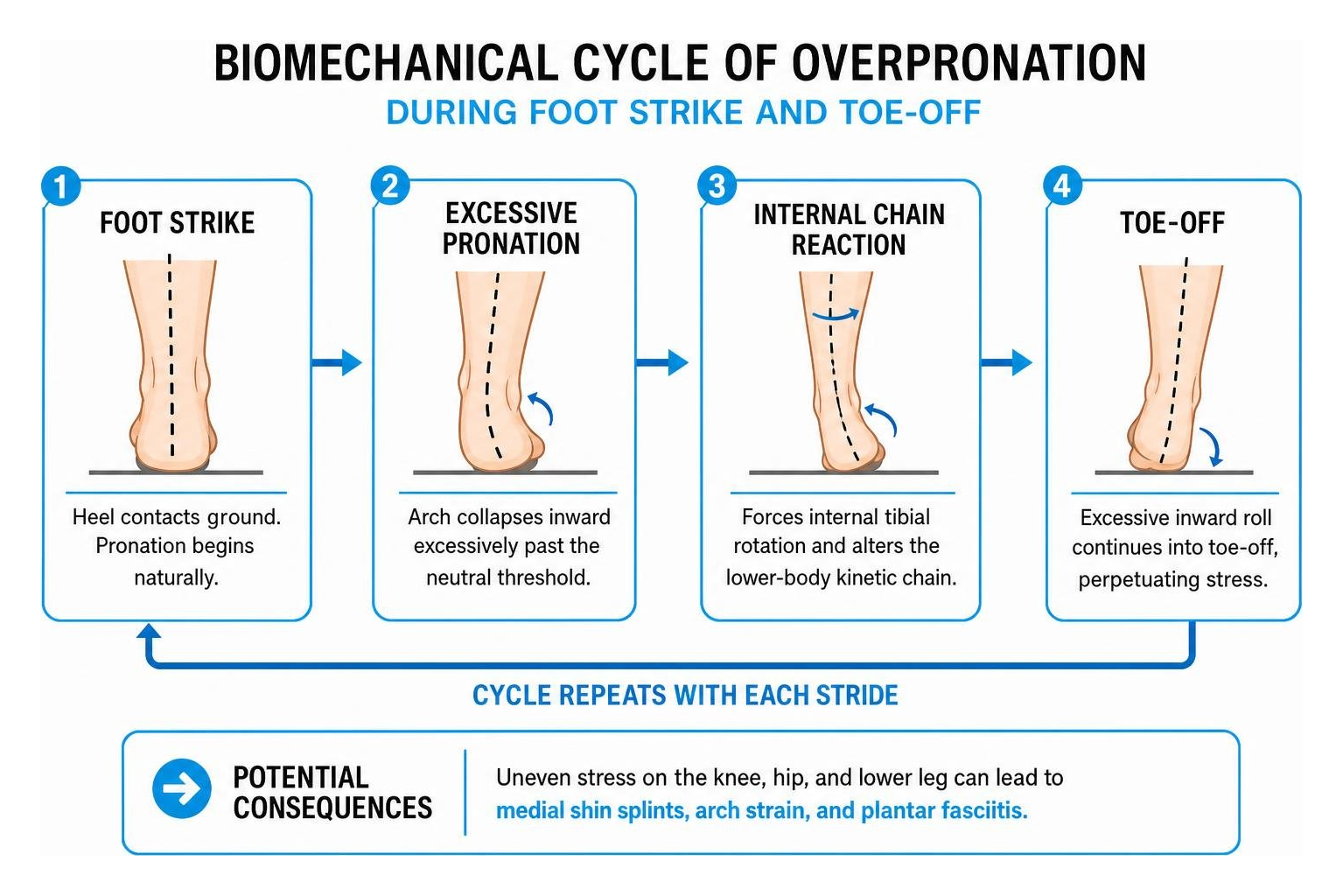
This excessive inward roll alters your lower-body kinetic chain. When the arch collapses inward, it forces internal tibial rotation (your shin bone twists inward), which places uneven stress on the knee, hip, and lower leg muscles. Over time, runners dealing with low arches or flexible flat feet experience issues such as medial shin splints, arch strain, and plantar fasciitis.
To counteract these stresses, runners require structured footwear that redirects inward momentum without abruptly blocking movement. The GT-1000 series incorporates an 8 mm heel drop alongside sculpted medial geometries. This balanced offset encourages a smooth heel-to-toe transition while preventing excessive strain on the Achilles tendon and calf complex, distributing ground reaction forces evenly across the footbed.
Evaluating the GT 1000 for Overpronation: How It Corrects Your Stride
Finding dependable stability running shoes for overpronation often means balancing structure with weight. The GT-1000 series achieves this balance by guiding the foot rather than forcing it into an unnatural position.
Instead of treating overpronation as a flaw that must be locked down, the GT-1000 stabilizes your gait dynamically. It manages impact through targeted geometry, wider base netting under the midfoot, and calibrated foam densities that resist medial compression during push-off.
3D GUIDANCE SYSTEM vs Legacy DuoMax
The biggest technological shift across recent generations of the GT-1000 is how the brand approaches medial support:
- Legacy DuoMax Support (GT-1000 9): Relied on a firm, dual-density block of hard foam placed under the inner arch (a traditional medial post). While effective at preventing inward rolling, it produced a rigid, somewhat clunky sensation underfoot.
- 3D GUIDANCE SYSTEM (GT-1000 13, 14, and 15): Replaces rigid foam blocks with holistic platform geometry. It integrates a wider base flare, subtle sidewalls, and an adapted heel bevel.
The 3D GUIDANCE SYSTEM offers adaptive stability: it engages primarily when fatigue sets in and your form breaks down, delivering a smoother, less intrusive transition. To learn more about how modern support systems work, check out our guide on everything you need to know about stability shoes for runners.
PureGEL vs Traditional Rearfoot GEL
For decades, this shoemaker used visible silicone-based GEL pads to handle rearfoot shock attenuation. While effective, traditional GEL added noticeable weight.
Modern editions (13, 14, and 15) feature PureGEL technology embedded directly inside the rearfoot midsole. PureGEL is roughly 65% softer than classic GEL formulations. When your heel strikes the ground, it dampens impact forces without the firm bottoming-out sensation found in older generations, leading to plush landings that ease joint stress.
Midsole Evolution: FLYTEFOAM vs FF BLAST Cushioning
The core foam compound of the GT-1000 has also seen substantial upgrades:
- FLYTEFOAM (Featured in GT-1000 9 & 13): A lightweight, resilient foam embedded with organic super fibers that prevent packing out over high mileage. It delivers a firm, protective, and predictable ride.
- FF BLAST (Featured in GT-1000 14 & 15): A modern, responsive foam compound that provides an energetic, cloud-like bounce. It compresses softly upon impact and rebounds quickly, making long training sessions feel significantly easier on tired legs.
Generation Breakdown: Comparing GT-1000 9, 13, 14, and 15
| Feature / Model | GT-1000 9 | GT-1000 13 | GT-1000 14 | GT-1000 15 |
|---|---|---|---|---|
| Release Era | Legacy | Previous Gen | Recent Core | Current Flagship |
| Weight (Men’s 9) | 275 g (9.7 oz) | 269 g (9.5 oz) | 265 g (9.35 oz) | 278 g (9.81 oz) |
| Heel Drop | 8 mm | 8 mm | 8 mm | 8 mm |
| Stability Tech | DuoMax Post | 3D GUIDANCE | 3D GUIDANCE | 3D GUIDANCE |
| Cushioning Foam | FLYTEFOAM | FLYTEFOAM | FF BLAST | FF BLAST |
| GEL Tech | Visible Rearfoot GEL | Rearfoot PureGEL | Rearfoot PureGEL | Rearfoot PureGEL |
| Outsole Rubber | AHAR | AHAR | AHAR LO | AHARPLUS |
Reviewing the specs of the GT-1000 lineup for overpronation across these four releases highlights the brand’s focus on pairing reliable gait correction with plush, lightweight cushioning.
Upgrading from Legacy Models: GT-1000 9 to Modern Editions
Runners transitioning directly from older models like the GT-1000 9 to the GT-1000 14 or GT-1000 15 will notice substantial improvements:
- Upper Comfort & Breathability: Older versions used stitched overlays that could create friction over wide bunions or low arches. The modern editions feature lightweight engineered mesh that hugs the foot seamlessly without restrictive pressure points.
- Heel Lockdown: Redesigned internal heel counters combined with plush collar padding hold the rearfoot firmly in place, minimizing internal heel slip.
- Weight Distribution: The featherweight build of the GT-1000 14 (265g) combined with modern PureGEL makes long runs feel far less fatiguing. If you’re building up weekly mileage, explore our recommendations for the best running shoes for distance training and daily miles.
Is the ASICS GT 1000 for Overpronation Suitable for Mixed Terrain?
If your daily routes alternate between pavement, packed gravel, and light dirt trails, standard road outsoles can wear down quickly and lose grip.
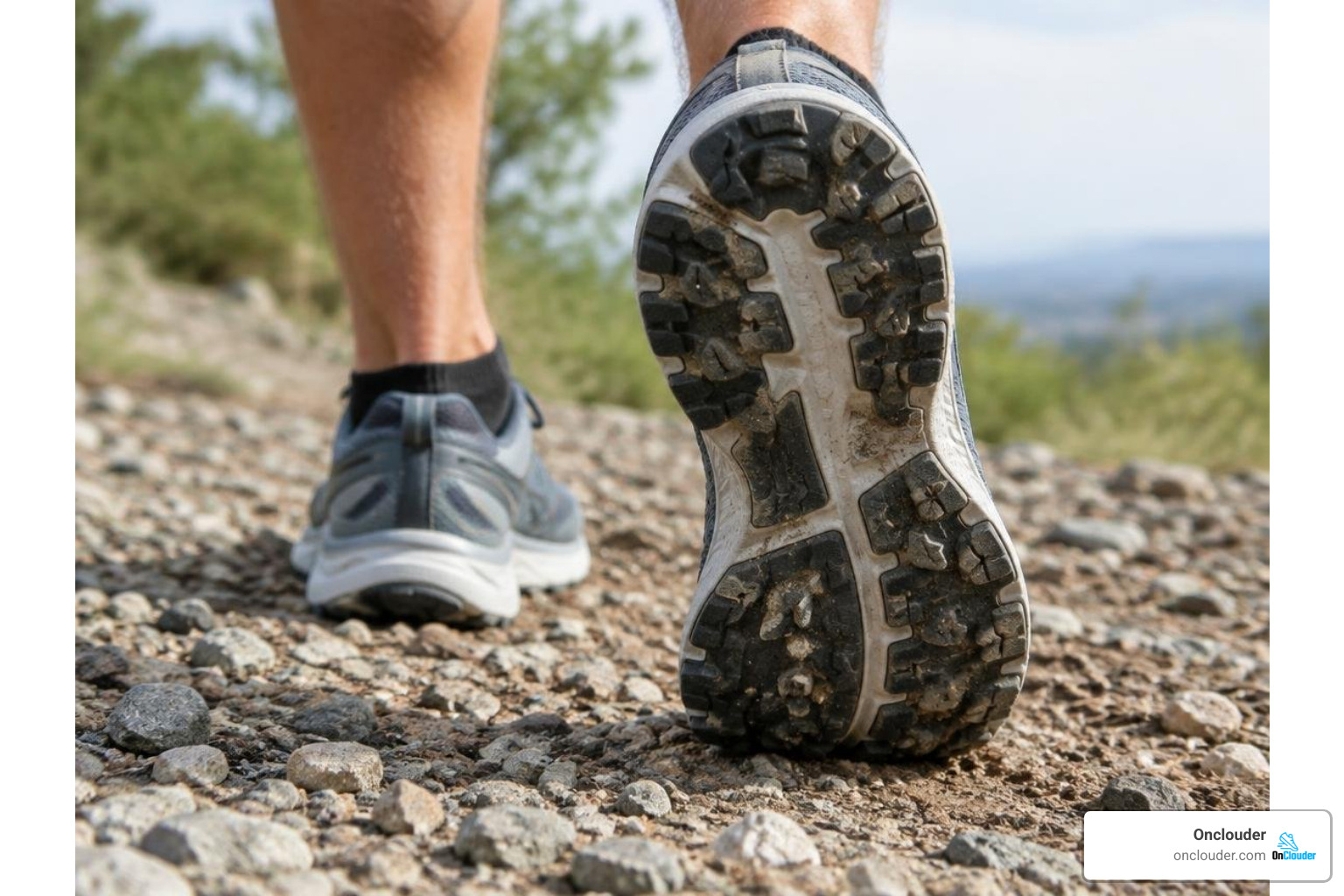
The GT-1000 13 TR Nature Bathing model is built specifically for these hybrid transitions. Weighing 274 g (9.7 oz), it features:
- A hybrid lugged outsole pattern that grips loose terrain while remaining smooth on hard asphalt.
- Reinforced toe guards to protect against stray roots and stones.
- The same adaptive 3D GUIDANCE SYSTEM and PureGEL cushioning found in the standard road shoe.
This makes the TR version an excellent multi-surface pick for runners with low arches who want dependable stability off-road.
Choosing the Best GT-1000 Model for Your Budget and Needs
Selecting the ideal model comes down to matching your budget with your performance needs:
- For the Best Value on a Budget: Look for discounted pairs of the GT-1000 13. It gives you the modern 3D GUIDANCE SYSTEM, rearfoot PureGEL, and durable FLYTEFOAM at an accessible price.
- For Maximum Cushioning and Responsiveness: Choose the GT-1000 14 or GT-1000 15. The upgrade to FF BLAST foam delivers an energetic ride that reduces leg fatigue over long road runs.
- For High-Mileage Durability: The GT-1000 15 features an ultra-tough AHARPLUS outsole, which is up to three times more abrasion-resistant than standard rubbers.
If you have very flat arches, pairing your daily trainers with supportive orthotics can offer additional relief. You can read our guide on how to stop the roll with the best overpronation insoles for further support options.
Frequently Asked Questions About the ASICS GT-1000
Key Signs You Need the ASICS GT 1000 for Overpronation
- Uneven Outsole Wear: Look at the bottom of your old shoes; heavy wear concentrated along the inside edge under the big toe indicates excessive inward rolling.
- Medial Lower Leg Fatigue: Frequent aches along the inner shin bones (shin splints) during or after tempo runs.
- Collapsing Arches: Your arch visibly flattens against the ground during weight-bearing stance phases.
- Plantar Fascia Tightness: Stabbing morning heel pain often results from unmanaged arch drop stretching the plantar band.
If you are exploring broader footwear alternatives, browse our curated selections of top podiatrist-approved shoes for overpronation and the 9 best stability shoes for every type of overpronator.
How Does PureGEL Differ from Standard GEL in Shock Absorption?
Traditional GEL was visible from the outside of the midsole, creating a distinct, localized zone of dampening that was dense and heavy. PureGEL is embedded completely within the foam core and engineered to be approximately 65% softer. This allows the entire rearfoot platform to compress uniformly, reducing peak impact forces without creating a mushy or unstable feeling when landing.
Which GT-1000 Model Delivers the Best Overall Value?
The GT-1000 13 and GT-1000 14 offer the best overall value for most runners. The GT-1000 13 delivers adaptive geometric stability at lower price points, while the GT-1000 14 introduces high-rebound FF BLAST foam at just 265 grams. Both models provide dependable performance without the premium price tags of top-tier stability trainers.
Conclusion
The ASICS GT-1000 series continues to stand out as a reliable, cost-effective stability workhorse for runners who overpronate. By replacing rigid medial posts with the adaptive 3D GUIDANCE SYSTEM, integrating soft PureGEL, and upgrading to responsive FF BLAST foam, ASICS has transformed the GT-1000 into a comfortable, modern trainer.
Whether you opt for the trail-ready versatility of the GT-1000 13 TR or the high-rebound ride of the GT-1000 14 and 15, this lineup delivers dependable gait correction across daily training miles. For more in-depth comparisons and expert fit advice, read our comprehensive essential guide to best overpronation shoes to find your ideal pair.