Best Beginner Marathon Shoes for Your First 26.2 Miles
Start with a comfortable daily trainer that fits well on long runs. Choosing the best beginner marathon shoes means prioritizing plush cushioning, dependable shock absorption, and step-in comfort. A premium max-cushion trainer offers ample joint protection for neutral runners, while responsive high-mileage options keep your legs fresh over everyday miles. If you prefer a shoe that rolls smoothly through your stride, consider the On Cloudmonster Hyper.
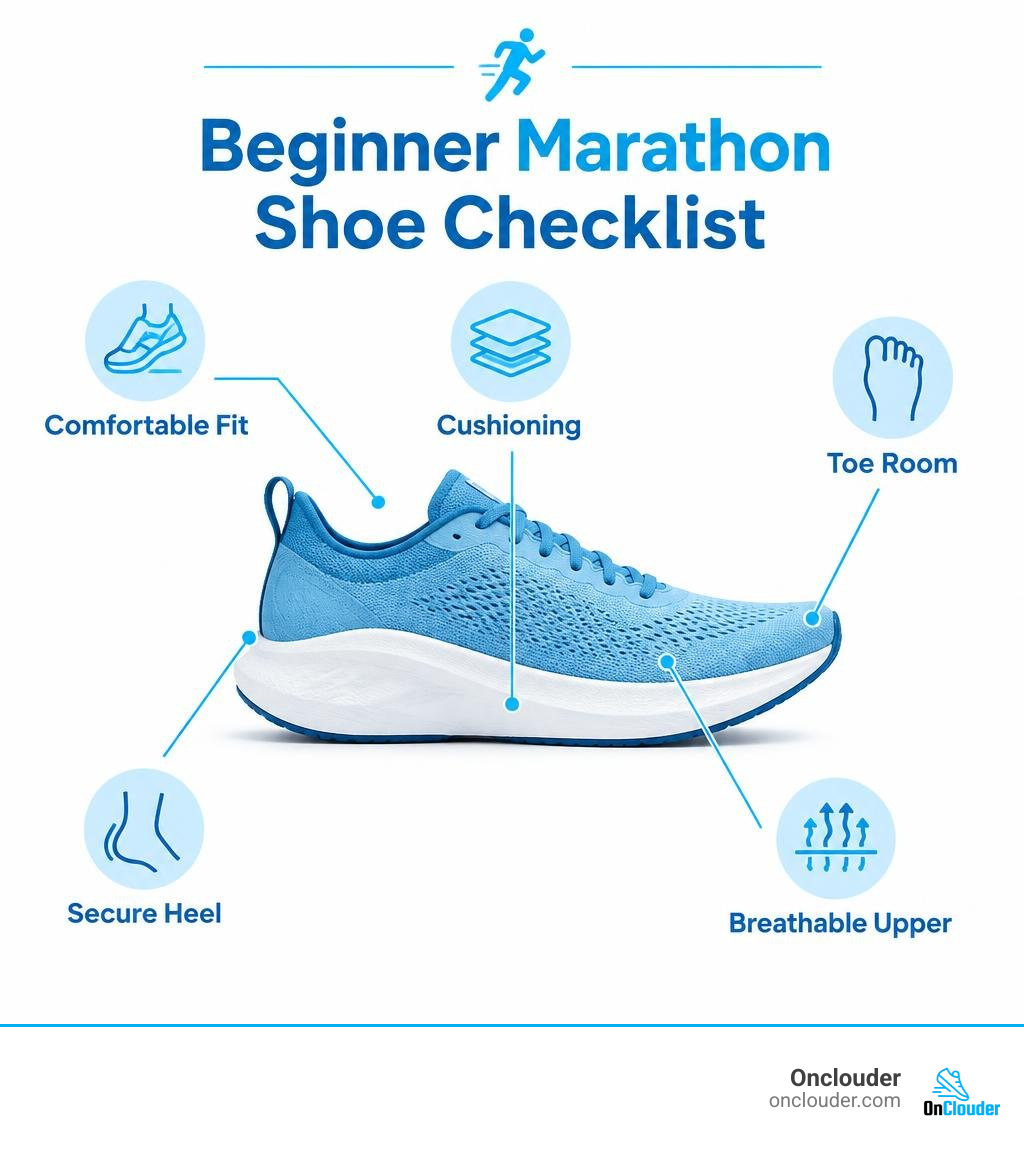
Fit matters far more than anything else. Look for room around your toes, a secure heel, and a breathable upper. Test your choice on several long runs before race day; a shoe that rubs at mile five is unlikely to feel better at mile 20.
Explore our guides on marathon running shoes, top marathon footwear rankings, and how elite athletes select a world record marathon shoe.
Essential Features: What First-Time Marathoners Need in a Shoe
Stepping into marathon training for the first time is thrilling, but running 30 to 45 miles a week demands a lot from your feet. When building your training setup, reviewing an ultimate checklist for finding the best marathon running shoes helps narrow down the sea of options.
For your initial 26.2-mile journey, the priority is simple: protection, comfort, and reliability over raw racing speed.
A beginner marathon shoe must combine several biomechanical features:
- Midsole Cushioning: Premium foams dampen ground reaction forces, protecting your feet and lower legs over long weekend sessions.
- Heel-to-Toe Drop: Most beginner shoes feature an 8mm to 10mm drop, reducing strain on the Achilles tendon and calf muscles as fatigue sets in.
- Shoe Weight: A balanced weight between 250g and 300g delivers enough foam underfoot without feeling like concrete blocks late in a 20-mile workout.
- Upper Breathability: High-engineered mesh allows heat and moisture to escape, preventing blisters and hotspots during multi-hour efforts.
Investing in highly cushioned road running shoes ensures your lower back, knees, and ankles can handle the repetitive pavement impact across a 16-to-20-week training plan.
Core Criteria: What Makes the Best Beginner Marathon Shoes?
The primary purpose of your first marathon shoe is joint preservation. Over thousands of strides, landing forces multiply, causing muscle breakdown. A high stack height—paired with resilient, impact-absorbing foam—spreads these forces evenly across the footbed.
Modern midsoles blend plush landing comfort with lively energy return. Rather than sinking into dead foam, modern trainers rebound to assist forward momentum. Finding top-rated cushioned running shoes ensures your legs stay fresh, while durable running shoes for distance training and daily miles maintain structural cushioning throughout your entire training block.
Key Comparisons: Finding the Best Beginner Marathon Shoes for Your Gait
Every runner’s foot strikes the ground differently, especially when fatigue hits during the final 10 kilometers:
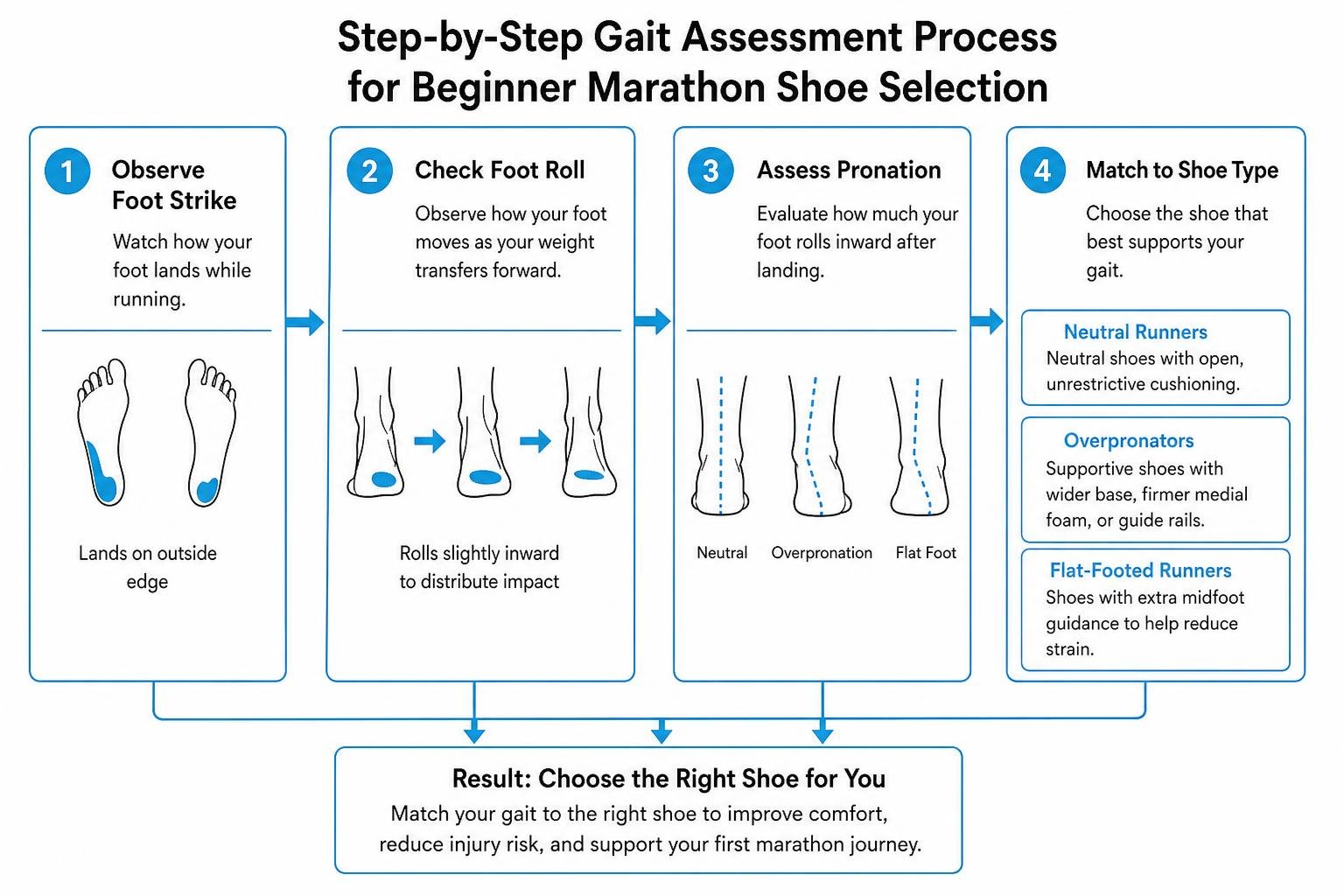
- Neutral Runners: If your foot lands naturally on the outside edge and rolls slightly inward to distribute impact, neutral shoes provide open, unrestrictive cushioning.
- Overpronators: If your ankles roll excessively inward and arches collapse under load, opt for supportive running shoes for comfort and protection. These designs use wider base geometries, firmer medial foams, or sidewall guide rails.
- Flat-Footed Runners: Runners needing extra midfoot guidance can check dedicated running shoes for flat feet and overpronation to prevent plantar fascia strain.
Top Ranked: The Best Beginner Marathon Shoes Reviewed
| Shoe Category | Weight | Drop | Key Cushioning Feature | Best Use Case |
|---|---|---|---|---|
| Max-Cushion Road Trainer | ~265g | 8mm | High-stack shock absorption foam | Maximum comfort & impact dampening |
| Plush Everyday Mileage Shoe | ~262g | 6mm | Soft resilient midsole foam | Easy daily training & recovery runs |
| Durable High-Mileage Trainer | ~275g | 10mm | Resilient, bouncy foam compound | Joint protection & high mileage |
| On Cloudmonster Hyper | ~272g | 6mm | Helion HF & CloudTec | Long runs with responsive rocker |
For a broader look at top-tier marathon footwear, explore our shoes best for marathon running guide.
Maximum-Cushioning Shoe: Shock Absorption and Heel Lockdown
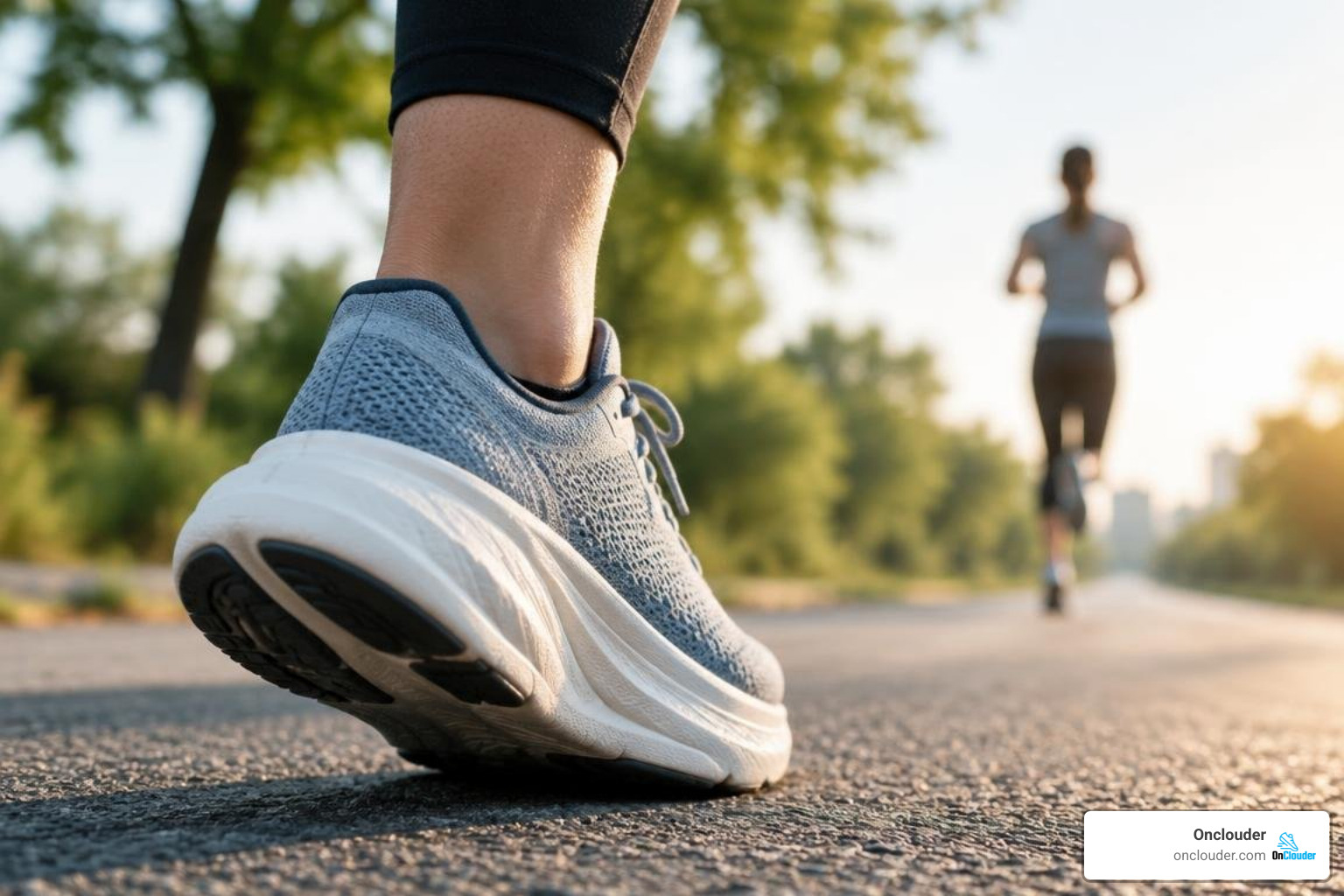
A maximum-cushion trainer is an outstanding choice for first-time marathoners. Weighing around 265g, this category delivers supreme shock absorption. By pairing rearfoot impact-dampening technology with lightweight, high-rebound foam, modern max-cushion trainers shift protective density toward the midsole for a plush, cloudlike step-in feel.
This setup excels at absorbing harsh pavement pounding over 26.2 miles, leaving runners with minimal post-race foot soreness. The engineered upper is breathable and supportive through the midfoot, though runners prone to friction should ensure a snug heel lockdown to avoid minor heel rub on wet runs.
- Pros: Lightweight ~265g build, top-tier shock absorption, sustainable foam construction, reliable wet grip.
- Cons: High collar requires precise lacing to prevent heel friction.
Everyday Trainer: Softness and Daily Miles
A plush everyday trainer remains an industry staple for logging high weekly mileage, serving as an ideal mileage builder for beginner marathon plans.
Its thick, cushioned midsole delivers a pillowy ride that protects joints during recovery jogs and weekend long runs. If you want a dependable shoe that cushions tired legs on easy days, consider these best marathon training shoes.
- Pros: Exceptionally soft step-in feel, roomy forefoot, smooth transitions.
- Cons: Can feel slightly soft for faster interval work.
Durable Trainer: Joint Protection
A durable high-mileage trainer is built for runners who prioritize joint support and out-and-out durability. Featuring bouncy, resilient performance foam, this category offers consistent cushioning that does not pack down or firm up in cold weather.
Its structured heel counter and wider platform provide inherent stability without restricting natural foot movement, making it one of our top marathon shoe recommendations for training and race day.
- Pros: Ultra-durable outsole rubber, energetic bounce, protective 10mm drop.
- Cons: Slightly heavier overall profile than pure racing shoes.
Responsive Trainer: Rocker for Long Runs
The On Cloudmonster Hyper takes maximum cushioning and adds dynamic speed. Designed specifically for high-mileage training blocks, it uses On’s Helion HF hyper-foam alongside an aggressive forward-rolling rocker profile.
This rocker geometry promotes an effortless forward roll, reducing ankle flexion demands and saving calf energy over the final 10 miles. It covers all the long distance running footwear essentials for beginners aiming to finish their first marathon strong.
- Pros: High energy return, smooth forward roll, breathable upper.
- Cons: Premium price point.
Marathon Training Shoe Strategy: Rotations and Lifespan
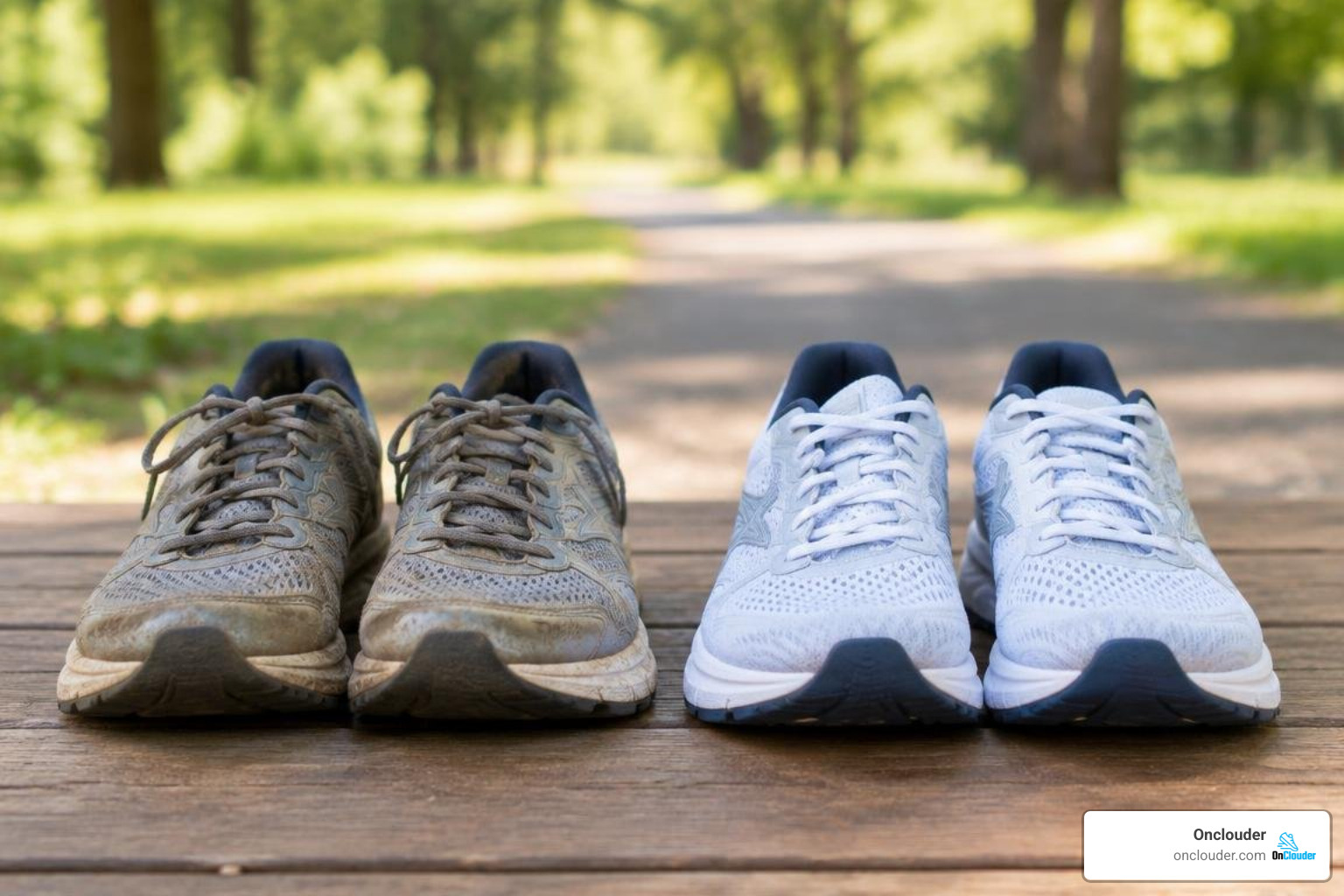
Running your entire training cycle in a single pair of shoes is a common beginner mistake. High-mileage marathon training causes midsole foams to compress. It takes 24 to 48 hours for modern EVA and PEBA-based foams to fully decompress and regain their shock-absorbing properties.
A typical marathon training shoe lasts between 300 and 500 miles. With many beginner plans totaling over 400 miles, alternating two pairs extends the lifespan of each shoe and reduces overuse injury risks by varying the repetitive stress placed on your tendons and muscles.
Daily Mileage Trainers vs. Faster Tempo Shoes
- Everyday Mileage Shoes: These shoes handle 70% to 80% of your training volume, including easy recovery jogs and weekend long runs. They prioritize plush cushioning, step-in comfort, and durability.
- Tempo Shoes: These lighter, more responsive trainers are built for interval sessions, fartleks, and threshold workouts. They encourage snappy toe-offs and quicker turnover.
To balance your training setup without overspending, check our budget vs premium running shoes guide for practical gear pairings.
How to Prevent Blisters and Discomfort on Long Runs
Long runs will quickly expose any shoe fit issues. During a 3-to-4-hour run, your feet naturally swell up to half a full shoe size. To prevent bruised toenails, arch hotspots, and blisters, follow these steps:
- Size Up: Buy your marathon shoes a half size larger than your casual footwear to give your toes ample room to splay. You can review our wide toe box running shoes guide if you have broader feet.
- Wear Technical Socks: Avoid cotton socks, which hold sweat. Choose synthetic or merino wool running socks that wick moisture away from your skin.
- Use Anti-Chafe Balm: Apply anti-chafe balm to high-friction spots like the balls of your feet, heels, and between your toes before heading out.
- Master the Runner’s Knot: Use the extra eyelet at the top of your shoe to create a heel-lock loop. This secures your ankle in place and stops your toes from sliding forward into the toe cap.
Frequently Asked Questions About Beginner Marathon Footwear
How many pairs of shoes do I need to train for a marathon?
We recommend having at least two pairs in your rotation. Using one cushioned pair for long, easy runs and a second, slightly lighter pair for tempo runs allows the midsole foam to fully recover between workouts and helps protect against repetitive impact injuries.
Should beginners wear carbon-plated super shoes for their first marathon?
Generally, no. Carbon-plated racers are designed for high-speed mechanics. Their rigid plates and aggressive geometry place extra strain on the calves, Achilles tendons, and plantar fascia, especially at slower beginner paces. A stable, max-cushioned trainer is a far safer and more comfortable choice for your first 26.2-mile event.
How far in advance should I purchase my race day shoes?
Purchase your race day shoes 4 to 6 weeks before the marathon. You should log roughly 50 to 80 miles in them, including at least one 16-to-18-mile long run. This ensures the shoes are broken in, comfortable, and free from unexpected hotspots without degrading their race-day cushioning.
Conclusion
Choosing the right footwear is the most important gear decision you will make for your marathon journey. By focusing on cushioning, reliable heel lockdown, and proper toe room, you give your body the protection it needs to cross the finish line injury-free.
To see how specialized Swiss engineering stacks up against classic high-mileage road shoes, explore our in-depth analysis: the best running shoes for marathons: can On Clouds really handle the distance?