Are Crocs Sandals Good for Plantar Fasciitis?
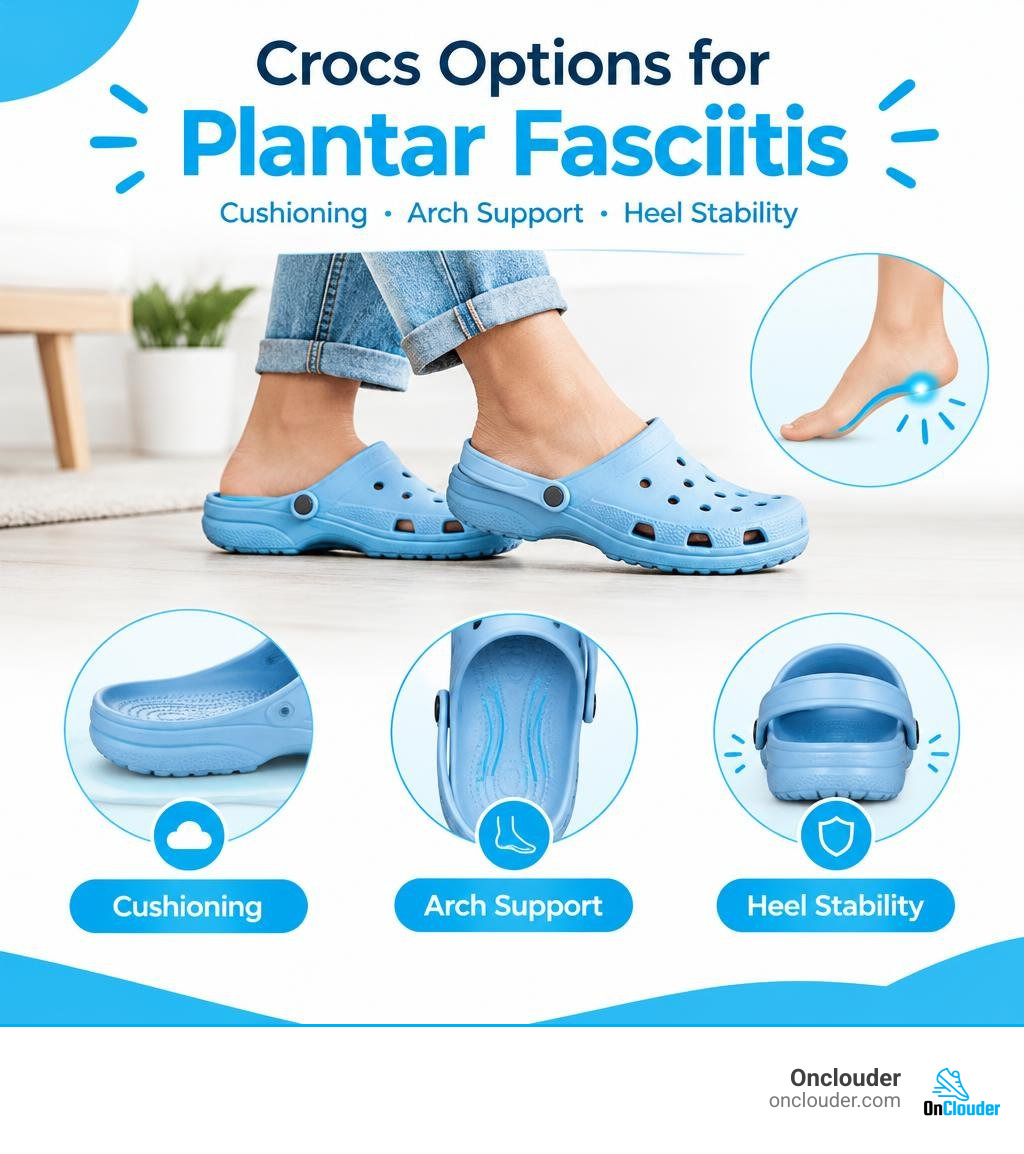
Crocs sandals can feel good on sore heels, but the best choice depends on support, not softness alone. For tender feet at home, consider the cushioned LiteRide 360 Slide or Mellow Recovery Slide. If your heel slips or you need a more secure fit, a Classic Clog with its heel strap may work better than an open sandal.
Look for a footbed that supports your arch, holds your heel in place, and feels comfortable when you walk. Crocs may help with daily comfort, but they do not replace prescribed orthotics or supportive shoes for exercise. This review compares the options so you can choose based on your pain and routine.
Best crocs sandals for plantar fasciitis terms to know:
- best flip flops with arch support for men
- best house slippers for plantar fasciitis women’s
- best indoor sandals for plantar fasciitis
Introduction
Anyone who has experienced plantar fasciitis knows that dreaded morning moment. You swing your legs out of bed, plant your feet onto hard flooring, and feel a sharp, stabbing sensation in the base of your heel. That acute discomfort occurs because the thick band of tissue running along the bottom of your foot—the plantar fascia—contracts overnight and becomes irritated when suddenly stretched under body weight.
Finding daily footwear that softens this impact without feeling stiff or heavy is essential for recovery. Over the years, Crocs has evolved from a quirky boat shoe into an everyday staple, surpassing 300 million pairs sold worldwide. Podiatrists frequently evaluate these molded foam models because their proprietary footbed geometry and shock-absorbing properties provide gentle relief for sore heels.
Understanding whether Crocs sandals fit your recovery routine comes down to matching their biomechanical traits to your specific foot needs.
How Crocs Technology Supports the Plantar Fascia
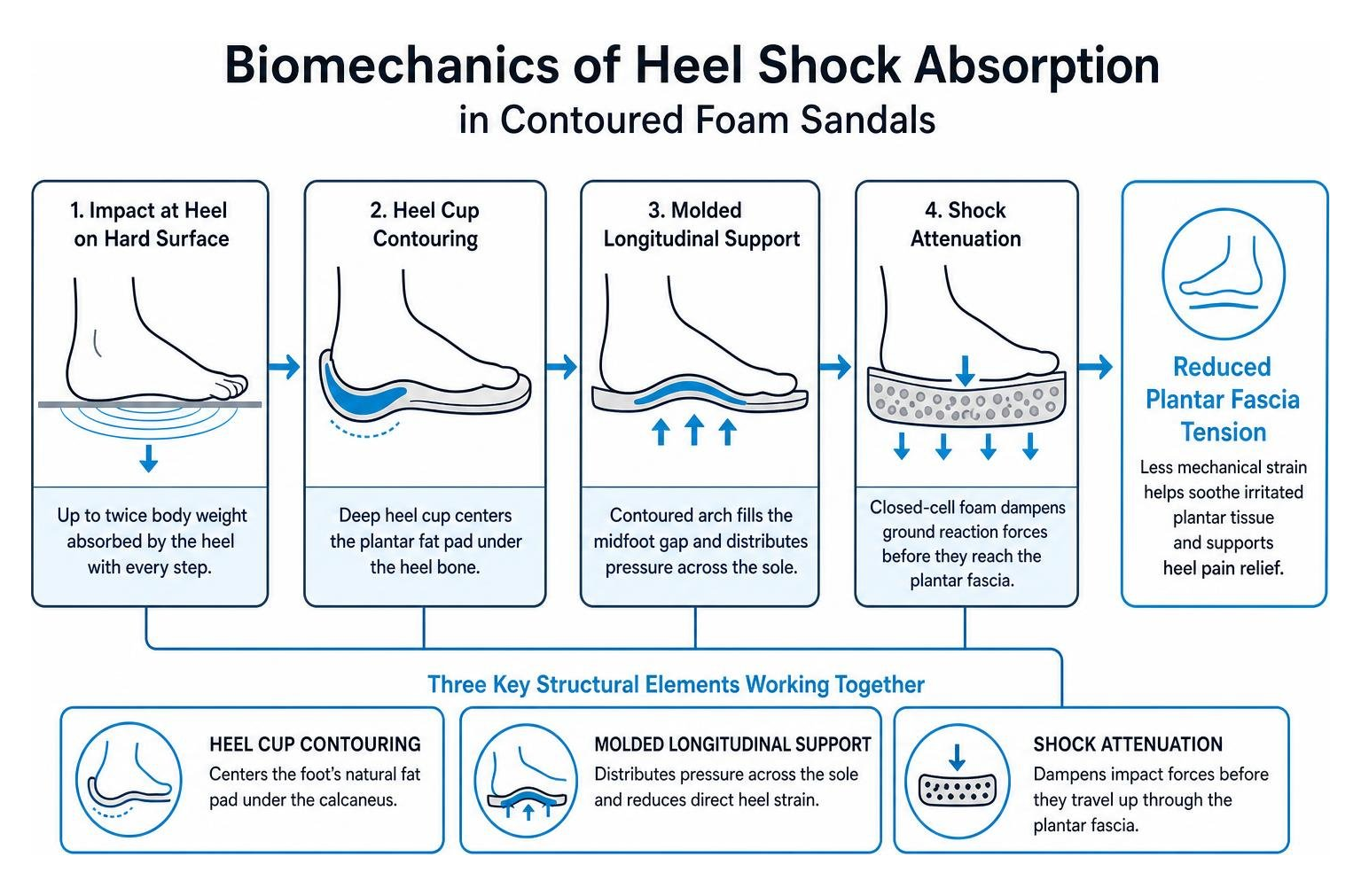
To understand why Crocs footwear eases heel pain, we have to look closely at foot biomechanics. When you walk barefoot across hard surfaces like hardwood or tile, your heel absorbs up to twice your body weight with every step. If your plantar fascia is inflamed, that repetitive shock slows healing.
Crocs sandals help reduce this mechanical strain through three key structural elements:
- Heel Cup Contouring: A subtle recess in the heel bed cradles your foot’s natural fat pad, concentrating your body’s built-in cushioning directly under the calcaneus (heel bone).
- Molded Longitudinal Support: The pre-shaped arch profile fills the gap under your midfoot, redistributing downward pressure evenly across the entire sole rather than dumping it onto the heel.
- Shock Attenuation: The closed-cell resin acts like a shock absorber, dampening ground reaction forces before they travel up through your fascia ligament.
For a deeper look into proper footbed design, see our comprehensive guide to shoes with good arch support for plantar fasciitis. While open-toed footwear will never offer the rigid motion control of structured running shoes, the ergonomic contouring in Crocs helps soothe irritated plantar tissue around the home.
The Biomechanics of Croslite vs LiteRide Foam
Crocs manufactures its footwear using two primary proprietary materials: classic Croslite and newer LiteRide foam. Understanding their differences is crucial when selecting footwear for heel pain:
- Traditional Croslite: A durable closed-cell resin that is neither rubber nor typical lightweight plastic. It softens slightly with foot warmth over time, creating a firm yet responsive footbed. This rigidity offers reliable longitudinal arch support for prolonged standing.
- LiteRide Foam: An advanced formulation designed specifically for sink-in comfort. LiteRide foam is 25% lighter and 40% softer than traditional Croslite, delivering immediate cushioning for acute heel tenderness and bruised foot soles.
If you deal with severe morning heel spurs, LiteRide delivers immediate shock dispersion. However, if you require firm resistance under your arch to prevent overpronation, firmer Croslite compounds provide better biomechanical stability. Many people also find that rotating these with the comfiest house slides for plantar fasciitis relief keeps feet rested throughout long weekends at home.
Key Criteria for Choosing the Best Crocs Sandals for Plantar Fasciitis
Not every open-air slide or sandal from the Crocs catalog works well for plantar fasciitis. When evaluating specific models, keep these four essential criteria in mind:
- Longitudinal Arch Elevation: The footbed must contact your midfoot arch cleanly without collapsing under full weight bearing.
- Heel Seat Depth: Avoid completely flat, slab-style flip-flops. Look for a defined heel cup that keeps your foot centered and prevents side-to-side rolling.
- Upper Fit and Adjustability: Loose straps force your toes to claw to keep the shoe on, which directly tightens the plantar fascia. Choose secure slide bands or dual-strap sandals.
- Roomy Toe Splay: A wide toe box allows your forefoot to expand naturally, enhancing balance and reducing tension along the bottom of the foot.
For warm-weather styling tips, check out our breakdown on why your summer needs arch support slides and thongs to keep your feet pain-free in every setting.
Top Picks: The Best Crocs Sandals for Plantar Fasciitis
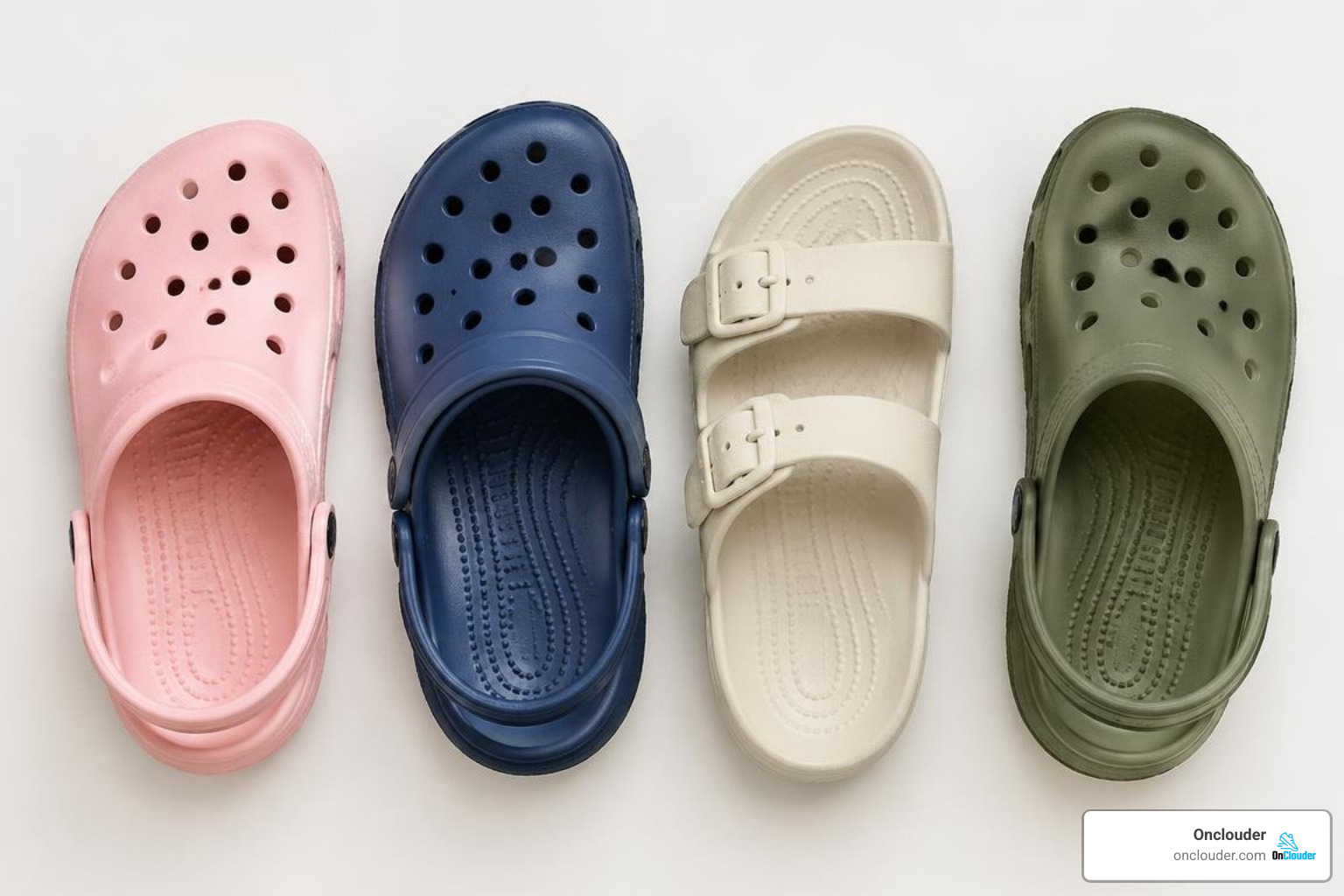
Finding the right balance between soft cushioning and firm stability is essential when shopping for supportive summer or indoor footwear. Below, we break down our top picks across the Crocs lineup, evaluating footbed density, strap design, and plantar relief.
1. Crocs LiteRide 360 Slide — Best for Soft, Acute Pain Relief
The LiteRide 360 Slide is engineered with next-generation foam mapping. The footbed features micro-massage nubs and ultra-plush LiteRide foam, making it ideal for stepping out of bed onto unforgiving floors.
- Pros: Exceptionally soft, lightweight, and gentle on sensitive heel spurs.
- Cons: Softer foam provides less structured arch support for high arches.
- Best For: Indoor recovery and gentle household wear during acute pain flare-ups.
2. Crocs Classic Clog — Best All-Around Everyday Arch Support
While technically a clog, this iconic model functions as a protective summer sandal thanks to its breathable ventilation ports and convertible heel strap. The firmer Croslite resin maintains steady arch support throughout hours of wear.
- Pros: Dependable arch elevation, deep heel seat, and secure pivoting heel strap.
- Cons: Bulkier silhouette that some may dislike for warm-weather outings.
- Best For: All-day indoor/outdoor chores and casual errands.
3. Crocs Specialist II Work Clog — Best for Maximum Arch Rigidity
For individuals who find standard clogs too soft, the Specialist II offers a reinforced, thicker metatarsal arch and an enclosed heel design. It meets occupational slip-resistance standards while shielding tired arches from fatigue.
- Pros: Thicker midfoot arch, enclosed heel protection, and enhanced outsole grip.
- Cons: Lacks ventilation holes on the upper, leading to warmer foot temps.
- Best For: Extended standing, kitchen prep, and those who need structured support.
4. Crocs Mellow Recovery Slide — Best for Post-Activity Comfort
The Mellow Recovery Slide uses a soft, slow-rebound foam blend. Its deep cupped footbed allows your foot to sink in securely, relieving post-workout tightness along the heel and Achilles tendon.
- Pros: High-rebound footbed, modern look, and soft upper strap.
- Cons: Thicker profile can feel slightly unstable on uneven outdoor ground.
- Best For: Post-run recovery and relaxing after athletic workouts.
If you are exploring other supportive options, take a look at our curated list of podiatrist approved best shoes for plantar fasciitis for active lifestyles.
Why the LiteRide 360 Ranks Among the Best Crocs Sandals for Plantar Fasciitis
The LiteRide 360 Slide stands out because it addresses the most painful phase of plantar fasciitis: the initial, high-pressure impact on an inflamed heel. Its sink-in softness absorbs ground shock immediately, preventing sharp pain when you step onto tile or stone floors.
Athletes and fitness enthusiasts often turn to this model after challenging training sessions. If you want to expand your warm-up and cool-down footwear collection, consider how you can level up your recovery with supportive athletic slides designed specifically for soothing tired feet.
Classic Clog vs Specialist II vs Crocs Slides
Choosing between traditional clogs and open-toed slides comes down to your personal support needs, work environment, and daily routine.
| Feature | Crocs Classic Clog | Crocs Specialist II | Crocs LiteRide 360 Slide | Crocs Mellow Recovery Slide |
|---|---|---|---|---|
| Primary Foam | Croslite | Reinforced Croslite | LiteRide | Deep-Drop Mellow Foam |
| Arch Rigidity | Moderate | High (Reinforced) | Soft to Moderate | Low to Moderate |
| Heel Security | Pivoting Heel Strap | Enclosed Heel Wall | Open Slide | Deep Contoured Recess |
| Ventilation | High (Open Ports) | Closed (Spill Proof) | Open Slide | Open Toe / Side Vents |
| Best Use Case | Everyday multi-use | Long standing / work | Morning heel relief | Post-exercise recovery |
Podiatric Guidance, Limitations, and Daily Usage Protocols
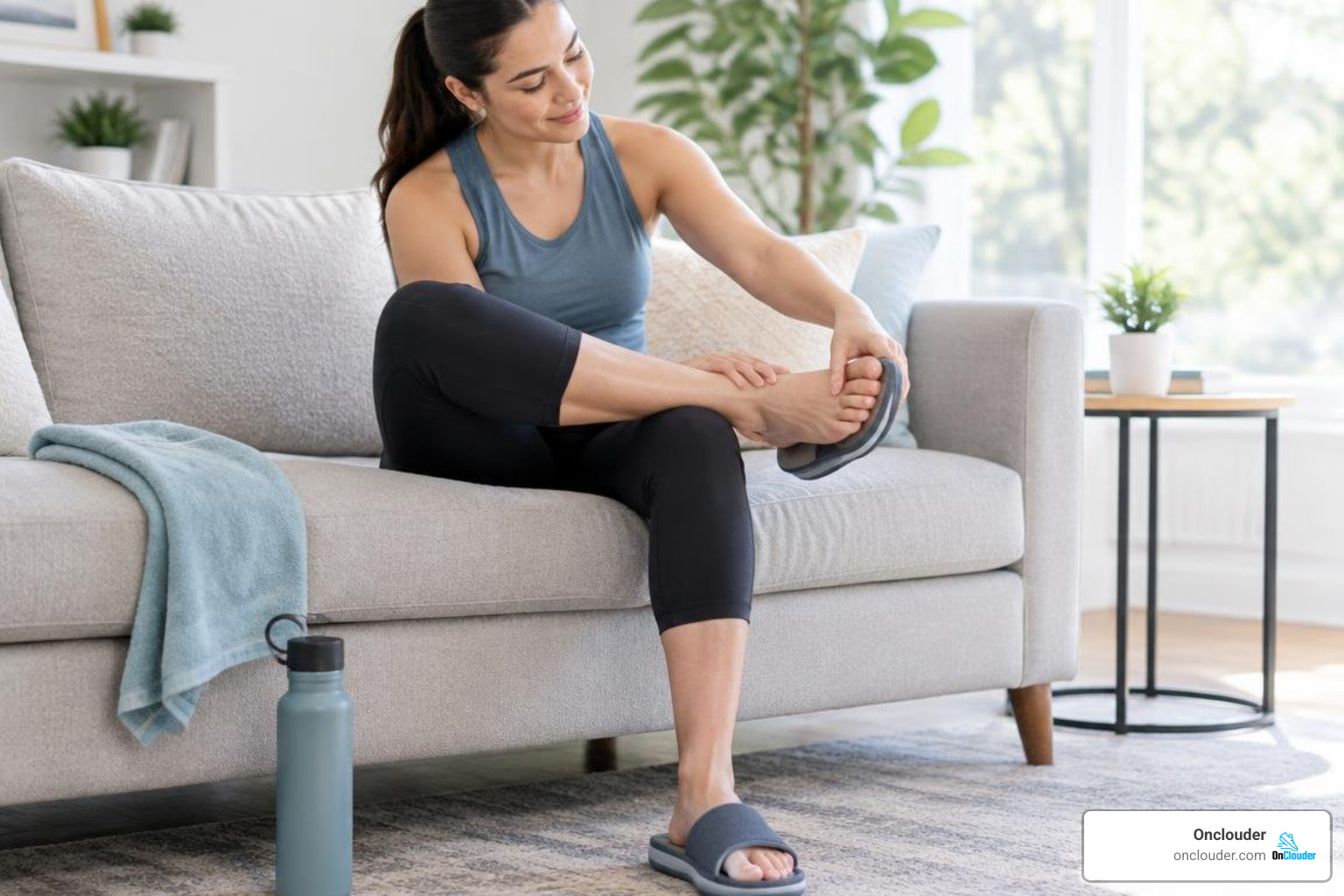
While Crocs sandals offer cushioned, practical comfort, it is essential to understand their medical role. According to guidance from the American Podiatric Medical Association, proper foot support is vital for heel pain recovery, meaning Crocs serve as supplemental comfort and recovery shoes, not medical orthotics.
Here are a few key limitations to keep in mind:
- Lateral Instability: Soft foam lacks the torsional stiffness needed to prevent ankles from rolling inward during lateral movements or hikes.
- Toe-Clawing Risk on Slides: Open-back slides without straps can cause your toes to curl with every step, which tightens the plantar fascia over long distances.
- Orthotic Limitations: You cannot swap out the footbeds in molded slides for custom prescription orthotics.
If you prefer lightweight open-toe options, discover why supportive flip flops might be your best defense against foot pain when transitioning out of heavy closed-toe shoes.
How to Maximize Podiatric Relief at Home
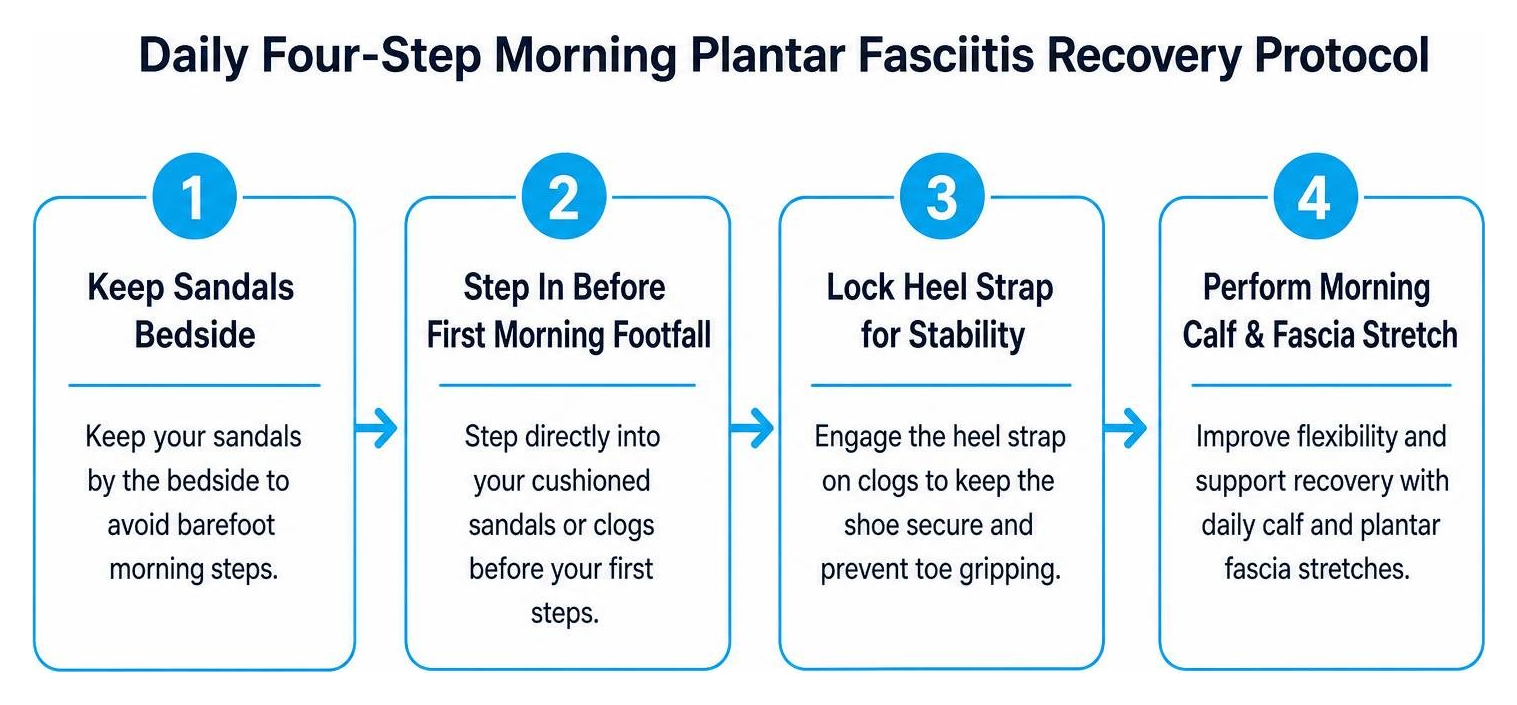
To get the most out of your Crocs sandals and support your recovery, incorporate these daily footwear habits:
- Keep Them Right by the Bedside: Never take barefoot steps onto cold, hard floors in the morning. Step directly into your cushioned slides or clogs to protect your plantar fascia.
- Engage the Heel Strap: When wearing clogs, swing the pivoting heel strap behind your ankle. This keeps the shoe locked to your heel, preventing your toes from gripping to stay in place.
- Incorporate Daily Calf Stretches: Combine your supportive footwear routine with regular calf and plantar fascia stretches against a wall or step.
- Monitor Outsole Tread Wear: Over time, compressed Croslite loses its shock-absorbing power and grip. Replace your sandals once the footbed nubs smooth out or the tread wears flat.
For more podiatrist-backed warm-weather recommendations, browse our top podiatrist picks for plantar fasciitis flip flops.
Frequently Asked Questions About Crocs and Plantar Fasciitis
Can I wear Crocs all day with plantar fasciitis?
Yes, you can wear Crocs for much of the day around the house or during light standing, provided you choose models with a secure heel strap and contoured arch. However, wearing open-back slides without straps all day on uneven outdoor terrain can lead to foot fatigue. Rotate them with structured walking shoes for longer outings.
Do Crocs have enough arch support to replace medical orthotics?
No. While Croslite foam provides comfortable molded contouring, it cannot replicate the precise corrective biomechanics of prescription orthotics. Crocs are ideal as indoor recovery footwear to protect your feet when you are not wearing your custom orthotics.
What is the difference between Classic Clog and Specialist II for foot pain?
The Classic Clog features open ventilation ports and standard Croslite cushioning. The Specialist II is built for work environments, featuring a closed-toe upper, a reinforced arch profile for extended standing, and slip-resistant tread.
Conclusion
Crocs sandals provide immediate, accessible comfort for anyone managing plantar fasciitis. Their shock-absorbing Croslite and LiteRide foams soften ground impact, while molded heel cups and arch profiles offload painful morning strain.
For plush, sink-in heel comfort, the LiteRide 360 Slide is a fantastic choice for home use. If you need firmer midfoot support and a secure fit, the Classic Clog or Specialist II delivers reliable stability throughout the day.
If you spend long hours standing on hard surfaces at work, explore our in-depth best work shoes for plantar fasciitis guide to find the ideal footwear for complete, all-day relief.