Understanding Biomechanics: Why Pronation Matters for Runners
If you’re looking for the best adidas pronation trainers, the Adistar 2.0 and Supernova Ease 2 are top choices for stability and comfort. The Adistar 2.0 uses a dual-density REPETITOR+ rear cradle to stabilize the heel during long runs, while the Supernova Ease 2 offers lightweight arch support for daily training. These stability features help control excessive inward foot roll, reducing strain on your knees and lower legs.
When your foot strikes the ground, it naturally rolls inward by roughly 15 degrees to distribute the impact. This movement, known as pronation, involves subtalar joint eversion, ankle dorsiflexion, and forefoot abduction. It is your body’s built-in shock absorption system. Without adequate pronation, the forces of landing travel directly up your skeletal framework.
However, biomechanical challenges arise when this motion becomes excessive. Overpronation occurs when the foot rolls inward past normal parameters, causing an inward twisting of the lower leg (Hintermann & Nigg, 1998). This calcaneus-to-tibia movement transfer places heightened torque on the knee joint and stresses the soft tissues along your lower leg. Research shows that injured runners often exhibit pronation movements that are 2 to 4 degrees greater than their uninjured peers.
Over time, excessive inward roll can contribute to issues such as medial tibial stress syndrome (shin splints), plantar fasciitis, and patellofemoral pain. Interestingly, between 40% and 50% of runners who overpronate never experience overuse injuries. But as mileage increases during a training block, muscle fatigue sets in, causing foot pronation to increase and elevating strain on connective tissues. Exploring the ultimate guide to running with overpronation can help you identify whether your mechanics require corrective support.
Determining Your Foot Strike and Pronation Type
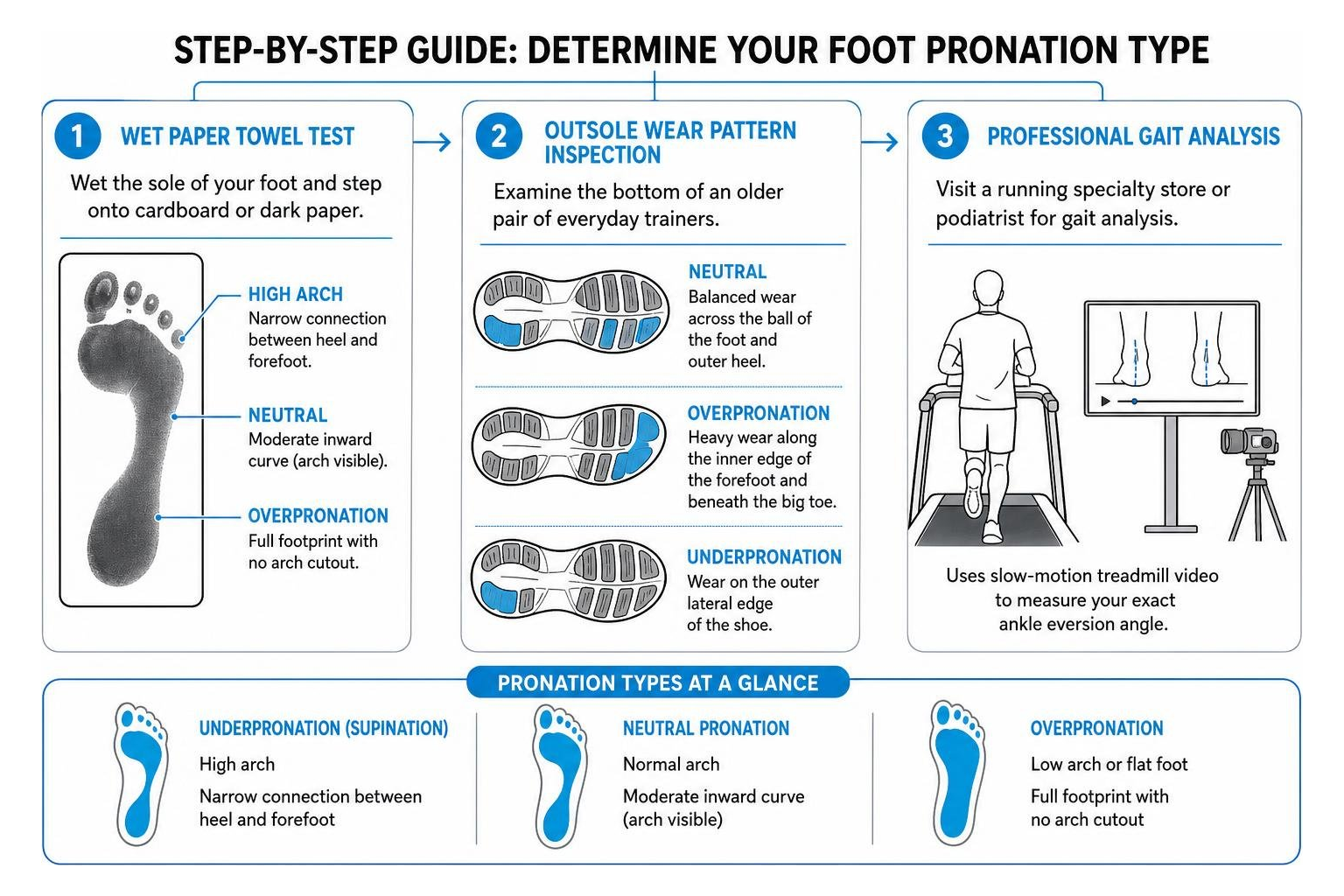
Finding the right support level starts with understanding how your foot interacts with the ground. You can determine your mechanics using three practical methods:
- The Wet Paper Towel Test: Wet the sole of your foot and step firmly onto a dry piece of cardboard or dark paper. A distinct, narrow connection between your heel and forefoot indicates a high arch (often associated with underpronation or supination). A full footprint with no visible arch cutout points to flat feet and probable overpronation. A balanced imprint with a moderate inward curve indicates neutral pronation.
- Outsole Wear Pattern Inspection: Examine the bottom of an older pair of everyday trainers. Neutral runners show balanced wear across the ball of the foot and outer heel. Overpronators show heavy wear along the inner edge of the forefoot and beneath the big toe. Underpronators wear out the outer lateral edge of the shoe.
- Professional Gait Analysis: Running specialty stores and podiatrists use slow-motion treadmill video capture to measure your exact ankle eversion angle. Checking top podiatrist-approved shoes for overpronation provides further guidance on choosing models that align with clinical recommendations.
Key Stability Features in Motion-Control Footwear
Running shoes manage excess motion through specific structural design elements rather than rigid, restrictive materials:
- Medial Posting and Firmer Dual-Density Foams: Denser foam along the medial (inner) side of the midsole slows down the rate of inward foot collapse during midstance.
- Firm Heel Counters: An external or reinforced internal heel cup locks the calcaneus in place, preventing lateral and medial sliding inside the shoe.
- Torsional Rigidity Systems: Plastic or composite midfoot shanks prevent the shoe from twisting unnaturally between the heel and forefoot.
- Broad Outsole Platforms: Wider geometric bases under the arch and midfoot create an inherently stable contact area upon ground strike.
Understanding everything you need to know about stability shoes for runners makes it easier to match these features to your specific arch profile and stride.
Top Adidas Pronation Trainers for Maximum Stability and Comfort
Selecting supportive running shoes depends on finding the balance of stability, cushioning, and weight that fits your training needs. As our best overpronation shoes guide 2026 highlights, modern stability shoes focus on smooth transitions over rigid correction.
| Model | Primary Stability Feature | Cushioning Tech | Best For | Typical Price Range |
|---|---|---|---|---|
| Adistar 2.0 | Dual-density REPETITOR+ rear cradle | REPETITOR / REPETITOR+ | High-mileage base runs, heavy heel strikers | £120 / $130–$140 |
| Supernova Ease 2 | EVA guide carrier & engineered mesh | Dreamstrike+ / Cushioned EVA | Daily training, mild overpronation | £40–£80 / $60–$90 |
| Puremotion Adapt | Broad base with memory foam sockliner | Cloudfoam midsole | Walking, casual wear, light recovery | $65–$105 |
| EQT Support Mid ADV | TPU heel cage & mid-cut collar | Compression-molded EVA | Gym training, lifestyle stability | £99 / $110–$130 |
Adidas Adistar 2.0: Best adidas pronation trainers for Long Distance Support
The adidas Adistar 2.0 Shoes – Black are built for logging slow, steady miles with steady support. Holding an average customer rating of 4.3 out of 5 from over 365 reviews, this model uses a dual-density midsole design. The front and core of the shoe feature lightweight REPETITOR foam, while the heel is wrapped in firmer, recycled REPETITOR+ foam.
This firmer rearfoot cradle acts as a physical boundary, stabilizing the calcaneus upon impact and guiding the foot forward into a smooth rocker transition. For runners who fatigue over high mileage, this structure helps prevent late-run form breakdown. It is one of the standout selections featured in the 9 best stability shoes for every type of overpronator.
Adidas Supernova Ease 2: Lightweight Everyday Arch Support
The Supernova Ease 2 Running Shoes provide a balanced feel for daily running. Earning a 4.6 rating from 184 reviews with a 93% recommendation rate, these shoes pair comfortable cushioning with subtle medial support.
Designed for runners with mild overpronation or neutral mechanics looking for extra guidance, the Supernova Ease 2 combines breathable engineered mesh with structured midsole sidewalls. If you manage lower arch profiles or mild flat-foot fatigue, our breakdown of the 5 best running shoes for flat feet overpronation 2026 guide outlines why this shoe’s balanced platform works well for short-to-medium runs.
Adidas Puremotion Adapt: Casual Slip-On Cushioning for Mild Overpronation
For non-running workouts, errands, or recovery walks, the adidas Women’s Puremotion Adapt Running Sneakers offer an easy-wearing slip-on design. Backed by a 4.4 rating across more than 7,700 reviews, this model features an elastic band system over a stretchy textile upper.
Underfoot, a Cloudfoam midsole works alongside a memory foam sockliner to absorb impact forces during daily walking. While not a dedicated stability running shoe for marathon blocks, it provides a plush, wide platform for active recovery. Review the best women’s overpronation trainers for daily comfort to see how slip-on lifestyle trainers compare to dedicated stability performance shoes.
Adidas EQT Support Mid ADV: Structured Lifestyle and Training Stability
From the brand’s heritage Equipment running line, the adidas EQT Support Mid ADV Primeknit Shoes – Black combine classic support principles with everyday streetwear aesthetics. Rated 4.3 out of 5 across 170 reviews, this mid-cut profile features a signature TPU heel cage wrapping the calcaneus to limit lateral and medial shifting.
The breathable Primeknit upper delivers a sock-like wrap, while integrated midfoot webbing connects directly to the laces for customizable arch tension during gym sessions and cross-training routines.
Proprietary Technologies Behind Adidas Stability Footwear
Modern stability running shoes have moved away from heavy, rigid medial posts toward holistic geometry and advanced material engineering.
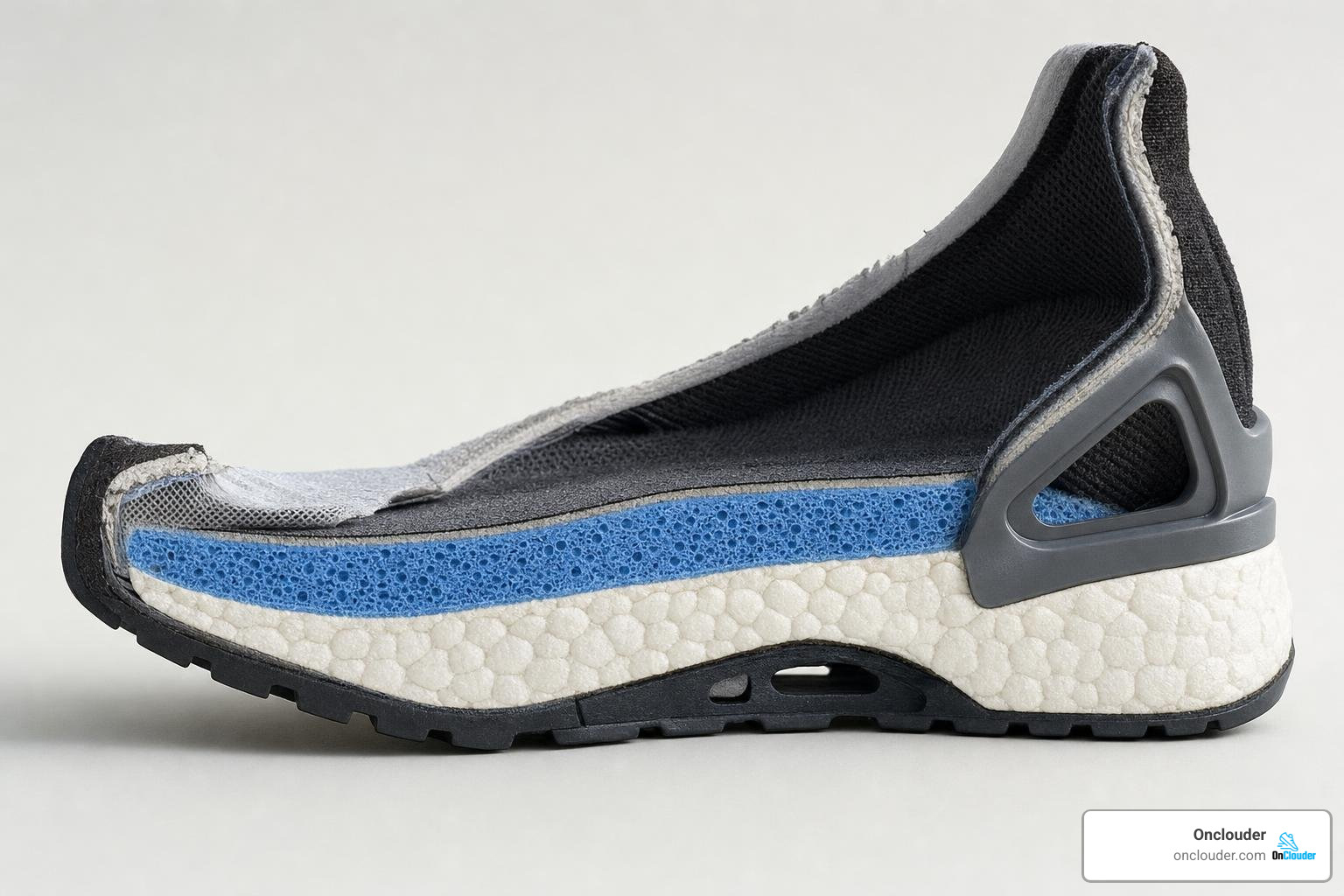
- REPETITOR+ Firm Midsole Frame: A firm, high-density EVA cradle integrated into the rearfoot that guides the heel bone through footstrike without abrupt stops.
- Torsion System / Energy Rods: A TPU or composite shank placed in the midfoot that controls torsional flex, preventing midfoot twisting while promoting clean toe-off transitions.
- Continental™ Rubber Outsoles: A reliable rubber compound configured in broad contact zones that prevents lateral slipping on wet roads and ensures balanced weight distribution.
If your standard insoles lack sufficient arch contact, pairing your trainers with structured footbeds from our guide to stop the roll with the best overpronation insoles can further improve underfoot stability.
Customizing Fit and Lacing in adidas pronation trainers
How you lace your running shoes plays a significant role in foot stabilization. Research demonstrates that ankle eversion decreases significantly when runners utilize the highest number of eyelets and tie their laces securely.
To prevent heel slippage and reduce excess foot movement, use the Runner’s Loop (Heel-Lock) technique:
- Thread each lace end through the extra top eyelet toward the inside, creating a small loop on both sides.
- Cross each lace end over the tongue and feed it through the loop on the opposite side.
- Pull the laces downward and back to secure your heel firmly into the counter before tying your knot.
Frequently Asked Questions About Pronation Running Shoes
How do adidas pronation trainers help prevent running injuries?
Supportive running shoes help stabilize the foot by controlling excessive ankle eversion during the stance phase of your gait. By limiting rapid internal rotation of the tibia, they reduce torque across the knee joint and help relieve stress on the plantar fascia and Achilles tendon.
Can neutral runners safely wear stability shoes?
Yes. Modern stability shoes utilize geometric guidance and wider baseline platforms rather than aggressive medial wedges. Neutral runners can wear mild stability trainers without negative effects, especially during high-mileage runs when fatigue often induces mild overpronation.
When should you replace your stability running shoes?
Most stability trainers maintain structural integrity between 300 and 500 miles. Replace your footwear sooner if you notice visible creasing or compression lines along the medial side of the foam, uneven outsole wear, or recurring aches in your shins and knees.
Finding Your Perfect Pair
Every runner’s stride is unique. Choosing between maximum-support trainers like the Adistar series, daily balance models like the Supernova line, or casual options like the Puremotion Adapt comes down to your personal mileage, arch shape, and comfort preferences.
For more hands-on reviews and footwear comparisons, read our essential guide to best overpronation shoes to find the ideal match for your daily miles.