Dress Shoes With a Wide Toe Box: What to Look For
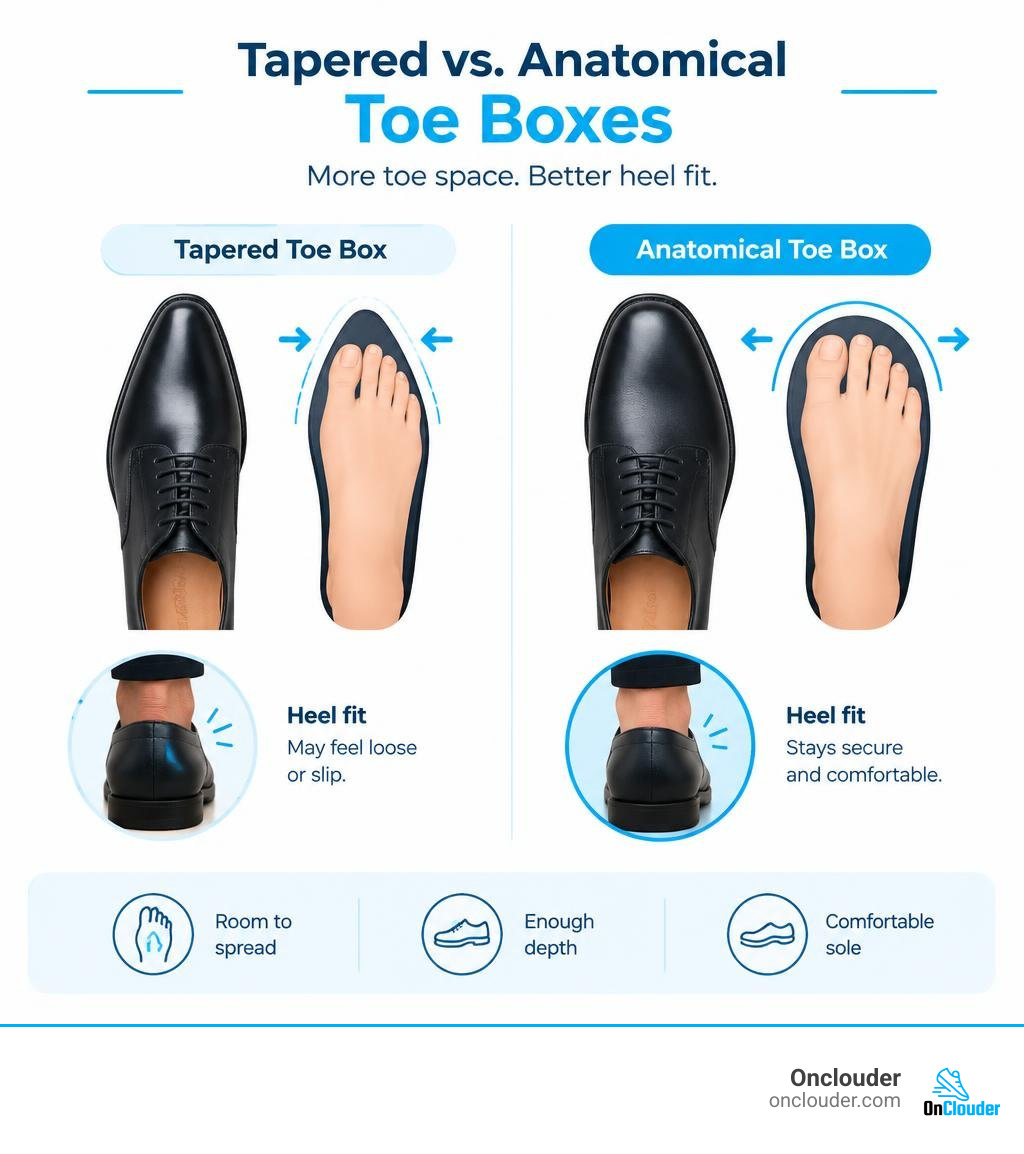
Choose dress shoes that give your toes room to spread without letting your heel slip. Look for a toe shape that follows your foot, enough depth to avoid rubbing, and a sole that feels comfortable for your workday. A wide toe box does not mean the whole shoe has to be wide.
Unlike tapered dress shoes, these styles reduce pressure on crowded toes while still working with office or formal clothes. Some have thin, flexible, zero-drop soles; others offer more cushioning and support. The right choice depends on your feet and how long you spend standing or walking.
Glossary for dress shoes with wide toe box:
Why Foot Health Demands Dress Shoes with Wide Toe Box
For decades, formal fashion has operated under an unspoken rule: looking sharp requires squeezing your feet into rigid, triangular leather shoes. Traditional lasts taper inward right where human feet naturally widen. When you force your forefoot into a narrow point for eight to ten hours a day, your toes compress, your metatarsals lose room to spread, and your intrinsic foot muscles gradually weaken.
Switching to footwear with an anatomical silhouette changes everything. When your big toe can track straight forward instead of being shoved toward the second toe, your entire foundation stabilizes. To dive deeper into the mechanics of foot-shaped formal footwear, check out our ultimate guide to wide toe box dress shoes. Allowing room for natural toe splay restores circulation, prevents chronic nerve compression, and reactivates the stabilizing muscles in your arches that traditional rigid footwear deactivates over time.
Alleviating Bunions, Hammertoes, and Plantar Fasciitis
Narrow, rigid dress shoes are the primary culprits behind some of the most frustrating foot conditions professionals face today:
- Bunions (Hallux Valgus): When a shoe pushes your big toe inward, the joint at the base is forced outward. A wide toe box eliminates lateral friction, allowing the joint to rest in its natural alignment.
- Hammertoes: Shoes with shallow vertical space and narrow tips force the smaller toes to curl upward. Footwear with ample depth and forefoot width lets the toes lie flat and unhindered.
- Morton’s Neuroma: Squeezing the metatarsal bones pinches the nerves running between the toes, causing sharp burning pain or numbness. A broader forefoot provides immediate nerve decompression.
- Plantar Fasciitis: Restricting the big toe impairs the natural windlass mechanism that supports the arch. Freeing the toes distributes shock evenly across the entire footbed, taking strain off the plantar fascia.
For those managing structural misalignments alongside heel pain, choosing the right dress shoes for overpronation can provide the exact balance of arch guidance and forefoot freedom your feet need. If you prefer slip-on designs with built-in forefoot relief, look for loafers that pair a metatarsal pad with a spacious toe box.
Improving Posture and Natural Gait Fluidity
Foot health does not stop at your ankles; it influences your entire kinetic chain. Traditional dress shoes feature elevated heels (often 15mm to 25mm high), which tilt your pelvis forward, hyperextend the knees, and increase compressive stress on the lumbar spine.
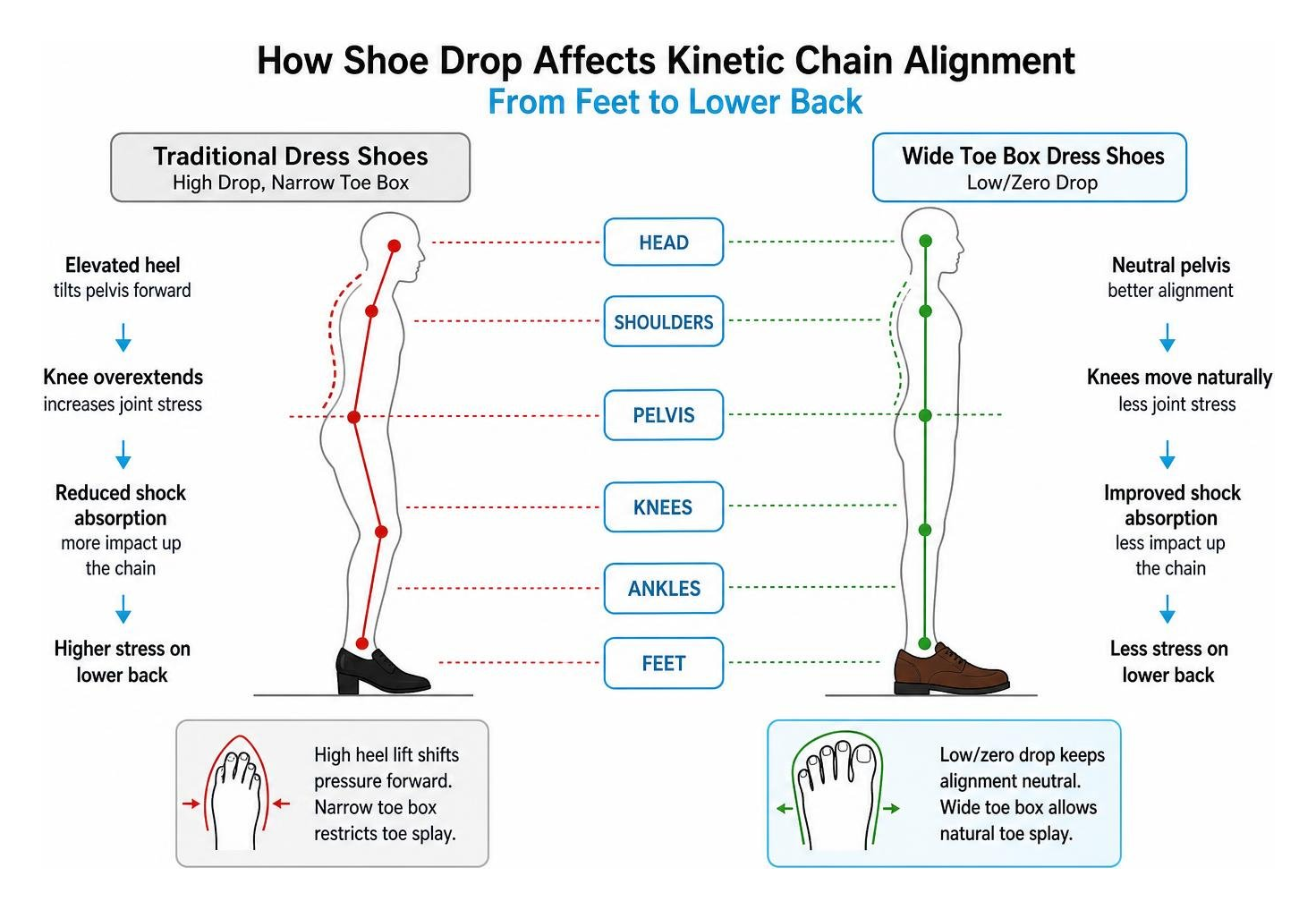
When you switch to anatomical, low-drop, or broad toe leather shoes, your body weight distributes evenly between your heel and metatarsal heads. This balanced foundation allows for natural gait fluidity: your foot lands softly, rolls through a stable midfoot, and pushes off powerfully using your splayed big toe rather than wobbling on an unstable, elevated heel.
Key Footwear Specs: Width, Zero-Drop, and Sole Flexibility
Shopping for foot-friendly formal shoes requires understanding three core specifications: toe box width, heel-to-toe drop, and sole flexibility.
- Anatomical Width: The toe box must match the natural fan shape of a healthy foot rather than coming to a symmetrical center point.
- Zero-Drop Platform: The sole has a 0mm height difference between the heel and the ball of the foot, maintaining a neutral spinal alignment.
- Torsional and Longitudinal Flexibility: A flexible sole allows your foot to flex naturally over uneven terrain, engaging intrinsic stabilizers instead of locking your foot in a cast-like stiff platform.
Traditional vs. Barefoot vs. Ergonomic Dress Footwear
Understanding where different dress shoes fall on the design spectrum helps you choose the perfect match for your workplace requirements and physical comfort needs.
| Feature | Traditional Dress Shoes | Ergonomic Wide-Fit Shoes | Barefoot / Minimalist Dress Shoes |
|---|---|---|---|
| Toe Box Shape | Pointed / Tapered | Slightly rounded, wide lasts | Anatomical foot-shaped |
| Heel-to-Toe Drop | 15mm – 25mm elevated heel | 4mm – 10mm subtle lift | 0.0mm (Zero-Drop) |
| Stack Height | 20mm – 35mm thick sole | 15mm – 25mm cushioned sole | Ultra-low (4mm – 10mm) |
| Flexibility | Extremely rigid | Moderate flexibility | High flexibility (rolls into a ball) |
| Average Weight | Heavy (16 oz – 24 oz+) | Moderate (12 oz – 18 oz) | Ultra-lightweight (9.2 oz – 13.7 oz) |
| Primary Benefit | Standard formal look | Classic cushion with extra room | Maximum natural foot function |
Minimalist models with a genuine 0mm drop, a 6mm stack height, and a featherlight weight of roughly 13.7 oz show how modern formal designs can maintain a sleek, smart-casual silhouette while supporting natural foot function.
Stack Height and Underfoot Cushioning Considerations
Stack height refers to the total thickness of material between your foot and the ground (including outsole, midsole, and insole).
- Ultra-Low Stack (4mm – 10mm): Minimalist models provide incredible ground sensory feedback and encourage strong foot muscles. They are exceptionally lightweight (often between 9.2 oz and 10 oz), but they require an adaptation period.
- Moderate Stack (12mm – 20mm): These styles utilize shock-absorbing cork footbeds or high-density foam insoles. They are ideal for professionals working on unforgiving surfaces.
If you spend endless hours walking across marble lobbies or standing on unyielding retail floors, check out our guide to dress shoes for standing on concrete to balance anatomical space with essential impact dampening.
Finding the Right Fit: Sizing and Style Guide
A common mistake is buying traditional shoes one or two sizes larger just to get more width. Doing this causes the shoe’s flex point to misalign with your foot, leading to severe heel slippage, blisters, and arch fatigue.
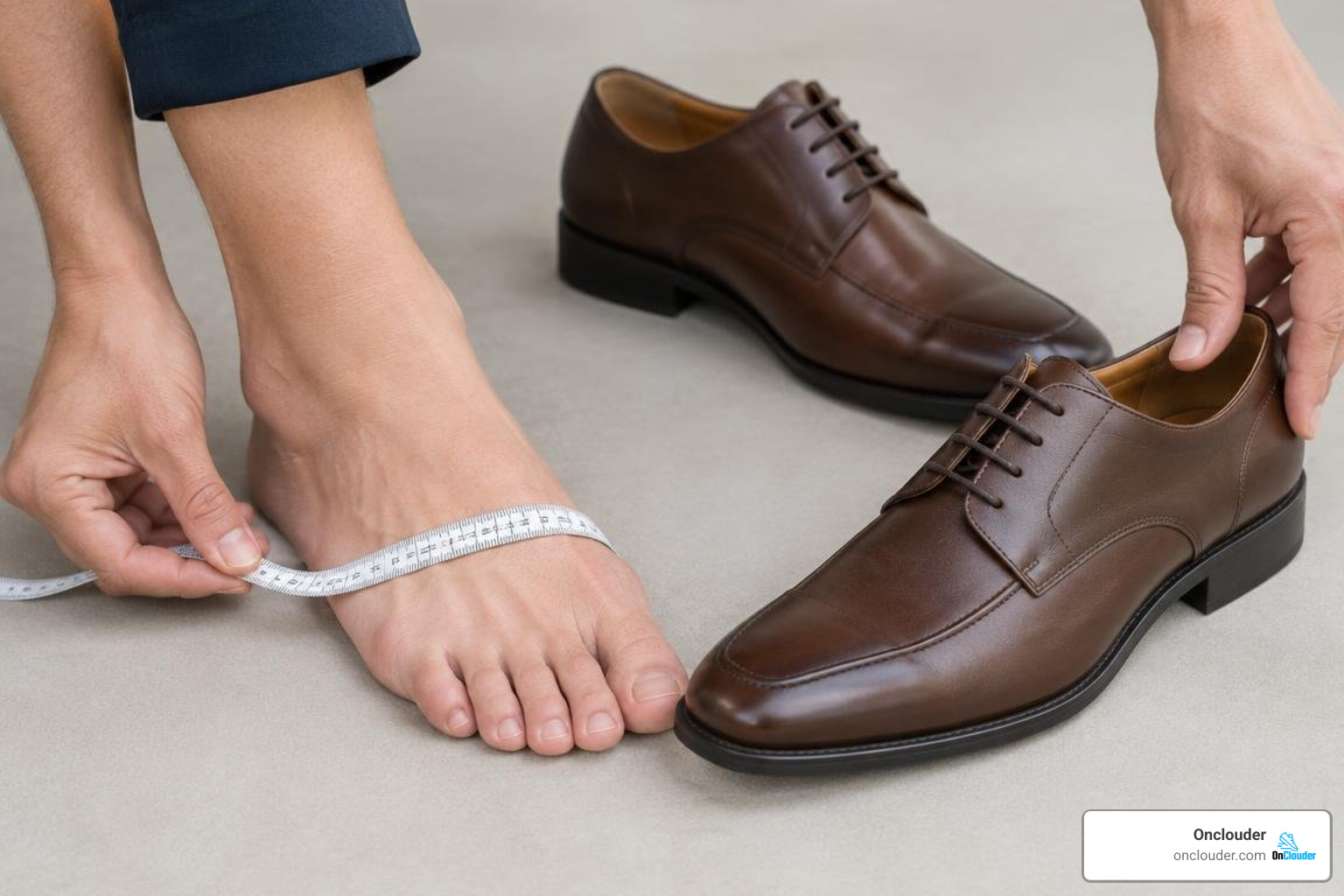
When sizing a shoe with an anatomical forefoot, follow these principles:
- Heel Security: The heel cup must fit snugly without digging into your Achilles tendon.
- Midfoot Lockdown: The laces or instep strap should anchor your foot firmly so your toes don’t slide forward into the front of the shoe.
- Toe Clearance: You should have roughly a thumb’s width (about 1/2 inch) of space between your longest toe and the end of the shoe when standing.
- Forefoot Width: Your pinky and big toe should rest completely flat against the insole without spilling over or pressing into the leather upper.
Men’s Dress Shoes with Wide Toe Box for Formal and Office Wear
Men looking for versatile business attire have several standout options across different width architectures:
- Classic Cap-Toe Oxfords (Extra-Wide Widths): For boardrooms and strict black-tie formalwear, extra-wide cap-toe oxfords combine a spacious forefoot with memory foam cushioning and a polished leather upper.
- Barefoot Leather Oxfords: For an anatomical shape with zero drop, full-grain leather oxfords on a 0.0mm drop platform can weigh as little as 9.6 oz with a 10.0mm stack height.
- Minimalist Derbies & Chukkas: Styles with soft uppers and removable insoles let you use custom orthotics easily while keeping weight between 9.2 oz and 13.7 oz.
For active workdays requiring nonstop mobility, explore our tested recommendations for men’s dress shoes for standing all day.
Women’s Dress Shoes with Wide Toe Box and Anatomical Support
Women often face an even stricter trade-off between style and toe comfort. Thankfully, modern anatomical designs offer refined options across multiple categories:
- Low-Drop Tailored Loafers: Handcrafted loafers with an anatomical toe box and a subtle low drop of just 2mm to 4mm are perfect for office-to-evening transitions.
- Bunion-Friendly Formal Pumps & Flats: Specialized footwear lines engineered for sensitive forefeet isolate extra width specifically to the toe box while maintaining a standard-width heel, preventing slippage while eliminating joint pressure.
- Supportive Office Flats: Minimalist ballet flats with flexible leather uppers and broad toe boxes keep you comfortable through long meetings.
To explore more everyday workwear styles, browse our guide on comfortable wide toe box ladies shoes.
Style and Durability: Overcoming the “Clunky” Shoe Stigma
The most common concern about wide toe box footwear is aesthetics: Will these look like clown shoes under tailored trousers?
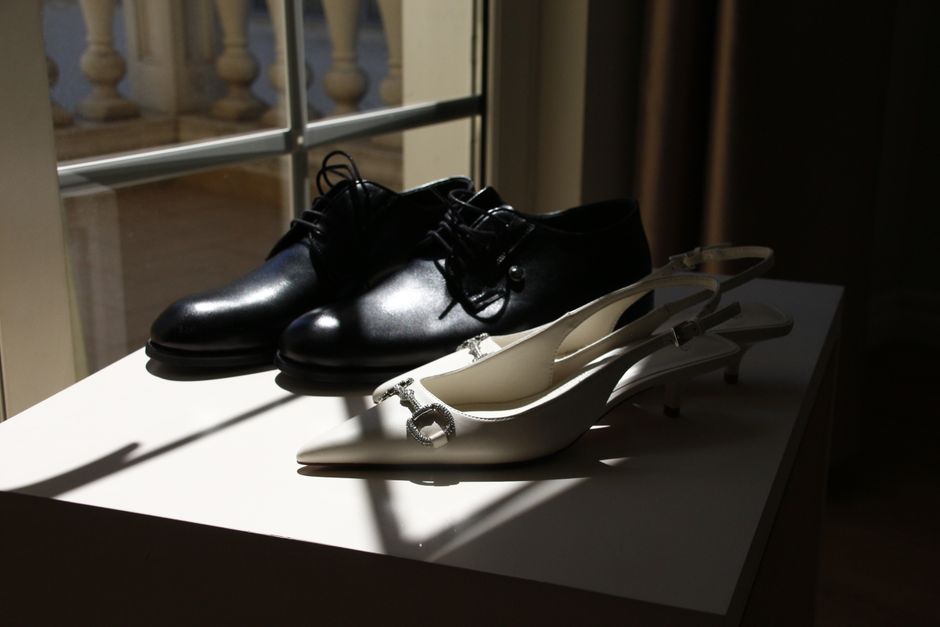
Modern footwear engineering solves this issue using smart design techniques:
- Vertical Toe Volume: Instead of making shoes excessively wide across the sole, designers add subtle vertical depth, giving your toes room to flex upward without widening the shoe’s visual outline.
- Beveled Outsoles & Blake Stitching: High-end brands use Blake stitch construction and trimmed outsoles to create a sleek profile that tucks cleanly beneath suit trousers.
- Premium Full-Grain Leather: High-grade leathers drape smoothly and develop an elegant patina over time, disguising the anatomical shape under a polished surface.
If your schedule requires polished leather that withstands intense daily use, explore our curated picks for black dress shoes for long hours.
Frequently Asked Questions About Wide Toe Box Dress Footwear
How do wide toe box dress shoes prevent heel slippage?
High-quality wide toe box dress shoes do not make the entire shoe wider. Instead, they use an anatomical last that features an extra-spacious forefoot combined with a standard-width heel cup and contoured midfoot. By securing your instep and locking the heel firmly in place, your foot remains stable, preventing blisters and heel slippage while your toes enjoy total freedom.
Can zero-drop dress shoes be worn with formal suits?
Yes. High-end zero-drop dress shoes use clean cap-toe, derby, or brogue styling made from polished full-grain leather. When worn with tailored trousers, the hem breaks cleanly over the top of the shoe, making the flat sole and foot-shaped toe box virtually indistinguishable from traditional luxury footwear.
Is there a transition period when switching from traditional dress shoes?
If you switch directly from an elevated heel dress shoe to a zero-drop, ultra-flexible minimalist sole, your Achilles tendons and calf muscles will need time to lengthen and adapt. Start by wearing your new shoes for two to three hours at a time, gradually increasing your wear time over two to three weeks to avoid calf tightness or arch soreness.
Conclusion
Choosing formal footwear should never force you to compromise between professional elegance and long-term foot health. By investing in shoes engineered with an anatomical toe box, high-grade materials, and natural alignment principles, you can eliminate chronic aches, prevent bunions, and complete demanding workdays in complete comfort.
Ready to find the ideal balance of style and foot freedom? Explore our comprehensive barefoot and wide toe box shoe comparison guide to find your next pair.