Best Sneakers for Arch Pain: Start With Your Foot Type
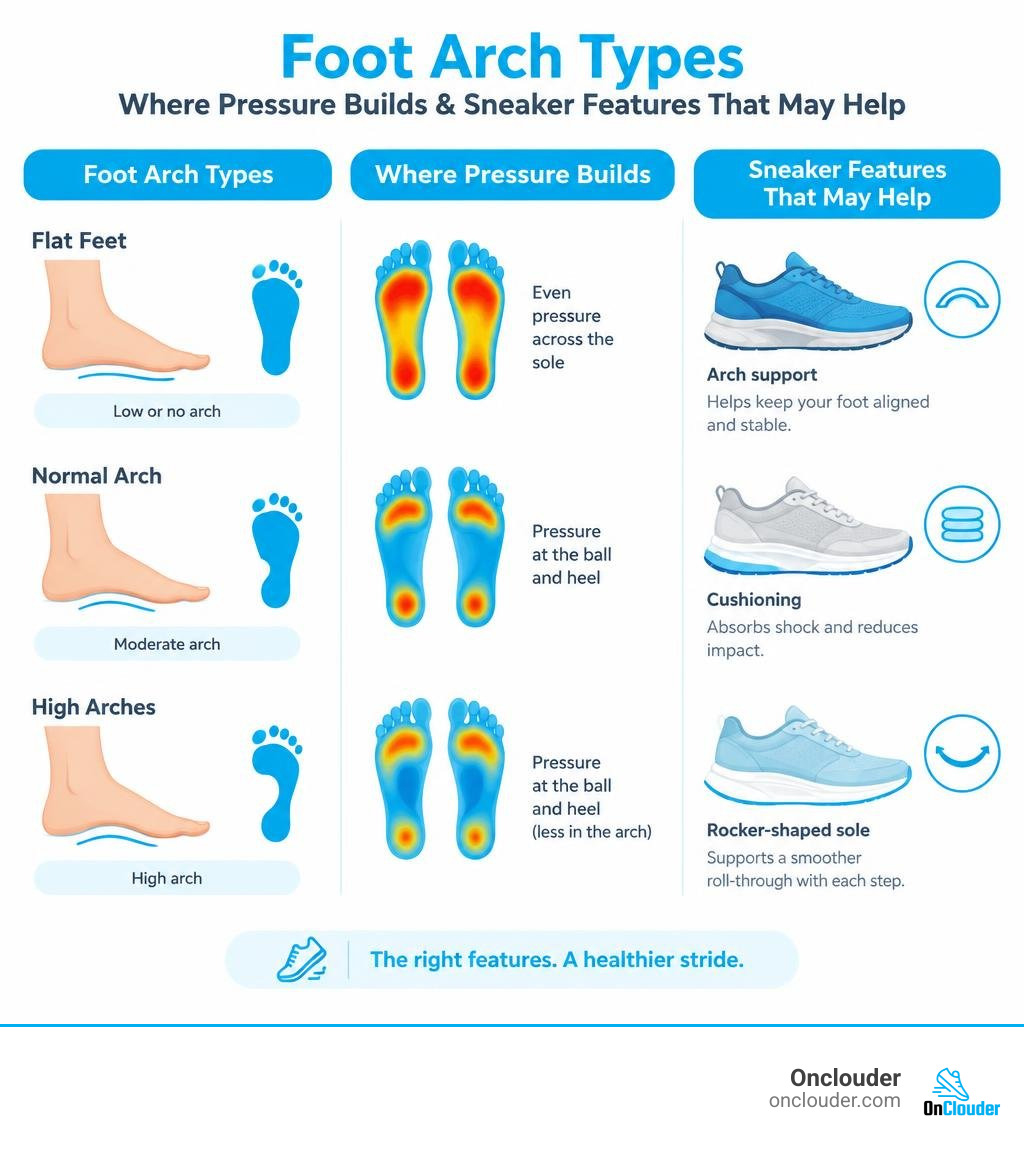
The best sneakers for arch pain depend on why your arch hurts. If you have flat feet or your feet roll inward, try a stability shoe such as the Brooks Adrenaline GTS or ASICS Gel-Kayano. If you have high arches, look for shock-absorbing cushioning in a neutral shoe such as the ASICS Gel-Nimbus or Brooks Ghost. For long days on your feet, the HOKA Bondi offers thick cushioning and a rocker-shaped sole.
Fit matters as much as the model. Your toes should have room, your heel should feel secure, and the arch should feel supported without pressing painfully into your foot. We’ll compare the top picks so you can narrow down what’s worth trying on.
Explore more about best sneakers for arch pain:
Understanding Arch Pain: Causes, Foot Types, and Biomechanics
The human foot contains 26 bones, 33 joints, and over 100 muscles, tendons, and ligaments. Connecting the heel bone to the base of the toes is the plantar fascia, a thick band of connective tissue acting as a shock-absorbing bowstring. When biomechanical stress overloads this tissue, micro-tears develop, resulting in plantar fasciitis, arch strain, or posterior tibial tendon irritation.

Every step generates ground reaction forces up to two to three times your body weight. If your arches collapse inward (overpronation) or fail to compress due to rigidity (underpronation or supination), those forces transfer directly into soft tissue and skeletal joints. Equipping yourself with a reliable guide to shoes with arch support for plantar fasciitis helps pinpoint designs that redistribute these localized impact zones.
How to Choose the Best Sneakers for Arch Pain for High Arches vs. Flat Feet
Finding the best sneakers for arch pain requires matching structural footwear engineering with your distinct anatomical arch height:
- High Arches (Cavus Foot): High arches are naturally rigid. Because the middle of the foot rarely contacts the ground, excessive force concentrates on the heel and metatarsal heads. High-arched feet require plush, neutral cushioning and contoured footbeds that fill the physical void under the arch to disperse impact evenly. For detailed recommendations, see our guide to supportive sneakers for high arches.
- Flat Feet / Low Arches (Pes Planus): Flat feet lack rigid internal support, allowing the arch to collapse downward upon weight-bearing. This forces the ankle inward, causing overpronation and strain along the plantar fascia and kinetic chain. Flat feet require structured stability shoes with medial posts, firm heel counters, and motion-control frameworks.
What to Look for in Arch-Supportive Tennis Shoes
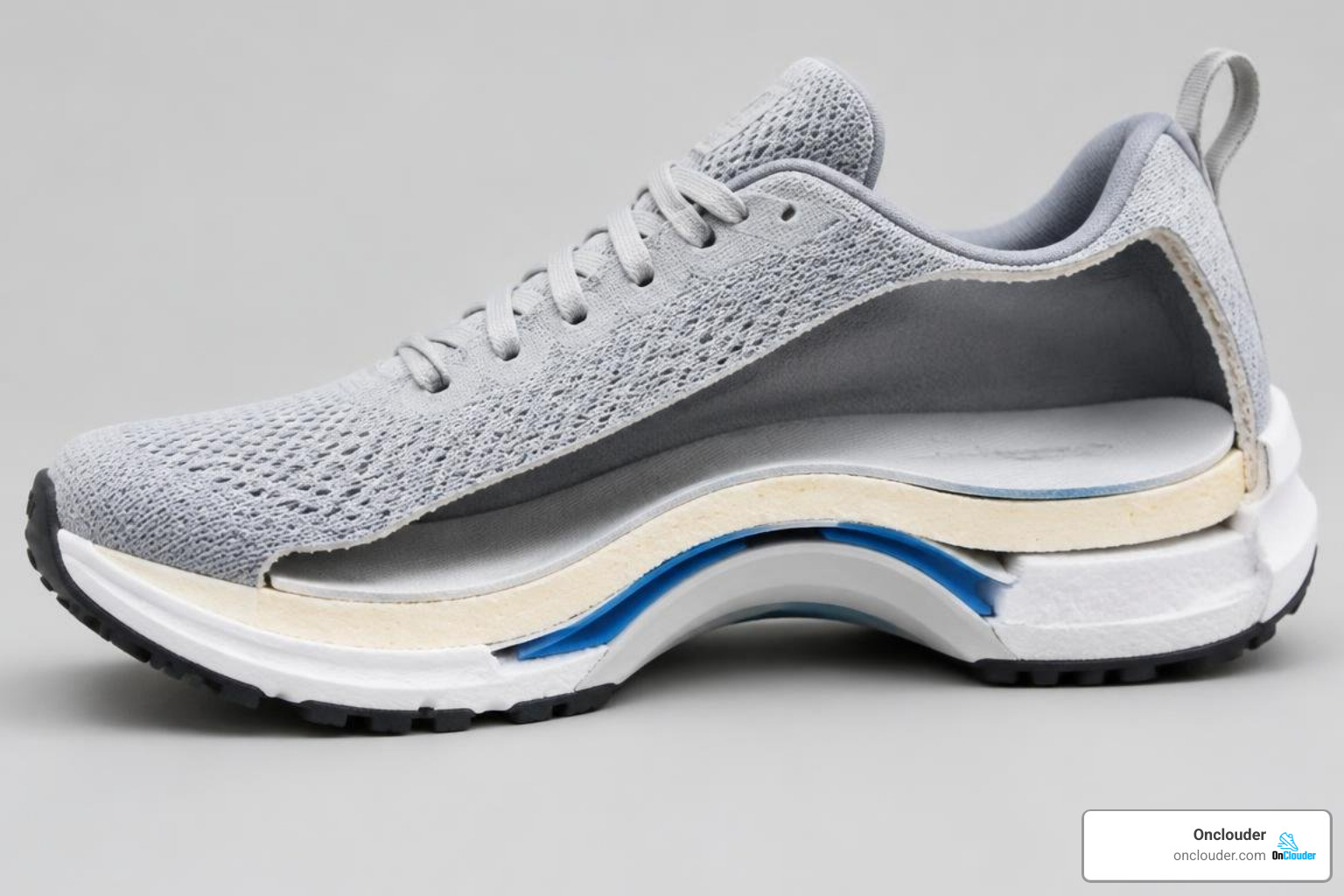
When selecting sneakers for daily walking, court sports, or long work shifts, specific biomechanical attributes separate genuinely therapeutic footwear from fashion-focused models:
- Torsional Rigidity: A supportive sneaker should resist twisting like a wet rag. Grab the heel and the toe; the shoe should only bend naturally at the forefoot ball, not across the middle shank.
- Firm Heel Counter: Squeeze the back collar of the shoe. A rigid heel cup centers the calcaneus (heel bone), preventing the lateral rolling that strains arch tendons.
- Rocker-Bottom Soles: Curved outsole profiles gently roll your foot forward through the gait cycle, reducing the dorsiflexion angle required by the big toe and minimizing tensile pull on the plantar fascia.
- Removable Insoles: Roomy, removable footbeds let you insert customized orthotic devices or specialized off-the-shelf insoles without crowding the toe box. Learn more about choosing the best insoles for foot pain and arch support.
- Medical Endorsements: Look for shoes carrying the American Podiatric Medical Association (APMA) Seal of Acceptance, signifying rigorous evaluation by podiatric specialists for healthy foot biomechanics.
Key Midsole Features in the Best Sneakers for Arch Pain
The midsole functions as the engine of structural support. Modern running and walking shoes employ engineered EVA and supercritical foams calibrated for energetic rebound without collapsing under steady body weight. Dual-density midsoles incorporate firmer foam along the medial side to resist inward rolling, while embedded thermoplastic shanks reinforce midfoot integrity. Many walkers discover long-term relief by choosing arch fit shoes for running and walking that combine contoured footbeds with resilient dual-density midsoles.
The Best Sneakers for Arch Pain Tested and Reviewed for 2026
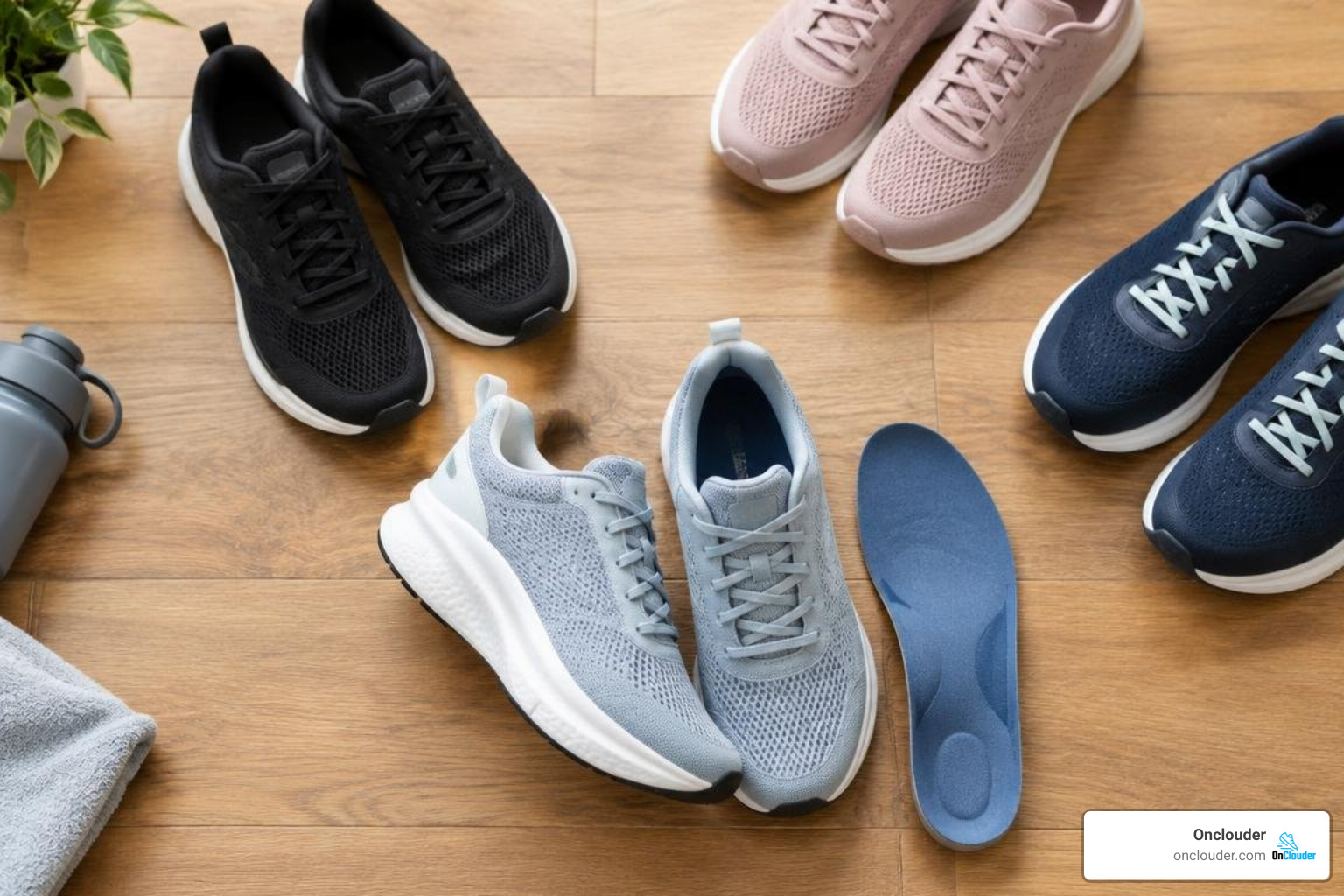
Our team evaluates dozens of performance shoes, logging hundreds of miles on pavement, treadmills, and indoor surfaces to analyze structural durability, pressure distribution, and long-term relief. Whether you need running models or lifestyle alternatives from top women’s shoe brands that truly support your arches, the models below deliver podiatrist-approved construction.
| Sneaker Model | Primary Arch Type | Cushioning Level | Stability Category | Best Use Case |
|---|---|---|---|---|
| Hoka Bondi 9 | Neutral / Low to High | Maximum Plush | Neutral / Stable Base | All-Day Standing & Plantar Fasciitis |
| Brooks Adrenaline GTS 24 | Flat / Overpronation | Balanced Medium | Dynamic Stability | Road Walking & Moderate Overpronation |
| ASICS Gel-Kayano 31 | Flat / Low Arches | Plush Structured | High Stability | Flat Arches & Severe Overpronation |
| ASICS Gel-Nimbus 27 | High Arches | Ultra-Plush | Neutral | High-Impact Shock Absorption |
| Brooks Ghost 17 | Medium to High Arches | Soft Balanced | Neutral | Everyday Walking & Road Running |
| On Cloudmonster 3 | Medium to High Arches | Responsive Max | Neutral Cushioned | Dynamic Travel & Versatile Training |
| Hoka Arahi 8 | Flat / Overpronation | Balanced Plush | J-Frame Stability | Lightweight Motion Control (APMA Approved) |
| New Balance Fresh Foam X 1080v14 / 1080v15 | Medium to High Arches | Premium Soft | Neutral | Wide Feet & Plush Pressure Relief |
| Altra Torin 7 | Neutral / Wide Forefoot | High Zero-Drop | Neutral Balanced | Natural Toe Splay & Bunions |
| Adidas Supernova Rise 3 | Neutral / Mild Stability | Dreamstrike+ Foam | Stable Neutral | APMA-Accepted Daily Training |
Top Maximum Cushion Models for Plantar Fasciitis
HOKA Bondi 9 & Clifton 11
The HOKA Bondi series remains a gold standard for severe heel and arch discomfort. Featuring an ultra-thick EVA midsole and signature early-stage Meta-Rocker geometry, the Bondi 9 offloads heel strike pressure by rolling the foot smoothly into toe-off. For those wanting a lighter profile, the HOKA Clifton 11 delivers balanced plushness with an APMA Seal of Acceptance, serving as an exceptional option for long shifts.
On Cloudmonster 3
Engineered with oversized CloudTec elements and Helion superfoam, the Cloudmonster absorbs sharp vertical impacts and adapts to your natural stride. Its pronounced forefoot rocker lessens strain across the plantar fascia during long sightseeing days and fitness walks.
Best Stability and Motion Control Sneakers for Overpronation
Brooks Adrenaline GTS 24
Equipped with GuideRails holistic support technology, the Adrenaline GTS 24 acts like bumpers on a bowling alley—stabilizing excess inward rotation without forcing your foot into an unnatural path. It aligns ankles, knees, and hips to eliminate arch collapse under load.
ASICS Gel-Kayano 31
Built specifically for flatter arches, the Gel-Kayano 31 pairs rearfoot PureGEL cushioning with a 4D Guidance System. This platform adapts to your level of fatigue, applying corrective lateral stability right as your arch muscles tire out during extended movement.
HOKA Arahi 8
A rare stability shoe that avoids stiff, clunky medial posts, the Arahi 8 utilizes a lightweight J-Frame design. Firm foam wraps the inside heel and midfoot, correcting overpronation while preserving breathable upper ventilation.
Premier Neutral Cushioning for High Arch Relief
ASICS Gel-Nimbus 27
High arches require deep, plush impact attenuation. The Gel-Nimbus 27 combines thick FF BLAST PLUS ECO foam with a contoured footbed that cradles the midfoot, distributing peak landing pressure across the entire plantar surface rather than concentrating it on the heel and forefoot.
Brooks Ghost 17
A perennial favorite for neutral runners and walkers, the Ghost 17 provides balanced DNA LOFT v3 cushioning. It delivers a soft, consistent ride that accommodates rigid arches without feeling overly soft or unstable.
Best Wide-Fit and Orthotic-Friendly Tennis Shoes
New Balance Fresh Foam X 1080v14 / 1080v15 & 860
New Balance leads the industry in multi-width sizing (Standard, Wide, Extra-Wide). The Fresh Foam X 1080 series features generous internal volume, plush foam, and a deep heel counter that easily accommodates custom orthotics without causing heel slippage.
Altra Torin 7
Featuring Altra’s FootShape toe box, the Torin 7 allows toes to splay out naturally. Letting the big toe engage properly stabilizes the medial arch naturally, eliminating midfoot cramping and forefoot pressure.
Common Footwear Mistakes and When to Replace Your Shoes
Even the most supportive sneaker loses its structural integrity over time. Here are the most frequent footwear mistakes that aggravate arch discomfort:
- Walking Barefoot on Hard Floors: Going barefoot forces your plantar fascia to absorb raw ground reaction forces without arch cradling. Use supportive recovery slides or dedicated indoor sneakers at home.
- Wearing Flat, Unstructured Shoes: Cheap flip-flops, thin canvas slip-ons, and flat fashion sneakers lack torsional rigidity, overworking internal arch muscles.
- Assuming Soft Equals Supportive: Memory foam that squishes down to paper-thinness provides pleasant step-in comfort for five minutes, but offers zero structural support against pronation.
Signs It Is Time to Replace Your Sneakers
- Mileage Exceeded: You have logged 300 to 500 miles of running or 6 to 8 months of daily walking.
- Midsole Compression Creasing: Deep, permanent wrinkles line the outer foam, indicating the internal cell structure has compacted and lost its shock-absorbing capacity.
- The Table Test: Place your sneakers on a flat table at eye level. If the shoes lean inward or wobble when tapped, the medial support has degraded.
- Returning Morning Stiffness: A gradual return of heel or arch pain upon getting out of bed often indicates dead midsole foam.
Frequently Asked Questions About Footwear for Arch Pain
Can supportive sneakers cure arch pain without custom orthotics?
Yes, for many individuals. High-quality sneakers equipped with integrated medial posts, deep heel cups, and contoured EVA footbeds provide sufficient structural alignment to resolve mild to moderate plantar fasciitis and arch strain. However, if severe structural misalignments or rigid anatomical deformities persist, podiatrist-crafted custom orthotics may be necessary.
Are expensive sneakers always better for treating arch pain?
Not necessarily. Price tags frequently reflect branding, lightweight racing plates, or cosmetic materials rather than medical-grade stability. Structural features—such as torsional stiffness, a firm heel counter, and targeted arch contouring—matter far more than price. Highly effective stability and cushioned walking shoes exist across diverse budget ranges.
When should you see a podiatrist instead of just changing shoes?
You should consult a licensed podiatrist if your arch or heel pain lasts longer than one to two weeks despite wearing supportive footwear, if you experience tingling, numbness, or sharp radiating pain, or if severe morning stiffness prevents normal walking. A specialist can perform diagnostic ultrasound or X-rays to rule out stress fractures and design a tailored physical therapy plan.
Conclusion
Living with chronic arch pain drains your energy and limits daily mobility. Choosing footwear with torsional stiffness, targeted arch contouring, and proven shock absorption relieves stress on the plantar fascia so your body can heal naturally. Start by identifying your arch type, match it with the stability or neutral platform that fits your biomechanics, and retire worn-out shoes before foam fatigue sets in.
For deeper insights into long-term foot health and our complete performance testing lineup, explore the ultimate guide to best shoes with arch support to find your next pain-free pair.