How to Choose Women’s Sneakers with Arch Support
The best women’s sneakers with arch support have a contoured footbed, a secure heel, and enough toe room to let your feet move comfortably. For walking or long days on your feet, look for cushioning that softens impact without feeling unstable. If you wear custom orthotics, choose a pair with removable insoles.
Style matters, too. A sneaker you like wearing is easier to make part of your daily routine. The right fit should feel supportive from the start, not depend on a painful break-in period.
Why Proper Foot Alignment Matters for Everyday Comfort
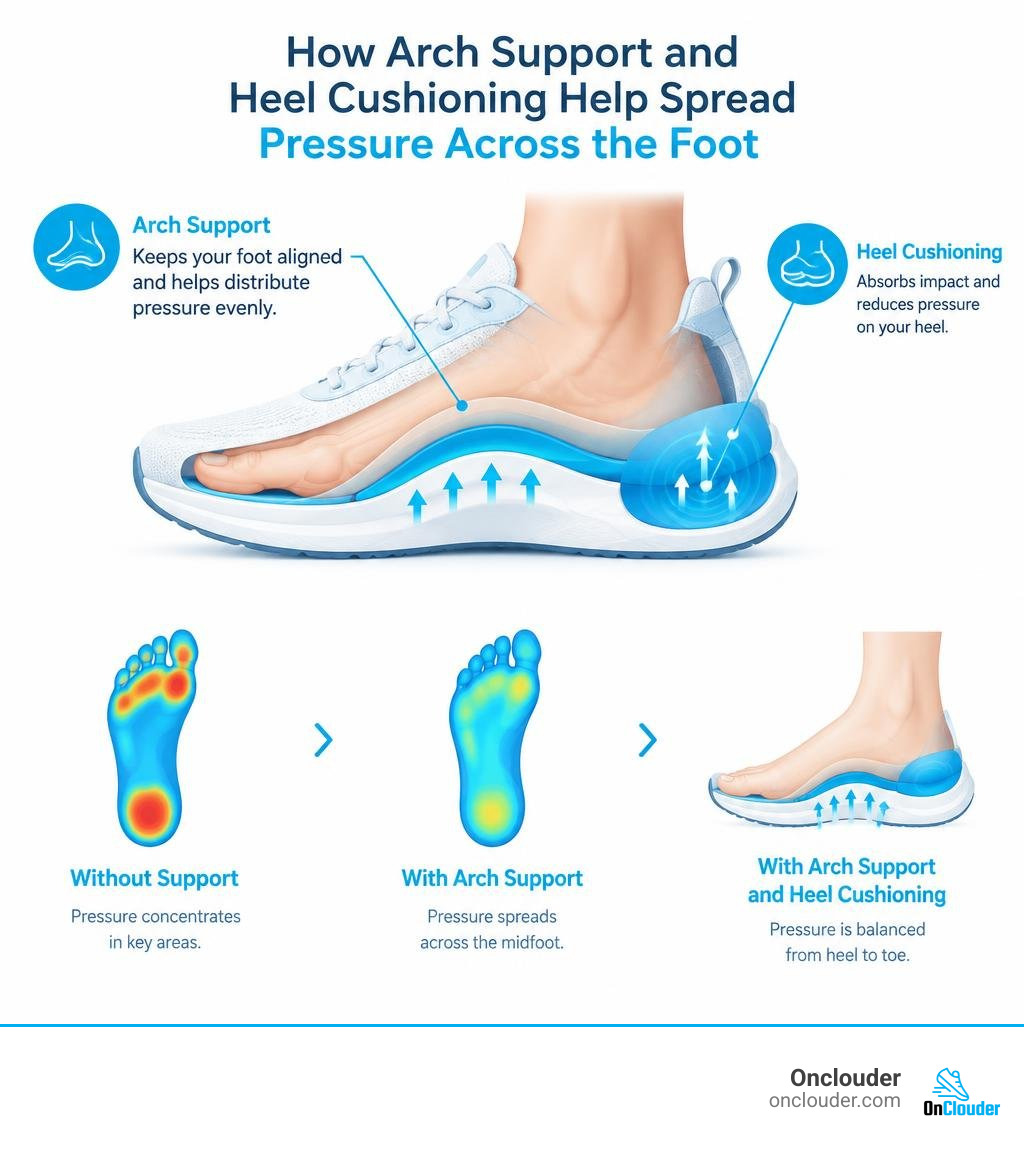
Every step you take sends impact forces rippling up through your ankles, knees, hips, and lower back. Your arches function as natural shock absorbers, compressing slightly during weight-bearing and springing back to propel you forward. When shoes lack adequate structural reinforcement, excessive plantar fascia strain develops. Over time, this repetitive micro-trauma triggers the sharp, morning heel pain associated with plantar fasciitis.
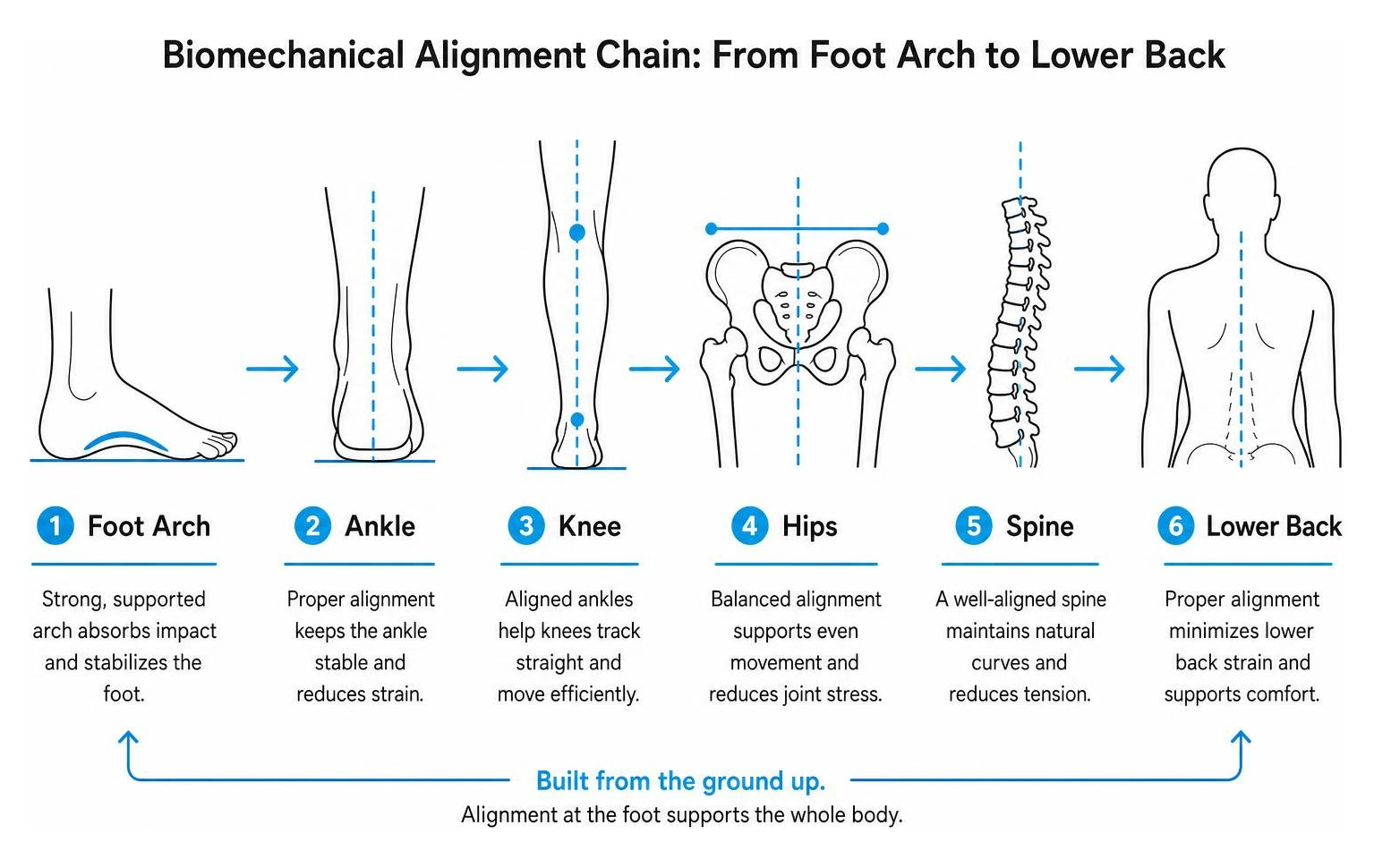
Poor alignment often leads to overpronation, where the inner arch collapses inward excessively, twisting the shin bone and straining joint capsules. Conversely, rigid high arches concentrate body weight solely onto the heel and the ball of the foot without dampening ground impact. Finding balanced footwear restores a neutral gait pattern, evenly distributing pressure across the entire plantar surface. By absorbing heel shock and stabilizing the midfoot, our essential guide to the best shoes for arch support shows how proper alignment prevents systemic foot fatigue and protects aging joints during routine daily movement.
Evaluating the Best Women’s Sneakers with Arch Support
Evaluating supportive footwear requires looking beneath aesthetic surfaces to assess structural foundations. In our testing lab, we analyze midfoot torsional rigidity, arch contour depth, and torsional resistance to ensure a shoe promotes natural biomechanics rather than masking foot issues with superficial softness.
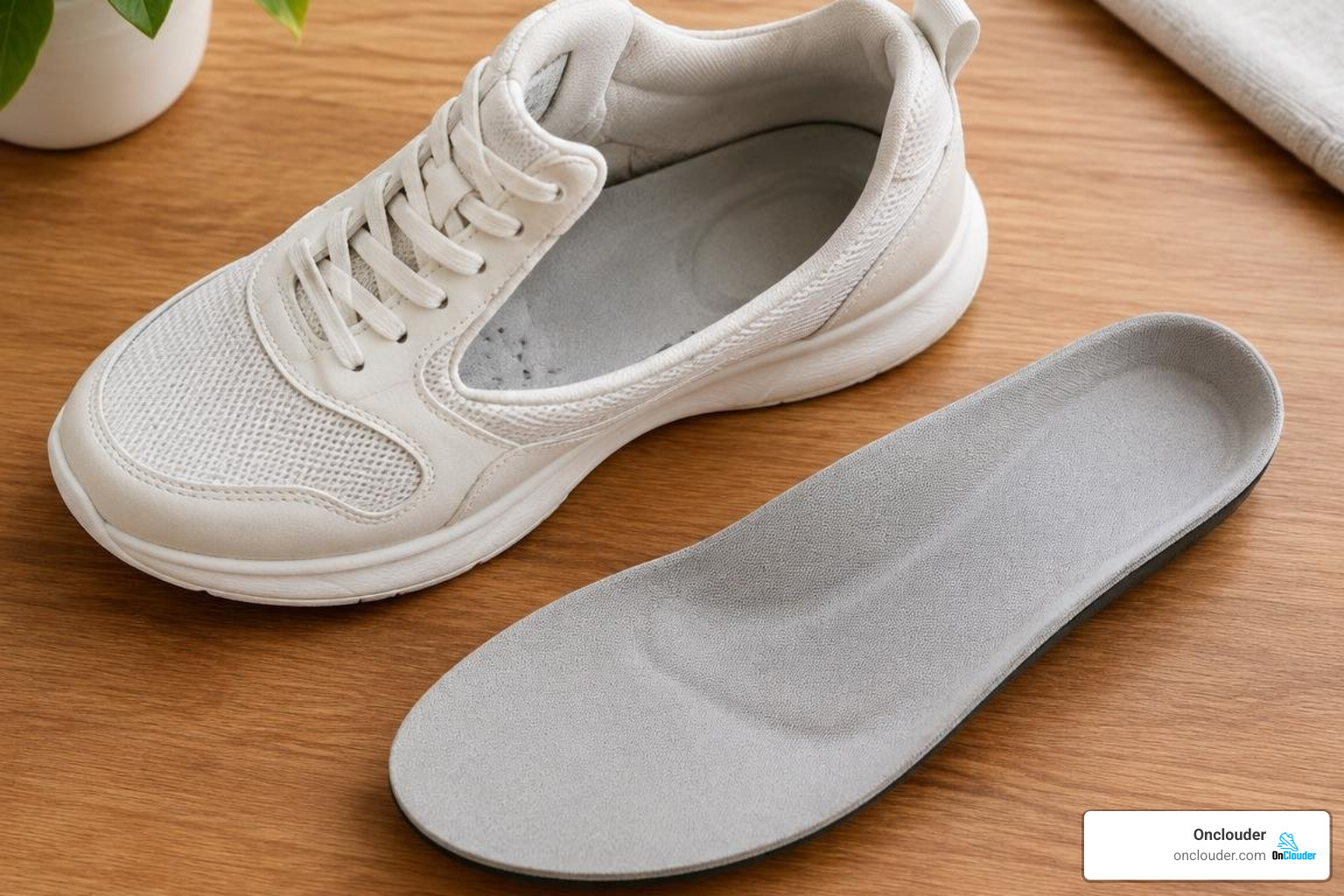
A high-performing sneaker strikes a balance between adaptive cushioning and podiatric stability. Many leading podiatrist-designed collections among the top footwear brands that support your arches incorporate anatomical geometries that prevent arch collapse without feeling excessively rigid underfoot.
Supportive Insole Materials and Orthotic Technology
The core engine of any supportive shoe lies within its footbed composition. Different engineering materials deliver distinct tactile responses and long-term durability:
- Memory Foam Cushioning: Adapts instantly to unique foot impressions, relieving localized pressure hot spots. While exceptionally comfortable out of the box, standard memory foam compresses over time unless layered over a resilient high-density foam base.
- Cork-Latex Footbeds: Popularized by heritage European cobblers, cork-latex blends mold progressively to your unique footprint through heat and pressure, delivering customized, semi-rigid structural integrity that endures for years.
- Thermoplastic Polyurethane (TPU) Stabilizing Cradles: Hard yet flexible structural arches integrated along the medial side to prevent inward rolling and torsional twist under load.
- Built-in Orthotic Systems: Comprehensive biomechanical foundations, such as the Aetrex Carly orthotic support system, combine elevated arch profiles, responsive UltraSky EVA foam, and integrated metatarsal pads to offload ball-of-foot pressure.
| Insole Material Type | Arch Rigidity Level | Cushioning Longevity | Best Suited Foot Conditions |
|---|---|---|---|
| High-Density EVA / TPU | High | Excellent (12–18 months) | Plantar fasciitis, severe overpronation |
| Cork-Latex Composite | Moderate-High | Superior (24+ months) | Neutral to high arches, all-day standing |
| Layered Memory Foam | Soft-Moderate | Moderate (6–9 months) | Sensitive metatarsals, sensitive soles |
| PU Gel Inserts | Soft | Good (9–12 months) | Heel spur impact relief, localized pain |
Fit Dynamics, Heel Stability, and Wide Toe Boxes
A common dilemma in women’s footwear is finding a secure heel lock that does not pinch the front of the foot. Many women experience heel slippage in standard wide shoes, leading to friction blisters. True orthotic-grade sneakers feature deep, cupped heel counters that cradle the subcalcaneal fat pad beneath the heel bone, keeping it positioned directly over the shoe’s shock-absorbing core.
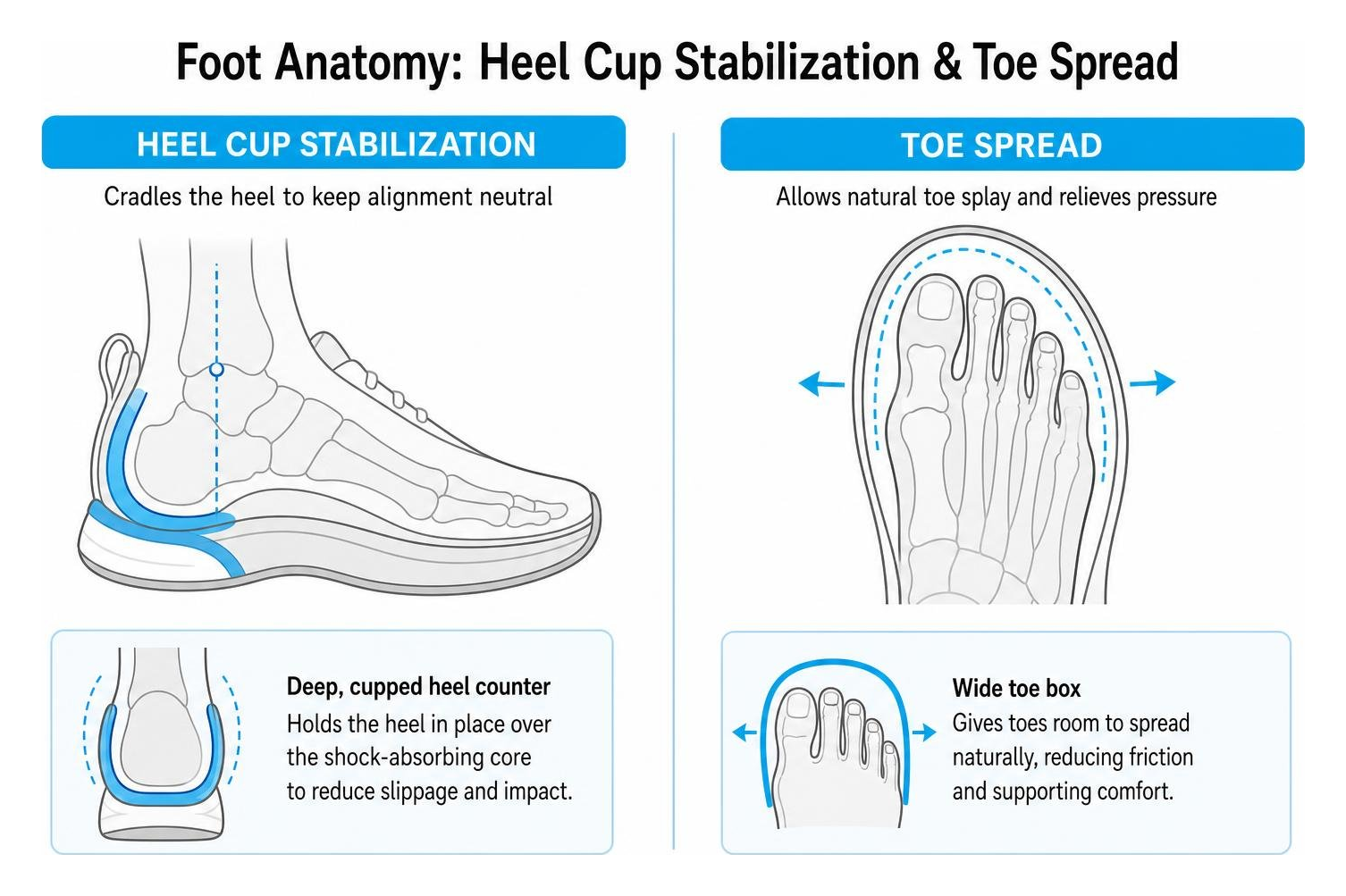
Concurrently, a generous forefoot profile provides necessary bunion relief and accommodates mild hammertoes without friction. If you manage lower, flatter profiles, selecting sneakers with arch support designed specifically for flat feet ensures that wide midfoot contact does not cause painful inward pressure points. Brands that provide removable forefoot volume adjusters let you tailor the internal depth precisely to your unique instep dimensions.
Top Performance Styles for Daily Activities and Travel
When planning a busy itinerary or managing demanding twelve-hour work shifts, your footwear must endure sustained pavement impacts without causing midfoot fatigue.

The most reliable travel shoes combine lightweight shock attenuation with breathable mesh or supple canvas uppers. Reviewing the best arch-fit shoes for running and walking highlights models that incorporate smooth rocker soles to ease transition phases during high-mileage days.
Top Women’s Sneakers with Arch Support for Active Walking and Travel
- Taos Plim Soul: A retro-styled canvas staple that conceals advanced orthotic engineering. Featuring an overall rating of 4.44 out of 5 from over 4,150 customer reviews, the Taos Plim Soul canvas sneaker specifications highlight its proprietary Curves & Pods removable footbed with targeted metatarsal support and odor-resistant Silvadur lining. Note: Canvas styles often fit snugly across the instep initially, so sizing up a half-size is recommended for wider feet.
- Aetrex Carly: Constructed with a flexible, breathable knit upper and a 0.7-inch heel platform, this machine-washable sneaker incorporates built-in arch support, a padded heel counter, and antimicrobial linings tailored for long walking tours.
- Ziera USHERY XF: Blending the lightweight silhouette of a casual flat with structural sneaker support, the Ziera USHERY podiatry-endorsed flats feature a TPU stabilizing cradle, PU gel cushioning, and customizable forefoot inserts engineered for broad fits and bunion comfort.
- Skechers Arch Comfy 2.0: Utilizing built-in Arch Comfort insoles, hands-free entry, and stretch laces, the Skechers Women’s Arch Comfy 2.0 Sneaker at Costco Australia pairs shock-absorbing midsoles with an effortless slip-on design for busy daily routines.
Affordable Women’s Sneakers with Arch Support for Everyday Wear
Reliable orthotic support does not require a luxury price tag. Several accessible everyday models provide substantial relief for casual strolls, grocery errands, and household wear:
- STQ Slip-On Walking Shoes: Designed with a generous toe box and breathable mesh, the STQ memory foam walking shoe holds a 4.1-star rating from over 500 reviews. It combines a supportive memory foam insole with deodorizing bamboo charcoal particles and an eco-friendly EVA traction outsole.
- Budget-Friendly Everyday Trainers: When exploring cost-effective everyday shoes, our roundup of Amazon options that ease heel and arch pain highlights accessible footwear featuring molded EVA arch profiles and elasticized entry systems that protect your arches on a budget.
Frequently Asked Questions About Supportive Footwear
What are the best sneakers for plantar fasciitis and heel pain?
The most effective sneakers for acute plantar fasciitis feature a deep, rigid heel cup paired with firm medial arch support and a cushioned heel strike zone. The deep cup centers the heel’s natural fat pad directly beneath the calcaneus bone, dampening impact shock, while the structured arch bridge keeps the plantar fascia ligament from stretching painfully flat during mid-stance.
Do removable insoles make it easier to use custom orthotics?
Yes. Footwear equipped with fully removable factory insoles preserves the vertical volume of the shoe when inserting custom medical orthotics or over-the-counter inserts. Inserting an orthotic on top of a glued-down insole crowds the toe box, raises the heel out of its protective cradle, and can cause painful top-of-foot pressure against the tongue.
How do I know if I need high arch support or flat feet support?
You can identify your arch profile at home using the classic “wet paper test.” Wet the sole of your foot and step firmly onto a piece of dry cardboard or heavy paper:
- Flat Arch: A complete, wide footprint without an inward curve indicates low arches or overpronation, requiring broad, stabilizing arch contours and motion control.
- High Arch: A footprint showing only the heel and ball of the foot connected by a thin outer line indicates high, rigid arches, requiring contoured, gap-filling cushioning to distribute downward forces across the entire sole.
Conclusion
Finding the right supportive sneaker means choosing a shoe that keeps your foot aligned, cushions high-impact areas, and suits your personal style. Whether you are walking city streets, working long hospital shifts, or running daily errands, investing in supportive footwear preserves your joints and keeps you moving comfortably.
At Onclouder, our hands-on footwear evaluations help you cut through marketing claims to find shoes that deliver genuine, long-term comfort. For a deeper breakdown of footbed biomechanics, insole choices, and podiatric fit techniques, explore our comprehensive arch support guide to find your ideal pair.