How to Choose Sneakers for High Arches
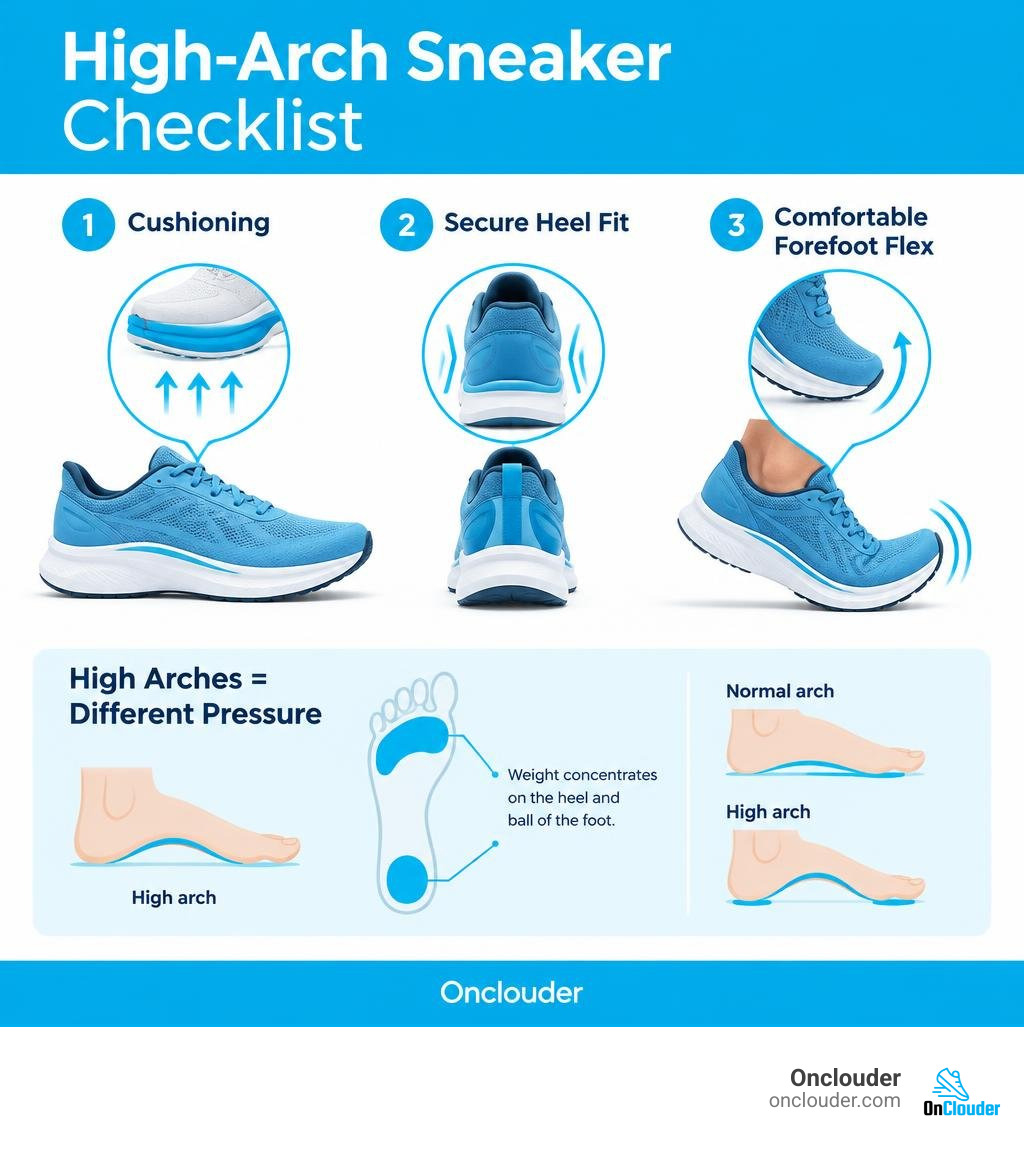
Start with cushioning, then check the fit. Sneakers for high arches should have a shock-absorbing midsole, a heel cup that holds your foot securely, and enough room across the midfoot and toes. The shoe should bend comfortably at the forefoot without pressing hard into your arch.
High-arched feet often absorb less impact on their own, leaving more pressure at the heel and ball of the foot. That is why a soft, stable shoe may feel better than one with aggressive arch support. Below, we compare options for running, walking, and everyday wear.
Biomechanics: Why High Arches Require Specialized Footwear
If you have high arches—clinically known as pes cavus—your feet interact with the ground entirely differently than neutral or flat feet. A typical arch flattens slightly upon impact, acting like a natural leaf spring to disperse ground reaction forces. High arches, however, are far more rigid. Because the arch stays elevated and stiff throughout your gait cycle, the middle section of your sole barely touches the ground.
This biomechanical reality means your body weight concentrates almost entirely on two small surface areas: the calcaneus (heel) and the metatarsal heads (ball of the foot).
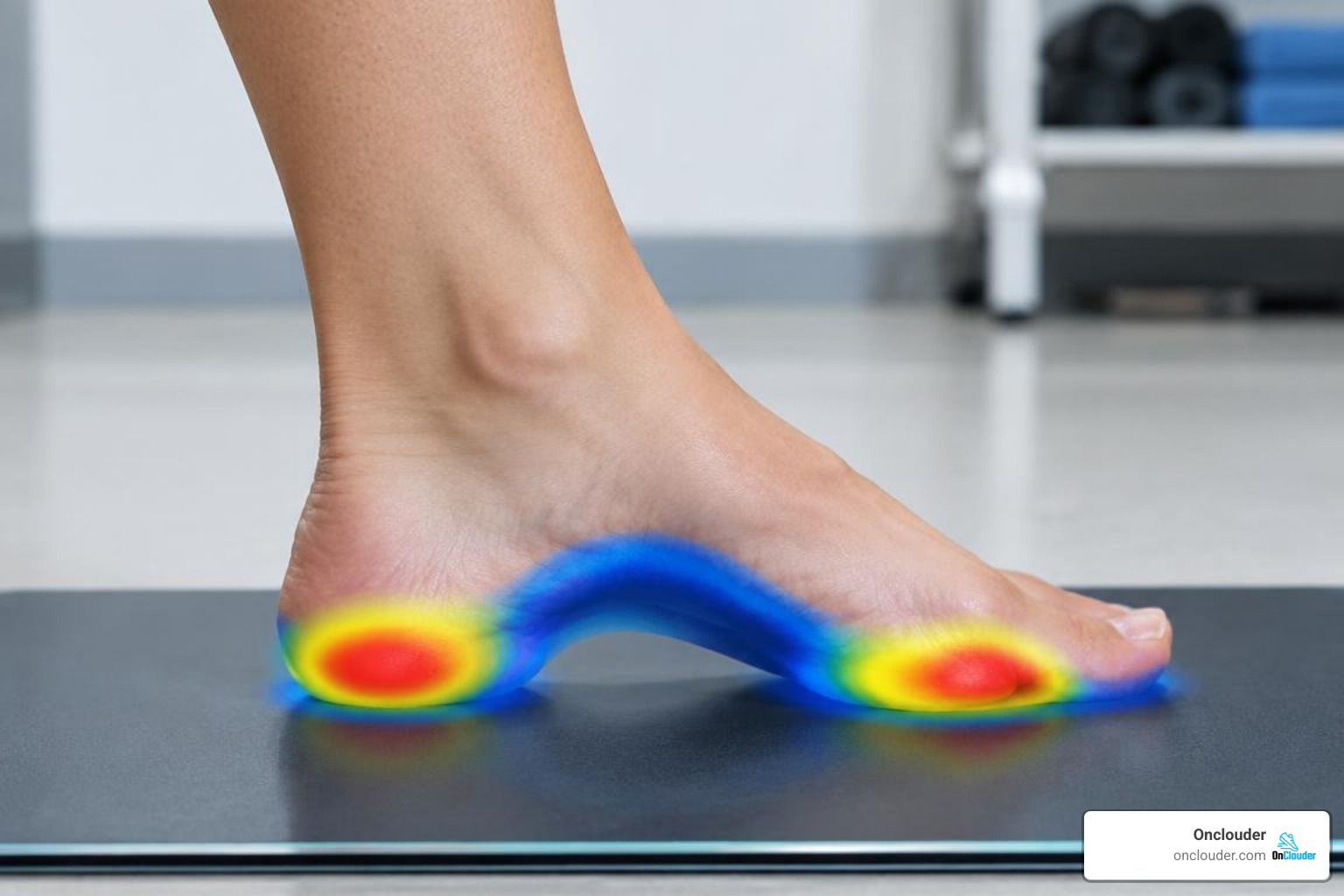
When your foot cannot roll inward naturally (a lack of pronation known as underpronation or supination), the shock from every single footstrike travels straight up your kinetic chain into your shins, knees, and lower back. Runners frequently notice premature wear along the outer edge of their outsoles. Finding the right pair of running shoes for supinators is critical to prevent overuse injuries like metatarsalgia, shin splints, and chronic plantar fascia strain.
Why Cushioning is Vital in Sneakers Good for High Arches
One of the most common misconceptions we hear at Onclouder is that high-arched feet need tall, ultra-rigid plastic wedges shoved beneath them. In reality, finding sneakers good for high arches is far more about impact dispersion than rigid elevation.
Because a cavus foot is inherently stiff and lacks natural shock attenuation, your shoe’s midsole must do the work your arch refuses to do. Plush materials—such as high-grade EVA foam, nitrogen-infused compounds, and specialized gel capsules—absorb the brunt of each landing. Premium midsoles spread ground reaction forces across a broader surface area, reducing peak pressure points under your forefoot and heel. Choosing footwear built with comfortable materials for high arch support ensures your feet stay protected without forcing them into an unnatural, restrictive position.
Heel Cup Depth and Ankle Stability Dynamics
High-arched feet don’t just struggle with shock absorption; they also present unique stability challenges. Because the foot rests in a supinated posture with weight tilted toward the outer edge, the ankle joint sits at a higher risk of rolling outward.
A deep, contoured heel cup provides the calcaneal support necessary to center your subtalar joint. By seating your heel firmly within the midsole rather than letting it perch on top, the shoe stabilizes your rearfoot during heel-to-midfoot transitions. This structural hold prevents lateral wobble without requiring stiff, heavy plastic medial posts that work against your natural stride.
Key Features That Make Sneakers Good for High Arches
When shopping for high-arch sneakers in 2026, looking at tech specs can feel overwhelming. We look for a balanced combination of impact attenuation, foot-cradling contours, and non-restrictive uppers.
Essential Features That Make Sneakers Good for High Arches
- Plush, Shock-Absorbing Midsole: Premium EVA, supercritical foams, or gel units that cushion heavy heel strikes and forefoot landings.
- Deep, Sculpted Heel Cup: Secure rearfoot lockdown that prevents heel slippage and stabilizes the subtalar joint against lateral rolling.
- Anatomical Footbed Contouring: Gentle, continuous arch contact that fills the gap beneath your foot to distribute weight without aggressive upward pressure.
- Breathable, Adaptive Upper: Flexible engineered mesh or knit that stretches across a tall instep without causing lace bite or restricting circulation.
- Dual-Density Traction Outsole: High-abrasion rubber pods that provide durable grip along the lateral edge where high-arch wearers land hardest.
- Removable Insole System: Footbeds that can easily be swapped out if you prefer using dedicated high arch inserts for walking comfort.
The Risks of Aggressive Motion Control and Rigid Stability Shoes
A frequent mistake is buying traditional motion-control shoes designed for overpronation. Overpronation and severe supination require completely opposite footwear philosophies, as detailed in our guide comparing flat feet and high arch footwear.
Motion-control shoes use dense medial posts and firm guide rails to stop the foot from rolling inward. If you have high arches, your foot is already resisting inward roll. Putting a rigid stability block under a high arch forces your weight even further onto the outside edge of your foot, spiking your risk of lateral ankle sprains, stress fractures along the fifth metatarsal, and peroneal tendonitis. For high arches, flexible neutral shoes with generous cushioning are almost always the superior choice.
Top-Rated Sneakers for High Arches: Expert & Podiatrist Picks
We have tested countless models to see which trainers deliver true all-day comfort, exceptional shock absorption, and stable alignment for high insteps.
| Sneaker Model | Category | Key Feature | Cushioning Level | Podiatrist-Certified Insole? |
|---|---|---|---|---|
| Brooks Glycerin Flex | Daily Running / Walking | Supercritical DNA LOFT Foam | Maximum | No (Anatomical) |
| Asics Gel-Nimbus 28 | Max-Cushion Road | PureGEL & FF BLAST PLUS | Ultra-Max | No (Ortholite) |
| Hoka Clifton 10 | High-Mileage Comfort | Balanced Early-Stage Meta-Rocker | Maximum | No (Molded EVA) |
| On Cloudswift 4 | Commuting / Urban Walking | Dual-Density Helion Foam + Ankle Sock | Responsive | No (Integrated) |
| Skechers Go Walk Arch Fit | Budget Walking | Patented Arch Fit Footbed System | Balanced Plush | Yes |
| Aetrex Aubrey Platform | Fashion & Support | Data-Driven Orthotic Platform | UltraSky EVA | Yes |
If your primary focus is pounding the pavement, check out our roundup of the best running shoes for high arches for in-depth performance breakdowns.
Maximum Cushioning Road and Running Sneakers
Brooks Glycerin Flex ($170)
The Brooks Glycerin Flex is a gold standard among podiatrists for high-arched runners and walkers. Its plush, nitrogen-infused midsole dampens harsh ground impacts effortlessly. By dispersing force evenly from initial heel contact through toe-off, it takes massive strain off the metatarsal heads, making tired forefeet a thing of the past.
Asics Gel-Nimbus 28 ($165)
With its signature PureGEL rearfoot technology and a high-stack FF BLAST PLUS ECO midsole, the Gel-Nimbus 28 feels like walking on marshmallows without sacrificing structural integrity. The deep heel collar wraps securely around the calcaneus, preventing heel slippage while delivering the impact protection high-arched supinators crave.
Hoka Clifton 10 ($155)
Hoka’s Clifton 10 pairs generous EVA foam with an early-stage Meta-Rocker geometry. The subtle rocker bottom guides your foot through a smooth heel-to-toe transition, preventing your rigid arch from absorbing full impact at mid-stance. It provides an exceptionally light, floaty ride for long days on your feet.
Responsive Lightweight Trainers for Walking and Commuting
On Cloudswift 4 ($170)
Not everyone wants a massive, squishy foam stack. If you prefer agility, urban speed, and responsive comfort, the On Cloudswift 4 shines.
While it sits on the lighter, firmer end of the cushioning spectrum compared to ultra-plush road runners, its dual-density Helion superfoam absorbs asphalt impacts with ease. The integrated, sock-like engineered knit upper accommodates high insteps effortlessly, eliminating the pinching and lace pressure common in traditional rigid tongues. It is an outstanding choice for all-day city commuting and active lifestyle wear.
Podiatrist-Certified Walking Shoes on a Budget
Skechers Women’s Go Walk Arch Fit-Motion Breeze ($57 – $90)
You don’t need to spend top dollar to get certified foot support. The Skechers Women’s Go Walk Arch Fit-Motion Breeze Sneaker delivers exceptional value, backed by a 4.4 out of 5 rating from over 1,300 verified walkers. You can also explore additional sizes of the Skechers Women’s Go Walk Arch Fit-Motion Breeze Sneaker for daily rotation.
The standout element is its patented Arch Fit insole system, developed with over 20 years of data and podiatrist certification. The removable insole molds directly to your arch shape, distributing weight evenly across the entire footbed. Paired with lightweight ULTRA GO cushioning and Comfort Pillar Technology underfoot, this budget-friendly walking shoe offers impressive shock rebound for daily errands. Read more about similar options in our guide to arch fit shoes for walking and running.
Data-Driven Orthotic Platform Sneakers
Aetrex Aubrey Arch Support Platform Sneaker ($159.95)
If you want dressier styling without sacrificing orthopedic alignment, the Aubrey Arch Support Platform Sneaker – Burgundy Velvet – aetrex is a standout. Holding a 4.36 out of 5 rating from satisfied customers, Aetrex designed this sneaker using proprietary anatomical data derived from over 50 million global foot scans.
The Aubrey features a lightweight UltraSky EVA platform midsole (1.5-inch heel height) that provides plush shock absorption, alongside a built-in anatomical arch support footbed designed specifically to alleviate plantar fasciitis and forefoot pressure. Its premium burgundy velvet upper and functional side zipper make it effortless to slip on and off while maintaining a snug, supportive fit.
Common Foot Conditions and Sizing Guidelines for High Arches
Wearing unsupportive footwear with high arches can quickly trigger painful overuse syndromes:
- Plantar Fasciitis: When the arch does not compress naturally, the plantar fascia remains under constant, tight tension, causing micro-tears and stabbing morning heel pain.
- Metatarsalgia: Excessive forefoot pressure causes intense inflammation, burning, and bruising across the balls of the feet.
- Stress Fractures: Poor shock attenuation sends ground vibrations straight into the metatarsals and shin bones.
- Ankle Sprains & Peroneal Tendonitis: Lateral weight distribution strains the tendons along the outer ankle, leading to instability.
Sizing Tips and Lacing Techniques
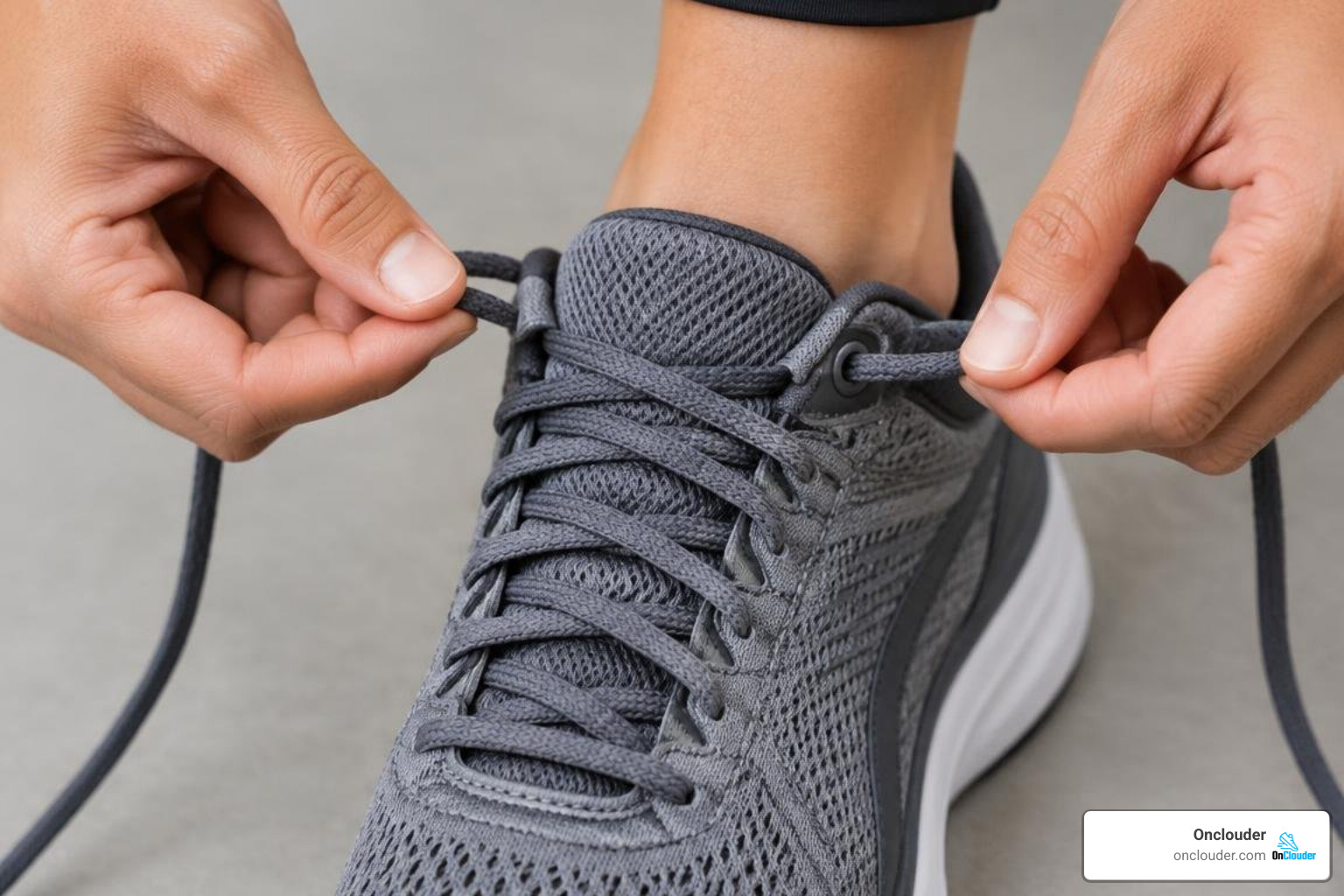
Because high arches push the top of your foot upward, standard shoe tongues can cause friction across the dorsal nerve. Look for sneakers with gusseted tongues or soft knit uppers. If you experience heel slipping—common in rigid feet that do not flex through the midsole easily—utilize the extra eyelet at the top of your sneakers to tie a heel lock (runner’s loop). This secures the rearfoot into the heel cup without needing to overtighten laces over your instep. For more tips on footwear fit, see our advice on preventing high arch boot and sneaker discomfort.
Frequently Asked Questions About Sneakers for High Arches
Why is cushioning more important than aggressive arch support for high arches?
High arches are naturally rigid structures that do not absorb ground impact effectively. If you place a hard, elevated arch support under a cavus foot, you simply create another rigid pressure point. Plush cushioning, on the other hand, fills the natural negative space beneath your foot while actively absorbing shock and redistributing forces evenly across your heel and forefoot.
What common foot problems arise from wearing the wrong shoes with high arches?
Wearing unsupportive, flat, or overly stiff motion-control shoes frequently leads to plantar fasciitis, metatarsal stress fractures, painful calluses on the heel and ball of the foot, Achilles tendonitis, and frequent lateral ankle sprains due to foot supination.
How should sneakers for high arches fit around the heel and midfoot?
Sneakers should provide a snug, deep heel cup that centers your calcaneus and locks the ankle securely in place. Across the midfoot and top of the instep, the upper should hold the foot gently without restrictive pinching or downward pressure on sensitive nerves. The forefoot needs ample room for natural toe splay during push-off.
Conclusion
Finding the right sneakers for high arches does not mean settling for heavy, medical-looking shoes or painfully stiff arch blocks. The key is seeking out neutral shoes that combine generous, shock-absorbing midsoles with a secure, deep heel cup and adaptive uppers.
Whether you opt for the maximum-cushioned comfort of the Brooks Glycerin Flex, the sleek daily versatility of the On Cloudswift 4, the certified value of Skechers Arch Fit, or the scan-backed orthotic styling of Aetrex, your feet will thank you with every step. For a complete look at foot health and alignment solutions, explore our ultimate guide to best shoes with arch support.