Can Arch Orthotic Insoles Ease Back and Knee Strain?
They may help, but the right fit matters more than the brand. Arch orthotic insoles can support your foot and reduce excess inward rolling as you walk. That may ease some knee or back strain linked to your gait, but insoles are not a reliable fix for every cause of joint pain.
For most people, a semi-rigid insole with a comfortable arch and a stable heel cup is a sensible place to start. Choose support that matches your arch height, fits your shoes without crowding your toes, and feels comfortable during your usual activities. If pain persists or worsens, get a professional assessment rather than trying a firmer insert.
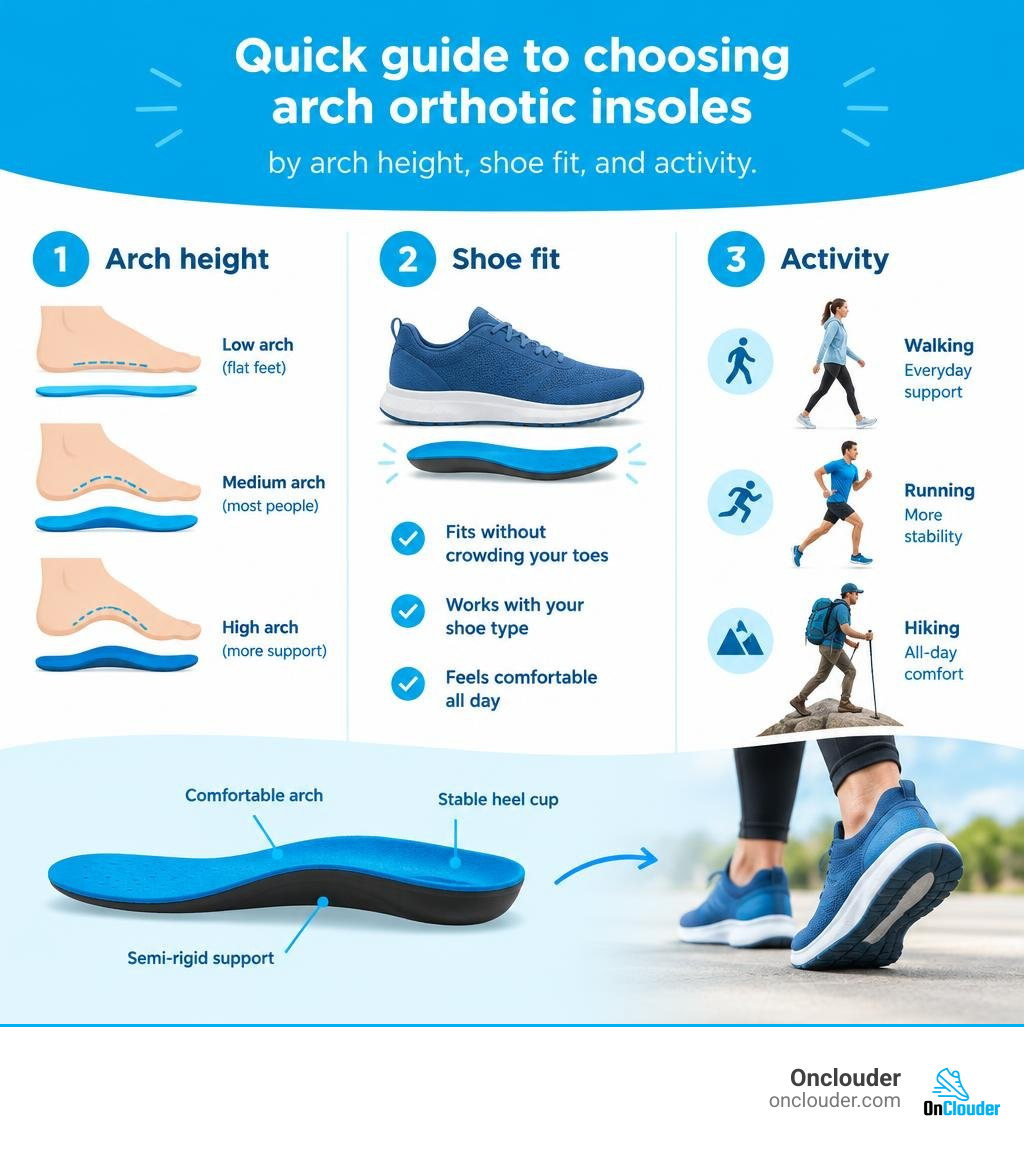
Arch orthotic insoles terms to remember:
How Arch Orthotic Insoles Correct Biomechanics and Relieve Joint Pain
When we spend hours on our feet, every step sends an impact wave upward through the body. This interconnected system of joints, muscles, and ligaments is known as the kinetic chain. If the foundation of that chain—the foot—lacks proper structural support, the entire alignment collapses upward.
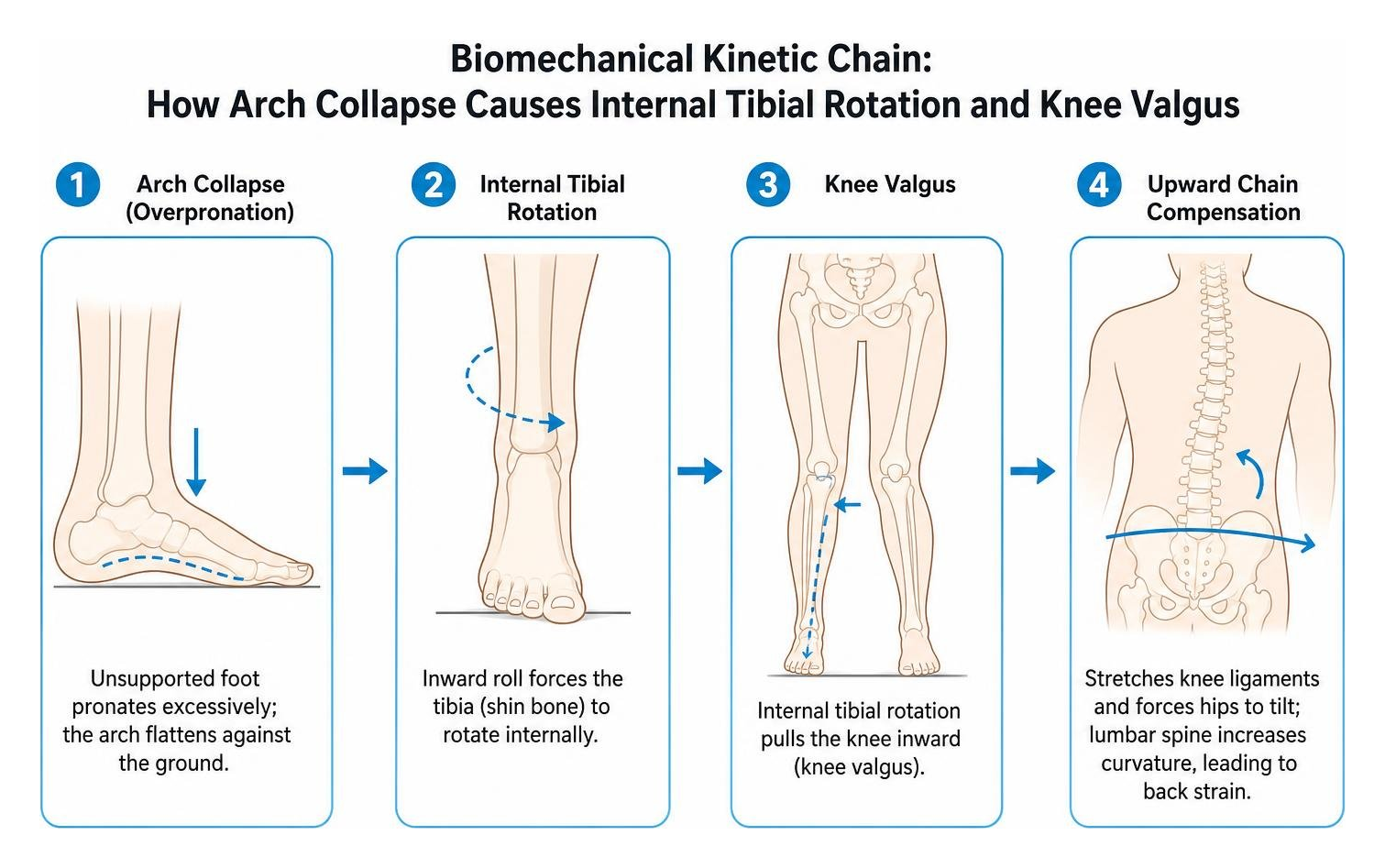
When an unsupported foot pronates excessively, the arch flattens against the ground. This inward roll forces the tibia (shin bone) to rotate internally, which pulls the knee inward into a position called knee valgus. This abnormal twisting stretches the inner ligaments of the knee joint and forces the hips to tilt forward. Consequently, the lumbar spine compensates with increased curvature, leading to lower back fatigue and chronic ache.
Using insoles for preventing excessive foot pronation provides structural reinforcement under the medial arch. This redistributes midfoot pressure and stabilizes the tibialis posterior tendon, taking tension off the plantar fascia ligament. By preventing inward arch collapse, orthotics help maintain neutral knee tracking and level pelvis positioning, providing noticeable relief for joint strain further up the body.
Top-Rated Arch Support Insoles for Pain Relief and Alignment
Finding the right insole requires balancing arch height, shell rigidity, and shoe volume. Here is a quick comparison of the leading over-the-counter options we have tested:
| Model | Arch Rigidity | Cushioning Type | Arch Height / Thickness | Best For |
|---|---|---|---|---|
| PowerStep Pinnacle | Semi-Rigid | Dual-layer EVA foam | 30 mm arch / 5 mm forefoot | Everyday wear & plantar fasciitis |
| Spenco RX Custom Arch | Heat-Moldable | Spencore shock foam | Adaptable / Low profile | Custom contours & overpronation |
| Pedag Viva Summer | Semi-Rigid | Breathable latex + Terry | 25 mm arch / 3.5 mm forefoot | Warm weather & moisture control |
| Pedag Viva Winter | Semi-Rigid | Wool + Thermal foam | 25 mm arch / 3.5 mm forefoot | Cold boots & winter insulation |
| PowerStep Pinnacle Hiker | Rigid | Dual-layer impact foam | 30 mm arch / 5 mm forefoot | Hiking boots & heavy trail impact |
PowerStep Pinnacle Insoles: Best Overall for Everyday Support
The PowerStep Pinnacle Insoles remain one of the most widely recommended over-the-counter orthotics, earning an impressive 4.66 out of 5 stars from users seeking relief from everyday plantar fasciitis and midfoot stress.
Featuring an APMA-accepted semi-rigid polypropylene shell with a 30 mm arch height, the Pinnacle creates a sturdy yet forgiving bridge under medium arches. It pairs a deep heel cup for rearfoot stability with dual-layer EVA cushioning that dampens repetitive shock. If you are learning how to choose the best insoles for foot pain, this versatile insert fits comfortably into most running shoes, casual sneakers, and roomy work shoes.
Spenco RX Custom Arch Orthotic Insoles: Best Heat-Moldable Support
Backed by over 35 years of clinical trust and more than 6 million pairs sold, the Spenco RX Custom Arch Orthotic Insole delivers personalized fit without custom-orthotic pricing. Over 88% of customer reviews give this product a full 5-star rating.
The standout feature of this insole is its moldable plastic arch plate. By immersing the shell in hot water according to package instructions, you can mold it directly to the exact contours of your foot for individualized support. Combined with shock-absorbing Spencore material, a 4-way stretch friction-reducing top cover, and Silvadur antimicrobial odor protection, it serves as a valuable tool highlighted in our plantar fascia orthotic guide. Spenco backs these inserts with a 1-year limited warranty against manufacturer defects.
Pedag Viva Summer and Winter: Best Climate-Specific Arch Orthotic Insoles
German brand Pedag creates orthotics tailored for specific seasons without compromising on biomechanical support. Both versions feature a semi-rigid arch bridge, an integrated metatarsal pad to relieve ball-of-foot pressure, and a shock-absorbing heel cushion.
For warmer climates, the APMA-accepted Pedag Viva Summer warm weather orthotic uses a soft terry cotton top layer that wicks away sweat and allows barefoot wearing inside summer sneakers. When temperatures drop, the Pedag Viva Winter Insoles swap in a three-layer thermal shield featuring pure unbleached wool, closed-cell insulation foam, and an aluminum base that reflects cold away from the sole. If sweaty or freezing feet complicate your daily routine, exploring breathable moisture-wicking insoles like these ensures comfort all year long.
PowerStep Pinnacle Hiker: Best for Hiking Boots and Heavy Impact
Taking on uneven trails with a heavy backpack multiplies the strain on your lower back and knees. The PowerStep Pinnacle Hiker insoles use a rugged, rigid stability cradle designed to keep the foot neutral over rocky ground.
These insoles feature dual-layer cushioning that blends a soft top foam with a resilient EVA base to soften harsh impacts from sharp stones. An odor-reducing polyester top cloth limits friction, heat buildup, and blister formation during long ascents. Backed by a 30-day wear-test guarantee, they are an essential upgrade when protecting feet with top hiking insoles on challenging backcountry terrain.
How to Choose the Right Orthotic Inserts for Your Arch Type and Condition
Before buying an insole, determine your specific foot arch profile using the simple “wet paper test.” Wet the bottom of your foot and step firmly onto a sheet of cardboard or brown paper:
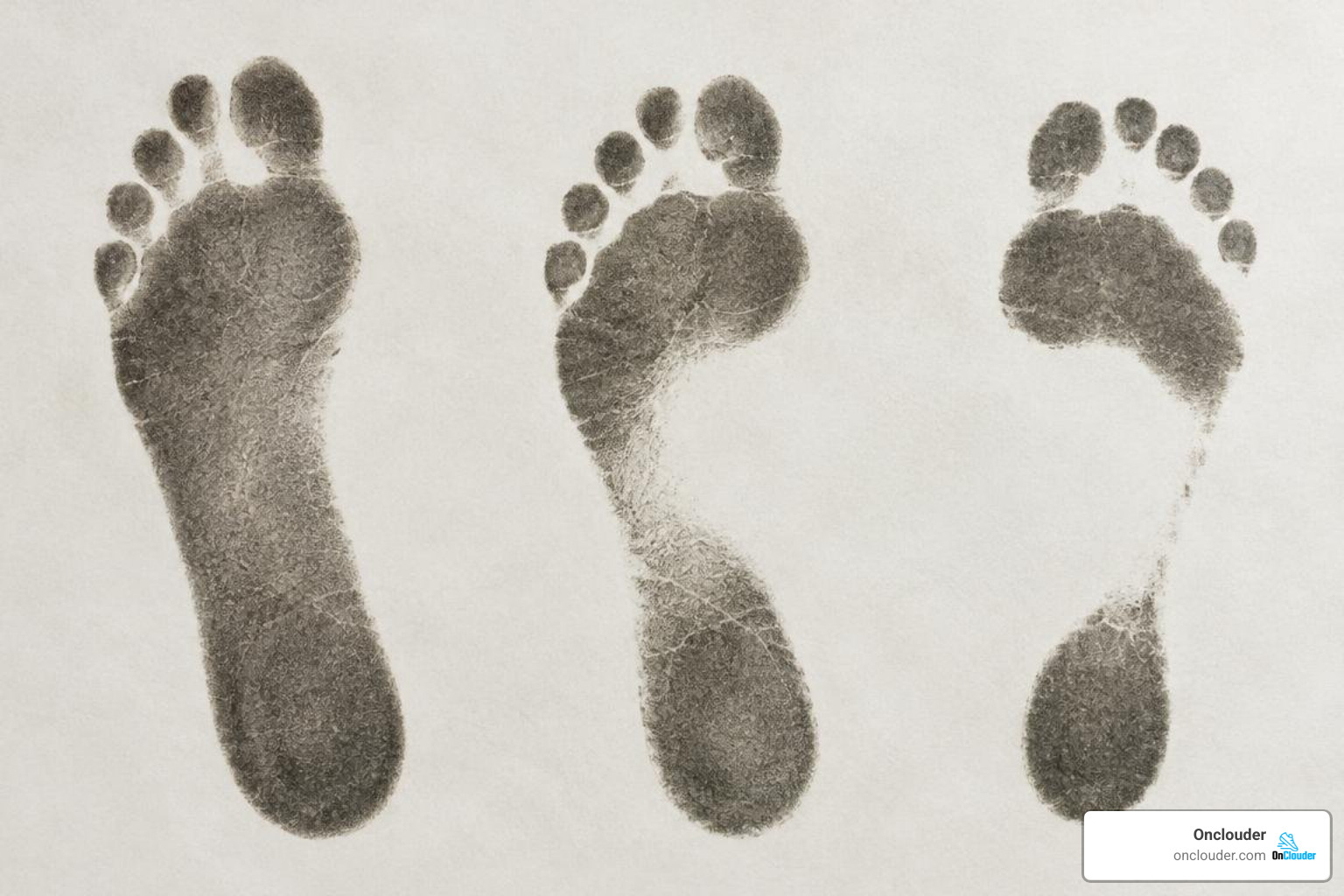
- Low Arch / Flat Feet: If the imprint shows the entire bottom of your foot, you have flat arches and are prone to overpronation. Opt for firm stability shells that prevent total arch collapse. You can explore structured options in our guide to arch support inserts for flat feet.
- Medium / Neutral Arch: If you see about half of your arch in the imprint, your feet naturally roll through a standard gait cycle. Semi-rigid insoles like the standard PowerStep Pinnacle offer ideal support and cushioning.
- High Arch: If you see only your heel, the ball of your foot, and a thin outer sliver, you have high arches that tend to supinate. High arches concentrate pressure on the heels and metatarsals, requiring specialized high arch support inserts with higher bridge profiles and extra cushion.
Matching Arch Height to Rigid vs. Semi-Rigid Shells
The stiffness of an insole dictates how much corrective force it applies:
- Semi-Rigid Shells: Constructed from flexible plastics like polypropylene, these allow natural dynamic movement while preventing extreme inward rolling. They are suitable for general walking, running, and minor aches.
- Rigid Shells: Made from reinforced composite plastics or carbon fibers, rigid shells offer maximum motion control. They work well for severe overpronation, heavier individuals needing heavy-duty orthotic support, or chronic tibialis posterior tendon issues.
Over-the-Counter vs. Custom Orthotics
While high-quality over-the-counter (OTC) inserts cost between $25 and $50, custom prescription orthotics prescribed by a podiatrist can cost anywhere from $300 to $600.
OTC insoles effectively resolve mild to moderate biomechanical aches, everyday muscle fatigue, and standard plantar fasciitis for most people. However, if you have significant leg length discrepancies, rigid non-flexible flat feet, severe diabetic neuropathy, or persistent pain that does not improve after weeks of OTC wear, consult a podiatrist. For a deeper breakdown of structural differences, read our guide comparing off-the-shelf inserts versus custom orthotics.
Proper Fitting, Trimming, and Care for Extended Insole Lifespan
An orthotic insole can only do its job if it sits completely flat inside your footwear. Follow these steps to ensure a clean fit:
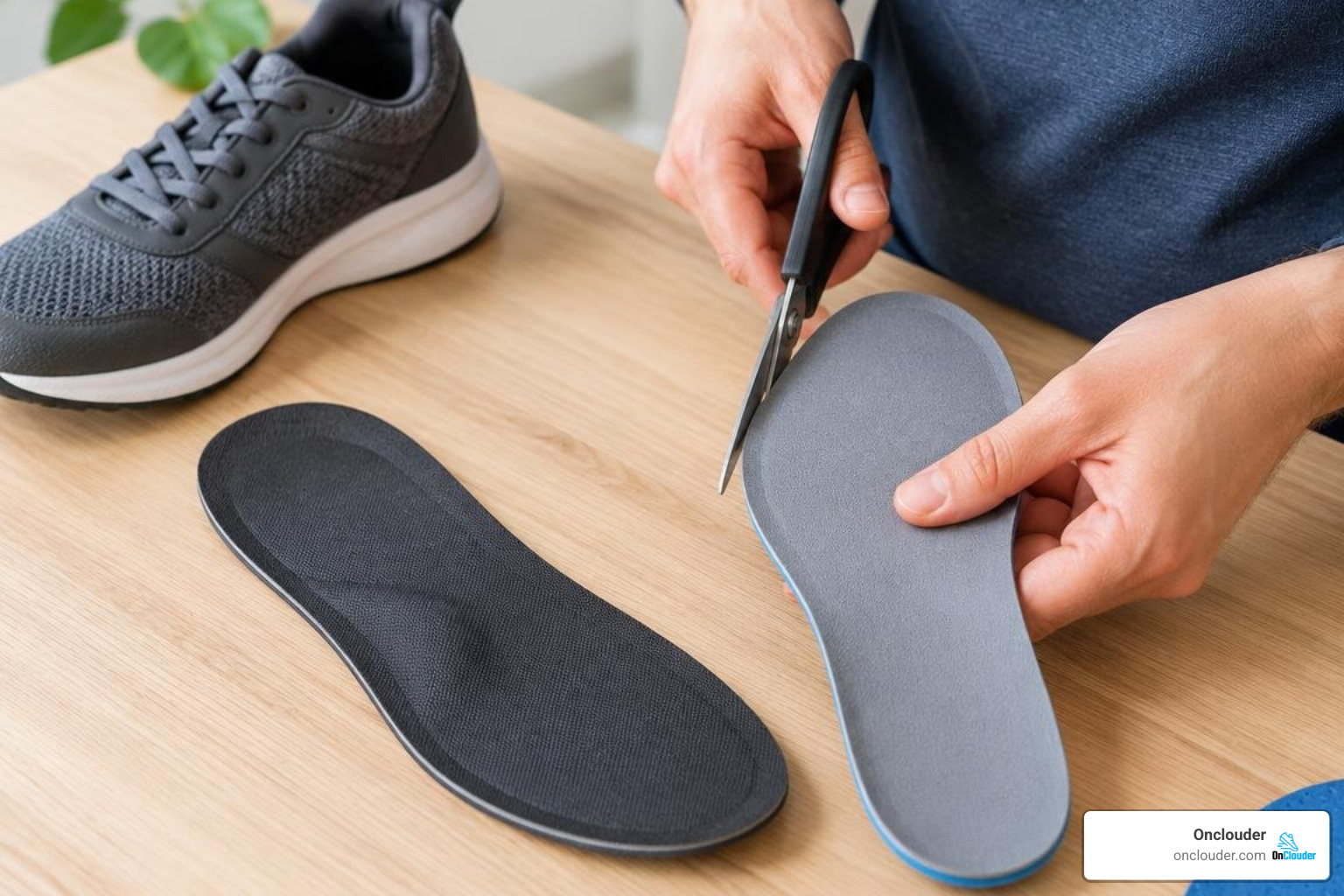
- Remove Factory Footbeds: Always remove the flimsy foam liner that came with your shoes. Stacking an orthotic on top of an existing insole crowds the toe box and lifts your heel out of the shoe’s collar.
- Trace the Outline: Place your original shoe liner over the bottom of your new orthotic, aligning the heel cups firmly. Use a pen to trace the contour around the forefoot.
- Trim Carefully: Use sharp kitchen shears to trim along the traced line. Cut slightly outside the line first—you can always trim more material away, but you cannot add it back.
- Test the Fit: Slide the trimmed insole into the shoe. It should rest flat without buckling, curling at the edges, or sliding back and forth.
For professionals wearing supportive insoles for standing all day, proper hygiene is essential. Clean your insoles by spot-wiping them with a damp cloth and mild soap. Never submerge them in water or place them in a clothes dryer, as extreme heat can warp the plastic arch shell and break down the cushioning foam.
Frequently Asked Questions About Foot Orthotics
How long do orthotic insoles typically last before needing replacement?
Most over-the-counter orthotics have a functional lifespan of 6 to 12 months, depending on your body weight, daily step count, and activity level. Manufacturers like PowerStep design their foam layers and shells to provide optimal support for roughly six months of daily use.
Inspect your insoles regularly for warning signs of breakdown: compressed or flat EVA foam under the ball of the foot, cracks along the bottom plastic bridge, fabric peeling away from the base, or a return of your original heel or knee pain.
Can wearing arch orthotics cause initial foot soreness?
Yes, experiencing mild arch or muscle soreness during the first 1 to 2 weeks is completely normal. Your feet, ankles, and calves are adapting to a new skeletal alignment and activating muscles that were previously underutilized.
To ensure a smooth transition, follow a gradual break-in schedule:
- Days 1–2: Wear the insoles for 1 to 2 hours during low-impact daily activities.
- Days 3–4: Increase wear time to 3 to 4 hours.
- Days 5–7: Wear them for half the day (4 to 6 hours).
- Week 2 and beyond: Use them for full days of walking, running, or working.
If sharp, shooting, or worsening pain occurs, remove the inserts immediately and consult a healthcare professional.
What complementary exercises help alleviate chronic plantar fasciitis?
Orthotic insoles support your feet from the outside, but strengthening your lower-leg muscles builds support from the inside. Combine insole use with these daily exercises:
- Plantar Fascia Stretch: Sit down, cross your affected leg over your knee, and pull your toes backward toward your shin until you feel a gentle stretch along the bottom of your foot. Hold for 30 seconds, repeating 3 times daily.
- Eccentric Calf Drops: Stand on the edge of a stair on the balls of your feet. Lower your heels slowly below the step over a count of 3 seconds, then press back up. Complete 3 sets of 10 repetitions.
- Frozen Bottle Rolls: Roll the arch of your foot over a frozen water bottle for 5 to 10 minutes in the evening to reduce localized inflammation.
Conclusion
Arch orthotic insoles provide a reliable, cost-effective way to stabilize your gait, correct overpronation, and reduce the kinetic chain strain that causes knee ache and lower back fatigue. Matching insole rigidity and arch height to your specific foot shape helps keep your body aligned and moving comfortably. To compare more tested models and find your ideal match, discover the best arch support insoles for total foot relief.