Why Your Feet Are Screaming After a Long Shift (And What to Do About It)
The best insoles for standing all day at work can make the difference between ending your shift feeling fine and limping to your car in pain. Here are the top picks to know right now:
| Insole | Best For | Key Feature |
|---|---|---|
| PowerStep Pinnacle | Overall work use | Firm arch support, podiatrist #1 pick |
| Dr. Scholl’s Work All-Day | Budget-friendly comfort | 4.5 stars, 53K+ reviews |
| Dr. Scholl’s Heavy Duty | Workers 200lbs+ | 4.4 stars, 82K+ reviews |
| Superfeet Work Cushion | Work boots | Anti-fatigue, 60-day guarantee |
| Tread Labs Pace 2 | Custom arch fit | 4 arch heights, lifetime support guarantee |
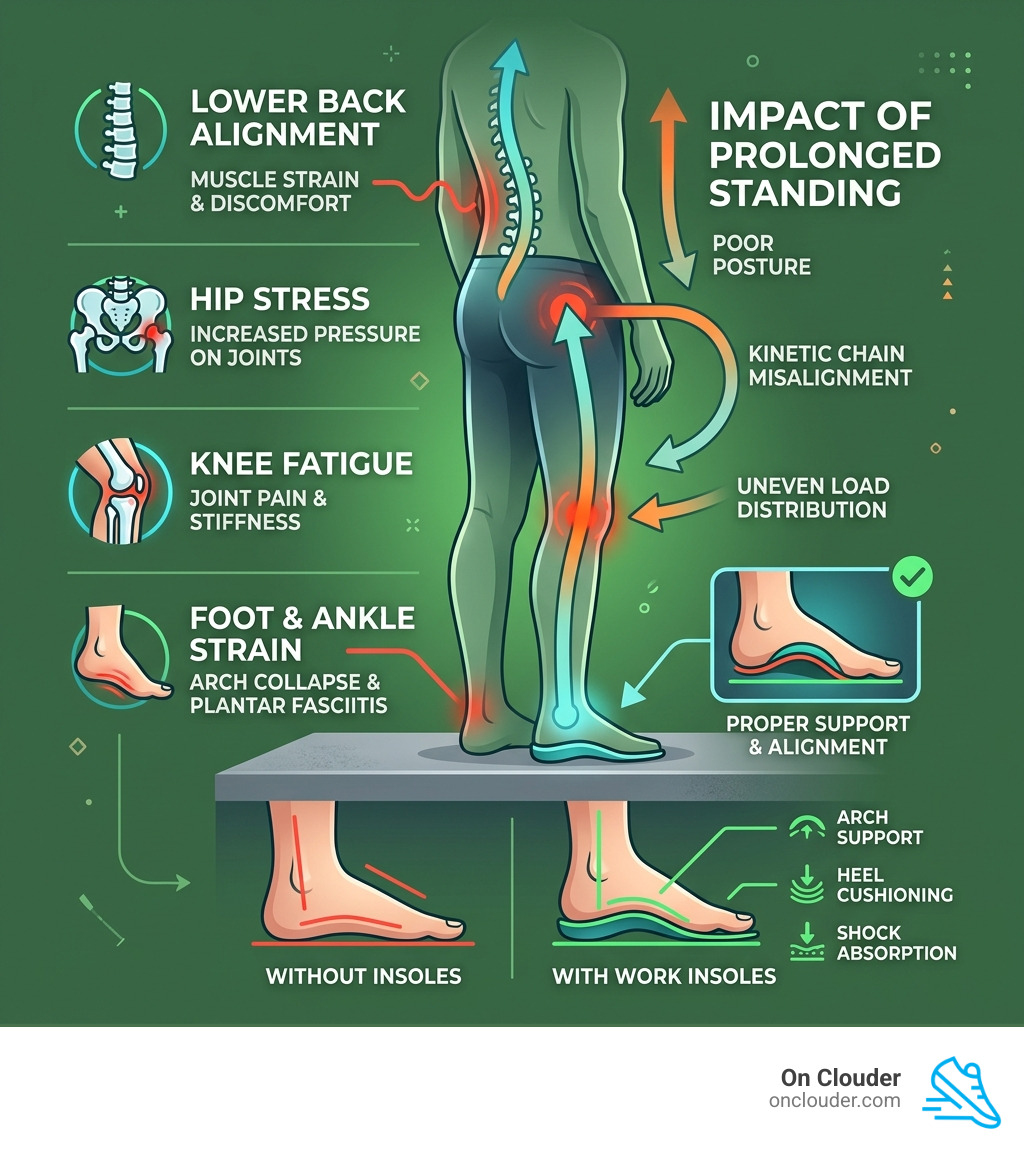
If you stand for 8, 10, or even 12+ hours a day — whether you’re a nurse, machinist, teacher, or retail worker — your feet take a serious beating. Hard floors, poor footwear, and hours of continuous pressure don’t just hurt your feet. They travel up the kinetic chain, causing knee, hip, and lower back pain too.
The right insole addresses that from the ground up. It’s not just about adding padding. Proper arch support, heel cushioning, and shock absorption all work together to keep your body aligned and fatigue at bay.
With over 4,000 insole options on Amazon alone, it’s easy to feel overwhelmed. This guide cuts through the noise.
I’m Faisal S. Chughtai, a footwear comfort expert who has spent years helping people find the right support for demanding, on-your-feet lifestyles — including researching and reviewing the best insoles for standing all day at work. In the sections ahead, I’ll walk you through exactly what to look for and which insoles are worth your money.
Best insoles for standing all day at work terminology:
- Best shoes for all day standing
- Best Hoka shoe for standing all day
- Best dress shoes for standing all day men’s
The Best Insoles for Standing All Day at Work
When we look for the best insoles for standing all day at work, we aren’t just looking for “squishy” foam. True relief comes from structural integrity. If an insole is too soft, it collapses under your body weight within an hour, leaving you with zero support for the remaining seven hours of your shift.
Premium Arch Support Insoles: PowerStep Pinnacle
PowerStep is frequently cited as the #1 podiatrist-recommended brand, and for good reason. The Pinnacle model features a medical-grade footbed that provides firm but flexible arch support. With a 4.5-star rating from over 24,000 reviews, it is a gold standard for those dealing with plantar fasciitis or general foot fatigue. It uses a dual-layer cushioning system that pairs a plush top layer with a supportive base to ensure your foot stays aligned.
Best for Customization: Tread Labs Pace 2
Not all feet are created equal, which is why we love the Tread Labs Pace 2 Insoles. They offer four different arch heights (low, medium, high, and extra high). This “semi-custom” approach allows you to match the insole to your specific foot shape. They also feature a unique two-part system: a molded arch support that carries a lifetime guarantee and a replaceable top cover. This means when the foam wears out, you don’t have to buy a whole new set of orthotics.
Best for Heavy-Duty Use: Dr. Scholl’s Heavy Duty Support
For workers who weigh over 200lbs or have wider feet, standard insoles often flatten out too quickly. Dr. Scholl’s Heavy Duty Support insoles are specifically engineered to distribute weight and reduce the impact of every step. With over 82,000 reviews and a 4.4-star rating, these are a powerhouse for those on concrete floors all day. They incorporate “Massaging Gel” technology alongside a reinforced arch guard to prevent the foot from “bottoming out.”
Best for Work Boots: Superfeet Work Cushion
If you wear roomy work boots or safety shoes, the Superfeet Work Cushion Insoles are a top-tier choice. They are designed with “Adaptive Comfort Technology” that allows the insole to flex with your foot while still maintaining structure. They are specifically built to reduce foot fatigue during long shifts and come with a 60-day comfort guarantee.
Learning how to choose the best insoles for foot pain involves balancing your specific shoe type with the level of rigidity your feet require.
Essential Features for All-Day Comfort and Support
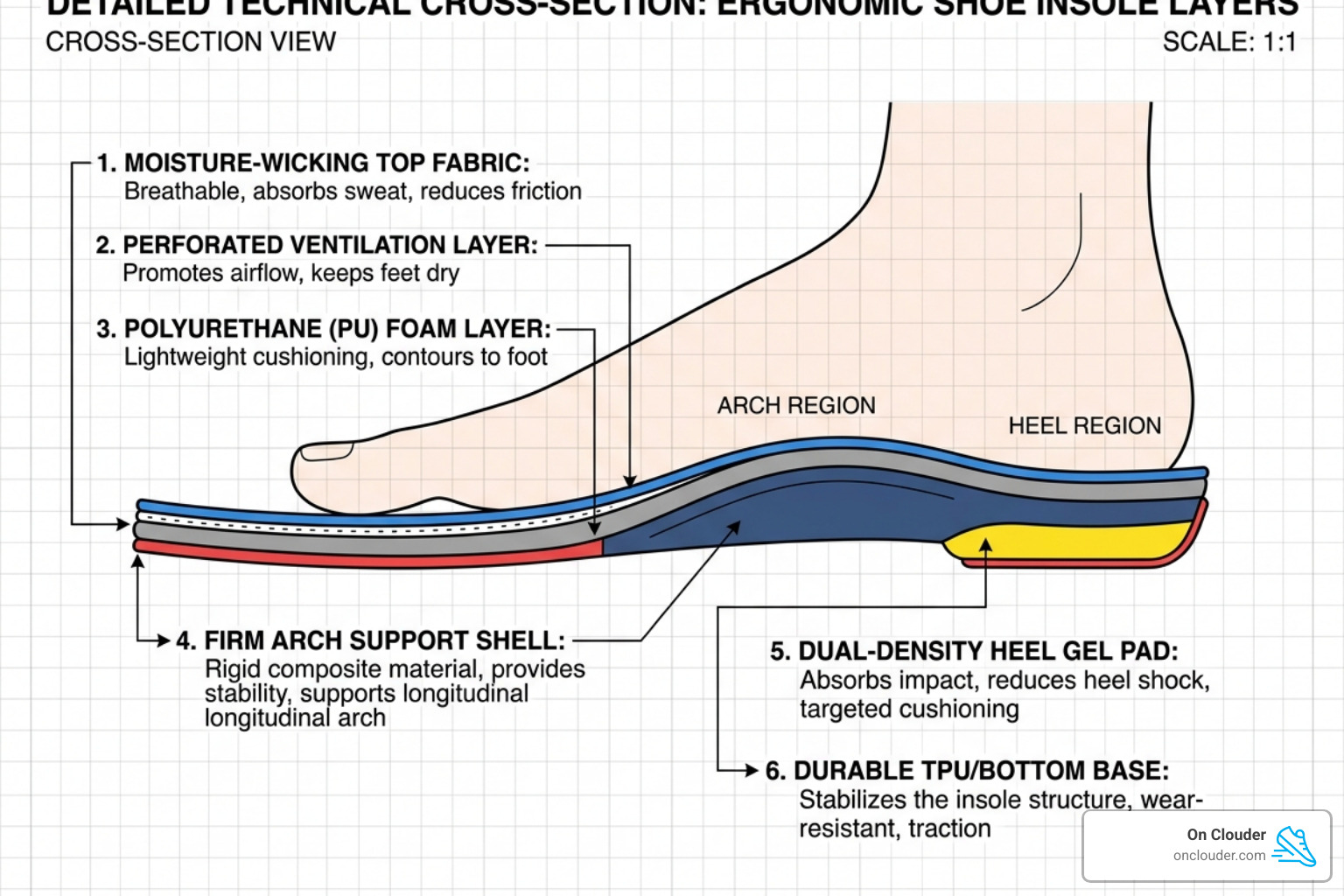
What actually makes an insole effective? It isn’t just marketing. There are four key mechanical features we look for when ranking the best insoles for standing all day at work.
1. Firm Arch Support
Many people make the mistake of buying the softest gel insoles they can find. However, for 10+ hour shifts, you need a semi-rigid or firm arch. This prevents the plantar fascia from overstretching and keeps your foot in a neutral position. If you have flat feet, you might want to look into the best arch support pads for shoes or specific arch support inserts that provide a more robust lift.
2. Deep Heel Cups
A deep, structured heel cup is vital for stability. It cradles the fatty pad under your heel bone, concentrating it to provide natural shock absorption. It also prevents your foot from rolling inward (overpronation) or outward (supination), which can cause cascading pain in your knees and hips.
3. Energy Return and Shock Absorption
Materials like “ShockAbsorb Premium Foam” or “Ortholite X-40” are designed to do more than just sit there. They absorb the kinetic energy of your step and “return” it, reducing the amount of work your muscles have to do to keep you upright. This is why high-end insoles often feel “bouncy” rather than just soft.
4. Moisture-Wicking and Antimicrobial Treatments
Let’s be honest: standing in work boots for 12 hours gets sweaty. The best options use fabrics like “Moisturewick” (often made from recycled materials) and antimicrobial coatings like CopperGuard or Silpure. These features prevent odor-causing bacteria from taking up residence in your shoes and help prevent blisters by reducing friction.
Specialized Solutions for Professions and Foot Conditions
Your profession dictates the type of insole you need. A nurse running through hospital hallways has different needs than a machinist standing stationary on a concrete floor.
For Machinists and Industrial Workers
Machinists often stand in one spot for 10+ hours. This creates static loading on the joints. For these professionals, we recommend high-volume insoles like the PowerStep Pinnacle Work Insoles. These are built for the extra depth of work boots and provide maximum shock absorption for hard surfaces.
For Nurses and Teachers
Nurses and teachers are constantly on the move. They need lightweight, “active” support. Many healthcare professionals find relief using On Cloud shoes for standing all day, but adding a slim-profile insole like the Vionic Slimfit or the PowerStep ComfortLast can provide that extra layer of arch protection needed for double shifts.
For Specific Foot Conditions
- Plantar Fasciitis: This condition requires targeted heel relief and firm arch support to stop the “pulling” sensation on the heel bone. The PowerStep ProTech Full Length is a medical-grade option specifically designed for this.
- Flat Feet: If your arches “collapse” by midday, you need a structured insole that won’t give way. Check out our guide on shoe inserts for flat feet 101 to understand why structural support beats soft padding every time.
- Metatarsalgia: If the ball of your foot feels like it’s burning, look for insoles with a “metatarsal pad”—a small raised bump that offloads pressure from the forefoot.
How to Choose and Maintain Your Best Insoles for Standing All Day at Work
Buying the best insoles for standing all day at work is only half the battle. You also have to fit them and care for them properly to get your money’s worth.
Selecting Based on Arch Type
Before you buy, you need to know your arch height. A simple “wet foot test” (stepping on a piece of cardboard with wet feet) can tell you if you have high, medium, or flat arches.
- High Arches: Need “cushioned” support to fill the gap and distribute pressure.
- Flat Feet: Need “structural” support to prevent the foot from rolling. Stop the slump with arch support for flat feet by choosing semi-rigid shells.
- Heat-Moldable Options: Some brands offer insoles you can pop in the oven for two minutes or heat with a hairdryer to get a custom mold of your foot.
You can also give your favorite shoes a lift with arch support inserts if you don’t want to replace the entire footbed.
Proper Fit and Breaking in Your Insoles
Most high-quality insoles are “trim-to-fit.”
- Remove the factory insole: Never put a new insole on top of the old one unless the shoe is incredibly roomy. It will cramp your toes and cause “volume” issues.
- Trace and Trim: Use the old insole as a template. Trace it onto the new insole and trim with sharp scissors. Leave a 1-2mm gap at the toe to prevent squeaking.
- The Break-In Period: Do not wear new, firm insoles for a full 12-hour shift on day one. Your feet need time to adjust to the new alignment. Wear them for 1-2 hours the first day, and gradually increase the time over two weeks. This is especially true if you are dealing with flat feet, as your arches crave this support but need time to adapt.
Maintenance and Replacement
Quality insoles typically last between 6 to 12 months. PowerStep users generally find 6 months is the sweet spot for standing all day, while Superfeet claims up to 12 months or 500 miles.
- Cleaning: Never machine wash your insoles. The heat and agitation can destroy the adhesives and foam. Instead, spot clean with mild soap and a damp cloth, then air dry completely.
- Replacement Signs: If the top fabric is peeling, the foam feels “flat,” or your foot pain starts to return, it’s time for a new pair. Don’t let flat feet keep you down by trying to squeeze extra life out of a worn-out insert.
Frequently Asked Questions about Work Insoles
How long do quality work insoles typically last?
For someone standing 40+ hours a week, most high-quality insoles will last 6 to 9 months. Even if they look okay, the “rebound” of the foam and the structural integrity of the arch shell will degrade over time. If you notice you’re feeling more fatigued at the end of the day, it’s likely time for a replacement.
Can the right insoles alleviate back and knee pain?
Absolutely. Your feet are the foundation of your body. When your arches collapse or your heel isn’t stabilized, your ankles roll inward. This forces your knees to rotate and your pelvis to tilt, which puts immense strain on your lower back. By correcting foot alignment, the best insoles for standing all day at work can significantly reduce “referred” pain in your upper body.
Should I remove my shoe’s original factory insole?
In 95% of cases, yes. Most factory insoles are cheap pieces of foam that provide no support. Removing them creates the necessary “volume” (space) for the new orthotic. If you leave both in, your foot will be pushed too high in the shoe, leading to heel slippage and toe pinching.
Conclusion
Finding the best insoles for standing all day at work is an investment in your long-term health. Whether you choose the podiatrist-recommended PowerStep, the custom-height Tread Labs, or the heavy-duty Dr. Scholl’s, the goal is the same: proper alignment and shock absorption.
At On Clouder, we know that the right gear makes all the difference. While a great insole can fix a mediocre shoe, pairing a high-quality insert with the right footwear is the ultimate solution. If you’re ready to upgrade your entire setup, be sure to find the best shoes for standing all day and give your feet the relief they deserve.
Your shift might be long, but it doesn’t have to be painful. Take care of your feet, and they’ll take care of you.