
Why Foot Arch Support for Flat Feet Is Essential
Foot arch support for flat feet helps stabilize the foot, control overpronation, and redistribute pressure more evenly across the sole. By supporting the medial longitudinal arch, a properly contoured insole reduces excessive inward rolling and eases strain on the plantar fascia, Achilles tendon, and posterior tibial tendon.
When your feet lack a natural structural arch, every step places unique demands on your muscles, ligaments, and joints. Roughly 20% to 30% of the population has some degree of flat feet, where the entire sole touches or nearly touches the ground during weight-bearing activities. Without proper support beneath the medial longitudinal arch, the foot tends to roll inward excessively—a motion known as overpronation.
This inward rolling sets off a chain reaction throughout your body. Your foot’s primary shock-absorbing mechanism collapses, forcing the plantar fascia, Achilles tendon, and posterior tibial tendon to absorb loads they were never designed to handle alone. Over time, this unmitigated force leads to chronic fatigue, muscle tightness, and persistent inflammation.
By stabilizing your foundation, the right orthotic insert redistributes these forces evenly across the entire surface of your foot. It bridges the gap between your footwear’s flat interior and your foot’s unique contours. For an in-depth breakdown of practical padding options, check out the ultimate guide to arch pads for flat feet and pronation to understand how targeted medial relief transforms daily mobility.
Biomechanical Benefits of Foot Arch Support for Flat Feet
Foot arch support does not simply prop up your midfoot; it fundamentally changes the way your musculoskeletal system handles ground reaction forces.
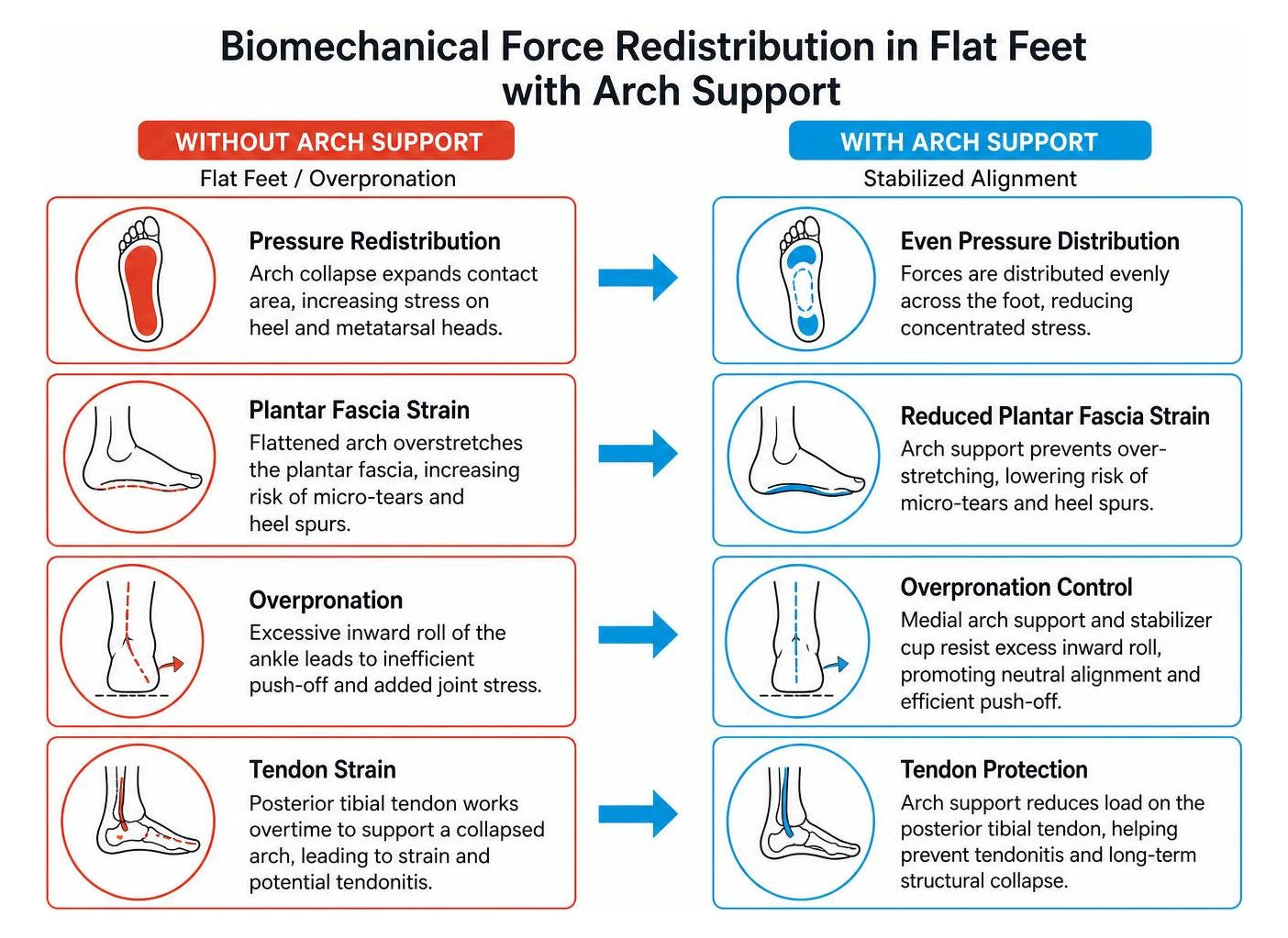
When an arch collapses during weight-bearing:
- Pressure Redistribution: The contact area expands across your foot, transferring concentrated stress away from your heel and metatarsal heads.
- Plantar Fascia Strain Reduction: By preventing the arch from flattening completely under tension, arch supports keep the plantar fascia from overstretching, drastically reducing the risk of micro-tears and heel spurs.
- Overpronation Control: A structured medial arch and firm stabilizer cup resist excessive inward ankle roll, allowing a more efficient, neutral push-off through the big toe.
- Tendon Protection: The posterior tibial tendon, which supports the arch, is spared from chronic strain, preventing tendonitis and long-term structural collapse.
Relieving Associated Knee, Hip, and Back Pain
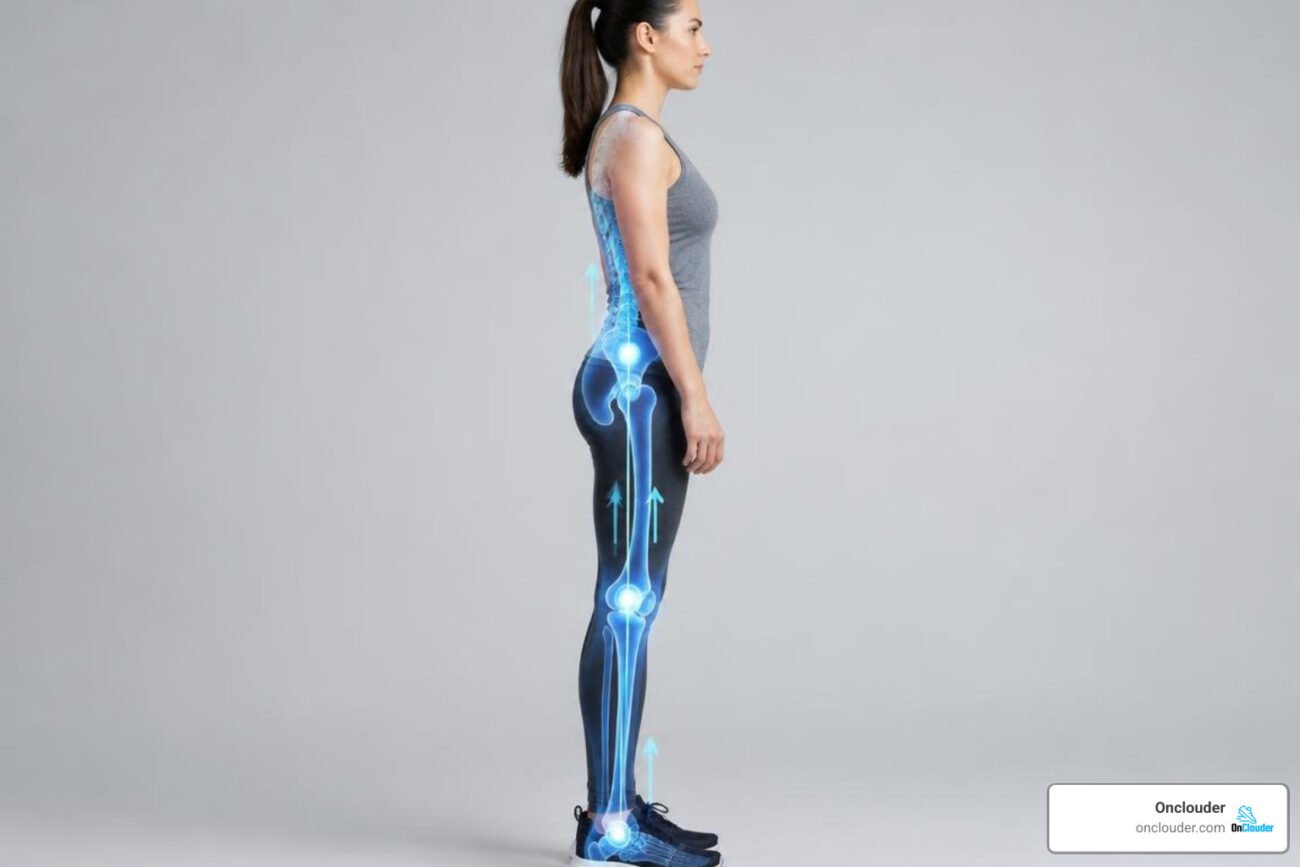
The effects of fallen arches do not stop at your ankles. Because your feet are the base of your entire kinetic chain, structural changes at the ground level reverberate upward through every major joint.
When your arch collapses inward, your lower leg rotates internally. This inward tibial rotation places abnormal twisting forces on your knee joint, often causing patellofemoral pain and tracking issues. As the rotation travels up your femur, your pelvis tilts forward and downward, creating an uneven pelvic foundation that increases lumbar spine curvature. The result is chronic lower back soreness, tight hip flexors, and joint fatigue.
By introducing structured arch support, you correct this mechanical misalignment at the root. Your tibia remains upright, your knees track in a healthy linear path over your toes, and your pelvis stays level, taking unwanted strain off your lower back.
Types and Profiles of Arch Support Insoles
Arch supports come in various heights, flex ratings, and material compositions. Choosing the wrong profile can cause discomfort or overcorrect your stride.
| Arch Profile | Best For | Typical Materials | Key Benefit | Relative Firmness |
|---|---|---|---|---|
| Low Arch | Rigid flat feet, sensitive arches, low-volume shoes | Thin EVA foam, composite base | Subtle guidance without pushing painfully into midfoot | Semi-flexible / Mild |
| Medium Arch | Flexible flat feet, mild overpronation, everyday sneakers | Polyurethane, EVA pods, TPU caps | Balanced stability, natural arch engagement, shock absorption | Balanced / Moderate |
| High Arch | Neutral to high arches (rarely for rigid flat feet) | Rigid polypropylene, carbon fiber | Maximum vertical support and deep load-offloading | Rigid / Firm |
To explore a wider array of specialized options, our ultimate guide to arch support inserts for flat feet covers specific designs for various foot types.
Selecting Proper Foot Arch Support for Flat Feet by Profile
When selecting foot arch support for flat feet, profile height is crucial:
- Flexible Flat Feet: If your foot displays a visible arch when non-weight-bearing (such as sitting) that disappears when you stand, you have flexible flat feet. A medium-arch profile is often ideal because it provides enough firm medial resistance to keep the arch from collapsing while allowing natural dynamic movement.
- Rigid Flat Feet: If your foot has no visible arch even when dangling in the air, your bone structure is naturally flat and rigid. Forcing a high or aggressive arch under a rigid flat foot can cause severe bruising, pain, and lateral instability. A low-profile insole, such as Superfeet All-Purpose Support Low Arch (rated 4.56/5 based on 274 reviews; $59.99), provides gentle alignment and pressure distribution without excessive midfoot intrusion.
Rigid Orthotics vs. Cushioned Insoles
Orthotics generally fall along a spectrum between rigid structural shells and soft, shock-absorbing footbeds:
- Rigid & Semi-Rigid Orthotics: Constructed from durable materials like carbon fiber, polypropylene, or dense TPU stabilizer caps. These orthotics excel at motion control, keeping the calcaneus (heel bone) vertical and stopping inward roll. While they offer superior structural control, they require an adaptation period.
- Cushioned Foam Insoles: Made from memory foam, polyurethane, or open-cell EVA. They deliver immediate step-in softness and impact dampening, but cushion alone compresses quickly under body weight without preventing arch collapse.
- Hybrid Designs: The most effective everyday solution for flat feet pairs a semi-rigid stabilizer cap under the heel and arch with responsive foam cushioning throughout the forefoot. Learn more about matching these materials in our primer on shoe inserts for flat feet 101.
How to Choose, Fit, and Maintain Your Orthotics
Selecting an insole requires looking beyond generic cushioning to examine specific podiatric features:
- Deep Heel Cup: A structured, sculpted heel cup cradles the fatty pad beneath your calcaneus, enhancing your natural shock absorption and preventing lateral heel slippage.
- Metatarsal Support: A subtle metatarsal pad or dome helps spread the transverse arch, offloading ball-of-foot pressure and preventing pinched nerves.
- APMA Acceptance: Look for the American Podiatric Medical Association (APMA) Seal of Acceptance, which indicates that podiatric experts have evaluated the product for foot health and safety.
- Antimicrobial & Breathable Materials: Quality top covers wick moisture and incorporate antimicrobial treatments to keep feet cool and prevent odors.
For example, the Spenco Total Support Original Insole ($49.99; backed by the APMA Seal of Acceptance and an 89% 5-star rating across 112 reviews) features a deep heel cup, metatarsal arch support, and multi-density cushioning with a big-toe cutout that promotes natural toe-off mechanics. When you’re ready to make a purchase, browse the ultimate guide to buying orthotic insoles for flat feet for our curated selections.
Proper Sizing and Trimming Techniques
Most performance insoles use a trim-to-fit design to ensure a precise match with your footwear.
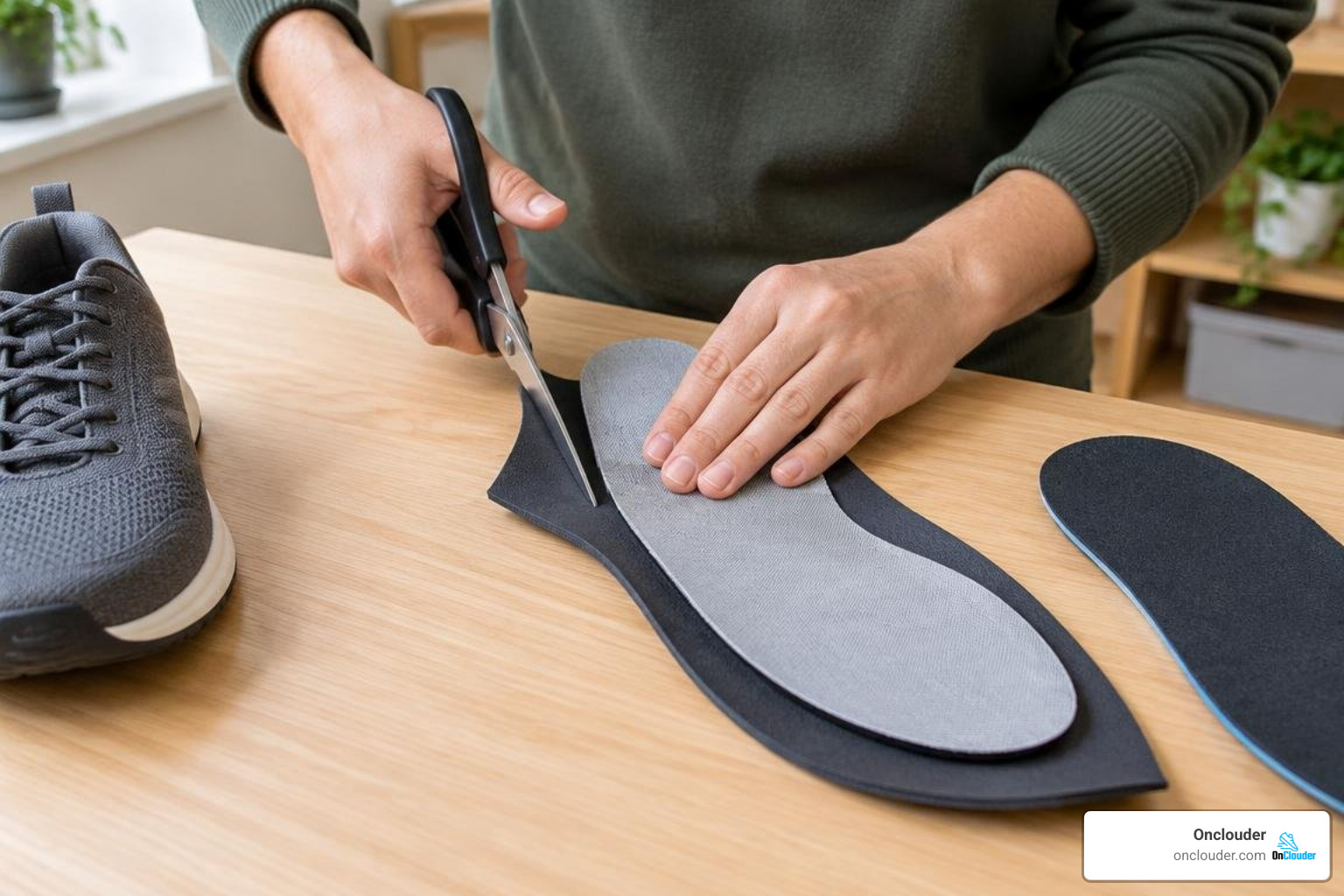
- Remove the Factory Liner: Always take out the removable factory foam liner that came inside your shoe. Layering an orthotic directly over an existing insole crowds the toe box and elevates your heel, leading to slippage.
- Align the Heel: Place the original factory liner directly over your new insole, aligning the heels and the medial (inside) contours.
- Trace the Outline: Using a pen or marker, trace the outline of the original liner’s toe shape onto the top or bottom of your new insole.
- Trim Conservatively: Use sharp scissors to trim along the drawn line. It is always best to trim slightly less material first; test the fit inside the shoe, and trim further if the insole buckles or bunches at the front.
- Check the Fit: Slide the trimmed insole back into your shoe. It should lay flat from heel to toe without curling up along the edges.
Break-In Schedule and Potential Side Effects
Switching to structured support changes how your foot and leg muscles engage. Rushing into full-day use can cause temporary arch soreness, calf tightness, or mild muscle fatigue.
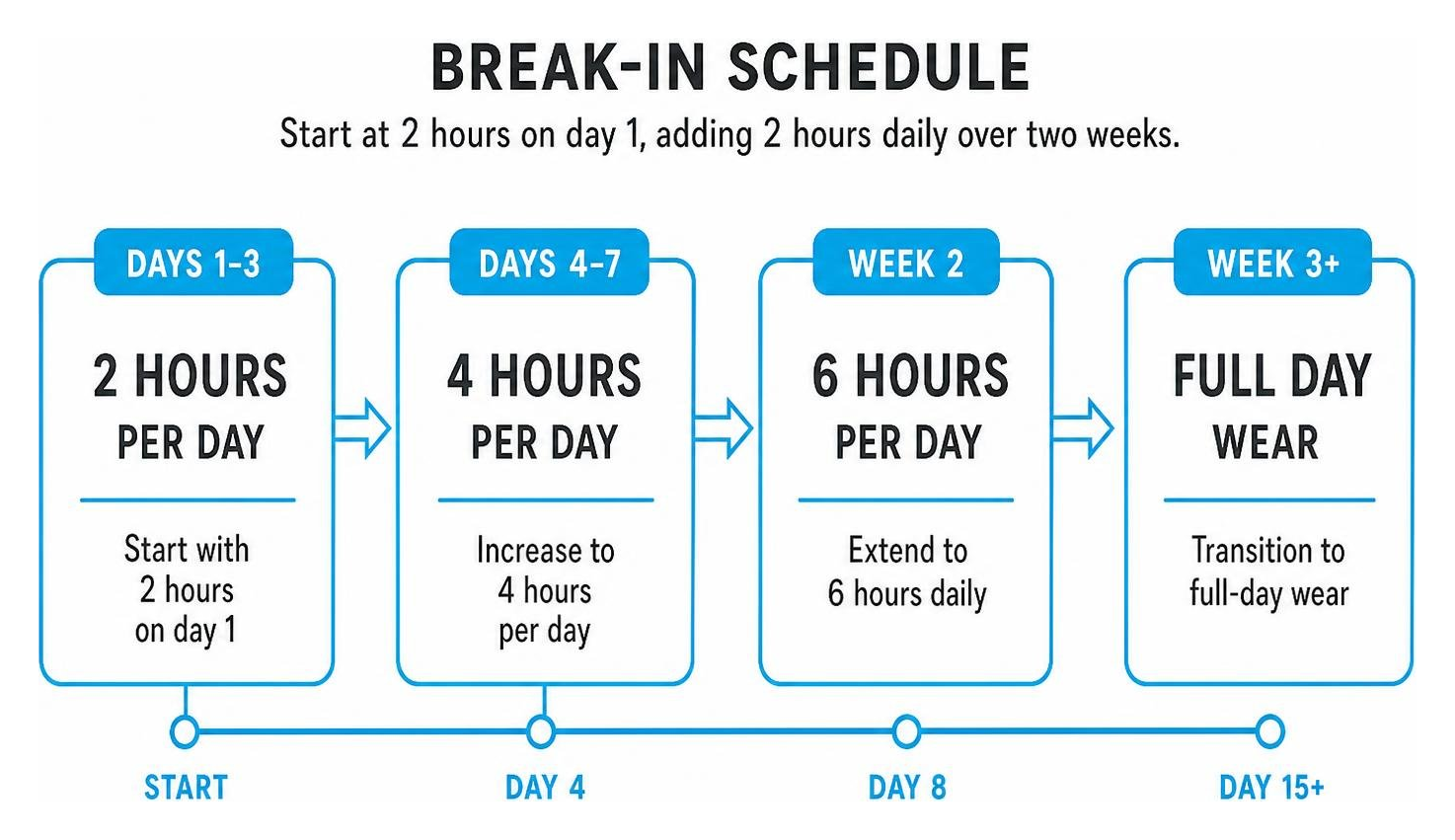
Follow a gradual adaptation schedule:
- Days 1–3: Wear your insoles for 1 to 2 hours per day during light activities.
- Days 4–7: Increase wear time to 3 to 4 hours per day.
- Week 2: Extend use to 5 to 6 hours daily, introducing brisk walking or light exercise.
- Week 3: Transition to full-day wear for all workouts, work shifts, and sports.
If you are an active runner easing into support, pair your inserts with proper footwear using the ultimate guide to good running shoes for flat feet to ensure your shoe’s midsole complements your orthotic.
Insole Lifespan and Replacement Indicators
Insoles do not last forever. Even if the fabric top cover appears clean, the structural foam and stabilizer caps break down under repeated mechanical stress. High-quality daily options—such as VALSOLE Stable Support ($37.99 regular price; 4.8 stars across 927 reviews) or Superfeet models—typically deliver peak performance for 6 to 12 months (or roughly 300 to 500 miles of running/walking).
Replace your insoles immediately if you notice:
- Visible cracking or flex fatigue in the rigid heel cup or plastic stabilizer cap.
- Permanent foam compression where the footbed no longer springs back.
- The return of subtle foot, knee, or lower back aches that had previously disappeared.
- Wear patterns where the top cover has worn completely through to the base plastic.
Frequently Asked Questions About Flat Foot Orthotics
How long does it take to break in new arch supports?
Most people require 1 to 2 weeks to fully adapt to structured orthotics. Because the support realigns your joints and activates previously underused stabilizing muscles, gradual wear starting with 1 to 2 hours a day helps prevent muscle fatigue and arch soreness.
Can arch support insoles cause side effects or foot pain?
Yes, if the arch profile is too high or rigid for your foot type, it can cause localized pressure, blistering, arch bruising, or overcorrection (forcing you onto the outside edge of your foot). Choosing a modest low-to-medium arch height and following a steady break-in schedule avoids these issues.
How often should flat foot insoles be replaced?
With regular daily use, replace your orthotic insoles every 6 to 12 months. Runners and individuals who stand for long shifts on hard surfaces may need replacements closer to the 6-month mark once cushioning foams lose responsiveness.
Conclusion
Living with flat feet does not mean you have to accept constant fatigue, sore arches, or aching knees. By pairing your daily footwear with a supportive, properly contoured insole, you stabilize your kinetic chain, protect vulnerable ligaments, and restore balanced shock absorption to every stride.
Take the time to evaluate your arch flexibility, choose an appropriate profile height, and follow a gradual break-in schedule. For our comprehensive recommendations and detailed side-by-side comparisons, explore the best arch support insoles for total foot relief to find the ideal match for your everyday activities.
