Cushioned vs. Lightweight Road Running Shoes: Which Should You Choose?
Choose cushioned shoes if comfort on easy or long runs matters most. Choose lightweight shoes if you want a quicker feel for speed work or racing. The trade-off is not absolute: some light shoes have plenty of foam, while extra cushioning does not guarantee fewer injuries.
Start with the run you do most often, then check how the shoes fit and feel on your feet. This guide compares weight, cushioning, and protection to help you find the right balance.
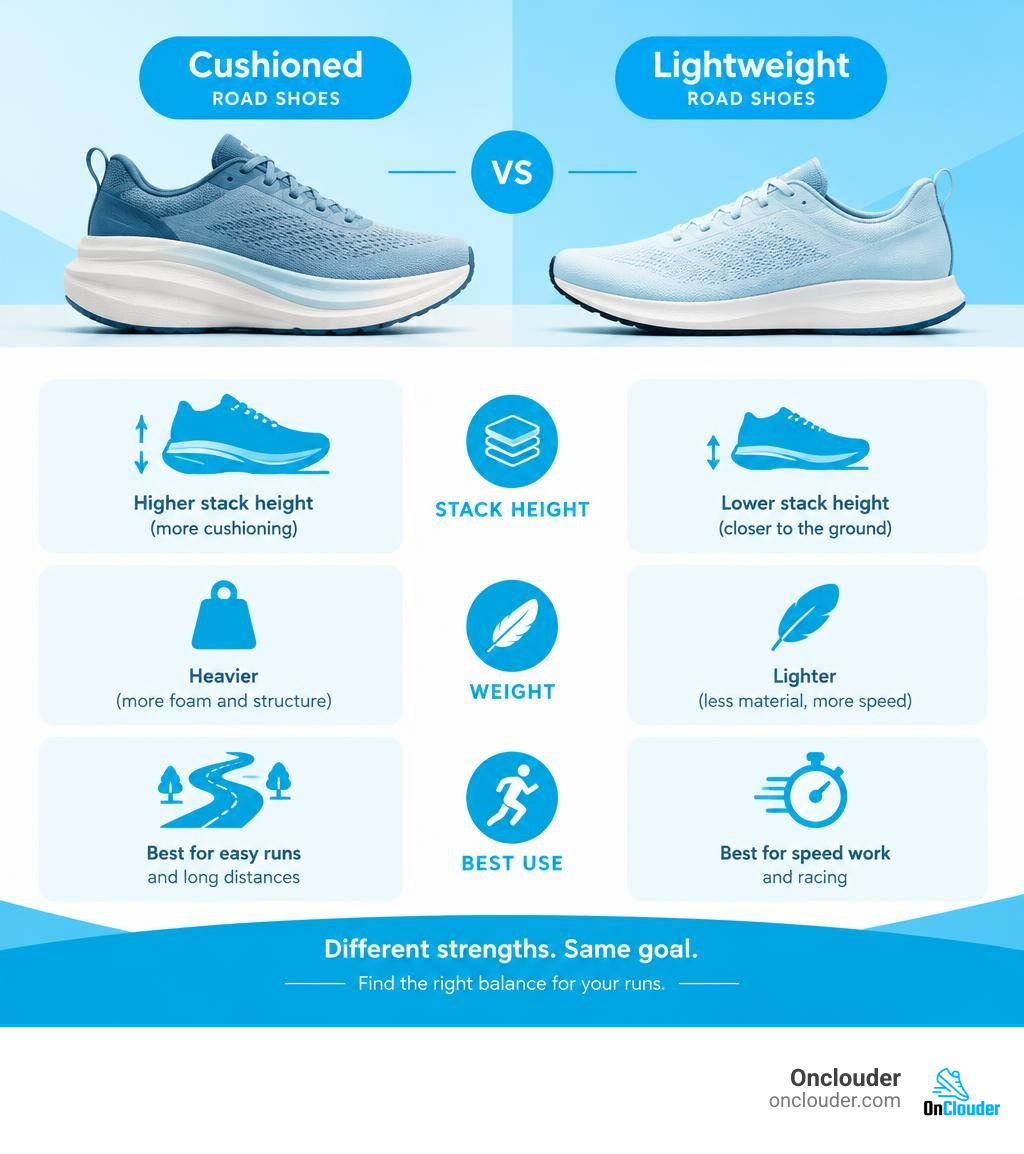
Terms related to compare cushioned vs lightweight road running shoes:
How to Compare Cushioned vs Lightweight Road Running Shoes
When we compare cushioned vs lightweight road running shoes, we look directly at where materials are placed and where weight is trimmed. Most road running shoes sit in a weight window between 184g and 368g (roughly 6.5 to 13 ounces per shoe). As a baseline rule, models weighing 225g or less fall into the lightweight bracket, while those clocking in at 300g or more are categorized as cushioned or heavy trainers.
The single biggest contributor to that heft is the midsole, which accounts for up to 75% of the total mass of a typical running shoe. Traditional models rely on standard molded ethylene-vinyl acetate (EVA), which requires substantial mass to deliver lasting vibration dampening. In modern 2026 designs, manufacturers increasingly utilize supercritical EVA—a lightweight compound infused with nitrogen gas. This creates a fine microcellular structure that maintains bounce while cutting overall density.
Outsole configurations also dictate weight. Heavily cushioned cruisers layer thick, full-contact carbon rubber over the bottom to protect softer foams from abrasive asphalt. Lightweight models, on the other hand, strategically map minimal rubber across high-wear zones or utilize exposed rubberized EVA midsoles. This reduction sheds valuable grams, but it alters how the shoe interacts with the pavement over hundreds of miles.
Midsole Foam and Cushioning Mechanics
The primary function of max-cushion foam is dispersing impact shock during initial foot strike. When your foot collides with concrete, high-stack shoes compress gradually, reducing the peak ground reaction forces transmitted up the kinetic chain. This is why road shoes engineered to absorb impact feel forgiving on sore joints during recovery weeks.
However, thicker foam alters energy return. A plush, dense midsole absorbs vibration but can occasionally deaden responsiveness, requiring extra muscular effort during the toe-off phase. In contrast, lightweight foams are tuned for elastic snap, compressing rapidly and rebounding instantly to maintain turnover.
Stack Height and Heel-to-Toe Drop Differences
Stack height—the total thickness of material between your bare foot and the ground—typically ranges from 35mm to 42mm in maximum-cushion models and 20mm to 32mm in featherweight alternatives. Heel-to-toe drop measures the offset between the heel elevation and the forefoot height:
- High Drop (8mm to 12mm): Directs impact force toward the heel and unloads the Achilles tendon and calves, making it comfortable for classic heel-strikers.
- Low to Zero Drop (0mm to 5mm): Encourages a midfoot or forefoot landing, distributing loads evenly toward the lower leg and foot arch.
Selecting the right profile depends on your weekly volume and movement patterns. Pairing high-drop protection with plush foam provides a reliable foundation when selecting long-distance shoes for weekly mileage targets.
Performance and Biomechanics: What Science Tells Us
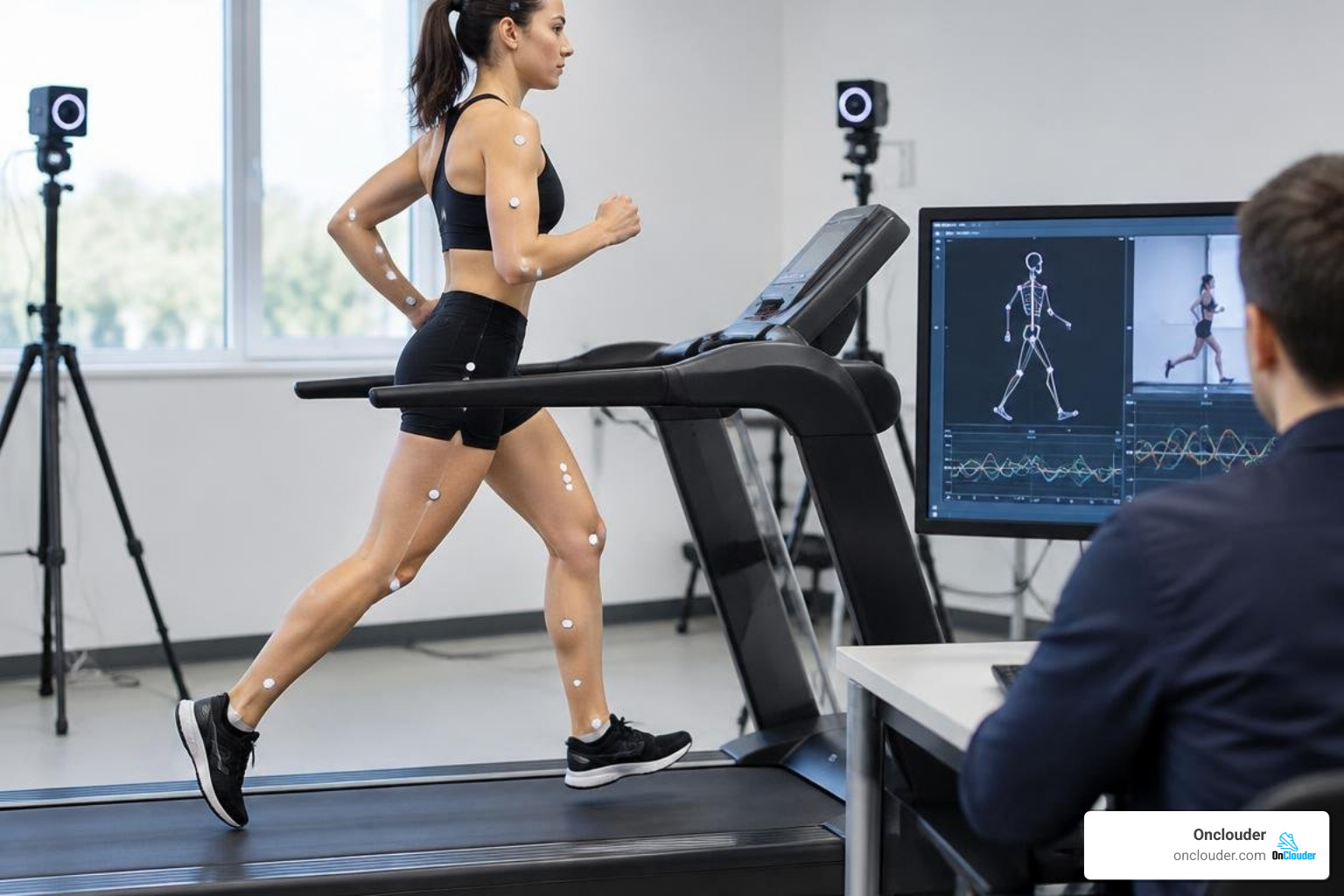
Runners often assume that switching between plush trainers and featherweight flats drastically alters their joint kinematics. However, real-world motion-capture data tells a more nuanced story.
According to research such as the Q4E Case Study 32 by Quintic Sports, shoe construction has surprisingly little influence on an amateur runner’s lower-body joint angles at a consistent 10km race pace. Testing a 264g cushioned shoe with a 10mm drop against a 150g racing flat with a 4mm drop revealed that kinematic similarity scores between legs differed by less than 1%.
While gait angles stay consistent, racing flats inflict significantly greater peak pressure and maximum force across the plantar surface compared to plush trainers. Runners chasing personal records often look to racing shoes that shave minutes off race times, but understanding how that speed affects loading mechanics is vital.
Kinematic Symmetry and Energy Cost
Biomechanical analyses consistently show that hip extension, knee flexion, and ankle dorsiflexion remain remarkably stable across footwear types. When joint asymmetries do appear, they are usually driven by an athlete’s personal injury history—such as an old ankle sprain—rather than the shoe on their foot.
What does shift dramatically is energetic cost. Every 100 grams added to a shoe increases the metabolic oxygen cost of running by roughly 1%. Shaving weight allows your legs to cycle through the swing phase with less muscular effort, resulting in noticeable efficiency gains over sustained efforts.
Impact Loading and Long-Term Durability
Most road running shoes are built to provide reliable support for 300 to 500 miles. Beyond that window, repeated compression cycles break down the internal air bubbles within the midsole—a process known as foam pack-out.
Because lightweight models feature less total material and thinner outsoles, their protective qualities deteriorate faster under heavy loads. Heavily cushioned options preserve structural support for much longer, functioning as durable shoes built for long-distance wear across multi-month training blocks.
Cushioned vs Lightweight Road Shoes Tested and Ranked
We logged hundreds of testing miles across high-heat desert roads in Arizona, rolling asphalt, and crushed gravel paths to see how the top road models stack up. Here is how leading cushioned and lightweight models compare in weight, geometry, and intended purpose:
| Model | Weight (Pair/Single Spec) | Stack Height (Heel/Toe) | Drop | Best Use Case |
|---|---|---|---|---|
| On Cloudsurfer 2 | 1 lb, 1.4 oz (pair) | 37 mm / 28 mm | 9 mm | Smooth daily training, active recovery |
| On Cloudmonster 2 | 1 lb, 3.2 oz (pair) | 40 mm / 34 mm | 6 mm | Maximum cushioning for long, easy miles |
| On Cloudrunner 2 | 1 lb, 2.1 oz (pair) | 36 mm / 27 mm | 9 mm | Supportive daily training, stability |
| On Cloudflow 4 | 1 lb, 0.9 oz (pair) | 32 mm / 24 mm | 8 mm | Lightweight tempo runs, speed work |
| On Cloudboom Echo 3 | 1 lb, 0.6 oz (pair) | 39 mm / 30 mm | 9 mm | Carbon-plated racing, marathon PRs |
| On Cloud X 4 | 1 lb, 0.8 oz (pair) | 28 mm / 22 mm | 6 mm | Mixed workouts, gym-to-road versatility |
Choosing between these options requires matching shoe architecture to your specific workout calendar, especially when seeking maximum cushion shoes for easy long runs.
Compare Cushioned vs Lightweight Road Running Shoes for Long Distance
For marathon distances, the priority shifts between protecting tired muscles and saving kinetic energy. The On Cloudmonster 2 leads the pack for absolute shock absorption; its massive 40mm heel stack insulates the lower body from pavement pounding, though its heavier profile demands more effort over late-stage miles.
Conversely, the On Cloudsurfer 2 bridges the gap by pairing a high 37mm stack with a feathery 1 lb, 1.4 oz total build. It delivers long-mileage protection without feeling like you are dragging anchors. Runners aiming for maximum efficiency often choose dedicated carbon-plated marathon shoes for long distances, which combine ultra-light super foams with stiff propulsion plates.
Compare Cushioned vs Lightweight Road Running Shoes for Daily Training and Speed
During daily volume, balanced weight and dynamic rebound keep workouts enjoyable. The On Cloudflow 4 emerged as our top overall lightweight performer, tipping the scales at just 1 lb, 0.9 oz for the pair. Its agile geometry makes tempo pickups effortless while retaining enough protective foam underfoot for standard training runs.
For beginners or runners who prefer a classic, worry-free heel drop, the On Cloudrunner 2 offers dependable cushioning with its 9mm offset, while the On Cloud X 4 delivers steady everyday versatility at an accessible price point. Runners seeking versatile daily performance frequently rely on versatile running shoes for daily distance training to manage everything from easy morning jogs to brisk mid-week progressions.
Matching Road Shoes to Your Body Weight and Foot Type
Your physical build and foot structure directly impact how footwear responds under load. In general, heavier runners—particularly those over 200 lbs—generate higher kinetic forces at impact, making shoes with reinforced, resilient midsoles crucial for joint preservation and preventing premature foam breakdown.
Foot structure is equally vital:
- High Arches: Naturally rigid and poor at shock absorption; they thrive in soft, flexible, lightweight neutral trainers.
- Neutral Arches: Highly versatile; can seamlessly alternate between lightweight flats and high-cushion trainers.
- Low Arches or Flat Feet: Prone to inward ankle rolling; they require stable foam platforms and firm medial support. Runners in this category benefit from running shoes for flat feet and overpronation.
If you are dealing with chronic soreness, selecting protective footwear for foot pain relief provides the necessary structure to keep you logging miles pain-free.
Choosing Shoes for Flat Feet and Overpronation
Runners with flat arches often experience arch collapse during mid-stance. In minimalist or ultra-lightweight footwear, this can overtax the plantar fascia and posterior tibial tendon.
Modern stability designs blend broad base geometries with dual-density midsoles to cradle the foot naturally. Understanding your individual running mechanics for overpronation ensures you select a shoe with the right balance of guidance and cushioning.
Rotation Strategy and Transitioning Safely
Relying on a single pair of shoes for every run limits performance and concentrates repetitive stress on identical muscle groups. Building a multi-shoe rotation distributes physical stress and lets midsole foams fully decompress between runs.
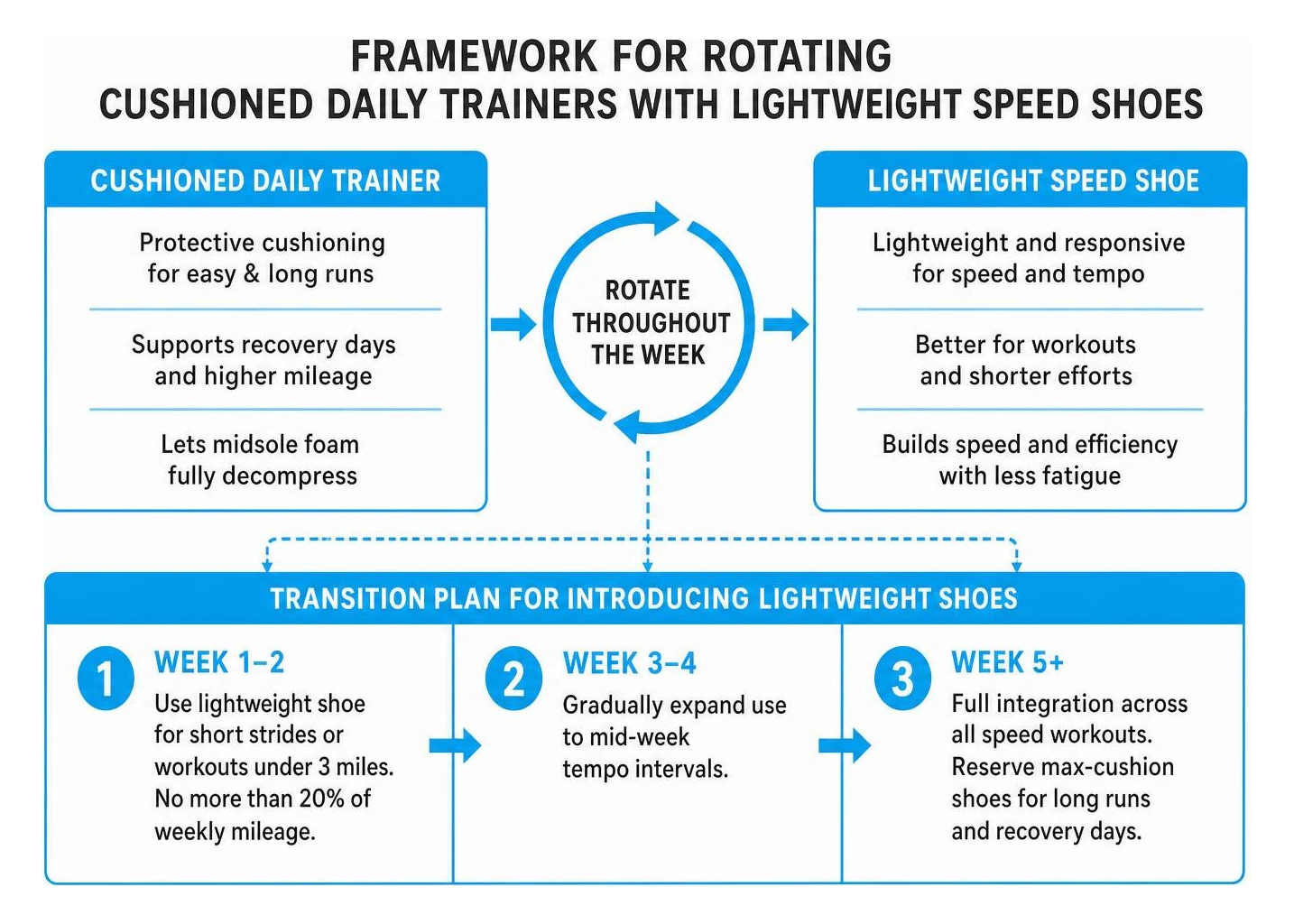
When introducing a lighter, lower-drop shoe into your training, follow these best practices:
- Week 1–2: Use the lightweight shoe exclusively for short strides or workouts under 3 miles (no more than 20% of weekly mileage).
- Week 3–4: Gradually expand use to mid-week tempo intervals.
- Week 5+: Full integration across all speed workouts, reserving max-cushion models for long runs and recovery days.
Balancing your lineup with both budget and premium shoe options keeps your training versatile and cost-effective.
Frequently Asked Questions About Road Running Shoes
Can lightweight shoes provide enough protection for marathon training?
Yes, modern lightweight models built with supercritical nitrogen-infused foams offer substantial stack heights without the traditional weight penalty. However, for everyday recovery runs and baseline mileage, rotating with a dedicated high-cushion trainer is recommended to minimize cumulative joint stress.
How do I know if a running shoe is too heavy for me?
A practical assessment is the 10-second foot-lift test: lift your foot slightly off the floor and hold it for ten seconds. If your hip flexors or ankles feel strained, or if you notice your running cadence dropping late in your workouts, the shoe’s mass may be excessive for your current leg strength.
Should beginners start in cushioned or lightweight road shoes?
Beginners generally benefit from starting in a moderate-to-cushioned daily trainer with an 8mm to 10mm drop, such as the On Cloudrunner 2. This setup provides dependable impact absorption and reduces stress on the calves and Achilles while running muscles and connective tissues adapt to regular impact.
Conclusion
Choosing between cushioned and lightweight road shoes is not an all-or-nothing proposition. Modern footwear engineering has narrowed the gap, providing plush options that feel responsive alongside featherlight trainers that cushion road impact.
By analyzing your weekly mileage, body mechanics, and workout goals, you can build a footwear rotation that keeps your legs fresh on easy days and snappy on race mornings. To explore more comparisons and find the right fit for your training, check out our comprehensive 2026 footwear comparison guide.