
Why Finding the Best Rated Shoes for Walking Actually Matters
The best rated shoes for walking in 2026 are listed here at a glance:
| Shoe | Best For | Key Strength |
|---|---|---|
| Nike Motiva | Overall | 133 SA score, smooth transitions |
| On Cloudtilt | Shock absorption | 132 SA, 18.9% above average |
| HOKA Bondi SR | Slip resistance | 0.77 wet traction rating |
| ASICS GT 2000 14 | Arch support & stability | Wide platform, 36.9mm stack |
| HOKA Clifton 10 | Active recovery & long distance | 8mm drop, lightweight |
| Brooks Ghost Max 3 | Mixed terrain | 39mm stack, top stability scores |
| Nike Promina | Budget pick | $65, 111 SA score |
Most people walk thousands of steps every day — on concrete, pavement, and hard floors — without thinking twice about their shoes. That changes fast when foot pain shows up.
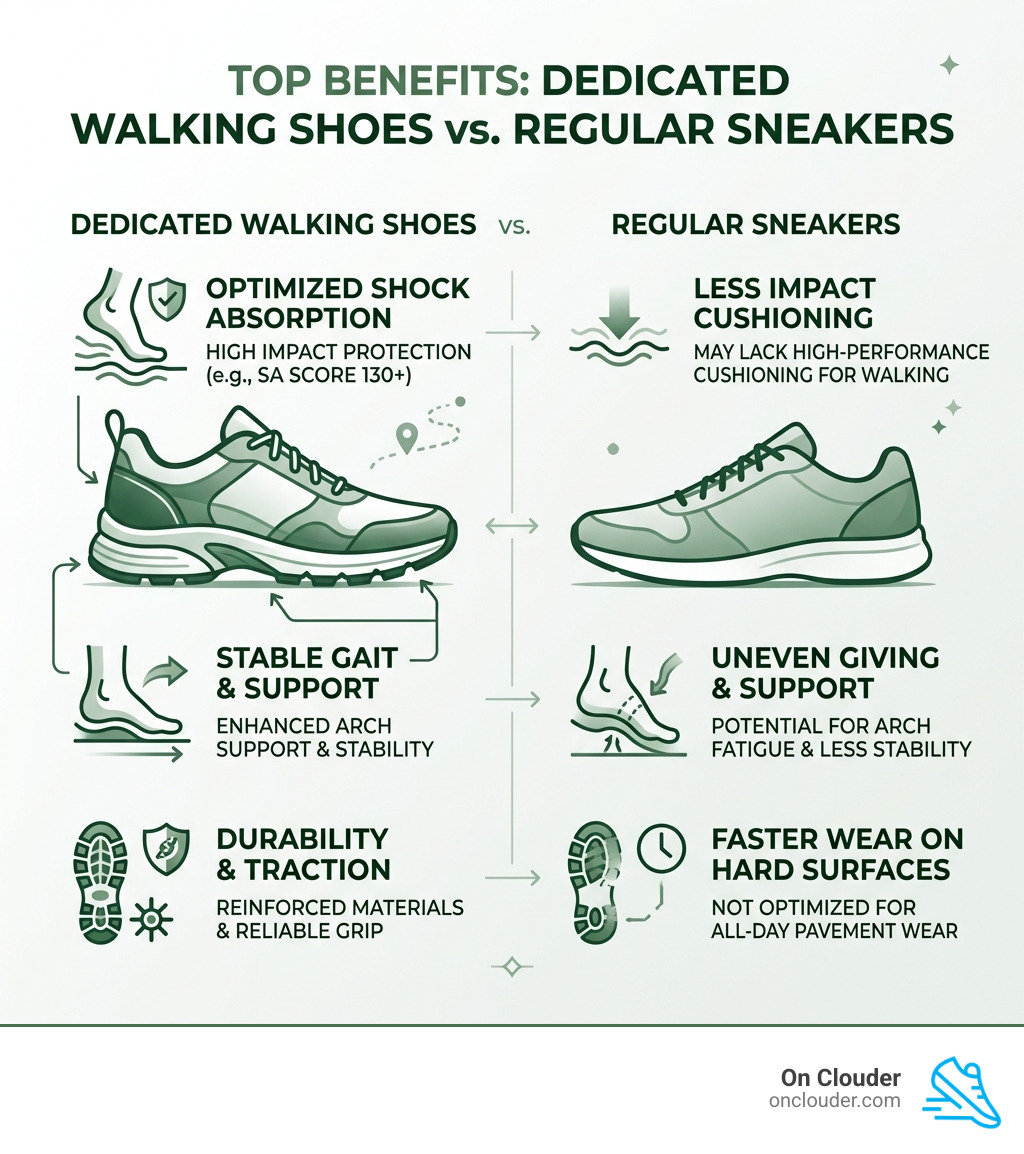
Foot fatigue, sore arches, and knee pain are not just annoyances. They are often signs that your shoes are not doing their job. A dedicated walking shoe is designed specifically for the heel-to-toe motion of walking, absorbing impact on your joints and keeping your gait stable over long hours.
The difference is real. In lab tests, top-rated walking shoes score over 130 on shock absorption — well above the 100 minimum recommended for all-day wear. That kind of protection adds up across miles.
Choosing the wrong shoe — or just grabbing your old running shoes — can quietly cause problems. As podiatrist Dr. Lori Grant puts it, new aches in your heel or the ball of your foot are often the first sign it’s time for a better pair.
I’m Faisal S. Chughtai, a footwear expert specializing in On Cloud shoes and walking performance, and I’ve spent years helping people find the best rated shoes for walking for their specific needs. In this guide, I’ll break down exactly what separates a great walking shoe from the rest — so you can move comfortably, all day long.
What Makes the Best Rated Shoes for Walking?
When we evaluate the best rated shoes for walking, we aren’t just looking at how they look on the shelf. We dive into the technical metrics that determine whether a shoe will save your feet or leave them throbbing by 5:00 PM.
The most critical metric in 2026 is the Shock Absorption (SA) score. Research shows that for all-day comfort, a shoe should ideally score at least 100. High-performers like the Nike Motiva (133 SA) and the On Cloudtilt (132 SA) lead the pack, offering nearly 19% better impact protection than the average walking shoe.
Other key features include:
- Stack Height: This is the amount of material between your foot and the ground. Max-cushion shoes often feature heel stacks over 35mm. While this provides a “walking on air” feel, it’s important to balance it with stability so you don’t feel “numb” to the pavement.
- Heel-to-Toe Drop: Most walking shoes fall between 6mm and 10mm. A higher drop can reduce calf fatigue, while lower drops (around 4mm-5mm) encourage a more natural gait but may require a short break-in period.
- Arch Support: Whether you have high arches or flat feet, the internal geometry matters. We look for technologies like the Best Walking Shoes categories that offer 3D guidance systems to keep your foot aligned.
- Breathability: Nobody likes “swamp foot.” We look for engineered mesh uppers that allow heat to escape, especially for those humid summer commutes.
For a deeper dive into these specs, check out our Walking Shoe Technology Guide 2026.
Top-Rated Walking Shoes for Every Foot Type
No two feet are the same, and the best rated shoes for walking for a marathon traveler might be a nightmare for someone with flat feet. We’ve categorized the top performers of 2026 to help you find your perfect match.

Best Rated Shoes for Walking Long Distances
If your daily goal is 10,000 steps and beyond, you need a shoe that won’t “bottom out.” Midsole compression is a real enemy; some foams feel great at mile one but turn into pancakes by mile ten.
- On Cloudtilt: This is our top pick for pure shock absorption. With a 132 SA score and a lightweight build (9.4 oz for men), it stays comfortable for hours. It uses a generous 35.5mm foam slab that makes concrete feel like carpet.
- On Cloudmonster 2: Known for its massive CloudTec pods, this shoe provides a “weird” but wonderful sensation of forward momentum. It’s perfect for those who want maximum cushion without the weight.
- On Cloudsurfer: If you prefer a smoother, more fluid transition, the Cloudsurfer’s computer-optimized midsole is a dream for long-distance city wandering.
For more endurance-focused picks, see our Best Walking Shoes Long Distance Guide.
Best Rated Shoes for Walking with Stability Needs
Overpronation (where the foot rolls inward) can lead to shin splints and knee pain. The best rated shoes for walking for stability use wider platforms and firmer sidewalls to keep you centered.
- On Cloudrunner 2: This model offers a supportive cradle for your foot. It’s designed for those who need a bit more guidance without the “clunky” feel of traditional orthotics.
- On Cloudflyer 5: A powerhouse for stability. It features a wider platform (often over 117mm in the forefoot) to prevent the “ankle roll” sensation common in softer shoes.
- ASICS GT 2000 14: This shoe is a legend for a reason. Its 3D Guidance System provides a stable base that podiatrists frequently recommend for those with low arches.
If you struggle with finding enough room for your toes alongside that stability, visit our Best Wide Toe Box Running Shoes Guide 2026.
Versatile Picks for Travel and Work
When you’re traveling or working a 12-hour shift, you need a shoe that looks decent with jeans but performs like a pro athlete.
- On Cloud 5: The quintessential travel shoe. It’s incredibly lightweight (around 8.1 oz) and features speed-lacing, making it perfect for airport security lines.
- On Cloudaway: Designed specifically for the “urban explorer,” this shoe has a more rugged outsole for transitioning from city streets to light gravel paths.
- On Cloud Coast: A fantastic hybrid that works well for beach-side walks or casual office environments where comfort is king.
Planning a trip? Don’t miss our guide on Sole Mates The Best Casual Walking Shoes For Your Next Vacation.
Walking vs. Running Shoes: Key Differences
Can you walk in running shoes? Yes. Should you? It depends. While many daily trainers make excellent walking shoes, there are distinct differences in how your foot moves.
- The Strike: Runners often land on their midfoot or forefoot, while walkers almost always land on their heel. Therefore, the best rated shoes for walking have extra-thick cushioning in the heel (like the 36.9mm stack in the ASICS GT 2000).
- The Gait: Walking is a more fluid, rolling motion. Shoes with “rocker geometry” (a curved sole) help transition your weight from the heel to the toe effortlessly.
- Flexibility: Walking shoes need to be more flexible at the arch to allow for the natural bend of the foot during a slower stride, whereas some running shoes are stiffened for “energy return” at high speeds.
For a side-by-side breakdown, read our On Cloud Walking Shoe Comparison or explore our All-Day Comfort Picks: Tested and Reviewed.
Expert Tips for Fit and Longevity
Even the best rated shoes for walking won’t help if they don’t fit. Here is how we ensure a perfect match:
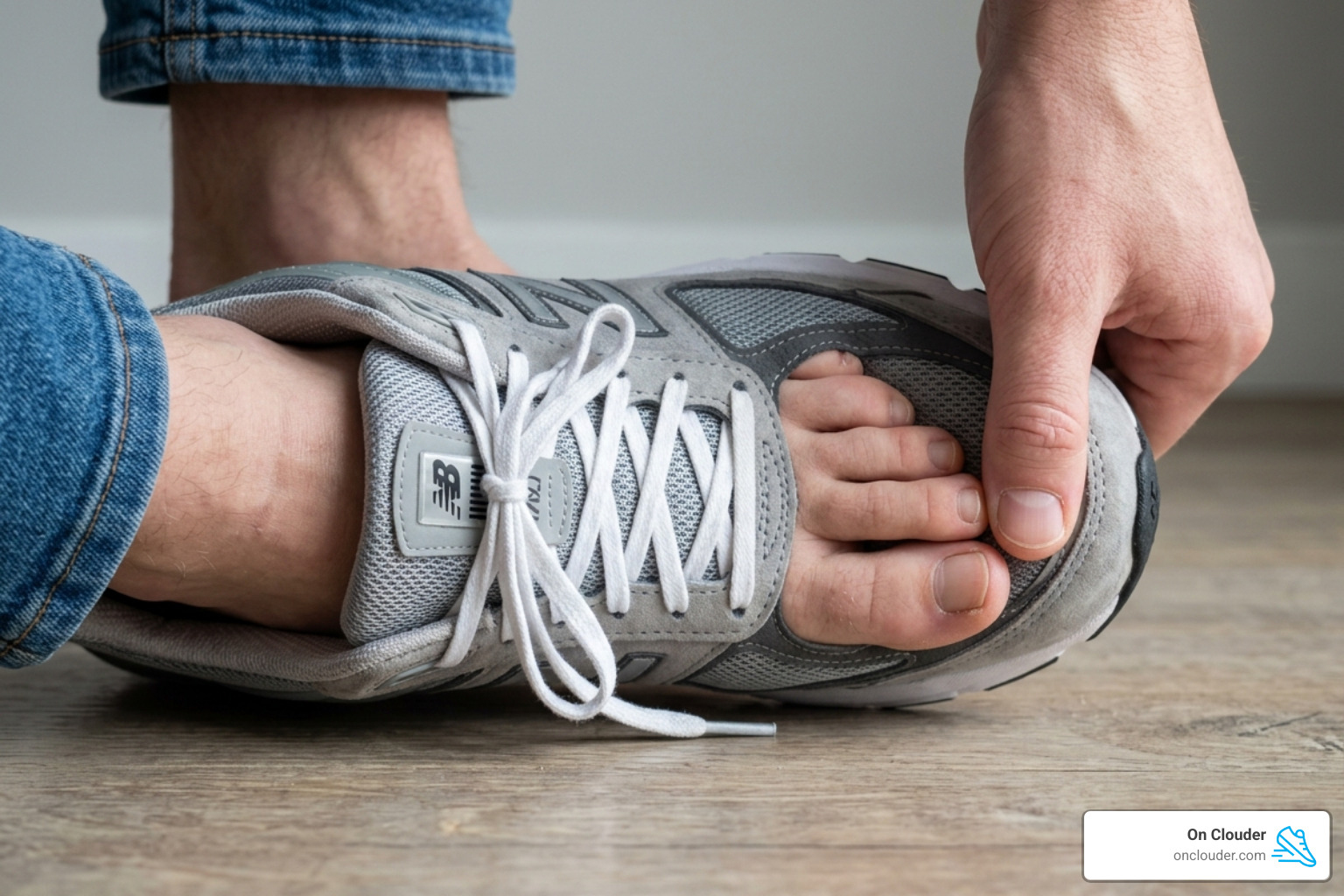
- The Thumb’s Width Rule: Always ensure there is about a thumb’s width of space between your longest toe and the end of the shoe. Your feet will swell throughout the day—sometimes up to half a size!
- Shop in the Afternoon: Because of that swelling, never buy shoes first thing in the morning.
- The 500-Mile Rule: Most walking shoes lose their structural integrity between 300 and 500 miles. For most daily walkers, that means replacing them every 6 to 12 months.
- Midsole Compression: If you see visible “wrinkles” in the foam or feel like you’re “bottoming out” on the pavement, the foam has lost its ability to absorb shock.
Check out our Best Shoes All Day Standing Guide for more maintenance tips.
Frequently Asked Questions about Walking Shoes
How often should I replace my walking shoes?
As mentioned, the 300-500 mile range is the industry standard. However, your body is the best indicator. If you start experiencing mysterious lower back pain, shin splints, or heel tenderness that wasn’t there a month ago, your shoes have likely retired themselves.
Are running shoes good for walking?
Many “daily trainer” running shoes are fantastic for walking because they prioritize comfort and durability. However, avoid “carbon-plated” racing shoes; they are designed for high-speed propulsion and can feel unstable and awkward at a walking pace.
What is the best shoe for plantar fasciitis?
For plantar fasciitis, you need a combination of high shock absorption (at least 100 SA), a stiff heel counter to lock your foot in place, and solid arch support. The Step-by-Step Guide to On Cloud Shoes highlights several models with the APMA Seal of Acceptance, which are specifically vetted for foot health.
Conclusion
Finding the best rated shoes for walking is an investment in your long-term mobility. Whether you’re commuting to work, exploring a new city, or standing all day on a hospital floor, your feet deserve the best technology 2026 has to offer.
At On Clouder, we believe that the right pair of shoes can turn a grueling day into a “walk in the park.” Don’t wait for the pain to start—proactively choose footwear that supports your unique gait and lifestyle.
Ready to find your next pair? Explore our full Walking Shoes 2026 collection or follow our Step-by-Step Guide to On Cloud Shoes to narrow down your choices today!