
Understanding Maximum Cushion: Foams, Stack Heights, and Midsole Tech
What Defines Highly Cushioned Road Running Shoes?
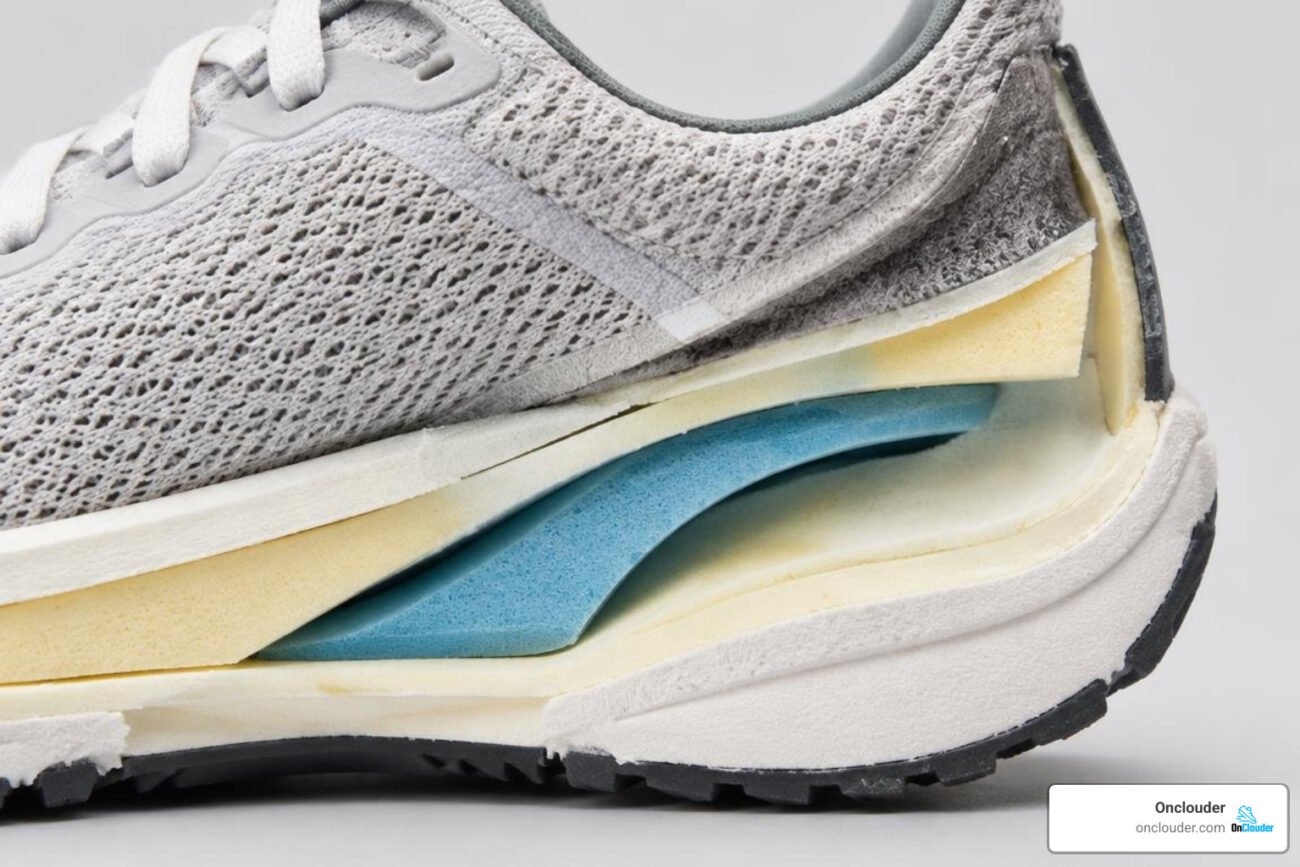
Maximum-cushion footwear is defined by substantial underfoot foam volume designed to isolate your body from hard asphalt. Traditionally, standard road trainers offered heel stack heights between 28mm and 32mm. Today, high-stack footwear frequently pushes heel stacks past 40mm, with boundary-pushing designs reaching up to 55mm.
The primary mechanical benefit is the reduction of peak impact forces. When your foot strikes asphalt, the midsole absorbs and redistributes kinetic energy, dampening stress on your lower leg joints, Achilles tendons, and plantar fascia. Runners relying on footwear to absorb road impact during high-volume weeks discover that cushioned running shoes minimize lingering muscular soreness between workouts.
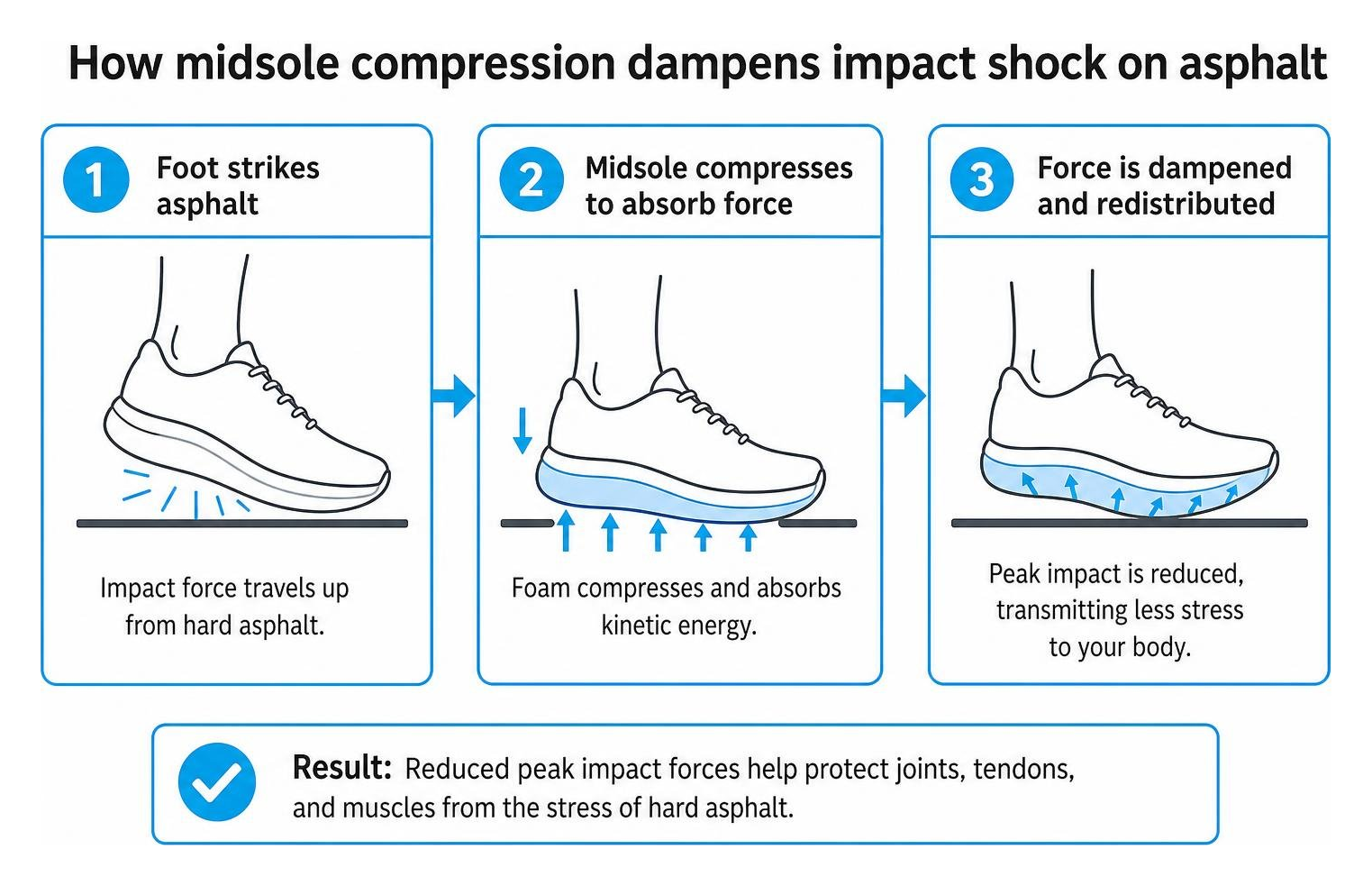
A common misconception is that high cushion automatically produces a mushy, slow ride. Modern formulations balance shock dampening with lively rebound, delivering around 80 to 85 percent energy return. This responsiveness makes high-cushion models effective not just for recovery days, but across steady-state long runs and daily base building.
Proprietary Midsole Technologies Compared
The performance of any max-cushion trainer depends heavily on its proprietary foam compound and mechanical geometry. Among the most notable approaches on the market today:
- CloudTec Phase™ with Helion™ Superfoam: This computer-optimized midsole structure uses finite element analysis to collapse sequentially like dominoes as your foot rolls forward, smoothing transitions without requiring heavy rubber stabilizing plates.
- Gel-infused composite foams: Some designs pair lightweight, springy foam with an internal silicone-based gel insert beneath the heel to diffuse harsh landing forces.
- PEBA-based foams with embedded air units: This formulation offers exceptional energy return (~85%). When paired with pressurized air capsules, it delivers plush compression alongside a snappy toe-off.
- Nitrogen-infused supercritical foam: Engineered to keep total shoe mass low while maintaining protective depth and high resilience over long distances.
- EVA-and-rubber compounds: Designed to resist pack-out over hundreds of training miles while maintaining a plush step-in sensation.
Comparing the Top Highly Cushioned Road Running Shoes for 2026
Modern max cushioning shoes span varied design philosophies, from towering mega-stacks to ultra-light protective builds. The comparison table below highlights key specifications for this year’s standout road models:
| Shoe Model | Heel Stack (mm) | Forefoot Stack (mm) | Heel Drop (mm) | Weight (g / oz) | Midsole Technology | List Price (USD) |
|---|---|---|---|---|---|---|
| On Cloudmonster Hyper | 37 mm | 31 mm | 6 mm | ~265 g (9.3 oz) | Helion™ HF + Helion™ Superfoam | $220.00 |
| On Cloudeclipse | 37 mm | 31 mm | 6 mm | ~285 g (10.0 oz) | Double CloudTec Phase™ + Helion™ | $180.00 |
| On Cloudsurfer Max | 38 mm | 30 mm | 8 mm | ~285 g (10.0 oz) | Double CloudTec Phase™ + Helion™ | $180.00 |
| On Cloudmonster 2 | 35 mm | 29 mm | 6 mm | ~295 g (10.4 oz) | Dual-Density Helion™ + Speedboard® | $180.00 |
| On Cloudstratus 3 | 32 mm | 26 mm | 6 mm | ~290 g (10.2 oz) | Double CloudTec® + Helion™ | $180.00 |
| On Cloudrunner 2 | 31 mm | 21 mm | 10 mm | ~280 g (9.8 oz) | CloudTec® + Helion™ Superfoam | $150.00 |
The Mega-Stack Innovators: High-Energy Maximum-Cushion Models
Modern high-stack engineering merges responsive training foam with daily trainer durability for effortless high-mileage blocks.
The On Cloudeclipse features a maximal 37mm stack built on a thick foundation of Helion™ superfoam. It integrates a double layer of computer-optimized CloudTec Phase™ structures that compress sequentially under load. This design creates a plush, rolling transition while a built-in flexible Speedboard® provides lateral stability across long weekend efforts.
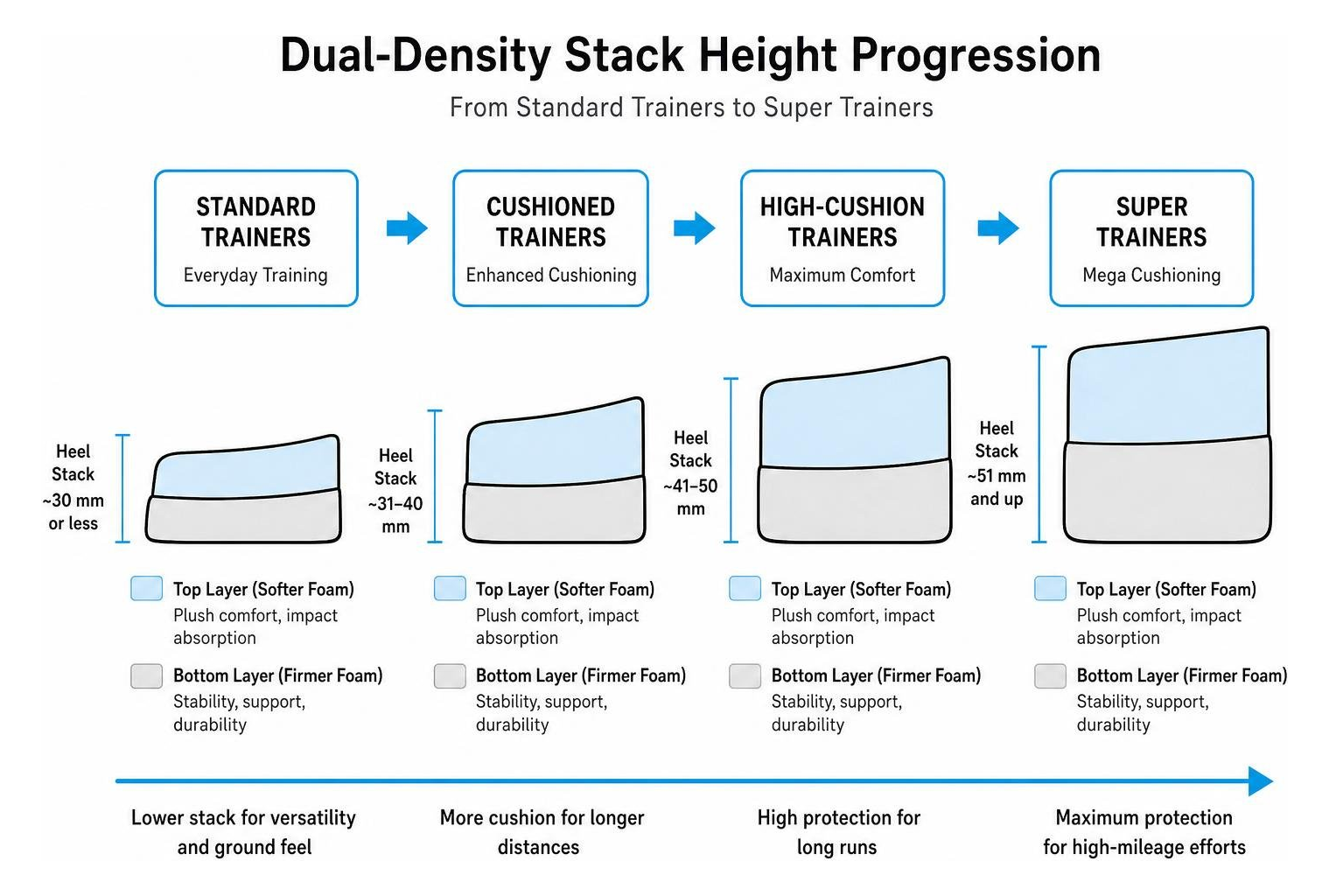
Sitting alongside it, the On Cloudmonster 2 combines high-volume Cloud elements with dual-density foam layers. Designed as a versatile super trainer, it delivers noticeable bounce and propulsion from heel strike through toe-off, making it an ideal choice for both recovery runs and steady endurance pacing.
Premium Daily Comfort: On Cloudsurfer Max and Plush Daily Trainers
For runners who prefer fluid transitions over traditional firm midsoles, the Cloudsurfer Max delivers balanced, stable comfort for everyday runs and long efforts over 15 km.
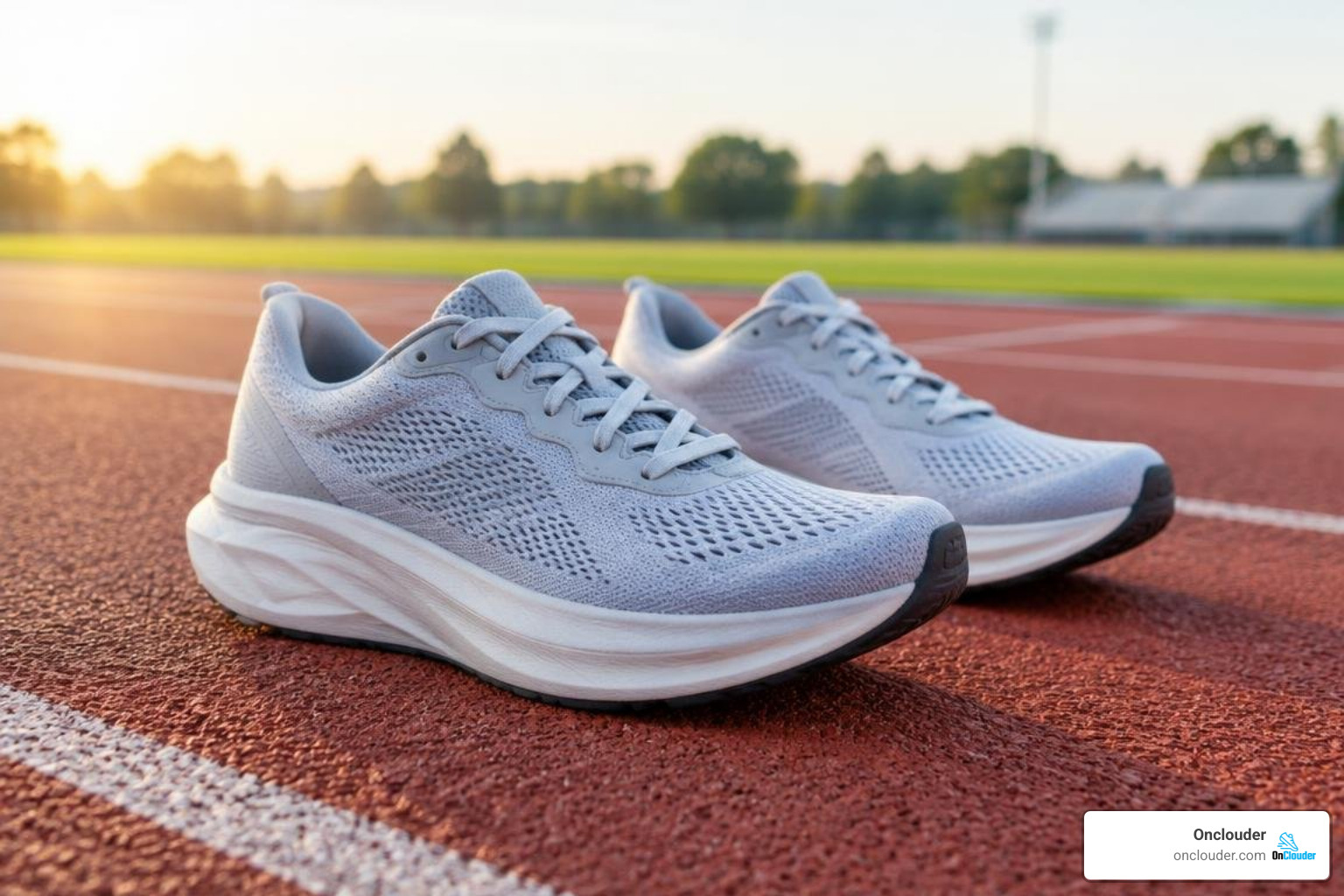
Priced at $180.00, the Cloudsurfer Max uses a double layer of CloudTec Phase™ embedded within soft Helion™ superfoam. Because the voids compress sequentially along the natural gait cycle, the shoe rolls smoothly from heel strike to toe-off. If you are comparing comfortable options across the On Cloud lineup, explore our detailed breakdowns of the full Cloud collection on our site.
For balanced daily support, the On Cloudrunner 2 ($150.00) remains an accessible everyday option, utilizing durable CloudTec® pods and supportive heel counters for runners seeking dependable impact reduction on a budget.
Lightweight Max Protection: Superfoam Performance Trainers
Runners who want generous cushioning without excess bulk often look to lightweight performance trainers. The On Cloudmonster Hyper targets this balance by keeping average shoe weight down to ~265g.
Instead of heavy stabilizing rubber, the Cloudmonster Hyper incorporates a PEBA-based Helion™ HF hyperfoam insert in the forefoot alongside Helion™ superfoam throughout the base. This configuration delivers exceptional energy return directly underfoot while shielding legs from tarmac shock without deadening road feel. It serves as a nimble choice for distance training and daily miles.
Buyer’s Guide: Fitting, Foot Types, and Sustainability
Choosing the Right Highly Cushioned Road Running Shoes for Your Stride
Taller stacks elevate your center of gravity, making proper fit and structural stability essential:
- Pronation Mechanics: Maximum-cushion models are built primarily for neutral pronation and runners with normal-to-high arches. If you overpronate, look for wide midsole platforms, supportive heel cradles, and broader base geometry that resist inward lateral compression.
- Width and Foot Splay: High-mileage road runs lead to natural foot swelling. Shoes with anatomical toe boxes allow toes to splay on impact, preventing blisters and hotspots over long distances.
- Heel-to-Toe Drop:
- 8mm to 10mm drops (e.g., Cloudsurfer Max, Cloudrunner 2) favor heel strikers by reducing strain on the calves and Achilles tendons.
- 6mm drops (e.g., Cloudeclipse, Cloudmonster 2) encourage a balanced midfoot landing and distribute impact evenly across the lower body.
Eco-Innovations, Pricing, and Trial Policies
Modern running shoes increasingly integrate sustainable manufacturing alongside performance foam. Models like the Cloudeclipse and Cloudsurfer Max incorporate dope-dyeing yarn technology—which cuts water usage by up to 90% compared to standard dyeing processes—paired with 100% recycled polyester across the upper mesh.
When buying high-end trainers, trial policies help protect your investment:
- Trial Periods: Leading brands typically provide a 30-day trial window, allowing you to test shoes on the road and return them if they do not suit your stride.
- Shipping and Returns: Direct orders often include free shipping and prepaid return labels for simple exchanges.
- Manufacturer Coverage: Most premium footwear comes backed by warranty protection covering structural material or craftsmanship defects within the first year of ownership.
Frequently Asked Questions
How long do max-cushion road running shoes typically last before losing their bounce?
Most high-cushion road shoes maintain their structural integrity and shock dampening for 300 to 500 miles (480 to 800 km).
While the rubber outsole may show little wear, supercritical and EVA foams experience progressive compression pack-out over time. If you notice persistent joint fatigue or a flat, unyielding feel on landing, the midsole has likely reached the end of its functional life.
Are maximum cushioning shoes suitable for runners who overpronate?
Neutral high-cushion shoes can accommodate mild overpronators if they feature a wide geometric base and firm perimeter sidewalls. However, runners with moderate to severe overpronation should exercise caution with ultra-soft, narrow-waisted mega-stacks (above 40mm). The high center of gravity and soft foam can accelerate inward ankle rolling.
What is the difference between high-stack daily trainers and race-day super shoes?
While both feature tall stacks of resilient foam, their designs prioritize different performance goals:
- High-Stack Daily Trainers: Prioritize upper durability, heavier outsoles for wet-road grip, wider stable bases, and forgiving geometry built to withstand daily pounding.
- Race-Day Super Shoes: Feature rigid carbon fiber plates, ultra-thin upper textiles, and aggressive rocker profiles tuned strictly for forward propulsion and race-day speed at the expense of long-term durability.
Conclusion
Finding the ideal pair of road shoes comes down to balancing stack height, weight, and foam density against your specific training goals. Whether you want the towering shock absorption of a 55mm mega-stack or the smooth rolling sensation of double-layer CloudTec Phase™ foam, today’s options provide plenty of ways to keep your legs fresh on hard asphalt.
Ready to find the perfect footwear for every mile on your calendar? Take a look at our ultimate 2026 walking and running shoe guide to explore expert recommendations across daily training, walking, and active recovery.
