Why the Best Shoes for Foot Pain Can Change Everything

The best shoes foot pain sufferers need aren’t just about comfort — they’re about getting your life back.
Here’s a quick look at the top picks to address what you’re looking for:
| Shoe Model | Best For | Key Feature |
|---|---|---|
| Brooks Adrenaline GTS 24 | Plantar fasciitis, overpronation | GuideRails stability, 12mm drop |
| Hoka Bondi 9 | Max cushioning, heel pain | 41.3mm heel stack, 146 SA rating |
| ASICS Gel-Kayano 32 | Flat feet, overpronation | 4D Guidance System, 8mm drop |
| New Balance 860 | Stability, daily walking | Medial post support |
| OOFOS Recovery Sandals | Post-activity recovery | OOfoam impact absorption |
| Vionic | Casual wear, arch support | Built-in orthotic footbed |
| Dansko | All-day standing, work shifts | Firm rocker sole |
Whether it’s that sharp stab in your heel with the first step out of bed, the dull ache after a long shift, or the soreness that follows a run — the wrong shoes make it much worse.
The numbers back this up. A striking 83.2% of people with plantar fasciitis were wearing shoes that were simply wrong for their condition — too flat, too hard, or lacking arch support entirely. Meanwhile, 95% of patients who switched to max-cushioned footwear reported that it helped their recovery.
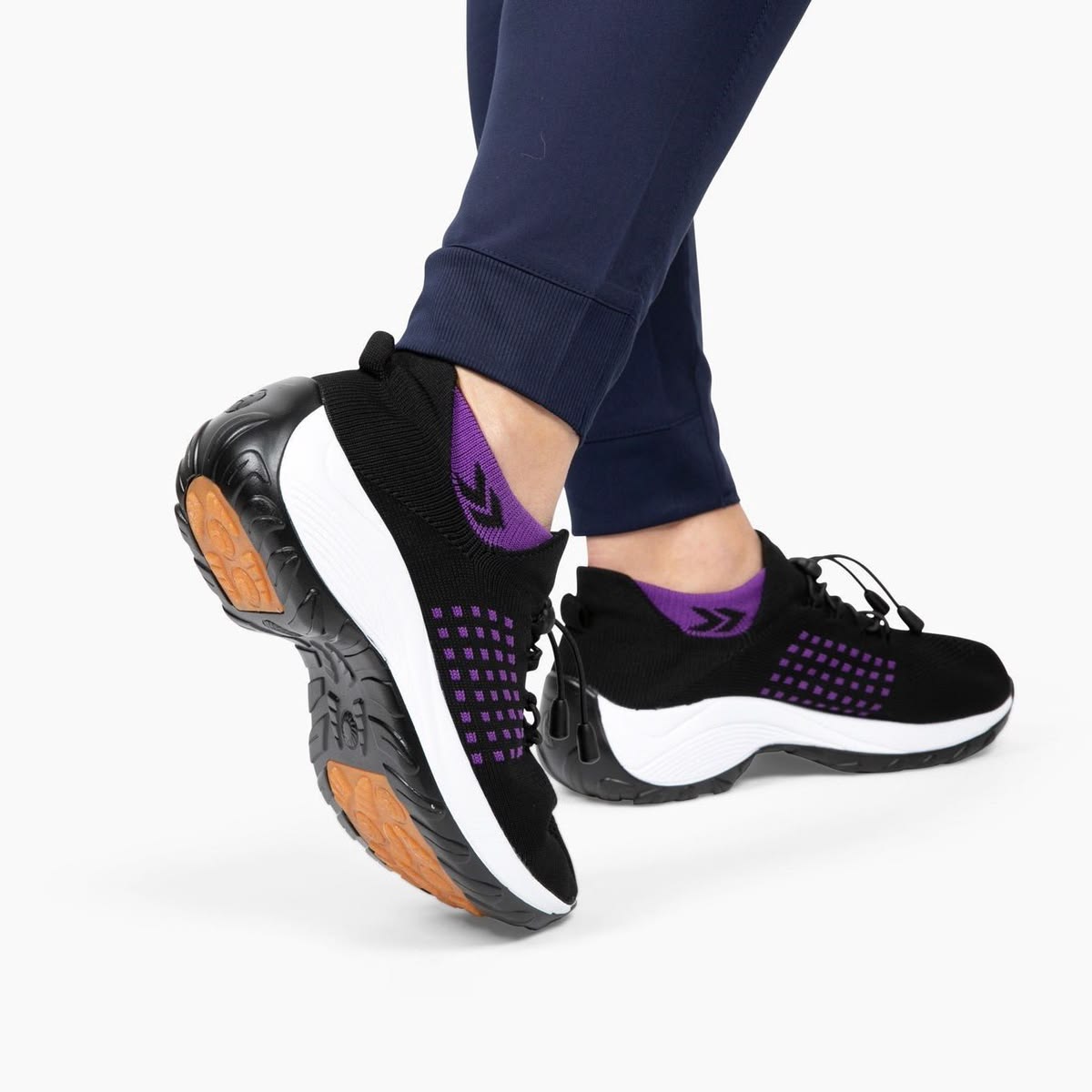
The right shoe isn’t just padding. It’s a combination of arch support, heel structure, cushioning type, and fit — all working together to reduce pressure, correct alignment, and absorb impact.
I’m Faisal S. Chughtai, a footwear expert with years of hands-on experience helping people find the best shoes for foot pain across a wide range of conditions and lifestyles. In this guide, I’ll walk you through exactly what to look for — and which models consistently deliver real relief.
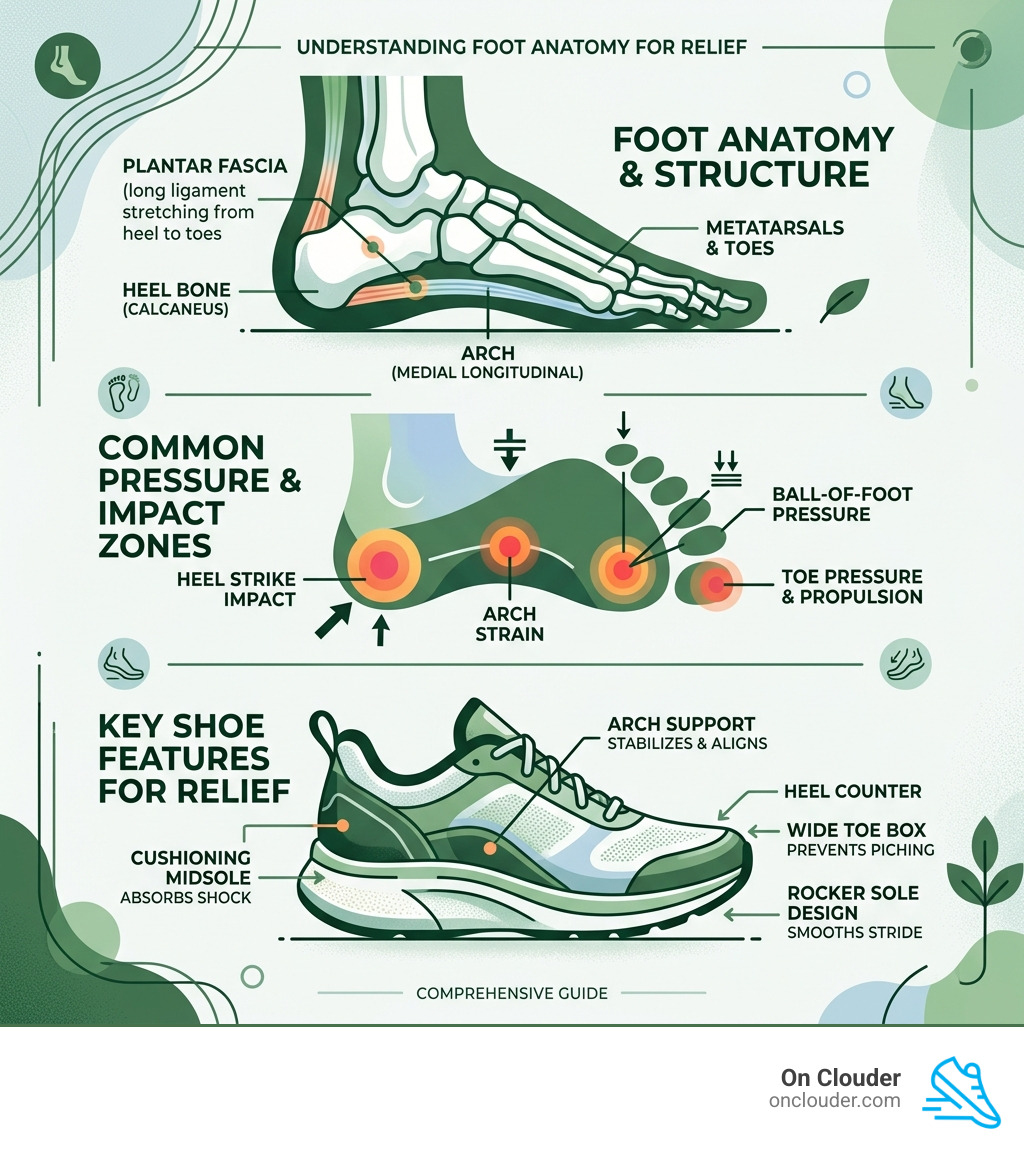
Quick best shoes foot pain definitions:
Essential Features of the Best Shoes for Foot Pain
Finding the best shoes foot pain relief requires looking past the flashy colors and focusing on the engineering beneath the surface. When we evaluate shoes at On Clouder, we look for a specific “DNA” of supportive features that podiatrists consistently recommend.
Arch Support and Pressure Redistribution
Proper arch support is the foundation of foot health. For those with flat feet, firm arch support reduces plantar pressure significantly. It’s not just about comfort; it’s about alignment. When the arch is supported, it prevents the foot from collapsing inward (overpronation), which can lead to a chain reaction of pain up to the knees and back. You can learn more in our 10 Expert Foot Health Tips And The Best Shoes To Prevent Pain.
The Rigid Heel Counter
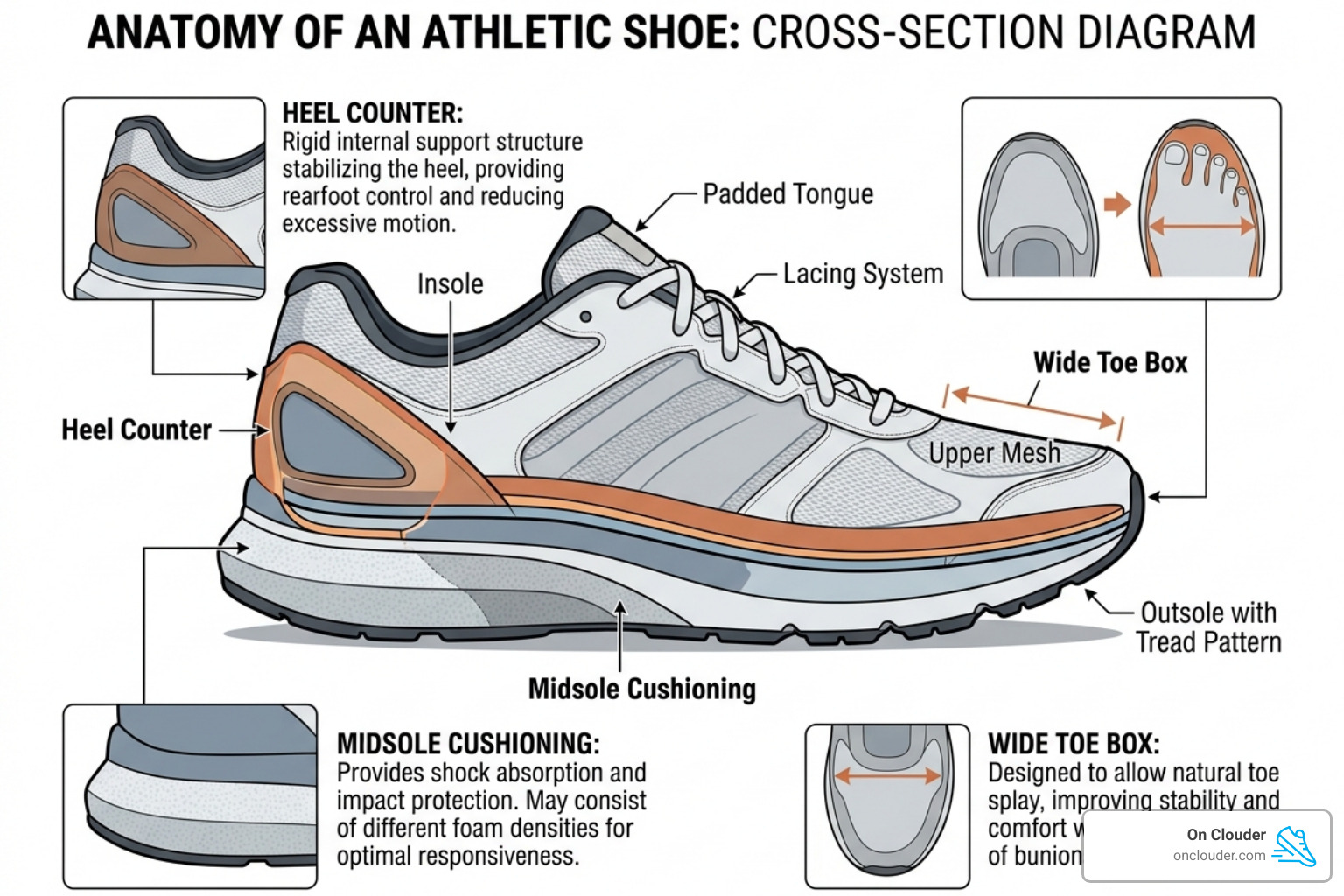
Grab the back of your shoe. Does it collapse easily under your thumb? If so, it’s likely not doing its job. A firm heel counter—the plastic or composite structure in the back of the shoe—stabilizes the heel bone (calcaneus). This minimizes excess wobble and reduces the strain on your plantar fascia.
Midsole Cushioning and Shock Absorption
Cushioning isn’t just about “squish.” The best shoes use advanced foams like EVA or Polyurethane to absorb impact. For example, the Hoka Bondi 9 features a massive 41.3 mm heel stack with a 146 SA shock absorption rating, which is well above the industry average of 127. This level of protection is vital for anyone spending long hours on hard surfaces.
Toe Box and Torsional Rigidity
A wide toe box allows your toes to splay naturally, preventing bunions and forefoot pain. Furthermore, a shoe should have high torsional rigidity—meaning it shouldn’t twist like a pretzel. A shoe that resists twisting provides a stable platform for your gait.
Heel-to-Toe Drop and Rocker Soles
The “drop” is the height difference between the heel and the forefoot. A higher drop (8-12mm) can offload the heel and Achilles tendon, providing relief for plantar fasciitis. Rocker soles, which have a curved bottom, help the foot roll through the gait cycle smoothly, reducing the force required from the small joints in the foot.
Top Podiatrist-Recommended Models for Specific Conditions
Different types of pain require different solutions. A shoe that works for high arches might be a nightmare for someone with severe overpronation. Understanding how shoes provide alignment correction and motion control is key to finding your perfect match. For a deeper dive into how footwear affects the whole body, check out The Definitive Guide To Best Shoes For Back Pain.
Best shoes for foot pain from Plantar Fasciitis
Plantar fasciitis is often characterized by that “stabbing” pain in the morning. To combat this, podiatrists recommend shoes with firm arch support and a significant heel-to-toe offset.
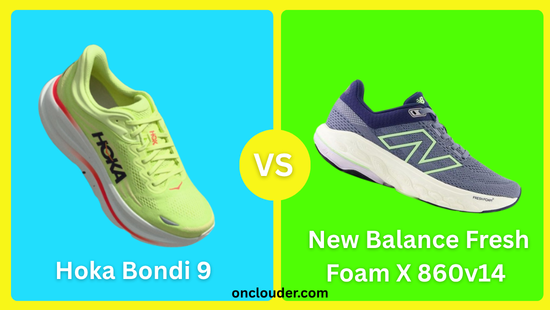
The Brooks Adrenaline GTS 24 is a standout here. It features “GuideRails” technology that acts like a bathtub for your foot, keeping it centered and reducing strain on the fascia. Research shows that 95% of patients wearing max-cushioned shoes like the Hoka Bondi 9 or New Balance Fresh Foam X 860v14 reported a smoother recovery process. These shoes provide the necessary shock absorption to let the inflamed tissue heal.
Best shoes for foot pain from Flat Feet and High Arches
If you have flat feet, you likely need a “stability” or “motion control” shoe. These models feature medial support (firmer foam on the inside of the shoe) to prevent the foot from rolling inward. The ASICS Gel-Kayano 32 is a premier choice, utilizing a 4D Guidance System to provide adaptive stability.
For those with high arches, the priority shifts to “neutral plush” shoes with deep cushioning. High arches are often rigid and poor at absorbing shock, so shoes like the ASICS Gel-Nimbus 27 or Nike Vomero are excellent for providing the impact protection your feet can’t generate naturally. You can find more specific recommendations in our Best Shoes For Flat Feet High Arches 2026 Guide.
Activity-Specific Footwear: From Work to Recovery
You wouldn’t wear a tuxedo to the gym, and you shouldn’t wear your running shoes for a 12-hour nursing shift if they aren’t designed for it. Activity-specific features like anti-slip soles and energy return foams make a massive difference in daily comfort.
Standing All Day and Healthcare
For those in healthcare or hospitality, the Best Shoes Standing All Day Guide Best Shoes Standing All Day Guide highlights the importance of rocker soles and slip resistance. Brands like Dansko are legendary in hospital hallways because their firm, rocker-bottom clogs reduce the fatigue that comes from standing on tile floors.
Walking and Workouts
If you are walking for exercise, you need a shoe that combines a wide, stable sole with breathable mesh. The Saucony Triumph 23 is a fantastic lightweight option that doesn’t sacrifice support. For those who need extra width, the New Balance 860v14 offers multiple width options to ensure a proper fit without pinching.
The Power of Recovery Footwear
After a long day, the worst thing you can do is walk barefoot on hard wood or tile floors. This is where recovery sandals come in. OOFOS and other recovery slides use specialized foams that absorb 37% more impact than traditional footwear. They serve as “house shoes” that keep your arches supported and your heels cushioned even when you’re just relaxing at home.
Common Footwear Mistakes and Professional Care
Even the best shoes foot pain technology can’t save you if you make these common mistakes.
- The 300-500 Mile Rule: Most athletic shoes lose their structural integrity and shock absorption after 300 to 500 miles. Even if the tread looks fine, the foam inside may be “dead.” If you start feeling new aches in your feet or knees, it’s time for a replacement.
- High Heels and Forefoot Pressure: High heels can increase pressure on the forefoot by up to 80%. This is a recipe for bunions, neuromas, and hammertoes.
- Walking Barefoot: If you have existing foot pain, walking barefoot removes all support and puts maximum strain on your tendons.
- Ignoring the Fit: Always shop for shoes in the afternoon when your feet are slightly swollen to ensure the most accurate fit. You should have a thumb’s width of space between your longest toe and the end of the shoe.
When to See a Podiatrist
If your pain persists for more than 1–2 weeks despite changing your shoes, it is time to see a professional. They can use diagnostic tools like gait analysis to determine if you need custom orthotics. According to the Mayo Clinic, persistent foot pain can indicate underlying structural issues that require medical attention. While over-the-counter inserts can help, custom orthotics are molded specifically to your foot to correct complex biomechanical issues. Check out The Best Arch Support Pads For Shoes To End Foot Pain for more on how to supplement your footwear.
Frequently Asked Questions about Foot Pain Relief
How often should I replace my shoes to avoid pain?
As mentioned, the general rule is every 300 to 500 miles. However, this varies based on your weight and the surfaces you walk on. Heavier individuals or those walking on concrete daily may need to replace shoes closer to the 300-mile mark. If you see uneven wear on the outsole or the midsole feels “mushy,” it’s time to shop.
Are expensive shoes always better for foot pain?
Not necessarily. While premium shoes often use higher-quality foams and more durable materials, the “best” shoe is the one that fits your specific foot type. A $200 high-end running shoe might be terrible for you if it’s a neutral shoe and you have flat feet. Structure and support matter more than the price tag.
Can I wear flip-flops if I have chronic foot pain?
Standard, flat flip-flops are among the worst offenders for foot pain. They offer zero arch support and force your toes to “scrunch” to keep the shoe on, leading to tendonitis. If you love the open-air feel, opt for arch-supportive slides or recovery sandals like OOFOS which are designed specifically for foot health.
Conclusion
At On Clouder, we believe that investing in the best shoes foot pain relief is an investment in your long-term mobility. Whether you are a nurse on a 12-hour shift, a runner dealing with a nagging injury, or someone who just wants to walk the dog without pain, the right footwear is out there.
Don’t settle for “fashion over function.” Prioritize a rigid heel counter, ample cushioning, and a wide toe box. Your feet are the foundation of your entire body—take care of them, and they will take care of you. For more tips on finding the right fit and preventing discomfort, see our 10 Expert Foot Health Tips And The Best Shoes To Prevent Pain.