Why Good Stability Running Shoes Are Important for People Who Overpronate
- stability running shoes help people who overpronate to run in comfort.
- They give them the support they need to protect their joints.
- This reduces the risk of injury.
- These shoes do all this without losing cushioning or feel.
- The best stability running shoes are really important, for overpronators.
- They need these shoes to run well.
Quick Answer: Best Stability Running Shoes for 2026
| Shoe | Best For | Drop | Weight |
|---|---|---|---|
| ASICS Gel-Kayano 32 | Overall support + daily training | 8mm | 10.6 oz (M) |
| New Balance Fresh Foam X 860v14 | Reliable cushioning | 8mm | 10.8 oz (M) |
| ASICS GT-1000 14 | Best value | 8mm | 9.3 oz (M) |
| Saucony Guide 18 | Lightweight stability | 6mm | 8.6 oz |
| HOKA Arahi 8 | Light feel, high stack | 5mm | 9.1 oz |
| Brooks Glycerin GTS 22 | Max cushion + guidance | 10mm | 10.5 oz |
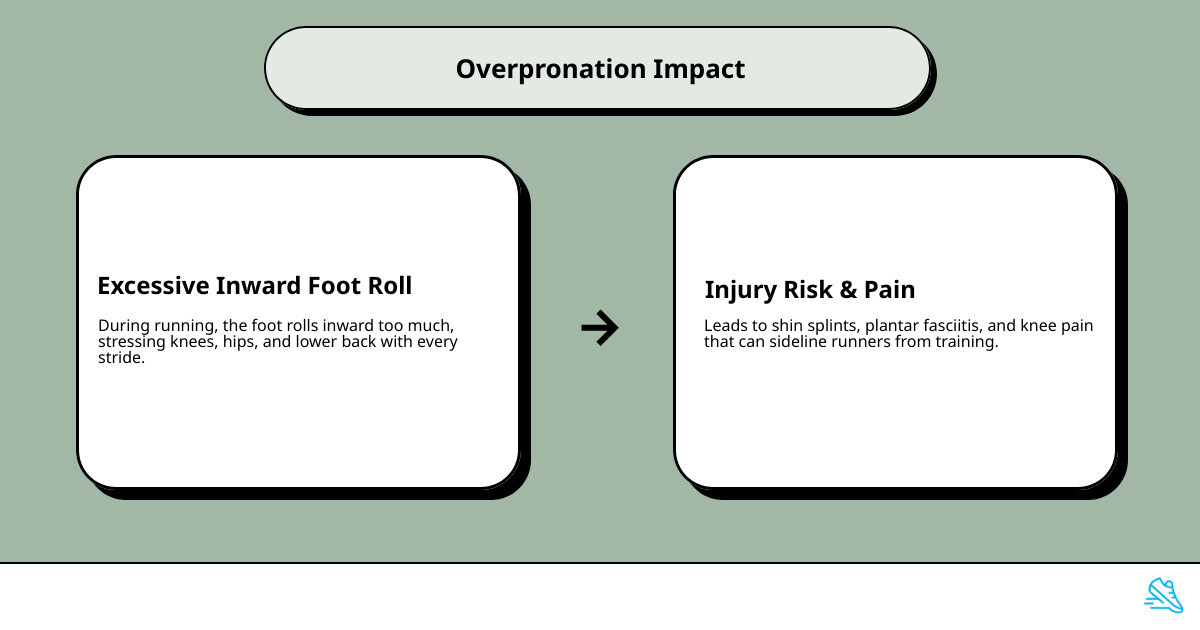
When you run and your feet roll inward much which is called overpronation you are putting extra stress on your knees and your hips and your lower back with every step you take. Over time this is going to add up and cause problems. You can get shin splints and plantar fasciitis and knee pain that will keep you from doing the things you like to do.
Stability running shoes are made to help with this problem. They have things like bases and medial support and special foam that helps your foot move in a more natural way when you run. This means your foot is not forced into a position that’s not natural, for it.
The good thing is that stability running shoes have gotten a lot better. They do not feel stiff or clumsy anymore. The best stability running shoes nowadays feel much like regular running shoes but they have extra support built into them that helps your feet and your knees and your hips.
I’m Faisal S. Chughtai, a footwear expert who has spent years researching and reviewing performance running shoes, including the best stability running shoes on the market. My focus is always on helping you find the right shoe for your specific needs — whether that’s daily runs, long-distance training, or simply staying on your feet all day without pain.
Best stability running shoes vocab to learn:
Understanding Stability vs Neutral Footwear
When we talk about stability running shoes the first question most runners ask is: “How are stability running shoes different from the footwear I see everyone else wearing?”
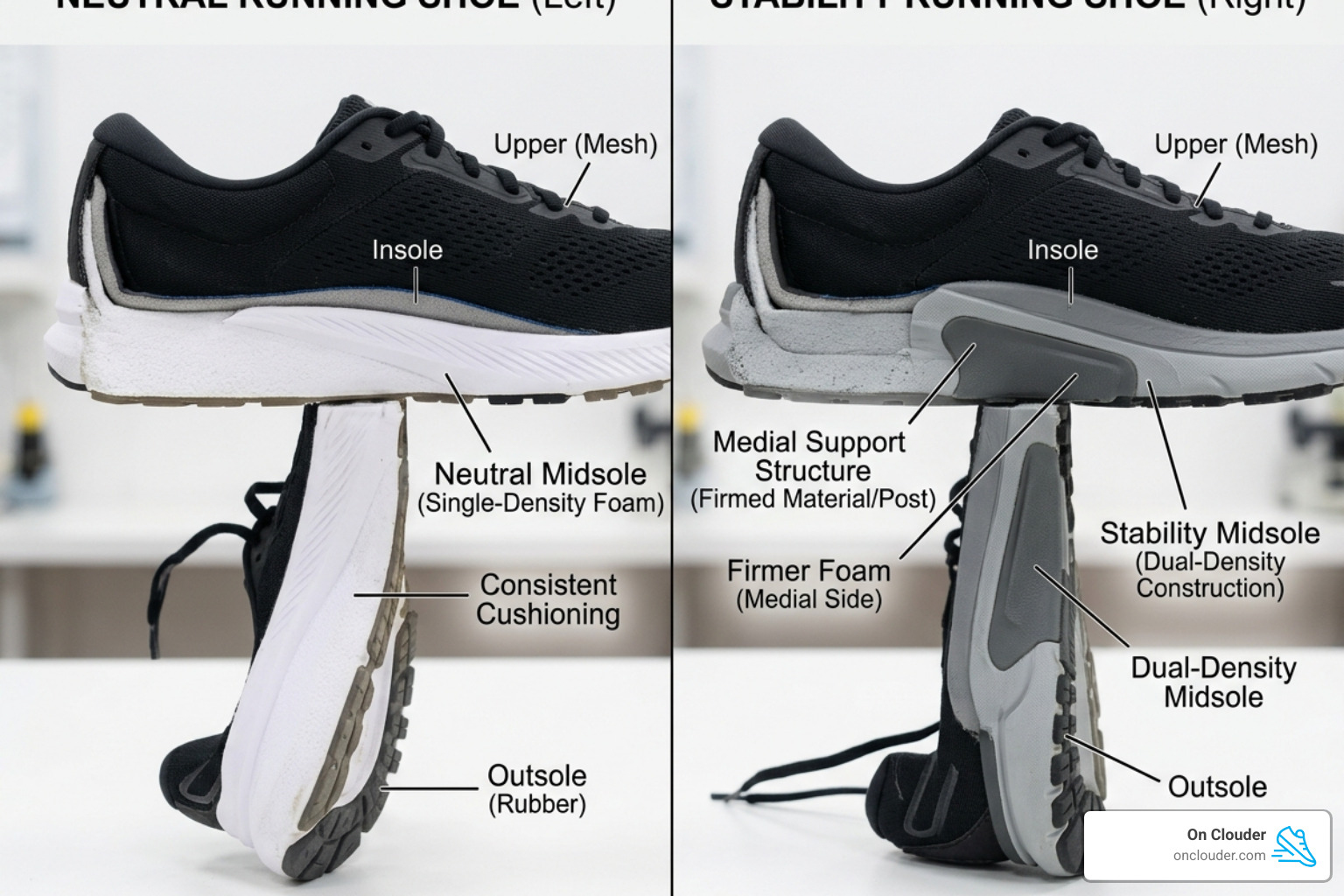
The main difference is how the shoe handles the movement of your foot. Neutral running shoes are made for runners whose feet hit the ground on the outside of the heel and then roll a bit inward. This is something that happens when you run it is called pronation. I am someone who overpronates. This means my foot rolls inward when I run, which makes my arch collapse and my ankle tilt.
Stability running shoes are different from footwear because they are made to help people who overpronate, like me run without hurting their feet or ankles. Stability running shoes are really good, for people who overpronate because they give my foot the support it needs when I run. I like stability running shoes because they help me run without hurting my feet or ankles. Stability running shoes are made for people who overpronate. That is why I wear stability running shoes when I go for a run.
Stability shoes help fix a problem.
A neutral shoe helps absorb shock and bends
- Stability shoes keep your foot straight.
- These shoes have parts, on the side to stop your foot from rolling in too much.
- This helps you walk correctly.
- When we look closely at how people walk we see that stability shoes do not just stop movement.
- They give you a base to move your weight around.
- Your weight hits the middle of your foot, not the edge.
- These shoes help move that energy to the ball of your foot.
- This makes it easier to push off with your toes.
- Stability shoes make walking easier.
- They help you move your weight from your heel to your toes smoothly.
- Stability shoes help you walk efficiently.
Why You Need the Best Stability Running Shoes
If you’ve ever finished a run and felt a nagging ache in your inner knee or a sharp pull in your lower back, your shoes might be the culprit. Overpronation doesn’t just affect your feet; it creates a “kinetic chain” reaction. When your foot rolls in, your lower leg rotates internally, which puts stress on the knee, which then pulls on the hip and misaligns the lower back.
Choosing the best stability running shoes is about more than just comfort—it’s about joint protection.
- Knee Pain: Stability features reduce the rotational force on the knee joint.
- Hip Alignment: By keeping the foot neutral, these shoes help maintain a level pelvis during the stance phase of your stride.
- Lower Back Relief: Proper foot support prevents the compensatory movements in your spine that often lead to “runner’s back.”
For men, stability options often feature slightly wider platforms and higher weight tolerances to accommodate larger frames, ensuring the foam doesn’t compress prematurely under load.
Modern Technology in Footwear
The days of shoes that feel like bricks are gone. Now it is 2026. Things have changed. People in the shoe business are talking about something called stability. This means the shoe does not get in the way when you are walking or running properly. When you get tired and your walking or running form gets bad the shoe helps to support you.
New technology in Modern Technology in Footwear is about helping your feet not forcing them to do something. For example some shoe companies do not use a piece of plastic under the arch of the foot anymore. Instead they use things like GuideRails which’re like the bumpers you see in a bowling alley. Some shoes also have something called 4D Guidance Systems. These systems use the shape of the shoe to help keep your feet in the position. They make the base of the shoe wider. The back of the shoe and the middle part of the shoe are bigger. All of this helps to keep your feet centered when you are walking or running.
- Modern Technology in Footwear is really about making shoes that work with Modern Technology in Footwear to help you.
- Modern Technology in Footwear is making life easier for people who wear shoes.
- Modern Technology, in Footwear is very helpful.
Comparison: Traditional vs. Modern Stability
| Feature | Traditional Medial Post | Modern Guidance (e.g., GuideRails) |
|---|---|---|
| Mechanism | Firm wedge of foam under the arch | Raised foam “bumpers” on the sides |
| Feel | Stiff and corrective | Unobtrusive until needed |
| Goal | Stop the foot from rolling | Guide the foot into a neutral path |
| Weight | Usually heavier | Lighter, integrated into geometry |
Key Features of the Best Stability Running Shoes
When we evaluate the best stability running shoes in our lab, we look for several defining characteristics:
- Wide Base: A broader “footprint” provides an inherently more stable platform. The Saucony Hurricane 25, for instance, features a massive 124.4mm base at the forefoot to prevent tipping.
- Heel Counters: A stiff internal plastic or foam piece that cups your heel, preventing it from sliding side-to-side.
- Beveled Heels: A rounded heel shape that smooths out the landing, reducing the “slap” that can force the foot into rapid overpronation.
- Dual-Density Foam: Using a firmer foam on the inside and a softer foam on the outside to naturally guide the foot toward the center.
A prime example of this engineering is found in the GT-4000, which is widely considered one of the most stable shoes available. It utilizes LITETRUSS technology to reduce the rate of pronation without the clunkiness of old-school designs.
The Best Stability Running Shoes for 2026
We’ve analyzed dozens of models, logging hundreds of miles to find the top performers for the 2026 season. Whether you are a marathoner or a casual walker, there is a stability shoe tailored for you.
On average, a stability shoe weighs about 285g (10.0 oz), which is slightly heavier than the 262.9g (9.3 oz) average for neutral shoes. However, as you’ll see below, some modern models are breaking that mold.
ASICS Gel-Kayano 32: The Pinnacle of Support
The GEL-KAYANO 32 continues its reign as the gold standard for supportive daily trainers. It weighs in at 10.6 oz for men and 9.2 oz for women, offering a balanced 8mm drop.
What makes it stand out is the 4D Guidance System. This isn’t just one feature; it’s a combination of a wider base, a beveled heel, and a specialized “energy return” foam pod under the arch that helps the foot snap back into a neutral position. Our testers noted that the Hybrid ASICSGRIP outsole provides incredible traction (68% grippier than the average shoe), making it feel secure even on wet city streets or sloped berms.
With a heel stack height of nearly 40mm, it offers “maximalist” levels of cushioning while maintaining a torsional rigidity score of 4/5 in lab tests—meaning it won’t twist or collapse under pressure.
New Balance Fresh Foam X 860v14: Reliable Cushioning
For runners who prefer a more traditional feel with a modern foam twist, the New Balance Fresh Foam X 860v14 is a powerhouse. It uses a dual-density Fresh Foam X midsole that provides a soft landing but a firm, supportive “wall” on the medial side.
At 10.8 oz (men) and 8.6 oz (women), it’s a robust daily trainer built for high mileage. The engineered mesh upper is breathable and provides a secure lockdown, which is crucial for preventing the foot from sliding over the edge of the midsole during overpronation. It’s a “set it and forget it” shoe—reliable, durable, and consistently supportive.
ASICS GT-1000 14: Best Value Option
You don’t always have to spend $180 to get top-tier support. The GT-1000 series is our top pick for budget-conscious runners. Despite its lower price point, it features LITETRUSS technology and a surprisingly light weight (9.3 oz for men).
It’s an excellent “do-it-all” shoe. While it might lack some of the premium “plushness” of the Kayano, it offers a snappy, responsive ride that works just as well for a 5K race as it does for an 8-hour shift at a hospital. Its 8mm drop and 33.5mm heel stack provide a grounded, stable feel that many runners actually prefer over “super-stack” shoes.
Frequently Asked Questions about Stability Shoes
Do stability shoes fix overpronation?
Stability shoes do not fix your feet forever.
They are like glasses that you wear on your feet.
- These shoes help you when you are walking or running. Only when you have them on.
- They do not really change the way your feet are shaped or anything.
- To really fix problems like overpronation you need to do more than just wear stability shoes.
- We think that the best way is to use stability shoes and do exercises at the time.
- You should do exercises that make your butt and hips stronger and also the small muscles in your feet the ones, in your arches.
- These muscles are very important because they help your body stop rolling much when you walk or run.
- Stability shoes can guide your feet. It is really your muscles that make the big changes happen.
- Stability shoes are a tool to help you and your muscles are the ones that do the work to fix your feet and the way you walk or run.
- You need stability shoes and strong muscles to really make a difference.
- So stability shoes and exercises go together to help your feet and the way you move.
How often should I replace my stability shoes?
Most stability shoes should be replaced every 300 to 500 miles. However, for overpronators, it’s important to watch for “foam compression.” Because you are putting more pressure on the inside of the shoe, the medial support foam can collapse faster than the rest of the midsole.
If you look at your shoes from behind and they appear to be “tilting” inward while sitting on a flat surface, it’s time for a new pair. Another sign is the return of old aches and pains in your knees or shins—this usually means the shock absorption (measured in SA units) has degraded.
Can neutral runners wear stability shoes?
Yes! In fact, many neutral runners choose stability shoes for their long runs. When you hit mile 15 of a marathon training run, your muscles fatigue, and your form naturally becomes “sloppy.” This is known as late-onset pronation.
Modern shoes like the Saucony Guide 18 or the Adidas Supernova Solution 3 are designed to be “unobtrusive.” They feel like neutral shoes when you’re fresh, but provide that extra safety net when you start to tire. If you find yourself rolling inward toward the end of your workouts, a stability shoe might be a great addition to your rotation.
Finding the stability running shoes is like taking a big step towards running without any pain and doing a lot better. If you need good support from the ASICS Gel-Kayano 32 or you want a shoe that you can wear every day like the New Balance 860v14 or you are looking for a great deal on the GT-1000 this is a great time to be a runner who needs a little extra help with stability running shoes. Stability running shoes, like the ASICS Gel-Kayano 32 and the New Balance 860v14 can make a difference.
At OnClouder, we pride ourselves on providing in-depth performance rankings to help you make the best choice for your unique feet. Don’t let overpronation hold you back—grab a pair of supportive trainers and get back on the road with confidence.
Ready to see how these stack up against your current favorites? Compare the best stability running shoes on our main comparison page.