How to Spot a World Record Marathon Shoe
The world record marathon shoe is the Adidas Adizero Adios Pro Evo 3: Sabastian Sawe wore it for his 1:59:30 run at the 2026 London Marathon. But the model name alone will not tell you whether a shoe is right for your race.
Look for five things: a legal sole height, a stiff propulsion system, responsive foam, low weight without giving up comfort, and approval for competition. Those features can help you run efficiently. Training, pacing, and fueling still matter more than the shoe on its own.
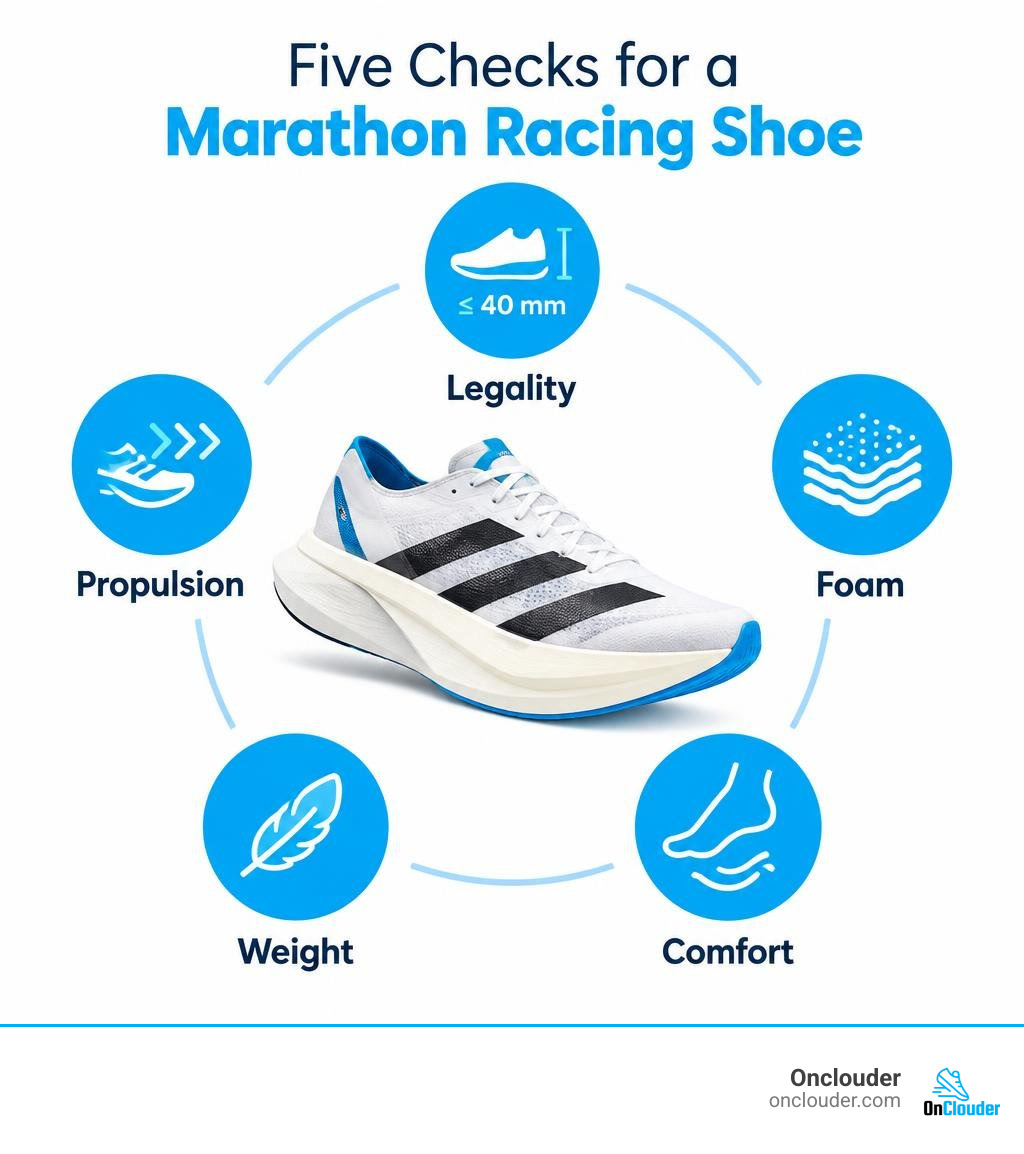
Simple world record marathon shoe glossary:
Trick 1: Inspect the Midsole Stack Height and Plate Regulations
The first trick to spotting a true world record contender is checking its physical dimensions against official rules. The sport moved away from traditional wafer-thin racing flats once sports science proved that thick, bouncy midsoles paired with rigid plates drastically improve running economy.
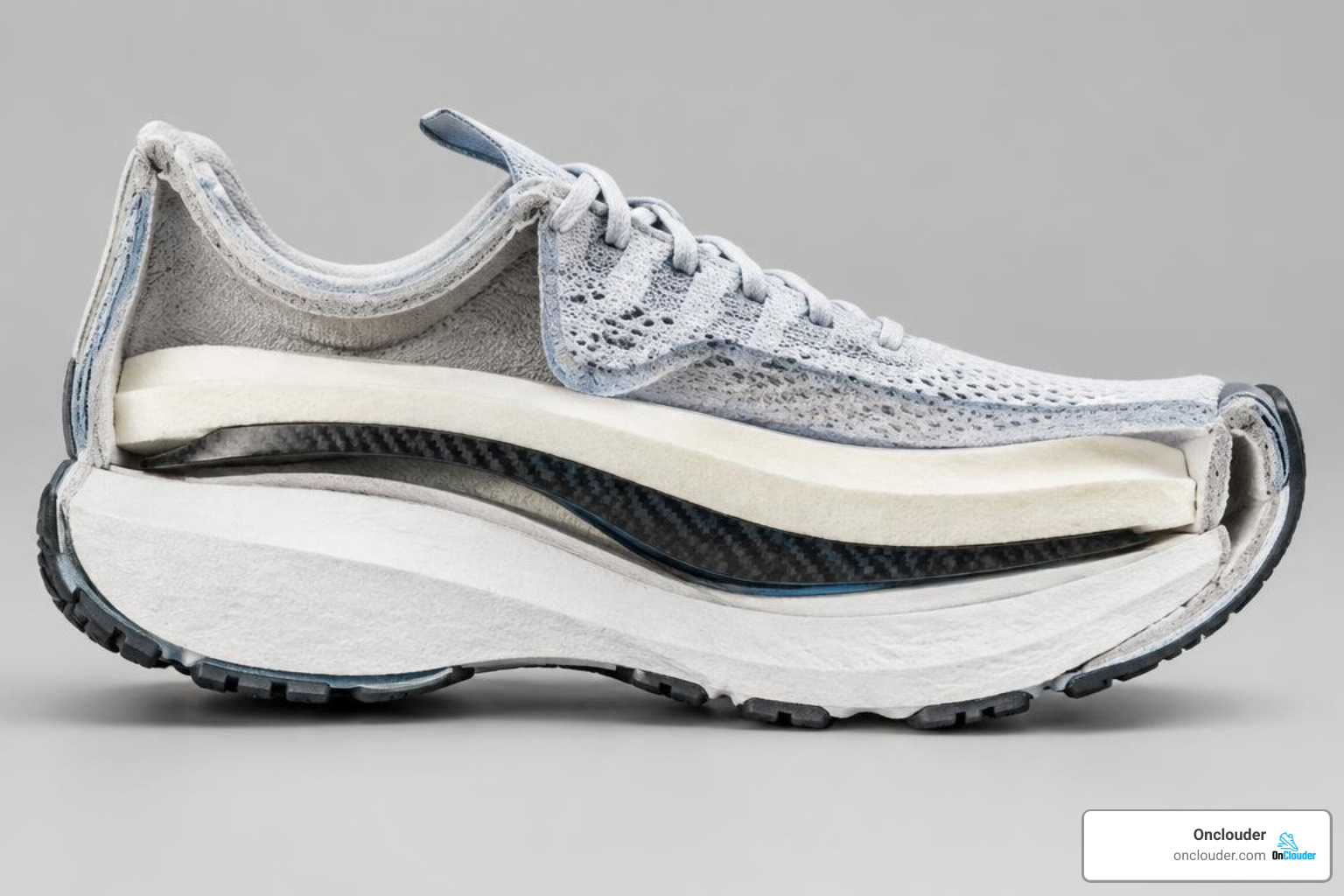
A high-performance shoe must maximize cushioning to reduce muscular damage over 26.2 miles. However, thicker is not always faster—or legal. The energy return generated by modern supershoes comes from how a rigid lever works together with resilient foam. Understanding how different internal elements behave—such as analyzing speedboards versus carbon plate propulsion systems—helps clarify how mechanical stiffness channels energy forward during toe-off.
According to BBC reporting on World Athletics super-shoe regulations, governing bodies had to step in to prevent footwear from turning into miniature trampolines.
Understanding Current World Athletics Footwear Regulations
To keep marathon racing fair, World Athletics enforces strict technical rules:
- Maximum Stack Height: Road racing soles must not exceed 40mm in total thickness at the heel (including insole and outsole).
- Plate Limitations: Shoes can contain a maximum of one rigid plate (typically carbon-fiber) or internal lever system throughout the midsole.
- Commercial Availability: Footwear must be publicly available for purchase by any athlete, preventing brands from outfitting sponsored elites with inaccessible, secret gear.
- Prototype Approval: Unreleased developmental models must appear on the official World Athletics approved list for limited developmental use before stepping onto a starting line.
Trick 2: Analyze the Foam Chemistry and Energy Return
The true engine of any record-setting racer is not just the plate—it is the advanced chemical formulation of the foam. Modern record-breakers use supercritical foams, commonly formulated with Polyether Block Amide (PEBA) or specially tuned aliphatic compounds.
These materials store kinetic energy upon foot strike and return up to 85% to 90% of that energy to the runner, delaying calf and quadricep fatigue. Experiencing effortless racing in high-stack shoes is a direct result of these responsive polymers sparing leg muscles late in the race.
When Ruth Chepngetich ran her historic 2:09:56 in Chicago, breaking the women’s world record by nearly two minutes, her performance highlighted the power of modern foam engineering. Detailed breakdowns in the Ruth Chepngetich Chicago world record shoe breakdown revealed that her footwear provided a mechanical efficiency score equivalent to a sub-two-hour men’s effort.

Anatomy of a Modern World Record Marathon Shoe
When we compare top-tier racers, several mechanical features stand out:
- Aggressive Forefoot Rocker: An upward curve at the front of the shoe accelerates roll-through and quickens cadence.
- Pressurized Air Units: Specialized pods in models like the Alphafly series store and release mechanical energy directly under the metatarsals.
- Carbon-Wrapped Midsoles: Innovations like the frame in the Adizero Adios Pro Evo 3 use structural wrapping rather than flat plates to shave grams while keeping torsional rigidity.
- Stable Base Geometries: Wide heel and midfoot landings ensure the soft, compliant foam remains stable at blistering paces.
Whether you prefer traditional plates or alternative brand designs, evaluating how models stack up in guides like ranking high-performance marathon racing shoes shows that foam resilience remains the biggest factor in cutting minutes off your PR.
Trick 3: Verify the Weight-to-Cushion Ratio
Weight has always been the enemy of distance runners. For years, runners shaved weight by wearing minimal flats with almost no foam. Today’s top shoes achieve the ultimate balance: maximum 40mm stack height at microscopic weights.
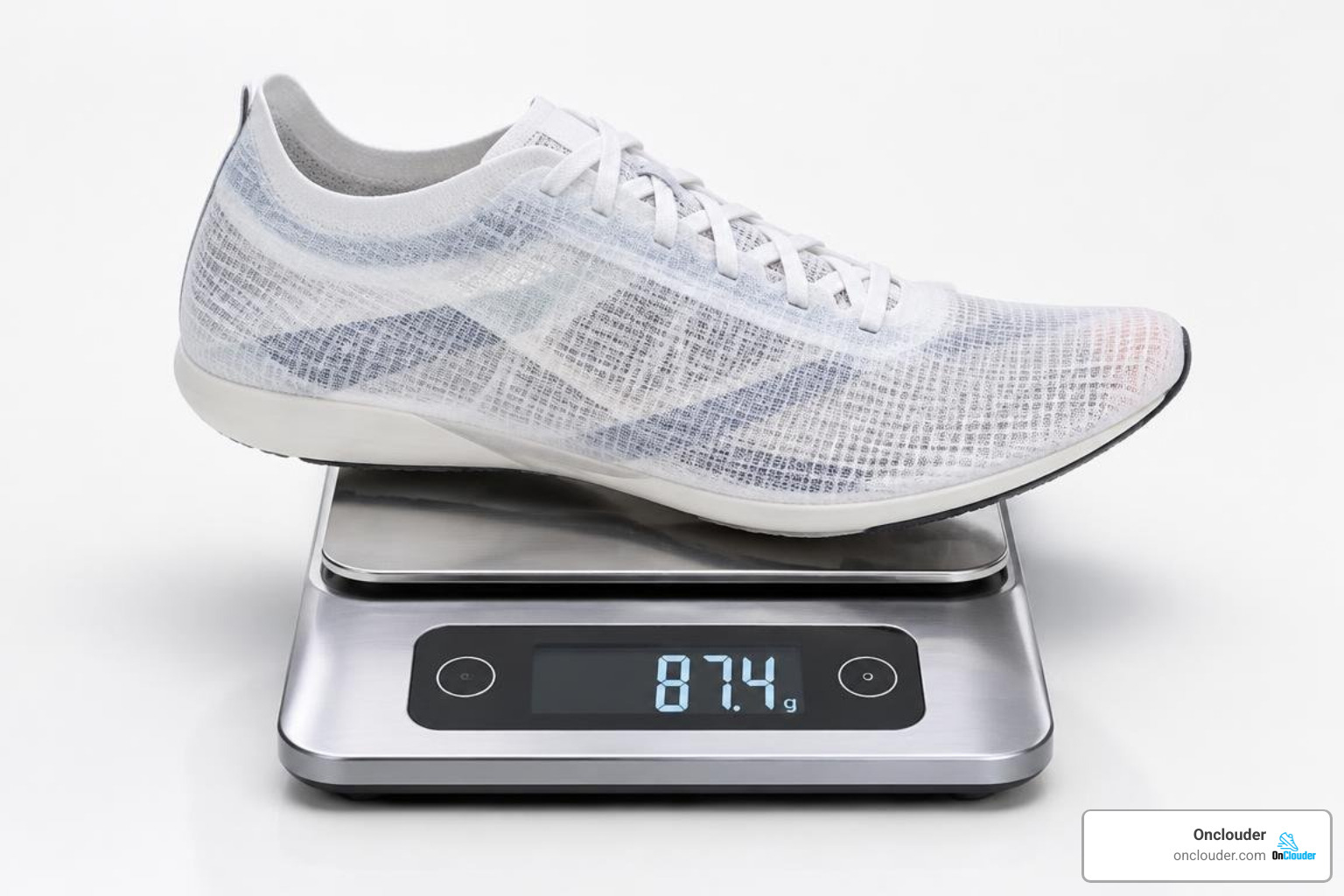
The current benchmark in elite running is the sub-100g weight barrier. The Adidas Adizero Adios Pro Evo 3 set a milestone by weighing just 99 grams, making it lighter than a typical bar of soap.
Every 100 grams added to a running shoe increases metabolic cost by roughly 1%. By removing extraneous rubber, using translucent mesh uppers, and tuning the foam density down to the nanogram, brands allow elites to run at marathon pace with minimal wasted energy. To help you evaluate whether a racer strikes the right balance for your running mechanics, check our checklist for selecting marathon running shoes.
Looking through men’s marathon world record footwear history, you can see how cutting weight while boosting stack height has accelerated record progression.
Evolution of the World Record Marathon Shoe: From Flats to Sub-Two Speed
Marathon footwear technology has evolved dramatically over the decades, shifting from barefoot wins to carbon-plated super shoes that eventually brought down the official two-hour barrier.
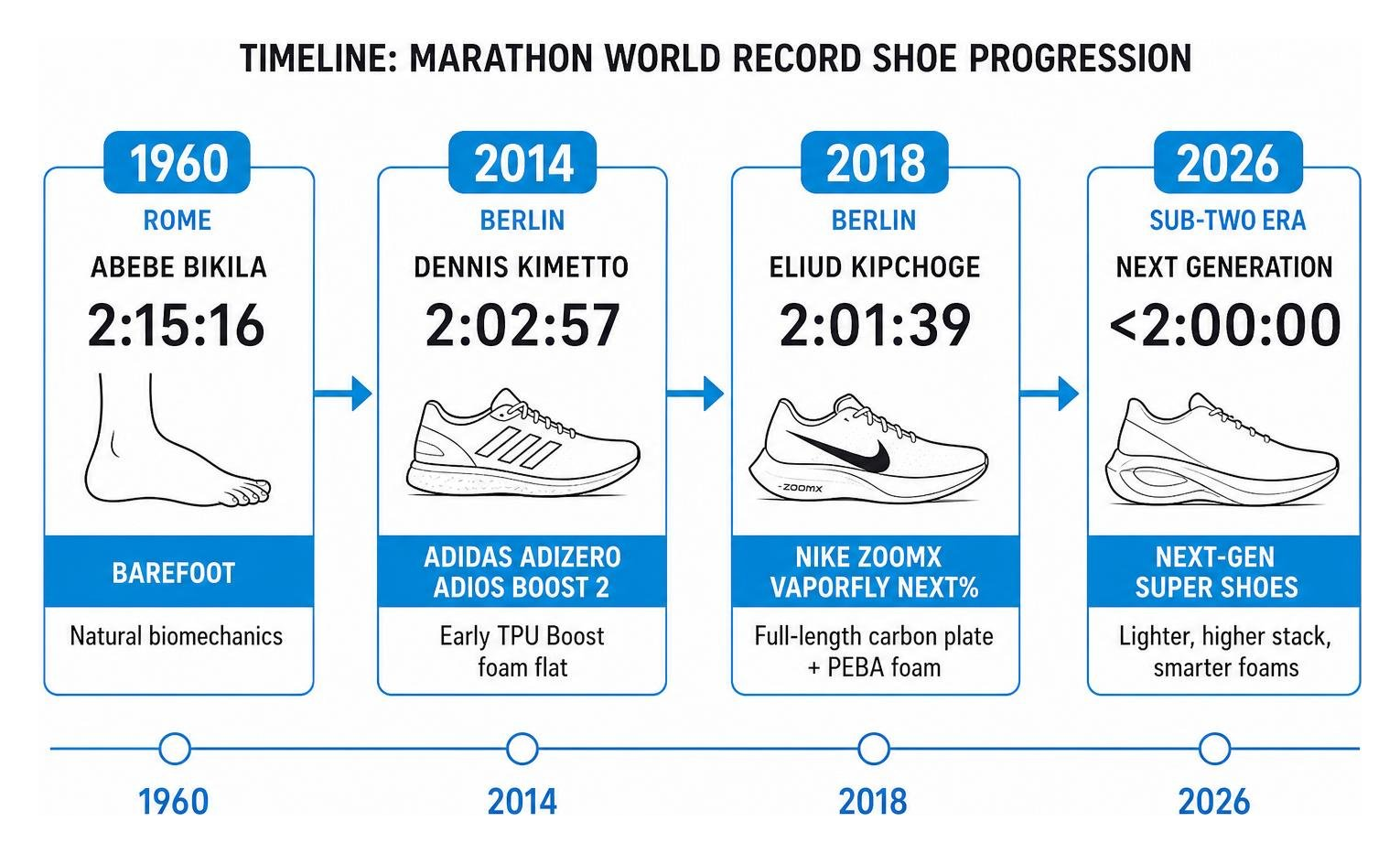
| Year & Race | Athlete | Record Time | Shoe Model | Key Technological Feature |
|---|---|---|---|---|
| 1960 Rome | Abebe Bikila | 2:15:16 | Barefoot | Natural biomechanics |
| 2014 Berlin | Dennis Kimetto | 2:02:57 | Adidas Adizero Adios Boost 2 | Early TPU Boost foam flat |
| 2018 Berlin | Eliud Kipchoge | 2:01:39 | Nike ZoomX Vaporfly Next% | Full-length carbon plate + PEBA foam |
| 2022 Berlin | Eliud Kipchoge | 2:01:09 | Nike Air Zoom Alphafly Next% 2 | Dual Air Zoom pods + ZoomX foam |
| 2023 Chicago | Kelvin Kiptum | 2:00:35 | Nike Air Zoom Alphafly 3 | Continuous bottom sole + ultra-tuned rocker |
| 2024 Chicago | Ruth Chepngetich | 2:09:56 (W) | Nike Air Zoom Alphafly 3 | Air Zoom unit with optimized stability |
| 2026 London | Sabastian Sawe | 1:59:30 | Adidas Adizero Adios Pro Evo 3 | 99g weight + carbon-wrapped midsole |
In little over a decade, the men’s world record fell four times—shaving nearly three minutes off the clock—while the women’s mark dropped by over five minutes. If you want to know how these compare to everyday high-stack mileage trainers, explore our breakdown on the best footwear for marathon running.
How Men’s and Women’s World Record Marathon Shoe Choices Compare
Men’s and women’s elite racing shoe choices share identical engineering goals: maximizing energy return while keeping weight minimal. Both Kelvin Kiptum (2:00:35) and Ruth Chepngetich (2:09:56) set historic times wearing the Nike Alphafly 3, proving its versatility across different biomechanical profiles.
Meanwhile, Tigst Assefa and Sabastian Sawe showcased the effectiveness of Adidas’s ultra-lightweight design ethos. As highlighted in BBC coverage on record-setting sub-100g marathon shoes, reducing upper material and shaving outsole rubber allows both male and female athletes to maintain extreme turnover throughout the closing miles of a major marathon.
Beyond the Shoe: Fueling, Pacing, and Training Synergy
Super shoes get most of the headlines, but record-breaking performances rely on a complete performance system:
- Carbohydrate Hydrogel Fueling: Athletes now take in 90g to 120g of carbs per hour using hydrogel formulas without GI distress.
- Laser-Guided Drafting Formations: Optimized aerodynamic pacemaking formations shield lead runners from energy-sapping headwinds.
- Targeted Altitude Training Camps: High-altitude blocks in places like Kaptagat and Iten optimize aerobic capacity and red blood cell count.
- Rigorous Anti-Doping Protocols: Elite athletes undergo routine, year-round testing to ensure clean competition.
Frequently Asked Questions About Marathon Super Shoes
What is the current official men’s marathon world record and shoe?
The official men’s world record is 1:59:30, run by Sabastian Sawe at the 2026 London Marathon. Sawe wore the Adidas Adizero Adios Pro Evo 3, an ultra-lightweight supershoe weighing 99g with a carbon-wrapped midsole structure.
Can amateur runners buy and race in world record marathon shoes?
Yes. World Athletics regulations require all competition shoes to be commercially available. However, top-end models come at premium prices—ranging from £285 ($285) to £450 ($500). Because ultra-lightweight record shoes feature thinner outsoles and delicate uppers, they often have a race-day lifespan of just 1 to 2 marathons before their peak energy return begins to fade.
What makes a shoe illegal for official world record attempts?
A road shoe is disqualified from official world records if:
- The midsole stack height exceeds 40mm.
- It contains more than one rigid plate.
- It uses active electronic components that adapt during the stride.
- It is an unapproved, unlisted prototype unavailable under developmental rules.
Conclusion
The evolution of elite distance footwear has taken marathon running from traditional flats to historic sub-two-hour barrier breakthroughs. While carbon plates and resilient foams have redefined what is possible on race day, matching the right shoe geometry to your unique stride is what translates into personal records.
Whether you are targeting an Olympic Trials qualifier or lining up for your first 26.2-mile finish line, we recommend exploring our comprehensive hands-on shoe reviews and testing data to find your ideal race-day companion. Explore our in-depth guide to the best marathon running shoes to find the ideal match for your stride and distance goals.