How to Choose Marathon Running Shoes That Work for You
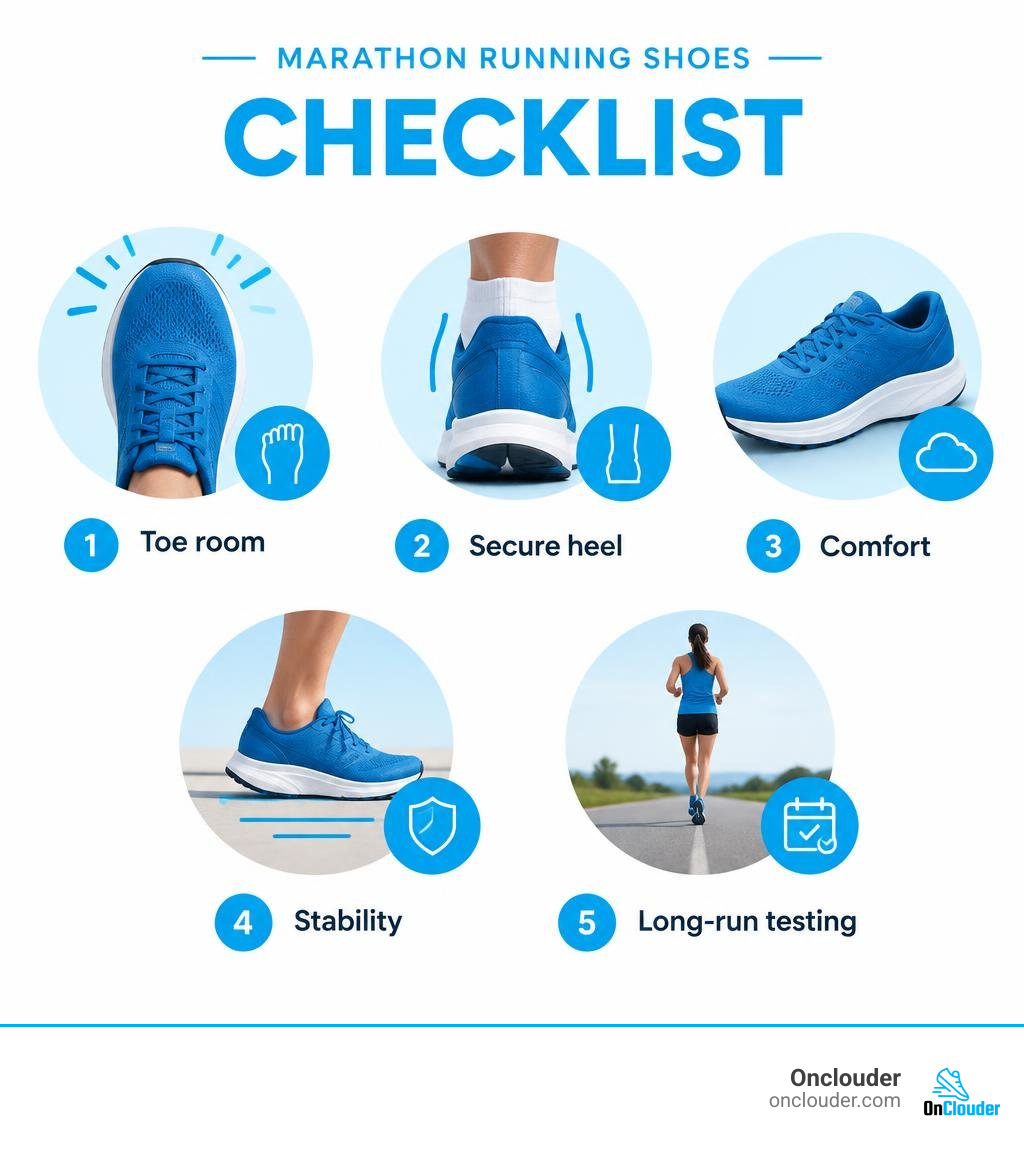
The best marathon running shoes are the ones that fit well and still feel good late in a long run. Look for room to spread your toes, a secure heel, cushioning you like, and a stable feel at your goal pace. Lightweight foams and carbon plates may help you run more efficiently, but they cannot make up for a poor fit.
Try shoes with your race-day socks. Test your top choice on a long run before you wear it for 26.2 miles.
Marathon running shoes further reading:
Biomechanics and Technology of Modern Super Shoes
Running a marathon places immense repetitive stress on your lower limbs. Over 26.2 miles, an average runner takes between 30,000 and 45,000 steps. In recent years, shoe engineering has transformed from basic foam wedges into highly tuned mechanical systems designed to alter how energy flows through the foot and leg.
At the core of modern marathon shoe science is running economy—the submaximal oxygen cost of maintaining a specific running velocity (Saunders et al., 2004). When your shoes reduce muscular vibration, absorb impact forces efficiently, and reduce ground contact time, your body expends less energy per stride. Today’s racing shoes operate within strict World Athletics guidelines (a maximum stack height of 40mm at the heel), relying on a synergistic pairing of lightweight, high-rebound polyether block amide (PEBA) foams and curved, rigid carbon fiber plates.
Energy Return and High-Resilience Foams
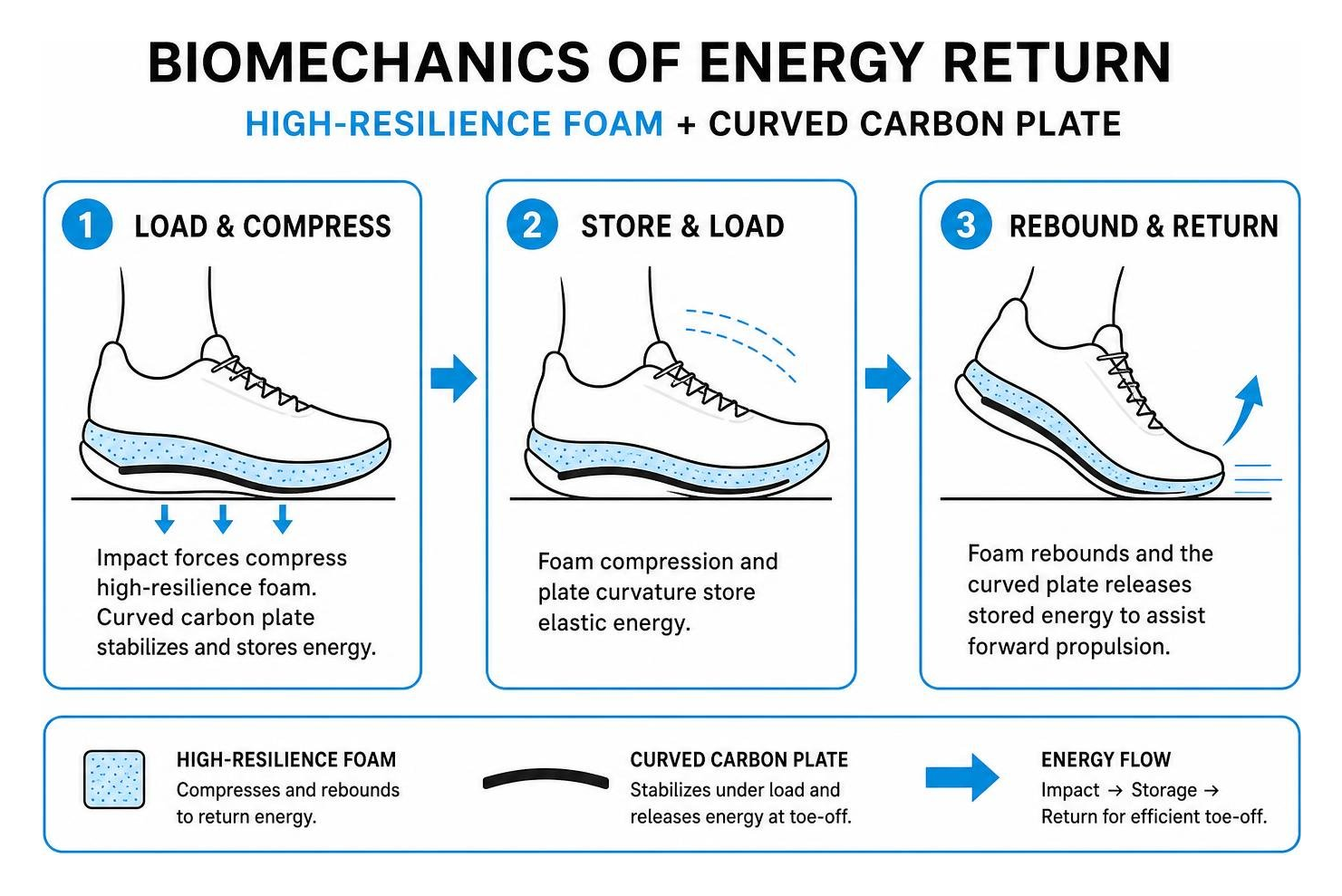
Traditional midsoles relied on standard EVA (ethylene-vinyl acetate) foam, which yields an energy return of roughly 60% to 65% while degrading under sustained pressure. Modern marathon shoes feature advanced nitrogen-infused and supercritical foams, such as ZoomX, PEBAX composites, and Lightstrike Pro formulations. These materials deliver between 80% and 90%+ energy return.
By compressing under load and rapidly rebounding during toe-off, high-resilience racing foams decrease the muscular effort required by your calves and quadriceps. This midsole resilience limits late-race muscle breakdown, allowing you to hold your marathon goal pace long after mile 20.
Running Economy and Plate Propulsion Mechanics
While runners often refer to carbon fiber plates as “springs,” their primary biomechanical function is optimizing longitudinal bending stiffness. A stiff, anatomically curved plate acts as a lever:
- Leverage Optimization: It stabilizes the thick, squishy foam block, preventing energy loss through uncontrolled lateral deformation.
- Joint Work Reduction: It stiffens the metatarsophalangeal (toe) joints, reducing the mechanical work required by the foot’s smaller intrinsic muscles.
- Ankle Torque Modulation: It shifts the mechanical workload slightly up the kinetic chain, lowering peak triceps surae (calf) loading and dampening muscle oscillation.
This combination reduces submaximal oxygen uptake without requiring a higher aerobic capacity, translating directly into faster finishing times across long distances.
Comparing Top 26.2 Racers: Energy Return, Weight, and Stability
Choosing between flagship racers requires balancing speed, weight, and your tolerance for aggressive geometries.
| Shoe Category | Weight (Men’s US 9/10) | Heel-to-Toe Drop | Midsole Foam Technology | Key Performance Characteristic |
|---|---|---|---|---|
| Agile Racing Flagship | 190g (6.7 oz) | 6mm | High-rebound foam + carbon flyplate | Agile, lightweight propulsive racer |
| Maximal Cushion Flagship | ~205g | 8mm | Lightweight supercritical foam + dual air pods | High energy return, maximal marathon cushion |
| Zero-Drop Innovation Platform | ~185g | 0mm (Zero-Drop) | Double-stacked supercritical foam + air pods | 40mm platform, significantly higher energy return than earlier maximal models |
| Featherweight Elite Racer | 97g (3.4 oz) | 6mm | Ultra-light PEBA foam + embedded energy rods | Featherweight sub-2 chassis for elite speed |
| Balanced Traction Racer | 194g (6.8 oz) | 8mm | Nitrogen-infused foam + carbon plate | Balanced stability, durable wet-weather traction |
Elite Flagships: Lightweight Plated Racers
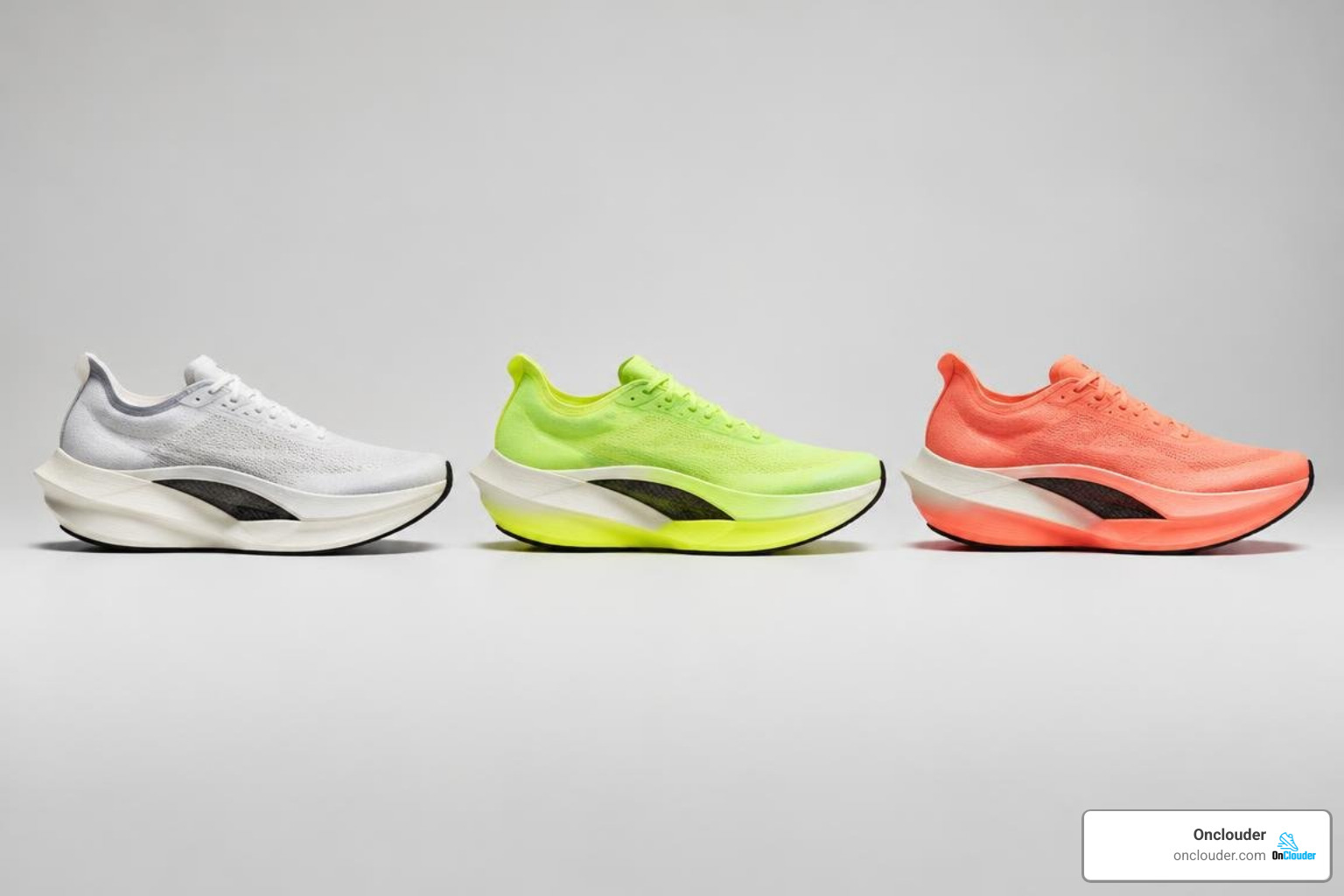
Flagship marathon shoes emphasize sustained energy return over long-haul pacing. An agile racing flagship can weigh as little as 190g (Men’s US 10) paired with an accessible 6mm drop, offering a nimble, versatile ride for racers who prefer a quick turnover.
For runners seeking high bounce, maximal cushion flagships integrate lightweight supercritical foam—up to 17% lighter than standard formulations while delivering 8% more energy return—alongside dual forefoot air pods for roughly 10% greater total energy return than earlier generations. Pushing these boundaries further, zero-drop innovation platforms introduce a 40mm stack height featuring double-stacked air units that yield up to 40% more energy return than previous maximal designs.
Ultralight Competitors: Racing Shoes Built for Speed
For athletes chasing every possible second, ultra-minimalist engineering has created historic breakthroughs. Featherweight elite racers strip mass down to an astonishing 97g, powering top runners across sub-2-hour marathon milestones. Meanwhile, balanced traction racers use nitrogen-infused foam and a carbon chassis to combine lightweight snap with reliable wet-weather road traction.
How to Choose Marathon Running Shoes for Your Foot Strike and Gait
Finding the right marathon racer requires matching shoe geometry to your individual biomechanics. When planning your race day setup, reviewing tailored marathon footwear recommendations ensures your choice complements your specific training load and running gait.
Matching Strike Pattern and Stability Needs
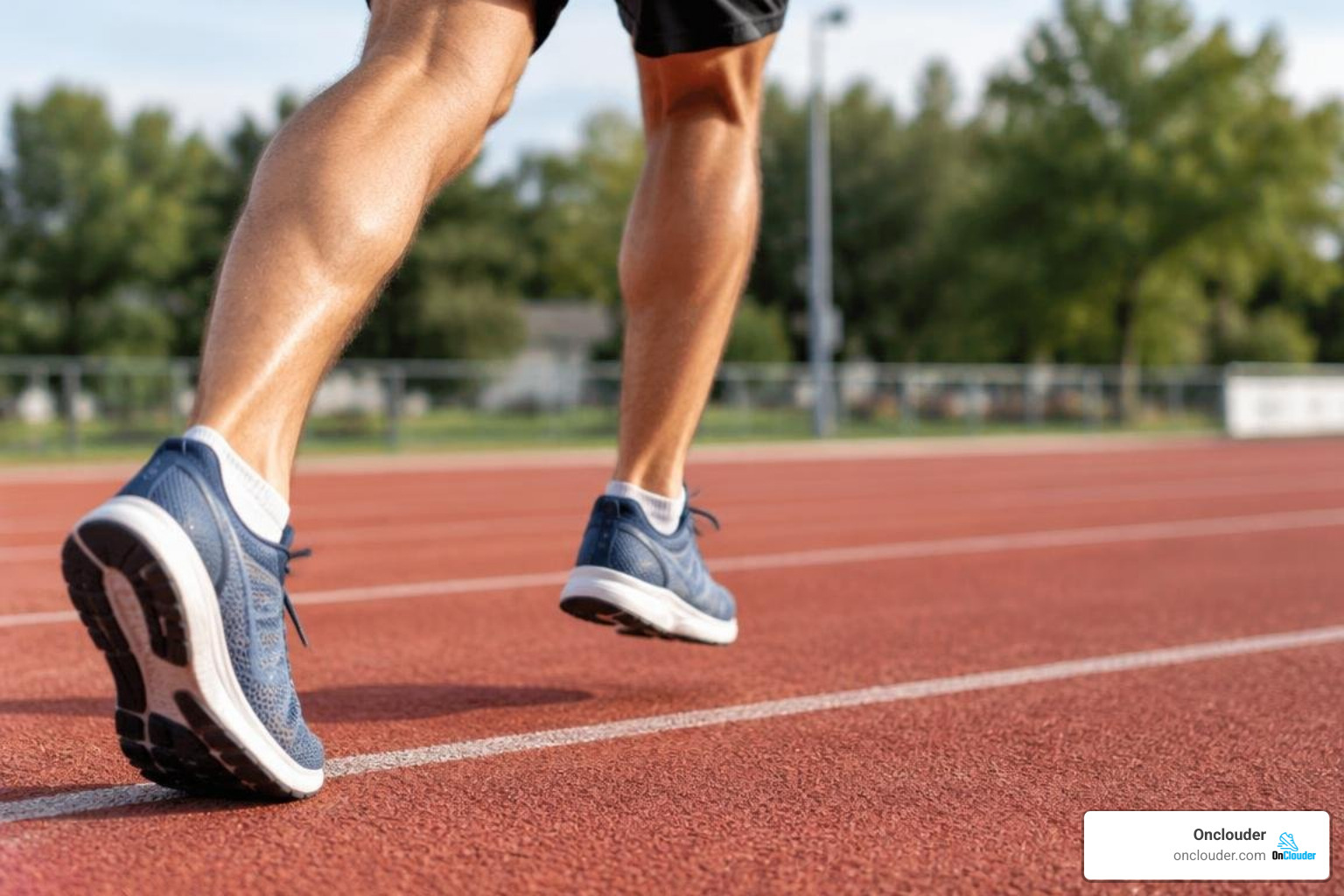
Your foot strike dictates how impact forces travel through your joints:
- Heel Strikers: Landing heel-first creates higher initial tibial impact shock and increases patellofemoral loading. Look for shoes with a 8mm–10mm drop and a stable, bevelled heel crash pad.
- Midfoot & Forefoot Strikers: Landing forward engages the triceps surae and Achilles tendon for shock absorption. A lower drop (0mm–6mm) with concentrated forefoot cushioning maximizes propulsion.
- Overpronation & Instability: Thick, soft super foams can magnify inward ankle rolling. If your ankles collapse inward under fatigue, look for super shoes with broader base geometries, subtle sidewalls, or firmer medial foam carrier inserts.
Selecting Marathon Running Shoes for Wide Feet and Flat Arches
High mileage causes the plantar fascia to fatigue, leading to natural arch flattening and foot splay late in a race. If you run with low arches, explore our curated options for flat and wide feet to avoid midfoot blisters caused by aggressive carbon plate sidewalls.
Similarly, racers with broader forefeet should consult our wide toe box running shoe guide to find models featuring accommodating uppers, breathable knit zones, and supportive midfoot locks that prevent black toenails over 26.2 miles.
Sizing, Fit, and Injury Prevention Checklist
A poorly fitted super shoe will undermine your training. Repetitive micro-trauma from ill-fitting shoes frequently causes iliotibial band syndrome, plantar fasciitis, and medial tibial stress syndrome. Before buying, check our multi-brand guide to sizing across major running brands.
Evaluating Daily Trainers vs Dedicated Marathon Running Shoes
We advise against doing all your training in carbon-plated racers. Stiff plates and hyper-responsive foams alter muscle engagement, which can leave stabilizing tissues underprepared if used on every easy run.
Instead, build a balanced rotation. Complete your recovery runs, tempo blocks, and base mileage in durable workhorses from our list of the best marathon training shoes of 2026. High-mileage runners tackling big training blocks often rely on the plush high-mileage cushioning in the Cloudmonster 3 to absorb impact during 20-mile preparation efforts before switching to plated racers on race day.
Proper Fitting and Blister Prevention Protocol
Follow these field-tested checks during your fitting sessions:
- Fit Late in the Day: Feet expand by up to half a size after standing and exercising; always try shoes on in the late afternoon.
- Check Thumb-Width Clearance: Ensure a full thumb’s width (1.2 to 1.5 cm) of space between your longest toe and the front of the shoe to account for downhill descents and forward slide.
- Lock the Heel: Confirm the heel cup grips without slippage. Use a runner’s loop (heel lock lace) if you detect vertical movement.
- Match Your Socks: Always fit shoes wearing the exact technical running socks you plan to use on race morning.
- Test Midfoot Width: Ensure your arch does not spill over the edge of the carbon plate or rub against stiff midsole cutouts.
Frequently Asked Questions About Marathon Footwear
How many miles should I put on marathon shoes before race day?
We recommend logging 15 to 30 miles in your racing shoes before toeing the starting line. Use them for one 10-mile to 13-mile progression run, a few marathon-pace intervals, and brief strides. This confirms the upper causes no hotspots, allows your calves to adapt to the plate’s stiffness, and preserves the foam’s peak bounce for race day.
Can recreational marathoners benefit from carbon-plated super shoes?
Yes. While elite runners gain speed through enhanced propulsion at high velocities, recreational runners (3:30 to 4:30+ marathoners) benefit substantially from muscle preservation. The thick foam cushioning dampens ground impact, reducing late-race leg fatigue and soreness over 4+ hours on the road.
What is the ideal heel-to-toe drop for a marathon?
There is no single “best” drop for every runner:
- 8mm to 10mm Drop: Best for heel strikers and runners prone to Achilles tendon or calf tightness, as it reduces strain on the lower leg.
- 4mm to 6mm Drop: Ideal for midfoot strikers seeking a balanced, natural rolling transition.
- 0mm Drop (Zero-Drop): Places higher demand on the calves and Achilles while distributing impact evenly across the hips and knees.
Conclusion
Finding the right marathon footwear comes down to matching your personal biomechanics, foot shape, and race pace to modern foam and plate technology. Prioritize upper comfort, secure heel lockdown, and stable cushioning above all else. When you are ready to dial in your race setup, read our hands-on review testing marathon running shoes for 26.2 performance to step up to the start line with complete confidence.
References
Saunders PU, Pyne DB, Telford RD, Hawley JA. “Factors affecting running economy in trained distance runners..” Sports medicine (Auckland, N.Z.), 2004. PMID 15233599.