Wide Toe Box Ladies Shoes: Room for Your Toes, Without a Loose Fit
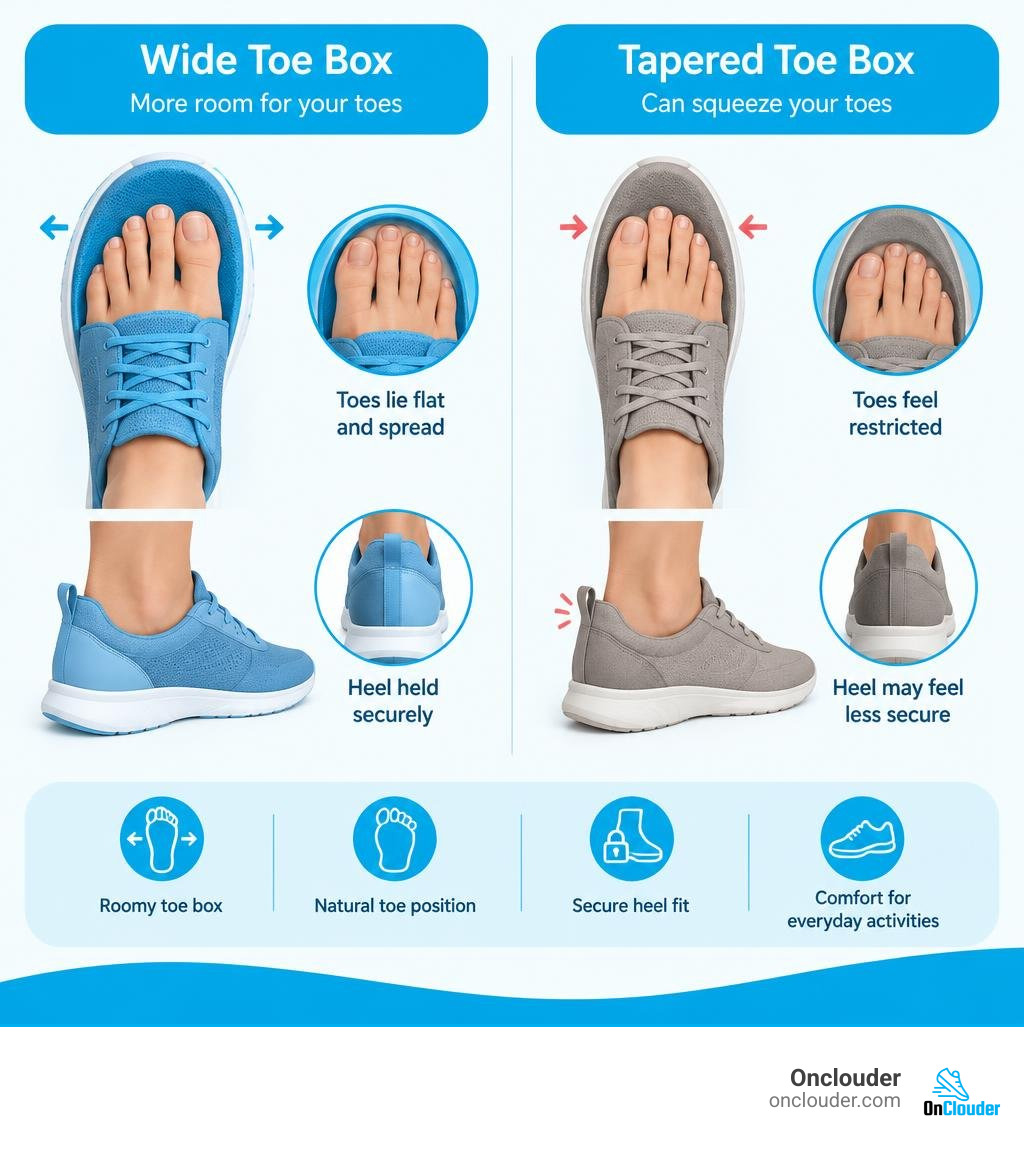
Whether for daily activities, walking, running, or simply dressing well, you should always choose footwear that keeps your heels secure without cramping your toes.
This is why a wider toe box provides more space for your feet; conversely, such shoes might feel too loose for those with narrower feet. Ultimately, the best choice is a shoe that fits well and offers superior comfort.
If you feel that your toes are being compressed, a wider toe box is the only solution to alleviate this pressure. It is essential that the shoe fits your foot correctly—neither too tight nor too loose—and making the right choice will ensure your feet remain comfortable even after prolonged walking.
Learn more about wide toe box ladies shoes:
- broad toe shoes
- broad toe leather shoes
- broad toe running shoes
Why Wide Toe Box Ladies Shoes Are Essential for Foot Health
For years, tapered, triangular-shaped footwear has been the preferred choice for women.
However, subjecting our feet to such shoes on a daily basis causes the metatarsals to compress.
This restricts natural movement and leads to underutilization of the intrinsic foot muscles.
Switching to proper, open-style footwear can help restore natural biomechanics.
This allows the metatarsals to function effectively, enabling the foot to bear weight in the correct manner.
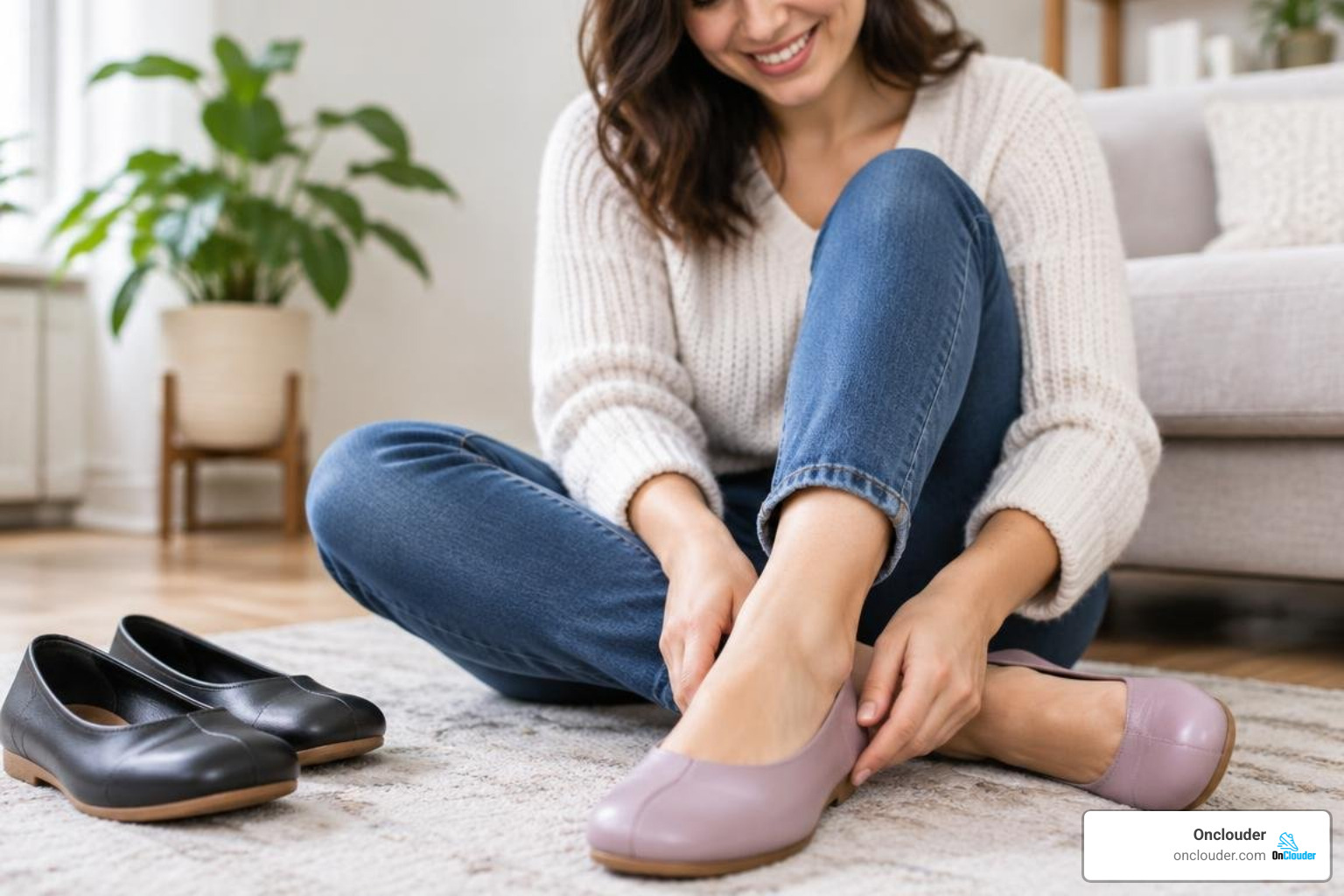
A spacious toe area allows better microcirculation through the small blood vessels of the forefoot, lowering the risk of numbness, cold extremities, and chronic fatigue. Furthermore, giving your toes room to flex and grip activates the deep intrinsic foot muscles—the stabilizing network that conventional, restrictive footwear tends to weaken over time. According to the American Podiatric Medical Association, tight, narrow footwear is one of the leading contributors to bunion formation and progression, underscoring why forefoot space matters for long-term foot health. As we highlight in An Essential Guide to Wide Toe Box Shoes, restoring natural foot shape directly encourages dynamic muscular strength and joint stability.
Natural Toe Splay and Postural Alignment
When you take a step, your toes naturally splay outward to form a stable base of support. The great toe (hallux) serves as the primary anchor for directional balance and propulsion. In tapered shoes, the big toe is forced inward toward the second toe, destabilizing the entire kinetic chain.
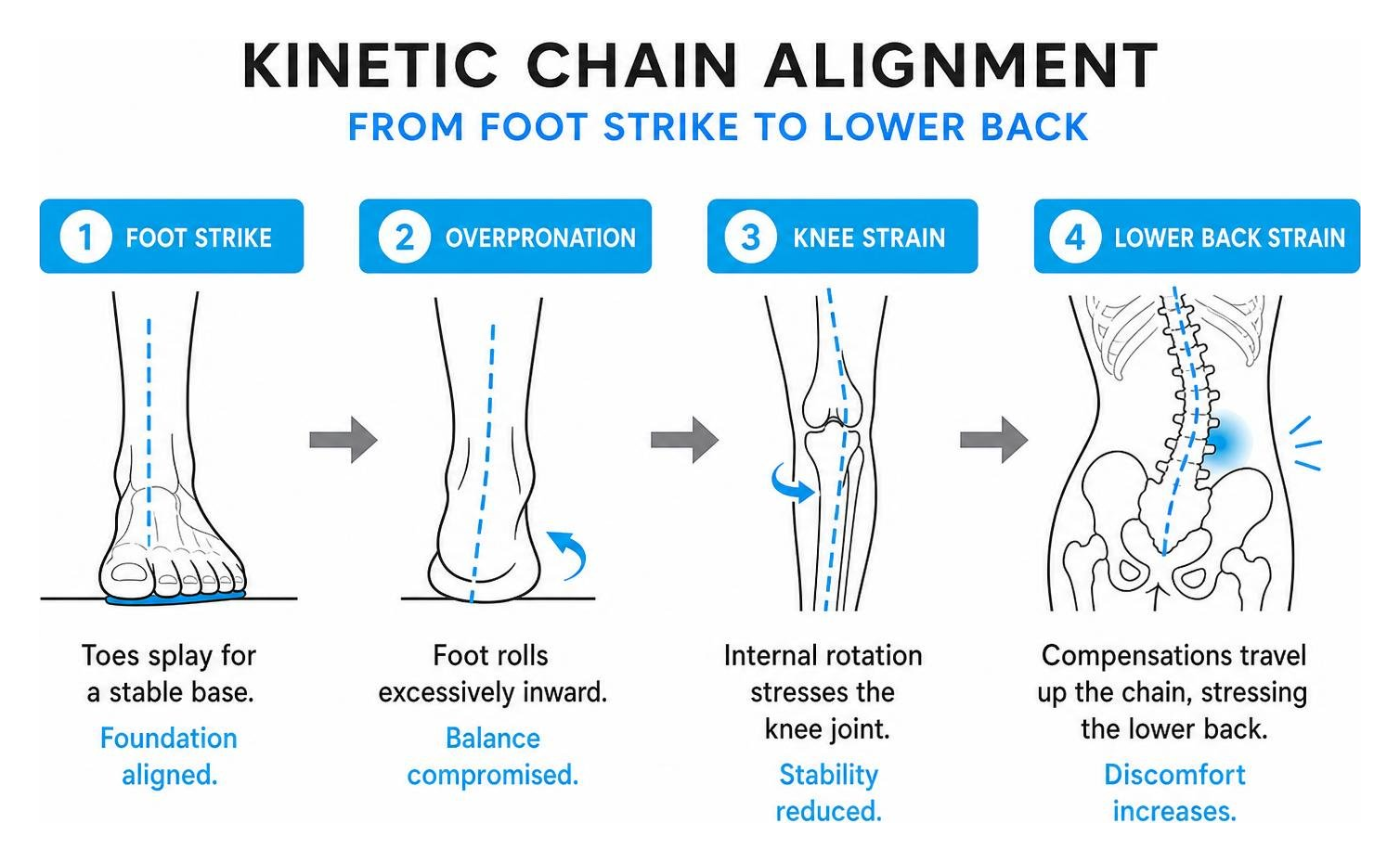
This inward crowding compromises your body’s foundation:
- Toe Splay Impairment: The big toe loses its anchoring leverage during push-off.
- Overpronation Compensation: To stabilize the gait, the foot compensates by rolling excessively inward.
- Ascending Joint Strain: Internal rotation twists the ankle and places torsional stress on the knee joint.
- Pelvic and Spinal Misalignment: The pelvis tilts forward or unevenly, creating chronic strain across the hips and lumbar spine.
By switching to footwear with an anatomically wide front, your toes spread across the ground, stabilizing your stance, reinforcing your arch structure, and relieving joint strain up through the kinetic chain.
Relief for Bunions, Hammertoes, and Morton’s Neuroma
Tight-fitting shoes do not exclusively originate structural bone deformities, but they accelerate and aggravate them significantly. Shoes with narrow, pointed fronts press continuously against the first metatarsophalangeal joint, irritating the protective joint capsule and inflaming the underlying bursa.
A wide forefoot brings substantial clinical relief for three common conditions:
- Bunions (Hallux Valgus): Extra width eliminates compressive forces on the outer bunion joint, stopping friction and preventing progressive joint inflammation.
- Hammertoes: Vertical volume alongside horizontal width lets curled digits sit without painful rubbing against the shoe’s ceiling, preventing painful corns and calluses.
- Morton’s Neuroma: Space between the metatarsal bones prevents the pinching of interdigital nerves, soothing sharp, burning forefoot pain.
Finding functional relief does not require sacrificing personal style. In our curated collection of 10 Womens Wide Toe Box Shoes That Wont Make You Cry, we explore elegant designs that provide ample forefoot clearance while looking polished.
Understanding the Difference: Wide Toe Box vs. Wide-Width Footwear
A common point of confusion is the distinction between a “wide-width” shoe (such as a standard D or EE width) and an “anatomical wide toe box” shoe. Sizing up in width scales the entire shoe proportionally, often leaving you with a loose heel and slipping ankles. In contrast, an anatomical shoe provides targeted volume at the front while maintaining a snug rearfoot hold.
| Footwear Category | Forefoot Profile | Midfoot & Instep | Heel Fit | Best Suited For |
|---|---|---|---|---|
| Standard Width (B) | Tapered, symmetric point | Standard volume | Narrow / Standard | Narrow, tapered feet |
| Wide Width (D / EE) | Proportionally scaled out | Broad volume | Broad / Loose | Overall wide, high-volume feet |
| Anatomical Wide Toe Box | Foot-shaped, fan-like splay | Contoured arch fit | Snug, locked heel | Bunions, toe splay, narrow heels |
To dive deeper into standard sizing versus anatomical lasts, check out Everything You Need to Know About Wide Toe Box Shoes.
Forefoot Volume vs. Heel Lock
Women commonly experience a wide forefoot paired with a relatively narrow heel. When wearing traditional wide-width shoes, the entire silhouette widens, which can cause annoying heel slippage, ankle instability, and painful Achilles blisters.
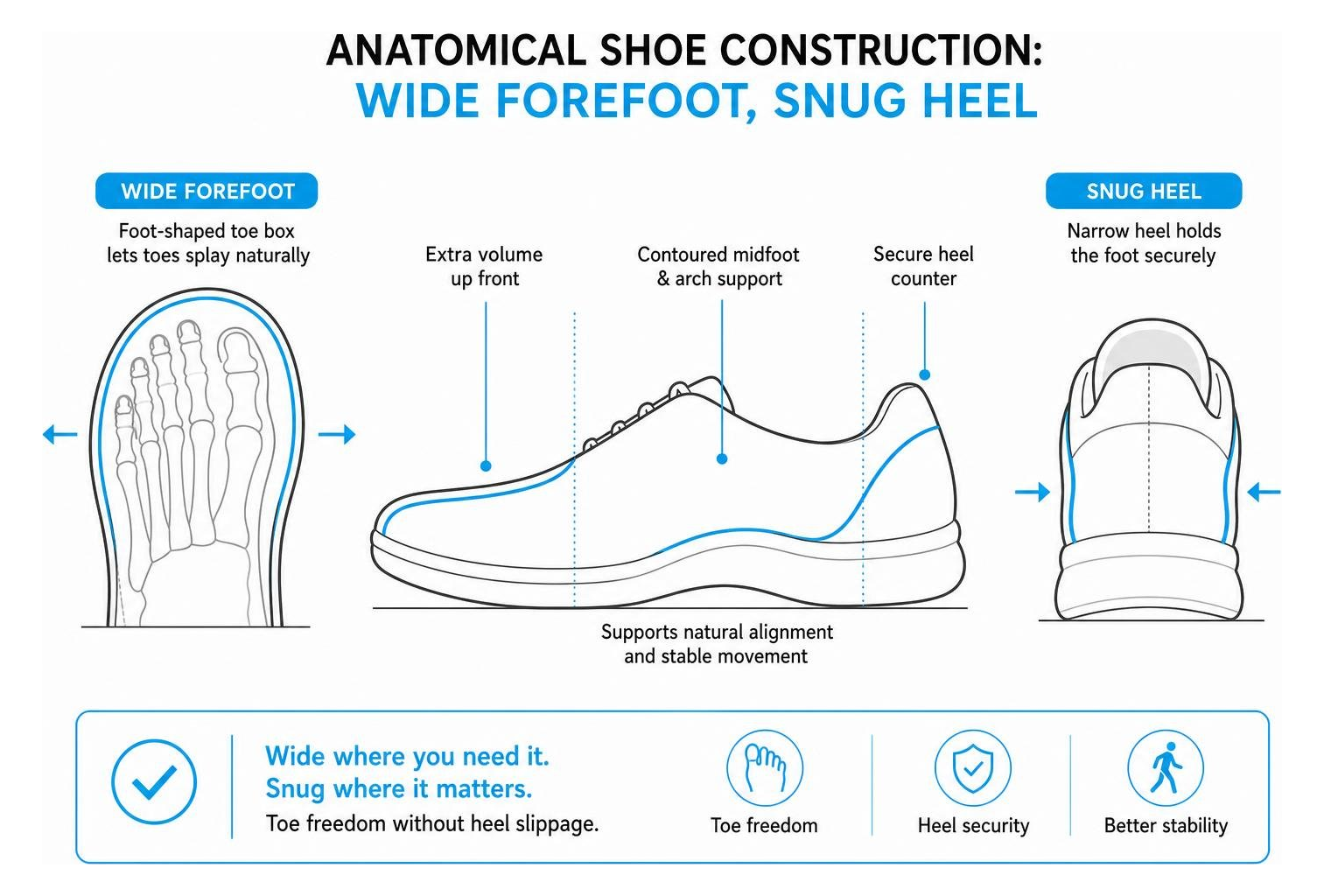
Brands engineered specifically for anatomical comfort often build footwear with an E to EE forefoot paired with a secure D-width heel counter. This targeted geometry ensures toes have freedom to spread while the rearfoot remains locked in place.
Barefoot Minimalist vs. Cushioned Ergonomic Soles
Choosing natural footwear does not mean you have to walk on razor-thin soles. Anatomical shoes sit along a broad spectrum:
- Barefoot / Minimalist: Features ultra-thin soles (3–6 mm), zero heel-to-toe drop, and no artificial arch support. Designed to maximize ground feedback and strengthen foot muscles.
- Transitional / Balanced: Features moderate stack heights (12–18 mm) with flexible cushioning and zero-to-low drop platforms for day-to-day comfort.
- Maximalist Ergonomic: Combines foot-shaped toe boxes with plush, shock-absorbing midsole foam (25–35+ mm) and structured arch support, ideal for long shifts on concrete or high-mileage road running.
Whether you prefer thin, responsive soles or plush cushioning, prioritizing foot-shaped geometry ensures comfort across any stack height.
Top Styles for Work, Dress, Athletic, and Casual Occasions
Gone are the days when foot-friendly footwear looked like bulky medical clogs. Today, innovative designers craft chic silhouettes that seamlessly pair with boardrooms, weekend markets, and running trails.
If you are looking for elevated styles that pair effortlessly with tailored suits or evening dresses, explore The Ultimate Guide to Wide Toe Box Dress Shoes to find refined, pain-free options.
Styling Wide Toe Box Ladies Shoes for Professional and Casual Outfits
Building a versatile capsule wardrobe with foot-friendly footwear is simpler than ever:
- Office Tailoring: Pair square-toed block pumps or almond-shaped leather skimmers with wide-leg trousers or midi skirts for an elegant, elongated line.
- Smart Casual Loafers: Supple leather loafers featuring hidden stretch panels around the metatarsal joints pair smoothly with cropped denim and blazers.
- Elevated Flats: Explore our curated reviews on The Best Big Toe Box Womens Shoes Style Meets Spaciousness and browse A Guide to the Best Ballet Flats with Wide Toe Box for 2026 to discover flats that offer ample volume without pinching.
- Sleek Ankle Boots: Look for Chelsea boots crafted from buttery leather with round or anatomical toe boxes, offering all-day comfort under autumnal coats.
For dependable comfort selections, look for collections that integrate orthotic arch engineering seamlessly into dressy styles.
Performance Athletic Trainers and Walking Footwear
In athletic performance, toe crowding can cause subungual hematomas (black toenails), plantar fascia strain, and blister formation. During extended runs or walking shifts over 10,000 steps, feet naturally swell and expand.
Top athletic brands build road and trail runners on dedicated women’s lasts—accounting for narrower heels, higher insteps, and wider forefoot splay. If you are curating everyday walking sneakers that look stylish on city streets, read our breakdown of 10 Best Casual Shoes with a Wide Toe Box That Dont Look Like Orthopedic Shoes. Dedicated lifestyle comfort lines highlight how flexible forefoot grooves and cushioned footbeds combine for easy everyday wear.
How to Properly Fit and Test Natural Shape Footwear
Finding the right anatomical fit requires looking beyond standard numerical sizing. Because feet change shape, swell throughout the day, and lengthen under body weight, taking a systematic approach to fit ensures all-day comfort.
For comprehensive sizing principles, consult our Wide Toe Box Shoes Complete Guide.
Fitting and Sizing Wide Toe Box Ladies Shoes for Maximum Comfort
Follow this five-step checklist when trying on new footwear:
- Measure in the Late Afternoon: Feet naturally expand and flatten slightly toward the end of the day. Always measure when feet are at their maximum volume.
- Perform the Insole Stand Test: Remove the shoe’s insole, place it flat on the floor, and stand on it with full body weight. If your toes spill over the sides of the foam liner, the shoe’s upper will compress your feet.
- Verify the Thumb-Width Rule: Ensure there is roughly one half-inch (a thumb’s width) of clearance between your longest toe and the front edge of the shoe to accommodate forward foot slide.
- Conduct the Toe Wiggle & Flex Test: Fasten the laces or straps, stand upright, and splay all ten toes. You should be able to lift and spread your digits freely without feeling sideways pressure from the upper.
- Check Heel Retention: Walk across a hard, flat surface. Your heel should remain seated in the heel counter with zero upward slip, while your forefoot stays relaxed and unconstrained.
Essential Comfort Features: Arch Support, Cushioning, and Flexible Uppers
A spacious front is only one component of a comfortable shoe. The overall construction of the upper, midsole, and footbed determines how well the shoe supports your daily movement.
When evaluating footwear, look for these key functional elements:
- Flexible, Adaptive Uppers: Opt for premium soft-grain leathers, suede, or engineered mesh that soften and mold to your forefoot contours.
- Removable Dual-Depth Footbeds: Systems like dual-fitting insoles allow you to customize interior volume or insert custom orthotics effortlessly.
- Integrated Metatarsal Support: Footbeds with subtle metatarsal domes help spread the transverse arch, offloading ball-of-foot pressure.
- Segmented Outsole Flex Grooves: Grooves through the forefoot allow the shoe to flex smoothly at the metatarsophalangeal joints during toe-off.
Frequently Asked Questions About Roomy Forefoot Footwear
Can wide toe box footwear prevent foot deformities from worsening?
Yes. While genetic factors and ligament laxity influence the initial development of bunions and hammertoes, narrow footwear significantly exacerbates their progression. Spacious footwear eliminates compressive side pressure on the first and fifth metatarsal heads, allowing the joint capsule to decompress, reducing friction, and slowing deformity progression while easing daily discomfort.
How do I know if my shoes are too narrow across the toes?
Common signs that your shoes lack adequate forefoot room include:
- Numbness, tingling, or “pins and needles” across your third and fourth toes after walking.
- Red irritation marks, localized burning sensations, or calluses along the sides of the big or little toe joints.
- An urge to kick your shoes off immediately upon sitting down.
- Visible stretching, bulging, or wear holes where your joints push against the upper materials.
Do I need transition time when switching from conventional shoes?
If you are switching to wide toe box shoes with standard cushioning, no transition period is necessary—your feet will appreciate the space immediately. However, if you are transitioning to minimalist or zero-drop wide toe box shoes, introduce them gradually over 2 to 4 weeks. This allows your Achilles tendons, calf muscles, and plantar tissues time to lengthen and adapt safely to the un-elevated heel platform.
Conclusion
Your feet are complex structures designed to provide balance, absorb impact, and propel you through daily life. Constraining them in narrow, restrictive shoes can compromise joint alignment and cause lasting discomfort. Choosing footwear with an anatomically wide front respects your natural foot mechanics, supporting healthy posture and all-day ease.
At Onclouder, we rigorously test footwear to help you make informed decisions for your comfort and style. Whether you need sleek office flats, cushioned athletic trainers, or supportive walking shoes, you never have to trade aesthetics for healthy, happy feet. Ready to experience total forefoot freedom? You can explore top barefoot and natural toe box footwear comparisons to find the ideal match for your active lifestyle.