Understanding Supination: Why Your Feet Roll Outward
Supination, or underpronation, isn’t just a fancy biomechanical term; it’s a specific way your body interacts with the pavement. When we run, our feet are supposed to roll slightly inward (pronation) to distribute the impact of hitting the ground. However, for supinators, the foot remains tilted outward. This means the smaller toes and the outer edge of the foot take on the brunt of the work, which is why finding the best running shoes for supinators is so critical for injury prevention.
Most of the running world focuses on overpronation (rolling too far inward), but being an underpronator presents its own set of challenges. Because the foot doesn’t roll inward enough, it stays rigid. This rigidity makes the foot a poor shock absorber. Instead of the arch collapsing slightly to soak up the “thud,” that energy travels straight up your tibia and into your knees and hips.
Common injuries associated with this outward roll include frequent ankle sprains (because the ankle is already tilted toward a “roll” position), shin splints, and the dreaded plantar fasciitis. According to our research, supinators represent the minority of runners, which often makes finding specialized advice a bit harder—but that’s exactly why we’ve compiled this guide.
Identifying Underpronation Through Wear Patterns
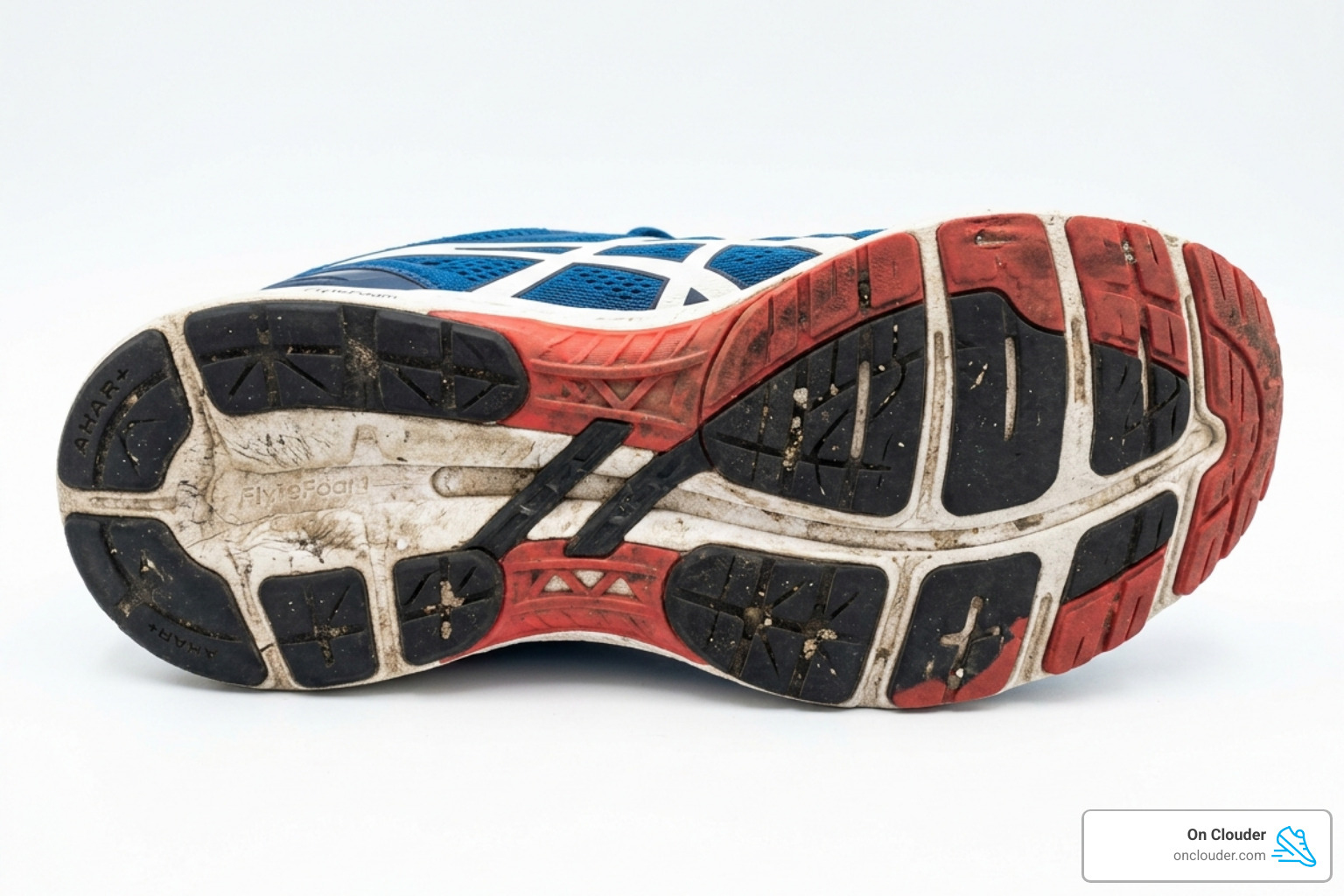
The easiest way to diagnose yourself at home is to play detective with your old gear. Flip your current running shoes over and look at the outsoles.
If you are a supinator, you will see excessive wear on the outer edge of the shoe, stretching from the height of the heel all the way to the forefoot. While a neutral runner will show wear in an S-shaped pattern from the outer heel to the big toe, a supinator’s wear pattern stays strictly on the “lateral” (outside) side.
Outsole durability is a major factor here. Because supinators put so much pressure on such a small strip of rubber, they tend to burn through shoes faster. If you notice the foam is compressing or the rubber is balding only on that outer strip, you’ve likely found your answer. This gait often coincides with a heavy heel strike or a very rigid forefoot strike, both of which demand specific shoe features to manage. For more on how foot shape influences your needs, check out our tag/high-arches section.
The Connection Between High Arches and Supination
There is a very strong correlation between having high arches and being a supinator. When you have a high, rigid arch, your foot is less likely to flatten out and roll inward during the gait cycle. This “inflexible instep” keeps the weight on the outside of the foot.
You can test this with the “Wet Test”:
- Wet the bottom of your foot.
- Step onto a piece of brown paper or a dark bath mat.
- Look at the imprint.
If you see your heel and the ball of your foot, but only a very thin line (or nothing at all) connecting them along the outside, you have high arches. This lack of a midfoot imprint suggests that your arch isn’t touching the ground, which almost always leads to underpronation. To help support these high peaks, many runners find relief in The Top High Arch Support Insoles Reviewed to help fill that gap and distribute pressure.
Key Features to Look for in the Best Running Shoes for Supinators
When we go into the lab or out on the road to test shoes, we look for a specific “DNA” that makes a shoe supination-friendly. It’s not about “correcting” the foot like a stability shoe does; it’s about accommodating it.
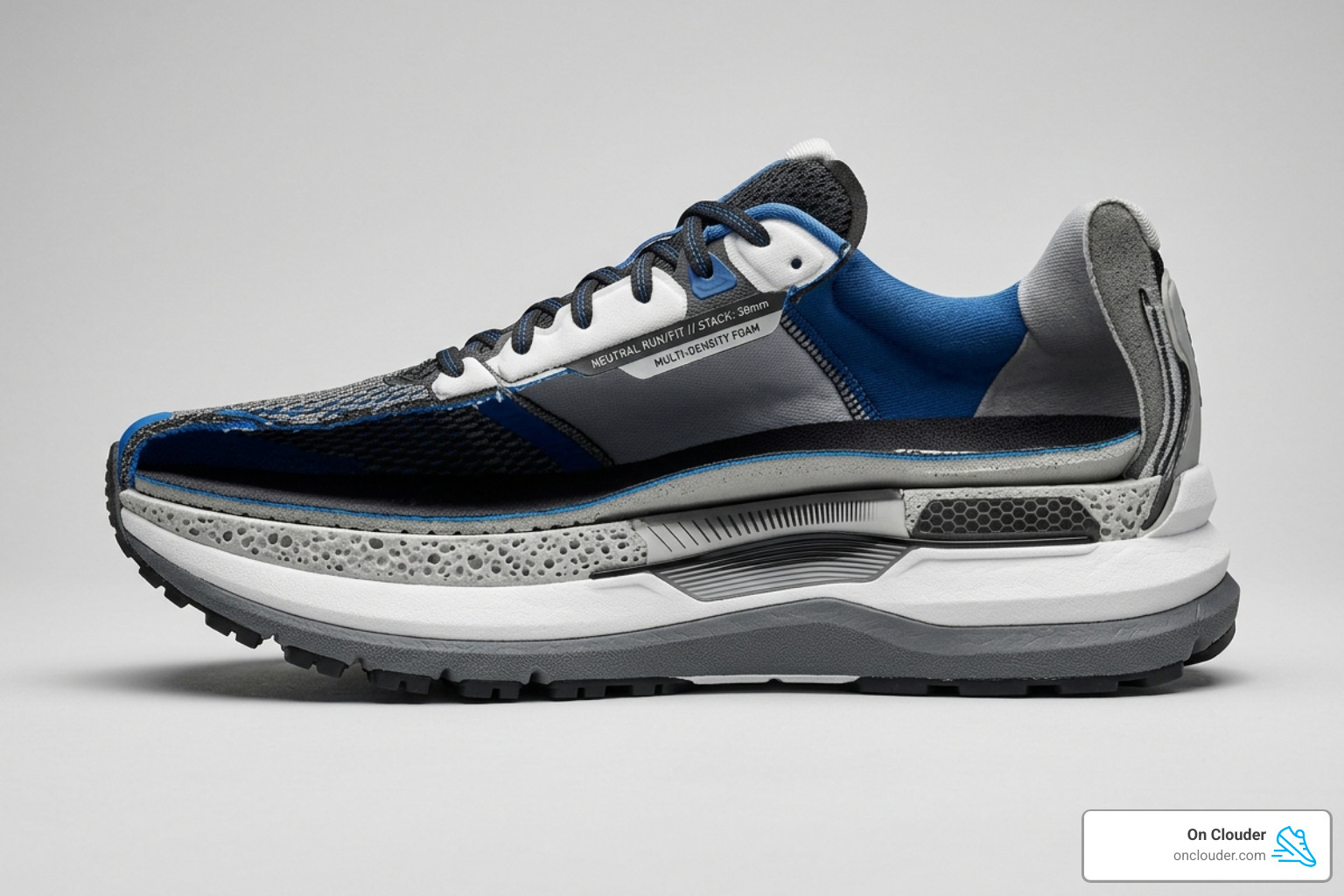
The best running shoes for supinators usually feature a combination of high-stack heights and rocker geometry. A “rocker” is a curved sole that helps the foot transition from heel to toe more easily. Since supinators have rigid feet, the shoe does the “rolling” work that the foot refuses to do. We also look for a wide platform. For example, the ASICS Novablast 5 features a massive 122.3 mm heel platform, which provides a stable base that resists the foot’s urge to tilt outward.
Why Neutral Design is Essential for the Best Running Shoes for Supinators
This is the most important rule for supinators: Avoid traditional stability shoes.
Stability shoes are designed for overpronators. They often feature “medial posts”—hard pieces of plastic or firmer foam on the inside of the arch. These posts are designed to stop the foot from rolling inward. If a supinator wears these, the shoe will literally push their foot even further onto the outer edge, significantly increasing the risk of a rolled ankle.
Instead, look for a “neutral” design. These shoes have non-prescriptive midsoles, meaning they don’t try to dictate where your foot goes. They provide a centered, balanced ride that allows for whatever natural inward roll you do have. You can explore more options in our Tag/Neutral Running Shoes and Tag/Neutral Running guides.
The Importance of Maximum Cushioning and Energy Return
Since your feet aren’t absorbing shock, your shoes have to do it for you. This is where “Superfoams” come into play. Modern foams like Saucony’s PWRRUN PB or New Balance’s Fresh Foam X are game-changers.
Statistics show that shoes like the Saucony Endorphin Elite 2 can achieve an energy return of over 82%, which means less fatigue for your muscles. For supinators, we want “maximalist” cushioning—a high stack of soft foam that acts as a pillow for every landing. This impact protection is vital for preventing stress fractures and shin splints. If you struggle with both high arches and specific foot shapes, our Best Shoes For Flat Feet High Arches 2026 Guide offers deeper insights into balancing these needs.
Top Recommended Running Shoes for Supinators in 2024/2025
Choosing the best running shoes for supinators depends on what you’re doing. You wouldn’t wear a tuxedo to the gym, and you shouldn’t wear a heavy recovery shoe for a 5K sprint. Here is how the top models stack up based on our testing and lab data.
| Model | Heel Stack | Drop | Weight (Men’s 9) | Best Feature |
|---|---|---|---|---|
| ASICS Novablast 5 | 41.5 mm | 8 mm | 9.0 oz | Ultra-wide stable platform |
| NB 1080v14 | 39 mm | 6 mm | 10.5 oz | Soft Fresh Foam X |
| Nike Winflo 11 | 37.5 mm | 10 mm | 11.4 oz | Affordable React foam |
| Saucony Endorphin Pro 4 | 40 mm | 8 mm | 7.7 oz | Carbon-plated speed |
| Hoka Clifton 9 | 32 mm | 5 mm | 8.7 oz | Famous meta-rocker |
Best Daily Trainers for Consistent Support
For your everyday miles, the ASICS Novablast 5 is currently our top pick. It’s a “supportive neutral” shoe. While it doesn’t have corrective posts, its platform is nearly as wide as dedicated stability shoes (122.3mm in the heel). This width creates a “cradle” for the foot, making it very hard for your ankle to wobble outward.
The Nike Winflo 11 is another fantastic daily option, especially for those on a budget. It uses Nike’s React foam, which is known for being incredibly durable. For supinators who tend to grind down the outer edge of their shoes, the Winflo’s resilient cushioning holds its shape longer than softer, “mushier” foams.
Finally, the Brooks Glycerin 22 remains a gold standard. It features DNA Loft v3 foam, which is nitrogen-infused. This makes it incredibly light but provides a “bottomless” feel of cushioning that protects the lateral edge of the foot during long, slow miles.
Elite Racing Options for Underpronators
When it’s time to chase a PR, supinators can still benefit from “Super Shoes.” The Saucony Endorphin Pro 4 is an excellent choice because it uses a combination of PWRRUN PB and HG foams. Our research shows it offers a forgiving but explosive ride. Because it has a balanced, neutral geometry, it won’t interfere with your outward-leaning gait, but the carbon plate will provide the propulsion you need.
Another heavy hitter is the Nike Alphafly 3. It’s incredibly stiff (89.3% stiffer than the average running shoe), which might sound scary for a rigid-footed supinator. However, the Zoom Air units in the forefoot provide massive impact protection right where supinators often land, making it a surprisingly viable race-day weapon.
Selecting the Best Running Shoes for Supinators by Terrain
If you’re taking your run off-road, the Saucony Endorphin Rift is a standout. Trail running is inherently unpredictable, and supinators are at a higher risk for ankle rolls on uneven ground. The Rift features a secure, sock-like upper that “locks” the foot in place, preventing that outward slide on technical descents.
For those who move between pavement and light trails, look for shoes with a “road-to-trail” outsole. You want a lug depth that provides grip without feeling clunky on the road. Always prioritize a neutral trail shoe; trail-specific stability features can be even more aggressive and dangerous for supinators than road versions. You can find more terrain-specific advice in our tag/supination archive.

How to Optimize Your Running Form and Shoe Longevity
Even the best running shoes for supinators won’t last forever, and they can’t fix a total lack of mobility. To get the most out of your gear, we recommend a few “pro tips.”
First, rotate your shoes. Because supinators compress the outer edge of the midsole so heavily, the foam needs time to “decompress” and return to its original shape. If you run in the same pair every day, the foam stays squashed, and the shoe’s lifespan drops. Aim for a 48-hour window between uses of the same pair.
Second, focus on your landing. While you can’t easily change your biology, practicing a midfoot or “ball-of-foot” landing can help. This allows the foot to engage more of its natural structures rather than slamming the heel into the ground at an angle.
Lastly, don’t ignore your Achilles. Supinators often have very tight calves and Achilles tendons because the foot doesn’t flex as much as it should. Regular stretching and mobility work can reduce the strain on your plantar fascia. For those who also deal with flat feet issues, see our guide on No Arch No Problem Best Running Shoes For Flat Feet.
Frequently Asked Questions about Running with Supination
Can supinators wear stability shoes?
In short: No. Stability shoes are designed with a “medial post”—a firm wedge on the inside of the shoe. This is meant to stop overpronators from rolling inward. If you supinate, this wedge will act like a ramp, pushing your foot even further toward the outside. This significantly increases your risk of lateral ankle sprains and stress fractures. Always stick to neutral shoes. If you want to see what stability shoes look like to ensure you’re avoiding them, check out The 5 Best Running Shoes For Flat Feet Overpronation 2026 Guide.
How often should supinators replace their running shoes?
Most experts recommend replacing shoes every 300 to 500 miles. However, supinators should watch the “wear tilt.” If you place your shoes on a flat table and they visibly lean outward, they are “shot.” Running in tilted shoes will force your body into a supinated position even when you aren’t moving, which can lead to knee and hip pain. Expect to replace your shoes every six months if you are a frequent runner.
What are the best exercises to help with underpronation?
Focus on three areas:
- Ankle Mobility: Use a resistance band to practice “inversion” and “eversion” (moving the foot side to side).
- Calf Flexibility: The Achilles stretch is your best friend. Stand with your toes against a wall and your heel on the ground to lengthen the posterior chain.
- Glute Strength: Strong glutes help control the rotation of your leg, preventing the entire limb from bowing outward.
Conclusion
Finding the best running shoes for supinators is about understanding that your foot needs a “neutral partner.” By choosing shoes with high-quality cushioning, a wide base, and a rockered sole, you can overcome the lack of natural shock absorption that comes with underpronation.
At On Clouder, we believe that every runner’s gait is a unique puzzle. Whether you are training for your first 5K or your tenth marathon, the right footwear is the foundation of a pain-free life. Don’t be afraid to visit a local running store for a professional gait analysis—sometimes seeing yourself on a treadmill is the “aha!” moment you need.
Ready to find your next pair? Dive deeper into our supination resource archive to see how different brands stack up in neutral performance. Happy running!