Why the Right Material Makes or Breaks High Arch Support
Gel insoles for high arches are one of the most popular solutions for people dealing with foot pain, fatigue, and instability caused by an elevated arch. But are they actually the best option — or do foam or rigid supports work better for your feet?
Here’s a quick answer:
| Material | Best For | Key Benefit |
|---|---|---|
| Gel | Dress shoes, daily wear, versatile use | Soft cushioning, slim profile, shock absorption |
| Memory Foam | All-day standing, wide shoes | Pressure relief, custom molding |
| Semi-Rigid EVA | Running, hiking, athletic shoes | Structural support, motion control |
| Carbon Fiber | Long-distance running | Energy return, lightweight stability |
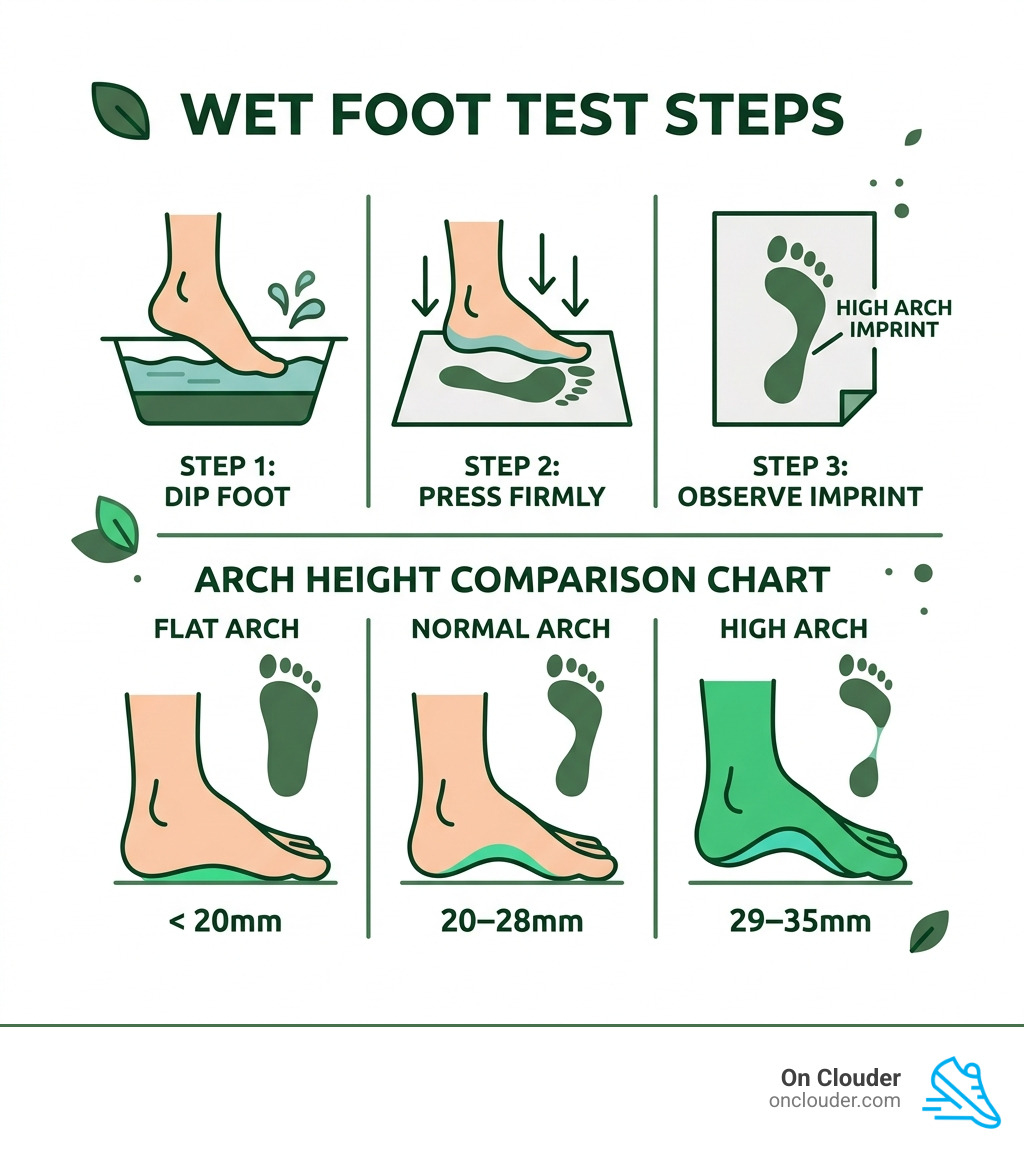
High arches — typically defined by an arch height of 29–35mm from base to peak — put extra pressure on your heel and the ball of your foot. This can lead to supination (your foot rolling outward), plantar fasciitis, and heel pain. The material of your insole directly affects how well it addresses these issues.
Not all insoles are built the same, and the wrong material can make your symptoms worse instead of better.
I’m Faisal S. Chughtai, a footwear comfort specialist who has spent years testing and comparing gel insoles for high arches across different shoe types and activities. In this guide, I’ll walk you through exactly how each material stacks up so you can find what actually works.
Understanding Gel Insoles for High Arches vs. Other Materials
When we talk about support for a high arch (also known as a cavus foot), the conversation usually revolves around three main categories: gel, foam, and rigid materials. Each has a specific “job” to do.
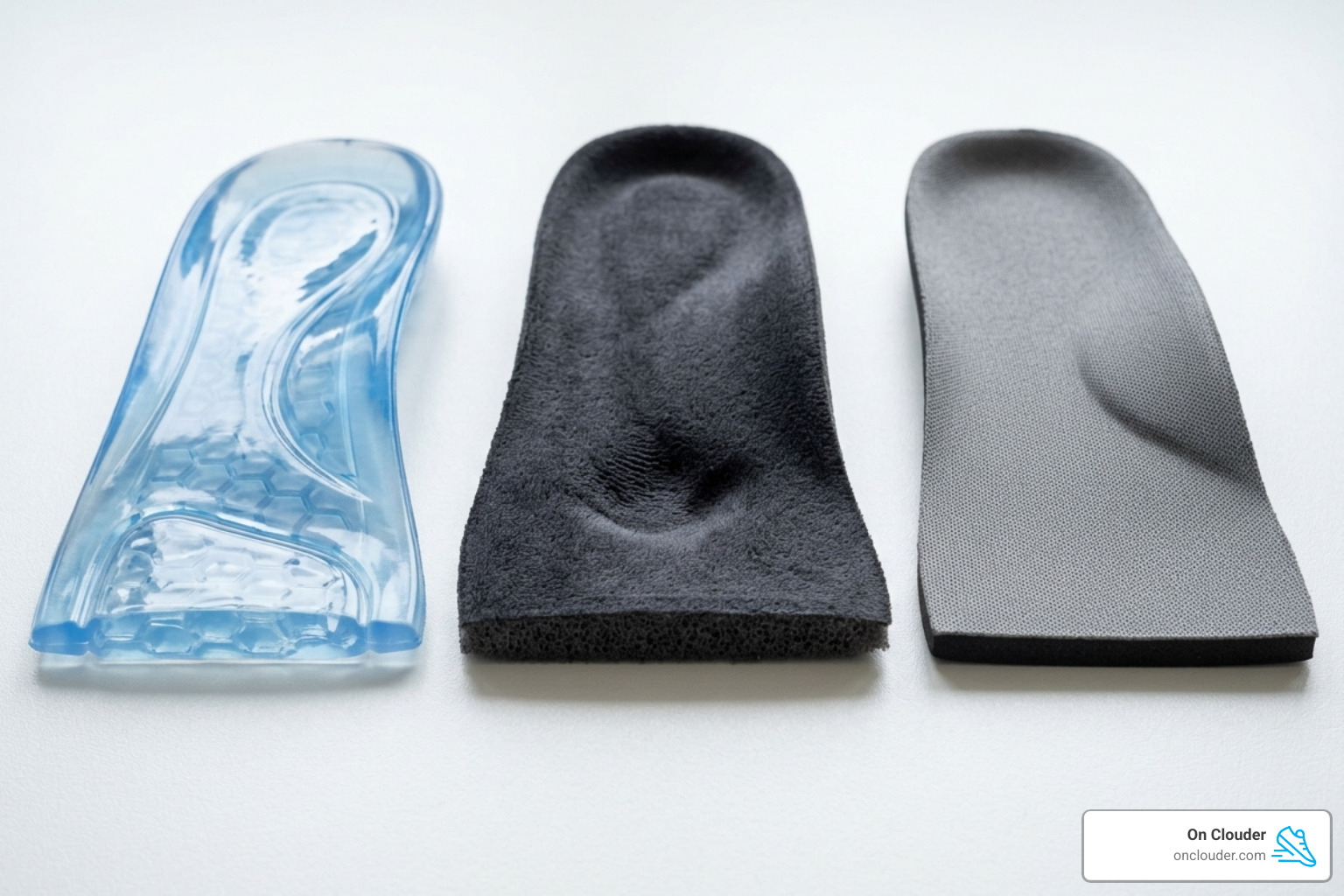
Gel insoles for high arches are typically made from Thermoplastic Elastomer (TPE) or medical-grade silicone. They are prized for their “squish factor” and their ability to absorb impact. Unlike rigid plastic, gel moves with your foot. Some advanced designs even use a dual-density approach—where a firmer blue gel provides the structural arch lift while a softer clear gel cushions the heel.
The Material Breakdown
- TPE Gel: This is the most common material in gel insoles high arches users love. It’s highly durable, washable, and excellent at dampening the “thud” of your heel hitting the pavement.
- Memory Foam: Some premium orthotics feature up to 43% more memory foam in the forefoot. This is ideal for those who feel like they are walking on marbles, as it custom-molds to the unique pressure points of your high arch.
- Semi-Rigid EVA: Ethylene-vinyl acetate (EVA) is a firm, foam-like plastic. It’s often used in the “shell” of an insole to provide the 29–35mm of height needed to actually reach a high arch.
- Carbon Fiber: Found in high-end running insoles, this material provides a “spring-back” effect. It’s incredibly thin but won’t collapse under the weight of a heavy stride.
Choosing between these often comes down to the “give” you need. If you want a “perfect cushioning embrace,” gel is your go-to. If you need structural realignment to stop your ankles from rolling, you might need a hybrid of a semi-rigid base with a gel overlay. For a deeper dive into making this choice, check out our guide on How To Choose The Best Insoles For Foot Pain And Arch Support.
| Feature | Gel Insoles | Foam/Memory Foam | Rigid/Semi-Rigid |
|---|---|---|---|
| Primary Goal | Shock Absorption | Pressure Relief | Structural Support |
| Durability | High (Washable) | Moderate (Can flatten) | Very High |
| Profile | Slim/Low Volume | High Volume | Varies |
| Best Activity | Walking/Standing | Casual Wear | Running/Hiking |
Benefits of Gel Insoles for High Arches in Dress Shoes
One of the biggest struggles for those with high arches is finding support that fits into tight-fitting dress shoes or loafers. Traditional orthotics are often too bulky, lifting your heel right out of the shoe.
This is where gel insoles for high arches shine. Specifically, “peel-and-stick” gel inserts are a game-changer. These are often only about 1.10cm thick, providing just enough lift to fill the “arch gap” without adding bulk to the toe box. Because they don’t always require a full-length bed, they can be placed precisely where your arch peaks. This versatility makes High Arch Support Gels a favorite for teachers, nurses, and office professionals who need to maintain a professional look without the agonizing foot fatigue.
Why Runners Prefer Gel Insoles for High Arches
For runners, the “high arch” problem isn’t just about comfort—it’s about injury prevention. High arches are naturally rigid, meaning they don’t absorb shock well. Every time your foot hits the ground, that energy travels straight up to your shins, knees, and lower back.
Gel provides a “responsive” cushioning that foam sometimes lacks. Many runners opt for insoles that combine a firm stabilizer cap (often made of carbon fiber or hard plastic) with gel pods in the heel and forefoot. This combination offers the best of both worlds: the stability to prevent supination and the “rebound” foam or gel to keep the legs feeling fresh over long distances. We’ve explored these dynamics further in The Top High Arch Support Insoles Reviewed.
Key Features of High-Quality Support for Cavus Foot
When you are shopping for gel insoles high arches, you aren’t just looking for “softness.” You are looking for specific engineering features that cater to the “Cavus” (high-arched) foot structure.
- Arch Height (29–35mm): This is the magic number. A standard insole usually peaks at 20-25mm. For a high arch, you need that extra height to actually make contact with the foot. If the insole doesn’t touch your arch, it isn’t supporting it.
- Deep Heel Cradle: Because high arches often lead to instability, a deep heel cup is essential. It “locks” your heel in place, preventing the outward roll (supination) that leads to ankle sprains.
- Targeted Cushioning: Look for insoles with extra padding at the heel and the ball of the foot. These are the two “landing zones” for people with high arches.
- Antimicrobial Top Fabric: High-quality insoles often use fabrics treated with copper or other antimicrobial agents to eliminate odors and reduce friction/heat buildup.
- Firm but Flexible Shell: The best gel insoles for high arches aren’t 100% “mush.” They usually have a firm, flexible shell (like the one found in PowerStep Pinnacle High Insoles | High Arch & Supination Insoles) that maintains its shape even under the pressure of a full day of walking.
How Gel Cushioning Relieves Supination and Plantar Fasciitis
If you have high arches, you’ve likely heard the terms “supination” and “plantar fasciitis” from your doctor or fellow runners. But how do gel insoles for high arches actually help?
Stopping the “Outward Roll” (Supination)
When your arch is high, your foot tends to tilt outward. This puts immense pressure on the outer edge of your foot and your smaller toes. Gel insoles with a structured lateral (outer) edge help redistribute this weight back toward the center of the foot. By filling the void under the arch, the insole provides a “platform” that prevents the foot from collapsing outward.
Protecting the Plantar Fascia
The plantar fascia is the ligament that connects your heel to your toes. In a high-arched foot, this ligament is often stretched too tight. Every step you take acts like a tug-of-war on your heel bone.
Gel cushioning acts as a shock absorber, taking the “hit” so your ligament doesn’t have to. Furthermore, by supporting the arch height, the insole prevents the ligament from overstretching. Professional-grade options, like the All-Purpose Support High Arch – Superfeet, are clinically proven to decrease fatigue and reduce the risk of these common injuries.
Practical Guide: Fitting, Breaking In, and Maintenance
Buying the right insole is only half the battle. You have to ensure they fit your lifestyle and your shoes.
The Wet Foot Test
Not sure if you actually have high arches? Try this:
- Wet the bottom of your foot.
- Step onto a flat, dry surface (like a concrete floor or a piece of heavy paper).
- Look at the footprint. If you see your heel and the ball of your foot, but almost nothing in the middle (the midfoot), you have high arches.
Trimming for a Custom Fit
Most full-length gel insoles for high arches are designed to be “trim-to-fit.”
- Step 1: Remove the existing factory liner from your shoe.
- Step 2: Place the old liner on top of the new gel insole.
- Step 3: Use a pen to trace the outline.
- Step 4: Use regular scissors to trim along the line.
- Note: Some high-end orthotics are “true-to-size” and do not require trimming, so always check the packaging!
The Break-In Period
Your feet have likely been “misaligned” for years. Forcing them into a corrected position can feel strange at first. We recommend a gradual break-in:
- Day 1: Wear them for 1 hour.
- Day 2: Wear them for 2 hours.
- Day 3-7: Gradually increase time until you can wear them all day. If you feel sharp pain, stop and consult a professional. But “weirdness” or a “full” feeling in the arch is normal during the first week. You can find more tips on this transition in our article Step Up Your Game With The Best Arch Support Inserts.
Maintenance and Lifespan
To keep your gel insoles high arches in top shape:
- Hand Wash Only: Use cool water and mild soap. Never put them in the dryer!
- Air Dry: Let them dry completely before putting them back in your shoes.
- Replacement: Most gel insoles last about 6 months with regular wear. If you notice the gel flattening or the fabric peeling, it’s time for a new pair.
Frequently Asked Questions about High Arch Support
Are gel insoles for high arches HSA/FSA eligible?
In many cases, yes! Because high arch insoles are considered “orthotics” used to treat medical conditions like plantar fasciitis or supination, they are often eligible for reimbursement through Health Savings Accounts (HSA) or Flexible Spending Accounts (FSA). Always check with your specific provider and keep your receipt.
How do I know if I need gel or rigid arch supports?
It depends on your activity. If you are standing all day on hard floors (like a nurse or retail worker), the shock absorption of gel insoles for high arches is usually better. If you are a heavy-duty hiker or have severe “foot collapse,” you may need the structural “shell” of a semi-rigid or rigid insole to keep your bones aligned.
Can I use gel inserts in sandals or open-back shoes?
Yes, but you should look for “3/4 length” or “peel-and-stick” gel pads. Full-length insoles will slide around in sandals. Stick-on gel pads are designed to stay put even in open-back dress shoes or jazz shoes, providing that 1.10cm of lift exactly where you need it.
Conclusion
At On Clouder, we know that there is no “one-size-fits-all” when it comes to foot health. However, for those of us with high arches, finding the right material is the difference between a productive day and a day spent in pain.
Gel insoles for high arches offer a unique blend of versatility, slim profiling, and superior shock absorption that makes them ideal for daily wear and high-impact activities alike. Whether you choose a full-length memory foam hybrid for your work boots or a discreet gel pad for your favorite dress shoes, the goal is the same: fill that arch gap and protect your foundation.
Ready to find your perfect match? Check out our full comparison category for more in-depth reviews of the latest footwear technology. Your feet will thank you!
#HighArches #ArchSupport #OrthoticMaterials #EVAFoam #CorkInsoles #CarbonFiber #MemoryFoam #FootPainRelief #Insoles #ComfortableFootwear