How to Find Heels With a Roomy Toe Box
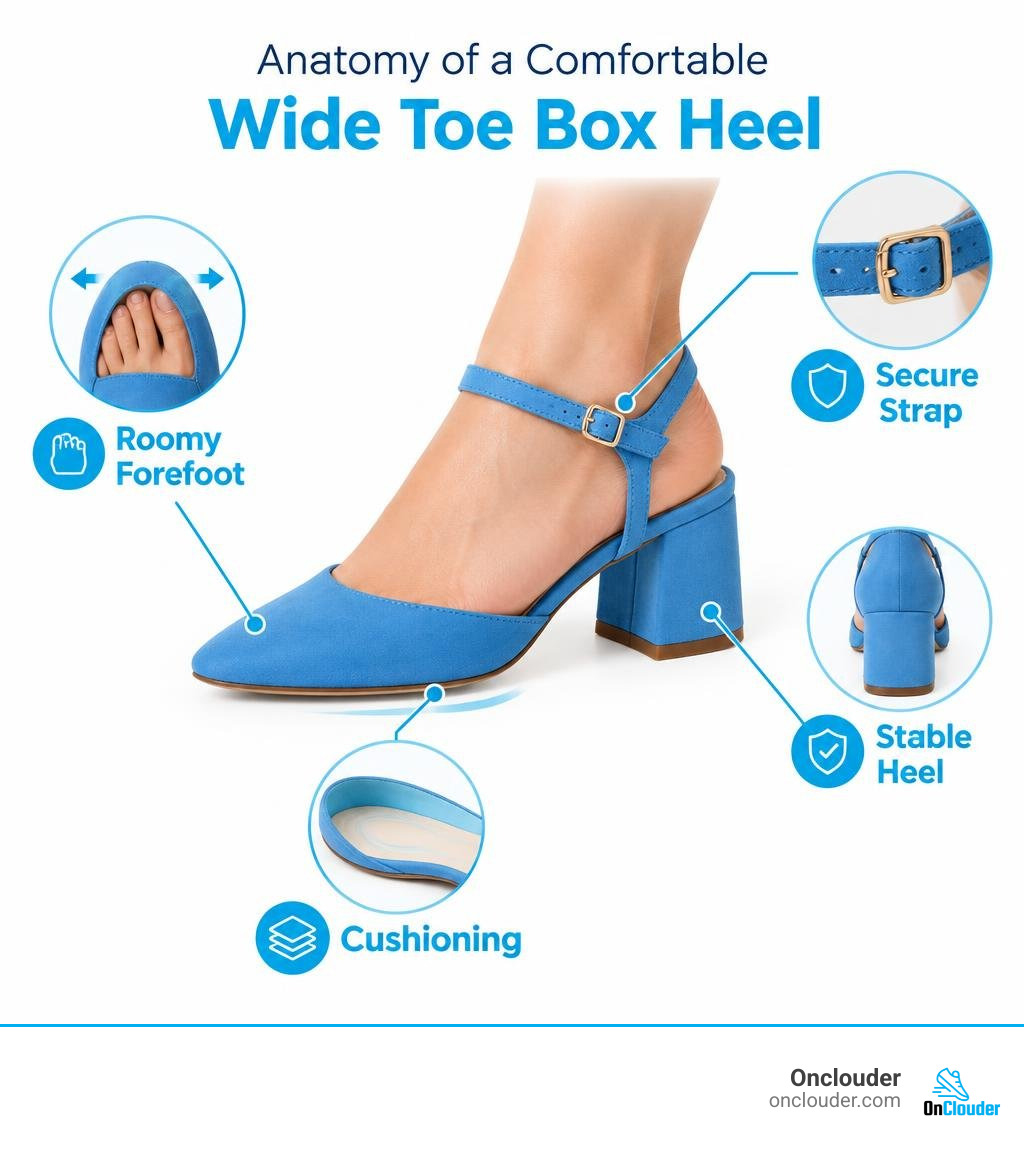
Start with a low block or kitten heel and a toe box that lets your toes lie flat without rubbing. For a secure fit, look for cushioning under the ball of your foot, a stable heel, and an adjustable strap if your feet swell during the day. If you have bunions or hammertoes, check that the upper does not press on sore joints. Many women searching for heels for wide toe box comfort are simply trying to find a pair that keeps its shape and support long after the first few steps.
A “wide” label alone is not enough. Your forefoot needs room, but your heel should not slip as you walk. Below, we’ll compare heel styles and the fit details that matter, so you can find a pair of heels for wide toe box comfort that looks good and feels good beyond the first few steps.
For more background on fit and styling, see our related guides:
Understanding Forefoot Width: D vs EEE and Sizing Metrics
When searching for dress footwear, understanding sizing metrics makes all the difference between all-day comfort and sore feet. Standard footwear sizing operates on a narrow spectrum that often compresses the metatarsals.
A standard women’s wide fit is typically designated as a D width, accommodating a forefoot measurement of 85 to 95 millimeters. While this offers slight relief compared to standard medium (B) widths, it often falls short for women who experience natural toe splay, have hereditary wide feet, or deal with joint inflammation.
For genuine forefoot relief, stepping into extra-wide sizing is essential:
- Standard Wide (D): 85–95 mm forefoot width. Good for borderline wide feet requiring minimal extra volume.
- Extra-Wide (EEE / WW): 105–115 mm forefoot width. Engineered with anatomical lasts that prevent lateral toe squeezing.
- Ultra-Wide (4E+): Exceeding 120 mm. Built for significant structural accommodation, severe bunions, or high-volume orthotics.
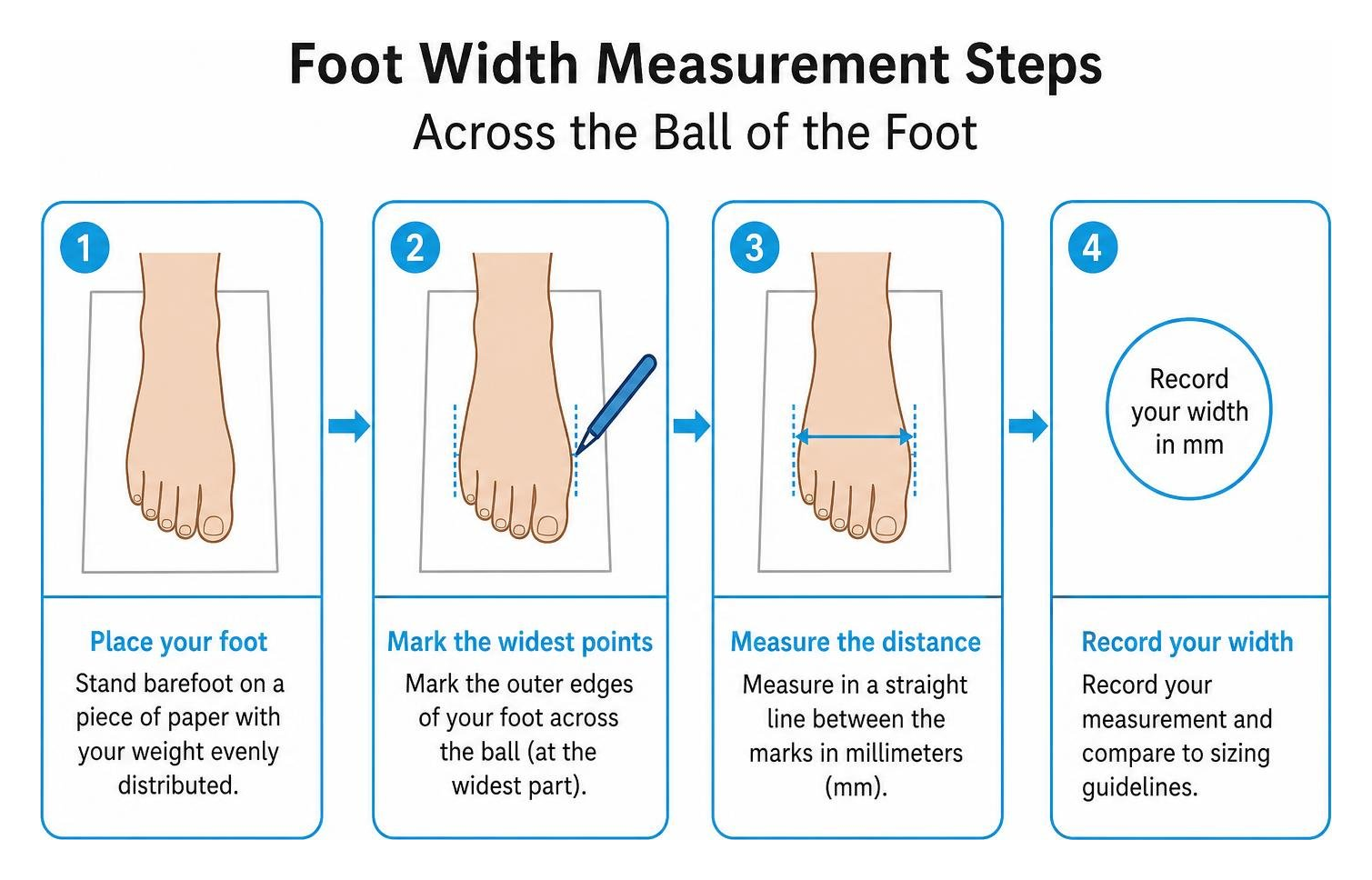
To accurately find your size, perform a foot tracing at the end of the day when your feet are naturally at their largest:
- Place a piece of paper on a hard floor against a flat wall.
- Step firmly onto the paper with your heel lightly touching the wall.
- Trace the perimeter of your foot, keeping the pencil strictly vertical.
- Measure the widest part across the ball of your foot (the metatarsal heads) in millimeters.
- Wrap a flexible tailor’s tape around that same widest circumference to capture foot volume.
If your circumference measurement exceeds 24 centimeters at a standard size, you fall squarely into EEE territory. Exploring the ultimate guide to wide toe box dress shoes will help you better understand how volume adjustments maintain a snug fit at the heel while preventing forefoot constriction.
Top Styles and Features of Heels for Wide Toe Box
Finding comfortable dress heels requires an eye for architectural construction. A properly built shoe does not simply scale up all dimensions proportionally; it provides targeted space where your foot expands while anchoring the rearfoot securely.
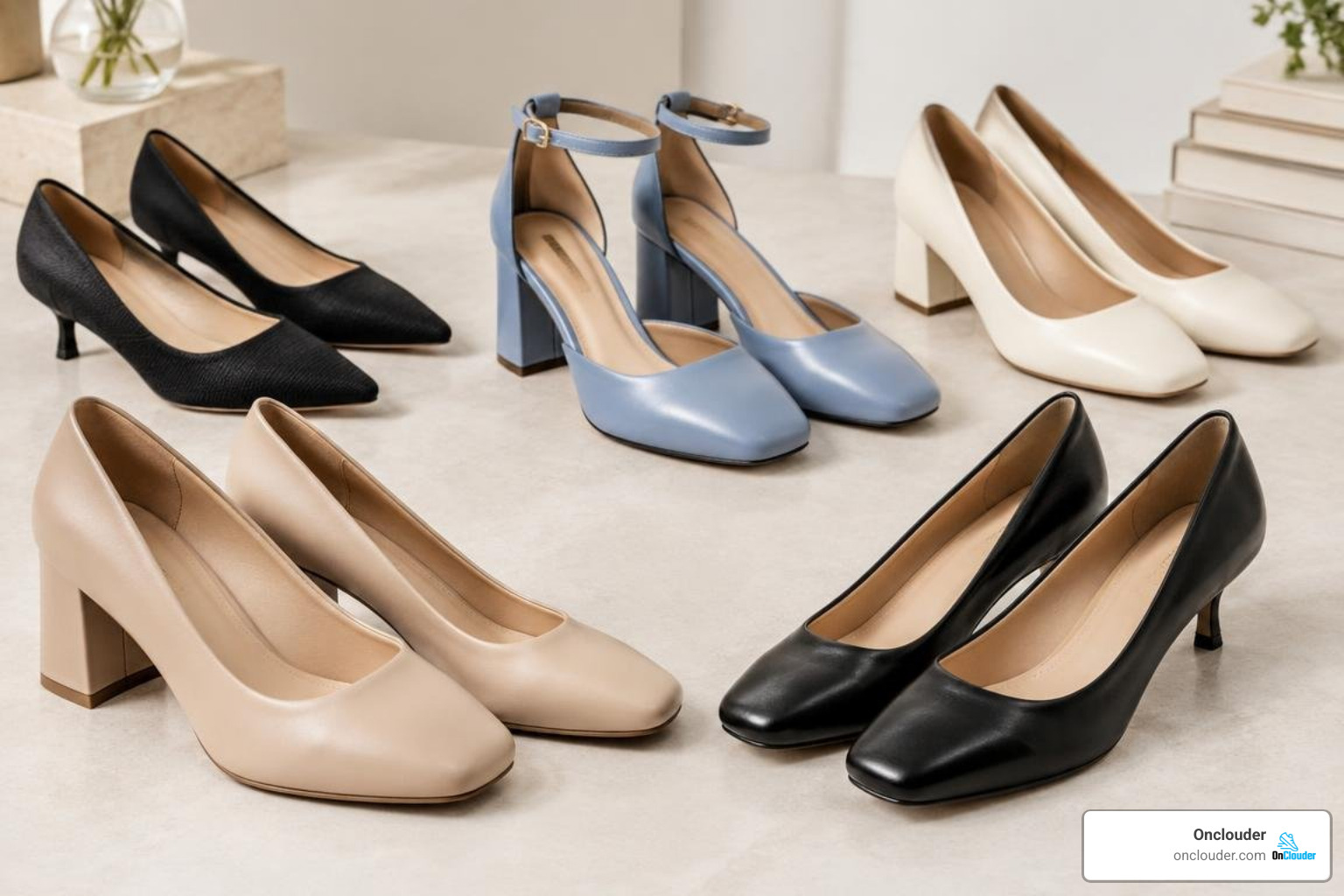
Key structural features to look for include:
- Toe Box Vertical Depth (≥30 mm): Ensures your toes are not compressed vertically against the shoe roof.
- Structured Heel Counter (60–70 mm height): Cups the calcaneus firmly to eliminate heel slippage without requiring painful toe-gripping.
- High-Rebound Forefoot Cushioning (≥6 mm): High-density EVA or polyurethane inserts that resist collapsing under body weight.
- Rigid Arch Support Shanks: Steel or composite shanks that maintain torsional stability and reduce strain across the plantar fascia.
- Adjustable Straps (20–30 mm adjustability): Buckles or discrete elastic gores that expand smoothly during natural afternoon swelling.
| Heel Silhouette | Recommended Heel Height | Forefoot Width Accommodated | Best Use Case | Key Fit Advantage |
|---|---|---|---|---|
| Block Heel Pumps | 3.5 – 5.0 cm | Up to EEE / WW (105–115 mm) | Office wear, all-day events, conferences | Broad surface area minimizes ball-of-foot pressure |
| Kitten Heels | 2.5 – 4.0 cm | D to EEE (95–110 mm) | Formal evenings, dinner parties | Low incline with sleek visual profile |
| Open-Toe Sandals | 3.0 – 6.0 cm | Wide to Extra-Wide | Summer weddings, warm-weather formal | Zero restriction across the distal toe joints |
| Almond-Toe Courts | 4.0 – 5.5 cm | EEE (105–115 mm) | Corporate boardrooms, black-tie events | Pointed aesthetic without inward toe crowding |
Mid-Heels and Block Heels for Wide Toe Box
Block heels provide an optimal balance of height and stability. By increasing the ground-contact surface area, a sturdy mid-heel significantly reduces pressure spikes on the ball of the foot. A modest heel height of 4 cm maintains a natural walking posture without forcing your body’s center of gravity forward.
For formal and professional environments, look for extra-wide WW fits paired with an elegant 4 cm block heel and a concealed cushioning panel designed for sensitive forefoot joints. A court shoe with an elasticated top-line can secure the rearfoot while offering generous space across the ball of the foot. Reviewing broader design philosophies in our guide to ladies shoes with wide toe box highlights how modern mid-heels distribute body weight evenly across the entire foot bed.
Elegant Kitten Heels and Open-Toe Heels for Wide Toe Box
If you prefer a lighter silhouette, kitten heels provide delicate styling with minimal elevation. The gentle pitch protects your metatarsal heads from excessive loading, while an almond-shaped toe preserves the space your toes need to rest naturally.
A classic low-profile kitten heel with triple-layer underfoot cushioning can be a reliable option for extended formal events. For warm-weather gatherings or summer weddings, an open-toe heel with an anti-pronation arch foundation and built-in forefoot stretch zones offers a comfortable alternative. For additional style profiles and silhouette breakdowns, browse a practical guide to comfortable wide toe box ladies shoes.
Health Benefits: Protecting Against Bunions, Hammertoes, and Plantar Fasciitis
Conventional high heels squeeze the toes into a tight triangular space, pushing the big toe outward and elevating pressure beneath the metatarsal heads. Over time, this unnatural alignment can lead to joint deformities and persistent foot pain.
Choosing shoes with an anatomically shaped toe box provides immediate and long-term health advantages:
- Bunion Relief (Hallux Valgus): Broad toe boxes prevent the big toe from being forced toward the second toe. Pressure-free stretch zones protect sensitive joint capsules from friction, inflammation, and bursa development. Learn more about structural relief in our article on how wide toe box shoes are a game changer for bunions.
- Hammertoe & Claw Toe Prevention: Adequate vertical toe depth (≥30 mm) allows the smaller toes to rest flat rather than curling against the roof of the shoe, preventing corns and joint stiffness.
- Morton’s Neuroma Alleviation: Allowing the metatarsal bones to spread naturally prevents pinching of the plantar digital nerves, helping eliminate burning sensations and numbness.
- Plantar Fascia Support: Pairing a broad base with rigid arch support stabilizes the plantar aponeurosis, reducing strain where the tissue attaches to the heel bone.
Materials, Orthotics Compatibility, and Long-Term Care
The materials used in your footwear directly impact how well the shoes adapt to the unique contours of your feet over time.
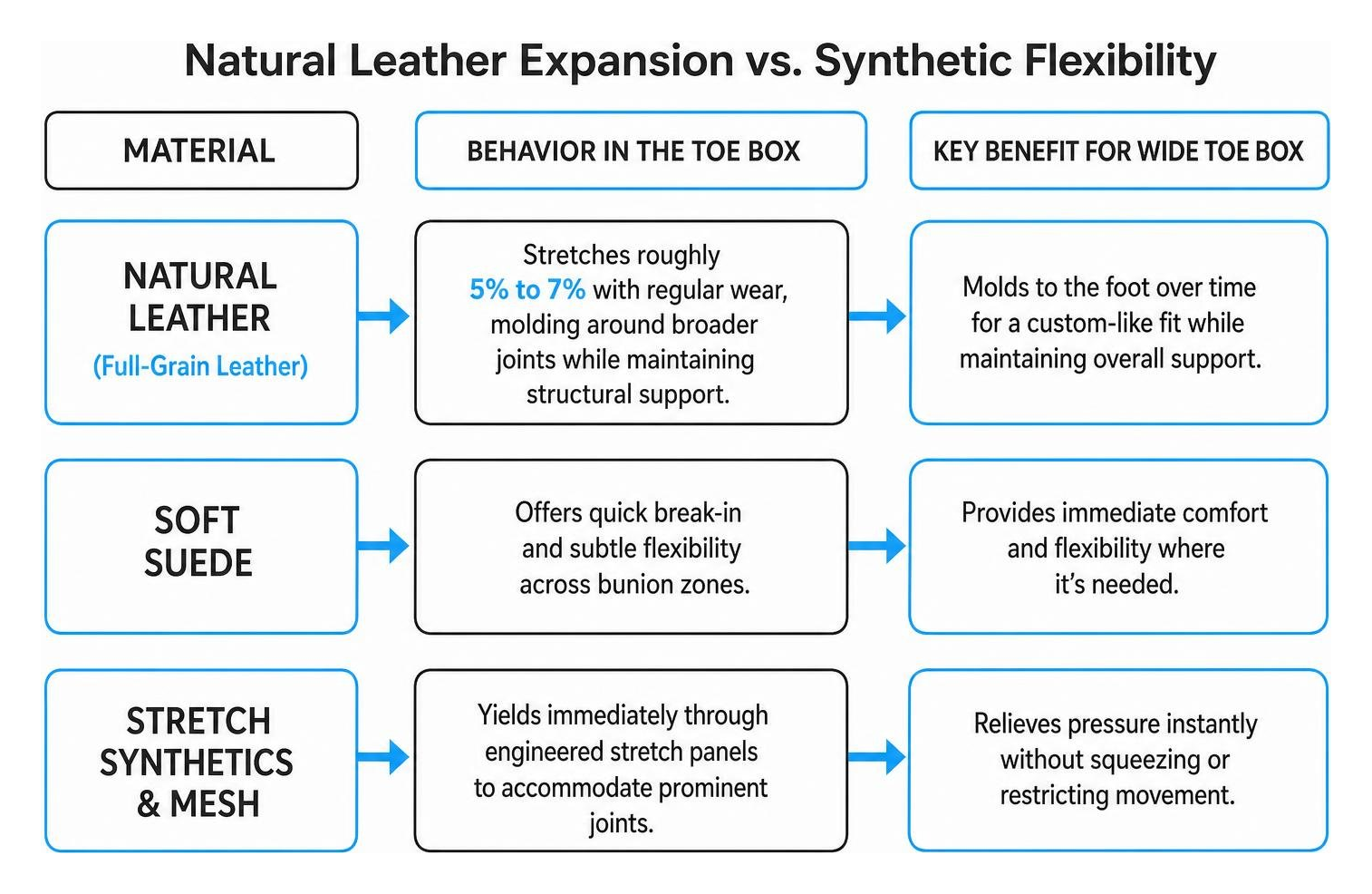
- Full-Grain Leather: Premium calfskin and lambskin stretch roughly 5% to 7% with regular wear, molding smoothly around broader joints while maintaining overall structural support. Explore these benefits in our article on how to step into all day comfort with broad toe leather shoes.
- Soft Suede: Suede offers quick break-in times and subtle flexibility across bunion zones, though it requires regular protective care.
- Stretch Synthetics & Mesh: Engineered stretch panels yield immediately to accommodate prominent joints without exerting inward pressure, though they do not permanently stretch like natural leather.
If you use custom orthotic inserts, ensure the shoe features a removable footbed with an internal cavity depth of at least 10 to 12 mm. This allows your corrective device to sit flat without crowding your toes or lifting your heel out of the heel cup.
Frequently Asked Questions about Wide Toe Box Heels
Will wide-fit heels look bulky or unstylish?
No. High-quality wide-fit heels are built on anatomically balanced lasts that taper subtly toward the rear of the foot. By incorporating vertical depth and rounded almond profiles rather than blunt, squared shapes, modern designs give your toes plenty of room while maintaining a sleek, elegant silhouette.
How do I know if I need extra-wide (EEE) versus standard wide (D)?
If your foot visibly spills over the sides of standard wide shoes, if you notice seam rubbing against your pinky or big toe joint, or if your forefoot width exceeds 105 mm (around size 6–7), you will benefit from an extra-wide EEE fit. Persistent afternoon tightness is another clear sign that you need extra volume rather than just a slightly wider sole.
Can I wear custom orthotics inside dress heels?
Yes, provided the heel is specifically built with a removable footbed, a stable heel counter (60–70 mm height), and a low heel incline (under 5 cm). The internal footbed cavity must offer 10 to 12 mm of depth so your orthotic can sit securely without causing your heel to slip.
Conclusion
You do not have to choose between elegant style and healthy, comfortable feet. By selecting footwear built with anatomically proportioned toe boxes, stable mid-to-kitten heels, and supportive arch structures, you can confidently wear heels throughout workdays and formal events without pain.
At Onclouder, we continuously test and review footwear to help you make informed, comfortable choices for your daily life. If you are ready to transition your entire shoe collection toward healthier, natural foot movement, explore spacious barefoot and wide toe box shoes to stop foot squeeze across all your favorite styles.