Which On Cloud Shoes Work for High-Mileage Weeks?
Start with the Cloudmonster 3 if you want one On shoe for long runs and easy miles. Its thick cushioning and rolling ride make it a strong option for steady training, while the Speedboard helps it feel less sluggish when you pick up the pace. For a high-mileage week, prioritize a fit that stays comfortable as your feet swell, and rotate shoes if one pair starts to feel flat.
The Cloudmonster 3 is often estimated to last 400 to 500 miles, but wear varies by runner and surface. No shoe can prevent injury on its own; gradual mileage increases, enough food, and recovery still matter most.
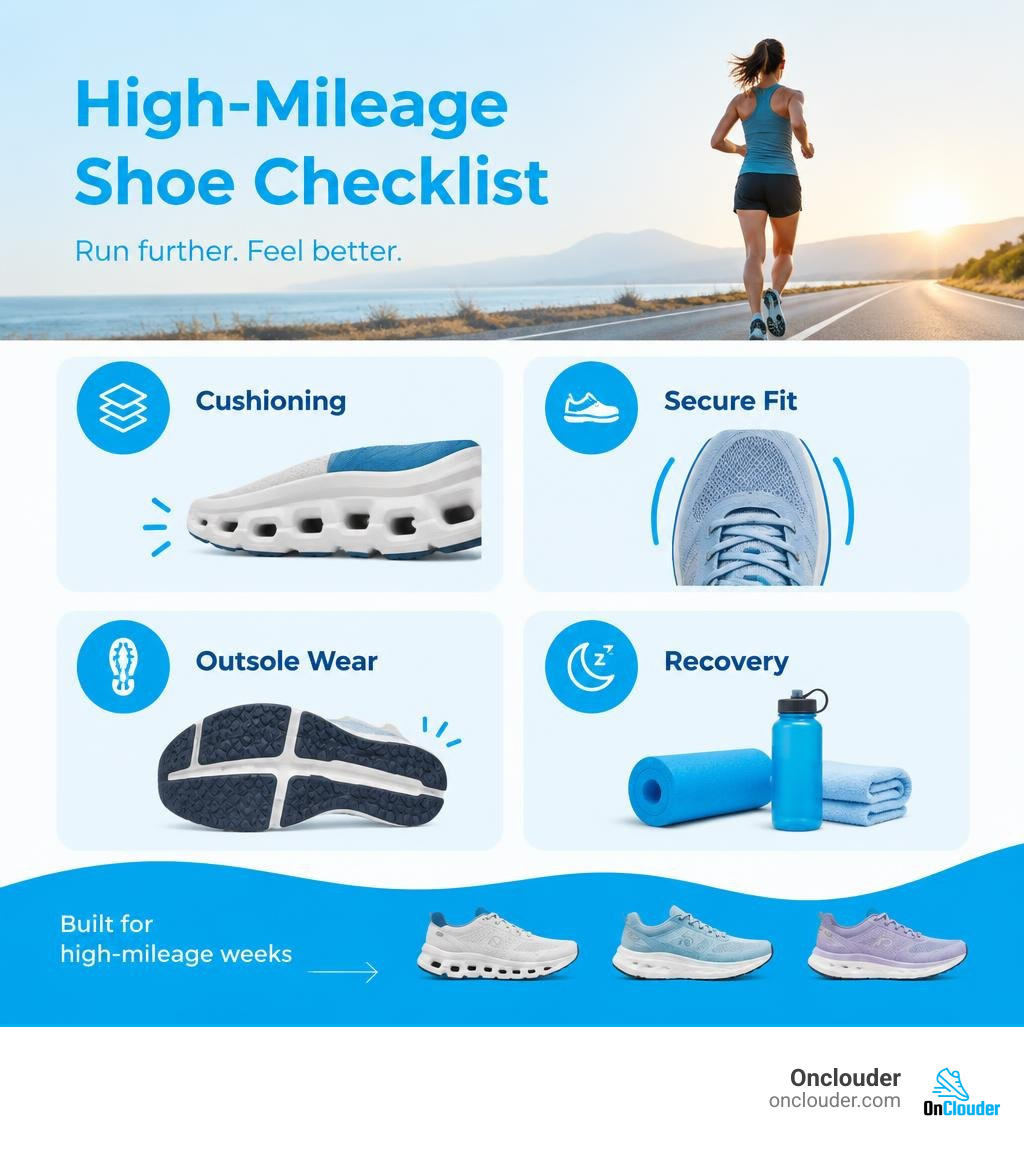
Simple On Cloud for high mileage weeks word guide:
- highly cushioned road running shoes
- altra men’s via olympus
- brooks womens glycerin 17 cushioned road running shoe
Why Choose On Cloud for High Mileage Weeks?
Logging high mileage—typically anywhere from 40 to 70 miles per week for dedicated marathoners—places an intense cumulative demand on your joints, tendons, and feet. When your training volume climbs, repetitive impact forces can quickly turn mild fatigue into stubborn overuse injuries. Finding the right pair of best running shoes for distance training and daily miles is essential to surviving peak training blocks intact.
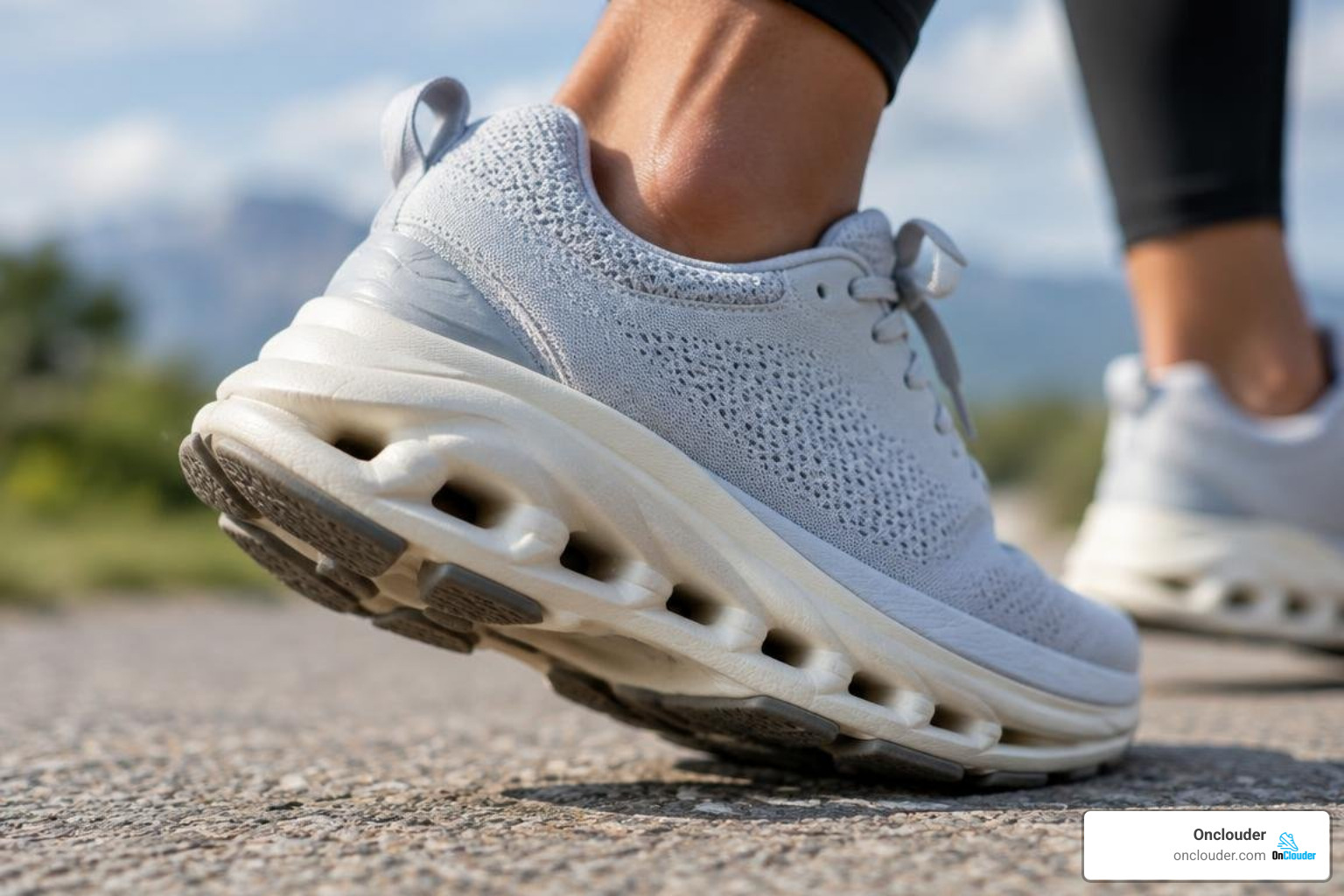
What sets modern On Cloud designs apart is their dual-action approach to shock absorption. Traditional foam slabs only compress downward under vertical force. In contrast, On’s mechanical CloudTec elements compress both vertically and horizontally. This multidirectional dispersion significantly reduces braking forces during footstrike, protecting your knees and lower back over extended sessions. When combined with a substantial 35mm stack height, the platform absorbs pounding asphalt without creating that unstable, sinking feeling often associated with tall foams.
Cushioning Architecture: Helion Superfoam and Max CloudTec Pods
The centerpiece of high-cushion distance running in On’s lineup is the synergy between the oversized CloudTec pods and Helion Superfoam. Engineered as a triple-layer setup in trainers like the Cloudmonster 3, this platform operates much like a high-performance vehicle suspension system:
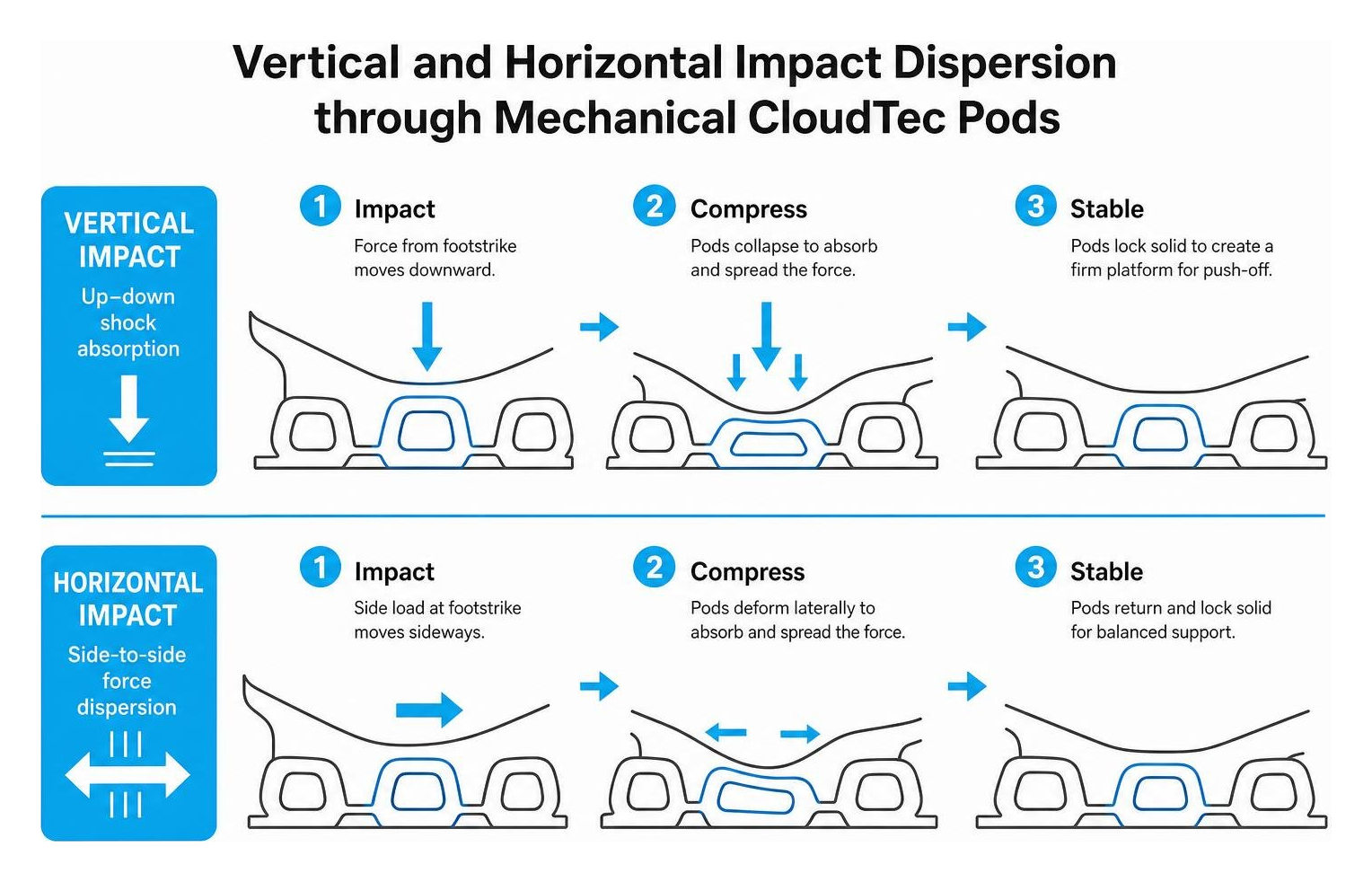
The large open pods collapse upon impact to soak up ground contact shock, then instantly lock solid to create a firm foundation for push-off. Because Helion Superfoam resists temperature changes, the shoe retains its responsive rebound in freezing morning runs or hot midday workouts. For runners seeking the best easy long run shoes, this mechanical dampening eliminates the dreaded “dead leg” sensation that often sets in during the final miles of a two-hour weekend run.
Nylon Speedboard vs Carbon Plates for Daily Efficiency
While rigid carbon plates dominate race day, they can be excessively harsh on calves and plantar fascia when used day in and day out. On addresses this by integrating a flexible, nylon-blend Speedboard into their maximalist trainers.
The nylon Speedboard flexes naturally through your stride, working in tandem with an aggressive forefoot rocker. This geometry creates a smooth rolling motion from heel to toe, dramatically lowering the workload placed on your Achilles tendons and calves. By gently guiding your foot through a quick turnover, it helps you maintain an efficient, sustainable cadence even when your legs are carrying heavy residual fatigue from earlier in the week.
Best On Trainers for High-Mileage Distance Training
Building a dependable training rotation requires matching specific models to your target pace and weekly volume. When building your distance foundation, consulting the best long run shoes 2026 for every weekly mileage target and our ultimate 2026 guide to On Cloud shoes will help pinpoint the right balance of support and responsiveness.
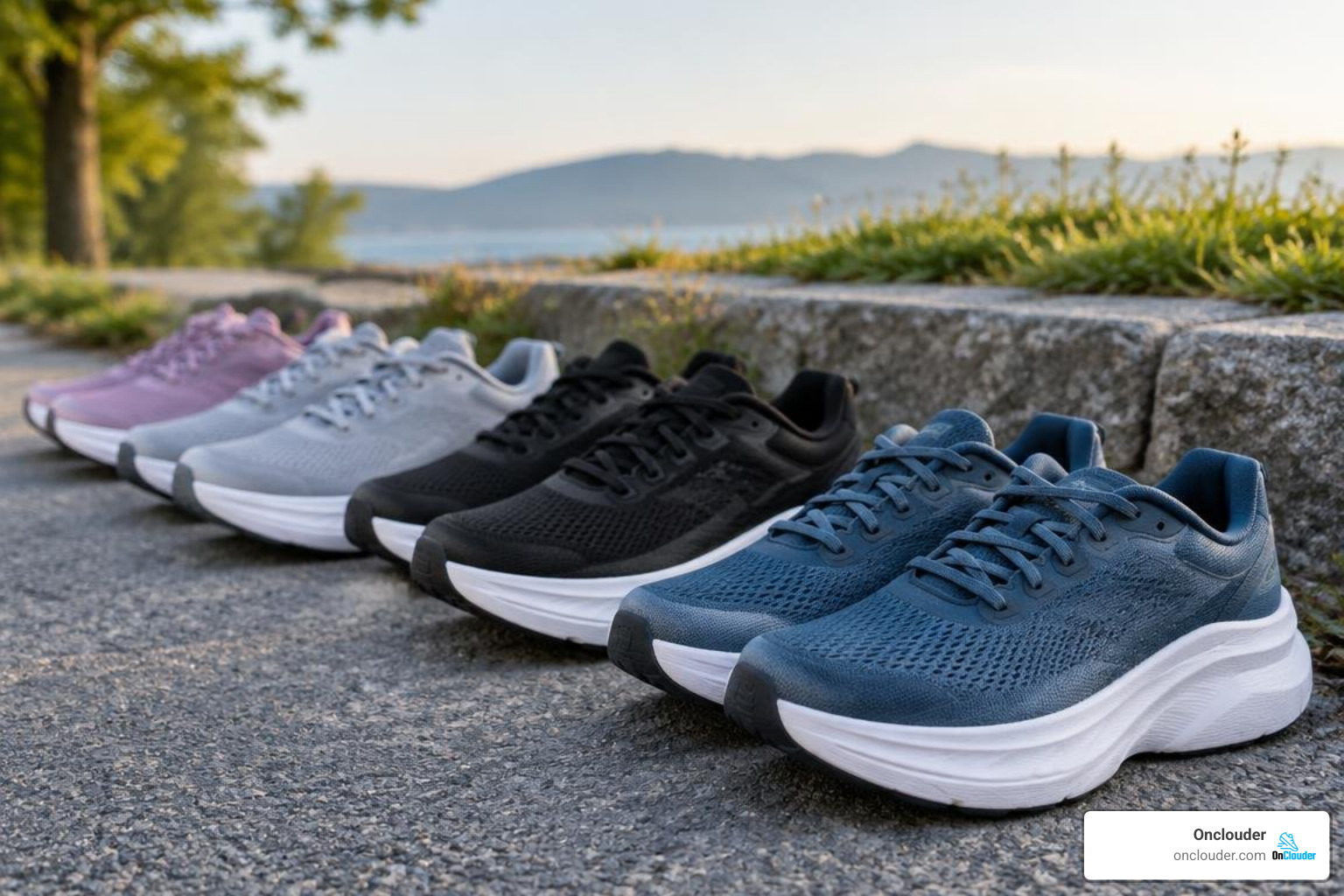
The table below breaks down the primary specifications for high-mileage road running:
| Feature | On Cloudmonster 3 | Traditional Daily Trainer | Carbon-Plated Racer |
|---|---|---|---|
| Stack Height | 35mm (Max Cushion) | 28–32mm (Moderate Cushion) | 36–40mm (Race Cushion) |
| Weight (Men’s) | ~309g | ~280–300g | ~200–230g |
| Plate Material | Nylon-blend Speedboard | None or Plastic Shank | Rigid Carbon Fiber |
| Optimal Pace | 4:30 to 6:30 min/km | 5:00 to 7:00 min/km | 3:00 to 4:45 min/km |
| Typical Lifespan | 400 to 500 Miles | 300 to 400 Miles | 150 to 250 Miles |
Optimizing Your Weekly Schedule: On Cloud for High Mileage Weeks
Sustaining high mileage requires balancing intensity so your aerobic system develops without overtaxing your muscular system. Adopting an 80/20 framework ensures that roughly 80% of your weekly volume remains in an easy aerobic zone, leaving 20% for focused quality sessions.
Here is an example of how to structure a 50-mile week utilizing high-cushion trainers:
- Monday (Rest & Mobility): Full rest day to allow tissue remodeling and mental recovery.
- Tuesday (Easy Base Run): 7 miles at 5:30–6:00 min/km pace to flush out legs and build aerobic volume.
- Wednesday (Aerobic Threshold Workout): 9 miles total, including 4 miles of sustained tempo pacing. The nylon Speedboard provides enough snap to handle brisk transitions smoothly.
- Thursday (Recovery Run): 5 miles at a relaxed 6:00–6:30 min/km pace, letting the thick Helion foam cushion tired joints.
- Friday (Mid-Week Steady Run): 8 miles at an easy aerobic effort.
- Saturday (Cross-Training or Easy Shakeout): 4 miles easy plus strides, or 45 minutes on the bike.
- Sunday (Long Run): 17 miles, serving as the cornerstone of training for a sub-4 marathon. Keep your long-slow-distance pace roughly 30 to 60 seconds slower than marathon target pace to preserve glycogen stores and minimize tissue breakdown.
Upper Breathability and Foot Swelling Accommodations on Long Runs
During runs lasting 90 minutes or longer, blood flow and temperature increases cause feet to swell by up to half a shoe size. Modern distance uppers feature dual-layer engineered mesh designed specifically to manage this expansion.
The forefoot mesh stretches laterally to eliminate pinch points around the metatarsals, while the reinforced midfoot cage and plush heel counter keep your rearfoot locked securely in place. This prevents unwanted slippage and friction, protecting you from blisters and blackened toenails when training through summer heat and high-mileage blocks.
Shoe Lifespan, Mileage Durability, and Model Comparisons
One of the biggest concerns during high-mileage blocks is how quickly your shoes wear out. A shoe might look pristine on the outside while its internal foam matrix has flattened and lost its ability to absorb shock.
Tracking your miles in a training log is essential. As detailed in our review covering our first 100 miles in the Cloudmonster, modern Helion Superfoam holds its mechanical rebound exceptionally well over time. To ensure your footwear remains safe, look for key wear indicators:
- Midsole Creasing: Deep, horizontal wrinkles across the Helion foam that do not rebound after 24 hours of rest.
- Outsole Wear: Thinning rubber patches where the exposed foam begins making direct contact with the road.
- Table-Tilt Test: Placing your shoe on a flat surface; if it leans inward or outward on its own, the internal support has broken down.
- Physical Feedback: New, unexplained tenderness in your shins, arches, or knees after routine easy runs.
Evaluating these signs is crucial when choosing among the best running shoes for marathons.
Cloudmonster 3 Lifespan vs Traditional Daily Trainers and Carbon Racers
The durability profile of the Cloudmonster 3 stands out across typical footwear categories:
- Cloudmonster 3 (400 to 500 miles): Helion Superfoam combined with high-abrasion rubber pods yields extended mileage before the responsive “pop” degrades.
- Traditional Daily Trainers (300 to 400 miles): Standard EVA or basic TPU foams compress earlier, with shock absorption dropping roughly 25% within the first 50 to 100 miles.
- Carbon-Plated Race Shoes (150 to 250 miles): Ultra-lightweight racing foams and paper-thin rubber outsoles deliver maximum energy return on race day but wear out quickly under daily training stress.
Investing in a dedicated high-mileage trainer provides the lowest cost per mile while keeping your race-day super shoes fresh for the starting line.
How to Prevent Injury When Wearing On Cloud for High Mileage Weeks
Logging serious volume requires a smart approach to training loads. Keep these principles in mind:
- Follow the 10% Rule: Increase your total weekly volume by no more than 10% from one week to the next to give tendons and ligaments time to adapt.
- Implement Cutback Weeks: Every 3 to 4 weeks, reduce your total mileage by 20% to 30%. This planned reduction allows your hormonal, muscular, and immune systems to rebuild.
- Rotate Your Footwear: Research shows that alternating between two pairs of running shoes can lower injury risk by nearly 39% by varying the repetitive biomechanical stress placed on your legs.
- Maintain Caloric Balance: High mileage depletes glycogen rapidly. Fuel consistently throughout the day rather than backloading all your nutrition into large evening meals to prevent energy deficiency and tissue breakdown.
- Prioritize Strength and Mobility: Dedicate 2 to 3 sessions per week to calf raises, single-leg squats, and hip bridges to strengthen the stabilizing muscles that support good running form.
Frequently Asked Questions About High-Mileage On Shoes
How many miles do the On Cloudmonster 3 running shoes last?
Most runners log between 400 and 500 miles in the Cloudmonster 3 before the Helion Superfoam loses its energetic rebound. High-abrasion rubber placed strategically over the CloudTec pods ensures durable traction throughout the shoe’s lifespan.
Is the Cloudmonster 3 suitable for sub-4 marathon training?
Yes. With its 35mm stack height and rolling Speedboard rocker, the Cloudmonster 3 is ideal for maintaining the 9:09 min/mile (5:41 min/km) pace needed for a sub-4 marathon, offering joint protection during long 20-mile preparation runs.
Can you use high-cushion On shoes for easy recovery runs and workouts?
Yes. While the thick Helion cushioning excels at protecting legs during slow recovery efforts, the nylon Speedboard provides enough snap and stability to handle tempo workouts and progression runs seamlessly.
Conclusion
At Onclouder, we test running shoes across hundreds of road miles to help you make informed gear choices. Successfully building high mileage comes down to consistent training habits, smart recovery, and durable footwear that absorbs impact day after day. With its 35mm stack of Helion Superfoam, responsive nylon Speedboard, and proven 400-to-500-mile lifespan, the Cloudmonster 3 stands out as a dependable training partner for ambitious distance goals.
Ready to explore supportive footwear options for every activity? Explore our comprehensive footwear guide to find the perfect fit for your active lifestyle.