Broad Toe Leather Shoes That Look Sharp and Feel Better
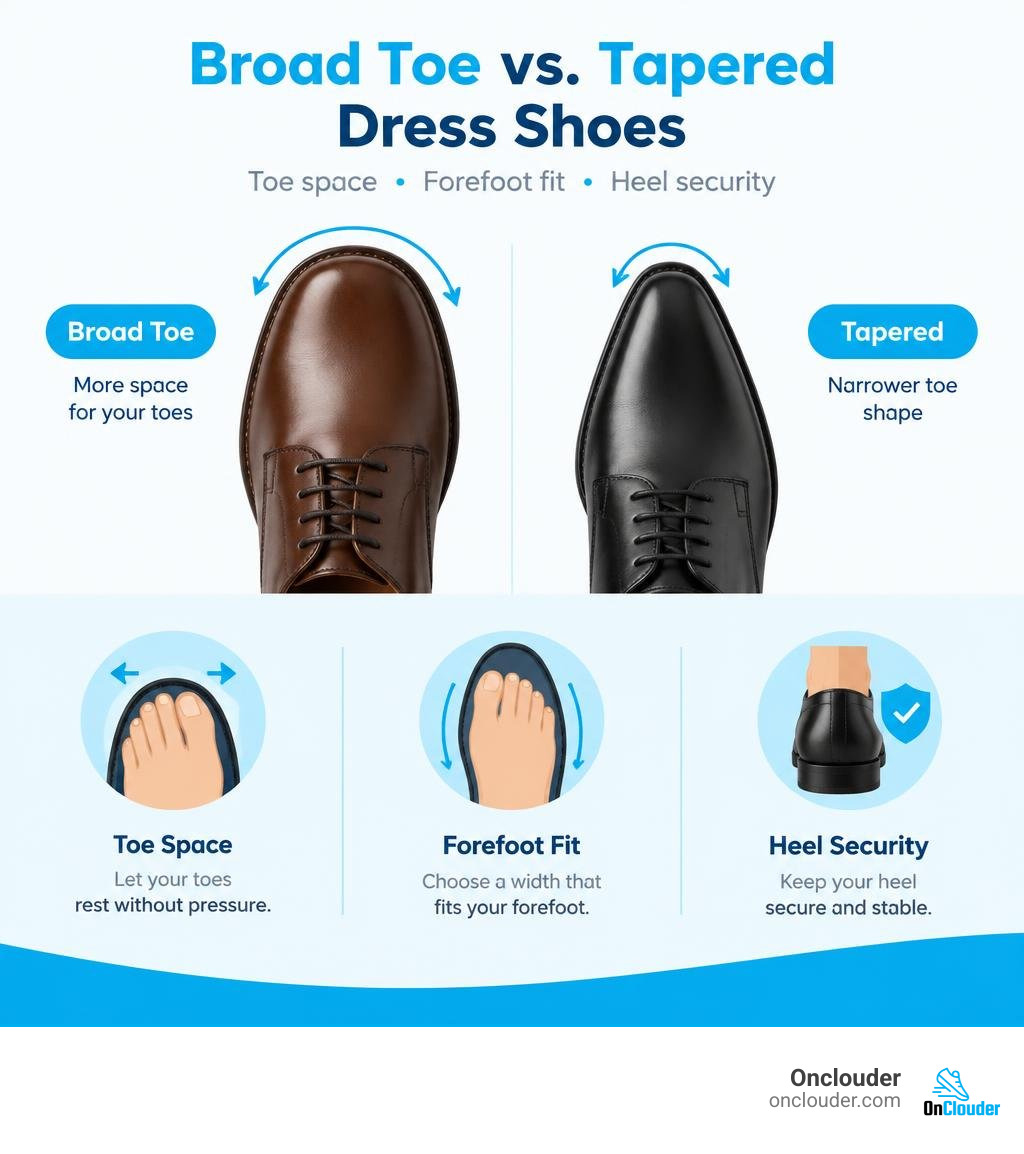
For comfortable leather dress shoes, look for a roomy toe box that lets your toes rest without pressure. Choose a width that fits your forefoot, a heel that stays secure, and a closure you can adjust. Broad toe leather shoes give your toes more space than many tapered dress shoes, but a “wide” label alone does not guarantee the right fit.
You can find that shape in polished Derbies and brogues, as well as casual styles. This guide will help you compare them without giving up the look you want.
Broad toe leather shoes basics:
Why Switching to Broad Toe Leather Shoes Transforms Foot Health
Traditional leather dress shoes are notorious for tapering inward right where human feet naturally widen. For decades, standard shoemaking prioritised a sharp, triangular silhouette over natural foot morphology. When you force your feet into tapered footwear, your metatarsals compress, your toes pinch together, and your gait mechanics compensate. Over a full workday, this compression limits blood flow and spikes forefoot pressure.

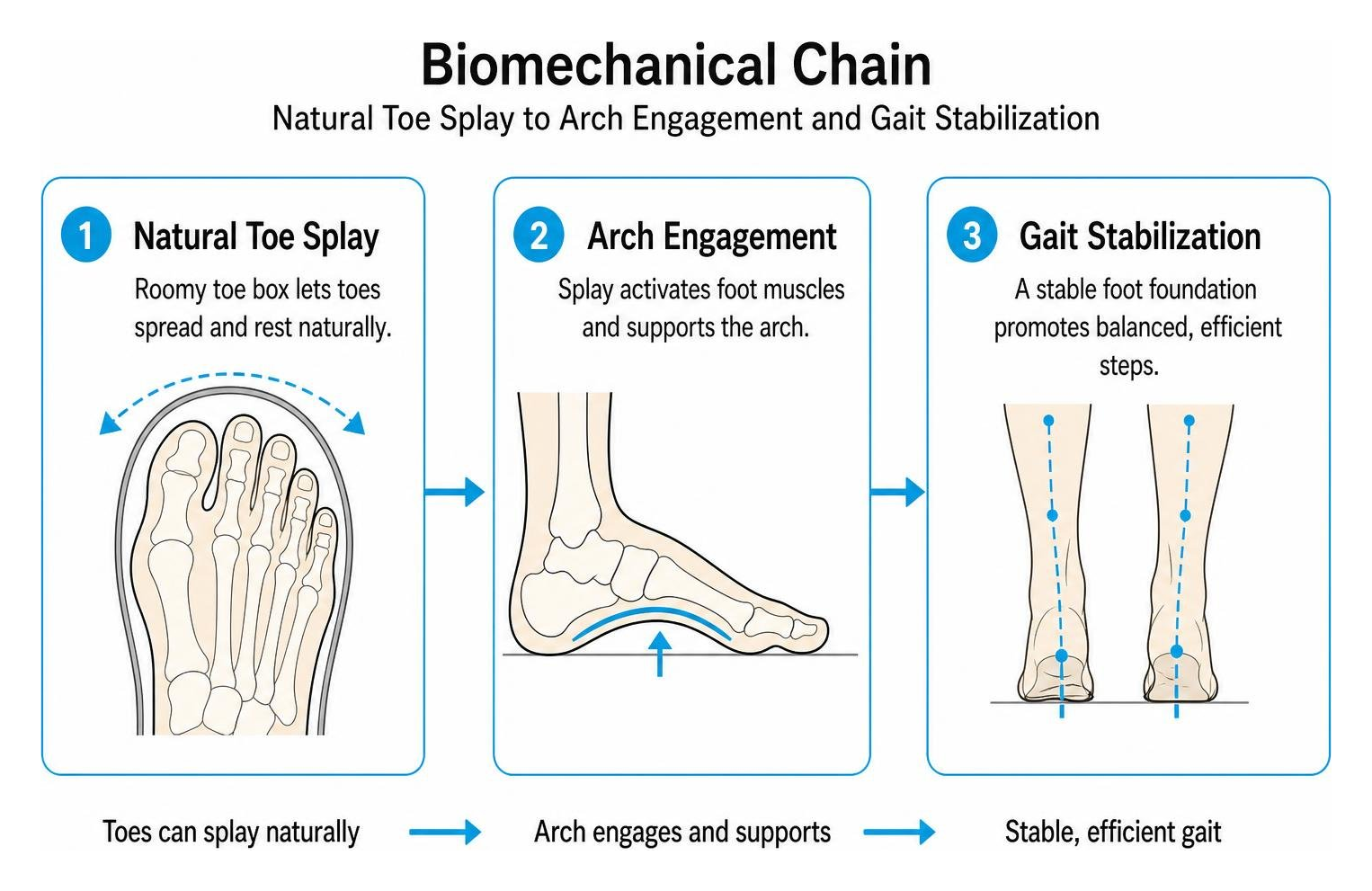
When you make the decision to switch to broad toe shoes and ditch daily foot pain, your feet regain their natural foundation. A wider forefoot design allows your toes to splay out with every step. Natural toe splay acts as your body’s built-in shock absorber and tripod base. When your big toe can sit straight rather than angled inward, it anchors your stride, stabilizing your arches and relieving excess tension across the plantar fascia.
For anyone who has studied our wide toe box shoes complete guide, the mechanics are straightforward: broader toe boxes redistribute your body weight evenly across the ball of your foot. This drastic drop in forefoot peak pressure prevents metatarsalgia (burning pain in the ball of the foot) and stops your calves and lower back from working overtime to balance an unstable stance.
Who Benefits Most from Broad Toe Leather Shoes?
While anyone spending hours on their feet will appreciate extra forefoot room, broad toe designs are life-changing for specific foot profiles and medical conditions:
- Bunion Sufferers (Hallux Valgus): Bunions form when the big toe joint is forced inward, causing the base joint to protrude. Roomy leather shoes eliminate painful friction and prevent further joint misalignment.
- Individuals with Hammertoes or Claw Toes: When toes curl upward, standard shallow toe caps rub against the tops of the joints, causing painful corns and calluses. Generous toe box height provides vital vertical clearance.
- Morton’s Neuroma Patients: Pinching the metatarsal heads irritates the nerve bundle between the third and fourth toes. Broad footwear relieves transverse metatarsal arch compression, keeping that nerve uncompressed.
- Diabetic Foot Care: Diabetic neuropathy demands friction-free footwear. Smooth interiors and non-binding, extra-width leather uppers prevent pressure points that could otherwise lead to skin breakdown and ulcers.
- Combination Foot Shapes: If you struggle with standard sizing because your heel slips while your toes pinch, explore finding the perfect match for your narrow heels and wide forefoot to find lasts that lock the rearfoot down while giving the forefoot room to spread.
- Daily Swelling: Those who stand on hard floors all day experience natural fluid shifts. Extra volume allows your feet to expand comfortably by late afternoon.
Key Anatomic Features: Width, Depth, and Support
A truly functional broad toe shoe isn’t just a standard shoe scaled up proportionally. It requires deliberate anatomical engineering across three key dimensions:
- Horizontal Width and Splay Geometry: The toe box should mirror the natural fan shape of human toes, staying wide through the outer digits rather than rounding off early.
- Vertical Depth: Shoes must offer ample ceiling height in the forefoot so toes never brush against the roof of the leather upper.
- Anatomical Arch Support: Room for your toes allows your plantar muscles to fire properly, but many walkers still benefit from structured arch contours. Reviewing the most comfortable materials for high arch support helps identify insoles made from cork, high-density EVA, or polyurethane that support the midfoot without crowding the toes.
- Non-Binding Linings and Padded Collars: Premium broad-fit footwear incorporates seam-free forefoot linings to prevent chafing against sensitive joints.
Top Picks for Broad Toe Leather Footwear in 2026

Finding spacious footwear no longer means settling for clunky orthotics. Today’s market includes refined formal styles, cushioned daily walkers, and flexible minimalist designs. If you want natural toe space while maintaining traditional dress shoe styling, exploring big toe box shoes that aren’t barefoot is a great way to bridge the gap between foot health and boardroom dress codes.
| Footwear Style | Width Fitting Range | Upper Material | Sole Construction | Best Occasion / Dress Code |
|---|---|---|---|---|
| Classic Derby / Brogue | Wide (G Fit / EE) | Full-Grain Calfskin | Goodyear Welt / Rubber Hybrid | Business Formal, Weddings, Office |
| Orthopedic Walking Shoe | Medium to Extra-Wide (4E) | Supple Tumbled Leather | Multi-Layer Cushion / Rocker Outsole | Long Shifts, Commuting, Daily Travel |
| Bio-Based Oxford | Wide (EE) | Italian Vegan Bio-Leather | Cemented with Steel Shank Support | Smart-Casual, Modern Office, Eco-Wear |
| Barefoot Leather Sneaker | Anatomic Extra-Wide | Hand-Finished Cowhide | 4 mm Zero-Drop Natural Rubber | Casual Fridays, Walking, Travel |
Classic Formal Brogues and Derbies
For business meetings, weddings, and formal offices, traditional dress silhouettes with modified lasts offer the perfect balance of style and space.
Classic wide-fit leather brogues incorporate traditional punch-hole detailing and wingtip designs while masking an expanded forefoot underneath. For instance, high-volume options from established retailers use deep toe boxes and lightweight tricolour soles. In customer reviews, 73% of wearers recommend these wide brogues specifically for all-day comfort at weddings and office events.
If you prefer clean lines, a polished open-laced Derby delivers a sharp profile with extra internal volume. Boasting an average 4.8 out of 5 rating from 54 reviews, these calf-leather Derbies use durable rubber outsoles that absorb heel strike shock during long days on concrete floors.
Orthopedic and Everyday Walking Comfort
When therapeutic relief is your primary goal, purpose-built casual leather shoes provide targeted anatomical support. These models often feature extra vertical depth, stretchable leather panels, and customizable arch inserts.
A prime example is a men’s Broadway leather casual shoe engineered across four distinct width options ranging from narrow to extra-wide. These shoes incorporate multi-layer cushioning and anatomical arch boosters that stabilize the foot, making them an excellent choice for managing plantar fasciitis, diabetic neuropathy, or severe bunions. For additional relaxed everyday styles, check out our favorite best casual wide toe box shoes for weekend wear and daily errands.
Minimalist and Vegan Leather Alternatives
Modern footwear design has embraced sustainable materials and barefoot-inspired shapes, creating exciting new options for wide-foot shoppers:
- Bio-Based Vegan Dress Shoes: If you prefer cruelty-free materials, modern options provide an EE wide fitting made from Italian bio-based vegan leather derived from cereal crops (62–66% bio-content). They include built-in steel arch shanks and water-resistant finishes that mimic premium calfskin without requiring a break-in period.
- Minimalist Barefoot Leather Sneakers: For natural movement, zero-drop designs feature a toe box roughly 40% wider than standard sneakers. Built with hand-finished, scratch-resistant leather over a flexible 4 mm natural rubber sole, these sneakers allow total ground feedback and uninhibited toe movement.
Leather Types, Construction, and Sustainability
The upper material plays a huge role in how comfortably your shoe adapts to your foot shape over time. Animal hides and synthetic alternatives stretch, breathe, and age very differently:
- Full-Grain Cowhide: The highest quality leather grade. It retains the complete natural grain, offering exceptional breathability and long-term durability. It molds gently to your unique foot contours over several weeks, creating a personalized fit around wider forefeet.
- Top-Grain & Corrected Leather: Sanded down to buff out imperfections and stamped with an artificial grain. While uniform in color and water-resistant, it is stiffer and offers less natural stretch across broad metatarsal joints.
- Tanning Methods (Vegetable vs. Chrome): Chrome tanning takes only 1–3 days, producing soft, supple, and colorful leather that feels comfortable right out of the box. Vegetable tanning relies on natural tree barks and plant tannins over 1–3 months; while stiffer initially, veg-tan leather possesses structural integrity, wet-molds beautifully over custom lasts, and develops a rich patina.
- Leather Thickness: Measured in ounces (where 1 ounce equals 1/64 inch or ~0.4 mm). Dress uppers typically use 3- to 4-ounce hides to balance structural shape with flexible movement.
Always look for compliance with the FTC Leather Guides (16 CFR Part 24), which require manufacturers to clearly disclose non-leather linings, bonded leather, or synthetic splits. Environmentally conscious shoppers should look for tanneries certified by the Leather Working Group (LWG), which audits facilities for water treatment, reduced chromium emissions, and lower carbon footprints.
Construction Methods: Welted vs. Cemented Soles
How the upper attaches to the outsole directly impacts how the shoe bends at your metatarsals:
- Goodyear Welt Construction: The upper and insole are stitched to a leather welt strip, which is then stitched to the outsole. A layer of cork filler sits beneath the insole, slowly molding to your foot print. While Goodyear-welted shoes require a longer break-in period, they provide incredible arch support and can be resoled indefinitely.
- Blake Stitch Construction: The outer sole is stitched directly through the insole. This creates a sleeker profile and a more flexible forefoot out of the box, though it offers slightly less water resistance than a welted shoe.
- Cemented Construction: The upper is bonded to the sole unit using high-strength adhesives. Cemented shoes are lightweight, highly flexible across wide joints, and cost-effective, but they cannot be easily resoled once the tread wears down.
Sizing, Fitting, and Maintenance Guide
Never assume your size in running shoes matches your size in wide-fit leather dress shoes. Leather does not stretch lengthwise; it only gives marginally across width pressure points. To find your ideal fit, use our step by step guide to finding comfortable shoes for toes alongside these measurement steps:
- Measure at the End of the Day: Your feet naturally swell by up to half a size after hours of walking and standing.
- The Wall Heel-to-Toe Test: Stand upright on a sheet of paper with your heel lightly touching a flat wall. Mark the tip of your longest toe and measure the distance in millimeters.
- Check Ball Girth (Width Fitting): Wrap a soft measuring tape around the widest part of your foot (across the first and fifth metatarsal heads). Match your measurement against standard width scales (D for standard, E/EE for wide, and 4E/6E for extra-wide).
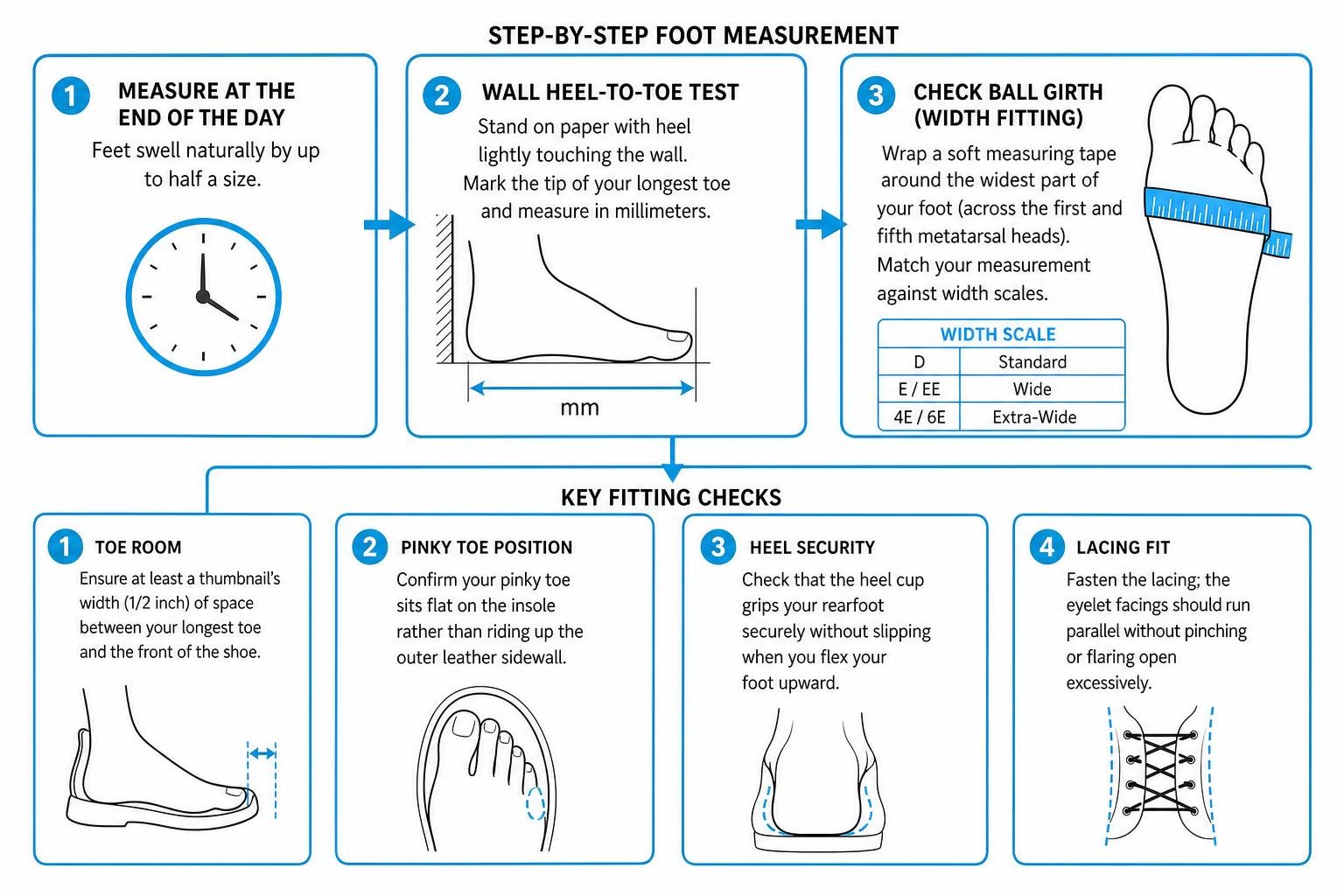
Key Fitting Checks:
- Ensure at least a thumbnail’s width (1/2 inch) of space between your longest toe and the front of the shoe.
- Confirm your pinky toe sits flat on the insole rather than riding up the outer leather sidewall.
- Check that the heel cup grips your rearfoot securely without slipping when you flex your foot upward.
- Fasten the lacing; the eyelet facings should run parallel without pinching or flaring open excessively.
How to Properly Break in and Maintain Broad Toe Leather Shoes
A high-grade pair of leather shoes can easily last 10 to 15 years with the right maintenance routine:
- Gradual Break-In: Wear your new leather shoes indoors with thick socks for 1–2 hours at a time over the first week. This softens the vamp leather without causing friction blisters.
- Routine Cleaning: Wipe down the uppers with a damp microfiber cloth after wear. Use saddle soap once a month to lift deep grime and road salt from the leather pores.
- Conditioning: Apply a wax-free, lanolin- or beeswax-based leather conditioner every 4 to 6 weeks. Keeping the leather hydrated allows it to flex around your wide forefoot without cracking.
- Use Cedar Shoe Trees: Insert raw cedar shoe trees immediately after taking your shoes off. Cedar draws out internal foot sweat, deodorizes the lining, and keeps the toe box from curling upward.
- The 24-Hour Rotation Rule: Never wear the exact same pair of leather shoes two days in a row. Giving shoes 24 hours to dry thoroughly preserves the interior linings and stitching.
- Waterproofing: Apply a breathable fluoropolymer or beeswax-based waterproofing spray every 2 to 3 months to protect against rain and puddles.
Frequently Asked Questions About Broad Toe Footwear
How do broad toe shoes differ from standard wide-width shoes?
A standard “wide” shoe (like an E or EE width) simply scales up the entire circumference of the shoe last. This often results in a sloppy, loose heel and midfoot for people who only have wide toes. Broad toe shoes specifically alter the forefoot geometry, providing a wide, anatomical fan shape at the toes while keeping the heel cup snug and supportive.
Can broad toe leather shoes look sleek and professional?
Yes. Skilled shoemakers use elongated toe caps, subtle chiseled silhouettes, and strategic welt beveling to create dress shoes that look streamlined from the outside while concealing generous internal volume. Darker leather shades like espresso, oxblood, and polished black also visually slim the profile.
What is the best way to break in stiff leather shoes without causing blisters?
Never soak quality leather in water or apply direct heat from hair dryers, as this dries out the hide and weakens the welt glue. Instead, apply a specialized leather-stretching spray or rich conditioning cream directly to tight spots on the inside of the shoe. Wear them around the house with cushioned socks, or use a mechanical two-way shoe stretcher to gently expand the metatarsal area overnight.
Conclusion
You don’t have to sacrifice professional style for healthy, pain-free feet. Switching to well-constructed broad toe leather shoes gives your toes the space they need to splay naturally, relieving pressure from bunions and metatarsalgia while keeping you polished for work and formal events.
At Onclouder, we believe comfortable footwear starts with natural anatomy and honest, real-world testing. Whether you choose a classic Goodyear-welted calfskin Derby, a cushioned orthopedic walker, or a flexible minimalist sneaker, giving your toes room to breathe is the best investment you can make for your posture and energy. If you are ready to experience unrestricted foot freedom, compare our top barefoot wide toe box shoes to find your next favorite pair today.