
Your First Step Starts With the Right Shoe
Running shoes for beginners can make or break your early experience as a runner. The right pair protects your joints, prevents injury, and keeps you comfortable mile after mile.
Here are the best beginner running shoes to consider in 2026:
| Shoe | Best For | Drop | Price |
|---|---|---|---|
| ASICS Novablast 5 | All-round cushioning | 8mm | ~$140 |
| Brooks Ghost 17 | Durability & comfort | 12mm | $119.95 (sale) |
| Nike Pegasus 41 | Responsive everyday rides | 10mm | ~$150 |
| Hoka Mach 6 | Lightweight energy return | 5mm | ~$150 |
| Puma Velocity Nitro 4 | Budget-friendly performance | 10mm | ~$140 |
Running is one of the most accessible sports out there. You don’t need much gear. But your shoes? Those actually matter.
Everyday sneakers aren’t built for the repetitive impact of running. Without proper cushioning and support, your feet, knees, and hips pay the price — especially on hard pavement. That’s why choosing the right pair from the start is so important.
I’m Faisal S. Chughtai, a footwear expert with years of experience helping people find the perfect running shoes for beginners and beyond. Let’s walk through everything you need to know to make a confident first purchase.
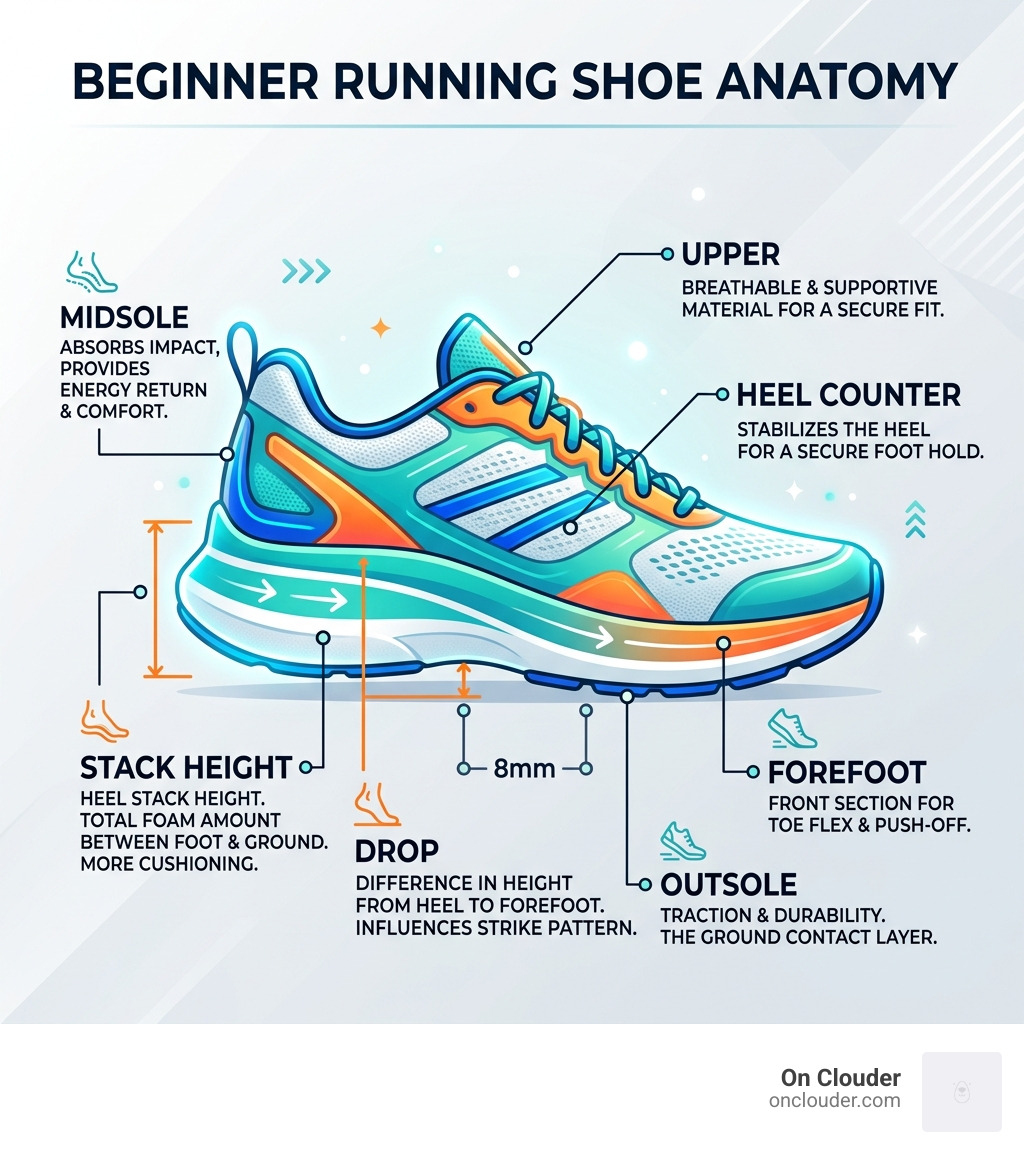
Running shoes for beginners definitions:
Why You Need Specialized Running Shoes for Beginners
We often hear the question: “Can’t I just use my gym trainers or those old sneakers in my closet?” While we love the “just get started” attitude, your body might disagree after a few miles.
Running is a high-impact activity. Every time your foot hits the pavement, it absorbs forces equivalent to two to three times your body weight. Specialized running shoes for beginners are engineered specifically to manage these forces. Unlike everyday trainers, which are often built for lateral (side-to-side) movement or just looking good at the grocery store, running shoes are designed for linear motion. They feature advanced midsole technology—the foam layer between your foot and the ground—that provides essential shock absorption.
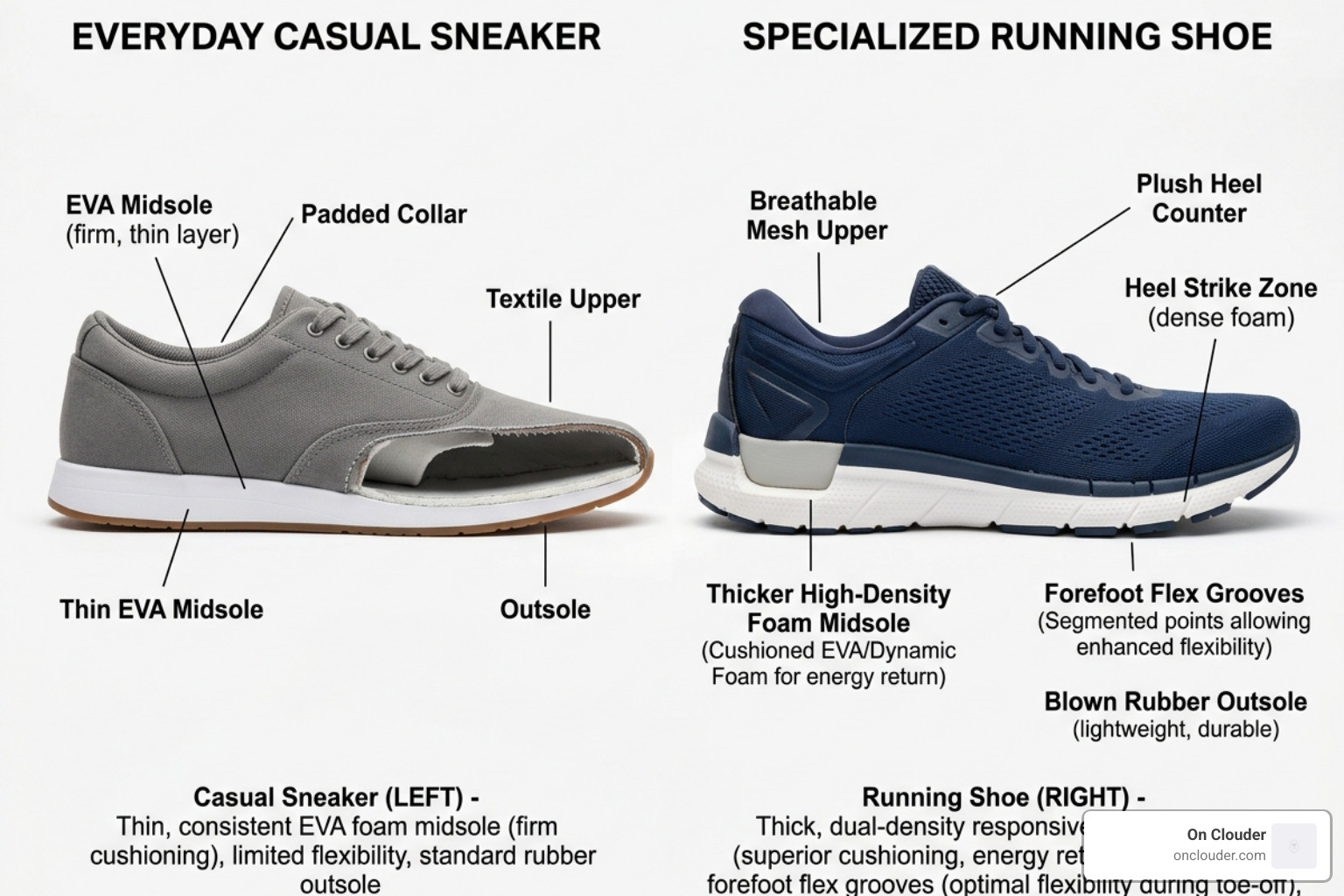
A key factor to keep in mind is the 500-mile lifespan. Most high-quality running shoes are built to last between 300 to 500 miles. Everyday sneakers often compress and lose their protective qualities much sooner, even if the outsole still looks “fine.” Furthermore, you need to consider where you’ll be running. Road shoes have flat, smooth outsoles for pavement, while trail shoes feature “lugs” for traction on mud and rocks. For most of us starting out, a road shoe is the most versatile choice.
For more on the basics of starting your fitness journey, check out our Beginner Running Guide.
Avoiding Common Mistakes
When we’re first starting out, it’s easy to fall into a few traps. The most common mistake? Buying for style over substance. We all want to look cool in our new hobby, but a neon-pink shoe that gives you blisters is a one-way ticket to quitting.
Another big one is ignoring foot swell. When you run, blood flow increases and your feet actually expand. If you buy shoes that fit exactly like your dress shoes, they will feel like torture devices by mile two. We also see many beginners trying to “tough it out” in worn-out trainers. If the foam feels hard or you’re seeing significant wear on the bottom, it’s time for an upgrade. To make sure you have everything you need, browse our list of Running Gear For Beginners.
Key Features to Look for in Your First Pair
Walking into a running store in April 2026 can feel like stepping onto a sci-fi movie set. There are talk of “carbon plates,” “nitrogen infusion,” and “energy return.” For your first pair, we recommend focusing on the “Daily Trainer”—the Swiss Army knife of shoes.
Here are the specs that actually matter:
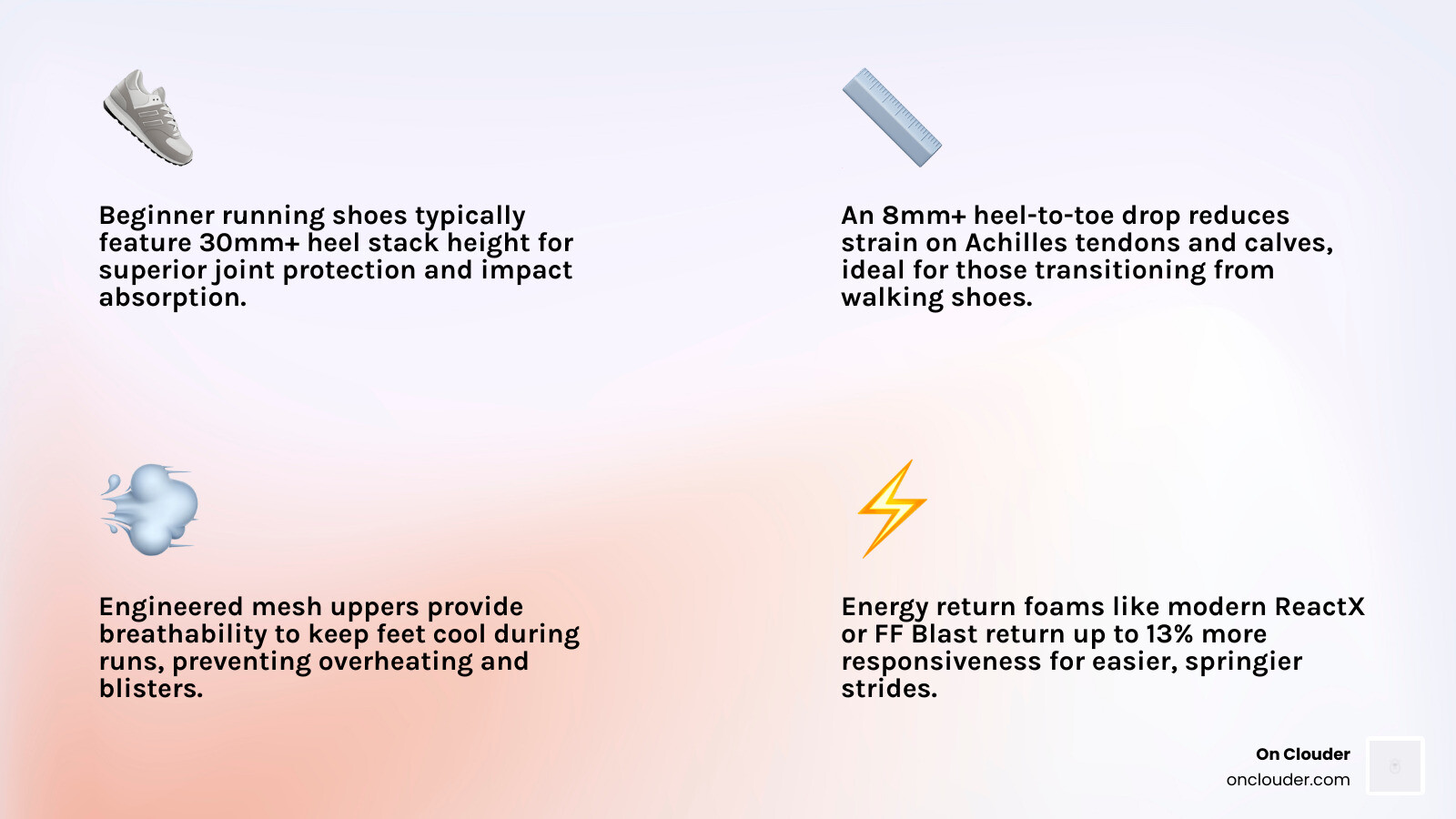
- Stack Height: This refers to the amount of material between your foot and the ground. For beginners, we recommend a “maximalist” or well-cushioned approach. Look for a 30mm heel cushion or higher. This ensures your joints are protected while your muscles adapt to the new stress of running.
- Heel-to-Toe Drop: This is the difference in height between the heel and the forefoot. Most beginners do best with an 8mm+ drop. This higher drop is closer to what you’re used to in “normal” shoes and puts less strain on your Achilles tendon and calves.
- Breathability: Running makes your feet hot. Look for engineered mesh uppers that let air circulate.
- Energy Return: Modern foams don’t just soak up impact; they bounce back. This “energy return” makes the run feel easier and more “springy.”
For a deeper dive into the top industry picks, you can read The 10 Best Running Shoes for Beginners in 2026 – Runner’s World.
Neutral vs. Stability Running Shoes for Beginners
This is where things get technical, but we’ll keep it simple. Your “gait” is how your foot moves when you run.
- Neutral: If your foot lands on the outside of the heel and rolls slightly inward to absorb shock, you have a neutral stride. Most runners fall into this category.
- Stability (Overpronation): If your foot rolls inward excessively, it can put a strain on your arches and knees. Stability shoes use firmer foam on the inside of the shoe to “guide” your foot back to a neutral position.
If you have flat feet, you might naturally lean toward stability options. We’ve put together a comprehensive resource on Flat Feet Running 101 Everything You Need To Know About Support And Comfort to help you decide.
Top-Rated Running Shoes for Beginners in 2026
We’ve analyzed the data and tested the latest models to find the absolute best running shoes for beginners available this year. Whether you want max cushion or a lightweight feel, there is something here for you.
For a full list of the latest updates, see our Best Running Shoes For Beginners 2026 Update.
Nike Pegasus 41
The “Peg” is a legend for a reason. In 2026, the Nike Pegasus 41 continues its reign as the ultimate all-rounder. The big news this year is the ReactX foam, which is 13% more responsive than previous versions. It also features dual Air Zoom units in the heel and forefoot for that signature snappy feel. With a 10mm drop, it’s a safe, reliable entry point for any new runner.
- Nike Pegasus 41 Men’s
- Nike Pegasus 41 Women’s
- Nike Pegasus 41 Women’s Wide
ASICS Novablast 5
If you want to feel like you’re running on trampolines, the ASICS Novablast 5 is your shoe. It uses the new FF Blast MAX foam, which offers 8.5% more bounce than the previous version. It boasts a massive 41mm stack height in the heel, yet the foam is 17% softer than the industry average. It’s perfect for protecting your legs during those first few 5K training blocks. Explore more Running Shoes 2026.
Brooks Ghost 17
The Brooks Ghost 17 is the “old reliable” of the running world, but it’s far from boring. The 17th edition features DNA Loft v3, a nitrogen-infused foam that is incredibly lightweight yet durable. With a 12mm drop, it’s one of the best options for those transitioning from stiff everyday shoes. It’s also known for its incredible outsole durability—lab tests show only 0.7mm of wear even after heavy use. Check out our Running Shoe Reviews 2026 for more details.
Hoka Mach 6
Hoka has moved beyond just “chunky” shoes to high-performance machines. The Hoka Mach 6 offers incredible energy return, with lab data showing 67% forefoot bounce. It’s exceptionally lightweight (about 8.2oz), making it great for beginners who find traditional trainers too “clunky.” It has a lower 5mm drop, so it’s best if you already have a fairly active lifestyle. See where it ranks in our Best Running Shoes 2026.
Puma Velocity Nitro 4
Puma is the dark horse of 2026, offering incredible value. The Velocity Nitro 4 weighs only 247g and features Nitro foam for a premium feel at a lower price point. One of its standout features is the “PumaGrip” outsole, which provides the best wet-grip traction in the business. It’s a fantastic, budget-friendly option often found at Beginner Running Shoes | DICK’S Sporting Goods.
How to Find the Perfect Fit and Maintain Your Shoes
Getting the right shoe is only half the battle; getting the right size is the other half.
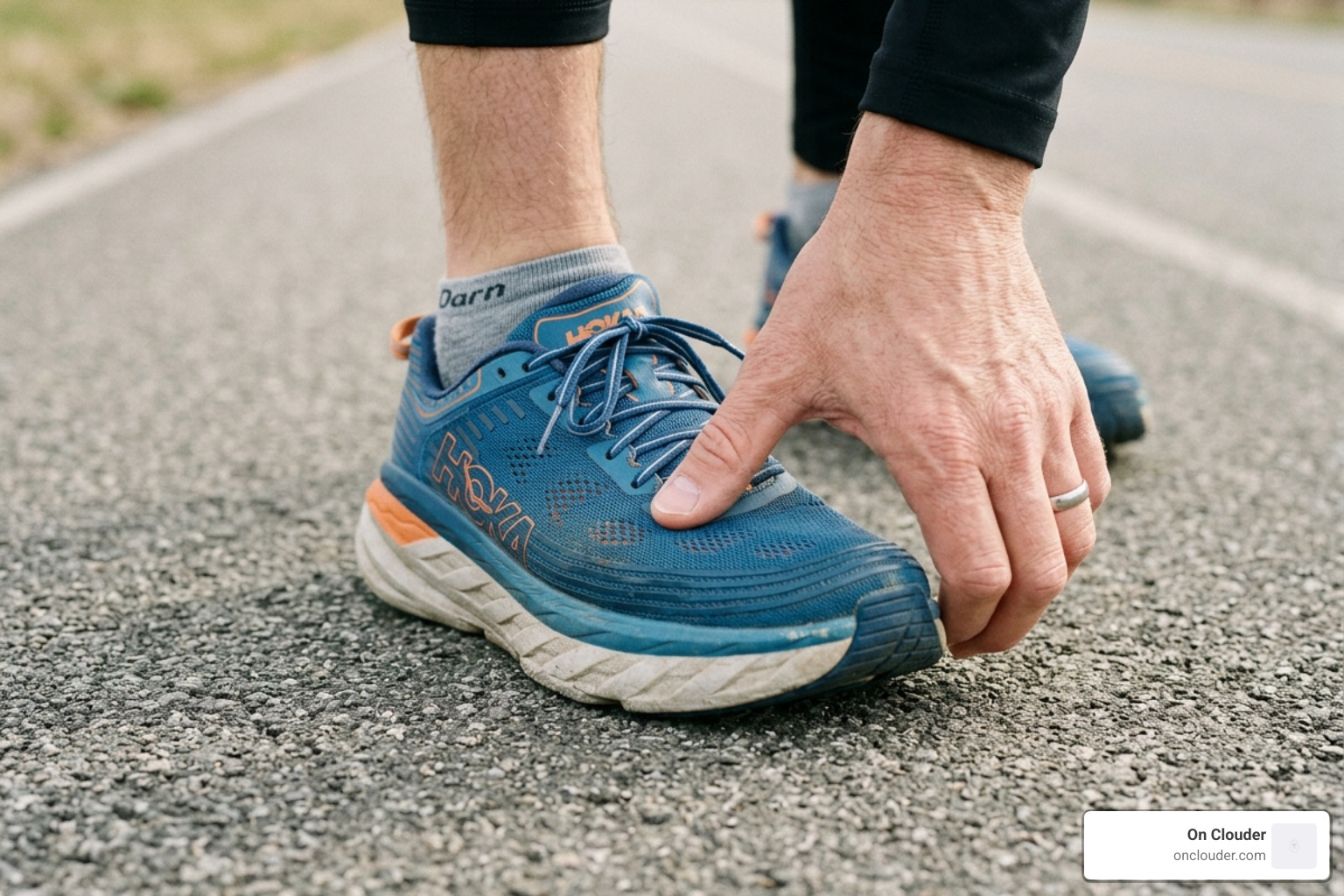
The Golden Rule of running shoes is the “Rule of Thumb.” You should have about a thumb’s width of space between your longest toe and the front of the shoe. Why? Because as we mentioned, your feet swell. If they fit “perfectly” in the store, they will be too small on the road. Most runners end up sizing up by a half-size or even a full size compared to their casual shoes.
If you find that your pinky toe feels squished or the sides of your feet ache, you likely need a wide-fit option. Don’t worry—most major brands like Brooks and Nike offer their top models in wide widths. Our Beginners Guide To Wide Fit Running Shoes can help you navigate these sizing nuances.
Maintenance and Replacement Cycles
To get the most out of your investment, follow these simple care tips:
- Clean gently: Never put your shoes in the washing machine or dryer! The heat and agitation can destroy the technical foams and glues. Use a damp cloth and mild soap.
- Air Dry: If they get wet, stuff them with newspaper and let them air dry away from direct heat.
- The 500-Mile Rule: Keep a rough log of your miles. Most shoes lose their “life” around 500 miles. Even if they look clean, the foam might be dead, leading to aches and pains.
- Watch the Outsole: If the rubber tread is worn smooth, your traction is gone, and it’s time for a new pair.
For more maintenance hacks, visit our Running Shoe Guide.
Frequently Asked Questions about Beginner Running Shoes
How much should I spend on my first pair?
While you can find shoes from $25 to $500, the “sweet spot” for quality running shoes for beginners is the $100-$140 range. At this price, you get the latest foam technologies and durable outsoles. If you’re on a budget, look for previous models (like the Ghost 16 instead of the 17); they are often 20-30% cheaper and still offer 95% of the performance.
Is a professional gait analysis necessary?
It’s not strictly mandatory, but it’s a great idea for your first pair. Most dedicated running stores offer a free treadmill test where they film you running. This helps determine if you need a neutral or stability shoe. However, if a store isn’t nearby, a comfort-first approach is usually best—if the shoe feels good when you’re moving, it’s likely a good match for your biomechanics.
Should I start with road or trail shoes?
Unless you live next to a mountain range, start with road shoes. They are more versatile, lighter, and provide better cushioning on pavement, where most beginners log their first miles. If you eventually start running on technical, muddy trails, you can add a pair of trail shoes to your rotation later.
Conclusion
Starting your running journey is an incredible gift to your health and happiness. By choosing the right running shoes for beginners, you’re setting yourself up for success and keeping those pesky injuries at bay. At On Clouder, we are dedicated to providing the most in-depth reviews and performance rankings to help you make the best choice for your feet.
Ready to see how these top models stack up against each other? Check out More info about shoe comparisons to find your perfect match! Happy running!