
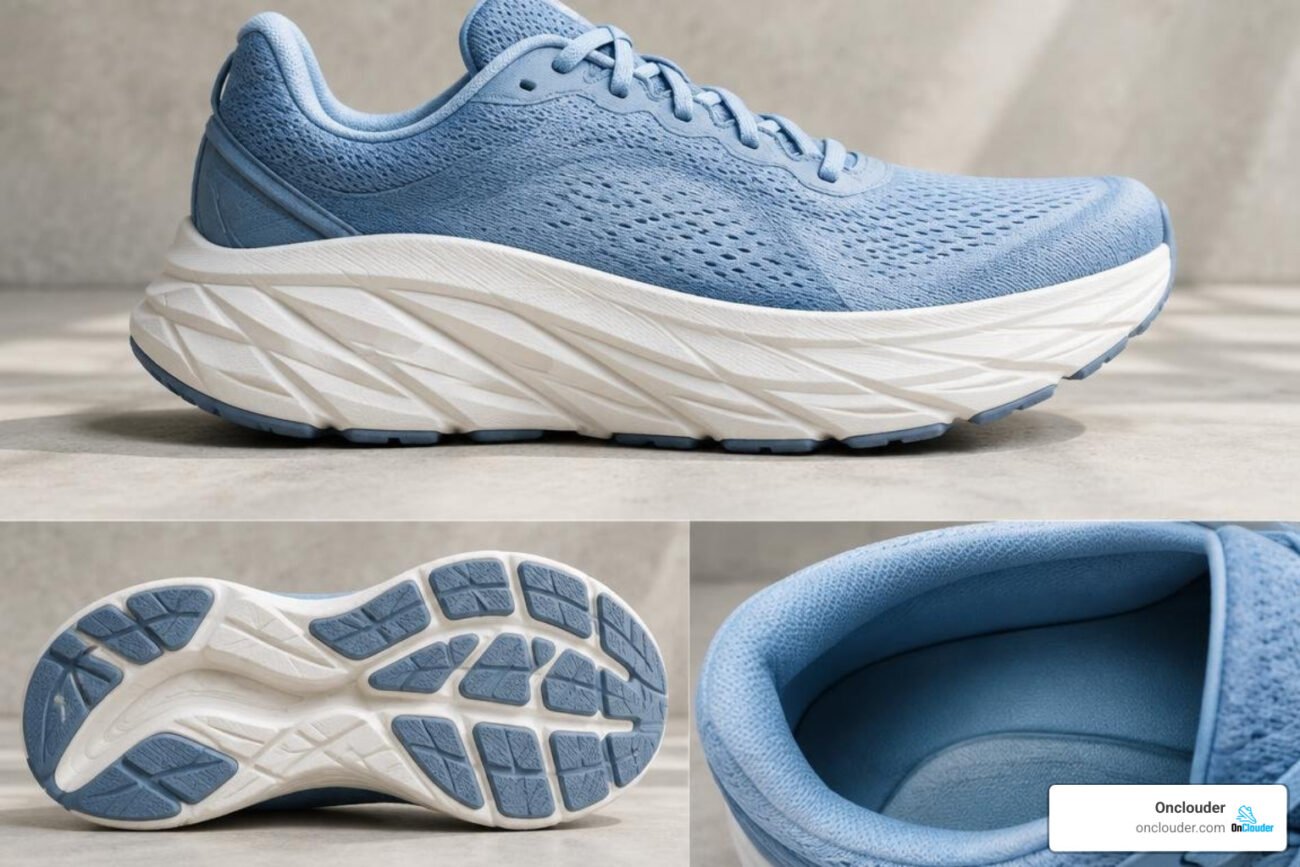
HOKA Walking Shoes for Plantar Fasciitis That Soothe Sore Arches
Key Features That Make These Walking Shoes Great for Plantar Fasciitis Relief
What makes the best walking shoes for plantar fasciitis? Three things: plush cushioning, structured arch support, and slip-resistant traction. That’s what you need for long shifts on hard floors. Some models go all-in on cushioning. Others focus on overpronation support. And some give you balanced, versatile comfort for daily walking. You’ll even find dedicated options for severe overpronation and all-day standing on hard surfaces.
So what is plantar fasciitis, exactly? It happens when the thick band of tissue along the bottom of your foot gets inflamed. Every time your heel hits the pavement, that strain pulls at the spot under your heel bone. And the best walking shoes for plantar fasciitis? They tackle that mechanical stress with specific design elements. All built to take the tension off.
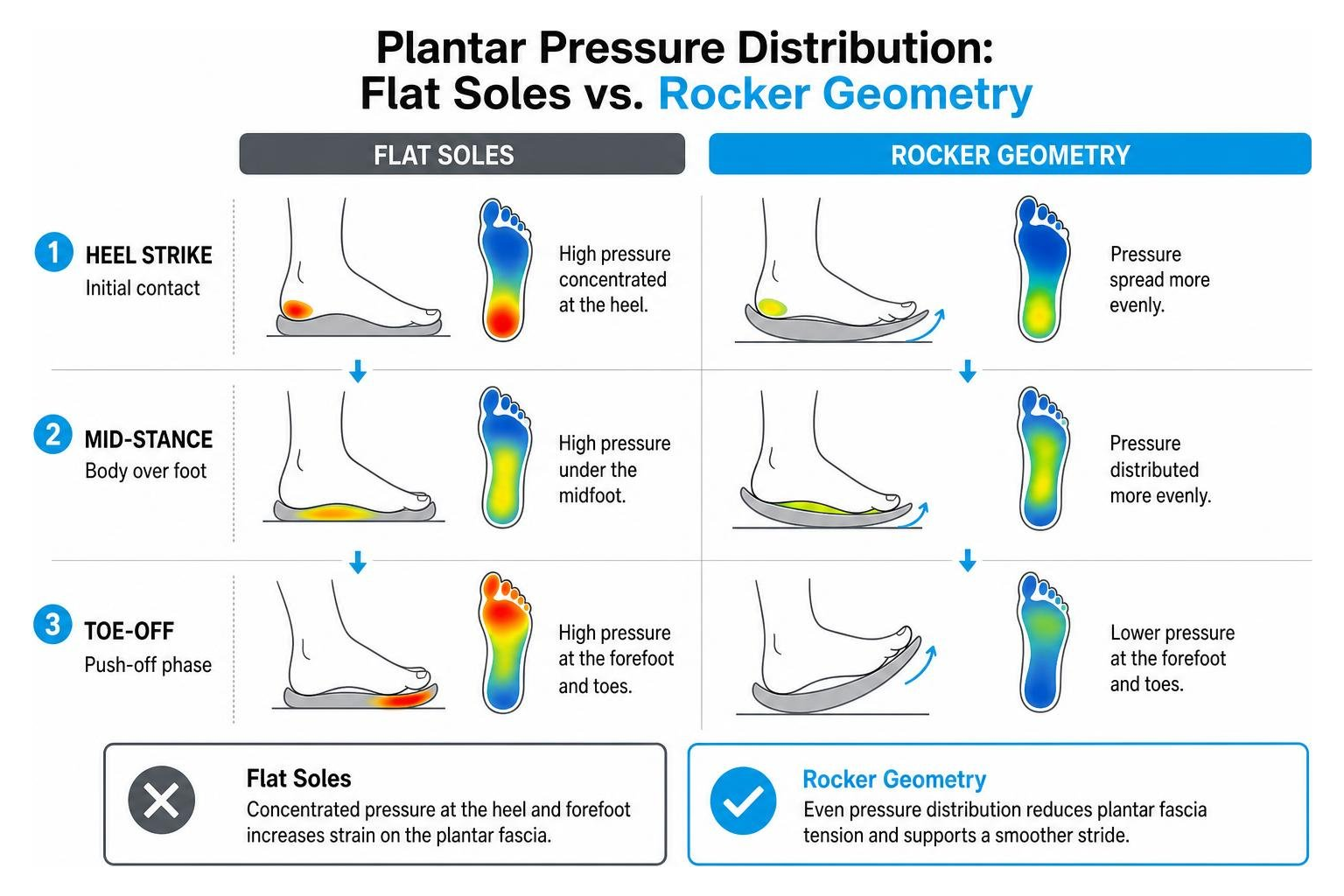
1. Early-Stage Meta-Rocker Geometry
Traditional shoes? They make your plantar fascia stretch and wind tight when your big toe bends during toe-off. You know, the windlass mechanism. But a curved sole changes that. Think of a rocking chair for your foot. It rolls your momentum forward smoothly, from heel strike to toe-off. That means less flex from your metatarsophalangeal joints. And your plantar fascia doesn’t over-stretch.
2. Deep Active Foot Frame
Most shoes just let your foot sit on top of the foam. But the best designs? They bed your heel and midfoot deep inside the midsole walls. Think of a bucket seat. That’s what locks your heel bone in place. No sliding side to side. And the fat pad under your heel stays right where it should.
3. High-Stack EVA Cushioning
Good midsoles pack in thick layers of compression-molded EVA foam. Why? To soak up all that vertical force hitting you with every step. And that cushioning does one big thing. It shields those tiny tears in your inflamed fascia from shock after shock on long daily walks.
4. Low Heel-to-Toe Drop (4mm to 6mm)
Most regular walking shoes have a steep 10mm to 12mm drop. That can shift your weight unevenly. The best ones? They go with a moderate 4mm to 6mm drop. Why does that matter? It spreads the load evenly across your whole footbed. And it won’t over-shorten or strain your Achilles tendon and calf muscles.
Top Picks: Best Walking Shoes for Plantar Fasciitis
So which shoe is right for you? It depends on how you walk, your arch height, and what your daily routine looks like. Here’s our side-by-side breakdown for plantar fasciitis relief:
| Shoe Type | Cushioning Level | Stability Type | Heel-to-Toe Drop | Best Use Case |
|---|---|---|---|---|
| Max-Cushion Neutral | Maximum (Plush) | Neutral | 4 mm | Long-distance walking & standing on hard surfaces |
| Moderate Support | Balanced | Moderate (Guide Frame) | 5 mm | Walkers with mild-to-moderate overpronation |
| Everyday Balanced | Balanced / Plush | Neutral | 5 mm | Everyday versatile walking & recovery miles |
| Max Stability | Maximum (Plush) | Maximum (Guide Frame) | 6 mm | Severe overpronation & flat/fallen arches |
| Slip-Resistant Work Shoe | Maximum (Firm-Plush) | Neutral | 6 mm | Healthcare & service workers needing slip resistance |
Max-Cushion Neutral: Best Walking Shoe for Plantar Fasciitis with Maximum Cushioning
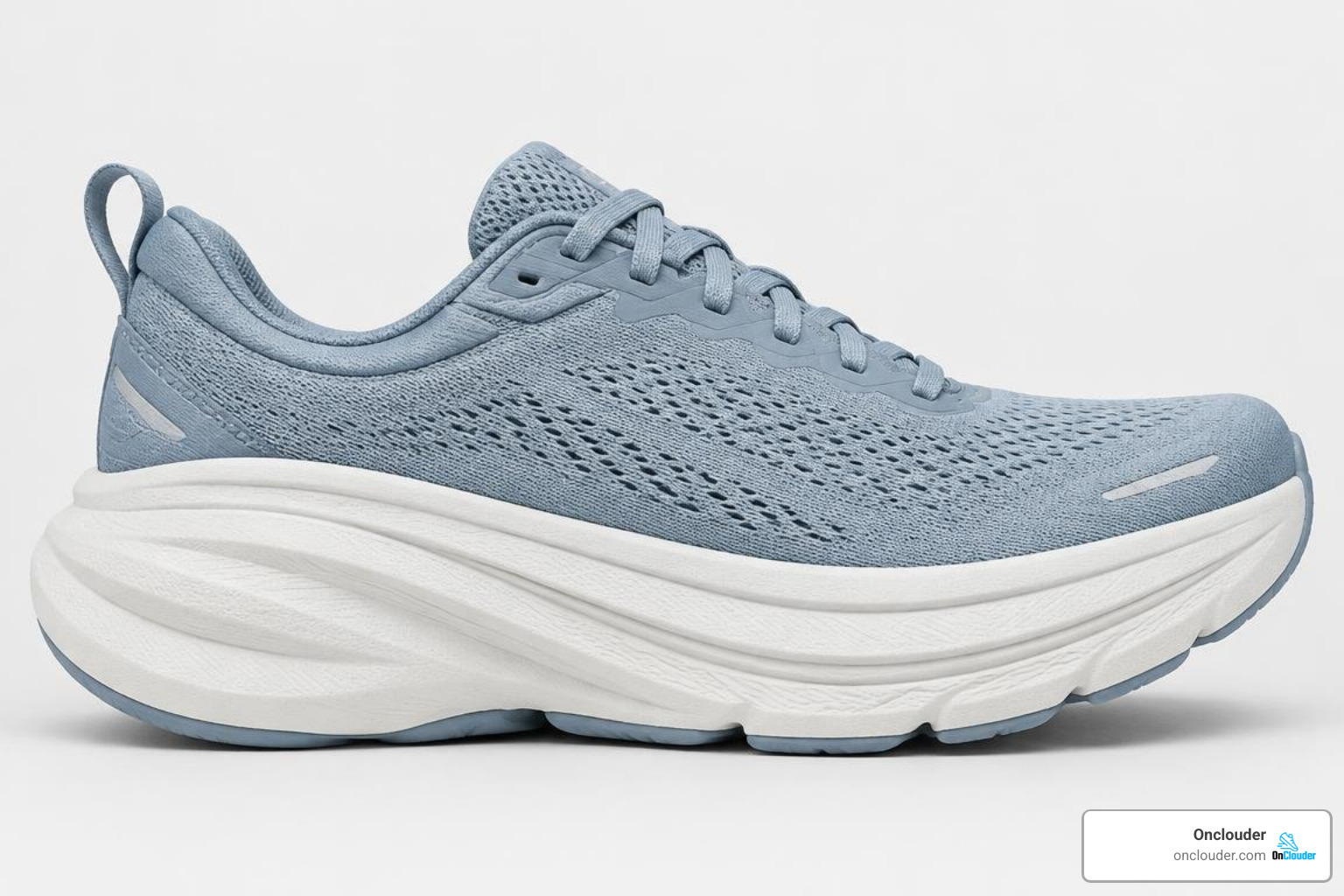
This type of shoe is the best pick for soaking up impact. Why? It’s got a big 42mm heel stack of soft EVA foam. And that foam? It keeps your tender heel spur or inflamed plantar fascia away from hard concrete.
- Heel Shock Absorption: The extended heel bevel softens the initial impact phase of every stride.
- Smooth Transition: The early-stage Meta-Rocker ensures you transition quickly off your heel without aggravating tender tissues.
- Upper Comfort: Engineered mesh hugs the midfoot securely while allowing room in the forefoot for natural swelling during long days.
If you spend multiple hours walking on unforgiving tile, asphalt, or concrete, this style provides an unmatched protective barrier.
Moderate Support: Best Walking Shoe for Plantar Fasciitis and Overpronation
When your arches roll inward — that’s overpronation — your plantar fascia gets twisted and strained. This shoe type fixes that with structured support. No harsh, rigid feel like traditional medial posts.
- Guide-Frame Stability: An updated support base guides your foot through its natural gait cycle, preventing the arch from collapsing downward and pulling at the heel.
- Balanced Ride: Weighing roughly 15.4 oz for women and 19.6 oz for men, it delivers structured stability while remaining nimble and responsive.
- Supportive Heel Counter: A firm, locked-in heel cup stops excess calcaneal wobble from irritating the fascia attachment point.
Everyday Balanced: Lightweight Daily Walker for Moderate Arch Support
Some walkers think max-cushion shoes feel too bulky. If that’s you, and you want something light and nimble, this style hits the sweet spot. It weighs 17.6 oz for women, 19.6 oz for men. And it gives you responsive daily performance plus balanced cushioning.
- Stack Height: A generous 38mm heel stack provides ample shock reduction while keeping your foot closer to the ground than the maximum-cushion option.
- Smooth Toe-Off: The rocker profile works seamlessly with a flexible forefoot to keep strides effortless.
- Versatility: Ideal for neighborhood walks, light errands, and daily recovery routines where moderate arch structure is sufficient.
Max Stability: Maximum Support for Severe Overpronation
Got flexible flat feet? Or severe overpronation that regular walking shoes can’t handle? Then this is your pick. It’s the most stable option you’ll find.
- Wide Midfoot Platform: A broad footprint creates inherent stability from the ground up, preventing midfoot twisting.
- Plush Stability Blend: Combines max-cushion foam with a rigid support frame, delivering comfort without sacrificing structural alignment.
- Deep Active Foot Frame: Wraps high around the perimeter of the foot to keep your arch supported and aligned throughout your stride.
Slip-Resistant Work Shoe: Best Option for Standing All Day
Work in healthcare, food service, or hospitality? Long shifts on your feet? Plantar fasciitis can make your job feel impossible. So what’s the fix? This slip-resistant style takes an ultra-cushioned midsole and tweaks it for work. That’s what makes it a game-changer.
- Water-Resistant Upper: Premium full-grain leather shields against spills and wipes clean easily.
- Slip-Resistant Rubber: Outsole tested to meet strict industry standards for wet, oily, and soapy surfaces.
- All-Day Pressure Relief: High-density foam cushions your heels through 8- to 12-hour shifts on hard floors.
How to Choose the Right Cushioning, Drop, and Fit for Sore Arches
Choosing the right shoe involves balancing cushioning, structural support, and proper fit.
1. Cushioning Levels: Plush vs. Balanced vs. Responsive
- Plush (Bondi 9, Gaviota 6): Best for acute heel pain and long periods of static standing. It minimizes peak impact forces under the calcaneus.
- Balanced (Clifton 10, Arahi 8): Delivers a blend of protective cushioning and energetic rebound, preventing that “sinking” feeling during brisk fitness walks.
- Responsive: Firmer platforms designed for speed; generally less suitable for acute plantar fasciitis flare-ups.
2. Heel-to-Toe Drop Considerations
A drop between 4mm and 6mm strikes an ideal balance for plantar fasciitis. It keeps your foot in a neutral position, avoiding the aggressive plantar fascia stretching caused by completely flat zero-drop shoes, while preventing the Achilles shortening associated with high-drop footwear.
3. Orthotic Compatibility and Width Options
All recommended Hoka models feature removable factory insoles. Their deep Active Foot Frame easily accommodates over-the-counter arch supports or rigid custom orthotics without causing your heel to slip out of the back. If you have wider feet or bunions, opt for designated Wide (2E) or Extra Wide (4E) sizing to avoid midfoot compression.
4. Models to Avoid
Avoid ultra-minimalist or hyper-flexible racing models (such as the Hoka Cielo or lightweight track flats). Highly flexible shoes bend easily at the midfoot, forcing your inflamed plantar fascia to act as the primary structural support during every step.
Frequently Asked Questions About Plantar Fasciitis and Hoka Shoes
Are stability Hokas better than neutral Hokas for plantar fasciitis?
It depends on your foot mechanics. If a gait analysis shows that your ankles and arches roll excessively inward (overpronation), stability models like the Arahi 8 or Gaviota 6 will reduce mechanical torque on your fascia. However, if you have neutral mechanics or high, rigid arches, a neutral max-cushion shoe like the Bondi 9 or Clifton 10 provides better shock dispersion.
Can you fit custom orthotics inside Hoka walking shoes?
Yes. Hoka shoes feature removable footbeds and deep interior volume thanks to the Active Foot Frame. Simply take out the stock liner and slide in your custom orthotic or medical-grade insert.
How should you break in Hoka shoes to avoid aggravating heel pain?
Even the most supportive shoes require an adaptation period. Because Hoka’s Meta-Rocker geometry subtly alters foot mechanics, follow a gradual break-in schedule:
- Days 1–3: Wear them around the house for 1 to 2 hours.
- Days 4–7: Take short, easy 20- to 30-minute walks on flat surfaces.
- Week 2 Onward: Gradually increase walking distance as your feet adapt to the rocker profile and foam stack.
Finding Lasting Arch Comfort
Recovering from plantar fasciitis requires an integrated approach that pairs proper footwear with targeted stretching, calf strengthening, and adequate rest. Hoka walking shoes provide the cushioning and rocker geometry needed to take painful steps off your inflamed arches.
Explore our comprehensive evaluation of podiatrist-approved best shoes for plantar fasciitis to see how different support systems stack up and find the right match for your daily routine.
