

The Best Running Shoes for Overpronation in 2026
The best running shoes for overpronation give your feet the stability they need to run comfortably — without slowing you down or making your shoes feel like ankle braces.
Here are the top picks at a glance:
| Shoe | Best For | Stability Level | Drop |
|---|---|---|---|
| On Cloudflyer 5 | Everyday training & mild-severe overpronation | High | 8mm |
| On Cloudrunner 2 | Mild overpronation, versatile daily use | Moderate | 8mm |
| On Cloudstratus 3 | Long runs & marathon training | High | 6mm |
| On Cloudmonster 2 | Max cushion + support | Moderate | 6mm |
| On Cloudrunner 2 Wide | Wide feet + overpronation | Moderate | 8mm |
| On Cloudsurfer Next | Lightweight daily stability | Moderate | 8mm |
| On Cloudflyer Waterproof | Wet weather + full support | High | 8mm |
| On Cloudvista 2 | Trail overpronation | Moderate | 6mm |
| On Cloudpulse | Standing, walking & light running | Moderate | 10mm |
Overpronation means your foot rolls too far inward when it lands. A little inward roll is normal — it helps absorb impact. But when it’s excessive, it shifts stress to the wrong muscles and joints. Over time, that can lead to shin splints, plantar fasciitis, knee pain, and more.
The good news? The right pair of shoes can make a real difference. Modern stability shoes no longer rely on stiff, clunky plastic posts. Instead, they use smart geometry, dual-density foams, and adaptive support systems that guide your foot without restricting it.
I’m Faisal S. Chughtai, a footwear expert who has spent years helping runners and active professionals find the right shoe for their stride — including the best running shoes for overpronation across different foot types, training goals, and budgets. Read on for my full breakdown of the top nine stability shoes for 2026.
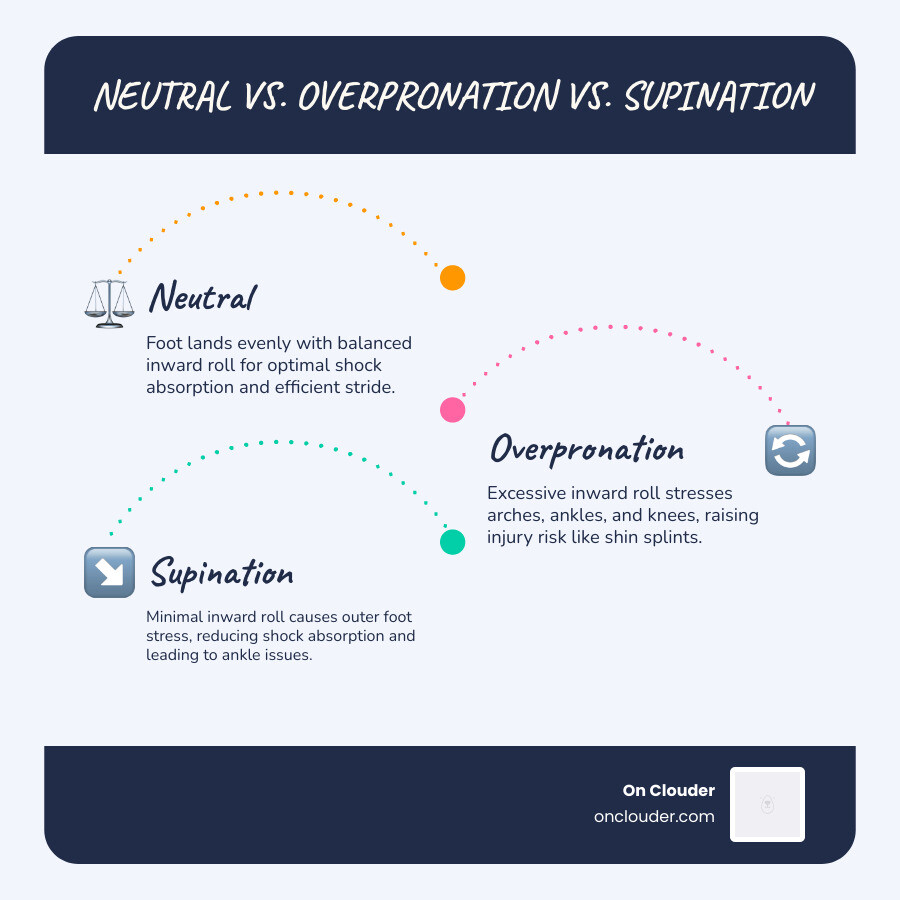
Best running shoes for overpronation terms made easy:
Understanding Your Gait: Identifying Overpronation
Before we dive into the gear, we need to talk about your feet. Identifying whether you actually need the best running shoes for overpronation is the first step toward injury-free miles. According to the Mayo Clinic, understanding your gait is essential for choosing footwear that prevents musculoskeletal strain and long-term overuse injuries.
Pronation is part of the natural gait cycle. When your heel strikes the ground, your arch flattens to absorb the shock. However, overpronation occurs when the foot rolls inward more than 15% during this process. This often results in the big toe and second toe doing all the heavy lifting during push-off, which is inefficient and taxing on your lower leg.
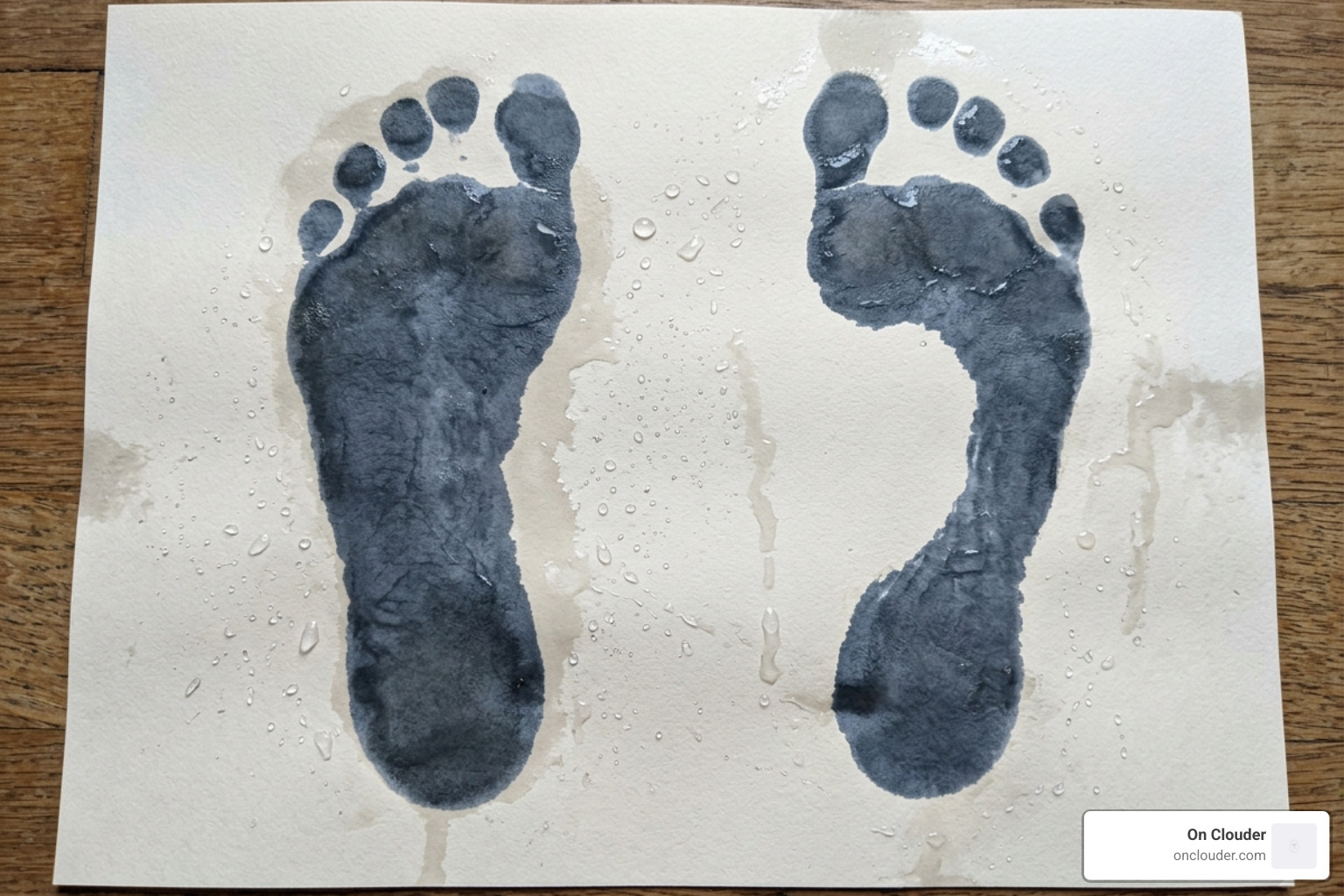
The DIY Gait Analysis: The Wet Test
You don’t necessarily need a fancy lab to get started. One of the easiest ways to identify your arch type is the “wet test.”
- Dip your feet in water.
- Step onto a piece of dark paper or a concrete floor.
- Look at the footprint.
If you see a full, wide footprint with no visible arch curve, you likely have flat feet, which is a primary indicator of overpronation.
Wear Patterns and Video Analysis
Another “tell” is hidden on the bottom of your old shoes. Flip them over and look at the soles. If the inside edge of the heel and the area under the big toe show significant wear compared to the outside edge, you are an overpronator.
For a more modern approach, have a friend record a video of you running from behind on a treadmill. When you slow the footage down, watch your ankles. Do they collapse inward as soon as your foot touches the ground? If so, you’re looking at mild to severe overpronation.
Ignoring this can lead to a “greatest hits” list of runner injuries: shin splints, bunions, heel spurs, and the dreaded plantar fasciitis. Structured support isn’t just about comfort; it’s about keeping you on the road and out of the physical therapist’s office.
Key Features of the Best Running Shoes for Overpronation
In 2026, the technology inside stability shoes has evolved. We’ve moved away from the “medial post”—that hard block of plastic on the inside of the shoe that felt like a brick. Today’s best running shoes for overpronation use holistic systems to guide the foot.
CloudTec® and Speedboard® Integration
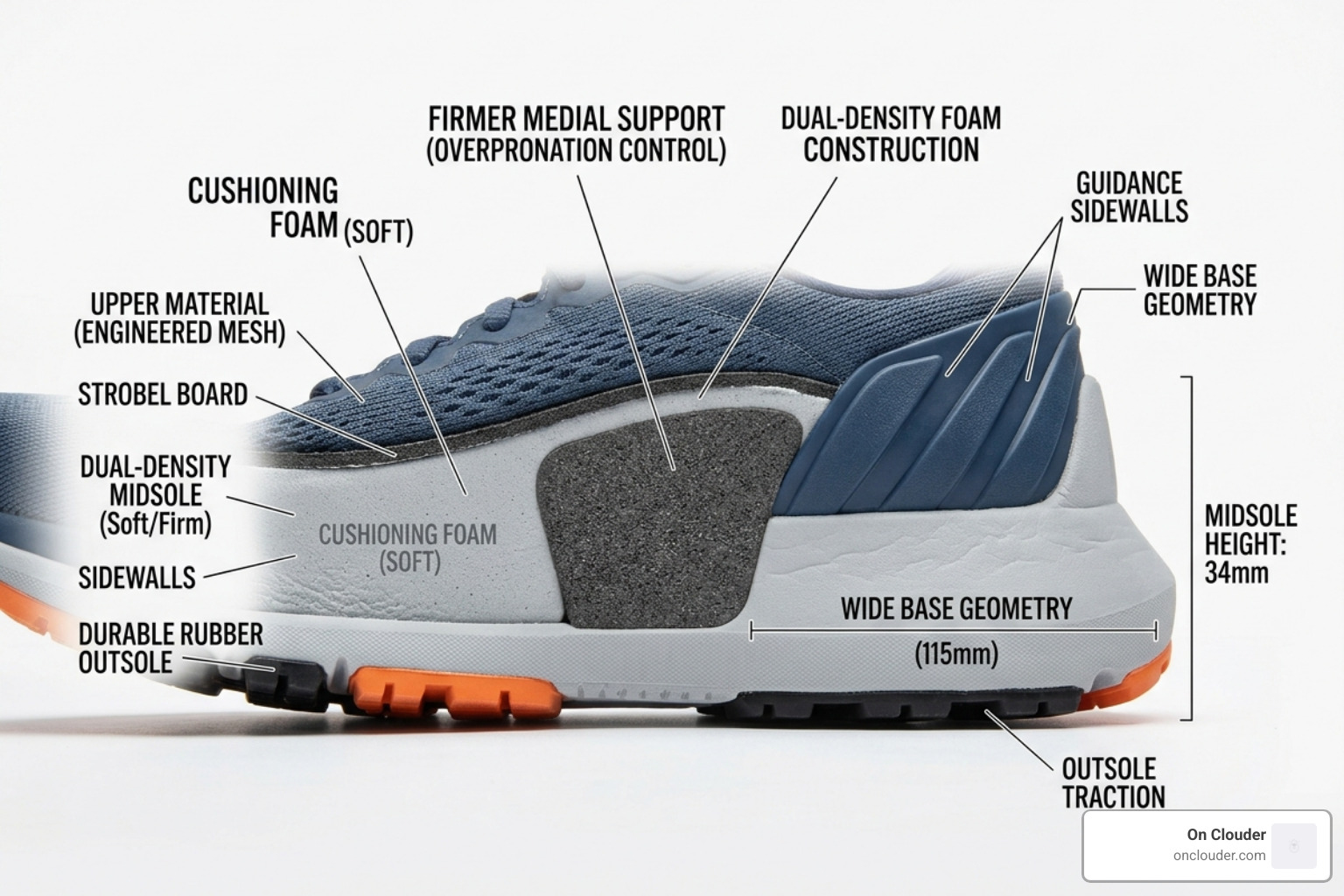
Our preferred technology involves a combination of CloudTec® cushioning and a tailored Speedboard®. The “Clouds” provide soft landings, but for overpronators, they are engineered to be slightly firmer on the medial (inside) side. The Speedboard® acts like a backbone, providing torsional rigidity—essentially preventing the shoe from twisting too much when your foot tries to roll inward.
Wide Base Geometry and Sidewalls
You’ll notice that many of the best running shoes for overpronation look a bit “chunkier” at the bottom. A wider base, especially in the midfoot and heel, provides a stable platform that makes it physically harder for the foot to tip over. Some models also feature “sidewalls”—where the midsole foam wraps up around the side of your foot, cradling it like a bucket seat in a race car.
Stats to Watch
When shopping, keep these averages in mind:
- Weight: Stability shoes usually weigh around 10.1 oz (286g). They are slightly heavier than neutral shoes due to the extra support structures.
- Torsional Rigidity: On a scale of 1-5, look for a 4 or 5 for severe overpronation.
- Stack Height: Higher stacks (35mm+) offer more shock absorption, which is vital since overpronators often hit the ground harder.
The 9 Best Stability Shoes for Every Type of Overpronator in 2026
Finding the perfect fit depends on your specific needs. Are you training for a marathon, or just looking for something to wear while standing all day? Here is our definitive ranking for 2026.
| Model | Weight (M) | Stack Height | Best Feature |
|---|---|---|---|
| On Cloudflyer 5 | 10.6 oz | 37mm | Ultimate Support |
| On Cloudrunner 2 | 9.8 oz | 34mm | Versatility |
| On Cloudstratus 3 | 10.4 oz | 38mm | Double CloudTec® |
| On Cloudmonster 2 | 10.4 oz | 40mm | Maximum Cushion |
| On Cloudsurfer Next | 9.2 oz | 32mm | Smooth Transition |
| On Cloudvista 2 | 10.2 oz | 30mm | Trail Stability |
1. On Cloudflyer 5: Best for Severe Overpronation
This is the heavyweight champion of support. If you have very flat feet or severe overpronation, the Cloudflyer 5 is designed for you. It features a wider Speedboard® and a dual-density midsole that provides 14% more flexibility than traditional stability shoes while maintaining a 5/5 rigidity score where it counts.
2. On Cloudrunner 2: Best for Mild Overpronation
Not everyone needs a “tank” on their feet. The Cloudrunner 2 is perfect for those who just need a little nudge. It’s lighter (9.8 oz) and uses a cradle-shaped construction to keep your foot centered. It’s a fantastic daily trainer that doesn’t feel like a “stability shoe.”
3. On Cloudstratus 3: Best for Marathon Training
When you’re at mile 20, your form starts to fall apart. That’s when the Cloudstratus 3 shines. It uses a double layer of CloudTec® to mute impact and a wide base to catch you as your ankles begin to tire.
4. On Cloudmonster 2: Best Max Cushion Support
For those who want to feel like they are “bouncing on clouds,” the Cloudmonster 2 offers a massive 40mm stack height. While technically a neutral-to-stability hybrid, its wide forefoot (often 12mm wider than average) provides natural stability for mild overpronators.
5. On Cloudrunner 2 Wide: Best for Wide Feet
Overpronation and wide feet often go hand-in-hand. This version offers extra volume in the midfoot and toe box, ensuring that the support structures actually sit under your arch rather than pinching the side of your foot.
6. On Cloudsurfer Next: Best Lightweight Stability
If you want to run fast, you don’t want heavy shoes. The Cloudsurfer Next uses a new Helion™ superfoam that offers 70% energy return while maintaining enough torsional rigidity to prevent excess roll during tempo runs.
7. On Cloudflyer Waterproof: Best for All-Weather
Stability doesn’t stop when it rains. This model adds a 100% wind and waterproof membrane to the most supportive chassis in the lineup, making it the best running shoe for overpronation in harsh climates.
8. On Cloudvista 2: Best for Trail Running
Trail surfaces are uneven, which can be a nightmare for overpronators. The Cloudvista 2 features a Missiongrip™ outsole with a firmer closed-channel midsole that prevents stones from getting stuck and stops your foot from rolling on sloped berms.
9. On Cloudpulse: Best for Gym and Walking
If your “running” is more of a brisk walk or a HIIT class, the Cloudpulse offers a 10mm drop and a stable heel cup that works perfectly for lateral movements and long hours on your feet.
Best Running Shoes for Overpronation and Marathon Training
Marathon training puts a unique strain on overpronators. As fatigue sets in, your arch naturally collapses more. Research shows that wearing stability shoes during long blocks can improve rearfoot eversion and lower injury risk.
For the long haul, we recommend the On Cloudstratus 3. Its dual-layer cushioning system absorbs about 151 SA (shock absorption) at the heel, which is significantly higher than the industry average. This protects your joints during those 18-20 mile training runs. Real-world testers have noted that switching to a high-stability trainer like the Cloudflyer 5 for recovery runs helped eliminate IT band and knee pain during high-mileage weeks.
Best Running Shoes for Overpronation: Severe vs. Mild Support
It is a mistake to buy “too much” shoe.
- Severe Overpronators: Look for shoes with a stiffness score of 5/5 and a wide heel base (like the Cloudflyer 5). You need the shoe to do the work your arch can’t.
- Mild Overpronators: You might prefer “adaptive stability.” Shoes like the Cloudrunner 2 or Cloudsurfer Next only engage their support when your foot rolls too far, allowing for a more natural feel during the rest of your stride.
Maintenance, Alternatives, and Expert Insights
Even the best running shoes for overpronation won’t last forever. In fact, stability shoes often “die” before they look worn out.
The 300-500 Mile Rule
Most stability shoes should be replaced every 300 to 500 miles. For overpronators, this is critical because the medial support structures compress over time. Once that foam loses its integrity, the shoe will actually encourage your foot to roll inward even more.
Signs it’s time to replace:
- You notice new aches in your shins or knees.
- The midsole feels “mushy” rather than snappy.
- The shoe leans inward when placed on a flat table.
Alternatives: Strength and Insoles
While we love a good shoe, gear isn’t the only answer. Many runners and coaches suggest that strength training is the ultimate “stability fix.” Exercises that target the hips, glutes, and “foot core” (the tiny muscles in your arch) can reduce your reliance on high-stability footwear over time.
If you have a pair of neutral shoes you love, you can also consider custom orthotic insoles. This allows you to get the cushioning of a neutral shoe with the specific arch support your foot requires.
Frequently Asked Questions about Overpronation Shoes
Do I actually need stability shoes if I have no pain?
Not necessarily. Some of the world’s most elite runners overpronate significantly without injury. If you have “perfect” form but your feet roll inward, and you have zero pain, you might be fine in neutral shoes. However, if you are increasing your mileage, stability shoes act as a “safety net” for when your muscles get tired.
Can I use neutral shoes with custom insoles instead?
Yes! This is a popular choice for runners with unique arch shapes. Just make sure the neutral shoe has a deep enough heel cup to accommodate the extra height of the insole.
How do I know when to replace my stability shoes?
Check the “tilt.” Place your shoes on a flat counter and look at them from behind. If they tilt inward toward each other, the stability features are spent. Also, look for “compression lines” in the foam on the inside of the shoe.
Conclusion
Finding the best running shoes for overpronation is a personal journey. Whether you need the max-support of the Cloudflyer 5 or the versatile comfort of the Cloudrunner 2, the goal is the same: to keep you moving comfortably and safely.
At On Clouder, we believe that the right support can change your entire relationship with running. Don’t let flat feet or an inward roll keep you on the sidelines. Choose your stability level, lace up, and get out there.
For more tips on managing foot comfort, check out our comprehensive guide to the best running shoes for flat feet.