Why Finding the Best Running Shoe for Flat and Wide Feet Is Harder Than It Sounds
The best running shoe for flat and wide feet combines stability features like medial support or GuideRails with a wide or extra-wide fit (2E or 4E). Here are the top picks:
| Shoe | Width Options | Stability Feature | Best For |
|---|---|---|---|
| Brooks Adrenaline GTS 25 | Medium, Wide, Extra Wide | GuideRails | Daily training |
| HOKA Arahi 8 | Standard, Wide | H-Frame | Lightweight stability |
| New Balance 860 v14 | 2E, 4E | Medial wedge | Overpronators |
| ASICS GEL-Kayano 32 Extra Wide | Extra Wide | 4D Guidance System | Distance running |
| Brooks Ghost Max 3 | Medium, Wide, Extra Wide | DNA Loft cushioning | Max cushioning |
Flat feet are more common than most people think. Research shows they affect 20% to 30% of the general population. When you add wide feet to the mix, the challenge gets even harder.
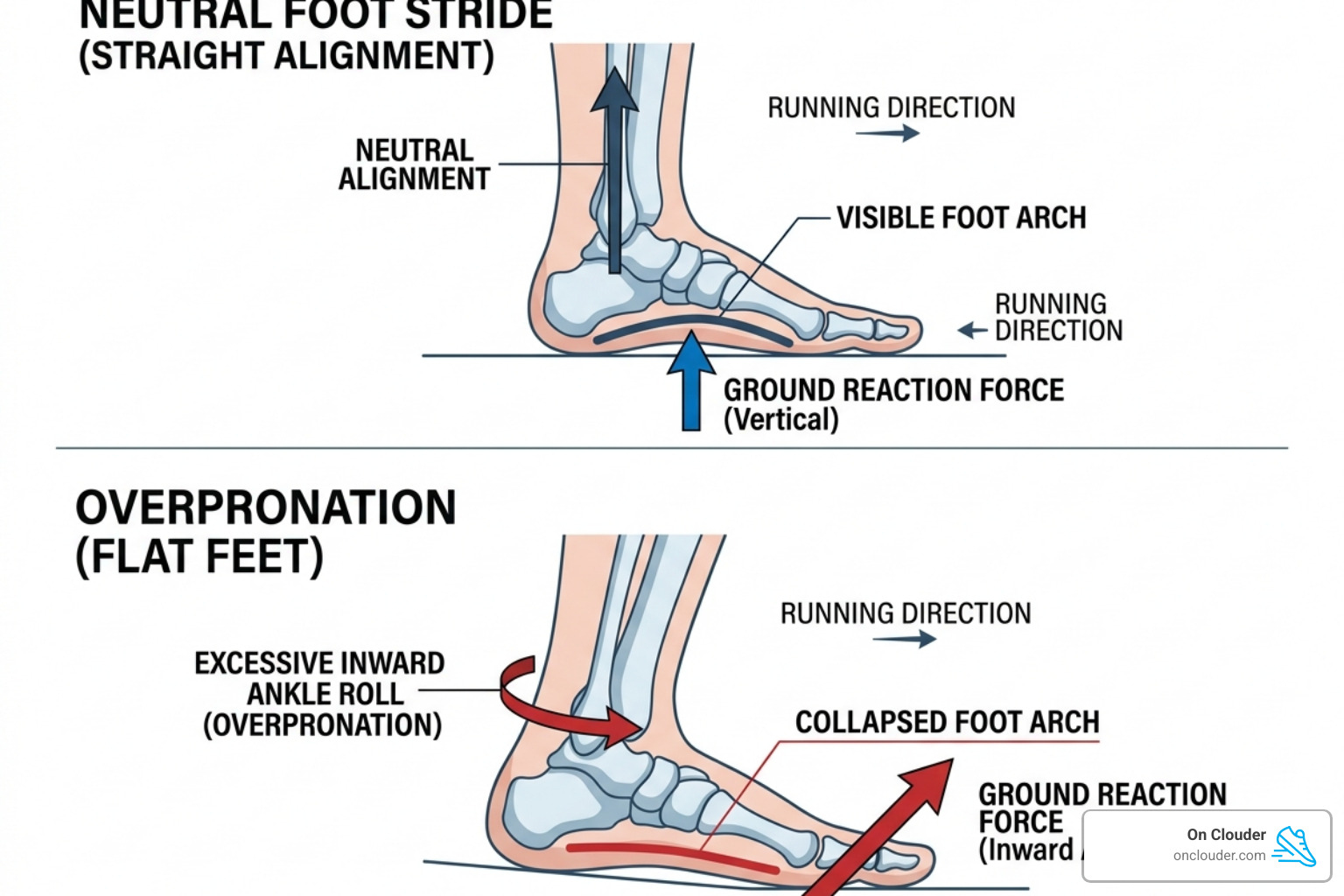
Here’s why: flat feet tend to cause overpronation — your foot rolls inward more than it should when you run. A wider foot means more surface area making contact with the ground, which makes that inward roll even harder to control.
Most shoe guides cover flat feet or wide feet. Very few address both together. That leaves a lot of runners stuck between shoes that support their arch but squeeze their toes, or shoes that fit their width but offer zero stability.
That’s exactly the gap this guide fills.
I’m Faisal S. Chughtai, a footwear expert who has spent years helping runners find shoes that truly fit their foot shape and support their stride — including testing and evaluating the best running shoe for flat and wide feet across dozens of models. Whether you’re logging miles on pavement or standing through long shifts, I’ll help you find a shoe that works for your feet, not against them.
Understanding the Best Running Shoe for Flat and Wide Feet
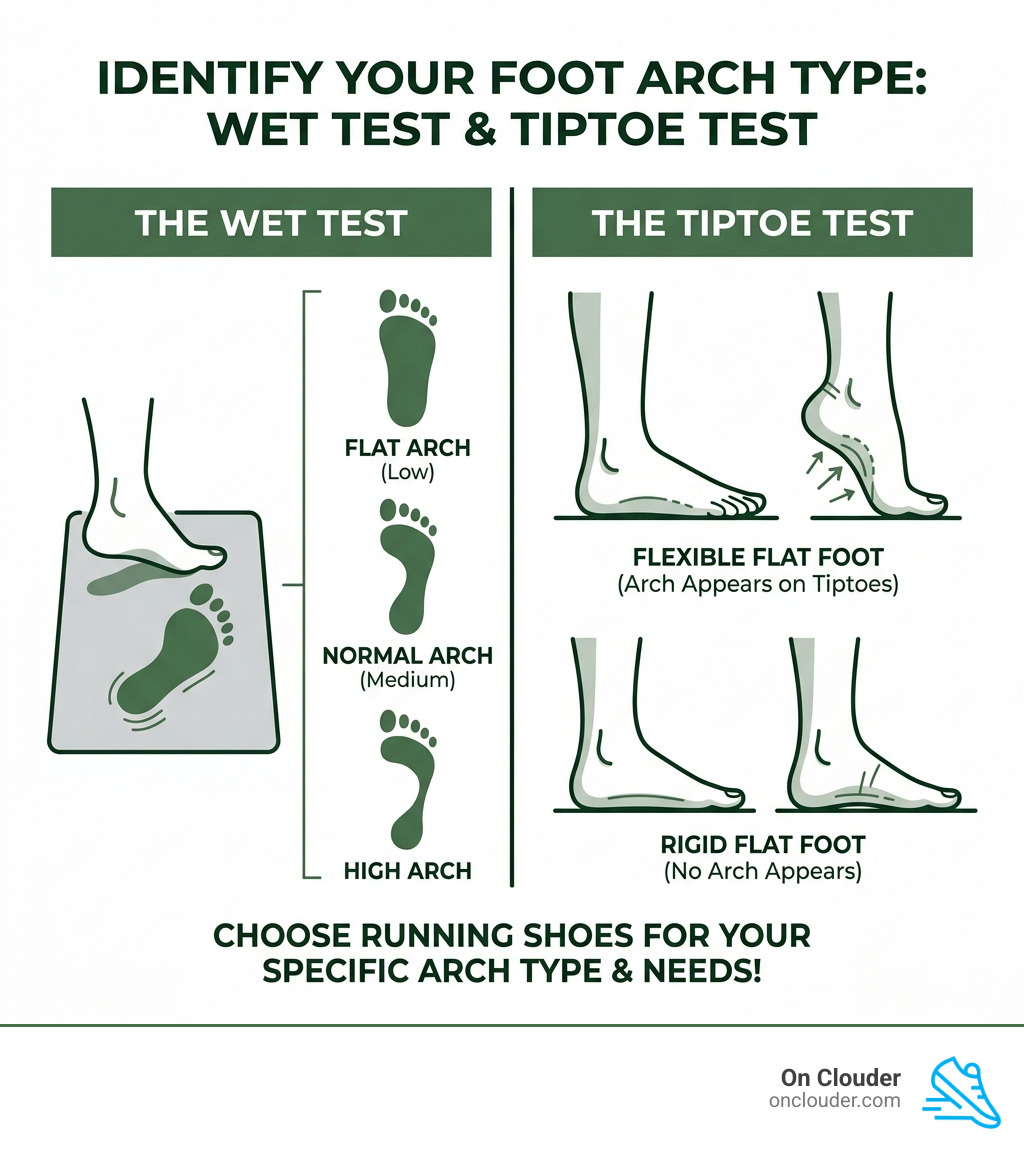
When we talk about finding the best running shoe for flat and wide feet, we have to look at the anatomy of the foot. Flat feet (pes planus) occur when the arches on the inside of your feet flatten when pressure is put on them. Wide feet, on the other hand, simply mean your foot requires more volume and width in the toebox and midfoot. When you have both, your feet are essentially “pancaking” out, filling every available millimeter of a shoe.
Flexible vs. Rigid Flat Feet
Not all flat feet are created equal. We generally categorize them into two types:
- Flexible Flat Feet: This is the most common type. You can see an arch when you lift your foot off the ground, but it disappears when you stand.
- Rigid Flat Feet: The arch is absent whether you are standing or sitting. This type often involves structural or bone issues and can be more prone to pain.
To figure out which one you have, we recommend the Tiptoe Test. Stand on your tiptoes; if an arch appears, you have flexible flat feet. Another method is Jack’s Test, where you (or a friend) pull your big toe upward while you are standing. If an arch forms, your feet are flexible.
The Overpronation Risk
Why does this matter for running? Because flat feet almost always lead to overpronation. As your arch collapses, your ankle rolls inward, putting stress on your knees, hips, and lower back. For runners with wide feet, this inward roll is compounded because the foot is already taking up more lateral space.
To combat this, the best running shoe for flat and wide feet must offer medial support. This usually comes in the form of “GuideRails,” “H-Frames,” or “Medial Posts”—technologies designed to keep your foot in a neutral path. Furthermore, you must ensure the shoe is available in 2E (Wide) or 4E (Extra Wide). A stability shoe that is too narrow will actually force your foot to spill over the side of the support system, rendering it useless and causing significant discomfort.
Top-Rated Stability and Wide-Width Models
Choosing the right shoe involves looking at the data. Stability shoes for flat feet typically weigh a bit more than neutral shoes—averaging about 10 oz (285g) compared to 9.3 oz (263g) for neutral models—because of the extra support hardware inside the midsole.
| Shoe Model | Stack Height (Heel/Forefoot) | Weight (Avg) | Widths Available |
|---|---|---|---|
| Brooks Ghost Max 3 | 39mm / 33mm | 10.6 oz | D, 2E, 4E |
| HOKA Arahi 8 | 35mm / 30mm | 9.1 oz | D, 2E |
| New Balance 860 v14 | 36mm / 28mm | 10.8 oz | D, 2E, 4E |
| ASICS GEL-Kayano 32 | 40mm / 32mm | 10.6 oz | D, 2E, 4E |
The GEL-KAYANO 32 EXTRA WIDE is a standout here. It utilizes a 4D GUIDANCE SYSTEM™, which provides adaptive stability. Instead of just “blocking” your foot from rolling, it works with your stride to guide it back to center. This is perfect for those with wide feet who find traditional, rigid medial posts too intrusive.
Best Daily Trainer for Flat and Wide Feet
If you need a “do-it-all” shoe for your morning miles, the Brooks Adrenaline GTS 25 is a legend for a reason. It features GuideRails® technology, which we like to describe as “bumpers on a bowling lane.” They stay out of the way when your stride is neutral but kick in to support you when you start to overpronate.
The Adrenaline is paired with DNA Loft cushioning, which offers a balanced feel—not too mushy, not too firm. For those who prefer a neutral shoe that still accommodates a wider foot, the GEL-CUMULUS 27 WIDE is an excellent alternative. It offers high cushioning with a softer landing, though it lacks the aggressive stability of the Adrenaline.
Best Max Cushioning for Flat and Wide Feet
For runners who want to feel like they are “running on clouds” (and let’s be honest, who doesn’t?), the HOKA Gaviota 6 is a top contender. It uses an H-Frame stability system that provides a wide, stable base without the stiffness of old-school stability shoes.
The Gaviota 6 is particularly good for flat, wide feet because HOKA shoes naturally have a wider “bucket seat” fit where your foot sits inside the midsole rather than on top of it. If you want a more traditional premium feel, the GEL-NIMBUS 27 EXTRA WIDE provides maximum cushioning with a plush midsole that reduces impact during long-distance runs.
Key Features to Look for in Supportive Footwear
When hunting for the best running shoe for flat and wide feet, don’t just look at the colors. You need to check the specs under the hood.
Torsional Rigidity
This refers to how much the shoe resists twisting. If you can pick up a shoe and easily wring it out like a wet towel, it probably isn’t supportive enough for flat feet. You want a shoe that scores high on torsional rigidity, often a 4/5 or 5/5 in lab tests, to ensure the platform stays stable under your weight.
Heel-to-Toe Drop
The drop is the difference in height between the heel and the forefoot.
- 8mm+ Drop: Generally better for heel strikers, which many flat-footed runners are. It takes some stress off the Achilles and calves.
- Low Drop (0-6mm): Can be good for midfoot strikers but requires a longer adjustment period to avoid injury.
Stack Height and Durability
A higher stack height, meaning more foam underfoot, usually means better shock absorption. However, for flat feet, that foam needs to be durable. In lab settings, reviewers often use Dremel-style abrasion tests to evaluate outsole toughness. This matters because flat-footed runners tend to wear through the medial side of their outsoles more quickly.
Breathability
Wide feet generate more heat and friction. Look for engineered mesh uppers that offer stretch to accommodate the width while maintaining breathability. Many ASICS and New Balance models now use solution-dyeing processes for their sockliners, which can reduce water usage and often result in a softer, more comfortable step-in feel.
Frequently Asked Questions about Flat and Wide Feet
How do I know if I have flexible or rigid flat feet?
As we mentioned, the Tiptoe Test is your best friend. Stand in front of a mirror and rise onto your toes. If you see an arch form, you’re “flexible.” If it stays flat as a pancake, you’re “rigid.” Rigid flat feet often require more “motion control” shoes, whereas flexible flat feet do well with “stability” shoes. If you experience chronic pain, we always recommend a consultation with a podiatrist to check for structural issues like tarsal coalition.
Should I use custom orthotics with stability shoes?
This is a common dilemma. Most high-quality stability shoes come with removable sockliners, making them compatible with custom orthotics. However, be careful: adding a thick orthotic to a stability shoe can sometimes create too much arch support, leading to outward rolling (supination) or ankle instability. If you use custom orthotics, you might actually find that a high-volume neutral shoe provides a better “base” for the insert than a stability shoe.
What are the best running shoe for flat and wide feet brands?
- New Balance: The undisputed king of widths, offering many models in 2E and 4E.
- Brooks: Known for their GTS (Go-To-Support) series which uses GuideRails.
- ASICS: Their 4D Guidance System is excellent for those who hate the “stiff” feeling of traditional stability shoes.
- HOKA: Great for wide platforms and “bucket seat” stability.
- Saucony: Their CenterPath technology provides a centered, stable ride for daily miles.
Conclusion
Finding the best running shoe for flat and wide feet doesn’t have to be an exercise in frustration. At On Clouder, we’ve seen thousands of runners transform their experience just by switching to a shoe that actually respects their foot shape.
Remember the golden rules:
- Prioritize the Width: If the shoe is too narrow, the stability features won’t align with your foot.
- Test the Arch: Know if you are flexible or rigid before you buy.
- Check the Tech: Look for GuideRails or H-Frames if you overpronate, but don’t be afraid of max-cushion neutral shoes if you use custom orthotics.
Avoid the common mistake of “sizing up” in length to get more width. This moves the arch support and flex points of the shoe to the wrong part of your foot, which can lead to blisters and even stress fractures. Instead, stick to your true size but hunt for those 2E and 4E labels.
Your feet do a lot of work for you – it’s time you returned the favor with the right pair of shoes!