
When every step hurts you might need the insoles for overpronation.
The best insoles for overpronation help your feet. They give your feet the structure they need. This structure stops your feet from rolling with every single step.Here are the top things to know about insoles for overpronation. You need to know what to look for in insoles, for overpronation.
| Feature | Best For | Typical Benefit |
|---|---|---|
| Deep heel cup | Everyday stability, flat feet | Helps center the heel and reduce inward rolling |
| Firm arch support | Walking, standing, daily wear | Supports the arch and reduces collapse |
| Medial posting | Moderate to severe overpronation | Adds structure along the inner foot |
| Shock-absorbing top layer | Running and high-impact activity | Helps reduce repetitive impact stress |
| Trim-to-fit design | Multi-shoe use | Makes fitting easier across shoe types |
| Custom orthotic option | Severe overpronation | Provides more personalized correction |
You know that pain in your knee after you go for a run.. The tight feeling in the arch of your foot by the middle of the day.. What about the pain in your heel when you take your first steps in the morning. These things are not just happening for no reason. They are usually caused by one problem: overpronation.
Overpronation is when your foot rolls far inward when you walk. This happens to a lot of people. In fact 60 percent of people roll their feet too far inward. When this happens it can cause a lot of problems. It can stress the arch of your foot twist your shins and hurt your knees and hips.
[web_stories title=”false” excerpt=”false” author=”false” date=”false” archive_link=”true” archive_link_label=”” circle_size=”150″ sharp_corners=”false” image_alignment=”left” number_of_columns=”1″ number_of_stories=”5″ order=”DESC” orderby=”post_title” view=”circles” /]
The good news is that you can stop these problems from happening. The right insole can make a difference.
I am Faisal S. Chughtai. I know a lot about shoes. I have been helping people find shoes that’re comfortable and supportive for a long time. This includes finding the insoles, for people who have overpronation. In this guide I will tell you what to look for in an insole what to avoid and which features of an insole will really help with overpronation.
Explore more about best insoles for overpronation:
- arch support inserts for flat feet
- best arch support insoles for flat feet
- best insoles for foot pain
Understanding Overpronation and Its Impact
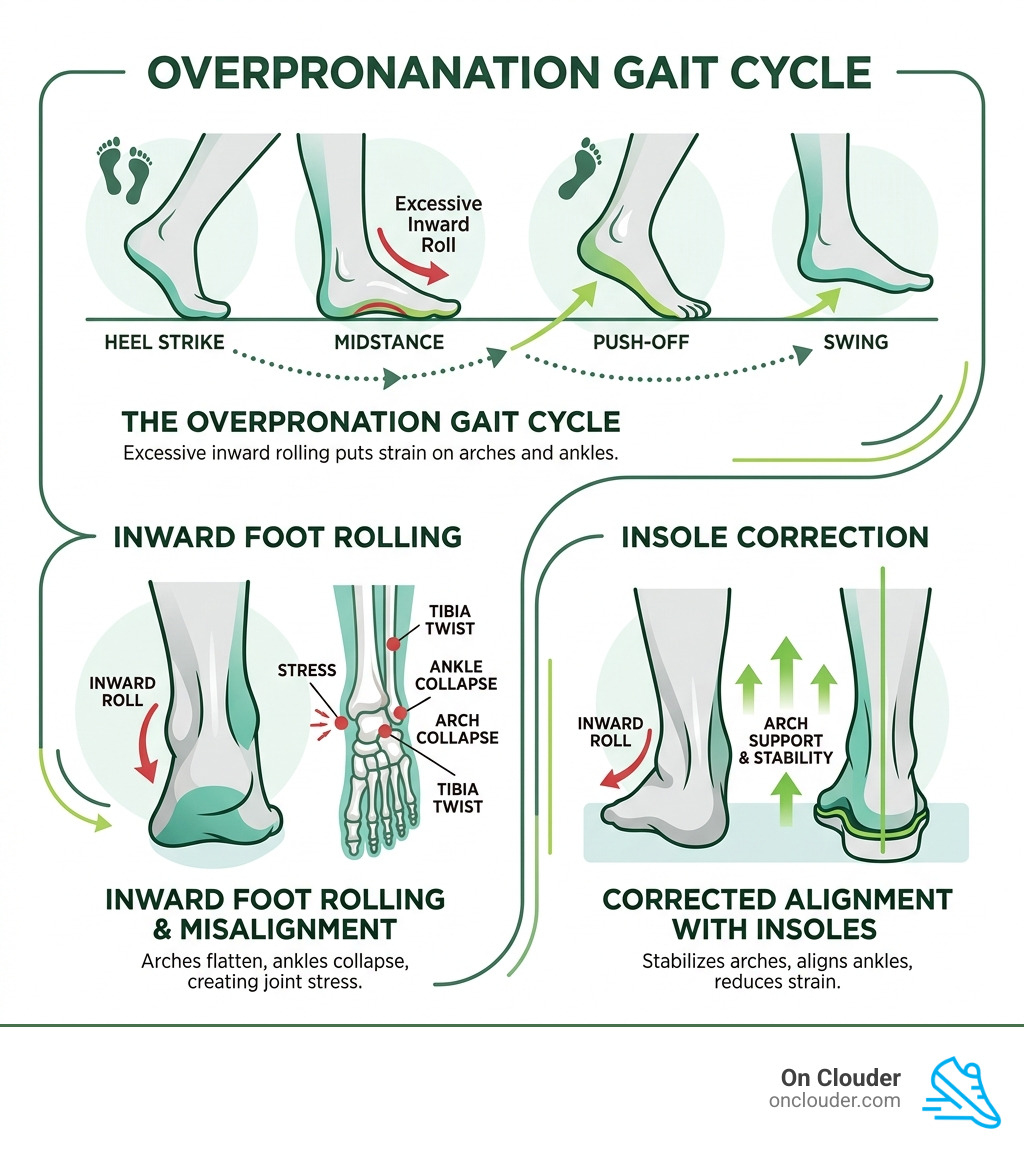
To figure out why your feet hurt we need to look at what happens when you take a step. Overpronation is not a thing by itself. It is something that happens naturally when you walk. It helps your feet deal with the shock of hitting the ground.. When your foot rolls too far inward before you push off that is when overpronation becomes a problem. This extra movement makes the arch of your foot collapse. Your ankle turn inward.
When the arch of your foot collapses it does not just affect your foot. It sets off a chain reaction that affects parts of your body. As your foot rolls inward the bone in your leg the tibia is forced to turn inward too. This puts strain on your knee joint and can even affect the alignment of your hips and lower back. That is why overpronation can cause problems like plantar fasciitis, shin splints and runners knee.
If you want to learn more, about overpronation and how it affects your body when you walk you can read more about overpronation. How it works. Overpronation affects the lower part of your body, including your feet and legs.
How to Tell If You Are an Overpronator
If you do not know where you stand there are a simple ways to check your foot alignment at home.

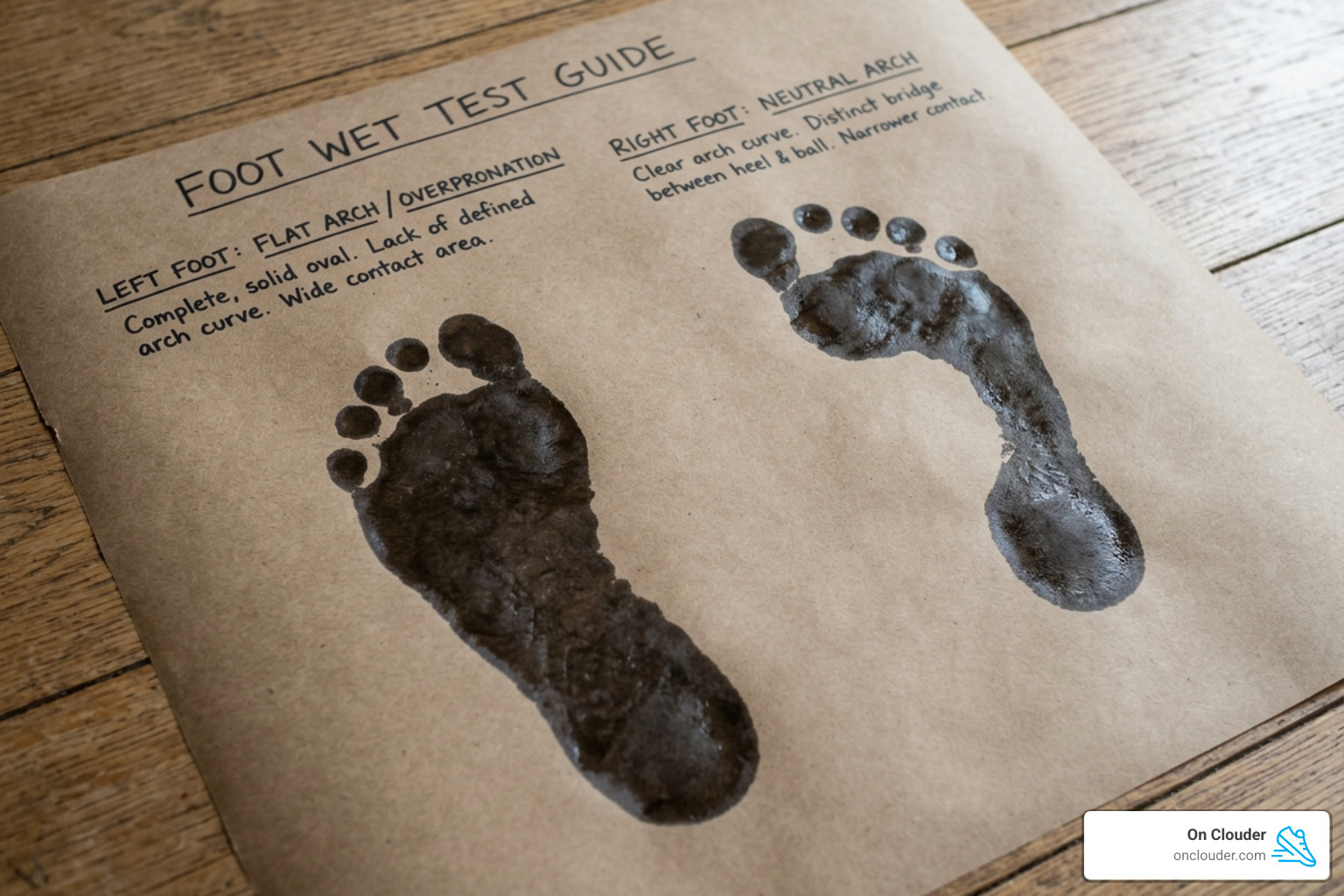
You can try a things to see if you are an overpronator. The Wet Test is one way to do this. You wet the sole of your foot. Step onto a piece of cardboard or a heavy paper bag. Then you look at your footprint. If your footprint looks like an oval with no curve where your arch should be you probably have flat feet or fallen arches that cause overpronation of your foot. Overpronation is what happens when you are an overpronator.
The Shoe Wear Test is another way to check. You look at the bottom of your sneakers. If you are an overpronator you will probably see that the inner edge of the heel and the ball of your foot are worn down more than parts especially near the big toe. This is a sign that you’re an overpronator.
You can also try The Ankle Observation. You stand in front of a mirror. Look at your ankles. Do your ankles seem to slump toward each other? This is a sign that your archesre not stable, which can cause overpronation of your foot.
For details, on finding the right shoes for overpronation check out our guide to overpronation shoes.
Key Features of the Best Insoles for Overpronation
When you buy insoles you should know that they are not all the same. If you get a soft foam pad from a store it will probably be flat in a week. This means it will not help your overpronation all. The best insoles for overpronation are made with parts that stop your foot from rolling inward. These insoles are designed to give your foot the support it needs. The best insoles, for overpronation have features that help block the roll of your foot.
1. Deep Heel Cup
A deep heel cup is the foundation of rearfoot stability. By cradling the heel bone (calcaneus), the insole keeps your foot centered and prevents the ankle from tilting. This “locking” effect is crucial for maintaining a neutral position from the moment your heel hits the ground.
2. Medial Posting
This is a fancy term for a firmer or angled section of material located under the inside of the heel or arch. For example, many top-tier orthotics feature a 2-degree medial heel post. This slight angle acts like a wedge, gently nudging the foot back toward a neutral alignment and preventing the “calcaneal shelf” from dropping.
3. Firm Arch Support
While comfort is important, “squishy” is the enemy of overpronation correction. You need a semi-rigid or rigid arch support shell that maintains its shape under the weight of your body. This helps distribute pressure evenly across the foot rather than concentrating it on the arch or the ball of the foot. You can learn more about these mechanics in our guide to arch support inserts 101.
4. Shock Absorption and Materials
Top brands often use medical-grade materials like high-density EVA foam, cork, or specialized polymers. Look for “APMA Acceptance” (American Podiatric Medical Association), which signifies the product has been reviewed by podiatrists and found to promote good foot health.
Top Recommended Solutions for Foot Alignment
When we look at the market, a few design features consistently rise to the top for their effectiveness and durability.

Top Recommended Best Insoles for Overpronation
- Structured full-length orthotics: These are often a reliable choice because they combine a firm support shell with full-foot coverage for stable everyday wear.
- Modular insole systems: Some insoles use a durable support base with a replaceable top cover, which can help extend the life of the product while maintaining arch structure.
- Athletic support insoles: Ideal for active use, these often focus on shock absorption, heel stability, and better energy return during repetitive impact.
- Cork-based insoles: For those who prefer natural materials, cork can gradually mold to the shape of your foot and create a more personalized feel over time.
- Lightweight running orthotics: These are specifically suited to runners who want added support without making training shoes feel overly bulky.
- Custom orthotic options: If off-the-shelf solutions aren’t cutting it, custom orthotics are often considered the gold standard. These are made from a mold of your actual foot to provide medical-grade correction.
How to Choose Based on Activity
The best insoles for overpronation for a marathon runner aren’t necessarily the best for someone wearing dress shoes at an office.
- Running and Athletics: Look for high shock absorption and energy return. You need materials that can withstand 400-500 miles of impact.
- Work and Everyday Wear: If you are on your feet all day, prioritize a deep heel cup and dual-layer cushioning to prevent fatigue. If you’re wearing work boots, you may need a higher-volume insole.
- Low-Volume Shoes: For dress shoes or slim sneakers, look for “thin” or “3/4 length” variants that won’t make your shoes feel too tight. You can give your shoes a lift with arch support inserts even in tighter footwear if you choose the right profile.
How to Properly Fit and Maintain Your New Orthotics
Once you’ve picked out the best insoles for overpronation, you need to ensure they are used correctly.
The Fitting Process
Most full-length insoles are designed to be “trim-to-fit.”
- Remove the Factory Liner: Never put your new insoles on top of the existing ones. It creates too much bulk and can actually cause more instability.
- Use the Old Insole as a Template: Place the factory liner on top of your new orthotic, trace the toe area with a pen, and trim the excess with sharp scissors.
- Check the Fit: The insole should lay flat in the shoe without bunching or sliding.
The Break-In Period
Don’t expect to run a 10k the first day you get your insoles. Your feet and muscles need time to adapt to the new alignment. We recommend wearing them for 1-2 hours on the first day, and gradually increasing the time over the course of a week. Most people feel completely adjusted within 3 to 7 days.
Maintenance and Replacement
Insoles don’t last forever. Most high-quality orthotics should be replaced every 6 to 12 months, or roughly every 400-500 miles for runners. If you notice the foam looking compressed or you feel that old familiar knee ache returning, it’s time for a new pair. To keep them fresh, spot clean them with a mild detergent and always let them air dry — never put them in the dryer!
Frequently Asked Questions about Overpronation
How can I figure out if I have overpronation at home.
I can try a couple of things to see if I have overpronation. The wet test and looking at how my shoes wear down are ways to check at home. If I have feet I probably overpronate. If I am still not sure about my overpronation I can ask a friend to record me walking from behind. If my ankles seem to move when I take a step that is a pretty good sign that I have overpronation. For information, on overpronation, read why your flat feet crave these arch support insoles.
Do insoles for overpronation help with knee and back pain?
- Yes insoles for overpronation often can help with knee and back pain.
- The body is like a chain and our feet are the start of this chain.
- When we use insoles for overpronation we can make our feet more stable.
- This can help our legs and the rest of our body.
- Insoles for overpronation can stop our legs from turning in much.
- This can make our knees feel better.
- It can also make our hips and lower back feel better.
So insoles, for overpronation can really help with knee and back pain.
Can I put insoles for overpronation in shoes that already have stability features?
You can definitely do that. Lots of runners do it. Stability shoes have a midsole to stop your foot from rolling too much.. They usually come with basic insoles. Adding insoles for overpronation, to these shoes can give you more arch support and help keep your heel stable.
Overpronation insoles can make a difference.
At On Clouder we think foot pain is a reason to stop doing the things you love. If you are a nurse who works for twelve hours a person who runs marathons or someone who just wants to walk the dog without getting heel pain finding the insoles for overpronation is a big part of taking care of your feet.
When you pick an insole with a deep heel cup, arch support and the right medial posting you are not just buying a piece of foam. You are actually investing in being able to move around for a long time and preventing injuries. Do not let a collapsed arch stop you from doing what you want to do. On Clouder and insoles, for overpronation can really help you with that. Ready to take the next step? Step up your game with the best arch support for runners and give your feet the foundation they deserve.
Explore more in-depth guides from our experts:
- Stop the slump with the best arch support insoles for flat feet
- Don’t let flat feet keep you down with these inserts
- Shoe inserts for flat feet 101
- The top high arch support insoles reviewed
- Step up your game with the best arch support inserts

2 thoughts on “Stop the Roll with the Best Overpronation Insoles”
Comments are closed.