Why Your Feet Deserve Better Than a Steel Cage All Day
Soft toe work boots are work boots built without a rigid steel or composite toe cap — giving your feet more natural movement, less weight, and serious all-day comfort without sacrificing durability or safety features like slip resistance and electrical hazard protection.
Here’s what you need to know at a glance:
- No rigid toe cap — your toes move freely, reducing fatigue on long shifts
- Lighter weight — less strain on your legs and lower back over 8-12 hour days
- Still safety-rated — most meet ASTM standards for slip resistance (F3445), electrical hazard (F2892-24), and heat resistance
- Best for: warehouses, light manufacturing, landscaping, farming, service industries, and any job where toe impact risk is low
- Not ideal for: heavy equipment operation, construction with falling object risk, or any site that mandates ASTM F2413 impact/compression toe protection
If your feet are screaming by lunchtime, the culprit might not be your hours — it might be your boots.
Workers who’ve made the switch often describe the difference as dramatic. One reviewer with 37 years in construction said it was the first time he’d finished a full day with zero foot pain. That’s not luck. That’s the right tool for the job.
I’m Faisal S. Chughtai, a footwear comfort specialist who has spent years researching and reviewing work boots — including dozens of soft toe work boots — to help hardworking people find footwear that actually supports them. Let me walk you through everything that matters when choosing the right pair.
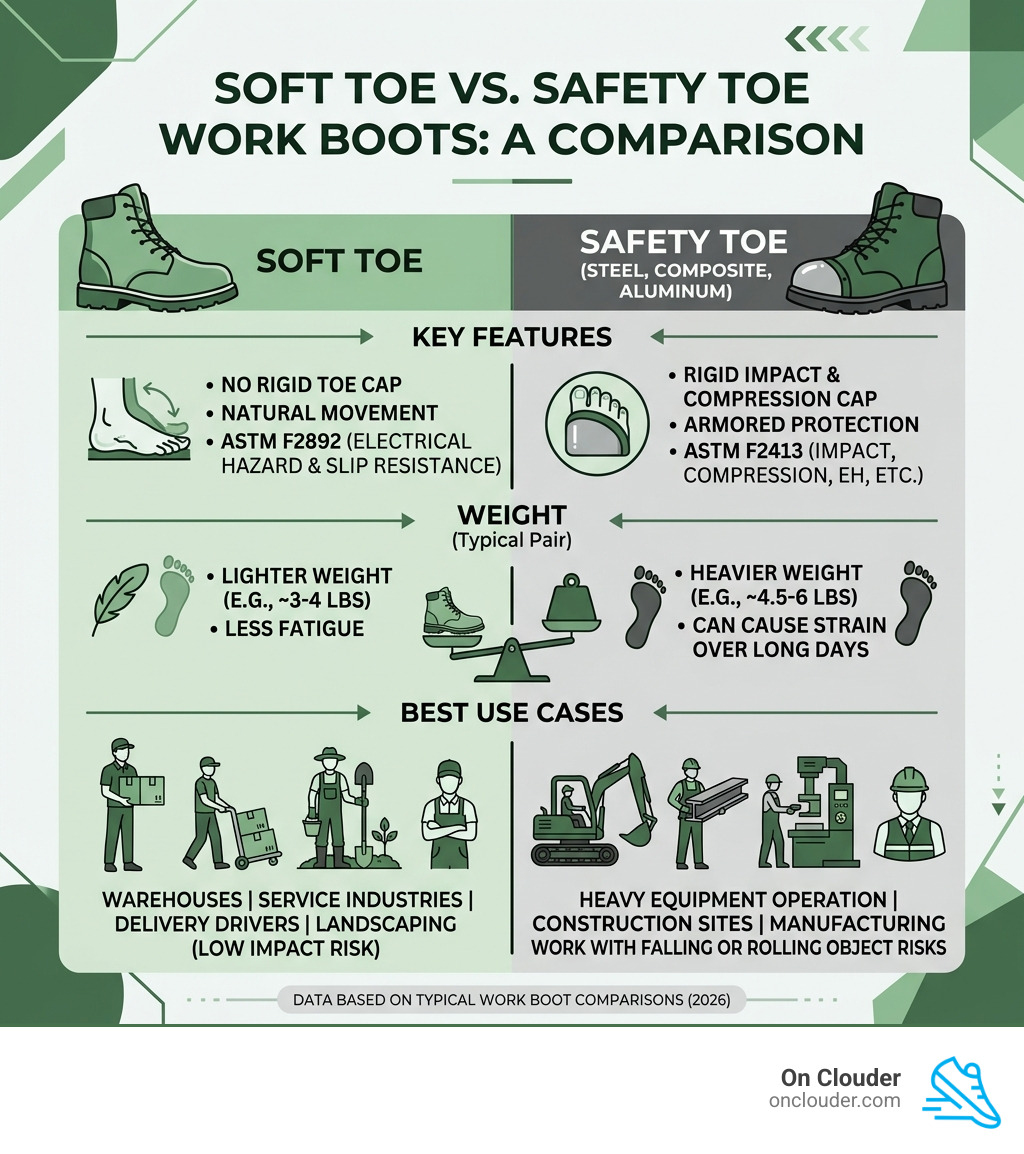
Soft Toe vs. Safety Toe: Understanding the Difference
When we talk about “safety boots,” most people immediately think of steel toes. However, the industry distinguishes between two primary categories: safety toe (which includes steel, aluminum, and composite) and soft toe work boots.
The technical benchmark for soft toe work boots is ASTM F2892-24. This standard ensures the boot provides protection against electrical hazards (EH) and maintains slip resistance, even though it lacks the rigid “armored” toe box. In contrast, safety toe boots must meet ASTM F2413, which specifically tests for impact (something falling on your foot) and compression (something rolling over your foot).
While safety toes offer a “steel cage” of protection, they come with trade-offs. They are inherently heavier and can sometimes pinch the toes during deep crouches or repetitive kneeling. Soft toes utilize lightweight materials and offer superior toe box flexibility. Because there is no metal or thick composite plate at the front, the leather can flex naturally with your foot.
If you are working in an environment where the primary risks are slippery floors or electrical circuits rather than falling sledgehammers, a soft toe is often the superior ergonomic choice. For those who do need that extra shield but want to keep the weight down, you might want to read our guide to Stop Dragging Your Feet With These Featherweight Composite Toe Boots. And for the ladies in the workforce, we’ve put together a Womens Steel Toe Shoes Survival Guide to help navigate those rigid requirements.
Why Soft Toe Work Boots are the Best Choice for Daily Wear
We’ve all been there: hour eight of a twelve-hour shift, and every step feels like you’re walking on hot coals. This is where soft toe work boots shine. By removing the heavy toe cap, manufacturers can focus the boot’s design on shock absorption and energy return.
Many modern soft toe models feature specialized midsoles, such as PU (polyurethane) or EVA foam, which act like a mattress for your feet. Brands like Wolverine utilize DuraShocks® technology, while BRUNT features CUSH’N® midsoles that claim up to 30% energy return. This means that instead of the ground “hitting” your foot, the boot absorbs the impact and helps propel you into your next step.
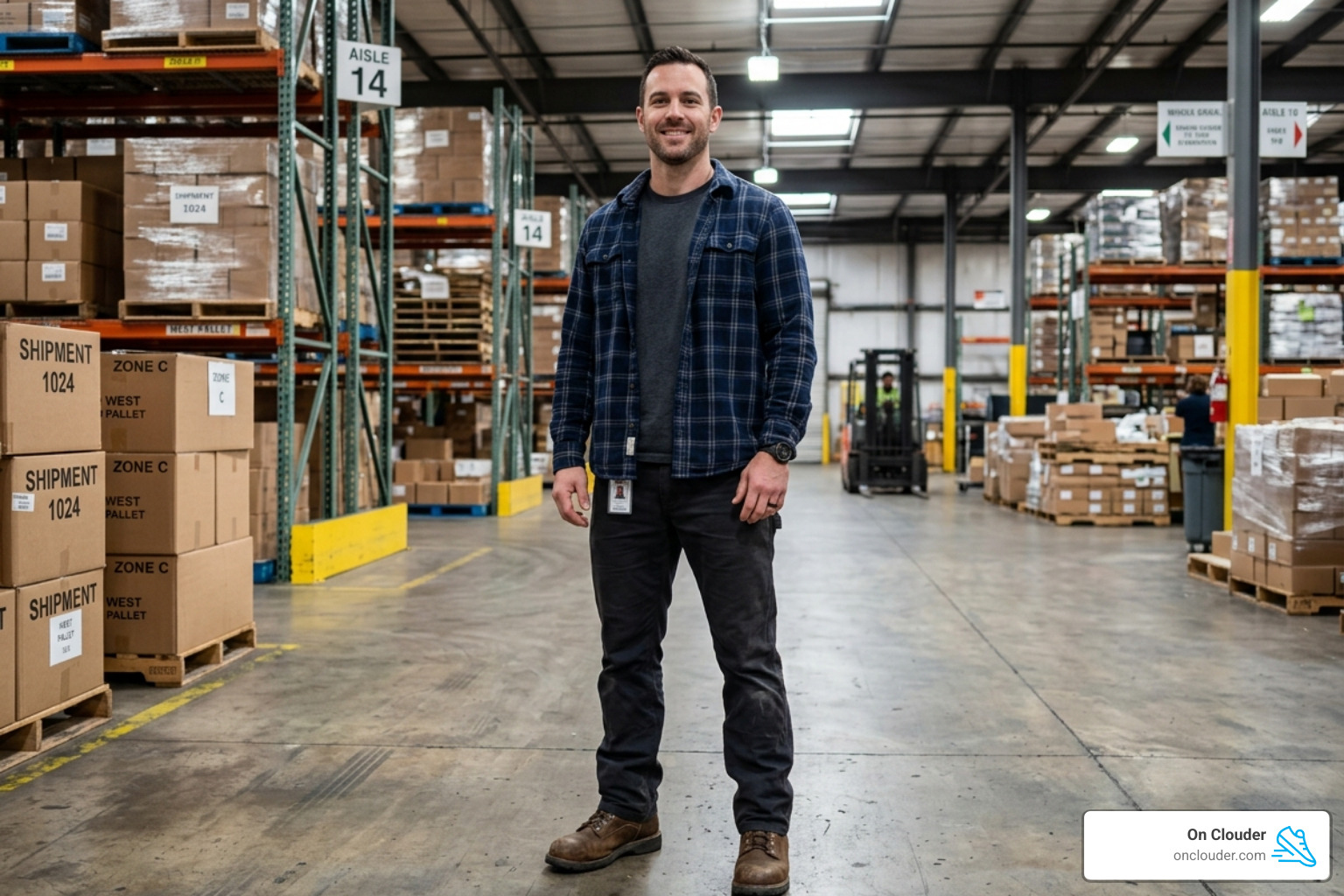
Another massive advantage is temperature regulation. Steel is a conductor; it gets freezing cold in the winter and holds onto heat in the summer. Soft toe work boots, being made primarily of leather and fabric, have non-conductive properties that keep your toes at a more stable temperature. If you’re working outdoors, check out our Beginners Guide To Breathable Work Boots For Men to see how airflow plays a role in keeping your feet dry and blister-free.
Essential Features for Performance and Safety
Just because a boot is “soft” doesn’t mean it’s lazy. High-quality soft toe work boots are packed with industrial-grade features.
- Waterproofing: Many models, such as the Red Wing Exos Lite or the BRUNT Marin, use a dual-layer system. This typically involves a premium leather outer treated with oils and an interior waterproof bootie that locks out moisture while allowing sweat to escape. Learn more about how this works in our Waterproof Safety Shoes 101 guide.
- Slip Resistance: This is non-negotiable. Look for the ASTM F3445-24 SR rating. This ensures the outsole has been tested on oily and wet surfaces to prevent “hydroplaning” in the warehouse. For a deeper dive into traction, see The Definitive Guide To Non Slip Sneakers For Work.
- Electrical Hazard (EH) Rating: Most quality soft toes are EH rated, meaning they can withstand 18,000 volts at 60Hz for one minute with no current leakage. This is a critical safety net for electricians and maintenance techs.
- Heat Resistance: Some outsoles, particularly those from Red Wing or BRUNT, are rated for high-heat contact (HRO), sometimes up to 572°F (300°C), which is essential if you’re walking on hot asphalt or near machinery.
Comparing Boot Heights
The height of your boot significantly impacts your mobility and support.
| Boot Height | Best For | Pros | Cons |
|---|---|---|---|
| 6-Inch | General Construction, Warehousing | Versatile, good ankle support, easier to lace | Less protection against deep mud/water |
| 8-Inch | Forestry, Heavy Outdoor Work | Maximum ankle stability, keeps debris out | Can feel restrictive or heavy |
| Pull-on / Wellington | Farming, Chemical Handling | Fast on/off, no laces to catch sparks | Less ankle support than lace-ups |
Advanced Technologies in Soft Toe Work Boots
To stay competitive, brands have integrated high-tech components into their soft toe work boots:
- Vibram® Soles: Known as the gold standard for traction, Vibram outsoles offer incredible durability and grip on uneven terrain.
- Thinsulate™ Insulation: For those working in cold storage or winter climates, 200g to 400g of Thinsulate provides warmth without the bulk.
- GORE-TEX Liners: This membrane is famous for being both 100% waterproof and highly breathable.
- Energy-Return Midsoles: Technologies like Ariat’s FLX Foam™ or Wolverine’s UltraSpring™ provide a “bouncy” feel that reduces leg fatigue.
Choosing the Right Soft Toe Work Boots for Your Environment
Not all soft toe work boots are created equal. You need to match the boot to your specific “battlefield”:
- Warehouse Production: Focus on slip resistance and high-cushion midsoles. You are likely walking 10+ miles a day on concrete. A wedge sole (flat bottom) is often preferred here as it maximizes surface contact.
- Farming and Agriculture: Look for “barnyard-resistant” leather. BRUNT’s FARMGUARD™ leather, for example, is designed to resist the acidic nature of manure and chemicals that typically crack standard leather.
- Landscaping: Breathability and waterproofing are king. You need a boot that can handle morning dew but won’t bake your feet by noon. Check out our rankings for Hot Jobs And Cool Toes The Most Comfortable Summer Work Boots Ranked.
- Oily and Wet Surfaces: Look for “SRX” or specialized rubber compounds that maintain their “stickiness” even when grease is present.
Maintenance and Care for Long-Lasting Performance
A pair of quality soft toe work boots from brands like Red Wing or Irish Setter can cost anywhere from $170 to $300. To protect that investment, you must have a maintenance routine.
- Cleaning: Never let mud dry on your boots. Dirt acts like a sponge, sucking the moisture out of the leather and causing it to crack. Use a horsehair brush and warm water. For nubuck leather, use a specialized cleaner to avoid ruining the “nap” of the leather.
- Conditioning: Every 3 to 6 months (depending on wear), apply a leather conditioner or mink oil. This keeps the leather supple and maintains its natural water resistance.
- Boot Rotation: This is the “secret” of the pros. If you can afford it, buy two pairs and rotate them every other day. This allows the leather and the internal foam to fully dry out and “reset,” which can effectively triple the lifespan of your boots.
- Salt Neutralization: If you work in snow and ice, salt will destroy your boots quickly. Use a mix of water and vinegar to wipe away salt stains immediately.
For more on how modern materials have changed maintenance needs, see The Evolution Of The Modern Step Mens Shoes Breathable Non Slip Work Shoes.
Frequently Asked Questions about Soft Toe Footwear
Are soft toe boots OSHA approved for all jobsites?
No. OSHA (Occupational Safety and Health Administration) requires protective footwear for employees in areas where there is a danger of foot injuries due to falling or rolling objects, or objects piercing the sole. If your jobsite involves heavy lifting, demolition, or logging, your employer will likely mandate ASTM F2413 safety toes. Always check with your safety officer before making the switch to soft toe work boots.
Can I add aftermarket inserts to my work boots for better arch support?
Absolutely. In fact, many veteran workers recommend “layering.” You can remove the factory insole and replace it with a high-quality orthopedic insert. Some workers even use thin foam layers underneath their primary insert for extra shock absorption on concrete. Brands like BRUNT even offer a “SWITCH-FIT™” system where you can remove a gray insert to change the boot from a regular (D) width to a wide (EE) fit.
How often should I replace my work boots to maintain shock absorption?
Most experts recommend replacing work boots every 6 to 12 months if worn daily. While the leather might still look good, the internal cushioning (the midsole) eventually “packs out” and loses its ability to absorb shock. If you start feeling new pains in your knees or lower back, it’s a sign the boots have given all they can.
Conclusion
At On Clouder, we believe that your work boots are the most important tool in your kit. Investing in high-quality soft toe work boots isn’t just about fashion; it’s a long-term investment in your physical health. By choosing a boot that aligns with your specific environment—whether that’s a slip-resistant sneaker-style boot for the warehouse or a rugged 8-inch waterproof logger for the field—you are protecting your body from the ground up.
If your job requires a bit more protection but you still want that sneaker-like feel, take a look at The Ultimate Guide To Womens Steel Toe Sneakers. And for those days when you need to look professional but still spend hours on your feet, don’t miss our Ultimate Dress Shoes Guide for Standing on Concrete.
Your toes do a lot for you. Isn’t it time you returned the favor? Get out of that “steel cage” if you can, and give your feet the freedom of a soft toe.