Why Boot Weight Matters More Than You Think
If you’re looking for the lightest composite toe work boots right now, here are the top picks based on weight and performance:
| Boot Model | Weight (per pair, size 10) | Key Feature |
|---|---|---|
| Rocky XO-Toe Composite | 3.4 lbs | External composite toe, VP Waterproof |
| Georgia Boot Carbo-Tec LTX | 4.4 lbs | Ergo-fit composite toe, memory foam |
| Ariat Rebar Flex Western | Not specified | EVA midsole, DRYShield waterproof |
| Carolina Production Workflex 8″ | Not specified | EVA midsole, mesh lining, SCUBALINER |
| Twisted X Composite Toe | Not specified | duraTWX leather, reduced leg strain |
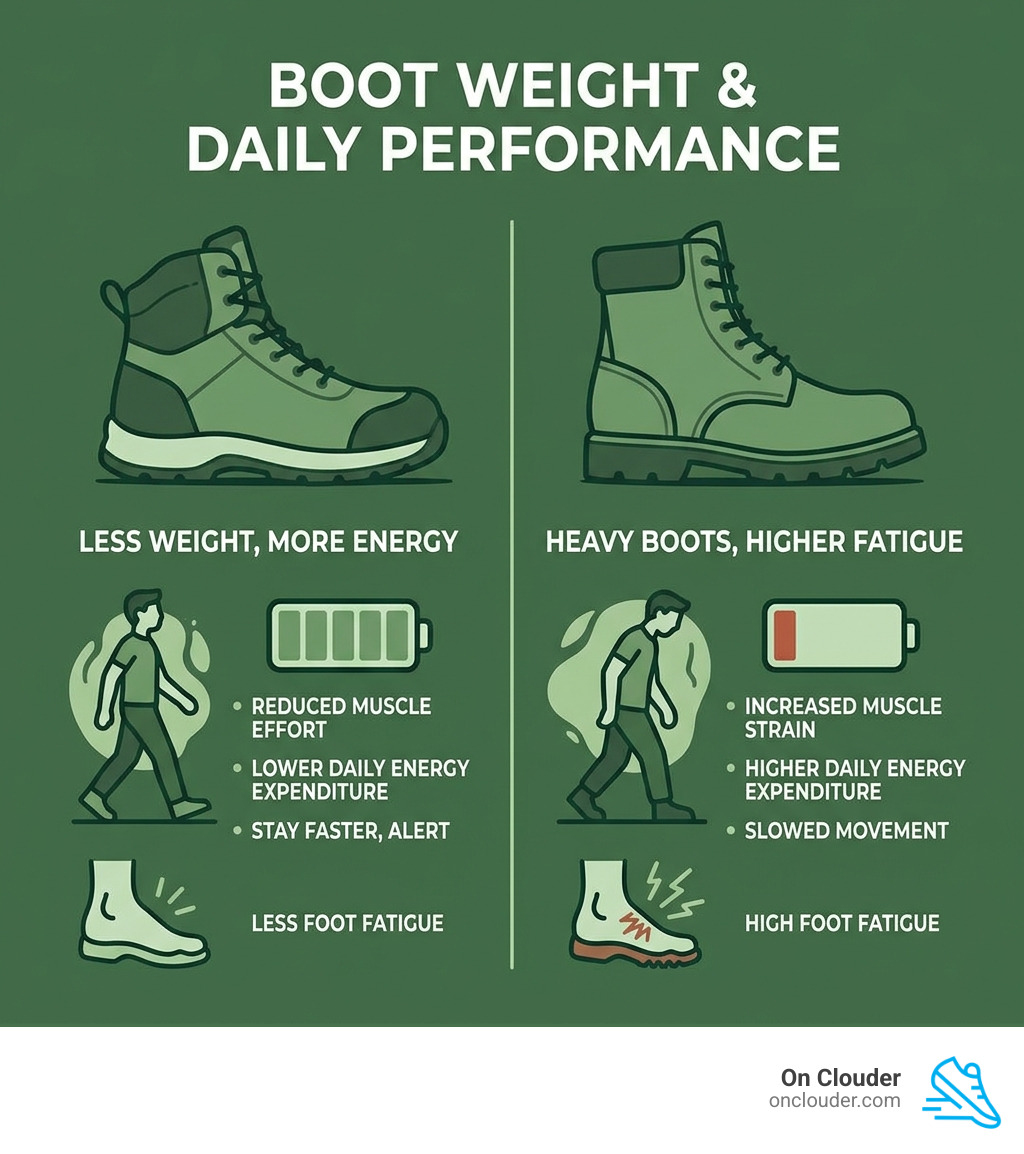
Your feet contain 52 bones, 66 joints, and over 200 muscles, tendons, and ligaments. Every extra ounce on your foot makes all of those work harder — all day long.
That’s the real problem with heavy work boots. It’s not just discomfort. It’s cumulative fatigue that drains your energy, slows you down, and beats up your body over months and years on the job.
The good news? Modern composite toe technology has changed the game. You no longer have to choose between protection and weight. Today’s lightest composite toe boots meet the same ASTM F2413 safety standards as steel — without the bulk, cold transfer, or metal detector headaches.
I’m Faisal S. Chughtai, a footwear expert with years of hands-on experience testing and reviewing work and performance boots, including the lightest composite toe work boots on the market. Keep reading — I’ll break down exactly which models deliver the best protection-to-weight ratio so you can stay fast, safe, and fatigue-free on the job.
Why the Lightest Composite Toe Work Boots Outperform Steel
When we talk about “industrial athletes”—the folks in construction, warehousing, and manufacturing who cover miles of concrete every shift—weight isn’t just a number. It’s a performance metric. Traditional steel toes have been the standard for decades, but they come with a literal heavy price. Composite toes, however, offer a modern alternative that is significantly lighter without compromising on safety.
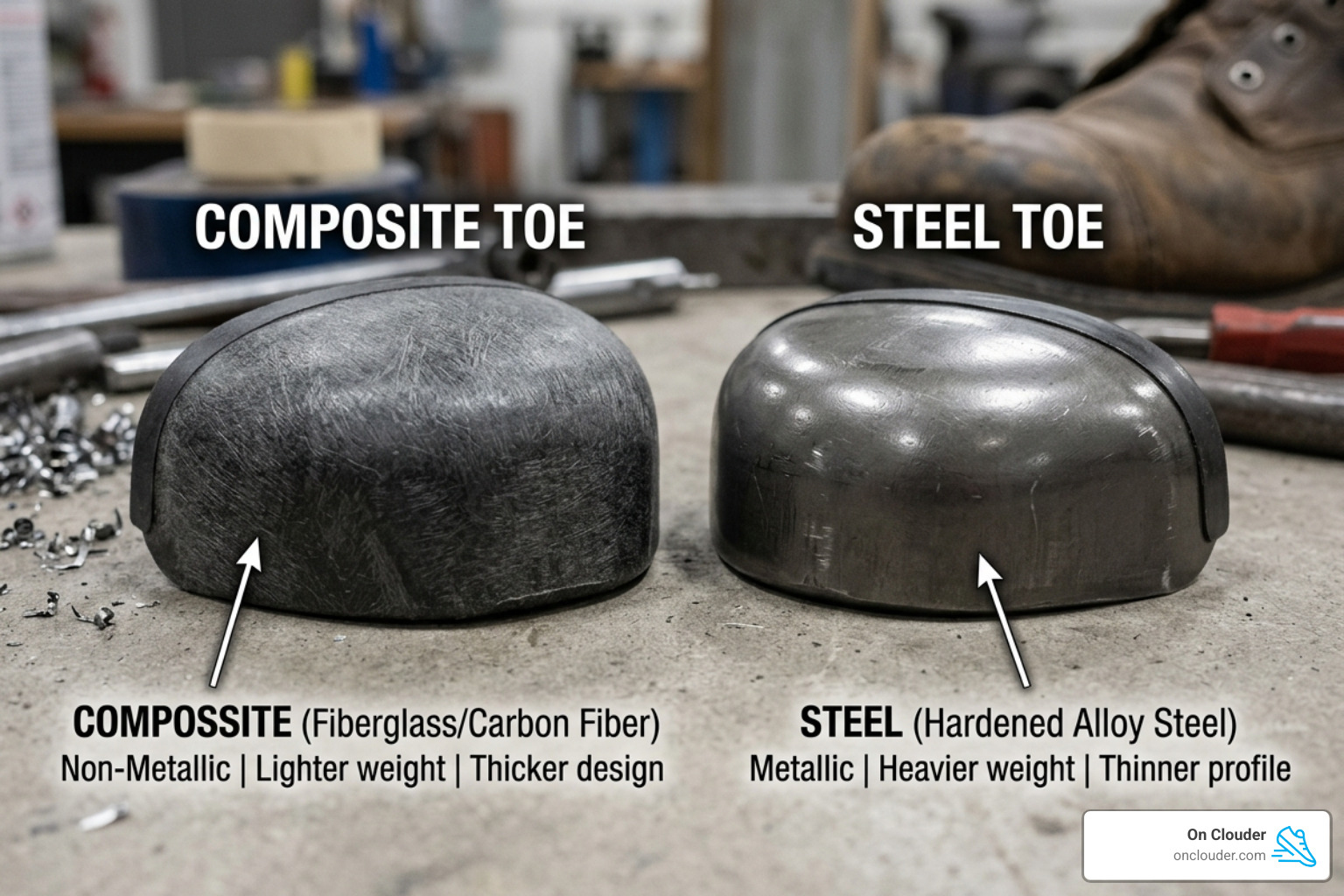
The lightest composite toe work boots utilize materials like carbon fiber, Kevlar, plastic, or fiberglass. Because these materials are less dense than steel, they require more volume to achieve the same strength, but the overall mass remains much lower. Here is why they are outperforming the old-school steel:
- Non-Metallic Nature: Composite toes are 100% metal-free. This is a lifesaver for workers in high-security environments who have to pass through metal detectors daily.
- Thermal Insulation: Unlike steel, which acts as a heat sink, composite materials do not conduct cold or heat. This means your toes won’t freeze in the winter or roast in the summer.
- ASTM F2413 Standards: Don’t let the “plastic” feel fool you. These boots are tested to meet the same rigorous impact and compression standards as steel.
- Fatigue Reduction: By shaving ounces off each step, these boots reduce the strain on your 200+ foot muscles.
For those working in wet environments, many of these lightweight options also integrate advanced waterproofing. You can learn more about how these features work together in our guide on waterproof safety shoes 101.
Safety Material Comparison Table
| Feature | Steel Toe | Composite Toe | Carbon Fiber Toe |
|---|---|---|---|
| Weight | Heaviest | Lightweight | Ultra-Lightweight |
| Safety Rating | ASTM F2413 | ASTM F2413 | ASTM F2413 |
| Conductivity | High (Cold/Heat) | Low (Insulative) | Low (Insulative) |
| Security | Sets off detectors | Metal-free | Metal-free |
Top-Rated Models for Maximum Agility and Protection
Finding the lightest composite toe work boots requires looking at brands that prioritize engineering over tradition. We’ve scoured the market to find models that feel more like athletic sneakers than clunky work gear.
One standout is the Red Wing Exos Lite. This is Red Wing’s lightest work boot ever, designed specifically for those who need to move fast without sacrificing toughness. Similarly, the Twisted X line uses duraTWX leather, which is not only durable but also significantly lighter than traditional hides, reducing strain on your legs during marathon shifts.
If you are a fan of Western styles but hate the weight of traditional cowboy boots, the Rebar Flex Western Waterproof Composite Toe Work Boot is a fantastic choice. It uses an EVA midsole for shock absorption and an anatomical last that follows the natural shape of your foot.
For those in heavy industrial settings, the Production Workflex 8″ Composite Toe Waterproof Work Boot | Carolina Shoe offers a higher shaft for ankle support while maintaining a lightweight profile through its specialized Workflex outsole. You can find more options like these in our curated list of work footwear.
Innovative Tech in the Lightest Composite Toe Work Boots
Technology is the secret sauce behind these “featherweight” champions. Brands are no longer just making boots; they are engineering footwear systems.
- Red Wing Cooltech: This technology focuses on breathability and weight reduction, making the boot feel like an extension of your foot.
- Rockport truFLEX: Rockport has taken its expertise in dress and casual shoes and applied it to work gear. Their truFLEX technology provides motion flexibility and reduces fatigue by allowing the foot to move naturally.
- EcoLite Materials: We are seeing a trend toward sustainability with materials like EcoLite, which uses recycled components to create lightweight, eco-friendly protection.
- Shock Absorption: Using EVA (the stuff in your running shoes) instead of heavy rubber midsoles makes a world of difference.
For the ladies looking for similar tech, don’t miss our women’s steel toe shoes survival guide which covers lightweight alternatives tailored for smaller frames.
Heavy-Duty Performance with the Lightest Composite Toe Work Boots
Can a boot be light and “heavy-duty” at the same time? Absolutely. The Georgia Boot Carbo-Tec LTX is a prime example. Weighing in at just 2.20 lbs per boot (4.4 lbs per pair for size 10), it features a Goodyear welt construction—the gold standard for durability—while remaining incredibly light.
Another innovator is the Rocky XO-Toe Composite Waterproof Work Boot. This boot features the industry’s first externally attached composite toe. By moving the protective cap to the outside, Rocky has created more interior toe room and a more flexible, lightweight cement construction. At approximately 3.4 pounds per pair, it’s a frontrunner for the title of the lightest composite toe work boots.
If you need something that resists pathogens and saline (great for snowplow drivers!), the Elicit Carbon Comp Toe | Carolina Shoe uses a carbon fiber weave in the toe to keep weight at an absolute minimum while meeting all ASTM safety standards.
Breathable Designs for Hot Weather and the Lightest Composite Toe Work Boots
Working in the heat with heavy, leather boots is a recipe for blisters and misery. The lightest composite toe work boots for hot weather often incorporate mesh linings and ventilation ports.
The DeWalt Halogen is frequently cited by workers on platforms like Reddit as feeling more like a “tennis shoe” than a boot. It prioritizes breathability, making it ideal for construction sites in extreme temperatures. These designs often feature moisture-wicking technology to pull sweat away from the skin, preventing the “swamp foot” that leads to discomfort.
For a look at how modern design is changing the safety shoe landscape, check out our review of the modern sentinel: MJYTHF rotating button safety shoes, which highlights how innovative closure systems and mesh materials are revolutionizing the industry.
Essential Features for All-Day Comfort and Safety
While weight is the headline, a boot is only as good as its support system. The lightest composite toe work boots aren’t just light; they are smart.
- EVA Midsoles: This lightweight foam provides the cushioning you need when standing on concrete for 12 hours.
- Electrical Hazard (EH) Rating: Most composite boots are EH rated, meaning they can withstand up to 18,000 volts of electricity under certain conditions.
- Slip-Resistance: A lightweight boot is no good if you’re sliding around. Look for outsoles with high-traction lug patterns designed to release debris.
- Non-Metallic Shanks: Fiberglass shanks provide the arch support and stability of steel shanks without the weight or thermal conductivity.
Ensure your choice meets the necessary ASTM F2413 certifications to guarantee you stay protected. You can browse more options in our composite toe category.
Frequently Asked Questions about Lightweight Safety Boots
How is the weight of a work boot typically measured?
In the footwear industry, weight is typically measured using a Men’s Size 10 as the standard. It is important to check if the manufacturer is listing the weight “per boot” or “per pair.” For a boot to be considered truly “lightweight” in the safety category, it usually needs to fall under 2.5 lbs per boot (or 5 lbs per pair). Some of the lightest composite toe work boots we’ve seen, like the Rocky XO-Toe, hit an impressive 3.4 lbs per pair!
Which professions benefit most from composite toe boots?
Anyone on their feet all day will benefit, but specific industries include:
- Warehousing: Constant walking on concrete makes weight reduction vital.
- Construction: Especially for those who do a lot of kneeling and bending.
- Transportation/Delivery: Jumping in and out of trucks is easier with less weight on your feet.
- Manufacturing: Safety is required, but agility is a plus. Check out our specialized construction footwear section for more industry-specific picks.
Are lightweight composite boots as durable as heavy leather boots?
There is often a trade-off. While the lightest composite toe work boots reduce fatigue, they may use more mesh or synthetic materials that can wear out faster than thick, heavy-duty leather in high-abrasion environments (like masonry). However, modern injection-molded TPU and high-performance leathers like duraTWX are closing that gap significantly. For many, the reduction in body fatigue is worth replacing the boots slightly more often. Explore more about safety shoes and their durability ratings on our blog.
Conclusion
At On Clouder, we know that the right footwear can be the difference between a productive day and a painful one. Choosing the lightest composite toe work boots is an investment in your long-term health, reducing the wear and tear on your joints and muscles.
Our final verdict? If you want the absolute cutting edge of weight and flexibility, the Rocky XO-Toe or the Red Wing Exos Lite are hard to beat. If you need a blend of traditional style and modern lightness, the Ariat Rebar Flex is your best bet.
When buying, always remember to check the width—lightweight boots often have a more athletic fit, so you may need a “wide” version if you have a broader foot. As we look toward the future, expect to see even more carbon fiber and sustainable materials making our work gear lighter and stronger than ever.
For those days when you need to swap the work site for the office but still need to stay comfortable, don’t forget to check out our ultimate dress shoes guide for standing on concrete. Stay light on your feet!