Why Most Slippers Are Secretly Bad for Your Feet
The best orthopedic slippers give you real arch support, a deep heel cup, and a firm — not floppy — sole that keeps your feet properly aligned from your first morning step to your last evening stretch.
Top picks at a glance:
| Slipper | Best For | Price Range |
|---|---|---|
| Orthofeet Capri | All-day comfort, multiple conditions | Mid-range |
| Aetrex Maya | Plantar fasciitis, adjustable fit | Mid-range |
| Orthofeet Clara | Arch support, cork-blend wedge | Mid-range |
| Vionic (various) | APMA-accepted, stylish options | Mid to premium |
| Aetrex Mandy | Arch pain, heel pain, home use | Mid-range |
After a long shift on your feet — or a hard run on pavement — the last thing you want is to shuffle around your kitchen in a flat, flimsy slipper that undoes all the support your shoes were doing. But that’s exactly what most house shoes do.
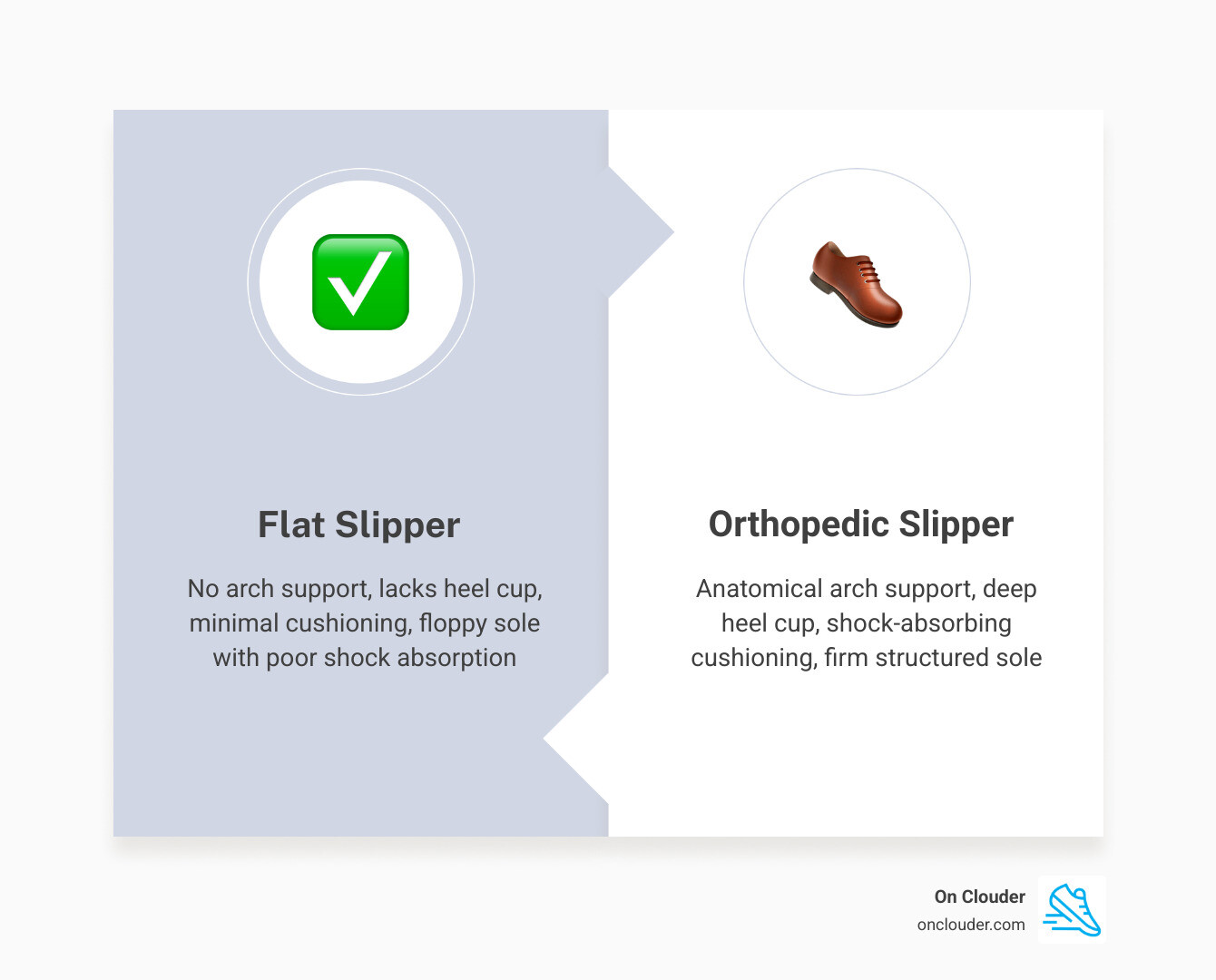
Most traditional slippers have zero structural integrity. They’re soft on the outside and empty on the inside — no arch support, no heel cup, no shock absorption. For anyone dealing with foot fatigue, plantar fasciitis, or just the daily grind of hard floors, that’s almost as bad as going barefoot.
Walking barefoot on tile or hardwood forces your foot to flatten, absorbs the full impact of every step, and strains the ligaments that keep your arch in shape. Over time, that adds up — not just in your feet, but in your ankles, knees, and lower back too.
The good news? Orthopedic slippers have come a long way. Modern designs blend medical-grade support with materials you actually want to wear at home.
I’m Faisal S. Chughtai, a footwear comfort expert who has spent years researching and testing supportive footwear — including the best orthopedic slippers — to help people find relief without sacrificing comfort. Let’s break down exactly what to look for and which slippers are worth your money in 2026.
Best orthopedic slippers terms you need:
Why Your Feet Crave the Best Orthopedic Slippers
We often think of our home as a sanctuary, but for our feet, the hard surfaces of modern houses—like tile, hardwood, and laminate—can be a “slipper-y slope” toward chronic pain. When we walk barefoot, our feet are forced to absorb the full impact of every step. Unlike walking on soft earth or sand, which naturally contours to the foot, hard floors offer zero “give.”
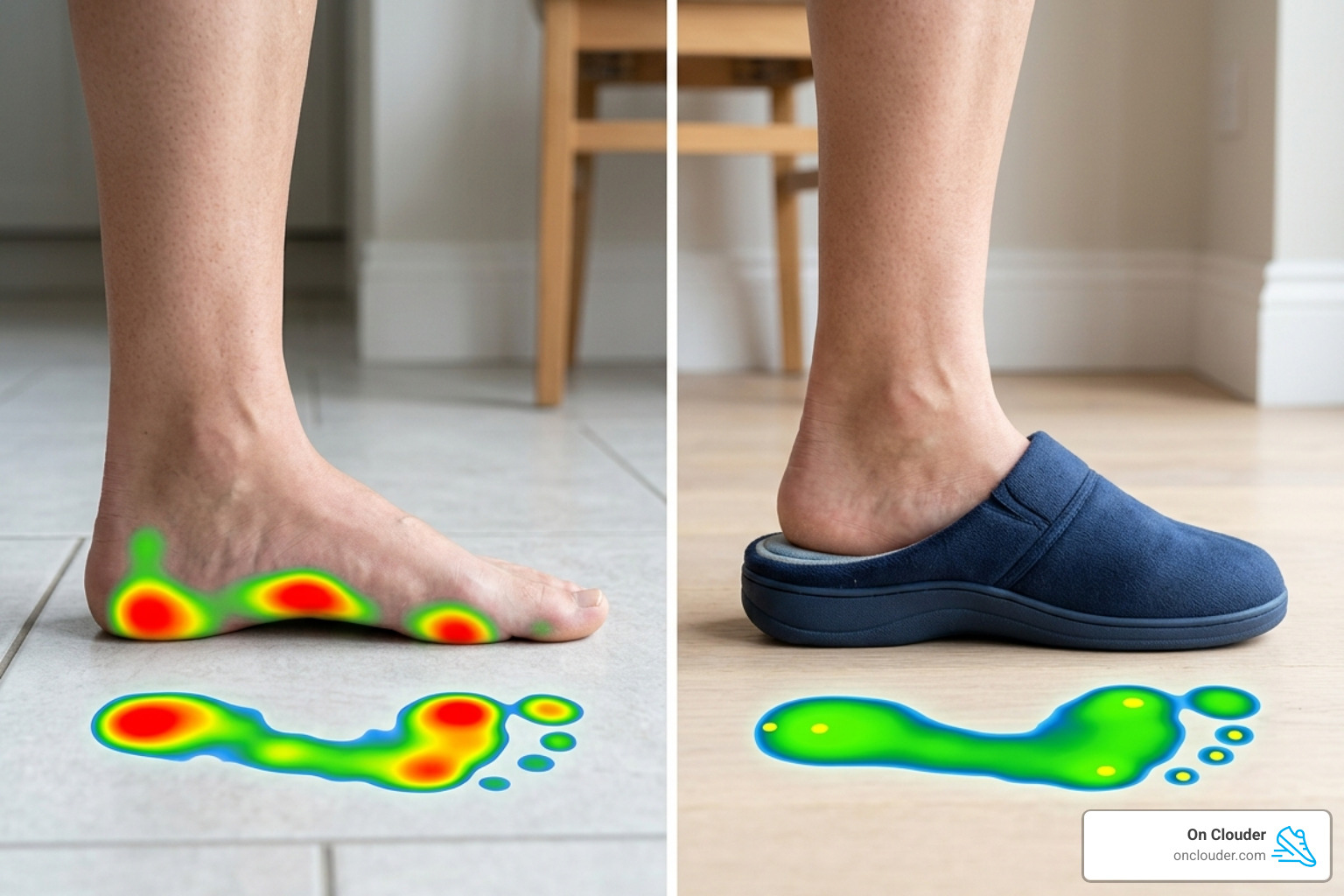
This constant barefoot stress leads to several issues. First, there is the natural loss of the fat pad on the bottom of the foot as we age. Without that natural cushion, the bones and nerves of the feet are more exposed to impact. Second, walking without support causes the arches to collapse or “over-pronate,” which pulls on the muscles and tendons all the way up to your lower back.
Treat Your Feet To Supportive House Slippers is more than just a catchy phrase; it’s a medical necessity for many. Podiatrists frequently recommend house shoes because most foot pain can be resolved by simply wearing footwear that supports the entire arch. Scientific research on orthopedic efficacy for pain confirms that orthopedic interventions show significant efficacy in alleviating pain, particularly for those with plantar fasciitis.
By choosing slippers with structural integrity, you aren’t just buying a cozy accessory; you are investing in Orthopedic Support that keeps your body in alignment.
Key Features of Top-Rated Orthotic House Shoes
What separates a “fuzzy sock with a sole” from the best orthopedic slippers? It comes down to engineering. When you’re shopping in 2026, look for these non-negotiable features:
- Anatomical Arch Support: This is the heart of the slipper. It should mirror the natural curve of your foot, preventing the arch from collapsing.
- Deep Heel Cup: A stabilizing heel cup cradles the heel, providing natural cushioning and preventing the foot from sliding side-to-side.
- Shock Absorption: Look for midsoles made of materials like EVA or memory foam that distribute weight evenly.
- Slip-Resistant Soles: Falls are the leading cause of injury for adults ages 65 and older. A sturdy rubber outsole is essential for traction on slippery kitchen floors.
You can even perform the “bend test” yourself: a truly supportive slipper should only flex at the ball of the foot. If you can fold it in half or twist it like a pretzel, it lacks the structural integrity needed to protect your feet. Many top-rated options also feature the APMA (American Podiatric Medical Association) Seal of Acceptance, which means they’ve been vetted by experts for promoting foot health.
For those who need a more customized feel, look for slippers with removable insoles. This allows you to swap the factory footbed for your own orthotics. If you prefer a sturdier feel, you might even consider The Ultimate Guide To Clogs That Wont Quit Before You Do for inspiration on structured indoor footwear.
Targeted Relief: Best Orthopedic Slippers for Specific Conditions
Not all foot pain is created equal. The best orthopedic slippers for one person might be completely wrong for another depending on their specific medical needs.
Best orthopedic slippers for Plantar Fasciitis
If you’ve ever felt a sharp, stabbing sensation in your heel with your first steps in the morning, you know the misery of plantar fasciitis. This happens because the plantar fascia ligament tightens overnight; when you stand up, it stretches abruptly, causing micro-tears.
The Maya Closed Toe Slipper – Pink – aetrex is a standout here. It uses signature arch support positioned to align the foot anatomically, which takes the strain off that inflamed ligament. Firm support is key—you want a slipper that prevents the foot from flattening out and pulling on the heel.
Solutions for Diabetes, Neuropathy, and Edema
For those with diabetes or neuropathy, the goals are protection and circulation. A “seamless” interior is vital to prevent friction sores that the wearer might not feel due to nerve damage. Orthopedic Shoes designed for these conditions often feature extra depth to accommodate swelling or custom inserts.
The Orthofeet Women’s Louise Slippers offer a stretchable upper that conforms to the foot, providing a pressure-free fit. This is especially helpful for edema (swelling), as the slipper won’t constrict the foot as it changes size throughout the day. Furthermore, for those with neuropathy, slip-resistant soles are a critical safety feature to prevent falls, which research shows are a major risk for adults 65+.
Top Picks: The Best Orthopedic Slippers of 2026
When looking at the market in April 2026, several brands consistently rise to the top. We’ve compared the heavy hitters to help you decide where to invest.
| Feature | Vionic | Orthofeet | Aetrex |
|---|---|---|---|
| Primary Tech | Vio Motion Technology | Ortho-Cushion™ System | Signature Arch Support |
| Best For | Style & Alignment | Therapeutic Relief | Anatomical Balance |
| Key Model | Relax Slipper | Capri | Mandy |
| Price Point | Premium | Mid-Range | Mid-Range |
The Capri by Orthofeet is a powerhouse for those with multiple conditions. It includes fitting spacers and an “Arch Booster” that you can add or remove to customize the level of support. It’s essentially a DIY orthotic kit in a slipper.
For those who want a blend of cozy and functional, the Mandy Closed Toe Slipper – Black – aetrex is a best-seller for a reason. It features memory foam that conforms to your foot and antimicrobial technology to keep things fresh.
If you are looking for more options, the Healthy Feet Store offers a wide variety of house shoes that bridge the gap between budget-friendly and luxury medical-grade footwear.
Finding Your Perfect Fit and Maintaining Support
Buying the best orthopedic slippers won’t help if they don’t fit. A common mistake is buying slippers based on your “shoe size” without considering how much your feet swell.
Pro Tip: Always measure your feet in the afternoon. Feet naturally expand throughout the day, and you want your slippers to be comfortable at their largest. You should have about a thumb’s width of space in the toe box to allow your toes to move freely. You can find detailed sizing guides at the Orthotic Shop to ensure you’re getting the right dimensions.
How to choose the best orthopedic slippers for wide feet
If you have wide feet, bunions, or hammertoes, look for slippers with a “wide toe box” and adjustable closures. Hook-and-loop straps (like Velcro) are your best friend. The Maya Closed Toe Slipper – Ivory – aetrex features an adjustable strap that allows you to customize the tightness, making it perfect for varying widths or for those days when your feet are particularly swollen.
Care and Longevity Tips
To ensure your investment lasts:
- Spot Clean: Most orthopedic slippers should not be machine washed. Use a damp cloth and mild soap.
- Air Dry: Never put your slippers in the dryer, as the heat can warp the orthopedic inserts.
- Antimicrobial Tech: Many brands like Aetrex include built-in antimicrobial linings. If yours don’t, consider a light spray of tea tree oil solution to keep odors at bay.
- Monitor Wear: Just like running shoes, the cushioning in slippers compresses over time. If the arch feels “mushy” or the outsole is worn flat, it’s time for a replacement.
Frequently Asked Questions about Orthopedic Slippers
Can I wear orthopedic slippers outside?
Many modern orthopedic slippers, such as those from Vionic or the Orthofeet Capri, feature durable rubber outsoles. These are designed for “indoor-outdoor” use, meaning they are perfectly fine for grabbing the mail, taking out the trash, or a quick trip to the driveway. However, they aren’t meant for long walks on pavement, which will wear down the tread quickly.
How often should I replace my house shoes?
On average, if you wear them daily, you should look to replace your orthopedic slippers every 6 to 12 months. The structural support—specifically the foam and the arch—will eventually break down and lose its efficacy.
Do I need to wear socks with orthotic slippers?
It’s a matter of preference! Many orthopedic slippers feature plush faux-fur or shearling linings designed for barefoot comfort. However, if you struggle with cold feet or need to manage moisture, moisture-wicking wool socks are a great addition. For those with diabetes, wearing socks provides an extra layer of protection against friction.
Conclusion
Finding the best orthopedic slippers is about more than just finding something “comfy”—it’s about protecting your foundation. By choosing footwear with a deep heel cup, anatomical arch support, and a non-slip sole, you’re preventing the “ripple effect” of pain that travels from your feet to your back.
At On Clouder, we believe that foot health shouldn’t stop at the front door. Whether you’re recovering from a marathon or just a long day at the office, the right house shoe keeps you in alignment and pain-free. For those who are active, don’t forget that your recovery at home is just as important as your gear on the road—check out our info about arch support for runners to see how to keep your feet happy 24/7.