
Why Proper Brooks Running Shoes Cleaning Extends Your Miles
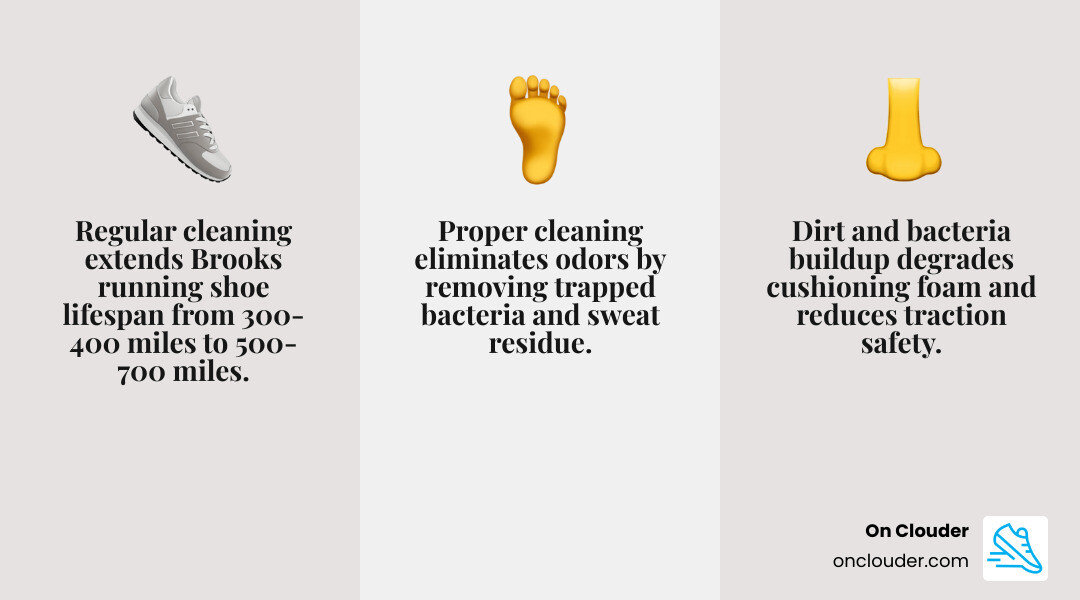
Brooks running shoes cleaning done the right way can push your shoe life from 300-400 miles all the way to 500-700 miles. Here’s the quick answer:
How to clean Brooks running shoes:
- Remove insoles and laces
- Brush off loose dirt from soles
- Scrub uppers gently with a soft brush, mild soap, and cold water — do not soak
- Clean outsole grooves with a stiff brush
- Use a toothbrush on midsole crevices
- Soak laces separately in soapy water
- Stuff shoes with newsprint and air dry in a cool room away from heat and sunlight
Never machine wash or machine dry Brooks shoes. It warps foam, stretches materials, and can void your warranty.
Scuffs and a little trail mud? That’s earned. But when dirt and bacteria build up inside your shoes, they start breaking down the cushioning, killing traction, and creating the kind of odors that clear a room. Regular cleaning isn’t just about looks — it protects the foam, mesh, and adhesives that keep your feet supported mile after mile.
I’m Faisal S. Chughtai, a footwear performance expert who has spent years testing and researching proper care routines — including brooks running shoes cleaning — to help runners get every possible mile out of their gear. Let’s walk through everything you need to know to keep your Brooks fresh, supportive, and trail-ready.
Simple brooks running shoes cleaning word guide:
The Risks of Machine Washing Brooks Shoes
It is incredibly tempting to just toss your muddy Ghosts or Adrenalines into the washing machine after a messy run. We’ve all been there—looking at a pair of shoes that look more like brown blocks of clay than high-performance gear. However, before you reach for that “Delicate” cycle button, you need to Stop Read This Before Putting Brooks In The Washer.

The engineering behind Brooks shoes relies on specialized EVA foams (like DNA LOFT or BioMoGo DNA) and intricate lamination. High-heat environments and the mechanical agitation of a washing machine are the natural enemies of these materials. According to the Brooks Running Help Center, machine washing can cause the shoes to stretch or warp, permanently altering the fit and support you rely on.
Even worse than the washer is the dryer. The high heat from a dryer can melt the adhesives that hold the outsole to the midsole, leading to premature delamination. It also causes the synthetic fibers in the mesh upper to become brittle, which eventually leads to those frustrating holes near the pinky toe. Beyond the physical damage, using a machine often voids the manufacturer’s warranty. If your $150 shoes fall apart because they were tumbled at 1200 RPM, you’re likely on your own.
Essential Supplies for brooks running shoes cleaning
To perform a professional-grade brooks running shoes cleaning at home, you don’t need an expensive kit. Most of the items are likely sitting under your kitchen sink right now. Having the right tools ensures you remove the grime without scratching the delicate mesh or stripping the protective coatings.
Here is what we recommend gathering before you start:
- Mild Detergent or Dish Soap: Avoid harsh chemicals or bleach. A simple, clear dish soap or a specialized sneaker cleaner works best.
- Soft-Bristled Brush: An old soft toothbrush is perfect for the uppers, while a slightly stiffer vegetable brush can handle the outsoles.
- Microfiber Cloth: For wiping away excess moisture and “buffing” the midsoles.
- Lukewarm Water: Never use boiling water, as it can damage the glue.
- Baking Soda: The ultimate weapon against stubborn odors.
- Newspaper or Paper Towels: Essential for the drying process to maintain the shoe’s internal shape.
If you want to dive deeper into the specific chemistry of shoe soaps, check out our guide on How To Wash Brooks Running Shoes The Right Way.
Step-by-Step Guide to Restoring Your Shoes
Cleaning your Brooks is a therapeutic process if you do it right. The goal isn’t just to make them look “new” again, but to remove the abrasive grit that acts like sandpaper against the fabric of the shoe.
| Part of Shoe | Cleaning Method | Tool to Use |
|---|---|---|
| Outsoles | Dry brush first, then scrub with soapy water | Stiff brush |
| Uppers (Mesh) | Gentle circular motions with cold/lukewarm water | Soft toothbrush |
| Midsoles | Targeted scrubbing to remove scuffs | Microfiber cloth or sponge |
| Insoles | Hand wash separately; do not soak for long | Soft cloth |
| Laces | Soak in a small bowl of soapy water | Hands/Small bowl |
- Debris Removal: Start by knocking the soles of the shoes together outside. This removes the “big” chunks of mud and rocks. Use a dry brush to flick away loose dust from the mesh.
- Strip the Shoe: Remove the laces and the internal liners (insoles). This allows you to reach the “nooks and crannies” where bacteria love to hide.
- The Outsole Scrub: Dip your brush in soapy water and attack the lugs. Ensure you clear out the flex grooves. According to Brooks Running Australia, keeping the tread clear is vital for maintaining traction and preventing slips.
- The Upper Wash: Wet your soft brush and apply a tiny amount of soap. Scrub the mesh uppers using very light pressure. If you scrub too hard, you’ll fray the technical fibers.
- Rinse (Don’t Submerge): Use a damp cloth to “rinse” the soap away. Never dunk the entire shoe into a bucket of water. Submerging the shoe can cause the internal structural boards to lose their shape.
Pro Tips for brooks running shoes cleaning
When dealing with the mesh, think of it like a delicate garment. Most modern Brooks models use engineered mesh that provides targeted breathability. If you notice dirt trapped inside the layers of the mesh, don’t dig at it. Instead, use a “blotting” motion with a wet microfiber cloth to lift the dirt out.
Always use cold or lukewarm water. Heat is the enemy of the technical lamination used in Gear Maintenance. If you are cleaning a Gore-Tex (GTX) version of a Brooks shoe, be even more careful—using harsh soaps can clog the membrane that makes the shoe waterproof.
Troubleshooting brooks running shoes cleaning issues
Sometimes, a standard wash isn’t enough. Here’s how to handle the “special cases”:
- Stubborn Mud: If the mud is wet, let it dry completely first. It is much easier to brush off dry dirt than to smear wet mud deeper into the fabric.
- Grass Stains: These are notoriously difficult. A paste made of baking soda and a drop of water can help lift the green pigment. Apply, let it sit for 15 minutes, and gently scrub away.
- Odor Elimination: If your shoes smell like a locker room, the Brooks Help Center suggests cleaning the insoles thoroughly. You can also sprinkle baking soda inside the dry shoe and let it sit overnight before shaking it out.
How to Properly Dry and Maintain Your Brooks
The drying stage is where most runners make mistakes that ruin their shoes. You might be tempted to put them near a heater or in direct sunlight to speed things up, but this is a recipe for disaster. Direct sunlight can cause the colors to fade and the synthetic materials to shrink.
The best method is the “Newsprint Method.” Take some plain newspaper (avoid the glossy ad pages as the ink can transfer) or paper towels and stuff them tightly into the shoes. This does two things: it absorbs moisture from the inside out and helps the shoe maintain its original shape while it dries.
Place the shoes in a room with good airflow and moderate temperature. Change the newspaper after a few hours if it becomes saturated. Depending on the humidity, it can take 24 to 48 hours for the shoes to dry completely. Do not put the insoles back in until everything is 100% dry; putting damp insoles into a damp shoe is an invitation for mold and mildew. As noted in the Brooks Blog, patience here is key to preserving the elasticity and cushion of the foam.
Frequently Asked Questions
How often should I clean my Brooks running shoes?
There is no “one size fits all” schedule, but a good rule of thumb is every 40-50 miles for road runners, or immediately after any muddy trail run. If you notice the shoes feel “heavy” (due to mud weight) or if they develop a persistent odor, it’s time for a scrub. Regular brooks running shoes cleaning prevents dirt from becoming “permanent” stains.
Can I use bleach on white Brooks mesh?
We strongly advise against using bleach. Bleach can turn the white mesh yellow and break down the synthetic fibers, leading to premature tearing. For white shoes, stick to a baking soda paste or a specialized sneaker whitener that is safe for technical fabrics.
When is it time to replace my shoes instead of cleaning them?
While cleaning can extend the life of your shoes, it can’t “fix” worn-out foam. Most Brooks shoes should be replaced every 300-500 miles. Signs that it’s time to retire them include:
- The tread on the outsole has worn smooth in high-impact areas.
- You feel new aches in your knees or hips after a run (indicating midsole compression).
- The “bounce” or energy return of the shoe feels dead.
- The heel counter has collapsed or become unstable.
Conclusion
At On Clouder, we believe that taking care of your gear is just as important as the training itself. By mastering brooks running shoes cleaning, you aren’t just saving money; you’re ensuring that your feet have the best possible protection against the pavement.
Remember to rotate your shoes if possible. Giving a pair 48 hours to fully dry and “decompress” between runs can significantly boost their lifespan. If your current pair is reaching that 500-mile mark and no amount of cleaning can bring back the cushion, it might be time to look for your next fit. For more detailed maintenance tips on other brands, check out our How to clean shoes step-by-step guide. Happy running!
