Why Your Feet Deserve Better: The Truth About Waterproof and Breathable Work Boots
Waterproof and breathable work boots keep your feet dry from the outside while letting sweat vapor escape from the inside — solving two problems at once that most standard work boots can’t handle.
Here’s a quick breakdown of how they work and what to look for:
| Feature | What It Does | Why It Matters |
|---|---|---|
| Waterproof membrane | Blocks liquid water from entering | Keeps feet dry in rain, mud, and puddles |
| Breathable lining | Allows moisture vapor to escape | Prevents sweat buildup and overheating |
| Water-resistant leather | Repels surface moisture | Adds an outer layer of protection |
| Moisture-wicking interior | Pulls sweat away from skin | Reduces blisters, chafing, and odor |
| Safety toe (steel/composite/aluminum) | Protects against impact and compression | Meets ASTM F2413-24 safety standards |
Most work boots do one thing well. They’re either tough and waterproof — but hot and sweaty inside — or breathable and light, but useless the moment your foot hits a puddle. That tradeoff used to be unavoidable.
Not anymore.
Modern work boot technology uses microscopic membrane systems that block liquid water molecules while still letting smaller water vapor molecules (your sweat) pass through. Think of it like a one-way valve for moisture. Brands like KEEN, Wolverine, Irish Setter, BRUNT, and CAT have each developed their own take on this science — with names like UltraDry™, DRYGuard, and DRYShield™ — and the results are genuinely impressive for workers on their feet all day.
Whether you work construction, a warehouse floor, a farm, or anywhere wet or hot, understanding how these boots actually work helps you pick the right pair — not just the most marketed one.
I’m Faisal S. Chughtai, a footwear comfort expert who has spent years studying and reviewing performance footwear technologies, including waterproof and breathable work boots, to help hardworking people find footwear that goes the distance. Let’s get into the science behind what makes these boots work — and how to choose the right pair for your job.
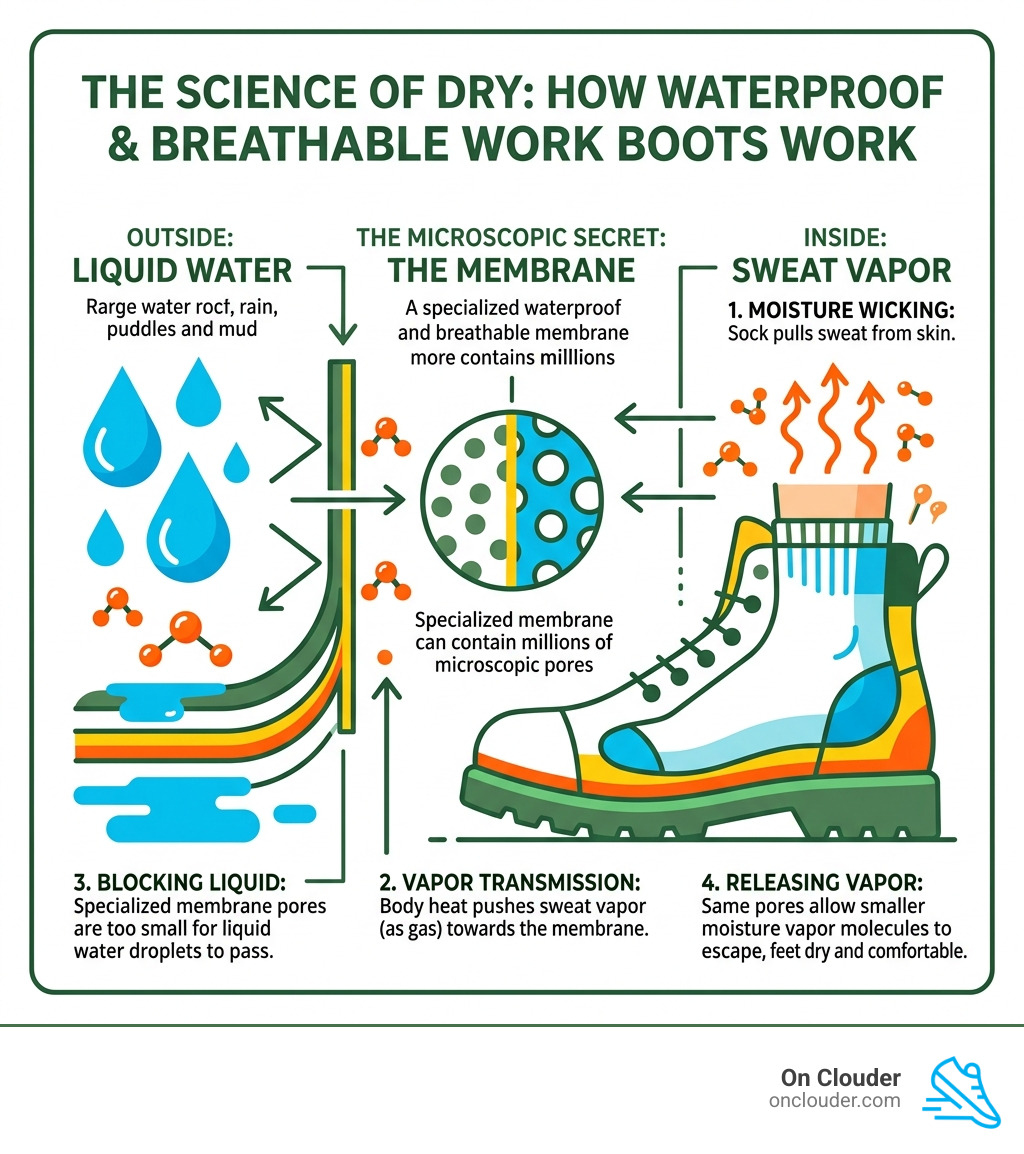
Waterproof and breathable work boots terms simplified:
The Mechanics of waterproof and breathable work boots
To understand how a boot can be both a fortress against rain and a chimney for sweat, we have to look at the microscopic level. It’s a delicate balancing act. If a boot is 100% sealed (like a rubber rain boot), your feet will eventually drown in their own perspiration. If it’s too porous, you’ll have soggy socks within five minutes of a rainstorm.
The magic happens through a multi-layered approach. High-quality waterproof and breathable work boots use a combination of a liquid barrier and a vapor release system. This ensures that while you’re trudging through mud, the moisture generated by your 250,000 sweat glands has an exit strategy. For a deeper dive into the basics, check out our guide on Waterproof Safety Shoes 101 or explore our curated Tag/Waterproof Boots section.
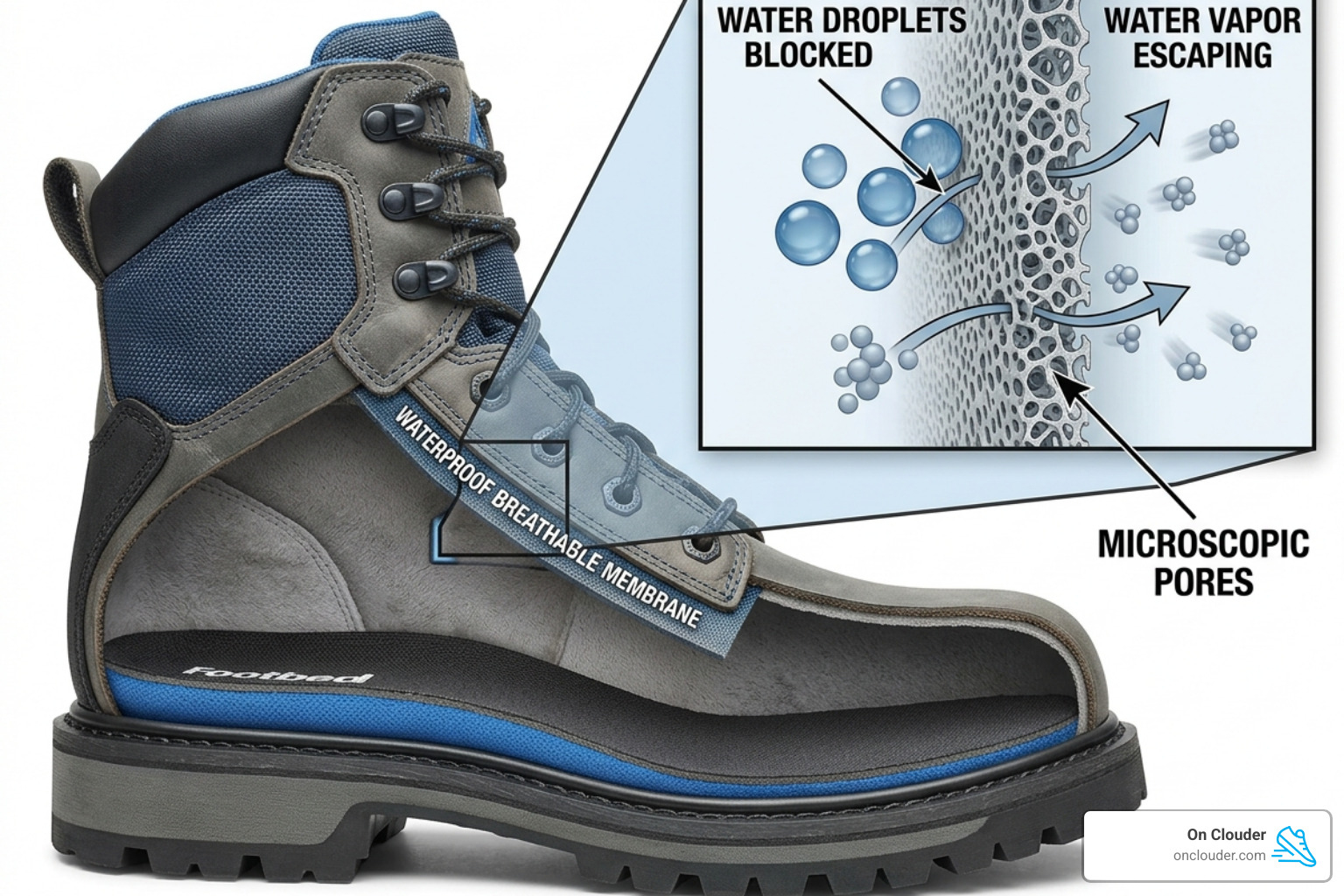
How Membranes and Linings Work
The “engine” of a breathable waterproof boot is the internal membrane. These membranes, such as Wolverine’s DRYGuard or Irish Setter’s UltraDry™, are engineered with billions of microscopic pores. These pores are approximately 20,000 times smaller than a drop of water—meaning rain can’t get in—but they are 700 times larger than a molecule of water vapor. This allows sweat to evaporate and pass through the boot.
Many brands, like Red Wing, utilize a three-layer system. This typically includes a moisture-deterrent inner lining to pull sweat away from the skin, a middle layer of cushioning foam for comfort, and the waterproof bootie barrier protected by a durable tricot mesh. This construction ensures the membrane isn’t punctured by friction or debris. You can see these technologies in action across the Breathable Work Boots – CAT Footwear collection, where ventilation is prioritized alongside protection.
The Role of Water-Resistant Leathers
While the membrane does the heavy lifting, the outer shell is your first line of defense. Manufacturers use premium full-grain, nubuck, or pull-up leathers that have been treated during the tanning process to be hydrophobic.
- Oiled and Waxed Leathers: These are saturated with oils to repel water naturally while remaining supple.
- Waterproof PRO™: Used by brands like Ariat, this construction uses impermeable leathers to prevent the “heavy” feeling boots get when they soak up water.
- Nubuck: Often used in hiker-style boots for a balance of durability and airflow.
By treating the leather itself, the boot sheds water immediately, preventing the material from becoming waterlogged, which would otherwise block the “breathable” pores of the internal membrane. You can find more about these materials in our Tag/Breathable Boots archive.
Advanced Technologies: Membranes and Midsoles
In April 2026, the industry has moved beyond just keeping feet dry; it’s about energy management. If your boots are heavy and stiff, it doesn’t matter if they’re dry—your feet will still ache. Modern waterproof and breathable work boots now integrate high-tech midsoles that return energy to the wearer.
| Technology | Primary Benefit | Best For |
|---|---|---|
| UltraDry™ | Multi-layer waterproofing | Wet outdoor environments |
| KEEN.ReGEN | 50% more energy return | Long shifts on concrete |
| DuraShocks | Shock absorption pads | High-impact industrial work |
| CarbonMax | Lightweight safety toe | Reducing overall boot weight |
Proprietary Systems and Energy Return
We’ve seen a massive shift toward “active” comfort. KEEN.ReGEN technology, for instance, uses a lightweight midsole that returns 50% more energy than standard EVA foam. This means every step helps propel the next, which is vital for delivery drivers or warehouse workers.
Similarly, Wolverine’s DuraShocks SR system uses compression pads in the heel and forefoot to absorb shock before it reaches your legs. Some high-end models, like the Men’s TruGuard Lite BOA® Work Boot 2552 | Red Wing Shoes, even incorporate bio-based carbon polyurethanes and high-rebound midsoles to keep the boot light and responsive. These are perfect examples of Tag/Lightweight Work Boots that don’t compromise on safety.
Ventilation and Odor Control
Breathability isn’t just about membranes; it’s about airflow. Models like the CAT Invader Mid Vent use mesh uppers and perforated designs to maximize air circulation. To combat the inevitable “work boot smell,” many brands now integrate CLEANSPORT NXT™, a natural probiotic technology that bonds to the lining fibers to break down odor-causing sweat.
For those who prefer a less restrictive feel, soft toe options are gaining popularity in climate-controlled environments. As we often say, Tag/Soft Toe Work Boots Are The Secret To Happy Toes when heavy impact isn’t a daily risk.
Safety Ratings and Material Standards
A work boot is only as good as its safety certification. In the US, the gold standard is ASTM F2413-24, which covers requirements for impact and compression resistance. When shopping for waterproof and breathable work boots, you’ll see these codes stamped on the tongue or inside the shaft.
Impact, Compression, and Electrical Hazards
The “Steel Toe” is no longer the only player in town. While steel remains the classic choice for maximum protection at a lower price point, other materials offer specific advantages:
- Aluminum Toes: Lighter than steel but just as strong, providing a roomier fit.
- Composite Toes: Non-metallic (won’t set off metal detectors) and doesn’t conduct heat or cold, making them ideal for extreme weather. Check out our Tag/Composite Toe boots for top-rated options.
- CarbonMax: A Wolverine specialty, using nanotechnology to create a thinner, lighter safety toe that still meets all ASTM standards.
Most of these boots are also EH (Electrical Hazard) rated, meaning they are designed to protect the wearer against open circuits up to 18,000 volts in dry conditions. Some models also feature puncture-resistant insoles, like the Lenzi PS5ES, which use high-tenacity fabrics to stop nails from reaching your foot without the weight of a steel plate.
Outsole Performance and Heat Resistance
The bottom of the boot is where the rubber meets the road—literally. For workers in paving or heavy manufacturing, HRO (Heat Resistant Outsole) soles are a must. These are tested to resist melting at temperatures up to 475°F (246°C).
Technologies like Ariat’s Duratread™ or Red Wing’s VersaTrax provide “best-in-class” resistance to oil, gas, and chemicals. Many modern outsoles also feature a 90-degree heel, which is a safety requirement for anyone frequently climbing ladders or rungs, as it provides a secure “lock” on the step.
Choosing the Right Fit for Your Environment
Not all waterproof and breathable work boots are created equal. The right boot for a Florida citrus farmer is vastly different from the right boot for an Alaskan oil rigger.
Selecting waterproof and breathable work boots by Industry
- Construction: Needs a 6-inch or 8-inch lace-up boot for ankle stability and a safety toe for falling debris.
- Warehousing: Lightweight, sneaker-like boots with KEEN.ReGEN or DuraShocks are better for walking miles on concrete.
- Farm and Ranch: Wellington (pull-on) styles are preferred to keep mud and manure from getting into the boot.
- Beer Delivery: Requires a mix of sneaker comfort and a safety toe for moving heavy kegs and navigating stairs.
The closure system also matters. While traditional laces offer the most customized fit, the BOA® Fit System—which uses a dial and stainless steel cables—allows for micro-adjustments on the fly and is incredibly easy to use with gloves. For those on the move, side-zips offer the convenience of a pull-on with the support of a lace-up. You can find more industry-specific advice in our Tag/Construction Boots section.
Performance of waterproof and breathable work boots in Extreme Weather
In hot and humid climates like Florida, look for boots with moisture-wicking textile linings and mesh uppers. KEEN has been a leader here, moving to PFAS-free materials since 2018 to ensure their waterproofing doesn’t rely on “forever chemicals.”
For cold weather, breathability is still important to prevent sweat from freezing. Boots with 400g 3M™ Thinsulate™ or PrimaLoft® insulation provide warmth without the bulk, while proprietary membranes like DRYShield™ keep the slush out.
Maintenance and Care for Performance
To keep your waterproof and breathable work boots functioning, you can’t just set them and forget them. If the leather pores get clogged with mud, the boot stops breathing. If the leather dries out and cracks, the waterproof membrane inside can be damaged.
- Clean: Use warm water and a soft brush after every shift. For heavy grime, use a specialized Waterproof Leather Cleaner.
- Condition: Apply Mink Oil or a brand-specific conditioner sparingly. Don’t overdo it, as too much oil can actually block the breathability of the leather.
- Protect: A Leather Protector spray adds an invisible shield against water and salt.
- Repair: High-quality boots from Red Wing or Irish Setter are often resoleable. Don’t wait until the midsole is showing; take them to a pro when the tread wears down.
Many top brands offer a 30-day comfort guarantee, so don’t be afraid to put them to the test. If they don’t breathe as promised, take advantage of the return policy.
Frequently Asked Questions about Breathable Waterproof Boots
How do I know if my boots are truly breathable?
If your feet feel “clammy” rather than “wet” after a long shift, the breathability might be struggling. A truly breathable boot will feel significantly cooler than a standard rubber boot. Look for labels like Gore-Tex, UltraDry™, or DRYGuard, which signify a tested membrane is present.
Can waterproof boots be worn in hot weather without sweating?
Yes, but you need the right socks. Always wear moisture-wicking wool or synthetic socks. Cotton absorbs sweat and holds it against your skin, making even the most breathable boot feel like a swamp.
How often should I re-apply waterproofing spray?
This depends on your environment. If you work in mud or heavy rain daily, once a month is a good rule of thumb. If you see water stop “beading” on the surface of the leather, it’s time for a fresh coat of protector.
Conclusion
Finding the perfect pair of waterproof and breathable work boots in April 2026 is easier than ever, thanks to the massive leaps in membrane and midsole technology. By choosing a boot that balances a high-quality waterproof barrier with energy-returning comfort, you aren’t just buying footwear—you’re investing in your long-term health and productivity.
At On Clouder, we pride ourselves on helping you navigate these technical specs to find the absolute best fit for your feet. Whether you’re standing on concrete for 12 hours or trekking through a muddy jobsite, the science of dry is on your side.
Step into the future of work comfort with our guide to breathable non-slip shoes