Why Soft Safety Boots Are Changing the Way We Work on Our Feet
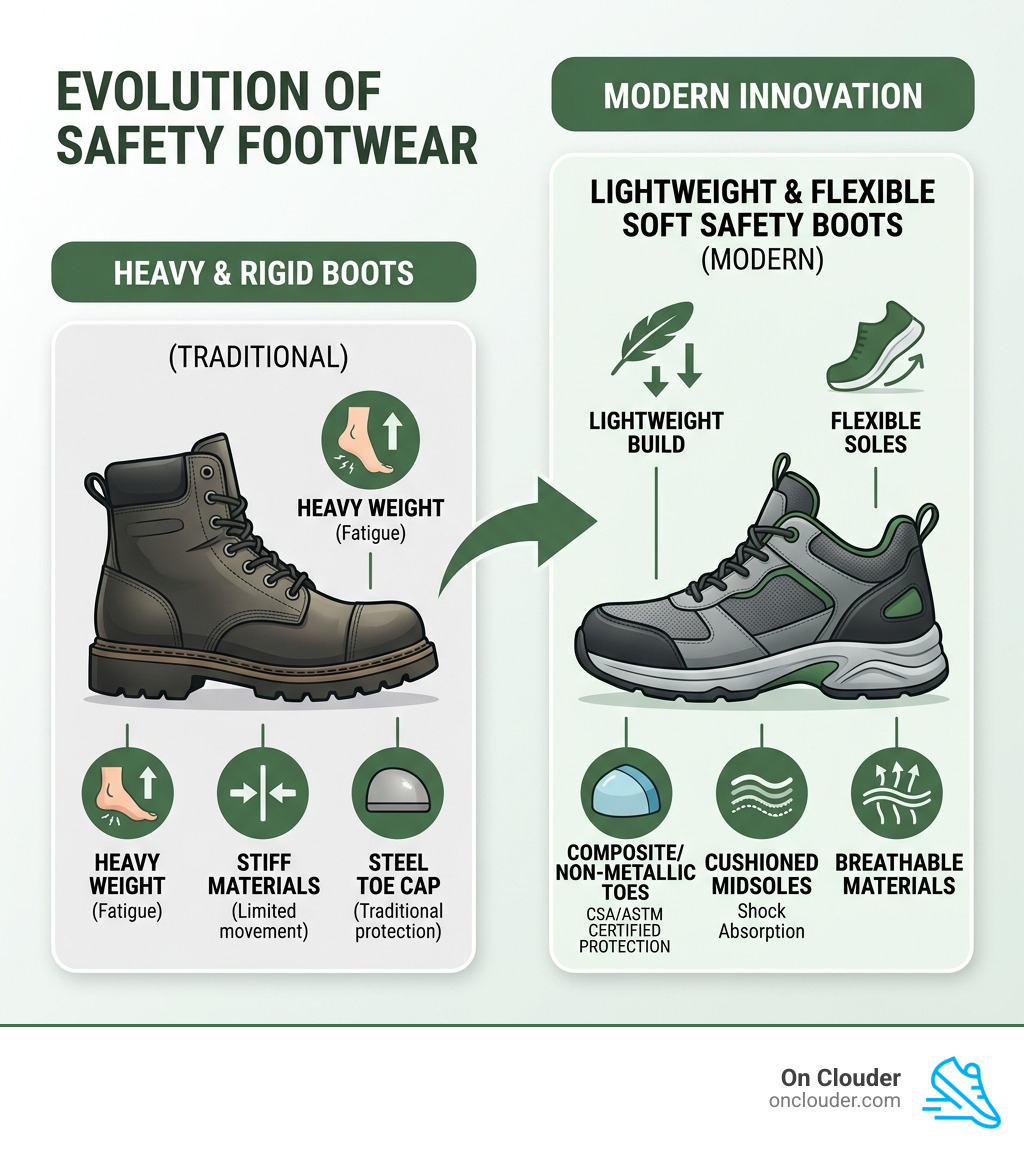
Soft safety boots combine certified workplace protection with the kind of all-day comfort that traditional rigid work boots simply can’t match. Here’s what you need to know at a glance:
| Feature | What It Means for You |
|---|---|
| Lightweight build | Less foot fatigue over long shifts |
| Flexible soles | Natural movement, less strain |
| Composite or non-metallic toes | Full CSA/ASTM protection, airport-friendly |
| Cushioned midsoles | Shock absorption on hard surfaces |
| Breathable materials | Cooler, drier feet all day |
If you’ve ever finished a shift with aching feet, stiff ankles, or sore knees, your boots might be the problem — not your job.
Traditional safety footwear was built tough first and comfortable second. But modern soft safety boots flip that priority without cutting corners on protection. They still meet rigorous standards like CSA Grade 1 and ASTM F2413-24, while using advanced materials to dramatically reduce weight and improve flexibility.
The result? Boots that feel more like athletic shoes than armor — and that can actually keep up with professionals who are on their feet for 8, 10, or 12 hours straight.
I’m Faisal S. Chughtai, a footwear expert with hands-on experience evaluating the comfort and performance of soft safety boots across a wide range of work environments. In this guide, I’ll walk you through everything you need to choose, use, and get the most out of your next pair.
Learn more about soft safety boots:
Defining Soft Safety Boots: Comfort Meets Protection
When we talk about soft safety boots, we aren’t referring to boots made of pillows. Instead, we are looking at a category of footwear designed with high-tech, lightweight materials that prioritize anatomical movement. Unlike the clunky, “clog-like” feel of traditional work boots, these models utilize flexible soles and non-metallic toes to mimic the gait of a standard shoe.
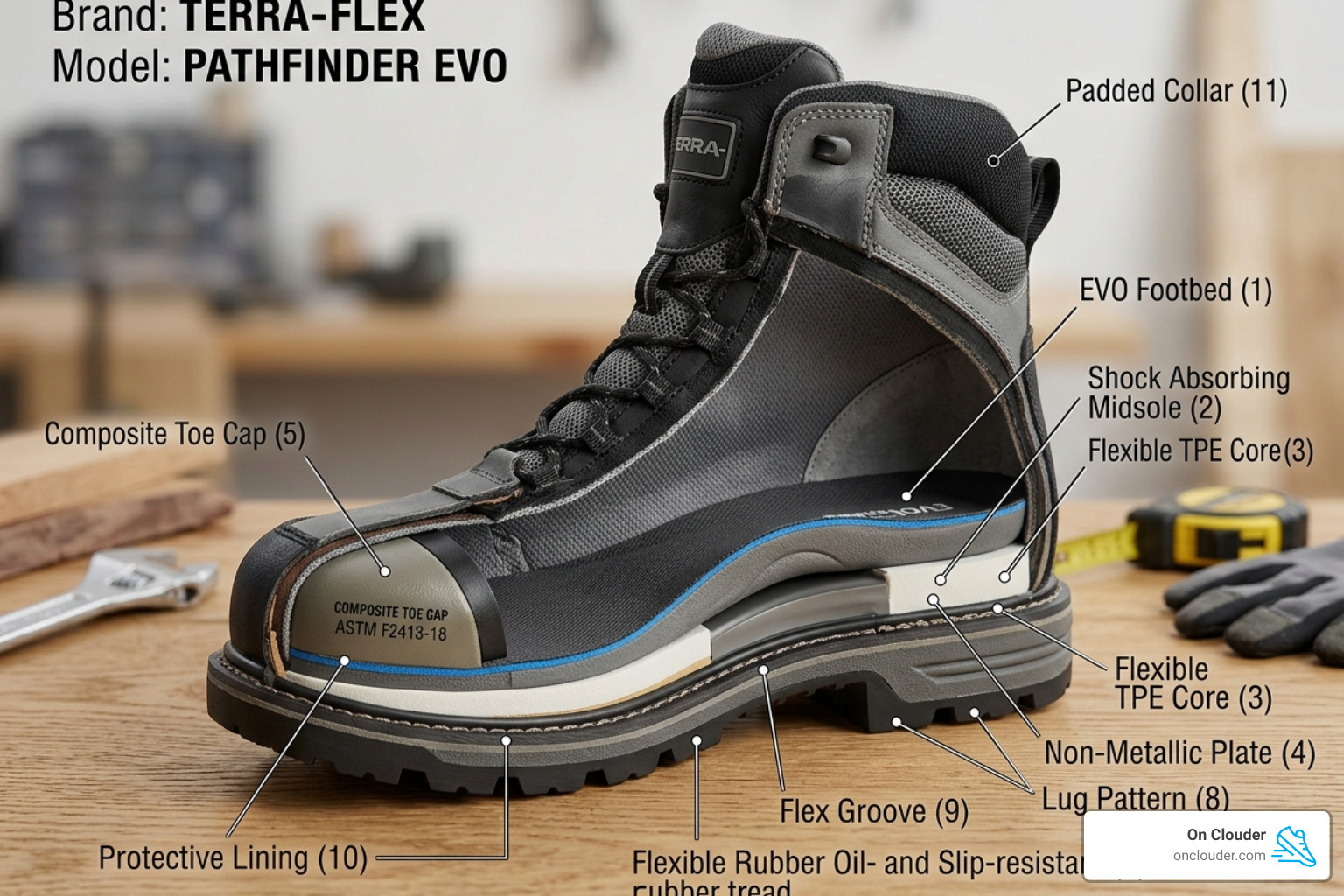
The secret lies in the construction. By swapping out heavy steel plates for composite materials and replacing rigid rubber with high-rebound EVA (ethylene-vinyl acetate) midsoles, manufacturers have created a boot that bends where your foot bends. This is why many workers find that soft toe work boots are the secret to happy toes, especially when their specific job site doesn’t mandate a hard toe cap.
Comparing Traditional vs. Soft Safety Boots
| Feature | Traditional Rigid Boots | Soft Safety Boots |
|---|---|---|
| Primary Material | Heavy-duty thick leather | Full-grain leather or technical mesh |
| Toe Protection | Steel | Composite, Carbon-Fiber, or Soft Toe |
| Midsole | Hard rubber or wood shank | EVA or Polyurethane (athletic feel) |
| Weight | Often 4+ lbs per pair | As low as 0.9 lbs per shoe |
| Break-in Period | Weeks of “stiff” walking | Near-instant comfort |
Essential Safety Certifications and Standards
Don’t let the “soft” label fool you. In April 2026, the safety standards for these boots are more stringent than ever. To ensure you are protected on a Canadian or American job site, you need to look for specific markings on the tongue or side of the boot.
- CSA Grade 1 (The Green Triangle): This is the gold standard in Canada. It ensures the toe can withstand an impact of up to 125 joules and the sole can resist a puncture force of 1200 Newtons (about 270 pounds).
- ASTM F2413-24: This is the updated American standard for safety footwear. It covers impact resistance, compression, and specialized protections like electrical hazard (EH) or puncture resistance (PR).
- ESR (Electric Shock Resistant): Look for the white rectangle with the orange omega symbol. These boots are tested to withstand 18,000 volts, ensuring that leakage current doesn’t exceed 1mA under dry conditions.
- HRO Soles: These are heat-resistant outsoles designed to perform on high-heat surfaces. High-performance models like the TruGuard Lite feature soles that resist melting at temperatures up to 475°F (246°C).
Whether you are looking for waterproof safety shoes 101 or high-voltage protection, always verify the tag/safety toe information before purchasing.
Top Features of High-Performance Soft Safety Boots
The modern soft safety boots market is driven by innovation. One of the most significant shifts we’ve seen is the move toward the BOA Fit System. Instead of fumbling with laces that can trip you up or trap dirt, the BOA system uses a micro-adjustable dial and stainless steel wires to provide a precision fit that won’t loosen throughout the shift.
Another game-changer is the use of composite toes. These are made from materials like carbon fiber, plastic, or Kevlar. They are significantly lighter than steel and don’t conduct heat or cold, which is a massive plus for Canadian winters. If you want to stop dragging your feet with these featherweight composite toe boots, checking the tag/composite toe is your first step.
Innovative Materials in Soft Safety Boots
We are seeing a surge in proprietary technologies that make these boots stand out:
- Kodiak Flex: This technology allows the upper material to stretch and mold to the unique shape of your foot instantly. For example, the Women’s Kodiak Flex Britt Slip-On Steel Toe Safety Work Shoe weighs only 406 grams (0.9 lbs) per shoe, making it one of the lightest options on the market.
- PFAS-Free Since 2018: Sustainability matters. Brands like KEEN have eliminated “forever chemicals” (PFAS) from their entire production line to protect both the wearer and the planet.
- OrthoLite Insoles: These breathable, open-cell foam insoles provide long-term cushioning and moisture management. When paired with breathable safety trainers that won’t leave you steaming, they are perfect for high-activity warehouse roles.
- Electrical Hazard Protection: Modern tag/electrical hazard boots use non-conductive materials to provide a secondary source of protection against accidental contact with live circuits.
Ergonomics and All-Day Wearability
Ergonomics is the study of people’s efficiency in their working environment, and in footwear, it translates to “reduced fatigue.” Traditional boots often use a “unisex” mold that doesn’t account for the anatomical differences in women’s feet.
Modern brands have corrected this. The Mellow Walk Vanessa Women’s Work Boots are built on women’s-specific lasts, offering a narrower heel and better arch support. Systems like RotoFlex and SoftCell use biomechanical designs to enhance stability and balance, which is vital for those working on uneven construction sites or navigating busy shop floors.
Choosing the Right Soft Safety Boots for Your Industry
Not all soft safety boots are created equal. Your choice should depend heavily on your daily environment:
- Warehousing & Logistics: Speed and agility are key here. Look for slip-on models or low-cut safety trainers with high-rebound midsoles to handle miles of walking on concrete.
- Construction: You need durability. Opt for tag/construction boots that feature reinforced toe scuff guards and HRO (heat-resistant) soles if you’re working near asphalt or hot machinery.
- Manufacturing: Slip resistance is the priority. Look for outsoles tested on oily and wet surfaces to prevent workplace falls.
- Outdoor Trades: Waterproofing and insulation are non-negotiable. Look for full-grain leather uppers treated with waterproof membranes.
Sizing and Fit for Maximum Performance
Getting the right fit is about more than just the number on the box.
- Width Options: Many soft boots now come in Medium (D) and Wide (EE) options. If your feet swell during the day, a wider fit is a lifesaver.
- UK vs. US Sizing: Be careful with brands like Blundstone. The Blundstone Unisex 163 Work & Safety Boot uses UK sizing, which is generally one size smaller for men and three sizes smaller for women compared to US sizing.
- The Break-in Period: While soft boots are more comfortable out of the box, leather models still need a few days to mold to your ankle.
- Removable Footbeds: If you use custom orthotics, ensure the boot has a removable insole. This allows you to maintain the boot’s tag/safety shoes rating while getting the arch support you need.
Frequently Asked Questions about Soft Safety Boots
How do I maintain and care for my boots?
To extend the lifespan of your soft safety boots, follow a three-step process:
- Clean: Use warm water and a soft brush to remove mud and grit. For stubborn stains, a specialized leather cleaner is best.
- Condition: Apply mink oil or a leather conditioner sparingly. This keeps the leather supple and prevents cracking, especially around flex points.
- Protect: Use a leather protector spray to maintain the waterproof barrier.
Don’t forget the hardware! If your boots have YKK zippers or a BOA system, keep them free of debris. If you’ve opted for a tag/steel toe model, check the leather over the toe cap for “scuffing” that could expose the metal.
Are soft safety boots as durable as heavy-duty leather boots?
Yes, if you choose the right model. While they feel lighter, the materials are often tougher. For example, the Men’s TruGuard Lite BOA® Work Boot uses abrasion-resistant materials and outsoles that can withstand 475°F. The puncture-resistant plates are often made of high-tenacity fabrics (like Lenzi) that are just as effective as steel but much more flexible.
Can I wear these for airport security?
If your boots are “metal-free,” yes! Models like the Blundstone Unisex 8303 Rotoflex Work & Safety utilize Fortalite composite technology. Because they contain no metal in the toe or the shank, they are “airport-friendly” and won’t set off metal detectors, making them a favorite for travelers and security personnel alike.
Conclusion
At On Clouder, we believe that your work gear should empower you, not hold you back. The shift toward soft safety boots represents a major leap in footwear innovation, proving that we no longer have to choose between “safe” and “comfortable.”
By focusing on lightweight materials, ergonomic designs, and the latest safety certifications, you can find a pair of boots that protects your feet from hazards while saving your joints from the wear and tear of a long shift. Whether you’re a nurse on a 12-hour rotation, a construction pro, or a warehouse specialist, there is a soft safety option designed for your specific needs.
For more tips on staying comfortable during those long hours, check out our ultimate guide to standing on concrete. Your feet will thank you.