How to Choose Running Shoes for Overpronation
Start with fit and comfort, not a label. If your foot rolls inward a lot and you have recurring pain, try a stability running shoe with a secure heel, a wide base, and support that feels comfortable under your arch. Compare it with a neutral shoe on a short run. The better choice is the one that feels good while you run and leaves you comfortable afterward.
Some inward roll is normal: it helps your foot absorb impact. Overpronation does not mean you need to force your foot straight or buy the firmest shoe available. This guide will help you spot useful shoe features, weigh the evidence for stability shoes, and know when pain calls for a specialist.
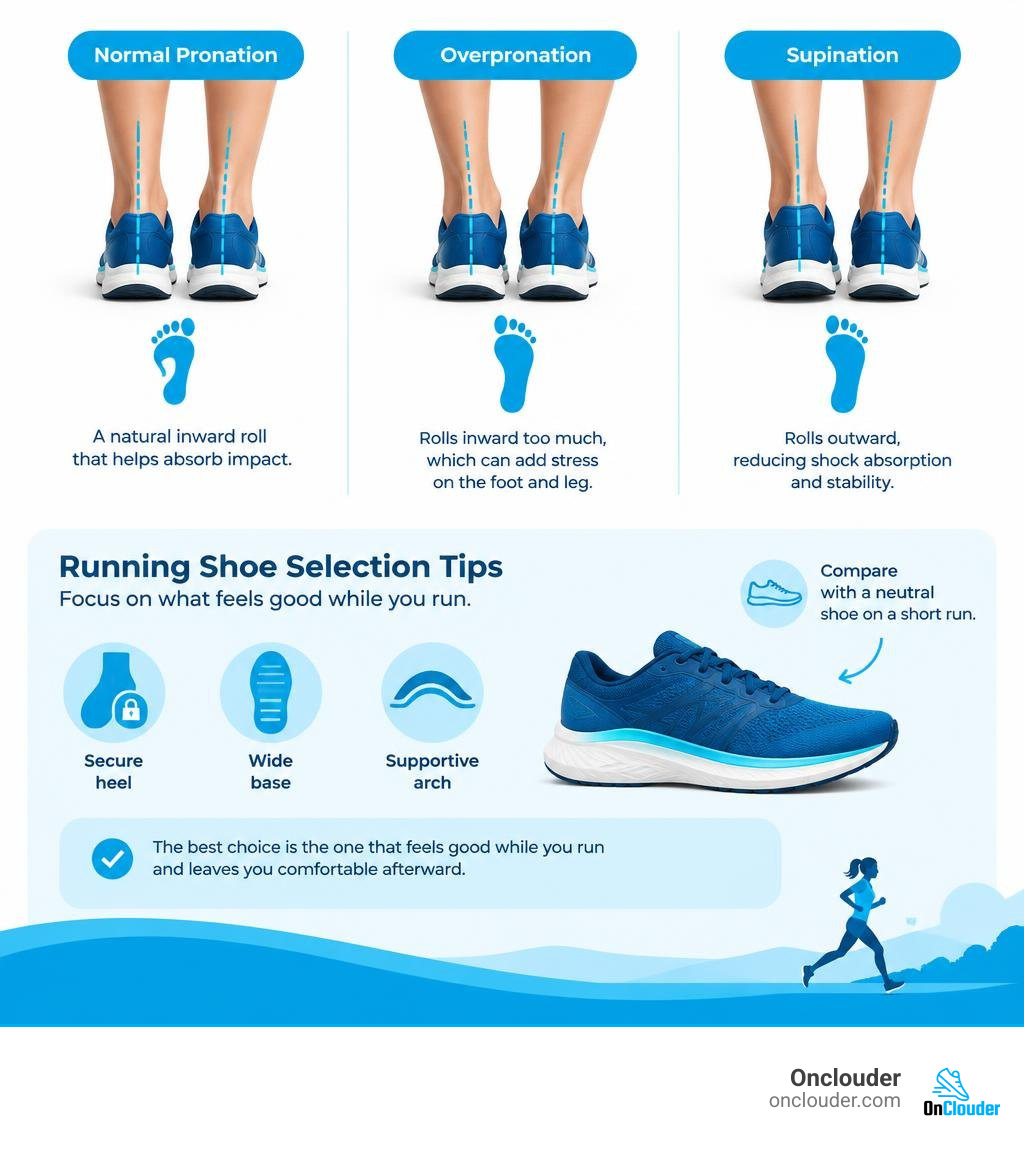
Simple overpronation shoes running glossary:
Understanding Overpronation and Biomechanics in Runners
When you run, your feet hit the pavement with a force equal to several times your body weight. To handle that sudden load, your body relies on natural pronation: the inward roll of the foot as the arch flattens slightly to absorb shock.
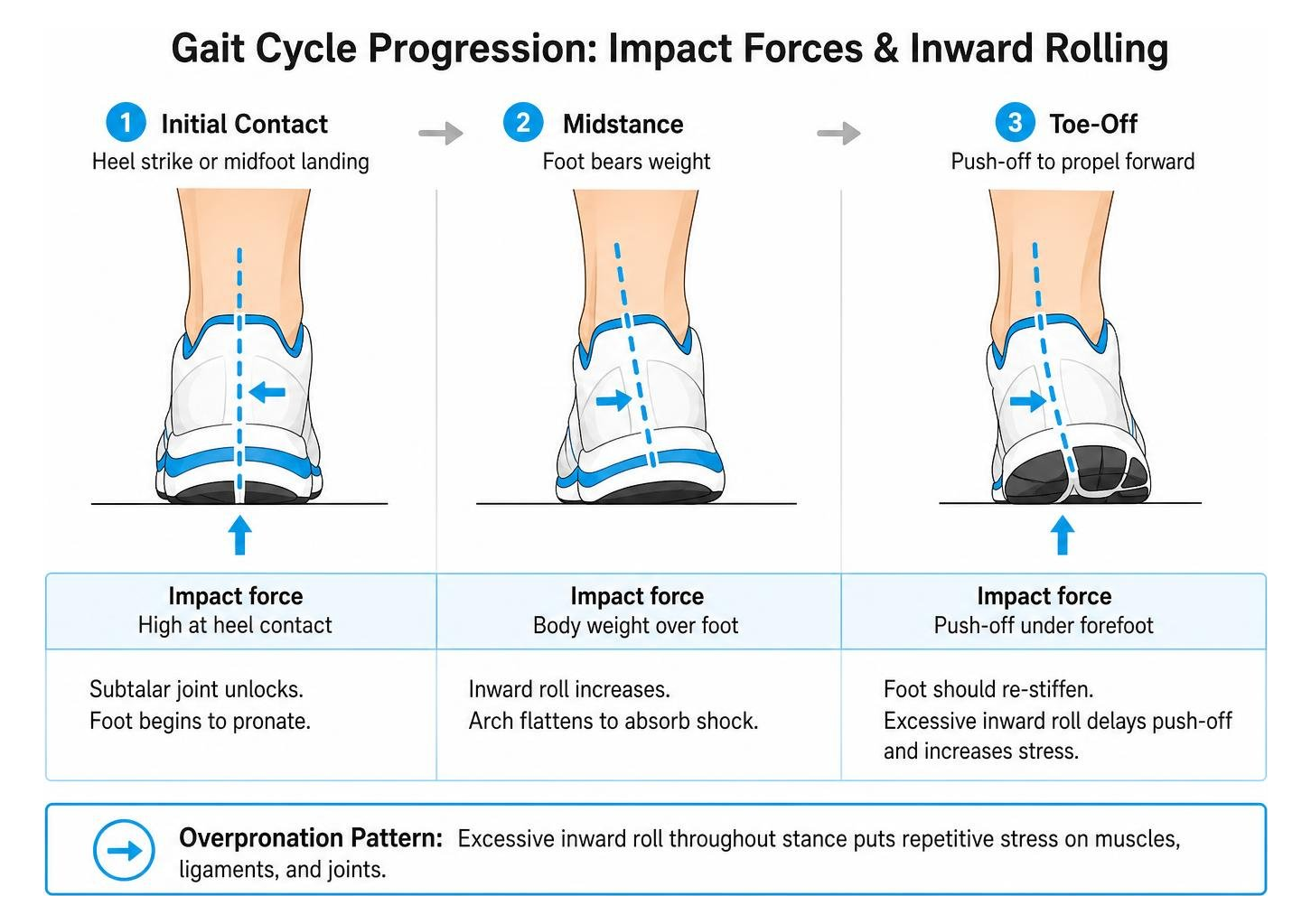
However, when that inward roll exceeds natural shock-absorbing parameters, the foot collapses excessively toward the medial (inner) side. When running with overpronation, your foot stays flattened for too long during the ground-contact phase rather than re-stiffening to propel you forward. This places repetitive torsional stress on your muscles, ligaments, and joints.
What Happens During Gait and Impact Forces
The running gait cycle moves through three key stages: initial contact (heel strike or midfoot landing), midstance, and toe-off. At initial contact, the subtalar joint unlocks, allowing the foot to pronate and adapt to uneven surfaces.
In an overpronating stride:
- The arch collapses excessively during midstance instead of rebounding.
- The lower leg (tibia) rotates inward along with the collapsing arch.
- The knee and hip turn inward to compensate, altering load distribution across the entire kinetic chain.
- The big toe takes on disproportionate pressure during toe-off, destabilizing propulsion.
Because the foot fails to become a rigid lever for push-off, the lower leg muscles must work overtime to stabilize your stride.
Common Running Injuries Linked to Foot Collapse
Overpronation is not an injury in itself, but the resulting mechanical imbalance increases the risk of several common overuse conditions:
- Plantar Fasciitis: Excessive arch flattening stretches and inflames the thick band of tissue running along the bottom of your foot.
- Shin Splints (Medial Tibial Stress Syndrome): Inward rolling forces the posterior tibialis muscle and surrounding fascia to pull repeatedly against the shinbone.
- Achilles Tendinitis: As the heel tilts inward, the Achilles tendon experiences uneven, twisting tension that causes micro-tears and inflammation.
- Patellofemoral Pain Syndrome (“Runner’s Knee”): Internal tibial rotation pulls the kneecap out of its natural groove, causing pain behind or around the patella.
- Posterior Tibial Tendinitis: The tendon responsible for holding up your medial arch becomes overloaded and fatigued from resisting excessive arch drop.
- Iliotibial (IT) Band Syndrome: Compensatory hip drop and internal thigh rotation create excessive friction between the IT band and the outside of the knee.
Self-Assessment Tests and Professional Gait Analysis
Before buying new footwear, it helps to determine whether your mechanics lean toward excessive inward roll.
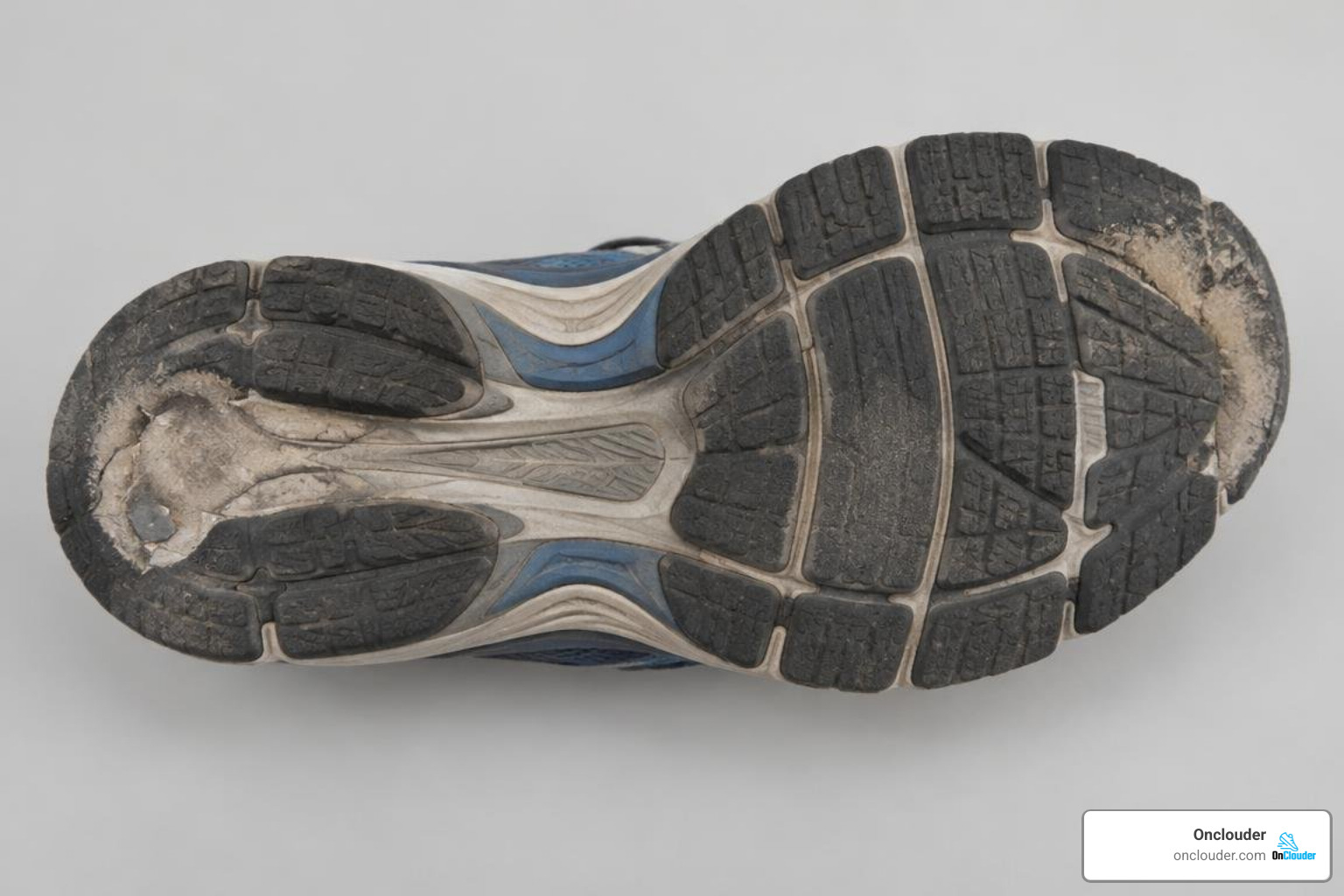
Here are three reliable ways to assess your pronation pattern:
- The Shoe Wear Pattern Test: Look at the outsoles of a well-worn pair of daily trainers. If you see heavy wear concentrated along the inside edge under the big toe and inner heel, you likely overpronate.
- The Wet Footprint Test: Wet the bottom of your foot and step firmly onto dry cardboard or concrete. If the footprint shows the complete outline of your sole without a distinct inward curve where your arch should be, you have low arches or flat feet, which often coincide with overpronation.
- Professional Video Gait Analysis: Specialty running stores and sports clinics use treadmill cameras and pressure-mapping plates. A slow-motion recording reveals exactly how much your subtalar joint rotates upon impact.
Choosing the Best Overpronation Shoes Running Gear for Your Stride
Selecting the right pair of stability running shoes means matching your biomechanics to the appropriate level of structural support. Footwear engineers use specific geometries, dual-density foams, and guiding geometries to manage inward roll without feeling like rigid ski boots.
| Feature / Category | Neutral Running Shoes | Stability Running Shoes | Motion-Control Running Shoes |
|---|---|---|---|
| Target Runner | Neutral pronators or mild supinators | Mild-to-moderate overpronators | Severe overpronators or flexible flat feet |
| Arch Support | Minimal, natural contour | Moderate, targeted medial support | Maximum, rigid reinforcement |
| Midsole Design | Single-density, uniform cushion | Dual-density foam or subtle guide rails | High-density medial posting |
| Heel Counter | Flexible to semi-firm | Firm and reinforced | Rigid, deeply structured |
| Torsional Rigidity | High flexibility | Moderate resistance to twisting | Highly rigid, resists all twisting |
| Base Width | Standard width profile | Flared, wide midfoot platform | Broad, straight-lasted platform |
Key Stability Features: Heel Counters, Midsoles, and Platform Width
When testing footwear, look for these three core structural components:
- Firm Heel Counter: Squeeze the back of the shoe cup around the heel. A firm, inflexible heel counter locks your calcaneus (heel bone) in place, preventing the rearfoot from tilting inward at initial touchdown.
- Dual-Density Midsole & Guide Rails: Traditional models use denser foam under the arch to slow inward collapse. Modern designs frequently feature dynamic guide rails—raised foam walls along the inner and outer perimeter that steady your foot only when your stride veers off-track.
- Wide Platform and Torsional Rigidity: Grab the shoe by the heel and toe, then twist it. A quality stability trainer resists excessive twisting through the midfoot shank and features a wider base underneath the arch to distribute impact evenly.
How Modern Overpronation Shoes Running Designs Guide Foot Strike
Modern podiatrist-approved footwear has moved away from stiff, blocky medial posts. Instead of forcing your foot into an artificial position, modern designs use geometry, flared midsole bases, and responsive foams to guide your foot through its preferred movement pathway.
These adaptive foams compress under load without bottoming out, preserving natural ankle motion while absorbing joint-jarring shock.
Stability vs. Motion Control: Rethinking Traditional Footwear Advice
Decades ago, runners who overpronated were routinely prescribed heavy motion-control shoes. Today, we understand the evolution of stability footwear as a shift toward dynamic support.
Rigid wedges can sometimes cause more harm than good by restricting normal foot mechanics, shifting excess strain into the knees and hips. Unless you have severe flat feet or neurological joint laxity, modern mild-to-moderate stability trainers provide the right balance of guidance and comfort.
Orthotics, Foot Exercises, and Gait Retraining for Overpronators
Footwear is only one piece of the puzzle. Combining supportive trainers with active strength work helps build a resilient foundation for injury-free miles.
Matching Overpronation Shoes Running Options with Custom Orthotics
If you use corrective overpronation insoles or custom orthotics, pair them carefully with your shoes:
- Avoid Double-Correction: Placing a high-arch orthotic inside an aggressive motion-control shoe can push your foot too far outward, leading to unintended lateral stress.
- Try Neutral Platforms First: Custom orthotics that feature medial posting and deep heel cups often work best inside neutral shoes with wide bases, allowing the insert to do its intended job.
- Replace Factory Liners: Always pull out the removable factory sockliner before inserting your orthotics to maintain proper shoe volume and heel lock.
Targeted Foot-Strengthening Drills and Tibial Rotation
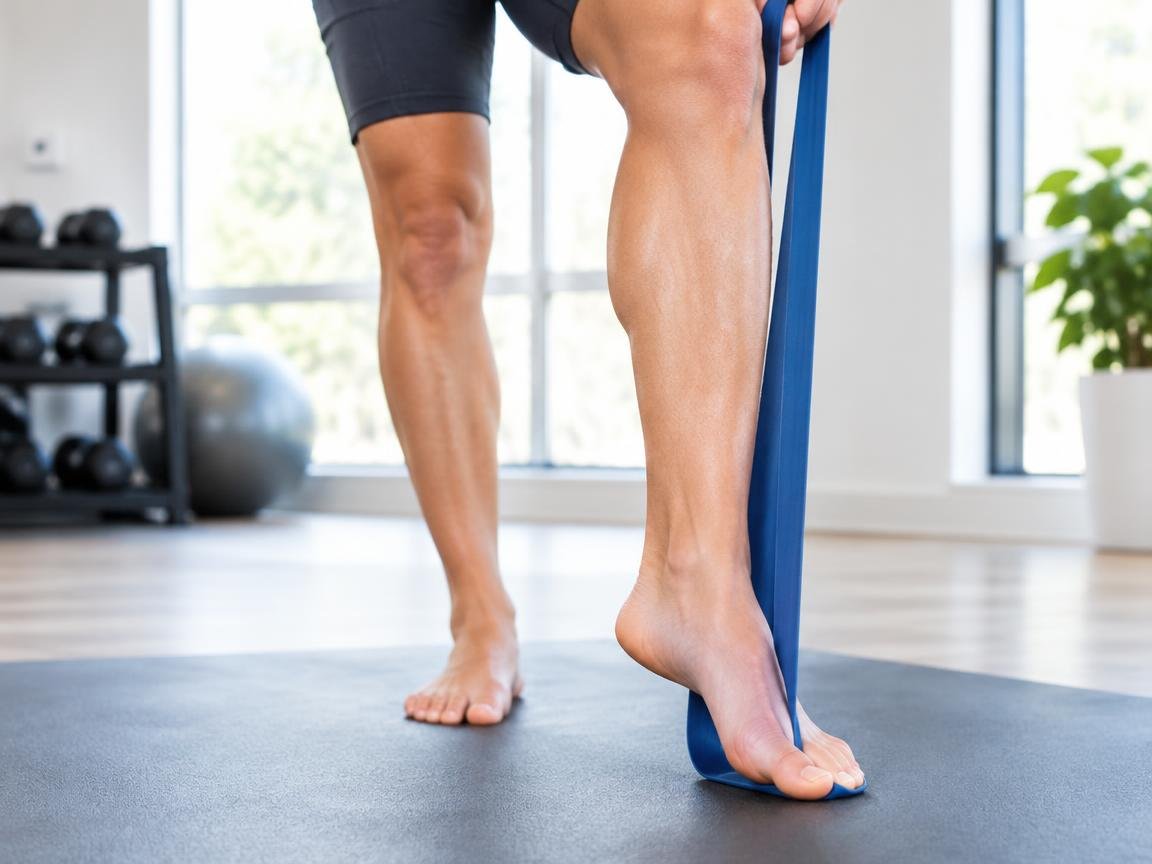
Strengthening your foot’s intrinsic muscles and lower-leg stabilizers improves arch integrity:
- Short Foot Exercise (Arch Domes): Sit or stand barefoot. Keep your toes flat on the ground and pull the ball of your foot toward your heel by engaging your arch. Hold for 5 seconds, release, and repeat 10 times per foot.
- Step-Ups with Tibial Rotation: Step onto a low box, keeping your knee tracking over your second toe. As you press up, ensure your foot’s three contact points (heel, base of the big toe, base of the pinky toe) remain grounded while rotating your shin slightly outward. Perform 8 controlled reps per side.
- Calf Raises with Medial Squeeze: Place a tennis ball between your inner ankles. Rise onto your toes while gently squeezing the ball to engage the posterior tibialis muscle. Do 3 sets of 12 reps.
- Towel Scrunches and Marble Pickups: Place a hand towel or marbles on a smooth floor. Use your toes to pull the towel toward you or pick up individual marbles and drop them into a cup.
When to Consult a Podiatrist or Sports Specialist
While self-care and supportive trainers resolve most pronation-related discomfort, seek professional care from a podiatrist or physical therapist if you experience:
- Sharp, pinpoint bone tenderness along the shin or top of the foot (possible stress fracture).
- Persistent morning heel pain that does not improve after two weeks of rest.
- Sudden numbness, tingling, or arch pain that alters your everyday walking mechanics.
- A sudden flattening of one foot accompanied by ankle swelling (signs of posterior tibial tendon dysfunction).
A specialist can provide 3D gait scans, targeted physical therapy, and custom-molded orthotics tailored to your specific anatomy.
Frequently Asked Questions About Overpronation Running Shoes
Can overpronation be completely corrected with running shoes?
Running shoes do not permanently change your underlying bone structure or cure overpronation. Instead, stability shoes provide dynamic external support that manages inward roll, eases tendon strain, and reduces injury risk while you run.
How do I know if I need stability shoes or custom orthotics?
Most runners with mild to moderate inward roll do well with standard stability running shoes. If you continue to experience chronic pain, have asymmetrical arch collapse (one foot flattens significantly more than the other), or have rigid structural flat feet, consult a podiatrist for custom orthotics.
How often should runners replace stability footwear?
We recommend replacing stability running shoes every 300 to 500 miles (roughly 500 to 800 kilometers). Even if the rubber outsole looks intact, the internal foam and guide rails break down over time, gradually reducing their supportive qualities.
Conclusion
At Onclouder, we test shoes across various distances and terrains because we believe the right pair should work in harmony with your natural stride, not fight against it. Managing overpronation is all about finding the right balance between smart footwear engineering, active strength drills, and individual comfort.
Take the time to evaluate your gait, test different models on short shakeout runs, and build lower-leg strength to keep your joints healthy. For a full breakdown of top-rated trainers, explore our essential guide to top overpronation footwear to find your ideal pair today.