On Cloud vs. Hoka: Which Shoes Are Better for Your Day?
Hoka is the better pick for long walks and standing all day if you want soft cushioning and more toe room. On Cloud is a better pick for quick errands and casual wear if you prefer a lighter, sleeker shoe with a springier feel. For running, compare specific models: the everyday On Cloud 6 and cushioned Hoka Clifton 11 serve different needs.
Fit matters more than the logo. Try both with your usual socks, and choose the pair that feels secure without squeezing your toes. If you have foot pain, seek advice from a podiatrist rather than relying on cushioning alone.
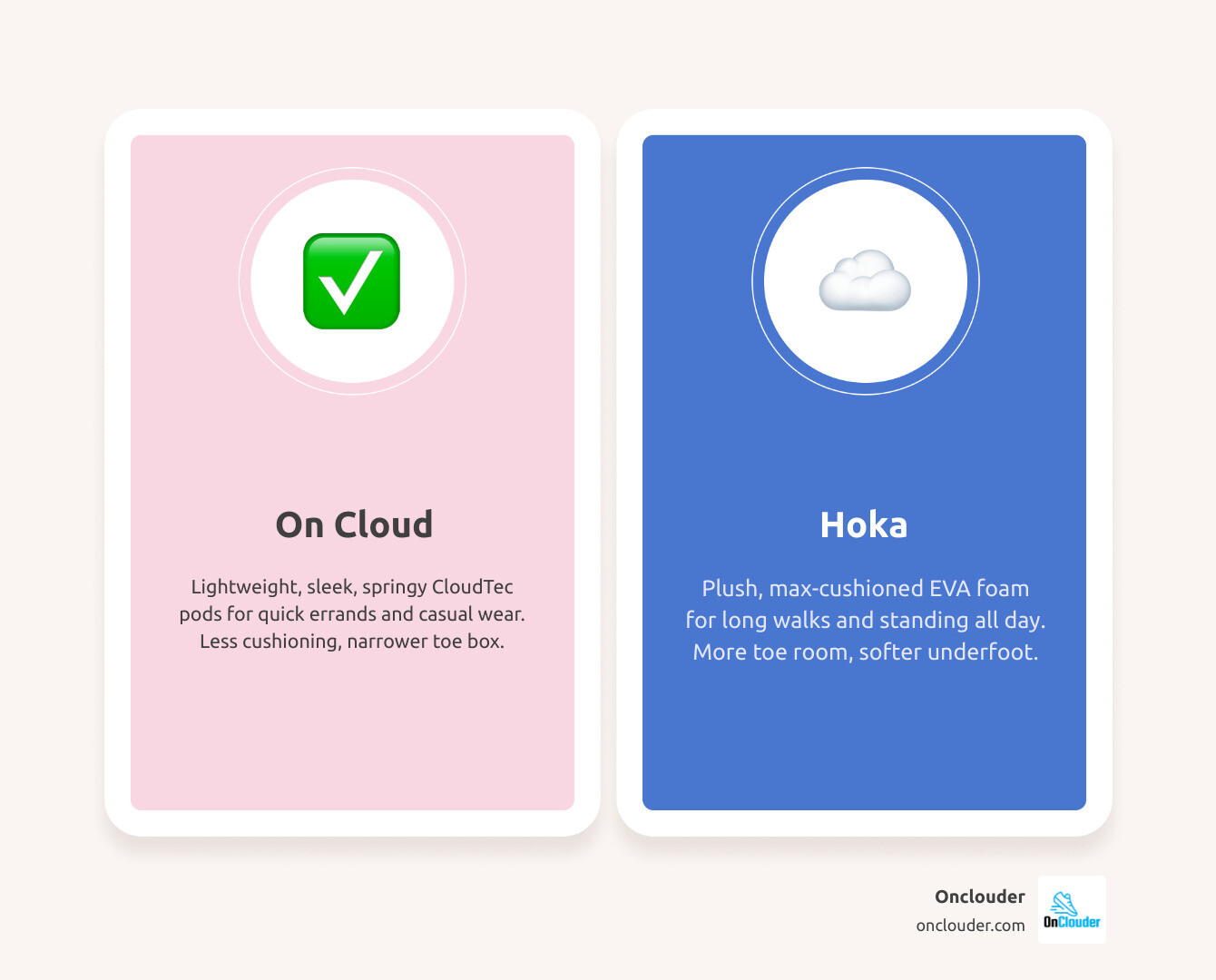
Basic which shoes are better on cloud or hoka terms:
Cushioning, Weight, and Break-in: How the Core Technologies Compare
When deciding between these two powerhouse brands, the fundamental difference comes down to what happens under your feet when you land.
On built its reputation on Swiss-engineered CloudTec technology. Instead of relying purely on a solid block of foam, On shoes feature hollow pods (often called “clouds”) along the outsole. When your foot strikes the ground, these pods compress horizontally and vertically to absorb impact, then immediately lock firm to provide a responsive, energetic takeoff. Many wearers describe this as a “trampoline cloud” experience: springy, agile, and connected to the ground.
Hoka takes the opposite route, pioneering the maximalist running revolution with oversized, high-volume EVA midsoles. Models like the Clifton and the Bondi envelop the foot in ultra-thick foam, acting more like a “fluffy duvet cloud.” You sink in gently, and the shoe absorbs nearly all ground vibration before it travels up into your joints.

Key Specifications: On Cloud 6 vs. Hoka Clifton 11
To see how these philosophies play out in real numbers, let us look at the core specs of their flagship everyday models:
| Feature | On Cloud 6 | Hoka Clifton 11 |
|---|---|---|
| Weight (Men’s / Unisex Avg.) | 7.6 oz (215 g) | 8.3 oz (236 g) |
| Stack Height | 28 mm | 29 mm |
| Midsole Cushioning | Light, responsive CloudTec EVA | Plush, high-volume compression EVA |
| Underfoot Sensation | Springy, firm, barefoot-like agility | Pillowy, soft, deep shock absorption |
| Lacing Style | Speed-pull elastic system | Traditional tie-up laces |
| Break-in Period | 3 to 7 days for upper and pods | Instant out-of-the-box comfort |
| APMA Seal of Acceptance | Selected models | Yes (Clifton & Bondi lines) |
In hands-on testing, weight and break-in periods present noticeable trade-offs. The On Cloud 6 is exceptionally lightweight at just 7.6 oz, making it feel almost weightless during quick trips around town. However, that sleek build often requires a short break-in window of a few days while the Speedboard and upper soften.
By contrast, the Hoka Clifton 11 weighs slightly more at 8.3 oz, but delivers an instantly plush, ready-to-wear feel from the second you lace it up. As noted in I Tried Hoka and On Cloud Sneakers for 1 Month: Which Walking Shoe Is More Comfortable? – AOL, testers found the Clifton’s thick cushioning provided steady, cumulative bounce on daily miles, while the Cloud delivered unmatched featherlight convenience. If you are examining performance across endurance categories, reviewing our breakdown of on cloud vs hoka for running will help clarify your stride requirements.
Fit, Width, and Lacing Systems
How a sneaker locks around your midfoot and accommodates your toes can make or break your day.
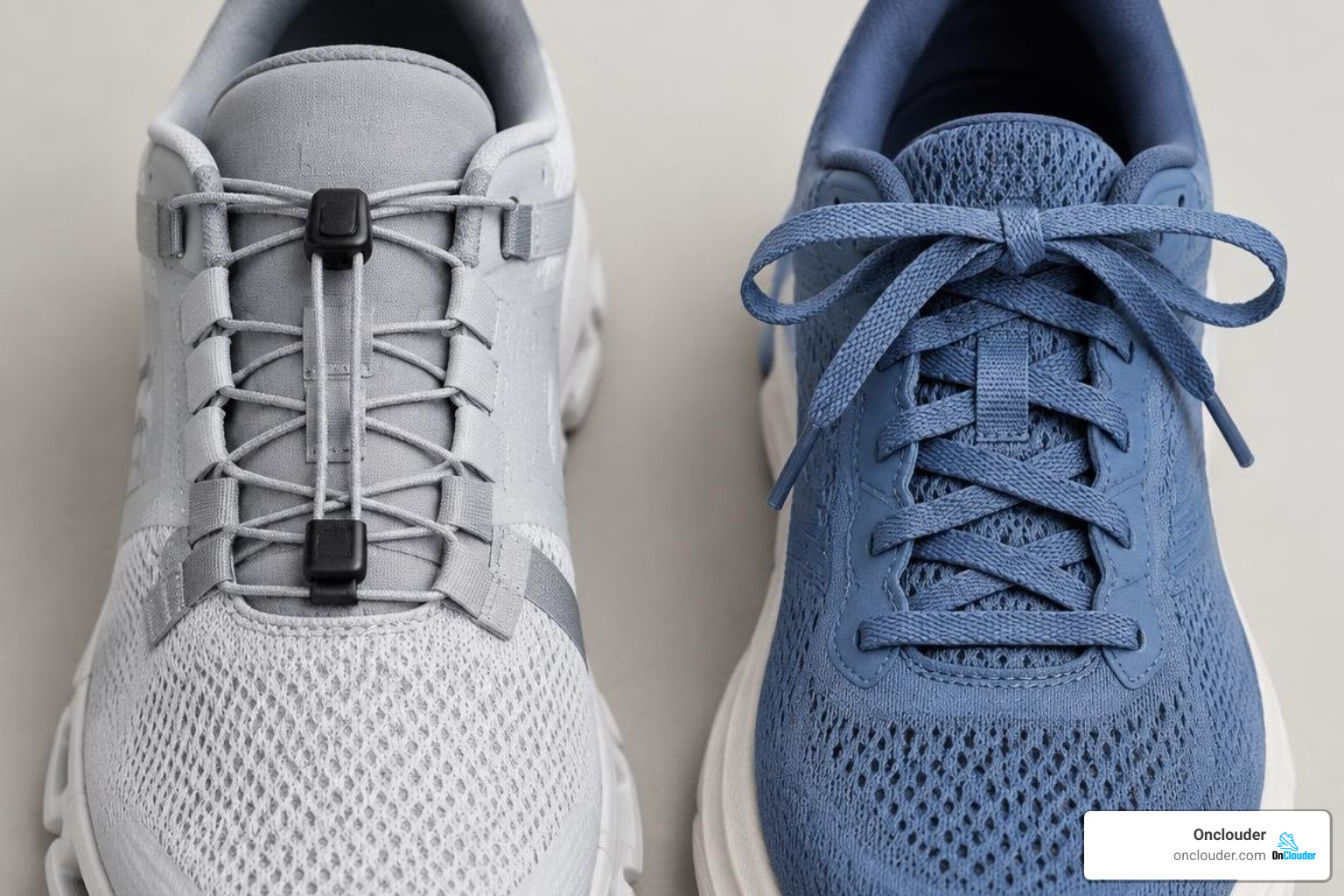
Hoka builds its shoes with generous forefoot volume. The toe box on models like the Clifton 11 and Bondi series allows your toes to splay naturally during extended walks. Furthermore, Hoka offers dedicated “Wide” (2E) and “Extra Wide” (4E) options across most styles, making them an accommodating choice for broader feet.
On Cloud models generally feature a streamlined, European-inspired silhouette. The fit is snug, secure, and athletic through the midfoot and heel, but the toe box is distinctly narrower. While fantastic for narrow-to-medium feet, runners with wider forefeet may experience slight friction along their pinky toes during long outings.
Another stark difference is the lacing design:
- On Cloud Speed Laces: Feature an elastic slip-on system that lets you step into the shoe and go without tying knots—ideal for airport security lines, gym lockers, and rushing out the door. (Traditional laces are also included in the box if you need custom tightness.)
- Hoka Traditional Laces: Rely on dependable, classic tie-up laces that allow you to customize eyelet pressure, lock down heel slippage with a runner’s loop, and dial in midfoot tension.
For a deeper look into individual model fits, explore our breakdown of the on cloud 5 vs hoka clifton 9 as well as our head-to-head analysis of the cloud 5 vs hoka bondi 8.
Performance Breakdown: Which Shoes Are Better for Everyday Activities?
To find out which sneaker fits your lifestyle, we evaluated how each handles the biomechanics of movement—from heel strike to toe-off. As highlighted in On Cloud vs HOKA: Which Sneakers Feel More Comfortable? (My Quick Take), choosing between spring and plush foam depends heavily on where you spend your waking hours.
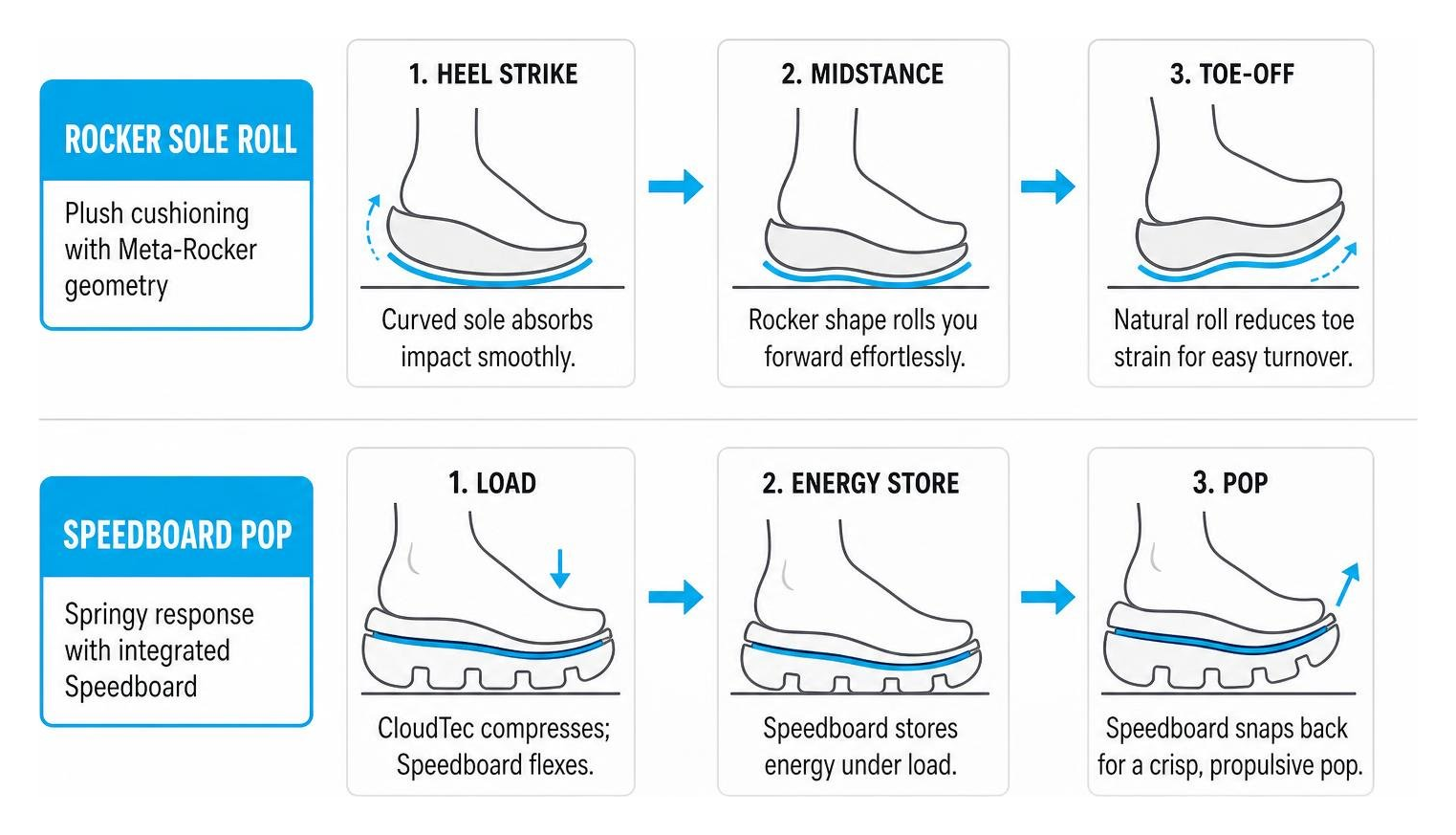
Hoka pairs its plush EVA midsoles with an aggressive Meta-Rocker geometry. This curved sole profile works like a rocking chair for your foot, rolling you smoothly forward through each step without forcing your metatarsal joints to flex excessively.
On relies on an integrated Speedboard—a firm, flexible thermoplastic layer sitting right above the CloudTec pods. When you compress the clouds, the Speedboard flexes and snaps back, propelling you into your next stride with crisp energy return.
If you are comparing different brands entirely, you can also see how Hoka stacks up against legacy stability leaders in our analysis of hoka vs brooks or compare max-cushion styles in our hoka vs new balance guide.
Walking and Daily Commuting: Which Shoes Are Better for Walking?
For pure walking comfort across concrete sidewalks and office corridors, Hoka holds the edge for high-mileage days.
The combination of the 29 mm stack height and rocker bottom takes immense pressure off your heels. If you walk 10,000 to 15,000 steps a day, Hoka minimizes joint fatigue by soaking up repetitive ground impacts.
The On Cloud 6, however, shines during rapid commutes and stop-and-go urban navigation. Its 7.6 oz profile feels weightless, and the snappy ground feedback helps you dodge subway turnstiles with ease. For an exhaustive look at all-day wearability, check out our comprehensive guide on hoka vs on cloud the ultimate showdown for running walking and all day comfort.
Plantar Fasciitis and Foot Pain: Which Shoes Are Better?
If you struggle with morning heel pain or aching arches, structural stability and podiatric design become paramount.
In this category, Hoka takes the clear win. The Hoka Clifton 11, Bondi, and Arahi series regularly earn the APMA (American Podiatric Medical Association) Seal of Acceptance, recognizing footwear that promotes positive foot health.
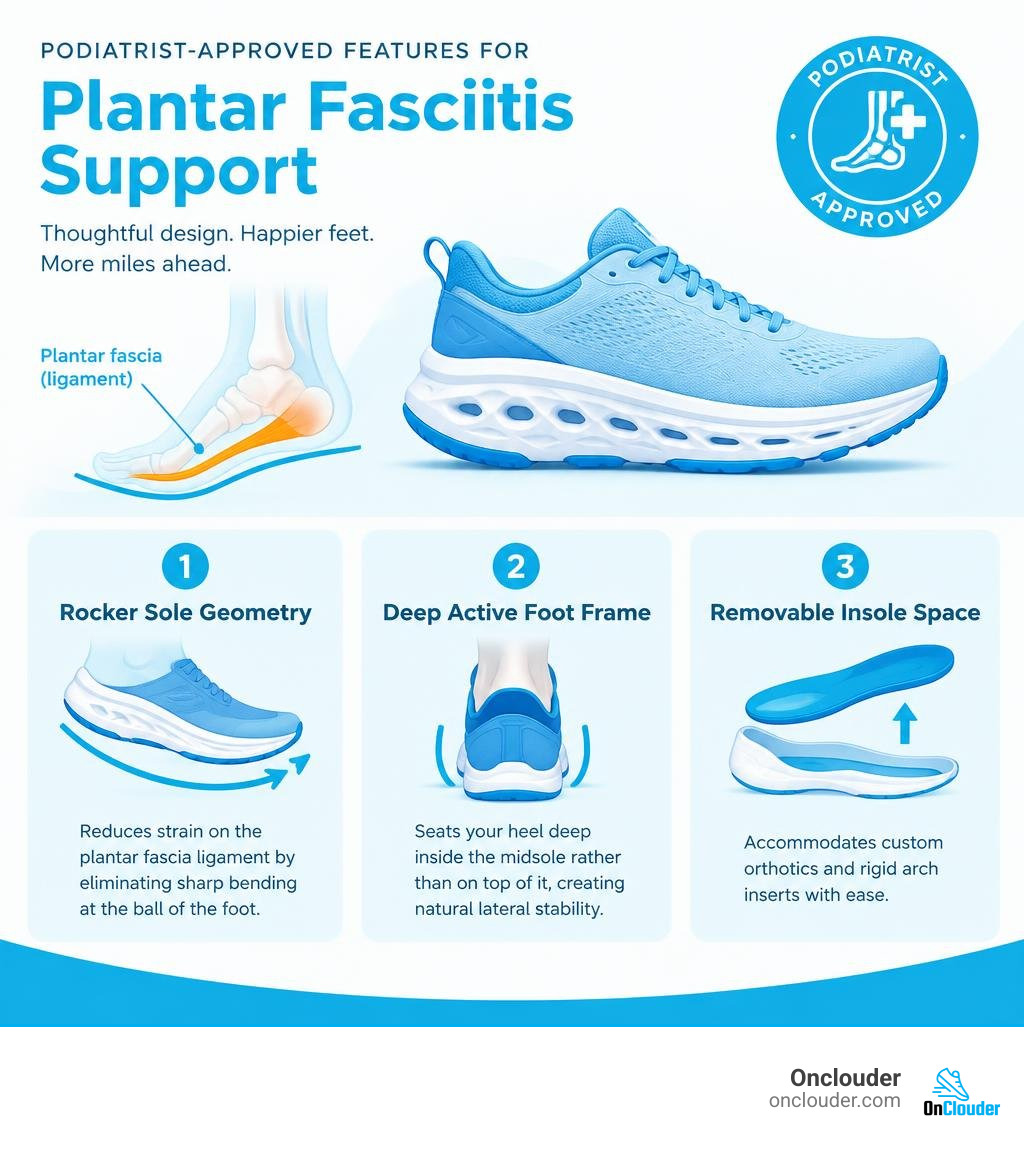
Podiatrists frequently recommend Hoka for plantar fasciitis due to three factors:
- Rocker Sole Geometry: Reduces strain on the plantar fascia ligament by eliminating sharp bending at the ball of the foot.
- Deep Active Foot Frame: Seats your heel deep inside the midsole rather than on top of it, creating natural lateral stability without harsh medial posts.
- Removable Insole Space: Accommodates custom orthotics and rigid arch inserts with ease.
While standard On Cloud models may feel too firm and flexible for acute heel inflammation, their high-cushion alternatives like the Cloudmonster offer improved protection. You can read more about targeted relief options in our resource on hoka walking shoes for plantar fasciitis real help for sore arches.
Style, Aesthetics, and Everyday Wardrobe Versatility
Comfort is vital, but let us be honest: how your shoes look with your regular wardrobe matters just as much.
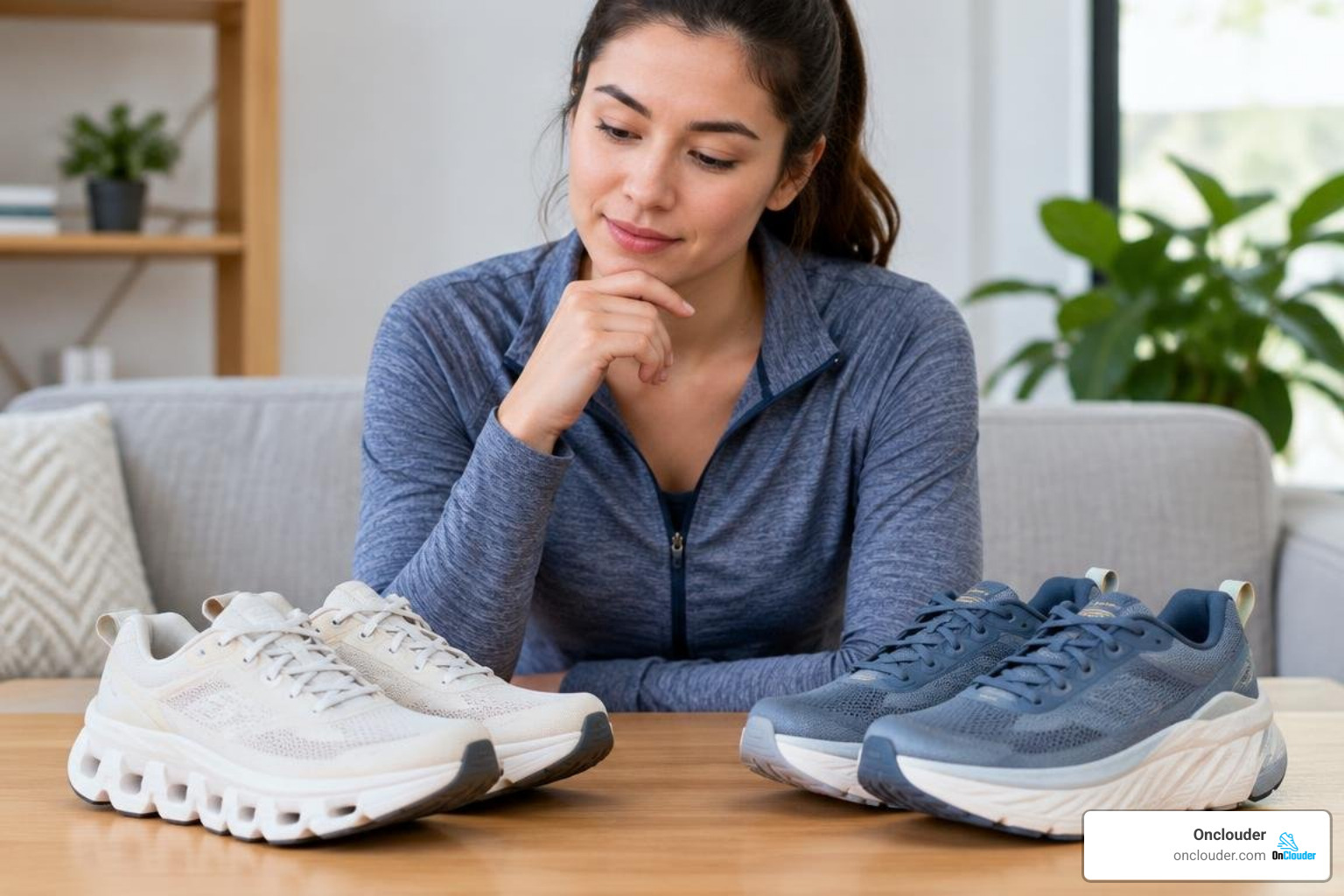
The two brands project completely different aesthetic energies:
- The On Cloud Aesthetic (Sleek, Preppy, Minimalist): On sneakers are masters of understated design. With clean lines, muted palettes (like the popular on cloud moon fawn vs hoka colorways), and low-profile silhouettes, they pair effortlessly with slim-fit joggers, tailored athleisure, leggings, and even smart-casual office chinos.
- The Hoka Aesthetic (Chunky, Bold, Streetwear-Forward): Hoka embraces the maximalist “dad-shoe” trend. With thick sculpted midsoles and vibrant, playful color combinations, Hokas stand out proudly. They look fantastic paired with wide-leg pants, oversized hoodies, bike shorts, and modern streetwear outfits.
If you love the maximalist cushion of Hoka but want On’s distinctive design language, we suggest exploring the cloudmonster vs hoka comparison, or looking at how maximalist trail models perform in our on cloud vs hoka hiking review.
Frequently Asked Questions About On Cloud and Cushioned Running Shoes
Are On Cloud Shoes or Other Running Shoes Better for Wide Feet?
Hoka is generally much better for wide feet. Most Hoka models feature a naturally wider base and roomier forefoot shape, alongside dedicated Wide (2E) options. Standard On Cloud shoes are built on a narrower European last. If you have broad feet and want to wear On, we advise ordering a half-size up or looking specifically at wide-release models like the Cloudflyer.
Which Shoes Last Longer for Standing 12-Hour Shifts?
For healthcare workers, hospitality staff, and retail professionals standing on concrete for 12 hours, Hoka remains the gold standard. High-volume EVA midsoles maintain shock absorption over long shifts without bottoming out. Discover our top tested picks in our curated list of the best hoka shoes for standing all day in 2025.
Do On Cloud Shoes Provide Enough Support for Running?
Yes, but it depends on the model. The classic On Cloud 6 is tuned primarily for lifestyle walking, light workouts, and brief jogs. If you are logging serious road mileage, look toward On’s dedicated running lineup—such as the Cloudstratus, Cloudsurfer, or Cloudmonster—which incorporate thicker Helion superfoam layers alongside the Speedboard for robust impact protection.
Conclusion: Choosing the Right Sneaker for Your Feet
Neither sneaker is universally superior—they simply solve different everyday problems.
- Choose On Cloud if: You want an ultra-lightweight (7.6 oz), springy, slip-on sneaker that looks sleek with casual clothes and makes errands feel effortless.
- Choose Hoka if: You want maximum plush cushioning (29 mm stack), wide toe room, rocker-bottom propulsion, and podiatrist-approved relief for long standing shifts or chronic foot pain.
Still weighing your options for joint relief? Read our specialized biomechanical breakdown on on cloud vs hoka which brand is better for your knees to find the ideal match for your body.