

On Cloud vs Hoka for Standing All Day: The Quick Answer
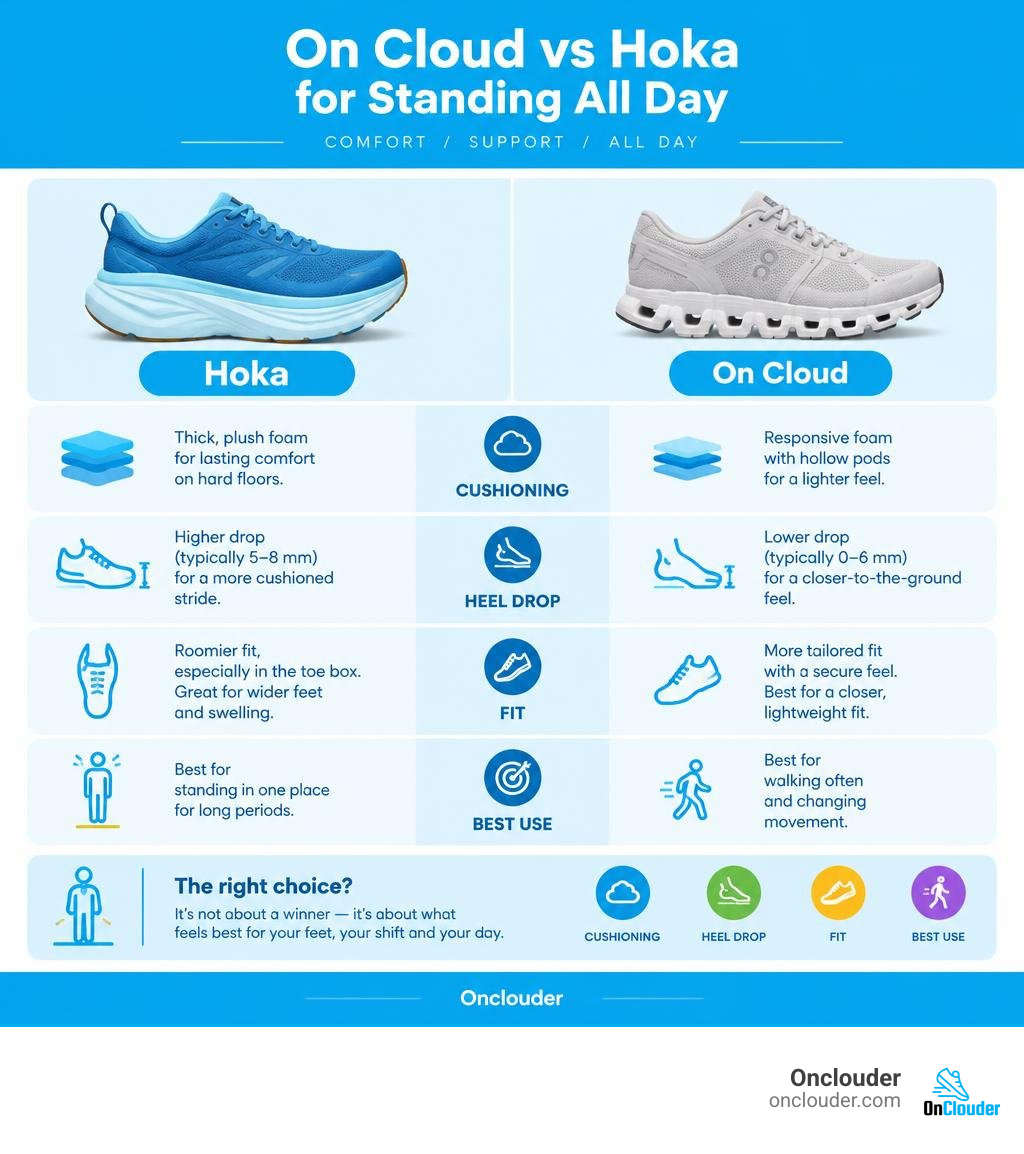
Choose Hoka if you spend most of your shift standing in one place. Its thick foam and broad soles may feel more comfortable on hard floors, especially if you want room for your toes. Choose On Cloud if you walk often and prefer a lighter, closer fit. Neither brand is best for every foot: the right model should feel stable, leave room for swelling, and stay comfortable when you stand still.
This cheat sheet compares cushioning, fit, support, and value so you can narrow your choices before your next shift.
On Cloud vs Hoka for Standing All Day: Key Technology and Biomechanics
Standing for an entire 8- to 12-hour shift places unique physical demands on your body. Unlike walking or running, where momentum and muscle contractions help pump blood back toward your heart, static standing causes fluid to pool in your lower extremities. In fact, clinical studies show that approximately 12% of blood plasma volume crosses into the extravascular compartment during prolonged standing, contributing to lower-limb swelling, heaviness, and orthostatic fatigue.
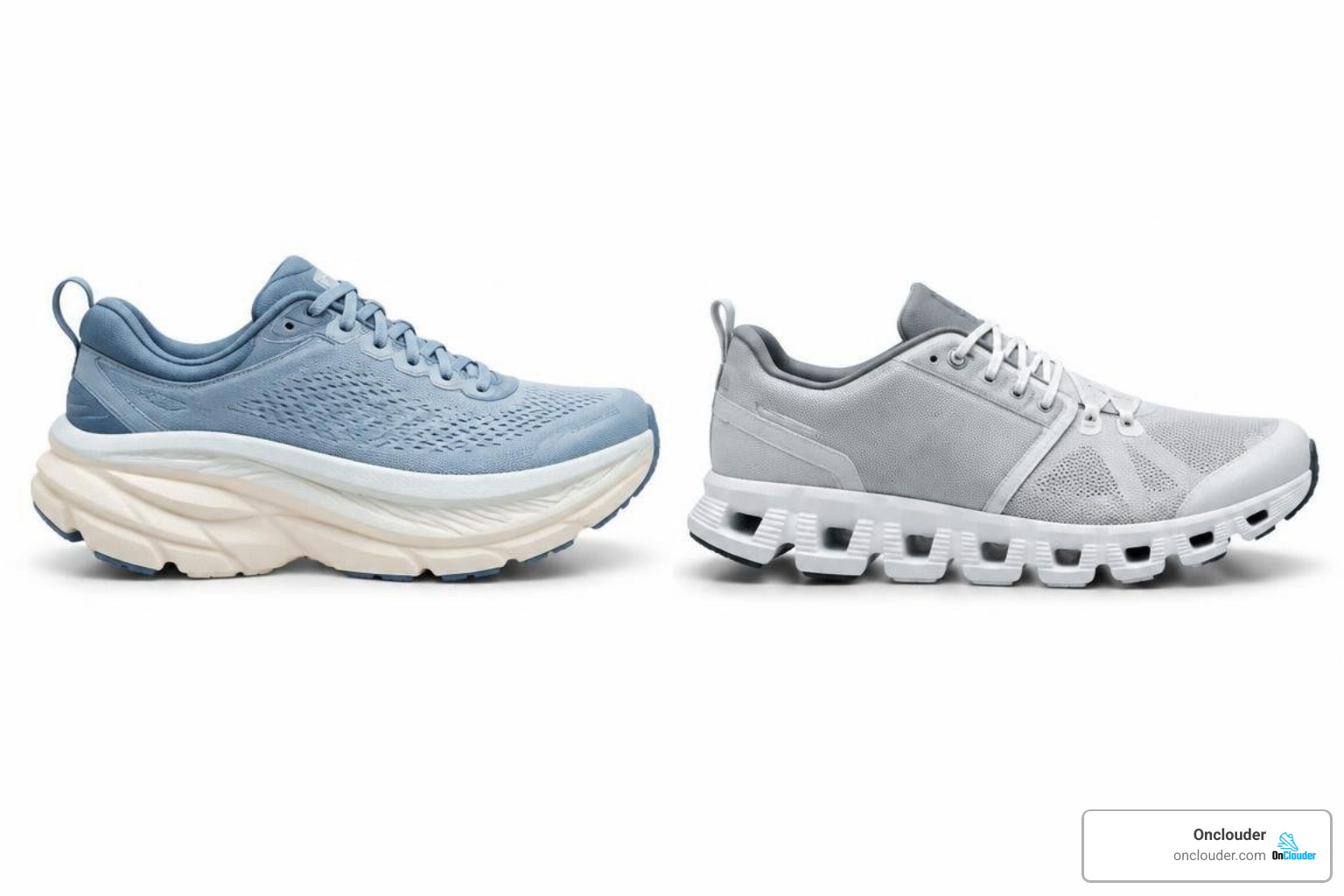
To combat this gravitational pull, Hoka and On engineer entirely different midsole technologies. Hoka leans into high-volume, maximalist compression-molded EVA foam paired with an early-stage Meta-Rocker sole profile. This setup creates a wide, plush base designed to absorb vertical forces and subtly encourage forward weight transitions.
On takes a structural engineering route with patented CloudTec® elements—open, hollow pods sculpted from Helion™ superfoam combined with a full-length thermoplastic Speedboard®. Rather than relying solely on pure foam thickness, CloudTec compresses both vertically and horizontally upon impact, while the integrated Speedboard provides torsional rigidity and energetic recoil.
To see how these design philosophies stack up at a glance, check out our head-to-head On Cloud vs Hoka breakdown and review the core specifications below:
| Feature / Metric | Hoka (e.g., Bondi 8 / Clifton 11) | On Cloud (e.g., Cloud 6 / Cloudmonster) |
|---|---|---|
| Primary Cushioning | Maximalist EVA / CMEVA Foam Base | Hollow CloudTec® Pods + Helion™ Foam |
| Midsole Structure | Solid, high-stack continuous foam | Segmented hollow pods with internal Speedboard® |
| Heel-to-Toe Drop | Low (typically 4 mm – 5 mm) | Moderate to High (typically 6 mm – 9 mm) |
| Rocker Geometry | Early-Stage Meta-Rocker | Snappy toe-spring with Speedboard plate flex |
| Average Shoe Weight | 8.3 oz – 11.0 oz (Plush, broad) | 7.6 oz – 9.8 oz (Lightweight, agile) |
| Average Price Range | $140 – $165 | $130 – $170 |
Cushioning and Foot Fatigue: On Cloud vs Hoka for Standing All Day
When comparing on cloud vs hoka for standing all day, the fundamental debate comes down to passive shock absorption versus active energetic rebound.
In biomechanics, human standing is often described through an inverted double-pendulum model, where micro-adjustments at your ankles and hips continuously work to maintain balance. When you stand on unforgiving concrete or hospital linoleum for hours, your plantar tissues bear continuous vertical load.
Hoka’s maximalist foam acts as a passive shock sink. The deep cushion absorbs peak plantar pressures over a broader surface area, which helps delay muscle exhaustion in your calves and lower back during static shifts.

On’s CloudTec pods offer active responsiveness. As noted in comparative testing of Hoka vs On Cloud sneakers, On shoes excel when your day involves constant stepping, turning, and climbing stairs. The hollow pods compress under load and spring back quickly, preventing that “stuck in deep sand” sensation that some workers report with ultra-soft foams. However, during hours of purely stationary standing, Hoka’s uninterrupted slab of dense foam provides superior continuous isolation from the hard ground.
Heel Drop, Arch Support, and Postural Stability
A shoe’s heel-to-toe drop heavily influences how body weight settles across your skeletal structure.
- Hoka’s Low Drop (4 mm to 5 mm): Positions your heel and forefoot on a nearly level plane. This distributed platform mimics your foot’s natural stance, reducing excessive loading on the metatarsal heads and encouraging a neutral pelvis.
- On’s Higher Drop (6 mm to 9 mm): Shifts a portion of your weight forward onto the forefoot. While this offloads tension from your Achilles tendon and calf muscles, it can increase pressure under the ball of the foot during uninterrupted standing.
When evaluating overall stability, Hoka embeds your foot within deep midsole sidewalls (like a bucket seat in a car) and uses its wide-base geometry—or J-Frame™ technology in stability models like the Arahi and Gaviota—to prevent overpronation. These structured support mechanics are a primary reason many Hoka silhouettes earn the American Podiatric Medical Association (APMA) Seal of Acceptance.
On relies on its firm, integrated Speedboard to provide structural stiffness across the arch. For our comprehensive analysis across multiple performance categories, explore our overall comfort showdown.
Foot Shape, Fit, and Foot Conditions: Wide Feet vs. Plantar Fasciitis
Finding all-day relief is impossible if your shoe pinches your toes or allows your heel to slide. Fit dynamics vary noticeably between these two brands.
Which Brand Fits Better: On Cloud vs Hoka for Standing All Day?
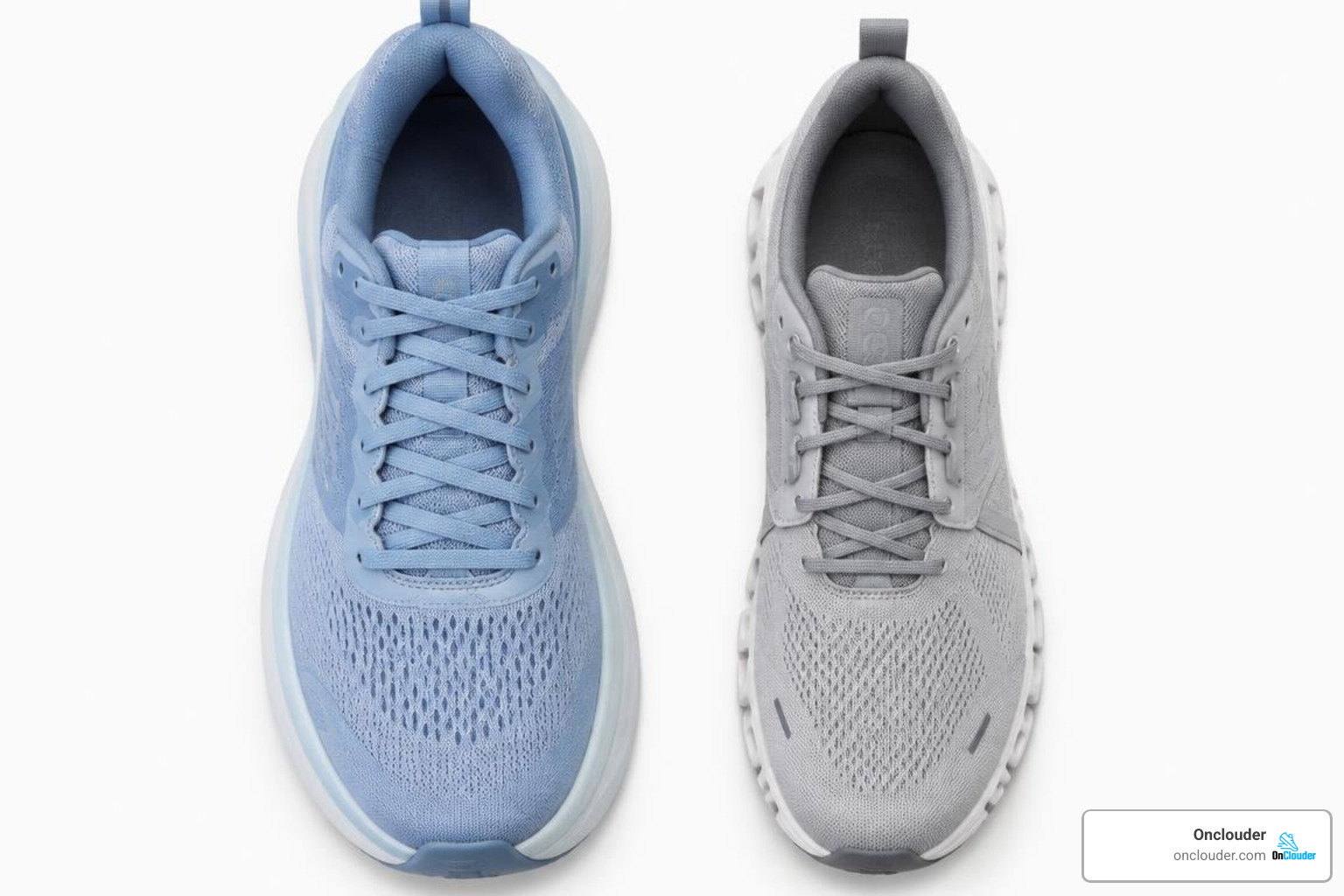
As a general rule, Hoka provides a more accommodating silhouette through the forefoot, with standard offerings running true to size and dedicated Wide (2E) and Extra-Wide (4E) options available across key models like the Bondi and Clifton. This extra room allows your toes to splay naturally and accommodates normal afternoon foot swelling.
On models historically feature a sleeker, European-inspired profile. Shoes like the classic On Cloud 5 and Cloud 6 deliver a locked-in, glove-like wrap that feels secure on narrow-to-medium feet. If you have a wider foot, standard On models may compress your fifth metatarsal, though newer releases like the Cloudmonster offer a noticeably more generous toe box. For detailed fitting parameters, read our definitive guide to standing sneakers.
As highlighted in a one-month trial of Hoka vs On walking shoes, testers with standard-to-narrow feet often appreciate On’s secure heel hold, whereas users requiring extra volume consistently favor Hoka’s plush upper dimensions.
Relief for Plantar Fasciitis and Foot Pain
Plantar fasciitis occurs when the thick band of tissue running along the bottom of your foot experiences micro-tears from repetitive stress and continuous tension.
For standing workers dealing with active plantar fasciitis, Hoka is often the top choice among foot specialists. Its combination of generous heel cushioning, structured arch support, and signature Meta-Rocker geometry reduces strain across the plantar fascia during heel strike and toe-off.
On models can assist with milder foot fatigue due to their firm, supportive Speedboards, but their firmer heel pods and higher heel drops may not offer the deep under-heel cushioning required for acute plantar inflammation. Learn more about navigating specific foot pain in our guide on how to choose standing footwear.
Static Standing vs. Dynamic Movement: Performance by Profession
The optimal sneaker depends heavily on how you spend your working hours:
- Stationary Standing (Retail cashiers, pharmacy techs, assembly workers): Standing still on hard tile or sealed concrete requires pure cushioning depth. Hoka’s expansive foam base distributes pressure effectively and dampens the cumulative impact of standing still.
- Fast-Paced Mobility (ER nurses, restaurant servers, delivery drivers): Frequent pivots, hurried sprints, and rapid directional changes benefit from agility. On shoes provide swift transitions, lightweight construction, and responsive ground feel that reduce leg fatigue during high-mileage shifts. Check out our detailed nurse and teacher standing shoe guide for workplace-specific breakdowns.
Weight, Durability, and Outsole Wear on Hard Floors
Weight and outsole endurance play vital roles across a 40-hour work week:
- Weight: An On Cloud 6 weighs around 7.6 oz (215 g), providing an airy, barely-there feel. By comparison, a max-cushion Hoka Clifton 11 averages 8.3 oz (235 g), with the ultra-plush Bondi 8 reaching closer to 10.8 oz (306 g). While Hokas are slightly heavier, that extra weight translates directly into protective foam volume.
- Outsole Longevity: Solid, continuous rubber outsoles on Hoka’s Bondi and Gaviota lines typically deliver 500 to 700 miles of reliable structural integrity. When investigating heel drop and outsole wear, On shoes show durable rubber on high-contact zones, but the central channel between the pods can occasionally catch small floor debris or show uneven wear when used primarily on rough concrete.
Long-Term Value and Price Comparison
Both brands occupy a premium price bracket, averaging between $140 and $165 for core models.
Given their durability profiles, Hoka models often deliver slightly better cost-per-hour value for purely static workers due to the longevity of their dense EVA midsoles. For dynamic professionals who prioritize speed, step-in ease, and lightweight uppers, On provides outstanding utility. To maximize your investment, we recommend rotating between two pairs of work shoes to allow the midsole foams to decompress fully between consecutive shifts. Browse our top nurse and teacher approved On Cloud models for work-ready recommendations.
Top Model Face-Offs: Bondi, Clifton, Cloud 6, and Cloudmonster
If you are looking to narrow your choices down to specific models, here is how the top contenders compare. For an extended brand breakdown, review our best Hoka models for all-day standing.
Hoka Bondi 8 vs. On Cloud 5 and Cloud 6
The Hoka Bondi 8 represents the pinnacle of maximalist cushioning, boasting a massive stack height and a stable 4 mm drop designed for complete impact absorption.
In contrast, the On Cloud 5 and Cloud 6 (stack height ~28 mm, 8–9 mm drop) focus on ultralight agility, step-in flexibility, and hands-free speed lacing. If your day involves standing stationary for hours on hard surfaces, the Bondi 8 offers vastly superior cushioning. If your day requires frequent walking and light agility, the Cloud 6 delivers quick, effortless comfort. See our direct Cloud 5 vs Bondi 8 comparison for a deeper look.
Hoka Bondi 8 vs. On Cloudmonster
The On Cloudmonster is On’s direct answer to the maximalist trend. Featuring oversized CloudTec pods combined with high-rebound Helion foam and a dynamic Speedboard, it delivers a high-stack ride with explosive energy return.
When placed against the Bondi 8, the Cloudmonster feels springier and more energetic during forward strides, whereas the Bondi 8 offers a softer, more dampening platform under static load. Explore our full On Cloudmonster vs Hoka Bondi 8 match-up and our general Cloudmonster vs Hoka overview to decide which style fits your daily routine.
Frequently Asked Questions About Shoes for Standing All Day
Can I use custom orthotics in both Hoka and On Cloud sneakers?
Yes. Both brands feature removable stock insoles across nearly all of their core standing models. However, Hoka shoes typically offer deeper interior volume, easily accommodating thicker medical-grade or rigid carbon orthotics without causing heel slippage. On shoes feature lower-volume uppers, meaning slim, low-profile orthotics work best to avoid a tight fit across the top of your foot.
Do Hoka shoes run wider than On Cloud shoes?
Generally, yes. Standard Hoka silhouettes provide a more anatomical, rounded toe box and are widely manufactured in dedicated Wide (2E) sizing. On models feature a narrower, more tapered midfoot and toe box. If you have wider feet or experience significant swelling during 12-hour shifts, consider sizing up a half-size in standard On shoes or choosing wider models like the Cloudmonster.
How often should you replace standing shoes for 12-hour shifts?
For full-time shift workers standing 36 to 40 hours per week on hard floors, work shoes should be replaced every 6 to 9 months (or roughly 500 miles of equivalent load). Even if the exterior outsole rubber looks intact, the internal microcellular foam structures compress over time, losing their shock-absorbing capacity and stability.
Conclusion
Both Hoka and On Cloud produce exceptional footwear that can transform a grueling workday into a comfortable shift.
To make your final decision:
- Choose Hoka if you suffer from plantar fasciitis, have wider feet, or spend the majority of your shift standing stationary on hard floors where maximal foam cushioning and a low heel drop keep joint pressure balanced.
- Choose On Cloud if you value lightweight construction, dynamic energy return, a snug fit, and responsive agility for shifts filled with non-stop walking and rapid movement.
For more insights on protecting your lower body during demanding workdays, read our guide on the impact of On Cloud vs Hoka on joint and knee health.
