
Why a Running Shoe Brand Comparison Matters Before You Buy
A running shoe brand comparison can save you from weeks of foot pain, wasted money, and workouts cut short. With dozens of brands and hundreds of models on the market in 2026, picking the right shoe is harder than ever.
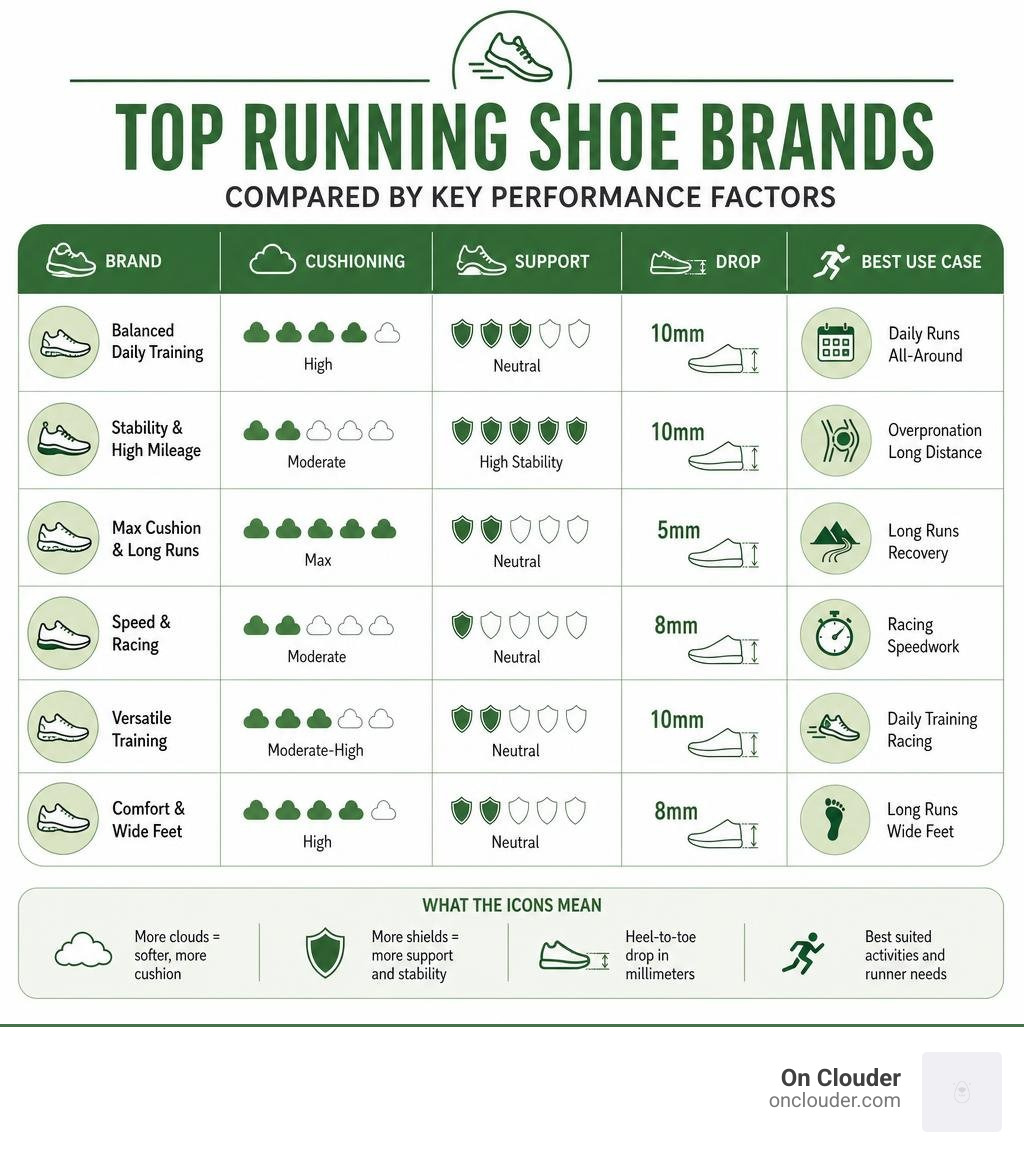
Here is a quick breakdown of how the top brands stack up:
| Brand | Best For | Ride Feel | Starting Price |
|---|---|---|---|
| Brooks | Neutral runners, beginners, daily training | Soft, plush, smooth | ~$130 |
| ASICS | Overpronators, high-mileage runners | Firm, structured, responsive | ~$130 |
| Hoka | Max cushion, stability, long runs | Cushioned, rocker-style | ~$140 |
| Nike | Speedwork, racing, versatile training | Light, snappy, energetic | ~$140 |
| Adidas | Daily training, racing, value | Responsive, bouncy | ~$130 |
| New Balance | Long runs, wide feet, value | Plush, balanced | ~$120 |
The truth is, no single brand wins for every runner. The right shoe depends on your foot shape, your weekly mileage, and what you are asking the shoe to do.
Are you logging easy miles after a long shift on your feet? Training for a marathon? Fighting knee pain from hard pavement? Each of those runners needs something different.
I’m Faisal S. Chughtai, a footwear expert who has spent years testing and comparing running shoe brands to help people find the perfect fit for both performance and all-day comfort. My deep focus on running shoe brand comparison means I cut through the marketing noise and give you answers grounded in real-world testing and data.
Easy running shoe brand comparison word list:
- best cushioned running shoes
- running shoe size comparison between brands
- running shoes for wide feet
The Ultimate Running Shoe Brand Comparison: Brooks vs. ASICS
When runners walk into a specialty shop, the two names they see most often are Brooks and ASICS. Both brands have rich histories—Brooks started in the USA in 1914, while ASICS was founded in Japan in 1949. Today, they represent two distinct philosophies of shoe design.

According to aggregated expert data, ASICS holds a slight edge with an average brand score of 93/100, while Brooks sits closely behind at 90/100. However, those numbers only tell part of the story. The best brand for you depends entirely on what you prioritize underfoot.
- Cushioning Philosophy: Brooks focuses on a smooth, protective, and highly consistent ride. Their foam is designed to adapt to your weight and stride. ASICS, on the other hand, relies heavily on its signature GEL technology and modern energetic foams like FlyteFoam (FF) Blast+ to offer a bouncier, quicker toe-off.
- Support & Structure: ASICS tends to design shoes with a highly structured, engineered feel, locking down your heel and midfoot. Brooks leans toward a more accommodating, natural-feeling upper with a roomier toe box.
- Ride Feel: Brooks is the king of “no-drama” comfort—it feels great the moment you step in and stays comfortable for miles. ASICS feels slightly more technical, with rockered geometries that roll you forward.
For a broader look at how ASICS compares to European-engineered alternatives, check out our On Cloud vs Asics Comparison. To see the full landscape of top-tier footwear, you can also browse industry guides on the best running shoes of the year.
Head-to-Head: Brooks Ghost vs. ASICS GEL-Nimbus in a Running Shoe Brand Comparison
To truly understand these brands, we have to look at their flagship cushioned trainers: the Brooks Ghost and the ASICS GEL-Nimbus.
The Brooks Ghost 18 remains a beloved staple in the running community. In 2026, it features nitrogen-infused DNA Loft v3 foam, which delivers balanced, lightweight cushioning without feeling mushy. Boasting a traditional 10mm drop, it provides a highly stable, predictable platform. It is the quintessential daily trainer—not too soft, not too firm, and incredibly durable.
The ASICS GEL-Nimbus (and its close sibling, the Cumulus) represents the pinnacle of plush, max-cushion comfort. It utilizes a thick stack of FF Blast+ Eco cushioning paired with PureGEL in the heel. The ride is noticeably softer and more pillowy than the Ghost, making it a favorite for recovery days and long, slow training miles.
- Comfort: The GEL-Nimbus wins for pure step-in plushness, while the Ghost 18 wins for a balanced, grounded feel.
- Durability: Both models easily clear 300 to 500 miles, but the Brooks Ghost outsole rubber is legendary for resisting wear.
- Real-World Use: The Ghost 18 is a highly versatile option that transitions beautifully from road running to gym workouts. The GEL-Nimbus is a dedicated mileage-eater designed to protect your joints from hard pavement.
For more detailed head-to-head match-ups, read our On Cloud vs Brooks Ghost Comparison and our analysis of the Saucony vs Asics Nimbus Comparison.
Stability and Support: Neutral Runners vs. Overpronators
For runners whose feet roll inward excessively (overpronation), choosing the right support system is crucial to avoiding injury. Brooks and ASICS approach stability from entirely different angles.
Brooks utilizes GuideRails technology. Instead of placing a hard post under your arch, GuideRails are structural foam pieces on the sides of the shoe. They only engage when your foot moves outside its natural stride, acting like bumpers on a bowling lane. This makes Brooks stability shoes (like the Adrenaline GTS 25) incredibly comfortable even for neutral runners who only need support late in a long run.
ASICS uses a more structured approach, historically relying on Dynamic DuoMax and now utilizing their modern 4D Guidance System. This system active-corrects your gait using adaptive design elements that reduce the time spent in overpronation. It provides a highly stable, controlled ride for high-mileage runners who need reliable structure.
If you want lightweight stability without a traditional clunky feel, the Hoka Arahi 8 is a standout option in 2026. Featuring Hoka’s innovative H-Frame support system, it offers excellent guidance at a lightweight £140/$150. You can learn more about how Hoka compares to other brands in our On Cloud vs Hoka Comparison.
Midsole Technology, Weight, and Drop Across Major Brands
The magic of a running shoe lives in its midsole. Modern chemical engineering has moved us past simple EVA foam into nitrogen-infused materials, super-critical foams, and carbon-plate integration.
To see how these technologies are built from the inside out, lab tests often slice shoes open to measure midsole softness, foam layers, and structural elements objectively.
Here is how the top midsole foams compare:
- Brooks DNA Loft v3: A nitrogen-infused foam that is lighter, bouncier, and more durable than traditional EVA.
- ASICS FF Blast+ / FF Leap: Highly responsive, energetic foams that provide a springy toe-off.
- Nike ZoomX: The gold standard for energy return, offering a soft, bouncy feel that keeps legs fresh over marathon distances.
- Adidas Lightstrike Pro: A resilient, high-performance foam used in both elite racing shoes and versatile daily trainers.
Midsole Specification Comparison
| Feature / Spec | Brooks (e.g., Ghost 18) | ASICS (e.g., Novablast 5) | Nike (e.g., Vomero Plus) |
|---|---|---|---|
| Primary Foam | DNA Loft v3 | FF Blast+ / FlyteFoam | ZoomX / Cushlon |
| Typical Drop | 10mm to 12mm | 8mm | 8mm to 10mm |
| Midsole Softness | Medium-Soft | Soft & Bouncy | Ultra-Soft |
| Weight (Men’s 9) | ~10.0 oz | ~9.0 oz | ~10.1 oz |
| Ride Geometry | Traditional, flat | Rockered, energetic | Cushioned, high stack |
Choosing Your Brand by Running Goal and Foot Shape
Your running goals and your unique foot shape should dictate your brand choice. A shoe that feels like a dream on a 3-mile treadmill jog might cause blisters during a 15-mile road run.

- Road Running & Long Runs: For long, pounding miles on concrete, look for brands that offer robust outsole rubber and deep cushioning. ASICS and Brooks excel here, but max-cushion options from Nike or Saucony are also excellent.
- Speedwork & Tempo Runs: If you want to run fast, you need a lighter shoe with high energy return. ASICS’ Metaspeed series or Brooks’ Hyperion line are built specifically to help you pick up the pace.
- Treadmill & Gym: If you want one shoe to do it all, a moderate-cushion neutral shoe like the Brooks Ghost is perfect. It keeps you grounded during weight training while offering plenty of protection on the belt.
- Foot Shapes & Sizing: Brooks is famous for its accommodating, wider toe box, making it a savior for runners with square foot shapes. ASICS historically ran narrow, but their modern designs offer a much improved, secure midfoot lockdown with dedicated wide (2E and 4E) options available.
For a deeper dive into the top performing shoes of the year, you can consult expert testing panels and performance reviews. If you are looking for women’s specific designs, check out our curated guide on the Best Running Shoes for Women.
Matching Your Workouts to a Running Shoe Brand Comparison
Building a shoe rotation—using different shoes for different workouts—is one of the best ways to prevent injury and make your shoes last longer.
For daily training, a reliable workhorse is your best friend. The Brooks Ghost 18 is a top choice because of its balanced DNA Loft v3 foam and comfortable 10mm drop.
For speedwork and tempo days, you want something lightweight and bouncy. The Adidas Adizero Evo SL is widely praised as a top daily trainer and speedwork option, utilizing responsive Lightstrike Pro foam to deliver an energetic ride without the rigid feel of a carbon plate.
For marathons and long runs, maximum cushioning is key. The Nike Vomero Plus is highly regarded for long efforts, using a massive 43mm stack height and ZoomX foam to absorb impact and keep your legs feeling fresh.
To see how Nike’s daily options compare to other popular trainers, read our On Cloud vs Nike Pegasus Comparison.
Frequently Asked Questions about Running Shoe Brands
Which brand is better for beginners, Brooks or ASICS?
For most beginner runners, Brooks is the safer and more reliable starting point.
The Brooks Ghost 18 is widely considered the ultimate beginner shoe because it does not require an adaptation period. It features a traditional 10mm heel drop, which reduces strain on the Achilles tendon and calves—a common pain point for new runners. Its balanced cushioning is neither too soft nor too firm, providing a stable and highly predictable ride.
While ASICS makes incredible shoes, their bouncier foams and rockered shapes can sometimes feel unstable to someone who hasn’t yet developed a strong, consistent running stride.
How do Brooks and ASICS compare in price, warranty, and overall value?
Both Brooks and ASICS price their flagship daily trainers in the $140 to $160 range, making them highly competitive on cost. Both brands offer solid manufacturer warranties against defects, usually covering the shoe for the first 1-2 months or up to 100 miles of use.
In terms of overall value:
- Brooks offers incredible value through sheer consistency. You know exactly what you are getting, and the outsoles are built to last.
- ASICS offers fantastic value if you want cutting-edge foam technology and premium upper materials at a standard price point.
If you are looking for alternative value options outside these two brands, the Puma Velocity Nitro 4 is a standout choice, offering a full Nitrofoam midsole for excellent bounce and durability at a highly competitive price point of around $140.
How long do Brooks and ASICS running shoes last?
On average, a high-quality daily trainer from either Brooks or ASICS will last between 300 and 500 miles.
- Outsole Durability: Brooks often wins on outsole longevity. They use thick, high-abrasion rubber compounds that resist wear even after hundreds of miles on rough concrete.
- Midsole Life: ASICS’ modern foams (like FF Blast+) hold their bouncy, cushioned feel exceptionally well over time, resisting early compression.
- Real-World Reliability: To get the most life out of your shoes, avoid wearing them for casual walking or gym workouts where lateral movements can stress the upper mesh. Let them dry naturally if they get wet, and rotate them with another pair to let the foam fully decompress between runs.
Conclusion
Finding your “sole mate” in a running shoe brand comparison comes down to understanding your body and your running goals.
Choose Brooks if you want a roomy toe box, a traditional heel drop, and a smooth, predictable, and highly durable ride that excels on easy daily runs. Choose ASICS if you want a snug, supportive lockdown, energetic and bouncy foam technology, or advanced stability options to manage overpronation.
At On Clouder, we always recommend building a shoe rotation to keep your feet healthy and extend the lifespan of your gear. Ready to compare more top-tier footwear options? Head over to our On Clouder Shoe Comparisons page to find your perfect fit!