

Why Finding the Right Sneakers for Flat Feet Actually Matters
Sneakers for flat feet are not all the same — and picking the wrong pair can mean the difference between a pain-free day and aching ankles, sore knees, and tired legs by noon.
Here are the top options most recommended for flat feet in 2026:
| Sneaker | Best For | Key Feature |
|---|---|---|
| Brooks Ghost Max 3 | Daily running & walking | GuideRails stability, plush cushioning |
| Brooks Addiction GTS 15 | Overpronation control | Motion control, wide widths |
| ASICS Gel Kayano 32 | Stability training | 4D Guidance System, high stack height |
| HOKA Arahi 8 | Lightweight support | H-Frame stability, low weight |
| New Balance 990 | All-day comfort | Dual-density foam, wide fit options |
| Skechers Arch Fit 2.0 | Budget pick | Podiatrist-designed insole, $90 price point |
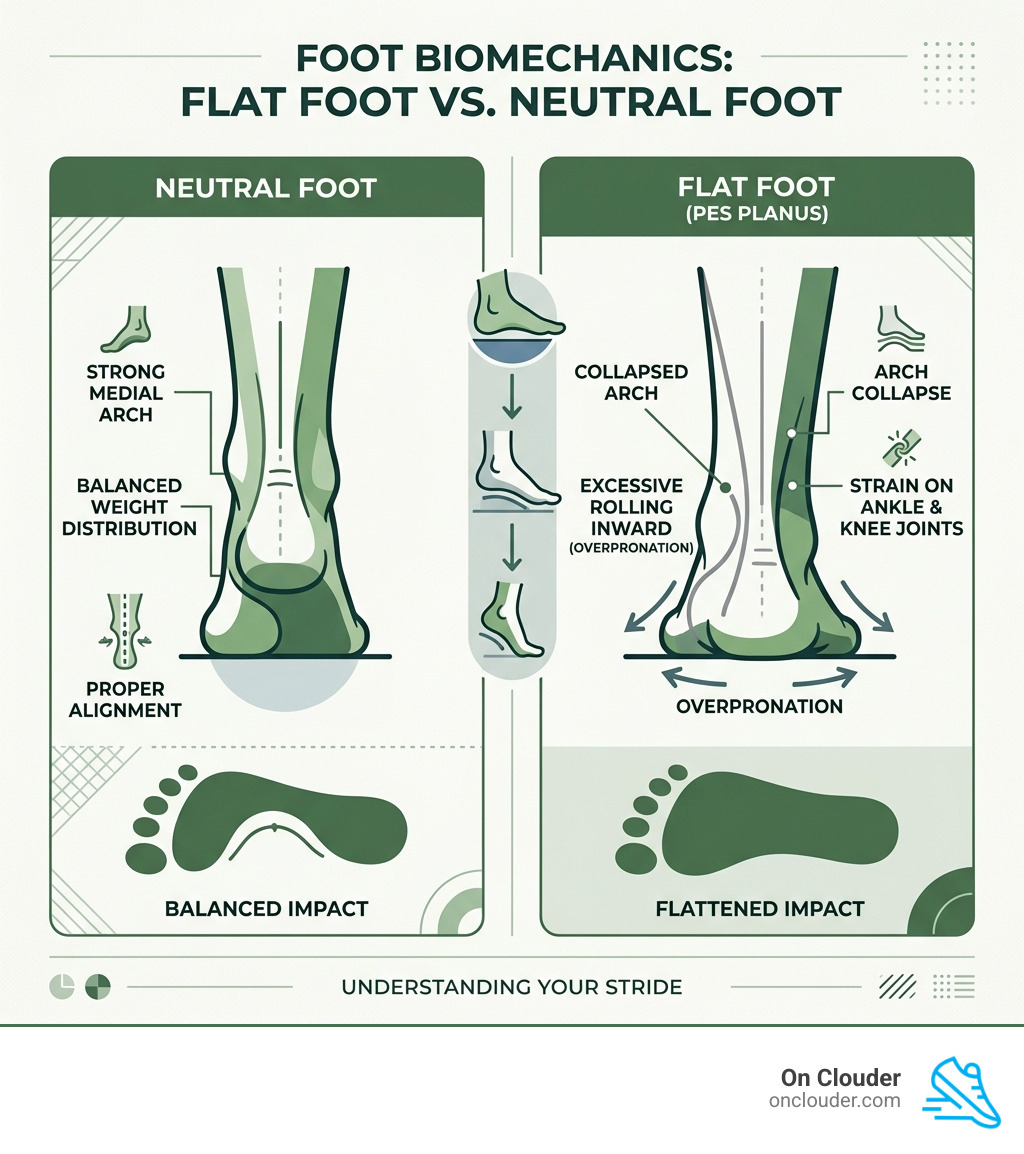
Flat feet — also called pes planus — mean your arch makes full or near-full contact with the ground when you stand. This is more common than most people think. And it often leads to overpronation, where your foot rolls inward too much with each step, putting stress on your feet, ankles, knees, and even hips.
The frustrating part? There is a lot of conflicting advice out there. Some experts push heavy arch support. Others say go minimal. The truth depends on your specific feet — whether your arches are naturally flat or have collapsed over time.
That is exactly what this guide cuts through.
I’m Faisal S. Chughtai, a footwear expert who has spent years helping people find the right sneakers for flat feet based on their specific biomechanics, activity level, and comfort needs. In the sections ahead, I’ll walk you through exactly what to look for — and which shoes are actually worth your money in 2026.
Sneakers for flat feet further reading:
- best running shoe for flat and wide feet
- best running shoes for overpronation
Understanding Biomechanics: How Flat Feet Affect Your Stride
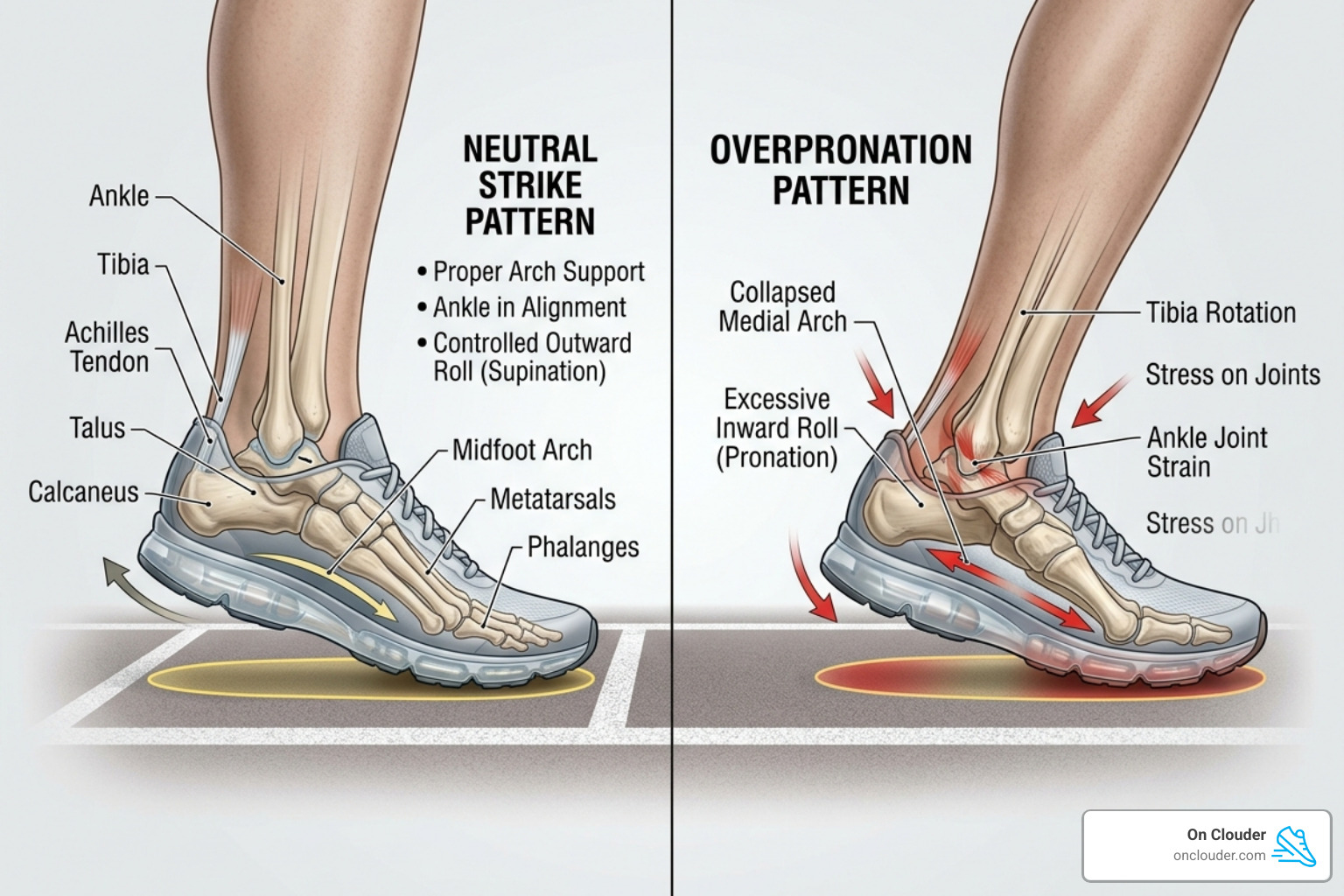
When we talk about flat feet, we aren’t talking about just one type of foot. Understanding the nuances of your own biomechanics is the first step toward finding the perfect pair of sneakers for flat feet. Generally, we categorize flat feet into two camps: anatomical (rigid) flat feet and collapsed (flexible) arches.
If you have flexible flat feet, your arch is visible when you’re sitting down, but it disappears as soon as you stand up and put weight on it. This often leads to excessive overpronation, where the foot rolls inward, causing the tibia (your shin bone) to rotate internally. Over time, this can lead to issues like posterior tibial tendon dysfunction or shin splints. On the other hand, rigid flat feet lack an arch regardless of weight-bearing and might require a different approach to support.
To figure out where you stand, you can try the “wet test” at home. Simply wet the sole of your foot and step onto a piece of cardboard or a paper bag. If the footprint looks like a solid block with no curve on the inside, you likely have flat feet. However, a professional gait analysis is always the gold standard. By watching how your foot strikes the ground, experts can determine how much shock absorption you need and whether your ankles are “slumping” inward. For a deeper dive into the mechanics, check out our guide on Flat Feet Running 101 Everything You Need To Know About Support And Comfort.
Key Features to Look for in Sneakers for Flat Feet
Finding the right sneakers for flat feet involves looking past the flashy colors and focusing on the “engine” of the shoe. In 2026, technology has moved away from rigid, uncomfortable plastic posts toward smarter, more adaptive stability.
| Feature | What It Does | Why Flat Feet Need It |
|---|---|---|
| GuideRails® | Holistic support system | Keeps excess movement in check without forcing the arch up. |
| H-Frame Stability | Interlocking foam frame | Provides a wide, stable base to prevent “spilling” over the sides. |
| Torsional Rigidity | Resistance to twisting | Prevents the shoe from wringing like a towel, protecting the midfoot. |
| Stiff Heel Counter | Firm plastic in the heel | Locks the heel in place to prevent the ankle from rolling inward. |
| Wide Toe Box | Extra room in the forefoot | Allows toes to splay naturally, which is common in flatter foot shapes. |
Modern Running Shoes for Flat Feet prioritize adaptive cushioning like BioMoGo DNA or FF BLAST™ PLUS. These foams react to your specific weight and stride. For those with significant overpronation, a 4D Guidance System™ or a full-contact midsole (where the arch area isn’t “carved out” but stays in contact with the ground) offers the most consistent support.
Don’t ignore the stack height and heel-to-toe drop. While a high stack height (like the 40mm found in some ASICS models) offers great shock absorption, a moderate drop (around 8mm to 10mm) is often the “sweet spot” for maintaining a natural gait while protecting the Achilles.
Top-Rated Models: The Best Sneakers for Flat Feet in 2026

We have analyzed the data, and the results for May 2026 are clear. Whether you are browsing Reddit for real-world reviews or looking at lab-tested statistics, these models consistently rise to the top. According to 7 Best Walking Shoes For Flat Feet in 2026 | RunRepeat, the focus this year is on balancing stability with weight.
The Brooks Ghost Max 3 has become a fan favorite, boasting a 4.5-star rating across nearly a thousand reviews. Users love it because it provides the stability of a traditional support shoe without the “clunky” feel. Similarly, the ASICS Gel Kayano 32 is often described by testers as being “stable as a table,” thanks to its 39.9 mm heel stack and impressive 133 SA shock absorption score.
If you have a wider foot, you aren’t alone. Flat feet often spread out, making width options essential. We recommend checking out The Ultimate List Of Running Shoes For Flat And Wide Feet to find models that offer 2E and 4E widths.
Best Performance Running Sneakers for Flat Feet
For the runners among us, the Adrenaline GTS 25 and Glycerin GTS 22 are the gold standards. The Glycerin GTS 22, in particular, features nitrogen-infused DNA LOFT v3 foam, which is incredibly lightweight yet provides a shock absorption score of 122 SA. This means you get a “heavenly” soft feel without losing the support your flat arches require.
The ASICS Gel Kayano 32 also shines here with its PureGEL™ technology, which is 65% softer than standard gel. It’s a premier stability trainer designed to handle long road miles while keeping your stride balanced.
Top-Rated Walking Sneakers for Flat Feet
If your “marathons” happen at work or while running errands, you need a different kind of support. The Addiction Walker 2 is a powerhouse in this category, with over 2,400 reviews and a reputation for all-day orthopedic comfort. It’s often recommended for those who need a slip-resistant outsole and a leather upper for professional environments.
Brands like ABEO also offer fantastic options like the MXV Shift and Encore Sneaker, both holding a near-perfect 4.8-star rating. These often come with APMA (American Podiatric Medical Association) approval, ensuring they meet high standards for foot health.
Gender-Specific Design: Men’s vs. Women’s Support Needs
When shopping for sneakers for flat feet, it is important to remember that men and women aren’t just scaled versions of each other. Biomechanically, women often have a wider “Q-angle” (the angle at which the femur meets the tibia) due to wider hips. This can increase the likelihood of overpronation.
Manufacturers address this by using different “lasts” (the mold the shoe is built on). Women’s sneakers often have a narrower heel and a wider forefoot ratio compared to men’s. For example, the Brooks Glycerin GTS 22 weighs approximately 289g for men but only 257g for women, reflecting the different density needs.
Furthermore, width availability varies. Men’s standard is “D,” but many flat-footed men require “2E” or “4E.” Women’s standard is “B,” with “D” and “2E” serving as wide and extra-wide options. The Walking Company, for instance, currently offers 182 different women’s sneakers specifically tagged for flat feet, highlighting the massive range of options available for female walkers.
Maximizing Longevity: Orthotics, Width, and Maintenance
Even the best sneakers for flat feet can benefit from a little help. Many people find that Why Your Flat Feet Crave These Arch Support Insoles is the key to total comfort. If your shoes have a removable footbed, you can easily swap the factory insole for a custom medical orthotic or a high-quality over-the-counter insert.
To get the most out of your investment, keep these tips in mind:
- The Break-In Period: Don’t take a brand-new pair of stability shoes on a 10-mile hike. Give your feet a week to adjust to the new support structure.
- Check the Tread: For flat-footed individuals, uneven wear on the inside of the outsole is a sign that the stability features are breaking down.
- Width Matters: If you feel “pinched,” you might need to go up a width rather than a size. A wide toe box is your best friend.
- Replacement Cycle: Generally, stability shoes should be replaced every 300–500 miles. If you notice the foam feels “mushy” or you start feeling new aches in your knees, it’s time for a new pair.
For a comprehensive look at how to choose the right inserts, see our Ultimate Guide Arch Support Inserts Flat Feet.
Frequently Asked Questions about Sneakers for Flat Feet
Can walking barefoot fix flat feet?
There is currently no scientific evidence that walking barefoot can “fix” or permanently raise the arch of an anatomically flat foot. While it can strengthen the small muscles in the foot, most experts agree that for long-duration activities, supportive footwear is necessary to prevent strain and injury.
Do I need stability shoes if I have flat feet but don’t overpronate?
Not necessarily. Some people have “neutral” flat feet, meaning their feet stay straight even without a visible arch. In this case, a neutral shoe with good cushioning might be more comfortable than a high-stability shoe that could overcorrect your gait.
How often should I replace my sneakers for flat feet?
Most high-quality sneakers for flat feet last between 300 and 500 miles. However, because flat feet put more lateral pressure on the shoe’s structure, you might notice the “GuideRails” or medial posts losing their effectiveness sooner. If the shoe no longer feels “stable as a table,” it’s time to shop.
Conclusion
Finding the best sneakers for flat feet in 2026 doesn’t have to be a struggle. By focusing on key features like torsional rigidity, adaptive cushioning, and proper width, you can find a pair that feels like an extension of your body rather than a clunky orthopedic tool.
Whether you choose the high-tech 4D Guidance of ASICS, the holistic support of Brooks GuideRails, or a budget-friendly Skechers model, the goal is the same: keeping you moving without pain. Your feet are the foundation of your entire body. Investing in the right support today prevents hip, knee, and back issues tomorrow.
For more expert tips on staying comfortable, check out our guide on How To Stand Your Ground With Flat Feet All Day Long. Stay supported, stay active, and we’ll see you on the road!