Key Biomechanical Features of the Best Athletic Shoes for Standing
The best athletic shoes for standing prioritize static compression resistance, arch alignment, and lateral stability over springy forward propulsion. Top expert recommendations include high-cushion stability models such as the On Cloudrunner 3 for all-day lateral stability, pressure relief across the heel and forefoot, and wide-base support on hard floors.
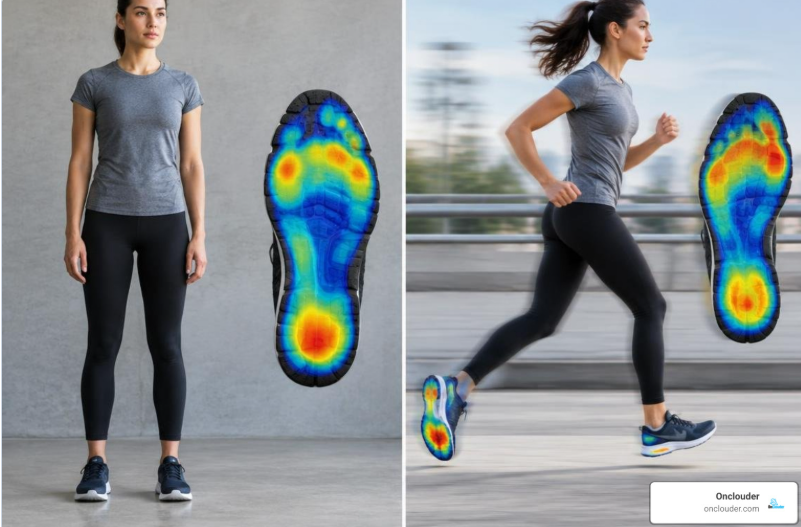
When you stand in one spot for hours, your feet experience continuous, static downward pressure. Unlike running or walking—where your foot goes through dynamic phases of impact, roll, and toe-off—standing distributes your full body weight across the heel and forefoot without a break. This sustained pressure can restrict local blood circulation, stress the plantar fascia, and fatigue postural stabilizing muscles.
Understanding footwear biomechanics explains why standard running shoes often fail during long shifts:
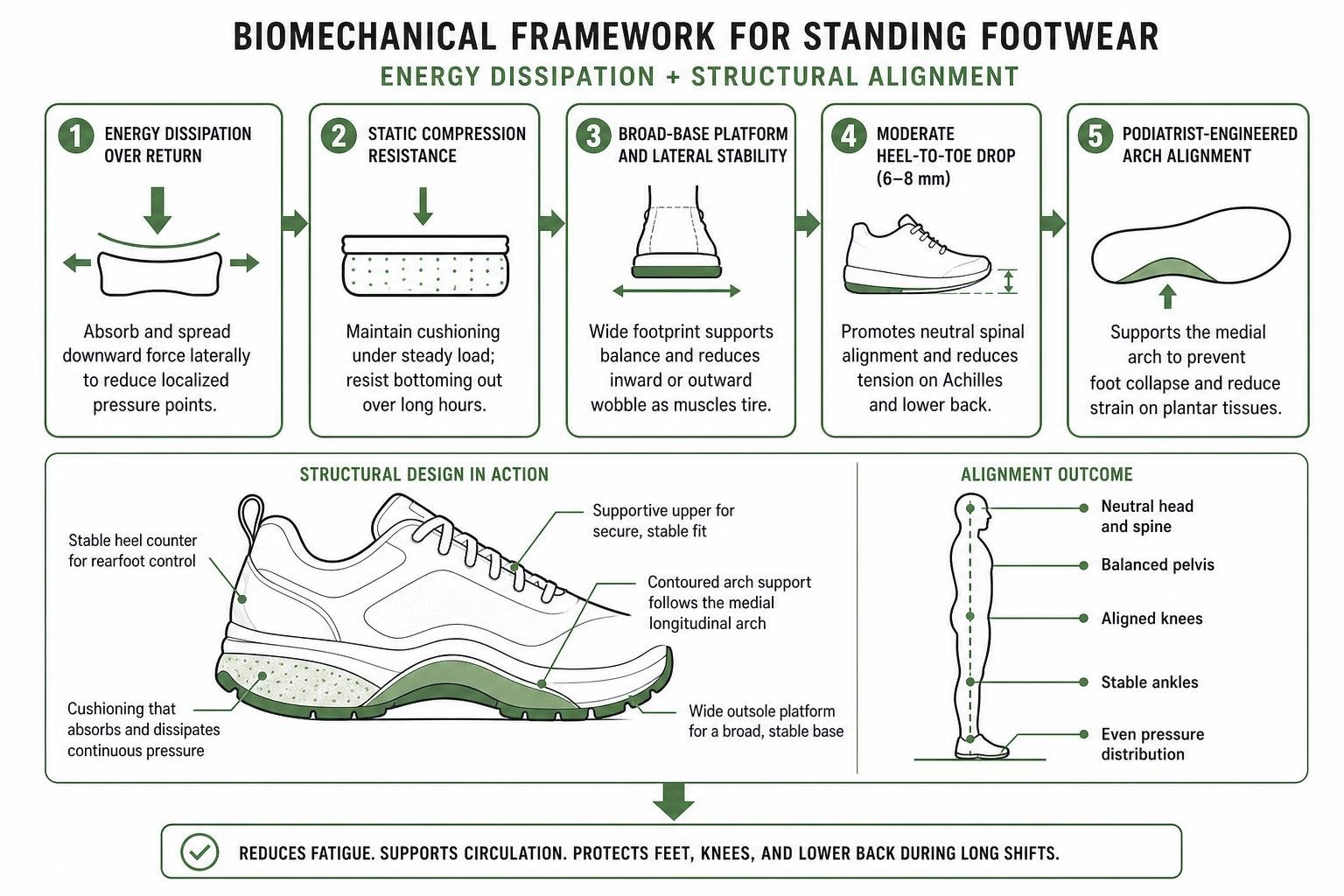
- Energy Return vs. Energy Dissipation: Running shoes are built with high-rebound foams designed to spring back quickly, propelling you forward into your next stride. For standing, however, excessive springiness can destabilize your stance. Shoes optimized for standing focus on energy dissipation—absorbing and spreading the downward force laterally across a broad base to reduce localized pressure points.
- Static Compression Resistance: High-rebound, ultra-plush foams tend to bottom out when subjected to steady weight over several hours. Once compressed flat, they offer minimal shock dampening. Standing footwear utilizes denser EVA blends, multi-density foams, or structural cushioning cells that maintain their shape under load.
- Broad-Base Platform and Lateral Stability: A wide footprint prevents your ankle from wobbling inward (overpronation) or outward (supination) as your stabilizer muscles tire toward the end of a shift.
- Moderate Heel-to-Toe Drop (6–8 mm): A moderate drop positions your pelvis and spine in neutral alignment, taking tension off your Achilles tendon and lower back without pitching your weight forward onto your metatarsal heads.
- Podiatrist-Engineered Arch Alignment: Continuous support along the medial longitudinal arch prevents foot collapse and reduces strain on the plantar connective tissues.
If you want a deeper look into biomechanical features and construction standards, explore our definitive guide to sneakers for standing.
Top Expert-Tested Footwear Picks for Long Shifts
To help you choose the right pair, we evaluated the leading models across key performance metrics: cushioning structure, arch support, slip resistance, and floor compatibility.
| Shoe Model | Cushioning Type | Arch Support | Slip Resistance | Best Floor Surfaces | Key Benefit |
|---|---|---|---|---|---|
| On Cloudmonster 2 | Max CloudTec® + Helion™ Superfoam | Structured / Ergonomic | Standard Rubber | Dry Concrete, Polished Tile | Deep cushioning with smooth rocker transition |
| On Cloudrunner 3 | CloudTec® + Helion™ Superfoam | High / Broad Cradle | Standard Rubber | Dry Concrete, Wood, Tile | Wide landing zone and late-shift lateral stability |
| On Cloudflyer 4 | Dual-Density Helion™ Foam | High / Contoured | Enhanced Grip Rubber | Hard Concrete, Hospital Floors | Targeted medial support and pressure dissipation |
| On Cloud 5 Coast | Zero-Gravity Foam + Speedboard® | Podiatrist-Engineered | Certified Grip Rubber | Concrete, Indoor Floors | Lightweight comfort for extended shifts |
Top Pick for Maximum Cushioning: On Cloudmonster as One of the Best Athletic Shoes for Standing
The On Cloudmonster utilizes a high-volume CloudTec platform with Helion superfoam that maintains its shape under static load, making it a strong candidate among the best athletic shoes for standing. Its rocker geometry helps shift pressure away from the heel and forefoot during prolonged weight-bearing, while the structured arch support reduces strain on the plantar fascia. For nurses, teachers, and retail workers who spend long shifts on hard floors, this model provides consistent cushioning without the instability of an overly soft running shoe.
Top Pick for All-Day Stability: Why On Cloudrunner 3 Ranks Among the Best Athletic Shoes for Standing
The On Cloudrunner 3 combines CloudTec cushioning with Helion superfoam to deliver a broad landing surface and dependable lateral stability. Its wide base helps control overpronation as lower-leg muscles fatigue, while the breathable engineered mesh upper accommodates diurnal foot swelling. This makes it a practical choice for professionals who need reliable support from the first hour of a shift to the last. For more shift-tested options, explore our review of top cloud-cushioned shoes for professional shifts.
Occupational Workhorses: Supportive All-Day Work Models
For demanding workplace environments, supportive stability shoes like the On Cloudflyer provide safety-rated traction and structural durability. Built with dual-density foam and wider Speedboards, these models offer resilient shock absorption and podiatrist-aligned arch support to relieve pressure on sensitive heels during long hours on concrete and industrial floors. For a broader overview of ergonomics, check out our detailed guide to standing footwear.
Essential Features for Hard Floors and Long Shifts
Concrete, hardwood, and commercial tile do not compress when your foot strikes them—meaning your footwear has to absorb 100% of the impact. When selecting a shoe for extended standing, keep an eye out for these essential design features:
1. Room for Diurnal Foot Swelling
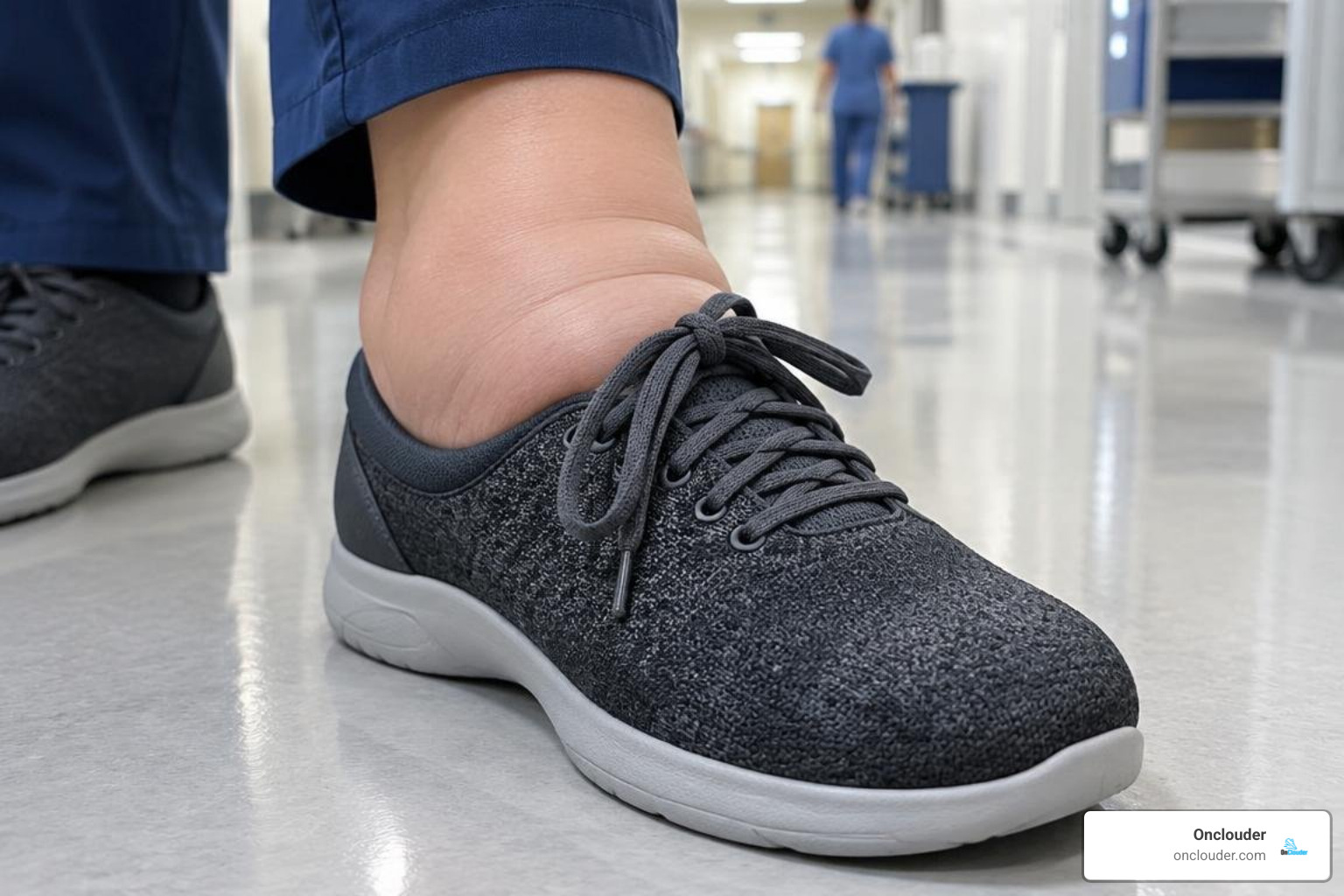
Throughout a typical shift, gravity causes blood and interstitial fluids to pool in your lower extremities. It is common for feet to swell by up to half a shoe size by the end of the day. A shoe with an anatomical, wide toe box gives your metatarsals and toes room to spread without rubbing against the upper, preventing painful friction, bunion irritation, and ingrown toenails.
2. Deep Heel Counter and Lateral Structure
A firm internal heel cup stabilizes the rearfoot. When your ankles remain aligned, your knees, hips, and back don’t have to work overtime to correct your posture, saving you valuable muscular energy during long hours on duty.
3. Safety-Rated Slip Resistance
While athletic outsoles provide great grip on dry pavement, they can slip on wet tile, slick linoleum, or greasy kitchen mats. If you work in food service, healthcare, or custodial roles, look for outsoles certified to ASTM F2913 standards rather than relying on standard running tread patterns.
4. Custom Orthotic Compatibility
If you rely on prescribed inserts or rigid over-the-counter insoles, ensure the shoe features a removable factory footbed. The shoe must retain enough internal volume so that adding an insert doesn’t crowd your instep or cause your heel to slip out of the rear collar.
For a step-by-step checklist on matching your foot profile to the right specifications, review our buying guide for standing shoes.
Profession-Specific Recommendations and Care Guidelines
Different work settings place unique demands on your footwear. Here is how to tailor your selection based on your workplace:
- Healthcare Professionals (Nurses, Techs, Doctors): Prioritize fluid resistance, easy-to-sanitize uppers, slip-resistant outsoles, and dependable arch alignment for twelve-hour hospital shifts.
- Retail & Hospitality Staff: Look for breathable uppers, structured midsoles, and clean styling that pairs well with dress codes while providing concrete dampening.
- Warehouse & Logistics Workers: Focus on puncture-resistant outsoles, wide platforms, durable toe caps, and high-density foam that holds up to heavy loads.
If you are looking for specific men’s sizing and silhouettes across these categories, see our guide on comfortable men’s shoes for standing and walking.
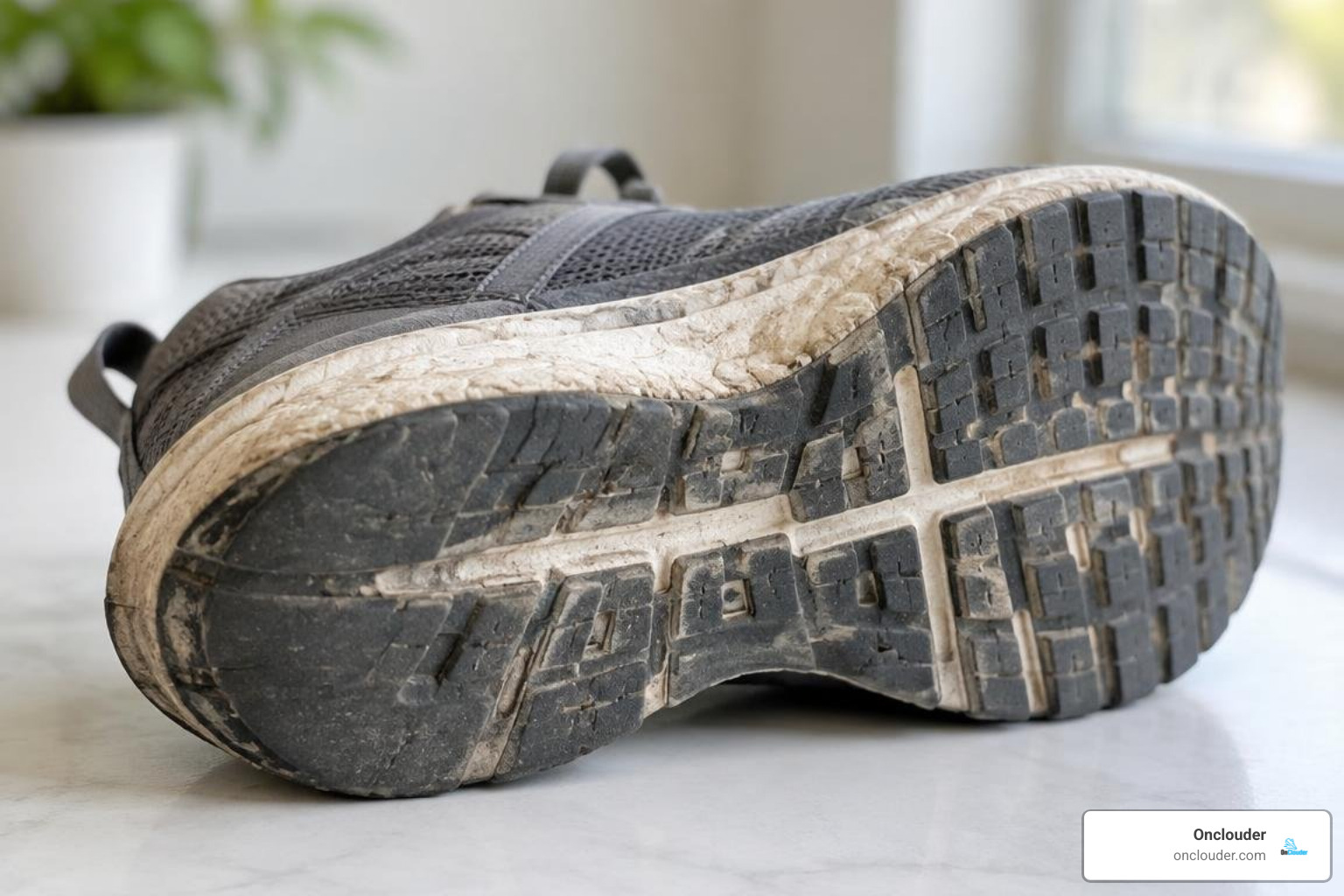
How to Extend Shoe Life: The Two-Pair Rotation Strategy
Foam midsoles consist of microscopic air cells that compress under your body weight. After an eight- to twelve-hour shift, these air pockets can take up to 24 to 48 hours to fully decompress and regain their original elasticity.
Rotating between two pairs on alternating days gives the cushioning time to bounce back, preventing premature foam breakdown and significantly extending the lifespan of both pairs.
Frequently Asked Questions About Footwear for Prolonged Standing
How often should you replace athletic shoes used for standing all day?
As a general rule, shoes used for full-time standing shifts should be replaced every 500 to 600 hours of wear, or roughly every six months. Even if the rubber outsole looks intact, the internal foam midsole degrades from continuous static load. Signs that it’s time for a new pair include end-of-shift foot soreness, visible creasing along the midsole walls, or uneven wear on the tread.
Is an ultra-soft running shoe suitable for standing all day?
Not always. While pillow-soft foam feels great for the first ten minutes in a fitting room, an overly soft platform can allow your foot to sink unevenly. This forces the stabilizing muscles in your lower legs and feet to fire constantly to keep you balanced, leading to muscle fatigue by hour six. A supportive standing shoe balances responsive cushioning with structural stability.
Can you use custom orthotics in athletic shoes for standing?
Yes, provided the shoe has a removable insole and sufficient internal volume. Always remove the factory liner before placing your custom orthotic to maintain proper shoe depth. When trying them on, check that your heel sits securely in the heel cup and that your toes still have ample room to wiggle without feeling pinched against the top of the toe box.
Finding Your Ideal Standing Footwear
Standing for hours on unforgiving floors doesn’t have to leave your feet throbbing at the end of every shift. By matching your foot shape and job environment with the right blend of energy-dissipating cushioning, structured arch support, a roomy toe box, and reliable traction, you can protect your joints and stay comfortable from clock-in to clock-out.
Ready to find the ideal match for your workday? Use our complete interactive guide on how to choose the best shoe for standing all day to pinpoint your perfect fit.